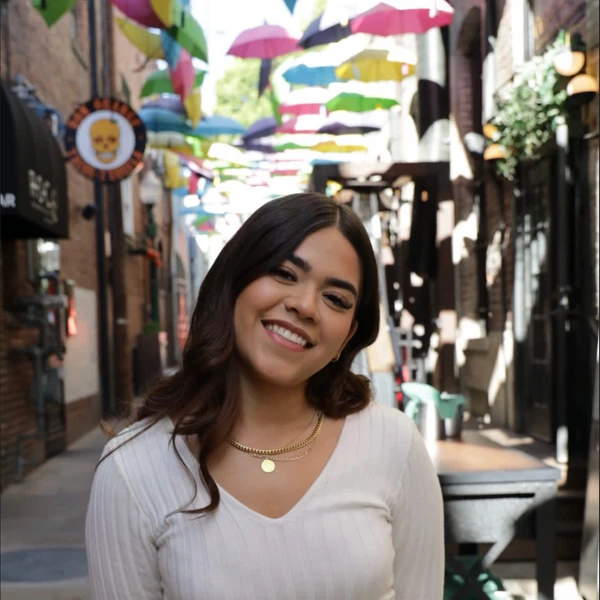
I grew up in a tight-knit, hardworking family where love and support were always present, even when financial security was not. As a woman of color pursuing a career in STEM, I have had to navigate not only the economic barriers that come with higher education but also the emotional challenges of being underrepresented in spaces that are often not designed with students like me in mind. Still, I’ve never let those obstacles define me. Instead, they’ve fueled my ambition to pursue medicine a path that combines science, service, and compassion in a way that allows me to uplift others while honoring my own journey.
I’m currently an undergraduate at the University of California, Berkeley, majoring in Molecular and Cell Biology. I’m on the pre-medical track with the long-term goal of becoming a pediatric anesthesiologist. My passion for healthcare began early, shaped by personal experiences that left lasting impressions. When I was around twelve, a close family member became seriously ill. I saw firsthand the ways our healthcare system often fails to serve underserved communities. Long drives to reach basic care, weeks of waiting for appointments, and limited communication between providers made it painfully clear to me that access to care isn’t equal for everyone. This injustice hit close to home and planted the seed for what has now become a lifelong calling.
Despite my passion, the road to becoming a doctor hasn’t been easy. As a first-generation college student from a financially disadvantaged background, I’ve had to carry a lot of responsibility on my shoulders. My family has always done everything they could to support me, but the cost of attending a university like UC Berkeley is significant. I’ve had to take on part-time jobs while juggling a full academic course load, apply to countless scholarships, and budget every dollar. There have been times when I’ve questioned whether I could keep going times when financial stress made it hard to focus on my studies or fully engage in campus life. But every time I felt discouraged, I reminded myself why I started this journey: to be the kind of doctor who shows up for kids and families the way mine needed someone to show up for us.
I’ve also found strength and purpose in community involvement, especially through CalTHON, a student-run organization at UC Berkeley that raises funds for our local children’s hospital through the Children’s Miracle Network. Each year, we organize a large-scale dance marathon and fundraising campaign to support pediatric patients, many of whom come from low-income households and face serious or life-threatening illnesses. The funds we raise help cover treatments, provide support services for families, and fuel critical research. Being part of CalTHON has allowed me to connect with the very communities I hope to serve as a future physician. It’s made the work feel even more personal. These kids need people to fight for them and knowing I’m part of that fight has been one of the most meaningful experiences of my college career.
In addition to CalTHON, I’ve volunteered at clinics and hospitals where I support healthcare staff and assist patients and their families. Sometimes, this means helping with check-ins or providing comfort to children waiting for procedures. Other times, it’s simply sitting with a scared patient and letting them know they’re not alone. These small acts have taught me how powerful kindness and presence can be in the healing process. They’ve also confirmed that pediatric anesthesiology a field that combines precision, technical knowledge, and compassion—is where I truly belong.
Outside of academics and volunteering, I find balance and joy through creative hobbies and family time. I love crafting, especially making bracelets and crocheting. I’ve even donated handmade gifts to children’s hospitals and local community events. I also love being outdoors camping, riding bikes, off-roading, and spending time with my family. These moments remind me of who I am and where I come from. They help me stay grounded and motivated to keep pushing forward, no matter how hard the road gets.
What excites me most about a future in STEM is the potential to create real, lasting impact. Biology has helped me understand how the human body works, but more importantly, it’s shown me how science can be used to solve real-world problems and bring relief to those in pain. I want to take what I’ve learned and use it to improve healthcare access and outcomes for children, particularly in underserved and rural communities. My goal is not just to be a doctor, but to be an advocate someone who uses her position to speak up for equity, mentor young women of color in STEM, and help build a healthcare system that works for everyone, not just a privileged few.
As a woman of color in STEM, I understand the power of representation. I know what it means to walk into a room and not see anyone who looks like you. I want to change that not just for myself, but for the young girls watching, wondering if they can do it too. I want them to know they can. Eric W. Larson’s legacy his belief in equality, his support for women in science, and his commitment to using knowledge for good deeply resonates with me. I would be honored to carry that legacy forward by continuing my education, serving my community, and working toward a more just and compassionate world through science and medicine.