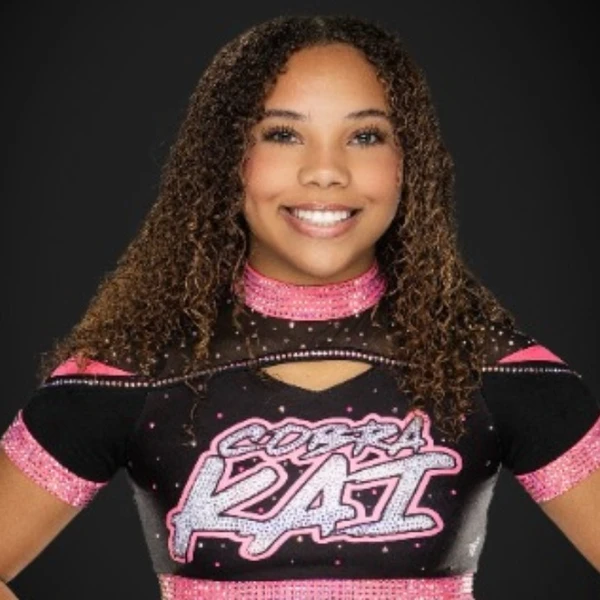
user profile avatar

Bianca Lorraine Braganza

1x

Finalist

Bio

Bianca Braganza is a dedicated student-athlete from George Ranch High School in Richmond, Texas, where she maintains a 4.38 weighted GPA while serving as Varsity Spirit Captain for her cheerleading team. With twelve years of competitive cheerleading experience, she has developed leadership skills, discipline, and a deep understanding of teamwork. Beyond her own athletic pursuits, Bianca coaches young athletes at Stars Vipers Katy, teaching them skills and communicating with both children and parents to foster growth and confidence. She volunteers at Williams Elementary School, greeting students each morning to encourage them, and at Gigi's Playhouse, assisting children with special needs. Passionate about combining her love for sports with creativity, Bianca plans to major in communications and pursue a career in sports advertising, where she can create meaningful connections between brands, teams, and fans.

Education

George Ranch High School

High School
2023 - 2026
  • GPA:
    4

Miscellaneous

  • Desired degree level:

    Bachelor's degree program

  • Majors of interest:

    • Communication, Journalism, and Related Programs, Other
    • Sports, Kinesiology, and Physical Education/Fitness
  • Not planning to go to medical school
  • Career

    • Dream career field:

      Sports

    • Dream career goals:

      sports

    • Coach

      Stars Vipers Katy
      2024 – Present2 years

    Sports

    Cheerleading

    Varsity
    2014 – Present12 years

    Public services

    • Volunteering

      Gigi’s Playhouse — Baby Sitter
      2023 – 2024
    Joe Gilroy "Plan Your Work, Work Your Plan" Scholarship
    From the moment I first laced up my cheer shoes in kindergarten, I understood that sports were more than competition. They were connection. Cheering on the sidelines, I watched athletes become heroes, teams become families, and brands become part of something bigger than themselves. What I did not realize then was that those moments were quietly shaping not just my passion, but my purpose. Growing up, I was always drawn to creativity and communication. I noticed how a well-crafted commercial could make you feel loyal to a team you had never followed, or how a single brand partnership could transform an athlete into a cultural icon. That intersection where storytelling meets sports fascinated me in a way nothing else did. It was not long before I realized I did not just want to be a fan of that world. I wanted to build it. That realization led me to pursue a major in Communications, with a clear goal of building a career in sports advertising. Studying Communications will give me the skills to do exactly that. I will develop expertise in branding, audience engagement, public relations, media analysis, and digital storytelling, all of which are essential tools in creating advertising campaigns that resonate with fans on a genuine level. Beyond the technical skills, Communications is sharpening me into a stronger writer, speaker, and collaborator, qualities that are just as critical in any professional advertising environment. Every course I take feels like a step closer to the career I have envisioned since I first noticed the power a thirty second commercial could have over an entire fanbase. But my drive to succeed is about far more than personal ambition. Since my parents' divorce, it has been just my mom and me. She is the hardest working person I have ever known, stretching every dollar, showing up to every competition with a smile that never wavers, and carrying financial pressures she rarely speaks out loud. Watching her sacrifice so much so that I never had to miss a practice, a competition, or an opportunity has permanently shaped my understanding of what strength truly looks like. She does not just support my dreams. She fuels them with her example every single day. College represents the future my mom and I have worked toward together. I will be the first in my family to earn a degree, and that milestone belongs to both of us. However, I am also deeply aware of the financial weight that higher education places on a single income household. A scholarship would not just ease that burden. It would allow me to pour my full energy into my studies, my creativity, and my growth as a future communications professional, without the constant anxiety of financial strain pulling at my focus. I am not just investing in a degree. I am investing in a future where I can honor everything my mom has given me, build a career I am genuinely passionate about, and prove that two people with big dreams and very little can still accomplish everything they set out to do. Sports taught me that the most memorable moments happen when preparation meets opportunity. I am prepared. I am ready for the opportunity.
    Sweet Dreams Scholarship
    Whose story changed yours? My mother never told me hers all at once. She let me find it in pieces. A late night sigh. A skipped meal she pretended not to skip. The way her hands trembled when the car repair bill came. Her story is not one of tragedy. It is one of quiet refusal. She refused to let me grow up hungry. She refused to use me as an emotional crutch. She refused to stop working double shifts even when her back gave out. Her story changed mine because I stopped seeing her as just a parent and started seeing her as a person who chose me every single day when she had every reason to choose herself. That story taught me to notice what others walk past. At Williams Elementary School, I greet students every morning in uniform. Most volunteers focus on the smiling children, the ones who wave back. I notice the girl who walks with her head down. I notice the boy who flinches when someone touches his shoulder. I notice the kindergartener who never has a clean shirt. These are the problems my community walks past because they are uncomfortable. A dirty shirt means a family without a washing machine. A flinch means something happened at home. A head down means a child has already learned that looking up brings disappointment. Most people do not see these things because they are rushing. I see them because I was that girl. I wore the same leggings three days in a row. I flinched when a teacher touched my shoulder because my father was never in the picture and I did not trust adult hands. My mother worked, so I walked to school alone. No one asked why my hair was messy. No one asked if I had eaten breakfast. They walked past. If I had the resources to act, I would build a weekend care center inside our elementary school. It would open on Saturdays from 8 AM to 2 PM. Families could drop off their children for free breakfast and lunch. There would be laundry machines in the basement so parents could wash clothes while their kids played. There would be a quiet room with a counselor who knows how to talk to a child who flinches. There would be a small closet with new underwear, socks, and gently used uniforms. No questions asked. No judgment. Just help. I would staff this center with high school volunteers like me. We already know the children. We already stand at the morning door. We already see the dirty shirts and the bowed heads. We just need a building, a few washing machines, and permission to care. My mother worked double shifts on Saturdays when I was young. She would have driven me to a place like this. She would have cried with relief. My mother changed my story because she taught me that love is not a feeling. It is action. She worked. She sacrificed. She never walked past my needs even when she was exhausted. Now I refuse to walk past the children who look like I did. Their stories are still being written. I want to be the person who hands them a clean shirt and says, I see you. You are not invisible. That is the problem most people walk past. I will not be one of them.
    Charles B. Brazelton Memorial Scholarship
    My awkward thing is that I have spent twelve years in one of the most visually demanding, athletically intense sports in existence, and I still cannot catch a ball thrown directly at me. Not a baseball. Not a football. Not even a gentle toss across a living room. My hands simply do not cooperate with that particular task. I have stuck landings from stunts fifteen feet in the air. I have executed back handsprings on floors that do not forgive mistakes. I have been the base for pyramid formations that required every muscle in my body to respond with precision on a count. But throw something at me casually and I will either flinch, miss entirely, or do something so spectacularly awkward that everyone in the room feels secondhand embarrassment. My teammates found this hilarious. My coaches found it baffling. I found it completely consistent with a truth I have come to appreciate about myself: I am good at the things I chose and committed to, and genuinely average at the things that just happen at me without warning. The catching thing is actually a perfect metaphor for how I operate. Cheerleading works because every sequence is practiced, internalized, and executed on a predetermined count. The variables are controlled. The communication is constant. When something unexpected gets thrown into that environment, you handle it because you have already prepared for the possibility. But casual catching is random. It requires a kind of easy reflex I apparently was not issued. I also talk to myself when I am working through a problem. Not quietly. Out loud, in full sentences, as if I am explaining it to someone else in the room. This habit confused my classmates and concerned a few substitute teachers over the years. What I eventually learned is that it is actually a documented learning strategy called self explanation, which made me feel significantly better about it. I was not eccentric. I was ahead of the research. The combination of these two things, the person who can perform flawlessly in a structured athletic environment and then completely fall apart trying to catch a set of keys, is genuinely who I am. I have made peace with it. The catching is never going to improve. The talking to myself has already proven useful. What I have learned from both is that awkward things are usually just mismatched contexts. My hands work exactly the way they are supposed to inside a cheer routine. My mouth works exactly the way it is supposed to when I am processing a difficult statistics problem. Put either of those things in the wrong context and suddenly I look like I have no idea what I am doing. I think that is true for most people. Charles was not bad at sports. He was bad at basketball specifically, and extraordinary in a pool. The skill was always there. It just needed the right water. Mine needed a mat, a count, and a team that already knew where to stand.
    Michael Rudometkin Memorial Scholarship
    Selflessness, the way I understand it, is not a personality trait. It is a practice. It is the repeated decision to treat someone else's need as worth your time, your presence, and your effort, even when nothing about the situation requires you to show up. I learned that definition from my mother. After my parents divorced, she made that decision every single day without labeling it or asking for recognition. She worked long hours and still drove me to early practices. She stretched every dollar and still showed up to every competition. She carried more than her share and never once suggested that I should carry less of my own. Watching her operate that way set a standard I have spent my life trying to meet. The most consistent example of selflessness in my own life is the three years I spent outside Williams Elementary School every morning, greeting students as they arrived for the day. I showed up in my cheerleading uniform before school began, learned names, made eye contact, and cheered for children who had not yet done anything worth cheering for. It was not a dramatic commitment. It was an early morning, repeated hundreds of times, in service of something simple: making sure a child felt seen before their day began. I did not start that volunteer role because someone asked me to. I started it because I had been a child who needed that kind of presence, and I understood what it costs a person to move through their day feeling invisible. My mother gave me the reminder that I was worth showing up for. I wanted to pass that forward to children who might not be getting it anywhere else. At Gigi's Playhouse I worked with children with special needs, and that experience asked something different of me. Selflessness there was not about showing up cheerfully. It was about setting aside my own comfort, my assumptions, and my timeline completely in order to meet each child where they actually were. Some sessions required adjusting every planned activity on the spot. Some required sitting quietly with a child who needed presence more than programming. I learned that genuine service is responsive, not scripted, and that the most helpful thing I could offer was often simply my full, unhurried attention. Coaching young athletes at Stars Vipers Katy required a similar kind of giving. I was not coaching to build my resume. I was coaching because I knew what it felt like to be a beginner in a sport that demands so much, and I wanted to be the person in the room who communicated clearly, believed in the athlete in front of me, and stayed patient when the skill did not come on the first attempt or the tenth. In each of these settings, the common thread is the same: I showed up for someone else at a cost to myself, whether that cost was time, energy, or the comfort of staying in my own lane. I do not think selflessness requires sacrifice to be meaningful. But I do think it requires a genuine decision to treat another person's experience as something worth protecting. That decision is one I make repeatedly, in small ways and large ones, because I was shown what it looks like when someone makes it for you. My mother made it for me every day. I am still learning how to return the favor at scale.
    WCEJ Thornton Foundation Low-Income Scholarship
    **Exactly 625 words** Higher education is the bridge between the life I have survived and the life I intend to build. I was raised by a single mother who worked double shifts so I could stay on the cheerleading mat. She never went to college. She never learned how to budget or invest or market a business. She learned how to survive. I love her for that, but I refuse to stop there. Attending college will give me the knowledge, credentials, and network to turn my lived experience into a career that serves others. My specific goal is to earn a degree in marketing with a minor in finance. I want to understand consumer behavior, brand strategy, and digital advertising. But I also want to understand compound interest, credit scores, and small business accounting. Why? Because the cheerleading gym that saved my life, Stars Vipers Katy, was a converted warehouse run by a woman who knew everything about tumbling but almost nothing about marketing. She could not afford a professional agency. She relied on word of mouth and flyers taped to grocery store windows. That gym kept me off the streets and inside a safe space where I learned discipline and leadership. I want to help a hundred small businesses like hers reach the families who need them most. Higher education will give me the technical skills to do that. College will also facilitate my growth as a leader. I have led as Varsity Spirit Captain and as a coach, but those were informal roles in familiar settings. College will challenge me with diverse teams, difficult professors, and high stakes group projects. I will learn to negotiate, to persuade, to listen, and to adapt. Those are not just classroom skills. They are the tools I need to create positive impact in the real world. I plan to join my college's marketing club, volunteer with local small business development centers, and eventually start a financial literacy workshop for first generation students like me. Beyond my career, I plan to create a positive impact by breaking the cycle of financial silence that harmed my mother. She never talked about money because she was ashamed of not having enough. That shame kept her from asking for help, from applying for aid, from even learning what a credit score was. I will use my college education to become fluent in the language of finance, and then I will translate that language for young people who are just as lost as she was. I have already started at George Ranch High School by sharing scholarship resources with my peers. In college, I will formalize that work into a peer led financial literacy club. After graduation, I will take those workshops into under resourced high schools and community centers. My grandmother came to this country with nothing and worked in a factory for thirty years. My mother worked double shifts and cried over an eight hundred dollar car repair. I will be the first in my family to earn a college degree. That degree is not just for me. It is for the single mother who needs a marketing plan for her home based business. It is for the teenager who does not know how to open a savings account. It is for the little girl at Stars Vipers Katy who needs someone to believe in her the way someone believed in me. Higher education will give me the platform, the skills, and the credibility to reach those people. I will not waste a single minute of that opportunity.
    Scorenavigator Financial Literacy Scholarship
    My first financial education did not come from a classroom. It came from a kitchen table. After my parents divorced, my mother sat down with a piece of paper every month and mapped every dollar coming in against every dollar going out. There was no app, no advisor, no professional guiding her through the process. There was just her, the numbers, and the determination to make them work. I sat close enough to watch. I did not have the vocabulary for what she was doing at the time, but I understood its weight. Every line on that page represented a decision with real consequences for both of us. That is where my relationship with finances began. Not in theory, but in practice, inside a household that could not afford to get it wrong. What I learned from watching her is something most financial literacy curricula do not teach: that financial management is not primarily about wealth. It is about risk. It is about understanding what can go wrong, how likely it is, and what you can do right now to protect yourself from an outcome you cannot recover from. My mother did not have the formal language for that either. But she practiced it every month, and she kept us stable because of it. As I got older, I began connecting what I had seen at home to what I was learning in school. AP Statistics gave me the mathematical framework to understand probability and uncertainty in a formal way. It was the first time I felt like I was learning the language for something I had already been living. Concepts like expected value and variance were not abstract to me. They were descriptions of decisions my mother had been making for years without ever knowing their technical names. That connection is what pointed me toward actuarial science as a career. Actuaries are professionals who quantify risk and build systems that protect people from financial outcomes they cannot afford. Insurance products, pension structures, healthcare cost models, these are all built on actuarial analysis. I want to be part of building those systems because I know personally what happens to a family when they are navigating financial uncertainty without the tools those systems are designed to provide. My plan for using what I learn is both professional and personal. Professionally, I intend to earn full actuarial credentialing and eventually direct my expertise toward underserved communities through the nonprofit financial stabilization center I want to build. That organization will bring actuarial thinking and financial planning directly to single parent households and families in economic crisis, the people who need it most and have historically had the least access to it. Personally, I intend to become financially literate in every dimension that affects my own life. I am already studying scholarship structures, financial aid terms, and the cost implications of different college pathways. I am tracking the investment of my education the way my mother tracked our household budget: carefully, deliberately, and with full awareness that the decisions I make now will shape the options I have later. My mother taught me that financial knowledge is not a privilege reserved for people who already have money. It is the most practical tool available to people who are building something from less than they need. I intend to spend my career making sure more people have access to it. That is what I learned at the kitchen table. That is what I am carrying forward.
    Lotus Scholarship
    Growing up in a single parent household taught me one thing above everything else: forward motion is a choice you make every day, not a condition you wait for. After my parents divorced, my mother became everything. One income. One parent. Zero margin for error. I watched her absorb that reality without bitterness and without stopping. She planned carefully, sacrificed quietly, and showed up completely for me through all of it. I did not have the option of coasting. Her effort demanded my effort in return. That dynamic built something in me that no comfortable circumstance could have produced: a genuine understanding of what is at stake when you waste an opportunity someone else paid for. I carried a 3.85 GPA through twelve years of competitive cheerleading, a coaching job, and consistent community volunteer work, not because it was easy but because I understood the cost of doing otherwise. The positive impact I intend to make is specific. I am pursuing actuarial science to build financial protection systems for families navigating the same kind of economic pressure my mother faced alone. I want to be the professional who shows up for households in crisis with real tools, not sympathy. I am actively working toward that goal right now. I completed AP Statistics, PreCalculus, and AP Seminar in preparation for actuarial examinations. I am applying for scholarships broadly and seriously to reduce financial pressure on my mother. I am walking on to a collegiate cheer program while managing a full academic load. Every step is deliberate. Every step is for her.
    Chi Changemaker Scholarship
    The issue I chose to address was invisibility. Not the kind that makes headlines, but the ordinary kind that happens every morning when a child walks into school already defeated before the day begins. I saw it at Williams Elementary School, the students who arrived with their heads down, who avoided eye contact, who moved through the entrance like they were hoping no one would notice them. That kind of invisibility is a community problem. It shapes how children learn, how they engage, and how they understand their own worth. I made a decision to show up. For three years, from 2023 through 2026, I stood outside Williams Elementary every morning in my cheerleading uniform and greeted students as they arrived. I learned names. I made eye contact. I cheered for kids who had not yet done anything worth cheering for that day, because I believed that was exactly the point. What motivated me was personal. I knew what it felt like to need someone to notice you. After my parents divorced and financial pressure reshaped our household, there were moments when I needed the reminder that I was worth showing up for. My mother gave me that reminder constantly. I wanted to pass it forward to children who might not be getting it anywhere else. What I accomplished was accumulative rather than dramatic. The same students who once avoided me began looking for me. They started running over. A few told me about their days before they even got through the door. That shift in behavior is evidence of something real changing in how those children moved through their mornings. To expand these efforts, I would build a structured early arrival welcome program at multiple elementary schools, recruiting student athletes and community volunteers to staff morning greeting stations consistently. The evidence is clear that school connectedness improves attendance, engagement, and academic performance. A visible, welcoming presence at the start of the day is one of the lowest cost and highest impact interventions a school community can implement. I started with one entrance and one uniform. The model scales. And the need is everywhere.
    Curtis Holloway Memorial Scholarship
    The person who has supported my educational journey most is my mother. She is not a teacher or a tutor. She never helped me with calculus homework or edited my AP Seminar essays. But she worked double shifts so I could stay in competitive cheerleading, and she came home exhausted only to ask if I had finished my homework. That is support. That is love without a manual. Growing up in a single parent household meant that my mother was my only safety net. When I spiral fractured my wrist during a basket toss, she drove me to the emergency room and then drove me to physical therapy every morning before school for twelve weeks. She never complained about the gas money or the lost sleep. She simply showed up. When our car broke down and she could not afford the eight hundred dollar repair, she borrowed a friend's car for two weeks and still made sure I got to school on time. She never let me see her give up, even when I know she wanted to. I honor my mother by working as hard as she does. She gave me a 4.38 weighted GPA, not as a gift but as a responsibility. Every time I finish an AP Statistics problem set at midnight, I think of her finishing a double shift at the same hour. Every time I coach a young athlete at Stars Vipers Katy, I think of her coaching me through life with no training and no breaks. I honor her by taking my education seriously because she never had the chance to take hers seriously. She graduated high school but never went to college. I will go for both of us. Her support has shaped me into someone who does not make excuses. I do not say I am tired because she is more tired. I do not say something is too hard because she has done harder things alone. That mindset drove me to earn TGCA All State awards, to become Varsity Spirit Captain, to volunteer at Gigi's Playhouse and Williams Elementary School, and to coach young athletes who remind me of myself. Her support taught me that success is not about talent. It is about showing up when no one else will. I will build on her support by using my college education to create stability she never had. I plan to study marketing so I can help small businesses like Stars Vipers Katy, the gym that became my second home. I will also create financial literacy programs for young people because my mother never learned about budgeting or credit scores. She learned to survive. I will learn to thrive, and I will teach others to do the same. Her support has been instrumental because she was the only one there. In a single parent household, there is no backup. There is no second income. There is just one woman holding everything together. That could have crushed me. Instead, it built me. My mother gave me everything she had. Now I will give everything I have back to the world. That is how I honor her. That is how I will succeed.
    Forever90 Scholarship
    I embody a life of service not through grand gestures but through showing up when no one is watching. Every morning before school, I stand at the entrance of Williams Elementary School in my uniform and greet young students with a smile. That is service. Every week at Gigi's Playhouse, I kneel beside children with special needs and adapt activities to their individual abilities. That is service. Every practice at Stars Vipers Katy, I coach young athletes who remind me of myself at their age, scared and hopeful and desperate for someone to believe in them. That is service too. Service for me is not an extracurricular bullet point. It is a response to the life I have lived. I was raised by a single mother who worked double shifts so I could stay on the cheerleading mat. She served me every single day without recognition or reward. She never posted about it. She never put it on a resume. She just came home exhausted and still helped me with my homework. That is the model I follow. Quiet. Consistent. Unbreakable. But I have learned that service also requires strategy. You cannot pour from an empty cup. You cannot help others if you have no skills, no education, no platform. That is why I am seeking higher education. I plan to study marketing because I want to serve small businesses the way Stars Vipers Katy served me. That gym was a converted warehouse with scuffed mats, but it became my second home. The owner knew every athlete by name. She drove me to the emergency room when I broke my wrist because my mother could not leave work. That woman embodied service. Now I want to use my marketing degree to help small businesses like hers reach the families who need them most. I will also use my education to serve future generations of students who face financial hardship. I know what it is like to watch your mother cry over an eight hundred dollar car repair. I know what it is like to eat rice and beans for a week. That knowledge is painful, but it is also powerful. I plan to create a financial literacy program for middle school students, teaching them about budgeting, credit, and student loans before they make expensive mistakes. I will start this program in my own community and expand it through my college network. Service does not end at graduation. It begins there. My mother taught me that service is not about what you say. It is about what you do. She never gave a speech about sacrifice. She just made it. I will do the same. I will earn my degree. I will build my career. And I will spend every single day asking the same question. Who needs me today? The answer at Williams Elementary is a kindergartener who needs a high five. The answer at Gigi's Playhouse is a boy named Marcus who needs someone to draw dinosaurs with him. The answer in my future is a small business owner who needs someone to tell her story. That is how I embody a life of service. That is how I will use my education to serve others. One morning. One child. One business at a time.
    Peter and Nan Liubenov Student Scholarship
    I perceive myself to be a positive force in society by refusing to accept the small cruelties that social norms have taught us to ignore. The most powerful norm I have encountered is the quiet acceptance of inconvenience for the vulnerable. We see an elderly woman struggle to cross a street before the light changes, and we look away. We notice a broken sidewalk that catches wheelchair wheels, and we step over it. We tell ourselves that someone else will handle it, that the city knows best, that the problem is too small to matter. This norm of polite passivity is the greatest barrier to change. I have chosen to reject that norm. Now, I am a positive force by paying attention where others have learned to look away. I documented a cracked sidewalk outside a senior housing complex and spent eight months pushing the city to repair it. I organized a Pedestrian Dignity Audit with five classmates, walking every block around a low income neighborhood to measure crosswalk timings, curb ramp heights, and missing bus shelters. We took our data directly to residents and then to the city transportation department. The changes we secured were small, a few extra seconds on a pedestrian signal, a bench at a bus stop, three repaired curb ramps. But for the seniors who live there, those small changes meant the difference between leaving their apartments or staying inside. That is a positive force. It is not heroic. It is simply the decision to see a problem and refuse to walk past it. Current social norms shape my thinking in two ways. First, the norm of efficiency tells us that infrastructure should prioritize speed and cost over human dignity. A twelve second crosswalk is cheaper than a twenty second one. A missing bench saves maintenance expenses. I have learned to question this norm directly, to ask whose convenience is being prioritized and whose struggle is being ignored. Second, the norm of deference to authority tells us that ordinary people, especially young people, should not challenge government decisions. I have learned that respectful persistence is not disrespect. Showing up to city council meetings, submitting petitions, and demanding answers are not violations of social order. They are the responsibilities of citizenship. In the future, I will be a positive force as an urban planner. I will work inside the systems that shape our daily movements, and I will carry the same stubborn attention with me. I will design bus stops where people can sit, crosswalks where people can cross, and sidewalks that do not end abruptly. I will hold community meetings in the buildings where residents live, not in distant government offices. I will bring data, but I will also bring stories, because social norms change when we refuse to let statistics obscure the human face. The parameters of current social norms do not have to be permanent. They are habits, not laws. Every time someone demands a bench at a bus stop or a few more seconds to cross the street, they rewrite the norm just a little. That is how I perceive myself, as a quiet, persistent force for rewriting. I am not waiting for permission. I am already walking the blocks, measuring the cracks, and knocking on the doors. That is my positive force, now and always.
    Hines Scholarship
    I learned the power of a small business not from a textbook but from a cheerleading gym called Stars Vipers Katy. It was not a corporate franchise with a glossy website. It was a converted warehouse with scuffed mats and a single mother at the front desk who believed in every child who walked through her doors. That woman saw something in me when I was four years old, holding my mother's hand and shaking with nervous energy. She told me I was brave. She told me I could fly. Twelve years later, I became a coach at that same gym. Small businesses change lives because they are built on relationships, not transactions. At Stars Vipers Katy, the owner knew every athlete by name. She knew which kids needed extra encouragement and which ones needed a firm push. She created a family for me when my own family consisted of just my mother and me. That gym became my second home. Those mats caught my tears and my sweat and my blood. When I spiral fractured my wrist during a basket toss, the owner drove me to the emergency room because my mother could not leave work. That is what a small business does. It shows up for you. That experience shaped everything I want to achieve in higher education. I plan to study marketing because I want to help small businesses tell their stories. The world is full of corporate giants with million dollar advertising budgets. But the businesses that truly change communities are the ones operating out of converted warehouses, run by people who sacrifice everything for the kids on their mats. Those businesses do not have marketing teams. They do not have social media strategies. They have heart. I want to give them the tools to survive and thrive. College will teach me consumer behavior, brand strategy, and digital marketing. But I already understand the most important lesson. Marketing is not about selling products. It is about sharing truths. The truth is that a small cheerleading gym kept a single mother's daughter off the streets and inside a safe space where she learned discipline, leadership, and love. The truth is that someone believed in me before I believed in myself. I want to be that person for other small businesses. I want to help them reach the families who need them most. My mother sacrificed everything to put me on those mats. She worked double shifts. She drove me to practice at 5 AM. She never complained. Now it is my turn to give back. I will use my marketing degree to amplify the voices of small business owners who are too busy changing lives to write their own press releases. That is my story. That is my purpose. And I am just getting started.
    Julie Adams Memorial Scholarship – Women in STEM
    Yes, I would like the selection panel to consider my family circumstances because they have fundamentally shaped who I am as a student, an athlete, a coach, and a volunteer. I was raised by a single mother who sacrificed everything for my future. She worked tirelessly, often holding multiple jobs, to build a stable life for us. There were nights she came home exhausted but still helped me with school projects. There were mornings she woke up before dawn to drive me to cheerleading practice. She never complained. She never made me feel like a burden. Instead, she taught me that hard work is not optional. It is essential. She taught me that resilience is not about avoiding failure. It is about getting back up every single time you fall. Because of her example, I have never allowed myself to take any opportunity for granted. As a junior at George Ranch High School, I maintain a 4.38 weighted GPA while taking challenging courses such as AP Statistics, AP U.S. History, and AP Seminar. I do this not because it comes easily to me, but because I know exactly how much my mother sacrificed for me to have a seat in those classrooms. Every time I feel tired or overwhelmed, I think of her. And I keep going. My circumstances have also shaped my approach to extracurricular activities. I have been a competitive cheerleader for twelve years, from 2014 to 2026. That is three practices a week, fifty weeks out of the year. Many people do not understand why I commit so much of my time to a single sport. The answer is simple. Cheerleading taught me discipline, teamwork, and the ability to push through physical and mental exhaustion. It also gave me a family when it was just my mother and me. My teammates became my sisters. My coaches became my mentors. And when I earned TGCA All State, TGCA All Star, and All Around Athlete awards, I dedicated every single one to my mother. I have also chosen to give back to my community in ways that reflect the support I received. As a cheerleading coach at Stars Vipers Katy from 2024 to 2026, I work hands on with young athletes who remind me of myself at their age. I teach them new skills, but more importantly, I teach them to believe in themselves. I communicate with their parents, explaining complex techniques in simple terms so families feel involved and supported. That is not just a job for me. It is a way of honoring the coaches who believed in me when I was young. My volunteer work at Gigi's Playhouse and Williams Elementary School also stems directly from my family circumstances. At Gigi's Playhouse, I worked with children who have special needs. I learned to adapt activities to each child's individual abilities. I remember one boy named Marcus who refused to participate. Instead of forcing him, I knelt down and asked what he loved. He whispered dinosaurs. I drew a dinosaur, and within minutes he was drawing alongside me. That moment taught me that leadership is not about forcing compliance. It is about meeting people where they are. My mother did that for me every single day. Now I do it for others. At Williams Elementary School, I have volunteered for three years, greeting young students in the morning to cheer them up and encourage them. I wear my uniform. I smile. I high five every child who walks through the door. Many of these children come from difficult homes. I know because I was one of them. A simple greeting can change the entire trajectory of a child's day. I know that because a teacher once did it for me. My mother taught me that circumstances do not define you. Your response to them does. I have chosen to respond with excellence, resilience, and a deep commitment to lifting others. I carry her strength in everything I do. I am determined to honor her sacrifices by becoming someone who gives back to the world as generously as she gave to me. That is the full picture of who I am, and I am grateful for the opportunity to share it with you.
    Julius Quentin Jackson Scholarship
    The greatest challenge I have overcome is learning to see my mother’s absence not as a loss but as a lesson. She is a flight attendant, and for years I resented the empty chairs at school events, the birthdays celebrated late, the nights I fell asleep before she returned home. I felt invisible, competing with the sky for her attention. That struggle shaped me into someone who notices invisible people. When I see an elderly woman struggling to cross a street before the light changes, I recognize her. When I document broken sidewalks outside a senior housing complex, I am fighting for the attention I once craved. Financial struggle has been the quieter companion to that emotional challenge. My mother’s income fluctuates with seasons and routes. There is never a crisis, but there is never a margin. To contribute to my education, I will need to work twenty to twenty five hours a week in college. Every hour at a part time job is an hour I cannot spend in a professor’s office hours or an unpaid urban planning internship. This scholarship would directly alleviate that trade off. It would reduce the hours I must work for immediate wages and free me to pursue the opportunities that build my career. It would allow me to accept a summer internship even if unpaid, to send a portion of my earnings home to my mother, and to be fully present as a student, not merely surviving but thriving. This scholarship is not charity. It is the difference between working to pay for college and learning to change the world.
    Dr. Tujuana Hunter Memorial Scholarship
    I perceive myself to be a positive force in society by refusing to accept the small cruelties that social norms have taught us to ignore. The most powerful norm I have encountered is the quiet acceptance of inconvenience for the vulnerable. We see an elderly woman struggle to cross a street before the light changes, and we look away. We notice a broken sidewalk that catches wheelchair wheels, and we step over it. We tell ourselves that someone else will handle it, that the city knows best, that the problem is too small to matter. This norm of polite passivity is the greatest barrier to change. I have chosen to reject that norm. Now, I am a positive force by paying attention where others have learned to look away. I documented a cracked sidewalk outside a senior housing complex and spent eight months pushing the city to repair it. I organized a Pedestrian Dignity Audit with five classmates, walking every block around a low income neighborhood to measure crosswalk timings, curb ramp heights, and missing bus shelters. We took our data directly to residents and then to the city transportation department. The changes we secured were small, a few extra seconds on a pedestrian signal, a bench at a bus stop, three repaired curb ramps. But for the seniors who live there, those small changes meant the difference between leaving their apartments or staying inside. That is a positive force. It is not heroic. It is simply the decision to see a problem and refuse to walk past it. Current social norms shape my thinking in two ways. First, the norm of efficiency tells us that infrastructure should prioritize speed and cost over human dignity. A twelve second crosswalk is cheaper than a twenty second one. A missing bench saves maintenance expenses. I have learned to question this norm directly, to ask whose convenience is being prioritized and whose struggle is being ignored. Second, the norm of deference to authority tells us that ordinary people, especially young people, should not challenge government decisions. I have learned that respectful persistence is not disrespect. Showing up to city council meetings, submitting petitions, and demanding answers are not violations of social order. They are the responsibilities of citizenship. In the future, I will be a positive force as an urban planner. I will work inside the systems that shape our daily movements, and I will carry the same stubborn attention with me. I will design bus stops where people can sit, crosswalks where people can cross, and sidewalks that do not end abruptly. I will hold community meetings in the buildings where residents live, not in distant government offices. I will bring data, but I will also bring stories, because social norms change when we refuse to let statistics obscure the human face. The parameters of current social norms do not have to be permanent. They are habits, not laws. Every time someone demands a bench at a bus stop or a few more seconds to cross the street, they rewrite the norm just a little. That is how I perceive myself, as a quiet, persistent force for rewriting. I am not waiting for permission. I am already walking the blocks, measuring the cracks, and knocking on the doors. That is my positive force, now and always.
    Big Picture Scholarship
    The movie that has had the greatest impact on my life is "Hidden Figures." I watched it for the first time during a difficult week in my junior year. I had just been told by a guidance counselor that my dream of studying urban planning was unrealistic for someone with my math scores. I walked home feeling small, convinced that the systems I wanted to change had already decided I did not belong in them. That night, I watched Katherine Johnson walk into a room full of white male engineers and solve equations none of them could touch. The film follows three Black female mathematicians at NASA during the Space Race. They are brilliant, but brilliance is not enough. They must fight for every desk, every restroom, every credit line on every report. The scene that broke me open occurs when Katherine Johnson finally explodes after being forced to run half a mile in heels to use the colored ladies' room. She screams about the injustice of having to work twice as hard while being treated as half as worthy. In that moment, I was not watching a movie. I was watching every woman who had ever been told to stay quiet, every girl who had ever been dismissed in a physics lab, every grandmother who had hidden her slide rule under the dinner table. What impacted me most was not the anger, though that was cathartic. It was the response. Katherine Johnson does not leave NASA. She does not accept that the system is too broken to change. She returns to her desk, recalculates the trajectory, and puts a man into orbit. The film taught me that resilience is not about ignoring injustice. Resilience is about refusing to let injustice determine your direction. You see the barriers clearly, you name them out loud, and then you keep calculating. That movie reshaped my understanding of my own goals. I want to redesign sidewalks and crosswalks and bus stops for communities that have been ignored. People will tell me it is too hard, too expensive, too idealistic. People will dismiss my data and question my qualifications. "Hidden Figures" prepared me for that. It showed me that the women who changed NASA did not wait for permission. They brought the math. They brought the proof. They brought the quiet, stubborn certainty that they belonged at the table. I still struggle with math sometimes. I still walk into rooms where I am the youngest person, the only woman, the one asking uncomfortable questions about infrastructure and equity. But now I carry a different image in my head. I imagine Katherine Johnson, her glasses perched on her nose, her pencil moving across a chalkboard covered in numbers I cannot yet understand. She is not angry about the half mile she had to run. She is too busy calculating the trajectory that will bring the astronauts home. That is the kind of impact I want to make. Not to scream about the cracks in the sidewalk, though I will name them. But to be so focused on building the solution that the cracks no longer matter. That is what a movie can do. It can give you a map when you have lost your way. "Hidden Figures" gave me the trajectory. Now I am learning to run the numbers myself.
    Williams Foundation Trailblazer Scholarship
    I noticed the problem on a Tuesday afternoon. An elderly woman named Ms. Patterson stood at a crosswalk near my grandmother's apartment, waiting for the light to change. The signal lasted only twelve seconds. She made it halfway before it turned red. Cars waited impatiently as she rushed, her face filled with quiet embarrassment. In that moment, I realized our city’s infrastructure was built for young, able bodies, while everyone else was expected to adapt. That realization led me to create the Pedestrian Dignity Audit. I recruited five classmates interested in urban planning and accessibility. We focused on a one mile radius around a low income senior housing complex where nearly two hundred residents over sixty five lived. Many relied on walkers, canes, or scooters. Most no longer drove, meaning their daily lives were limited to what they could safely reach on foot. Our process was simple but thorough. We walked every block, crosswalk, and bus stop. We timed pedestrian signals, measured curb ramps, and documented sidewalk hazards. We photographed bus stops without benches or shelters and noted intersections with broken or missing audible signals. Every detail mattered because every barrier represented a real challenge for residents. What made our project impactful was how we used the data. Instead of creating a report for officials, we first brought it to the residents. We printed large maps and hosted a meeting in the building’s community room. Residents marked areas they feared, places they had fallen, and stops they avoided. Their input transformed our findings into a powerful reflection of lived experience. We then presented this combined data to the city transportation department. Drawing from past advocacy, I knew persistence mattered. Although they were initially dismissive, we came prepared with clear evidence, resident testimonies, and a petition signed by attendees. This was not just a student project—it was a collective community voice. The results were modest but meaningful. The city extended crossing times at two intersections, repaired several curb ramps, and installed a bench and shelter at a nearby bus stop. These changes did not make headlines, but their impact was immediate. For Ms. Patterson, extra seconds meant crossing without fear. For another resident, a repaired ramp meant independence. This experience reshaped how I view service. Change does not always require масштабные solutions; it often begins with attention and listening. By walking the same paths as these residents and refusing to ignore what I saw, I was able to advocate for something simple yet powerful: dignity. I will carry this lesson forward, continuing to listen, advocate, and act so that every person can move safely and confidently through their own community.
    Be A Vanessa Scholarship
    The clearest way I can explain how my education will make the world better is to start with a specific image: my mother at the kitchen table, updating a handwritten budget by herself, after a divorce that restructured our entire life overnight. She had no financial advisor. No actuarial model. No professional framework to tell her which risks were manageable and which ones would compound into something she could not recover from. She had a piece of paper, a pen, and the kind of discipline that comes from having no other option. She kept us stable through sheer precision and refusal. But it should not have been that hard. The tools to help her existed. They just were not built for someone in her position. That is the gap my education is designed to close. I am pursuing actuarial science because actuaries build the systems that determine financial protection at scale. Insurance structures, pension models, risk frameworks, healthcare cost analysis, these are not abstract concepts. They are the mechanisms that decide whether a family in crisis can absorb a missed payment or whether that missed payment becomes the beginning of something they cannot climb out of. I have seen that cliff from very close. I know exactly what is at stake when those systems are designed without the perspective of the people they are supposed to protect. My plan is not vague. In college I will complete my actuarial coursework, begin the examination sequence, and build the technical foundation this profession requires. Post graduation, I will enter the field with the specific intention of eventually directing those skills toward underserved communities, bringing actuarial thinking and financial literacy to the households that have never had access to either. The nonprofit financial stabilization center I want to build will serve families navigating sudden economic disruption, the people who need professional guidance most at precisely the moment they can least afford to pay for it. The adversity my family has overcome is not dramatic in the way that makes headlines. It is the ordinary, grinding difficulty of a single parent stretching one income across a life that used to require two, of a child watching someone she loves carry weight silently so that the child can pursue every opportunity available to her. My mother overcame it the way she overcame everything: by not stopping. By planning carefully. By saying we will figure it out and then actually doing it, every month, for years. I overcame my share of it too. Midseason losses in my athletic career when the weight at home was affecting my performance. The absence of a roadmap as the first in my family to pursue a four year degree. The daily reality of knowing that the margin for error in my household is thin, and that my decisions carry consequences beyond myself. What I learned from all of it is the same thing my mother demonstrated without ever naming it: adversity does not have to become identity. You assess it clearly, you plan for what is within your control, and you keep moving. My education is the most powerful tool I have ever had for turning that lesson into something that reaches beyond our kitchen table. I intend to use every part of it.
    Richard Neumann Scholarship
    The first thing I ever created to solve a problem was a routine. When my parents divorced and my mother became our sole provider, our household lost its structure overnight. The calendar that once organized two adults coordinating a family became one person managing everything alone. I was old enough to see what that cost her. So I built a system. I mapped out my own schedule, practice times, school deadlines, and competition dates, and I put it somewhere she could see it without having to ask. I handled my own logistics wherever I could. I stopped waiting to be managed and started managing myself. It was not a product. It was not an app. It was a deliberate decision to reduce someone's load by taking ownership of my own. That is still the clearest definition of problem solving I know: see the weight, figure out what you can carry, and carry it without being asked. That instinct is what drives the solution I would build if I had the money and resources to create it. The problem I want to solve is this: families navigating sudden financial disruption, divorce, job loss, medical crisis, or any event that restructures a household economy overnight, almost never have access to clear, immediate, professional financial guidance at the moment they need it most. They are making decisions about budgets, debt, insurance, and long term planning under acute stress, without actuarial literacy, without advisors who understand their specific situation, and without a system designed to help them stabilize quickly. My mother had none of that. She figured it out through discipline and instinct alone. Millions of families are in the same position right now. The solution I would build is a nonprofit financial stabilization center, staffed by actuaries, financial planners, and social workers working together in one place. Families in crisis would come in, or connect virtually, and receive a rapid financial assessment: a clear picture of their current position, their most urgent risks, and a realistic short and medium term plan. Not vague advice. Specific, data informed guidance built on the same actuarial principles that insurance companies and pension funds use, applied at the household level for people who have never had access to that kind of analysis. The center would operate on a sliding scale with free access for households below a certain income threshold. It would partner with family courts, hospitals, and community organizations to reach people at the exact moment disruption occurs, not months later when the damage has already compounded. In the longer term, the center would also run financial literacy workshops in schools and community spaces, building the kind of baseline knowledge that helps families recognize risk before it becomes crisis. I know this problem from the inside. I watched my mother solve it alone, with nothing but a piece of paper on the kitchen table and a refusal to stop. That should not be the only option available to a family in crisis. The tools to help them exist. They are just not reaching the people who need them most. That is the gap I want to close, and that is the organization I intend to build.
    Overcoming Adversity - Jack Terry Memorial Scholarship
    Jack Terry was fifteen years old, alone, and had survived things no human being should survive. He had lost his entire family in the Holocaust, endured three Nazi concentration camps, and emerged into a country whose language he did not speak, with an education that stopped at elementary school. By any measure, the foundation was gone. What he built on top of nothing is what stays with me. He became a geological engineer. Then a medical doctor. Then a psychoanalyst. He served in the United States Army. He became an athlete, a father, a grandfather, and eventually a person who devoted the last years of his life to sitting in rooms full of students and telling them that the beginning of your story does not determine its ending. That last part is the part that reaches me most directly. My adversity is not comparable to Jack Terry's. I want to say that clearly, because I think it matters to hold the scale of his suffering honestly. What I can say is that his response to adversity, the refusal to let pain become identity, the choice to build forward rather than stay in the wreckage, is a framework I recognize from my own life. When my parents divorced, my mother became the sole provider for both of us overnight. The financial pressure was immediate and real. I watched her absorb that weight with a precision and steadiness that I did not fully understand at the time. I only knew that she did not stop. She did not collapse into what was unfair. She figured out what was next and she went there. I took that lesson into every hard moment that followed. When I lost a key competition role midseason during one of the most difficult periods of my family's life, I had a choice between self-pity and honesty. Jack Terry's example, and my mother's, pushed me toward honesty. I looked clearly at where I had fallen short, I made a decision to rebuild, and I did. I earned my position back. I earned TGCA All State recognition. And I carried the knowledge that setbacks are not conclusions. What I learned from both Jack Terry's story and my own is that adversity without self-pity creates a particular kind of clarity. You see what matters. You stop waiting for conditions to improve before you decide to move. You understand that the work of building a life is done in ordinary moments, not extraordinary ones. I will use my studies in actuarial science to give back to society in a specific and concrete way. I want to bring financial literacy and actuarial thinking to communities that have never had access to it, to single parent households and first generation students navigating financial uncertainty without professional guidance. Jack Terry spent his later years giving students something he had to build from nothing: the knowledge that the path exists. I intend to do the same thing, in the rooms and communities where that knowledge has been absent. The beginning of my story did not determine what I am building. Neither did his.
    Let Your Light Shine Scholarship
    Legacy is not something I plan to build after I have arrived somewhere. It is something I am building right now, in the way I lead, the way I serve, and the way I treat the people around me. The legacy I am working toward has a specific shape. I want to be the person who makes the actuarial profession visible to young women and first generation students who have never seen someone from a background like theirs succeed in it. That field is powerful, it is stable, and it is built on mathematics that protects people from financial ruin. It is also a field that most people in households like mine have never heard of. I want to change that. I want my presence in this profession to be proof that the path exists, because I know from personal experience that you cannot pursue something you cannot picture. The business I hope to build one day sits at the intersection of financial literacy and community access. I envision a consulting practice or nonprofit organization that brings actuarial thinking and financial planning education directly to underserved communities, specifically to single parent households, first generation college students, and families navigating financial uncertainty without professional guidance. The kind of guidance my mother never had access to but desperately needed after the divorce. The kind of guidance that could have made the stretch of those early years slightly less acute. I have the lived experience to understand what those families need, and I am building the professional credentials to actually deliver it. That combination is rare, and I intend to use it. The way I shine my light right now is through consistency and presence. I stood outside Williams Elementary School every morning for three years in my cheerleading uniform to greet students who needed to feel seen before their day began. I coached young athletes at Stars Vipers Katy and invested genuinely in their growth, not just their skills. I volunteered at Gigi's Playhouse and learned to show up fully for children whose needs required patience I had to actively develop. None of those things came with applause. They came with the quiet satisfaction of knowing that my presence made a difference in an ordinary moment for another person. That is how I understand light. Not as a dramatic gesture but as a repeated choice. Showing up when it is inconvenient. Staying present when it would be easier to disengage. Treating people with the kind of care my mother showed me, without announcement and without expectation of recognition. My mother is the original example of that in my life. She built her legacy in our household through daily, unglamorous, total commitment. She never described it as legacy building. She described it as showing up. But the impact of what she did will extend through me, through my career, through whatever I build, and eventually through the people I am able to help because of what she gave me. I plan to do the same thing at a larger scale. Build something real. Make the path more visible. Show up completely. And never stop doing it. That is the legacy. That is the light. That is the plan.
    Abigail O. Adewunmi Memorial Scholarship
    My goals are not separate from my service. They have always been the same thing. In college, my immediate goals are clear. I will complete my actuarial science coursework with the academic seriousness that a 3.85 GPA and four years of AP courses have prepared me for. I will begin the actuarial examination sequence, the professional licensing process that defines readiness in this field, and I will approach those exams with the same disciplined consistency I brought to twelve years of competitive cheerleading. I will also continue competing as a collegiate cheerleader, walking on and earning my place the way I have earned every position I have ever held in this sport. Beyond academics and athletics, I intend to find community in college the same way I built it in high school: by showing up for people who need it. My service background is not a list of activities I completed to fill an application. It is a set of experiences that fundamentally shaped how I understand my responsibility to other people. At Williams Elementary School I stood outside every morning in uniform and welcomed students as they arrived. I did that for three years, not because it was required but because I had been a child who needed to feel seen, and I understood what a consistent, caring presence does to someone who is not sure they deserve it. At Gigi's Playhouse I worked with children with special needs, learning to set aside assumptions, slow down, and meet each child exactly where they were. That experience taught me a kind of patience and adaptability that no classroom has matched. Those two experiences together taught me something essential: service is most powerful when it is personal, when it comes from genuine understanding rather than obligation. In college I plan to continue that pattern. I will seek out volunteer opportunities that connect to financial literacy and education access, particularly for first generation students and families navigating economic uncertainty. I know what it is to grow up without a roadmap for these systems. I know the specific cost of not having access to clear financial guidance at a critical moment. That knowledge makes financial education advocacy feel less like charity and more like returning something that was given to me through hard experience. Post graduation, my goals extend the same logic into professional practice. As an actuary I will work within systems that determine financial protection for millions of people. I intend to bring my personal understanding of financial vulnerability into that work, building models and frameworks that account for the households that have no margin for error. I also intend to stay connected to community in a direct way, mentoring students from backgrounds like mine, participating in outreach that demystifies actuarial careers for young people who have never seen someone who looks like their situation succeed in this field. The through line of my life has been this: I was shown up for, and I showed up for others in return. That is not a phase of my development that ends at graduation. It is the operating principle I intend to carry into every professional and personal space I enter. Service is not something I plan to add to my future. It is already built into the foundation of everything I am building toward.
    Sola Family Scholarship
    My mother never described herself as a single mother. She described herself as my mother. The distinction matters, because she never framed what she was doing as something partial or diminished. She was not half of something. She was the whole thing, and she showed up that way every single day. After my parents divorced, our household changed overnight. The income that once covered our life became one income stretched across the same expenses. I was young enough to feel the shift but old enough to understand it was real. I watched my mother sit at the kitchen table with a piece of paper she updated every month, tracking every dollar coming in and every dollar going out. She did not dramatize it. She did not complain. She simply figured it out, again and again, every month, for years. What that taught me is not something I learned in a classroom. It is something I absorbed by proximity. I learned that stability is not a condition you are given. It is something you build deliberately, one careful decision at a time. I learned that love and discipline are not opposites. My mother expressed both simultaneously, every morning she drove me to early practice, every night she stayed up to talk after long days, every moment she said we will figure it out and then actually did. Growing up in that environment made me precise. It made me attentive to things other people overlook. I notice the cost of things. I notice the effort behind things. I notice when someone is carrying more than they show, because I spent my entire childhood watching someone do exactly that with grace. It also made me motivated in a way that is difficult to manufacture. I did not develop ambition because someone told me I was special. I developed it because I watched someone sacrifice significantly so that I could have opportunities she did not. That kind of motivation is not about ego. It is about not wasting what someone else paid for. The influence of growing up with my mother runs through every part of who I am. It is why I pursued a leadership position in cheerleading and held it for years under real pressure. It is why I coach young athletes with patience and genuine investment in their growth. It is why I chose actuarial science, a field built on the same principles she practiced at that kitchen table: measure carefully, plan for uncertainty, and protect people from outcomes they cannot afford. She is also the reason I understand what is at stake in the work I want to do. Actuaries build the systems that determine whether a family can recover from a financial crisis or not. I have seen what financial pressure does to a household from the inside. I do not need to imagine it. That personal understanding is something I will bring to this profession every single day. My mother raised me to be someone who shows up fully, plans carefully, and does not stop moving forward when things get hard. She demonstrated all of that herself, without asking for recognition, without framing it as sacrifice, and without ever suggesting that our life was less than it should be. I am who I am because she is who she is. That will be true for the rest
    Ruthie Brown Scholarship
    I grew up watching my mother manage debt the way a surgeon manages risk: carefully, precisely, and with full awareness that a single miscalculation has consequences that compound. She did not talk about money as something abstract. She talked about it as something real, something that required attention and planning and respect. I absorbed that framework before I ever sat in a finance class, and it is the framework I am applying to my own student loan strategy right now. My approach to student debt is not reactive. It is built. The first layer of that plan is scholarships. I am applying broadly and seriously because every dollar secured through merit and service is a dollar that does not become interest bearing debt after graduation. This application is part of that effort. I do not view scholarship applications as a long shot. I view them as work, the same kind of disciplined, consistent work I have applied to cheerleading, academics, and coaching for the past twelve years. Effort compounds the same way debt does, and I intend to use that in my favor. The second layer is institutional aid. I have pursued every financial aid opportunity available to me, including need based grants and institutional scholarships, because I understand that my family's financial situation is exactly the profile those resources are designed to support. My mother is a single parent carrying expenses that once required two incomes. I do not have a safety net that will absorb loan payments if I miscalculate. That reality keeps my planning disciplined. The third layer is career trajectory. Actuarial science is not a field I chose casually. It is one of the most stable and well compensated professions in the country, and entry level actuarial positions provide income that makes responsible loan repayment structurally achievable. I have researched starting salary ranges, examined loan repayment timelines, and mapped what early career income looks like against projected debt. I am pursuing this field with my eyes open and my numbers clear. The fourth layer is minimizing borrowing from the start. I am being intentional about institutional cost, living arrangements, and unnecessary spending in ways that many students do not consider until after they have already committed to a loan amount. Every choice I make about how I fund my education is a choice I am making with full awareness of what it will cost me five years after graduation, not just in the moment of signing. What I want this committee to understand is that I am not someone who will take this scholarship and treat the financial question as solved. I will treat it as one piece of a larger plan that I am actively managing. I come from a household where financial literacy was not taught from a textbook. It was taught from necessity, from watching someone I love figure out how to make things work with less than she needed. That education was more valuable than any course I have taken. It gave me something most students my age do not have yet: a genuine understanding that the decisions I make about debt today will shape the life I am able to build tomorrow. I am not borrowing without a plan. I am building toward a future where the plan holds.
    Text-Em-All Founders Scholarship
    I want to tell you something that does not usually make it into scholarship essays: I chose actuarial science because of a budget spreadsheet my mother kept on the kitchen counter. It was not a formal document. It was a piece of paper she updated every month after my parents divorced, tracking every dollar coming in and every dollar going out. I watched her study it the way other people study scripture. Carefully. Deliberately. With complete seriousness about what the numbers meant for our future. I did not have a word for what she was doing at the time. I only knew that it worked, that her precision kept us stable when stability was not guaranteed, and that I wanted to understand how to do what she was doing at a level that could help people beyond our kitchen table. That is the origin of my career path. Not a classroom moment, not a teacher's speech, but a piece of paper on a counter and a woman who never stopped planning. I am now pursuing a degree that will prepare me for the actuarial profession, a field built entirely on measuring uncertainty and designing systems that protect people from financial outcomes they cannot recover from. I have a 3.85 unweighted GPA, a strong foundation in AP Statistics and mathematics, and a genuine understanding of what is at stake when those models are built well or poorly. I understand it personally. I grew up inside the consequence. The positive impact I intend to make is specific. Actuaries influence insurance products, healthcare cost structures, pension systems, and risk policy at a scale that reaches people who will never know our names. I want to build those structures with the kind of insight that only comes from having lived close to financial vulnerability. When I sit at that table, I will not be working from theory alone. I will be working from memory. Outside the classroom, I have spent years building toward that same standard of service in different forms. Coaching young athletes at Stars Vipers Katy taught me to communicate with patience and precision. Volunteering at Gigi's Playhouse taught me to meet people where they are without assumption. Greeting students every morning at Williams Elementary School taught me that showing up consistently for someone is one of the most powerful things a person can do. These experiences have not been separate from my professional preparation. They have been part of it. I am the first in my family to pursue a four year degree. That fact sits with me every day, not as pressure but as purpose. Every step I complete on this path makes the next step more visible for someone who comes after me. I want the people in my family and my community to see that a background like ours is not a ceiling. It is context. And context, understood clearly, can become the most powerful kind of motivation there is. I am not going into this field despite where I came from. I am going into it because of it. The work my mother did on that kitchen counter is the work I intend to do for the world, with better tools, at greater scale, for as long as I am able.
    Patricia Lindsey Jackson Foundation - Eva Mae Jackson Scholarship of Education
    Faith has never been something I wear loudly. It is something I carry quietly, the way my mother carries everything, without announcement, without performance, but with absolute consistency. Growing up, faith was the thing that held our household together when everything else was shifting. After my parents' divorce, the financial pressure was immediate and the uncertainty was real. There were moments when the path forward was not clear, when the budget did not stretch far enough, and when I could not see how everything was going to work out. In those moments, my mother did not collapse. She prayed, she planned, and she kept moving. That combination, trust in something larger than circumstance combined with practical, disciplined action, became my model for how to live. Faith taught me that hope is not passive. It is not sitting and waiting for conditions to improve. It is deciding to move forward with conviction before the outcome is guaranteed. That is exactly what pursuing actuarial science as a first generation college student requires. There is no certainty that any of this will be easy. The examination process is rigorous, the academic demands are real, and the financial weight on my family is genuine. But I have watched someone I love operate with steady faith under heavier pressure than most people will ever face, and I have learned that forward motion, even uncertain forward motion, is an act of belief in itself. My faith has also shaped how I treat the people around me. At Gigi's Playhouse I worked with children with special needs, meeting each child where they were, adapting to their needs without impatience. At Williams Elementary School I showed up every morning in uniform to greet students and make them feel seen. Those choices were not strategic. They came from a genuine belief that every person deserves to be treated with dignity and care, that showing up for someone who is struggling is one of the most meaningful things a person can do. That belief is rooted in faith. Beyond faith, two forces have pushed me toward higher education with equal power. The first is my mother. She is the hardest working person I know and the clearest example of what it looks like to give everything for someone else. She never complained about the sacrifices she made. She never suggested that my dreams were too expensive or too ambitious. She simply kept working and kept showing up. I want to earn a degree that honors what she has given. I want to build a future where I can give back to her the way she has given to me. That is not an abstract goal. It is the most concrete motivation I have. The second is the reality of being first. I am the first in my family to pursue a four year degree. There is no one ahead of me who has already figured out the path. There is no inherited knowledge about applications, financial aid, professional licensing, or what college actually demands day to day. I have had to seek every piece of that out myself. That reality does not discourage me. It makes the pursuit feel more significant. Every step I take is one that no one in my family has taken before, and every step I complete makes it easier for someone who comes after me to believe it is possible. Faith, my mother, and the weight of being first have together built something in me that I cannot easily name but can clearly describe: a refusal to stop. Not stubbornness, not ego, but a deep and grounded conviction that I am moving toward something real, that the work I am doing matters, and that the people who poured into me deserve to see it through. I intend to see it through. Instagram: _biancalorraine_
    YOU GOT IT GIRL SCHOLARSHIP
    1.I am a You Got It Girl because I did not wait for better circumstances before deciding to show up fully. I grew up watching my mother carry single parenthood with precision and zero complaints, stretching one income across expenses that once required two. I absorbed her standard early. The qualities that define me, discipline, resilience, and the ability to lead under pressure, were built in difficult conditions, not ideal ones. Every achievement in my record was earned on an uneven foundation. The YGIG Scholarship matters because it comes from people who understand that female athletes are building toward something beyond the sport. I am preparing for a career in actuarial science and trying to do it without placing more burden on a mother who has already given everything she has. 2.I have been a competitive cheerleader since I was five years old. Twelve years, three times a week, fifty weeks a year. At George Ranch High School I served as Varsity Spirit Captain and competed at the club level, earning TGCA All State, TGCA All Star, and the All Around Athlete award. In 2024 I began coaching at Stars Vipers Katy, teaching young athletes the skills and confidence this sport gave me. 3.My most formative setback came midseason when I lost a key competition role during the same period my parents divorced. I was carrying that weight into every practice and it showed. Being passed over for a role I had trained years for was humbling in a way I was not prepared for. What pulled me through was honesty. I stopped pretending home and performance were separate. I let my mother's discipline fuel mine instead of fighting against it. I earned my position back, earned TGCA All State, and carried that lesson into every role since. 4.The person I admire most is my mother. She raised me alone, managed financial pressure without bitterness, and showed up to every competition with full presence. What inspires me most is not her sacrifice but her framing. She never described our circumstances as a tragedy. She described them as a problem to solve. I come back to that framing constantly, in difficult coursework, in hard practices, in every moment when the weight of everything feels heavy. She is the reason I believe I deserve this scholarship. 5.My mother is my sole financial support. I see the careful budgeting. I see what it costs her to make sure I never miss an opportunity. This scholarship would reduce that pressure directly and allow me to focus fully on coursework and actuarial exam preparation without financial worry splitting my attention. Additional support would go toward training, competition travel, and study materials. I am not asking for a shortcut. I am asking for a foundation that matches the effort I am already bringing. 6.I am the first in my family to pursue a four year degree. There is no roadmap in my household for college applications, athletic recruitment, or actuarial exam registration. I have figured out every step independently. That means every achievement is original and every mistake is mine alone to catch. I share this not for sympathy but for context. The person applying here has been navigating without a blueprint her entire life and has not stopped moving forward. 7. I am an incoming college cheerleader planning to walk on and earn my roster spot through performance. I have never been handed a position in this sport, and I do not expect one now. In college I will manage a full academic load, competitive cheerleading, and the beginning of my actuarial exam preparation simultaneously. I am not approaching that with anxiety. I am approaching it with a plan. Being a student athlete means I show up completely in every room, on every floor, and in every exam. The opportunity I have was made possible by my mother's sacrifice. I intend to honor it every single day.
    East Harris County Impact Scholarship
    Every morning before the first bell, I stood outside Williams Elementary School in my cheerleading uniform and welcomed students as they arrived. I waved. I cheered. I called out names when I learned them. I made eye contact with the kids who walked in looking at the ground. It sounds simple. It was not small. I started this volunteer role in 2023 and continued it through 2026. What began as a community service commitment became something I thought about on the drive over every single week. Elementary school is not easy. For many of those children, the morning sets the tone for everything that follows. A child who arrives feeling invisible carries that feeling into every classroom interaction, every test, every moment they consider raising their hand or staying quiet. I knew what it felt like to carry invisible weight into a space and have someone notice you anyway. My mother did that for me every day after the divorce. She showed up. She smiled. She made me feel like I was worth showing up for even when everything else felt uncertain. I wanted to pass that forward. The impact I witnessed was not dramatic. It was accumulative. The same kids who avoided eye contact in the first weeks started looking for me. They started running over. A few of them began telling me about their days before they even got through the door. That shift, from avoidance to eagerness, told me everything I needed to know about what consistent, visible care does to a child who is not sure they deserve it. I also volunteered at Gigi's Playhouse, working with children with special needs. That experience required a different kind of presence. I had to set aside assumptions, slow down, and meet each child exactly where they were. No two sessions looked alike. I learned to read nonverbal cues, adjust activities in real time, and find the approach that worked for that individual child on that particular day. That skill, the ability to adapt without losing patience, has shaped how I coach, how I lead, and how I intend to operate professionally. What both experiences taught me is that service is most powerful when it is personal. Showing up in uniform to greet children was not a program. It was a choice I made repeatedly, a decision to treat someone else's morning as something worth investing in. I have been the recipient of that kind of investment my entire life. My mother made it. A few teachers made it. Strangers at competitions made it. The most honest thing I can say about my community service is this: I was not giving something I had extra of. I was giving something I understood the value of, because I had needed it myself. That understanding is something I will carry into every space I enter for the rest of my life.
    “I Matter” Scholarship
    Helping someone does not always look the way we expect. Sometimes it does not involve grand gestures or solving big problems. Sometimes helping someone just means sitting beside them in silence, waiting until they are ready to let you in. I learned this lesson at Gigi's Playhouse, where I volunteered with children with special needs. When I first started at Gigi's, I wanted to help everyone. I bounced from child to child, offering activities, asking questions, trying to engage. But one boy, Leo, remained completely unreachable. He sat in the corner every week, building towers with blocks and then knocking them down. He never spoke. He never looked at anyone. The other volunteers tried everything to connect with him, but he would just turn away or ignore them completely. One afternoon, instead of trying to pull him into an activity, I sat down next to him on the floor. I did not say anything. I did not offer him a toy or ask him a question. I just sat there, quietly present. He glanced at me, then looked away. I picked up a block and started stacking it slowly. He watched from the corner of his eye. I smiled, not at him directly, but to myself, and kept stacking. After a few minutes, his hand reached out and placed a block on top of mine. We continued like that for nearly an hour, building a tower together without exchanging a single word. When it got tall enough to wobble, we both looked at it, then at each other. He almost smiled. Then he knocked it down, and for the first time, he laughed. It was a small, quiet sound, but it was the most beautiful thing I had heard all week. When his mom came to pick him up, she paused at the door and watched us. Later, she pulled me aside with tears in her eyes. She told me Leo rarely connected with anyone outside their family. She thanked me for being patient, for not forcing him to interact on anyone else's terms. She said, "You saw him. Really saw him. That is all he ever needed." That moment changed how I understand helping. Leo did not need me to entertain him or fix anything. He did not need activities or conversation. He just needed someone willing to sit on the floor and be still with him. He needed someone who would wait until he was ready, rather than demanding he perform connection on command. Since then, I have carried that lesson into every interaction. As a cheerleading coach, I pay attention to the quiet athletes who do not ask for help. I notice when a child is struggling silently and make space for them to talk, or not talk, whatever they need. At Williams Elementary, greeting students each morning, I watch for the ones who arrive with heavy eyes and offer extra warmth without demanding anything in return. Helping someone in need is not about having the right words or the perfect solution. Sometimes it is about having the patience to sit in silence, the humility to follow someone else's lead, and the wisdom to understand that presence matters more than performance. Leo taught me that. I will never forget him.
    Learner Mental Health Empowerment for Health Students Scholarship
    As a student, I have learned that strength is often visible while struggle remains hidden. On the outside, I am the girl with the 4.38 GPA, Varsity Spirit Captain, coach, and volunteer who greets elementary students with a smile. But like many students, I carry weight that never appears on a resume. Balancing advanced classes, competitive cheerleading, coaching, and volunteering has taught me that achievement often comes with a cost, and that cost is usually paid in mental and emotional energy. Mental health matters to me because I have seen what happens when it is ignored. I have watched teammates burn out and quit sports they once loved because the pressure became overwhelming. I have seen friends hide behind silence while battling anxiety and pretending everything was fine. I have felt it myself: the exhaustion that comes from pushing too hard for too long and the constant pressure of expectations, both my own and everyone else's. One moment from my junior year stands out clearly. During competition season I was running on empty. Early practices, late night homework, and weekend coaching left little time to rest. One evening I snapped at my mom over something small. A few minutes later I was crying because I felt so guilty. She sat beside me and said something I will never forget: you do not have to be strong all the time, you only have to be honest when you are not. That honesty became my anchor. I began paying attention to my limits and allowing myself time to rest. I also started asking my teammates how they were really doing instead of accepting the automatic “I’m fine.” I realized vulnerability is not weakness. It is the beginning of real connection and understanding. In my community I try to advocate for mental health by modeling that honesty. As a cheerleading coach at Stars Vipers Katy, I remind my athletes that struggling does not make them failures. I share my own experiences with frustration and self doubt so they know those feelings are normal. I celebrate effort just as much as achievement because I want them to understand their value is not defined by perfection. When one of my athletes has a difficult day, I try to respond with patience instead of pressure. Sometimes they need encouragement. Sometimes they need a break. Sometimes they simply need someone to notice that they are trying. At Williams Elementary, where I greet students each morning, I also see children carrying invisible burdens. Some arrive with tired eyes or quiet voices that hint at long nights or hard mornings. I try to meet them with warmth, a high five, and a genuine smile. I cannot solve every problem they face, but I can help them start their day feeling noticed and valued. Mental health advocacy does not always look like large campaigns or public speeches. Often it appears in quiet moments: listening to someone who needs support, asking honest questions, or admitting that you are struggling too. These small acts create spaces where people feel safe being real. As I move toward college and a future career in communications, I hope to expand that impact. I want to help create media and advertising that normalize conversations about mental health, especially for young athletes who are often taught to push through pain without asking for help. Mental health matters because behind every grade, award, and achievement is a person with limits, emotions, and needs. Learning to respect those limits in my own life has taught me to respect them in others. That lesson will guide me wherever I go.
    STLF Memorial Pay It Forward Scholarship
    When I noticed the mountains of trash left behind at our Friday night football games, I knew I had to do something. Plastic water bottles, food wrappers, and soda cans littered the bleachers and parking lot after every game, and I watched custodians spend hours cleaning up waste that would ultimately end up in landfills. As Varsity Spirit Captain, I had a platform and a responsibility to act. That is when I organized a recycling initiative at our school's football games. The process required more than just placing bins around the stadium. I had to research our local waste management options, contact the company to arrange for recycling bins and collection, and present my proposal to school administrators. I attended facility management meetings, coordinated with custodial staff to ensure they understood the new system, and created educational signs showing what could be recycled. I also trained my fellow cheerleaders to monitor the bins and encourage fans to participate. What started as a simple idea became a coordinated effort involving multiple stakeholders across our school community. On the first game night, I watched nervously as fans approached the bins. Would they read the signs? Would they care? Slowly, I saw people pausing to make the right choice. Parents corrected their children. Students reminded each other. By the end of the night, the recycling bins were nearly full, and the trash bins were noticeably lighter. It was a small victory, but it showed me what organized service could accomplish. Beyond organizing this event, I have given back to my community in other ways. For three years, I volunteered at Williams Elementary School, greeting students each morning with high-fives and smiles. At Gigi's Playhouse, I worked with children with special needs, adapting activities to meet each child where they were. As a cheerleading coach at Stars Vipers Katy, I teach young athletes not just skills, but also patience, perseverance, and self-belief. Through these experiences, I have learned that leadership through service is not about being in charge. It is about noticing needs and taking action to meet them. It is about using whatever platform you have, whether that is a cheerleading uniform, a coaching position, or simply your own two hands, to make things better for others. True leaders do not wait for permission to serve. They see a problem and start solving it. They recruit others to join them. They show up consistently, even when no one is watching. The recycling project taught me that one person's idea can spark community-wide change when paired with determination and collaboration. That is the power of leadership through service. It turns small acts into lasting impact.
    Tawkify Meaningful Connections Scholarship
    The most meaningful relationship in my life is the one I share with my mom. Since my parents' divorce, she has been my anchor, my biggest supporter, and the hardest working person I know. But it was not until a quiet moment my junior year that I fully understood the depth of her impact on who I am and how I connect with others. For years, my mom worked long hours to provide for us. She missed some of my games and competitions, not because she did not care, but because she was busy making sure I had a uniform to wear and gas in the car to get there. I used to feel a small pang of disappointment when I scanned the crowd and did not see her face. But one night, after a long cheer competition, I walked out to the parking lot and found her sitting in her car, waiting for me. She had driven straight from work, still in her uniform, too tired to fight for a seat inside but unwilling to miss seeing me walk out those doors. She smiled and said, "I saw your last routine through the window. You were amazing." In that moment, I realized something that changed me forever. My mom had always been there, just not always in the way I expected. Her love did not live in the front row. It lived in the parking lot, in the early mornings, in the late nights, in every quiet sacrifice she made so I could chase my dreams. That realization taught me that presence does not always look the way we imagine. Sometimes it looks like showing up however you can, even when showing up perfectly is impossible. That lesson has shaped every relationship I have built since. As Varsity Spirit Captain, I learned to see the quiet contributions of my teammates, not just the loud ones. I noticed the girls who stayed late to help clean up, who encouraged a struggling teammate, who showed up consistently without seeking recognition. I made a point to thank them, to let them know they were seen. My mom taught me that the people in the background matter just as much as the ones in the spotlight. As a coach at Stars Vipers Katy, I carry that lesson into every interaction with my young athletes. I know that some of their parents are working long hours too, sacrificing in ways their children may not yet understand. I try to be patient, encouraging, and consistent because I know what it feels like to need someone reliable when your own people cannot always be there. I want those kids to know that someone in their corner sees them, even if that someone is just a coach on a mat. At Williams Elementary School, greeting students each morning, I thought about my mom every single day. I thought about how a simple high-five or a smile might be the moment that carries a child through their morning. I thought about how connection does not have to be deep to be meaningful. Sometimes it just needs to be consistent. Show up, smile, offer a kind word, and let people know they are welcome. That is what my mom did for me from the parking lot. That is what I try to do for others now. At Gigi's Playhouse, working with children with special needs, I carried my mom's lesson with me. I learned to meet people where they are, not where I expect them to be. I learned that presence matters more than perfection. Some days I sat quietly with a child who did not want to talk. Some days we just stacked blocks. But I showed up, consistently, because my mom taught me that showing up is the foundation of love. This relationship has also shaped how I think about my future career in sports advertising. I want to create campaigns that highlight the quiet sacrifices, the parking lot moments, the people who love from the background. I want to tell stories that make people feel seen, just like my mom made me feel seen from her car that night. My mom taught me that meaningful connection does not require a front-row seat. It requires showing up, however you can, and letting people know they matter. That is the lesson I carry into every relationship I build, and it is the lesson I hope to share with the world through the work I will one day create.
    Kalia D. Davis Memorial Scholarship
    My name is Bianca Braganza, and I am the daughter of the strongest woman I know. Since my parents' divorce, my mom has been my anchor, my biggest supporter, and the hardest working person in my life. Watching her navigate single parenthood while ensuring I never missed a practice, competition, or opportunity has shaped everything about who I am. She works long hours, stretches every dollar, and still shows up at my competitions with the biggest smile. I see the weight she carries silently, the worry about bills, the careful budgeting, and the moments she says "we'll figure it out" when unexpected costs arise. Her resilience inspires me daily. I am also a cheerleader, a coach, and a volunteer. For twelve years, I have dedicated myself to competitive cheerleading, practicing three times a week, fifty weeks a year. That commitment taught me discipline, teamwork, and the power of showing up consistently. As Varsity Spirit Captain at George Ranch High School, I learned to lead with encouragement rather than authority, to motivate my teammates, and to represent something bigger than myself. Beyond school, I coach young athletes at Stars Vipers Katy, where I teach skills and model patience and perseverance. I volunteer at Williams Elementary School, greeting students each morning to start their day with positivity, and at Gigi's Playhouse, where I assist children with special needs. These experiences have taught me that service is not something you do occasionally; it is a way of living. Academically, I have challenged myself with AP Statistics, AP U.S. History, AP Seminar, and PreCalculus, maintaining a 4.38 weighted GPA. I chose communications as my college major because it aligns with my passion for sports and my interest in storytelling. I want to pursue a career in sports advertising, creating campaigns that connect fans to the teams and athletes they love. I want to use media to highlight stories of resilience, sacrifice, and community, stories like my mom's that often go untold. This scholarship would mean more to me than financial assistance. It would mean relief for my mom, who has carried so much for so long. It would mean I can focus fully on my studies without the weight of worrying how we will afford them. It would mean honoring her sacrifices by making the most of every opportunity this education provides. College represents not just my dream, but ours, a dream we have worked toward together every single day. With this scholarship, I can take the next step toward becoming the first in my family to earn a degree and building a future where I can support her the way she has always supported me.
    Justin Burnell Memorial Scholarship
    For most of my life, I did not see myself as a writer. I was an athlete, a cheerleader, a coach, a volunteer. I expressed myself through motion, through spirit, through showing up and doing. Words on a page felt foreign, like a language I could observe but never truly speak. But somewhere along the way, I discovered that writing was not about being perfect. It was about being honest. And honesty, I have learned, is something I know deeply. Growing up in a single-parent household shaped my identity in ways I am still understanding. My mom worked long hours to provide for us, which meant she could not always be present in the ways other parents were. I used to feel the weight of that absence, especially at school events when I scanned the crowd and did not see her face. There were moments I felt different, like my family did not quite fit the mold. I carried a quiet awareness that my circumstances were not the same as many of my peers, and sometimes that awareness felt like a gap I could not bridge. That feeling of being different followed me into other spaces. As a cheerleader, I was part of a team, but I also carried responsibilities at home that my teammates did not always understand. As a volunteer at Williams Elementary, I connected with children whose backgrounds I recognized because they reminded me of myself. I learned early that identity is complicated. It is not just one story. It is the collection of moments that shape how you move through the world. Writing became important to me because it gave me a place to hold all those pieces. In my AP Seminar class, I discovered that I could use words to explore questions I did not know how to answer out loud. I wrote about community, about sacrifice, about the quiet ways people show love. I wrote about my mom and the parking lot, about the children at Gigi's Playhouse, about the feeling of standing on a sideline cheering for something bigger than myself. Writing did not just help me process my experiences. It helped me understand that my story mattered. I am passionate about pursuing writing because I believe in the power of stories to connect people. Growing up, I did not always see families like mine represented in the media I consumed. I did not see single mothers celebrated for their quiet sacrifices. I did not see girls from my background pursuing creative careers. Writing gives me the tools to change that, even in small ways. Whether through advertising copy, personal essays, or campaigns that highlight overlooked communities, I want to use words to make people feel seen. Writing is also how I make sense of the world. When I sit down to write, I am not just putting words on a page. I am wrestling with questions, sorting through emotions, and finding clarity. It is the place where my athletic discipline meets my creative curiosity. It is where I get to be both the girl on the sidelines and the girl dreaming beyond them. My identity is not a single story. It is a single mom's daughter, a cheerleader, a coach, a volunteer, a writer in progress. And through writing, I am learning to tell that story honestly, for myself and for anyone else who needs to hear it.
    Raise Me Up to DO GOOD Scholarship
    I was twelve when my parents divorced. Too young to understand the legal complexities, but old enough to feel the shift in our family's gravity. Overnight, our household became just two people: my mom and me. In the beginning, I focused on what I had lost, the house with the big backyard, the idea of a traditional family, and the ease of life before everything changed. It took time for me to realize what I had gained. Watching my mom rebuild our life from the ground up taught me lessons no textbook could offer. She left for work before sunrise and returned after dark, exhausted but determined. I watched her stretch every paycheck so I could afford school supplies and competition fees. I noticed the moments she thought I was not watching, the deep breath before walking through the door, the quiet way she paid bills at the kitchen table, and the times she said, "We will figure it out," even when the future was uncertain. She never complained. She simply showed up, day after day. That consistency shaped me more than any lecture ever could. From her, I learned that love is not always loud or dramatic. Sometimes love is packing lunch at 5 AM before work. Sometimes it is driving forty minutes to a competition and sitting alone in the bleachers just to support me. Sometimes it is saying, "I am proud of you," when both of you are exhausted. Growing up in a single parent household also taught me responsibility earlier than most of my peers. I learned to manage my time because my mom could not manage it for me. I learned to communicate clearly because misunderstandings cost time we simply did not have. I also learned to appreciate small acts of kindness because I saw how much effort they required. I also came to understand the power of community. My mom worked incredibly hard, but there were moments when others stepped in to help. Coaches stayed late to guide me. Teachers offered extra help when I needed it. Friends' parents gave me rides when my mom was still at work. These people filled gaps they did not have to fill. They showed me that family can extend far beyond blood. Today, that lesson shapes how I move through the world. As Varsity Spirit Captain, I try to notice teammates who may feel invisible. As a coach at Stars Vipers Katy, I pay attention to the children who linger after practice, hoping someone will notice them. As a volunteer greeting elementary students, I remember that every child walks into school carrying experiences I may never see. A simple smile or encouraging word can make a difference. Looking toward the future, I do not have every detail planned. I may become a counselor who helps young athletes navigate pressure and identity. I may start a nonprofit supporting children from single parent homes. I may work in a field where communication and empathy help people build stronger communities. The exact career path may change, but my purpose will not. I want to build spaces where people feel supported, understood, and valued. My mom built the foundation that made my future possible. Everything I achieve will be a way of honoring that sacrifice and offering the same support to someone who needs it.
    Autumn Davis Memorial Scholarship
    For most of my life, I believed strength meant never breaking. I watched my mom work tirelessly after my parents' divorce, never complaining, always showing up. I applied that same standard to myself. When things got hard, I kept going. When I felt overwhelmed, I ignored it. When anxiety crept in before competitions or exams, I told myself to shake it off and focus. It took an injury during my junior year to teach me that this approach was not strength. It was avoidance. When I tore ligaments in my ankle weeks before regional competitions, my identity crumbled. Cheerleading had defined me for twelve years. Without it, who was I? Sitting on the sidelines while my team competed forced me to face questions I had been running from. I could not outrun my thoughts anymore. I could not distract myself with practice or exhaust myself into numbness. I had to sit still and feel. Those weeks were uncomfortable in ways I did not expect. I felt useless, invisible, unmoored. But they also cracked something open in me. I started having honest conversations with my mom about how we were both really doing, not just the surface answers. I learned that she carried invisible weight too. I learned that connection deepens when we let people see us fully. Working with children with special needs at Gigi's Playhouse further shaped my understanding. One child who rarely spoke taught me that presence matters more than words. Another taught me that patience creates safety. These children could not always articulate their feelings, but I learned to read their cues. That awareness made me more attuned to everyone around me. I started noticing when teammates seemed withdrawn. I started checking in more intentionally. This journey changed my beliefs about strength. I now understand that true strength includes vulnerability. It includes admitting when things feel hard. It includes asking for help. It includes sitting with discomfort instead of running from it. These beliefs have shaped my career aspirations. I plan to study communications and work with young people, particularly athletes navigating pressure and identity challenges. Having experienced the mental toll of injury and the weight of performing, I understand that athletes need support beyond physical training. They need someone who sees their whole humanity. I want to be that someone. I want to coach in a way that normalizes mental health conversations. I want to create spaces where young people can say they are struggling without shame. I want to help athletes discover that their worth is not attached to their performance. Beyond coaching, I hope to develop programs for young people from single-parent homes who carry invisible burdens. I know what it feels like to watch a parent sacrifice everything and feel responsible for making their struggle worth it. I know how heavy that can become. I want to create communities where those young people find support and know they are not alone. My experience with mental health has not been linear or dramatic. It has been quiet and gradual, built from small realizations and honest conversations. But it has shaped everything: my beliefs, my relationships, my sense of purpose. I am still learning. I am still growing. But I no longer run from myself. Instead, I want to help others stop running too. That is the impact I hope to make. That is why I am pursuing this path.
    Our Destiny Our Future Scholarship
    The question of how to make a positive impact on the world felt overwhelming for most of my life. I imagined it required something monumental: curing a disease, founding a nonprofit, inventing technology that changes billions of lives. I spent years searching for that kind of purpose, paralyzed by the scale of the world's problems and the smallness of my own hands. Then, I started paying attention to cracks. It happened during my junior year, on my walk home from school. A section of sidewalk near the bus stop had heaved and split, creating a raised edge that caught the wheels of strollers, wheelchairs, and elderly people with rolling grocery carts. I watched them struggle every day. An older woman with a walker would step into the street to get around it. A dad pushing twins would bounce his kids hard enough to make them cry. No one complained. Everyone just adapted, accepted it as part of the landscape. I decided to fix it. It was not simple. I started by calling the city public works department. I was transferred five times, left three voicemails, and was told twice that someone would call back. No one did. I attended a city council meeting, a seventeen-year-old with a photo of the crack, and waited three hours for my two minutes at the microphone. The council nodded politely and moved on. Nothing happened for two months. I could have stopped. The crack was not technically my problem. But I kept thinking about that woman with the walker, about the crying toddlers, about the quiet acceptance of an obstacle that should not exist. I tried a different approach. I gathered photographs, measurements, and a petition signed by sixty neighbors. I contacted a local news reporter who did a short segment on "the teenager fighting for a sidewalk." I emailed council members individually with the petition and news link. I became a gentle, persistent nuisance. Eight months after I first noticed the crack, a city crew arrived and repaired it. Watching them smooth the fresh concrete, I felt something new. It was not the grand satisfaction of solving a world crisis. It was the recognition that impact is not measured in scale, but in specificity. That repaired sidewalk will be walked on by thousands. Elderly residents will cross safely. Parents will push strollers without flinching. A small obstacle, removed, will make countless lives incrementally easier. That matters. This experience reshaped how I plan to make a positive impact. I am pursuing a degree in urban planning and public policy because the systems we move through every day—sidewalks, bus routes, park access, housing—are not neutral. They are designed, and they can be redesigned. The most vulnerable—the elderly, disabled, and poor—are often most affected by design failures. I want to be the person who notices cracks, refuses to accept that struggle is inevitable, makes the calls, and waits through transfers until something changes. I plan to focus on the invisible infrastructure of daily life. I want to work with communities to identify small barriers that accumulate into large inequities. I want to design public spaces that work for everyone, not just the able-bodied and affluent. True impact is not a single dramatic gesture, but a career spent noticing what others have learned to ignore. The world does not need more heroes. It needs people willing to look at a crack in the sidewalk and decide, quietly and stubbornly, that it should not be there. That is the impact I intend to make.
    Patricia Lindsey Jackson Foundation-Mary Louise Lindsey Service Scholarship
    The dinner table at my grandmother's apartment complex had thirty empty seats. Every Wednesday night, the community center of her building, a high-rise for low-income seniors, hosted a free meal. Yet only a handful of residents showed up. The others stayed in their apartments, alone, eating cold sandwiches or skipping dinner. When my grandmother mentioned this, her voice carried not hunger, but loneliness. "It is not the food," she said. "It is the walk. It is the dark hallway. It is just easier to stay inside." That conversation sparked something in me. I was sixteen, involved in my church's youth group, and looking for a service project that felt real. Delivering meals to homebound seniors seemed obvious, but I wanted to do more than drop food at a door. I wanted to bring the table to them. I organized a program called "Table for Two" through my church's outreach ministry. Every Wednesday, volunteers would deliver a hot meal to seniors and stay to eat with them. No rush. No timer. Just conversation shared over food. The inspiration came from my faith and the idea of communion—not just as a religious ritual, but as a human one. Breaking bread together is sacred, no matter the setting. The challenges were immediate. First, I had to convince church leadership this was worth their resources. They were skeptical about liability, time commitment, and whether teenagers could be reliable. I attended three meetings with a binder: a schedule, a training plan, and a partnership agreement with the building. I learned quickly that vision without logistics is just a dream. The second challenge was recruitment. Asking teenagers to spend Wednesday nights eating with strangers, with no social media content or resume benefit, was difficult. I started with friends who knew and loved my grandmother. I asked them to come once. After that first night, they returned because of Ms. Elaine, who shared stories about marching in the Civil Rights Movement, and Mr. George, who taught my friend to play chess on a cracked board he had had for fifty years. The third challenge was my own doubt. Weeks came when only two volunteers showed up and we had to split eight deliveries. Some nights a senior was having a bad day and slammed the door in our faces. I learned that service is not about gratitude; it is about showing up even when you are unwelcome. This experience reshaped my understanding of service, leadership, and faith. True service is about presence, not fixing problems. It is sitting in a small apartment and listening to the same story you heard last week because being there is what matters. Leadership is not the loudest voice in the room. It is the quiet work of coordination, remembering preferences, texting reminders, and carrying the vision when others cannot yet see it. Faith is not only belief; it is knocking on a door, uncertain if anyone will answer, and doing it anyway because someone might be waiting. My grandmother was right. It was not about the food. It was about the walk down the dark hallway. Now, a hallway that once felt endless has become a little brighter, one Wednesday at a time. -- _biancalorraine_
    Valerie Rabb Academic Scholarship
    My mother is a flight attendant. For as long as I can remember, our kitchen counter has been a landing place for passport stamps, safety manuals, and tiny bottles of lotion from hotels around the world. While other kids had parents who coached soccer or attended every parent teacher conference, my mother was often thirty five thousand feet above us, serving coffee to strangers and demonstrating how to fasten an oxygen mask. For years I struggled with her absence. I counted the days until she returned, marked calendars with her layovers, and learned to celebrate birthdays on whichever weekend she was home. I envied friends whose mothers were always there and whose dinner tables were set by the same hands every night. I did not realize that her absence taught me a valuable lesson that constant presence might not have shown me. She taught me the importance of being fully present in the time you have. When my mother is home, she is completely home. She does not scroll through her phone or half listen while cooking. She sits with me and asks questions that require real answers. She remembers the names of my friends, the subjects I struggle with, and the small victories I mentioned weeks before. Watching her, I learned that the true measure of care is not hours spent but attention given. This lesson shaped my academic and career goals. I plan to pursue a degree in global health policy because I want to help build systems that deliver care across distances and reach people far from resources. My mother connects cities through her work, and that idea of connection inspires me. I want to help connect communities to health care and information that can improve their lives. Whether it is strengthening vaccine distribution in rural areas or developing health education programs that cross language barriers, I want to work in ways that bridge physical and social distance. The challenge I faced growing up was not dramatic but shaped me deeply. Living with a parent whose love was clear but presence limited created moments of loneliness. School events sometimes had only one parent attending. There were evenings when the house felt quiet, and I wished my mother were there to hear about my day. For a long time I carried quiet frustration and felt I had to compete with the sky for her attention. My perspective shifted during a conversation when I was fifteen. My mother had come home for a short visit, and I complained about how little time we had together. She listened and then said something simple that stayed with me. She told me that even when she was away, she was always coming back, and that promise mattered. In that moment I understood that her work was not distance from our family but an example of commitment, responsibility, and purpose. Today I carry that lesson with me. My mother showed me that distance does not weaken devotion and that meaningful impact does not depend on constant presence. I hope to apply that lesson through global health policy by creating systems that bring care and support to people who live far from opportunity. Just as my mother connects distant cities, I want to connect communities to the health resources they need.
    Women in STEM Scholarship
    My grandmother was a mathematician in an era when women were expected to be quiet about it. She solved equations for a defense contractor during the Cold War, but at dinner parties she learned to deflect questions about her work with a polite smile and a change of topic about cooking. When she passed away, I inherited her slide rule, a beautiful instrument of bamboo and brass that she had used long before calculators existed. Holding it, I felt the weight of unspoken knowledge and curiosity that once had to hide itself to be acceptable. I keep that slide rule on my desk today not only as a relic but as a reminder of why this scholarship matters. I am pursuing a degree in environmental engineering because I believe the most urgent problems of our generation including climate change, resource scarcity, and environmental injustice require solutions grounded in science and guided by curiosity. My interest began when I built my first solar powered water filtration system for a seventh grade science fair. I was fascinated not by winning but by the simple miracle of turning sunlight and polluted water into something clean and life sustaining. That moment showed me how knowledge can become action. Since then I have been drawn to projects that combine engineering with environmental responsibility and community impact. The path has not always been welcoming. In my advanced physics class last year I was one of only four girls among thirty students. During a lab a partner asked if I could really handle the calculations. For a moment embarrassment rose in my face. Then I thought of my grandmother and the quiet strength behind her work. I opened my laptop, pulled up our simulation, and carefully explained the equations he had misunderstood. I did not need to argue loudly. I simply needed to understand the material and trust my preparation. That experience reminded me that confidence grows from knowledge and persistence rather than approval. This scholarship appeals to me because it supports women who pursue knowledge even when they feel outnumbered. I have experienced the isolation of being the only girl in a technical discussion, yet I have also experienced the strength that appears when women support each other. At a summer engineering camp for girls I spent a week debating thermodynamics, testing designs, and debugging code with students who shared the same curiosity. Instead of competing for attention we helped each other improve. That environment showed me how powerful a community of determined learners can be. My long term goal is to design affordable and sustainable water systems for communities that lack reliable access to clean water. I want to combine civil engineering knowledge with a commitment to environmental justice so that safe water becomes a right rather than a privilege. To prepare for that work I am teaching myself geographic information system mapping and volunteering with a local watershed group that collects water quality data. These experiences remind me that engineering is not only about structures or calculations. It is about people whose health and dignity depend on responsible solutions. I hope to contribute to a future where curiosity, collaboration, and courage allow more young women to enter scientific fields without hiding their ambition. I think often of my grandmother working quietly with her slide rule. Opportunities like this scholarship help ensure that the next generation of women will not have to hide their intelligence. Instead we can speak openly, ask difficult questions, and build solutions that serve the world. That future is the one I hope to help create through study, service, and determination.
    Heather Brown Sports Information Scholarship
    The roar of the crowd faded into a dull hum the first time I sat in the press box at a high school football game. I was not there as a fan shouting from the stands. I was there as a student volunteer, tracking statistics on a wrinkled clipboard under bright lights. While my friends were watching the game for fun, I was documenting every tackle, completion, and yard gained. I realized quickly that I loved being part of the game in a different way. That night I discovered sports information. It combined my love for athletics with my interest in writing and data. My career goal is to become a sports information director at the college level. I want to tell the stories of student athletes, preserve the history of a program, and connect teams with the public. I want to make sure great moments in sports are remembered not only through highlights but also through records and written stories. To succeed in this field, I believe three skills are important. The first is adaptability. In sports, situations can change quickly. A player may get injured or a game may go into overtime. A sports information professional must adjust quickly without losing focus. The second skill is precision. Statistics must always be correct. Even one mistake in a box score can misrepresent an athlete’s performance. The third skill is storytelling. Numbers alone do not capture the emotion of sports. Turning statistics into meaningful stories allows people to understand the effort and dedication behind each game. I am working to develop these skills in school. As the sports editor for my school newspaper, I have learned how to write quickly while meeting deadlines after games. I also taught myself how to use Adobe InDesign to design game programs and media guides. In addition, I started a small blog where I highlight athletes at my school who often receive little attention. Writing these stories has helped me see that sports are not only about star players but about everyone who contributes to a team. Beyond writing and statistics, generosity plays an important role in my life. I believe kindness is not about large gestures but about small actions done consistently. Every Wednesday morning before school, I meet with a freshman who struggles with social anxiety. We sit together in the cafeteria and talk while eating breakfast. Sometimes we talk about classes or music, and sometimes we simply sit quietly. Over time I have watched him grow more comfortable and begin greeting classmates in the hallway. Seeing that change has been one of the most meaningful experiences of my life. I also volunteer at a youth basketball clinic on Saturday mornings. My responsibility is teaching kids how to dribble and pass. However, I believe the most important part of my role is encouraging them. I try to make sure every child feels included and supported during practice. Through these experiences I have learned that both sports and life are about connection. Whether I am recording statistics, writing stories, or encouraging a young player, my goal is the same. I want people to feel seen and valued. In the future, I hope to continue telling the stories of athletes while supporting the communities that make sports meaningful.
    Simon Strong Scholarship
    The crack of the bat was the sweetest sound in baseball, unless it was your own bone breaking. I was sixteen, a starting pitcher with dreams of playing in college, when a sharp pain shot through my elbow on what should have been a routine fastball. One moment I was on the mound, ahead in the count. The next, I was on the ground clutching my arm, my future suddenly uncertain. The diagnosis arrived quickly: a torn UCL, the same injury that sidelines professional players for months or even years. For a high school junior with recruiters beginning to notice, it felt like the end of the road. The adversity was not only physical. It was the mental battle that followed. Baseball had been my identity for as long as I could remember. It was where I found confidence, community, and purpose. Without it, I felt lost. I still attended team practices, but not as a player. I sat on the bench holding ice packs instead of baseballs, watching my teammates improve while my arm rested in a sling. The isolation was difficult. I stopped going to team dinners and avoided messages from friends asking how my rehab was going. I was frustrated with my body and angry that life seemed to continue for everyone else while mine felt frozen. Recovery was harder than I expected. Physical therapy was slow and often discouraging. Progress came in tiny steps that hardly felt like progress at all. Bending my elbow a little more or lifting a small weight did not feel like victories when I was used to throwing fastballs from the mound. The turning point came during a frustrating therapy session when my physical therapist, a former athlete, gave me advice that changed my perspective. She told me I was so focused on returning to who I was that I was missing the chance to become someone new. Her words shifted my mindset. Instead of comparing myself to the pitcher I used to be, I focused on growing in other ways. I studied the game more closely than I ever had before. I watched film, analyzed batters’ tendencies, and kept notes on pitch strategies. I also began helping younger players on the team, teaching them the mechanics I was relearning myself. For the first time, my value to the team was not measured by my fastball or my statistics, but by my knowledge and willingness to help others improve. When I finally returned to the mound nine months later, I was not exactly the same pitcher I had been before. My velocity was slightly lower, but my understanding of the game was much deeper. I approached each inning with patience and strategy instead of relying only on power. The injury taught me that adversity is not simply an obstacle that blocks your path. Sometimes it reshapes your path and helps you grow in ways you never expected. Challenges can reveal strengths that remain hidden during easier moments. Looking back, that painful moment on the mound did not end my journey in baseball. Instead, it transformed it. The crack I heard that day might have sounded like something breaking, but in many ways it was the moment I began rebuilding myself into a stronger and more resilient person.
    Sewing Seeds: Lena B. Davis Memorial Scholarship
    The first line of code I ever wrote was a complete accident. I was fourteen, trying to customize a blog theme, and I randomly deleted a semicolon. The entire layout collapsed into a wall of error text. I sat there, staring at the screen, equal parts frustrated and fascinated. That moment of failure sparked an obsession. I decided I was going to teach myself how to build something real, something that worked. My goal was absurdly ambitious for a beginner: I wanted to create a fully functional mobile app that could help students in my school organize their assignments and track deadlines. The journey was anything but smooth. The first few weeks were a blur of YouTube tutorials, coding forums, and digital textbooks that might as well have been written in ancient Greek. I would spend hours debugging a single line, only to realize I had used the wrong type of bracket. There were nights I wanted to throw my laptop across the room, convinced I simply wasn't "smart enough" to understand programming. My friends were out playing basketball or hanging out at the mall, and I was hunched over a screen, battling a stubborn piece of logic that refused to cooperate. The initial excitement faded, replaced by the grinding reality of hard work. I refused to give up, but I had to get smarter about how I was learning. I broke the massive goal into tiny, manageable pieces. First, I focused only on understanding the basic layout structure. Then, I moved to buttons and user input. I joined an online community for young developers and started asking specific questions instead of vaguely stating, "My code doesn't work." I found a mentor, a college student majoring in computer science, who reviewed my work once a week and pointed out my blind spots. Slowly, incrementally, the chaos started to form order. After six months of relentless effort, I built a clunky, basic prototype. It wasn't beautiful, and it only had three features, but it worked. Pressing that "Add Assignment" button and seeing it appear on the screen was one of the most exhilarating moments of my life. That experience taught me that reaching a significant goal isn't about raw talent or intelligence. It's about stubborn consistency and the willingness to seek help. I learned that mastery is not a lightning strike but a slow sunrise, and that asking for guidance is not a weakness but a strategy. The app never made it to the App Store, and that's okay. The real achievement was the transformation in how I approach challenges. Now, I'm working toward something bigger. I'm currently teaching myself machine learning fundamentals, with the goal of developing a small-scale project that uses AI to help identify patterns in local environmental data, like air quality or water pollution. I want to combine my technical skills with a purpose that extends beyond myself. I've learned that the goals worth pursuing are the ones that scare you a little, the ones that require you to grow into the person capable of achieving them. And just like that first line of code, I'm ready to embrace the crashes along the way.
    Hearts on Sleeves, Minds in College Scholarship
    The moment arrived in the sixth-grade auditorium, but it had been building for years. It was the final day of our D.A.R.E. program graduation, an event my elementary school treated with the gravity of a presidential inauguration. The entire fifth and sixth grades were packed into the folding chairs, restless and buzzing. I was sitting rigidly in the front row, my stomach a knot of ice. Earlier that week, my essay on resisting peer pressure had been chosen as the class winner, and now I had to read it. On stage. Into a microphone. In front of everyone. For as long as I could remember, my voice had been my greatest liability. I was the kid who prayed the teacher wouldn't call on him, the one who practiced ordering food in a restaurant for ten minutes beforehand, terrified the words would get stuck. In group projects, I was the silent note-taker, my ideas locked away because the process of vocalizing them felt like climbing a mountain. My voice, or rather my inability to use it freely, was a constant source of quiet shame. As I walked up the wooden steps to the stage, my heart was a frantic drum against my ribs. The bright lights felt like spotlights on my fear. I stood at the podium, a giant piece of dark wood, and looked out at a sea of blurry faces. I leaned into the microphone, and for one horrifying second, no sound came out. My throat was closed, my voice trapped. I saw a friend in the second row give me a small, encouraging nod. I took a breath that felt like a gasp, and I began to read. The words came out, but they were thin and shaky, a mouse's squeak in a cavern. I could hear my own uncertainty echoing back at me through the speakers. I focused on the paper, my finger tracing each line, desperate not to lose my place. And then, about halfway through, I hit a line I had written about the importance of staying true to yourself. In that moment, it wasn't just a sentence in an essay anymore; it was a message I desperately needed to hear. My voice, without my permission, steadied. It grew louder. I wasn't just reciting words; I was saying them. I finished the essay, the final line hanging in the air, and for a second, there was silence. Then, the applause began. It wasn't roaring, just the genuine clapping of a couple hundred kids and teachers. But to me, it was a thunderclap. In that moment, I learned a profound lesson: using your voice isn't about being the loudest or the most eloquent. It's about believing, even for a split second, that what you have to say matters. The confidence didn't come before the act; it was born during it. I learned that communication is a muscle, and it only grows stronger when you use it, even if you're shaking the whole time. That single, shaky experience was a catalyst. Today, I use my voice with far more ease, whether it's leading a class discussion or advocating for a project. But I haven't forgotten the feeling of that trapped silence. Now, I hope to use my voice to be the encouraging nod for others. I want to use it to create spaces where the quiet kids, the ones still finding their strength, feel seen and heard. I want to build platforms for voices that are still learning to trust themselves, because the most powerful thing my voice can do is help someone else find their own.
    Hester Richardson Powell Memorial Service Scholarship
    The summer I turned sixteen was supposed to be the season of freedom. Instead, it became the season of survival. My mother, a single parent and the unwavering anchor of our family, was diagnosed with a severe illness that required immediate, intensive treatment. In an instant, the roles in our household inverted. The person I had always leaned on needed me to be the support system. My days dissolved into a rigid routine of adult responsibilities. I became the primary caregiver for my younger brother, the household manager, and my mother’s shadow. My alarm clock dictated a schedule of making breakfast, packing lunches, and getting my brother to his summer camp before I rushed to the hospital to sit with my mom during her treatments. Afternoons were for groceries, cleaning, and preparing meals. Evenings were for helping my brother with his reading, answering my mom’s worried texts from her hospital bed, and trying to maintain a façade of normalcy over the phone with well meaning relatives. The freedom of my summer plans with friends, lazy afternoons, even the college prep summer course I had enrolled in evaporated. The weight was immense, a constant, suffocating pressure. I was terrified, not just for my mother, but that I would fail at holding everything together. Resilience, for me, wasn’t a dramatic, single act of courage. It was the quiet, daily decision to keep going. It was finding the strength to smile for my brother when all I felt was despair. It was learning to navigate complex medical paperwork and advocate for my mom’s needs to nurses and doctors. It was the exhaustion of falling into bed each night, only to wake up and do it all over again. I learned to operate in crisis mode, to suppress my own fears and focus on the tangible tasks in front of me. This was my normal for three long months. The person I ended up inspiring wasn't my mother, who was simply grateful, or my brother, who was too young to fully understand. It was a classmate named Sarah the following school year. Sarah’s family was going through a different kind of crisis, a financial one that threatened to upend her life. I found her in the library one day, head in her hands, utterly defeated. She whispered to me that she felt like the world was collapsing, that she couldn’t handle the pressure, and that no one understood. Instead of offering platitudes, I told her my summer story. I shared the raw, unglamorous details: the fear, the mundane chores, the feeling of being in way over my head. I told her that I wasn't some paragon of strength, just a person who learned to put one foot in front of the other. I shared the practical strategies I’d learned, how to break down an overwhelming situation into small, manageable tasks, how to find moments of quiet for myself, and how to ask for specific, concrete help when needed. Sarah looked at me differently after that. It wasn't admiration in her eyes, but recognition. She saw that she wasn't alone in her struggle and that survival wasn't about being fearless, but about moving forward despite the fear. My quiet summer of endurance gave her the tangible proof she needed that she, too, could navigate her own storm. In my struggle to hold up my world, I had unknowingly provided a blueprint for someone else trying to hold up theirs.
    Aserina Hill Memorial Scholarship
    My name is Bianca Braganza, and I am a senior at George Ranch High School in Richmond, Texas. I live with my mom, my greatest inspiration and the reason I approach life with gratitude and determination. After my parents divorced, she rebuilt our life with quiet strength, working long hours and sacrificing constantly so I could pursue my dreams. Her example taught me that love shows up consistently, even when no one is watching. At school, I maintain a 3.85 unweighted GPA and 4.38 weighted GPA while taking AP courses including Statistics, U.S. History, and Seminar. Balancing academics with other commitments has taught me discipline and intentional time management. I use spare moments wisely, reviewing flashcards during car rides and working ahead before busy seasons. Cheerleading has been my home for twelve years. I compete as Varsity Spirit Captain and on a competitive team that practices three days weekly year-round. This sport taught me resilience, leadership, and that my greatest contributions come from lifting others rather than seeking the spotlight. When I injured my ankle junior year and watched from the sidelines, I learned that supporting my team mattered more than performing. That experience redefined my understanding of strength. Beyond my athletic journey, I coach young athletes at Stars Vipers Katy, working with children who remind me of myself years ago. I teach skills, but more importantly, I offer patience and encouragement. I remember how it felt to need someone to believe in me, and now I strive to be that person for them. My community involvement includes two meaningful volunteer commitments. At Gigi's Playhouse, I work with children with special needs, adapting activities and celebrating every victory. One child who rarely spoke began reaching for my hand when I arrived. That connection taught me that communication transcends words. At Williams Elementary, I greet students each morning, offering encouragement before their day begins. Teachers say students arrive more ready to learn after our interactions. These moments remind me that consistency creates community. After high school, I plan to pursue a degree in communications because I believe connection changes everything. Whether through mentoring or developing programs for young people, I want a career centered on uplifting others. I hope to give back to my mom the stability she sacrificed to provide and mentor students from single-parent homes who need encouragement. If I could start my own charity, I would call it “The Bridge.” Its mission would connect children from single-parent homes with mentors who understand their challenges. These children often carry invisible weight, responsibility beyond their years and loneliness they cannot express. Volunteers would be matched with children based on shared interests and commit to consistent weekly interactions focused on relationship building. They might attend games, help with homework, or simply listen. I would also create group events for families to build community. Additionally, The Bridge would offer practical support, including help with school supplies, sports fees, and enrichment opportunities. The foundation would stand on one belief: no child should feel invisible. Having one person who truly sees you makes all the difference.
    Ethel Hayes Destigmatization of Mental Health Scholarship
    For most of my life, I believed strength meant pushing through without breaking. I watched my mom work tirelessly after my parents' divorce, never complaining, always showing up. I applied that same standard to myself. When things got hard, I kept going. When I felt overwhelmed, I ignored it. When anxiety crept in before competitions or big exams, I told myself to shake it off and focus. It took me a long time to understand that mental health is not something you can outrun. My journey with mental health did not begin with a dramatic crisis. It began quietly, in small moments I dismissed as normal. The knot in my stomach before school. The exhaustion that lingered even after sleeping. The way my mind raced at night, replaying every mistake from practice, every word I wished I had not said. I thought everyone felt this way. I thought I just needed to try harder. Cheerleading amplified these feelings in ways I did not expect. As captain, I felt responsible for everyone. I worried about underclassmen who seemed lonely. I stressed about team dynamics and whether people felt included. I pushed myself to be perfect because I thought my teammates needed me to be. The pressure built slowly, like water dripping into a container I never checked. The injury during junior year forced me to stop running. When the doctor said six weeks recovery, I initially panicked. Cheerleading was my identity. Without it, who was I? Sitting on the sidelines while my team competed felt like watching my purpose from a distance. The frustration I felt was not just about missing competitions. It was about losing the one place where I felt competent, valuable, and in control. Those weeks taught me something I could not have learned any other way. Sitting still forced me to face thoughts I had been avoiding. I had to sit with discomfort instead of exercising it away. I had to accept help instead of always giving it. I had to let my teammates encourage me for once. That role reversal felt uncomfortable at first, almost wrong. But it also cracked something open in me. I realized that strength includes vulnerability. I realized that asking for help is not weakness. My mom's example had taught me to be strong by never showing struggle. But watching her now through older eyes, I began to see her differently. I noticed the exhaustion she tried to hide. I noticed the moments she thought I was not watching. I realized that her quiet resilience came with a cost I had not recognized. She gave everything and kept giving, but I wondered who checked on her. I wondered if she ever felt alone in her struggles. This realization reshaped our relationship. I started asking her how she was really doing, not just the surface answer. I started sharing my own struggles more honestly instead of pretending everything was fine. Those conversations brought us closer. They also taught me that connection deepens when we let people see us fully, not just the polished version. Volunteering at Gigi's Playhouse further shifted my understanding. Working with children with special needs taught me that everyone carries something invisible. One child who rarely spoke taught me that presence matters more than words. Another taught me that patience creates safety. These children could not always articulate their feelings, but I learned to read their cues, their comfort, their distress. That awareness made me more attuned to the people around me in daily life. I started noticing when teammates seemed off. I started checking in more intentionally. My mental health journey also shaped my academic and career goals. I want to study communications because I believe open conversations about mental health can reduce stigma. I want to create spaces where people feel safe saying they are struggling. Whether through coaching, mentoring, or programs for young people, I want to normalize asking for help. I want to be for someone else what I needed at my lowest moments: someone who sees them, believes in them, and reminds them they do not have to carry everything alone. I still have hard days. Anxiety still visits before big moments. Stress still builds when responsibilities pile up. But I no longer ignore these signals. I talk to my mom. I lean on close friends. I give myself permission to rest. I have learned that mental health is not a destination you reach and finish. It is an ongoing practice, like tumbling or stunting. You do not master it once. You show up and work at it consistently, knowing some days will feel easier than others. Understanding my own mental health has made me more compassionate toward others. When a teammate seems withdrawn, I check in. When a young athlete struggles with frustration, I remind them that learning takes time. When I greet elementary students each morning, I remember that I do not know what they carry into school. A smile might be the kindness that carries them through. The world looks different to me now. I see the invisible weight people carry. I understand that strength comes in many forms, including the courage to admit when things feel hard. I know that showing up for others matters, but so does letting them show up for me. My experience with mental health has not been linear or dramatic. It has been quiet and gradual, built from small realizations and honest conversations. But it has shaped everything: my goals, my relationships, my understanding of what it means to be human. I am still learning. I am still growing. But I am no longer running from myself. And that has made all the difference.
    Christian Fitness Association General Scholarship
    When I look at my resume, I see grades, awards, and activities. I see a 4.38 weighted GPA, TGCA All-State honors, and years of cheerleading and volunteer work. But a resume cannot capture the full picture of who I am or why I deserve this scholarship. It cannot show the late nights my mom worked so I could afford to compete. It cannot capture the mornings I stood outside Williams Elementary School, tired but smiling, because those children deserved to start their day feeling seen. It cannot convey the moments on the cheerleading mat when I fell, got back up, and fell again, learning that resilience is not about never falling but about always rising. My academic accomplishments reflect more than just intelligence. They reflect discipline and time management earned through years of balancing competing priorities. I have maintained a 4.38 weighted GPA while taking AP Statistics, AP U.S. History, AP Seminar, and PreCalculus. I chose challenging courses because I believe in pushing myself, even when it is uncomfortable. But my best learning has happened at the intersection of academics and real life. In AP Seminar, I learned how to construct arguments and analyze complex issues. In AP Statistics, I learned to look for patterns and question assumptions. These skills will serve me well as I pursue a degree in communications and eventually a career in sports advertising. My extracurricular activities have shaped me just as much as my classes. For twelve years, I have dedicated myself to competitive cheerleading, practicing three times a week, fifty weeks a year. That commitment taught me that excellence requires consistency, not just talent. It taught me to trust my teammates and to be someone they could trust in return. As Varsity Spirit Captain at George Ranch High School, I learned how to lead without authority, how to motivate without demanding, and how to represent something bigger than myself. Standing on that sideline at football games, cheering for my school, I felt the power of community and the responsibility that comes with visibility. Beyond school, I have sought opportunities to serve and lead. As a cheerleading coach at Stars Vipers Katy, I work with young athletes who look to me for guidance. I teach them skills, yes, but I also try to model patience, encouragement, and perseverance. When a child finally lands a skill they have struggled with for weeks, and their face lights up with pride, I am reminded why I love this work. Coaching has taught me that leadership is not about being the best; it is about bringing out the best in others. My volunteer experiences have been equally formative. At Williams Elementary School, I spent three years greeting students each morning. It seemed like a small thing, just a high-five and a smile. But I watched those small moments create ripples. Shy children began arriving early just to get their greeting. Teachers reported that classroom energy improved. That experience taught me that connection does not require grand gestures. It requires showing up, consistently, with an open heart. At Gigi's Playhouse, I worked with children with special needs, adapting activities to meet each child where they were. Some days we played games; other days we simply sat together. That work taught me patience, flexibility, and the profound value of presence. It also opened my eyes to how many families carry unseen burdens and how powerful it is to simply show up for them. These experiences have led me to a clear goal: I want to work in sports advertising, combining my love for athletics with my interest in storytelling. I want to create campaigns that connect people to the sports and athletes they love. I want to use media to highlight stories that often go untold, stories of sacrifice, resilience, and community. I chose communications as my major because it will give me the tools to do that work effectively. I believe I deserve this scholarship because I have proven that I can balance rigorous academics with significant extracurricular commitments while still showing up for my community. I have proven that I can lead, serve, and persist through challenges. But more than that, I believe I deserve this scholarship because of what I will do with it. I will use this education not just to build a career for myself, but to create work that uplifts others. I will be the person in the parking lot, showing up however I can, just like my mom taught me. I will carry forward every lesson I have learned and use them to make something meaningful. This scholarship would not just be an investment in my education. It would be an investment in the communities I will continue to serve, the stories I will tell, and the young people who will one day see themselves reflected in my work. That is why I am asking you to consider me. Not just for what I have done, but for what I am determined to become.
    Ava Wood Stupendous Love Scholarship
    "Kindness in Action" One of the most meaningful acts of kindness I have offered happened at Gigi's Playhouse, where I volunteered with children with special needs. There was a young boy named Leo who came every week. He rarely spoke and often kept to himself, preferring to watch rather than participate. The other volunteers tried to engage him, but he would usually turn away or simply ignore them. One afternoon, instead of trying to pull him into an activity, I sat down next to him on the floor. I did not say anything at first. I just sat there, quietly present. After a few minutes, he glanced at me, then looked away. I picked up a building block and started stacking it slowly. He watched. I smiled and offered him a block. He hesitated, then took it and placed it on top of mine. We continued like that for nearly an hour, building a small tower together without saying a single word. When his mom came to pick him up, she paused at the door and watched us. Later, she pulled me aside with tears in her eyes. She told me Leo rarely connected with anyone outside their family. She thanked me for being patient, for not forcing him to interact on anyone else's terms. That moment was important because it taught me that kindness does not always need words or grand gestures. Sometimes it just needs presence. It needs patience and the willingness to meet someone where they are. Leo did not need me to entertain him or fix anything. He just needed someone willing to sit on the floor and be still with him. That is a lesson I carry into every interaction now. "Creating Connection" At Williams Elementary School, I spent three years greeting students each morning as they arrived. I stood outside in my cheer uniform, offering high-fives and hellos to children ranging from kindergarten to fifth grade. It seemed like a small thing, just showing up with a smile. But over time, I watched those small moments create something bigger. One morning, a little girl named Sofia walked up to me with her head down, looking sad. I crouched down to her level and asked if she wanted a high-five. She nodded, and I gave her the biggest, most enthusiastic high-five I could manage. She looked up at me and, for the first time that morning, smiled. The next day, she ran up to me before I could even greet her, hand already raised for her high-five. That interaction spread. Soon, Sofia's friends started coming over too. Then their friends. Within weeks, greeting me had become a morning ritual for a whole group of students. They would arrive early just to get their high-five and start their day with a moment of connection. Teachers told me they noticed a difference in classroom energy. Students seemed more positive, more ready to learn. What started as a simple act of showing up became a way of building belonging. Those children learned that someone in their community cared about them before they even walked through the classroom door. They learned that school was a place where they were wanted. Creating that sense of belonging for even a few students has been one of the most meaningful things I have ever done. It showed me that connection does not require elaborate plans. It just requires showing up, consistently, with an open heart.
    Matthew Hoover Memorial Scholarship
    For as long as I can remember, cheerleading has been part of my identity. I started competing at age five, and twelve years later, I am still showing up. I cheer for George Ranch High School as Varsity Spirit Captain and compete year-round with a competitive team, committing three days a week, fifty weeks a year. Add coaching young athletes at Stars Vipers Katy, and my schedule resembles a puzzle that requires constant rearranging. Balancing this demanding athletic life with schoolwork has never been easy. There were nights I returned home from practice at nine o'clock, exhausted, with homework still waiting. There were weekends I wanted to sleep but instead dragged myself to the library to study for AP exams while my body ached from competition prep. There were moments I questioned whether I could keep all the plates spinning. But I learned that balance is not about having equal time for everything. Balance is about intentionality. I learned to use every scrap of time wisely. While waiting for practice to start, I reviewed flashcards. During car rides to competitions, I read assigned chapters. On weekends between events, I worked ahead on assignments so I would not fall behind when competition season intensified. My coaches and teachers became partners in this balancing act. When I traveled for national competitions, I communicated with teachers beforehand, submitted work early, and proved that my commitment to athletics did not mean I cared less about academics. Cheerleading also taught me discipline that translated directly to my studies. The same focus required to land a difficult stunt applied to mastering AP Statistics. The same resilience needed to push through a exhausting practice applied to persevering through challenging coursework. My weighted GPA of 4.38 reflects not just intelligence but the work ethic built through years of showing up when my body was tired and my mind wanted to quit. Perhaps most importantly, cheerleading gave me a reason to manage my time well. I wanted to honor my mom's sacrifices. She drove me to countless practices, paid for competitions, and never complained. Wasting that investment by letting grades slip felt like disrespecting everything she gave me. So I worked harder. Balancing sport and school taught me that I am capable of more than I realized. When people ask how I manage, I tell them the truth: I do not always manage perfectly. Sometimes I am tired. Sometimes I fall behind. But I always get back up. Cheerleading taught me that too.
    Dream BIG, Rise HIGHER Scholarship
    For most of my life, I thought education was something that happened inside classrooms. I thought it lived in textbooks, lectures, and homework assignments. And while those things matter, I have come to understand that real education, the kind that shapes who you become, happens in many places. It happens on cheerleading mats, in elementary school hallways, and in the back of a car in a parking lot after a long competition. Education, I have learned, is not just what you study. It is what you absorb from the people and experiences around you. Growing up in a single-parent household, my first teacher was my mom. She worked long hours to provide for us, and while she could not always help me with algebra homework, she taught me something more important. She taught me that sacrifice is a form of love. She taught me that showing up, even from the parking lot when you cannot get a seat inside, still counts. She taught me that education is not just about what you know; it is about who you become in the process of learning. My mom never went to college, but she valued education more than anyone I know because she saw it as the key to a different kind of life for me. In school, I found subjects that challenged and excited me. AP Statistics taught me to look for patterns and question assumptions. AP Seminar taught me how to research, analyze, and construct arguments. PreCalculus pushed me to persist through problems that did not solve themselves easily. But my real direction came when I started connecting what I learned in class to what I cared about outside of it. I loved sports. I loved creativity. And I began noticing how advertising shaped the way I felt about the teams and athletes I cheered for. That is when education stopped being just an obligation and started becoming a path. One of the biggest challenges I have faced was learning to balance everything. There were semesters when I had AP courses, varsity cheerleading responsibilities, coaching duties at Stars Vipers Katy, and volunteer commitments at Williams Elementary and Gigi's Playhouse all at once. There were nights I stayed up late finishing homework after practice and mornings I dragged myself out of bed before sunrise to greet elementary students. There were moments I felt stretched so thin I wondered if I was doing any of it well. But I kept going because I understood, thanks to my mom, that consistency matters. The people counting on me deserved someone reliable. That challenge taught me something classroom education never could. It taught me that I am capable of more than I think. It taught me that asking for help is not weakness. It taught me that rest is not laziness. I learned to communicate with my teachers when I needed extensions, to lean on my teammates when I felt overwhelmed, and to give myself grace when I could not do everything perfectly. Those lessons will carry me through college and far beyond. Now, as I prepare for the next chapter, I think about how I want to use my education to create a better future. First, for myself. I want to build a career in sports advertising, combining my love for athletics with my interest in storytelling. I want to create campaigns that do more than sell products, that connect people to the sports and athletes they love. I want to be proof that a girl from a single-parent household who cheered on sidelines and greeted elementary students can make it in a competitive creative field. But I also want to use my education for others. I want to create advertising that highlights stories like my mom's, the quiet sacrifices that never make headlines but shape everything. I want to create content that shows young people from backgrounds like mine that they belong in every room they work to enter. I want to mentor students who are balancing their own challenges and remind them that falling is part of learning. I want to be the person in the parking lot for someone else, showing up however I can. Education gave me direction, but not just through textbooks. It gave me language for what I already knew in my bones: that stories matter, that connection matters, that showing up matters. My mom taught me those lessons first. School taught me how to build a life around them. Now I am ready to take everything I have learned and use it to create something meaningful, for myself and for everyone who needs to see that another path is possible.
    Sunshine Legall Scholarship
    From the time I was five years old, I knew I loved sports. What took me longer to understand was how that love could translate into a career that mattered. My academic and professional goal is to work in sports advertising, combining my passion for athletics with my interest in media and storytelling. I want to create campaigns that do more than sell products. I want to tell stories that connect people, inspire communities, and shine light on athletes and moments that might otherwise go unnoticed. To reach this goal, I am pursuing a degree in communications. This path will teach me about branding, audience engagement, media strategy, and public relations, all essential tools for crafting meaningful advertising. But my education did not start in a classroom. It started on the sidelines, in the gym, and in my community, where I learned lessons no textbook could teach. Giving back to my community has been one of the most formative parts of my life. For three years, I have volunteered at Williams Elementary School, standing outside each morning to greet students as they arrive. In a uniform and with a smile, I welcome them to their day. Some kids walk in sleepy, others bursting with energy, but every single one deserves to feel seen. Those few minutes taught me that small, consistent acts of kindness create ripples. A high-five can shift a child's entire mood. A welcoming face can make school feel like a safe place. At Gigi's Playhouse, I volunteered with children with special needs, adapting activities to meet each child where they were. Some days we played games; other days we simply sat together. What mattered was showing up consistently, building trust, and letting them know they were not alone. That experience opened my eyes to how many families carry unseen burdens and how powerful it is to simply be present for them. As a cheerleading coach at Stars Vipers Katy, I work with young athletes who look to me for guidance. I teach them skills, yes, but I also try to model patience, encouragement, and perseverance. When a child finally lands a skill they have struggled with for weeks, and their face lights up with pride, I am reminded why service matters. It creates moments that shape who they become. These experiences have inspired me to make a difference on a larger scale. In my future career, I want to create advertising that uplifts communities, highlights diverse voices, and tells stories that bring people together. I want to use media as a tool for connection, not just consumption. My community taught me that everyone deserves to feel seen and valued. Now I want to spend my life making sure they do.
    Stephan L. Daniels Lift As We Climb Scholarship
    When people talk about STEM careers, they often picture someone in a lab coat staring through a microscope or writing complex code on a computer screen. While those images are valid, they do not capture the full picture of how science, technology, engineering, and math touch everyday lives. For me, pursuing a career connected to STEM is not about becoming a researcher or engineer in the traditional sense. It is about becoming a translator, someone who takes complex information and makes it accessible, meaningful, and useful for ordinary people. That is why I chose to study communications with a focus on sports advertising, a field where I can bridge the gap between technical innovation and public understanding. My interest in this intersection grew from watching how information flows in my own community. At Gigi's Playhouse, I worked with children with special needs and saw how crucial clear communication was for their development. Therapists used data and research to design activities, but it was the volunteers and staff who translated those techniques into play that children could enjoy. That experience taught me that scientific knowledge only matters if it reaches the people who need it. The best research in the world is useless if it stays locked in academic journals. In sports, where I hope to build my career, STEM innovations are everywhere. Athletes wear tracking devices that monitor their performance and health. Teams use data analytics to make strategic decisions. Equipment design has evolved through engineering breakthroughs. But fans do not always understand the science behind what they are seeing. As someone who loves sports and cares about communication, I see an opportunity. I want to create advertising campaigns and media content that explain these innovations in ways that bring fans closer to the game. When people understand the science behind a new training method or a piece of equipment, they appreciate the sport on a deeper level. Using my degree to uplift my community means more than just explaining things, though. It means ensuring that everyone has access to information that can improve their lives. At Williams Elementary, I greeted students each morning and saw the excitement in their eyes. Some of those kids will grow up curious about science and technology. I want to help create pathways for them, whether through mentorship, community programs, or media that shows them what is possible. Growing up, I did not always see people like me represented in STEM fields. I want to change that for the next generation. My path may not look like a traditional STEM career. I will not be in a laboratory conducting experiments. But I will be using the tools of communication to amplify scientific knowledge, to make it accessible, and to ensure that the benefits of innovation reach everyone, not just the privileged few. That is how I plan to use my education to serve others. By translating science into stories, data into meaning, and innovation into opportunity.
    Julia Elizabeth Legacy Scholarship
    When I think about diversity in STEM, I do not just think about laboratories or computer screens. I think about the elementary school students I greeted each morning at Williams Elementary, the ones whose eyes lit up when they saw someone who looked like them. I think about the young athletes I coach, who absorb not just skills but also messages about who belongs in certain spaces. Representation matters because it shapes what young people believe is possible for themselves. Growing up, I did not always see people like me represented in science, technology, engineering, and math fields. The faces in textbooks, the featured innovators, the professionals highlighted in media often fit a narrow mold. It was easy to absorb the unspoken message that STEM was not really for someone like me. But I have come to understand that diversity in these fields is not just about fairness or inclusion, though those matter deeply. It is about innovation, progress, and solving problems that affect real people. When teams lack diversity, they lack perspective. A group of people with similar backgrounds and experiences will naturally approach problems in similar ways. They will ask similar questions and arrive at similar solutions. But the challenges we face as a society are complex and multifaceted. Climate change, public health crises, technological ethics, these issues affect everyone differently depending on their circumstances. If the people designing solutions all come from the same background, whose needs get overlooked? Whose voices never get heard? I saw a small version of this truth on my cheerleading team. When we prepared for competitions, our captain made sure to ask everyone for input. The flyers saw things differently than the bases. The veterans spotted things the newcomers missed. By including multiple perspectives, we created routines that played to everyone's strengths. The same principle applies to STEM. When scientists, engineers, and mathematicians bring diverse life experiences to their work, they ask better questions and design more inclusive solutions. Diverse representation also matters for the next generation. When a young girl sees a female engineer on television, when a Black child learns about a Black inventor whose work changed the world, when a first-generation student meets a scientist who grew up just like them, something shifts inside. They start to believe, "Maybe that could be me." I know this because I have felt it myself. Every time I saw a woman succeeding in a field I was curious about, it planted a small seed of possibility. As I pursue my degree in communications, I think about the role media plays in shaping who gets represented and how. Advertising, my chosen field, has the power to either reinforce narrow stereotypes or expand them. I want to create campaigns that show diverse scientists, engineers, and innovators doing meaningful work. I want young people watching to see themselves reflected in those stories. Because when a child can imagine themselves in a career, they are already one step closer to getting there. Diverse representation in STEM is not just a nice idea. It is essential for building a future that works for everyone.
    Resilient Scholar Award
    For as long as I can remember, my mom has been both parents rolled into one. She is the one who woke me up for early morning practices, who sat in the stands at every competition, who helped me with homework even when she was exhausted from work. Growing up in a single-parent household, I never felt like something was missing because she gave everything she had to make sure I had everything I needed. But it was not until a quiet moment my junior year that I truly understood the weight of what she carried and how it shaped the person I am becoming. My mom works long hours to provide for us, which means she cannot always be front and center at every event. She misses some games, some parent meetings, some award ceremonies. I used to feel a small pang of disappointment when I scanned the crowd and did not see her face. But one night, after a long cheer competition, I walked out to the parking lot and found her sitting in her car, waiting for me. She had driven straight from work, still in her uniform, too tired to fight for a seat inside but unwilling to miss seeing me walk out those doors. She smiled and said, "I saw your last routine through the window. You were amazing." In that moment, I realized something I had never fully understood before. My mom had always been there, just not always in the way I expected. She was the one making sure I had a uniform to wear, gas in the car to get me there, and dinner waiting when I got home, no matter how late. Her presence was not always visible from the stands, but it was woven into every single opportunity I ever had. The back of the room, the parking lot, the early mornings and late nights, that was where her love lived. That realization changed how I see myself and others. I started noticing the quiet sacrifices people make, the ones that do not get announced or applauded. I saw it in the single mom at Gigi's Playhouse who sat patiently with her child, never complaining. I saw it in the dad who worked two jobs so his daughter could afford competitive cheer. I saw it in my teammates who leaned on grandparents or siblings for support. We all carry different burdens, and we rarely know the full story of what someone else is handling. This understanding has made me more compassionate and more grateful. It has also made me more determined. My mom sacrificed so I could chase my dreams, and the best way I can honor that is to make those dreams mean something. When I graduate college and build my career in sports advertising, it will not just be my accomplishment. It will be hers too, earned in the back of the room, in the parking lot, and in every quiet moment she gave so I could shine.