Hobbies and interests
Anatomy
Cooking
Studying
Research
Reading
Academic
Education
Health
I read books multiple times per week
LOW INCOME STUDENT
Yes
FIRST GENERATION STUDENT
Yes
Beyonce Nwachukwu
1x
Finalist
Beyonce Nwachukwu
1x
FinalistBio
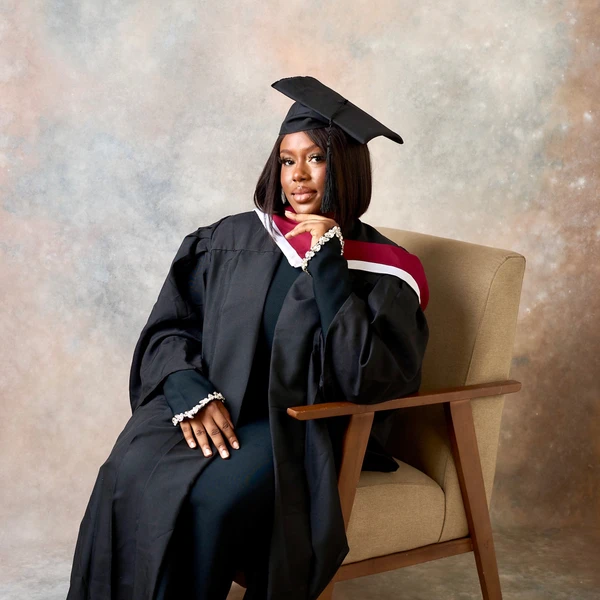
I am a Nigerian international student in the United States with a strong academic background in Human Anatomy and a clear passion for healthcare and service. I earned my Bachelor’s degree in Human Anatomy, where I developed a deep interest in understanding the human body and translating scientific knowledge into meaningful patient care.
My long-term goal is to build a career that combines clinical practice, research, and community service, particularly in improving healthcare access for underserved populations. I am driven by resilience, curiosity, and a commitment to excellence, and I actively seek opportunities that allow me to grow academically while making a positive impact beyond the classroom.
As a first-generation college student, it has been difficult navigating higher education with little to no support. Receiving scholarships is not just financial support for me but also an investment in a future healthcare professional who is determined to give back through service, leadership, and lifelong learning.
Education
La Sierra University
Bachelor's degree programMajors:
- Registered Nursing, Nursing Administration, Nursing Research and Clinical Nursing
GPA:
4
Miscellaneous
Desired degree level:
Bachelor's degree program
Graduate schools of interest:
Transfer schools of interest:
Majors of interest:
- Medicine
- Registered Nursing, Nursing Administration, Nursing Research and Clinical Nursing
Career
Dream career field:
Hospital & Health Care
Dream career goals:
Nursing
Pharmaceutical intern
Cephax pharmacy2020 – 20211 yearResort ranger
Sun outdoors2025 – 2025
Sports
Basketball
Club2018 – 20202 years
Research
Biological and Biomedical Sciences, Other
Babcock university — Research team member2024 – 2025
Public services
Advocacy
Community Outreach Initiatives — Participating in health education and awareness activities in host communities.2022 – 2025Volunteering
Nigeria Red Cross Society — First aid and emergency support volunteers2018 – 2019Volunteering
Babcock university — Volunteer committee2021 – 2025
Future Interests
Advocacy
Politics
Volunteering
Philanthropy
Entrepreneurship
Finance Your Education No-Essay Scholarship
K-POP Fan No-Essay Scholarship
Women in Nursing Scholarship
The room smelled like antiseptic and quiet worry. I remember sitting in a stiff hospital chair, watching the steady rhythm of a monitor beside my father. In that moment I felt helpless. I did not know how to ease his pain or answer the questions running through my mind.
Then a nurse walked in.
She spoke gently, explained what was happening, and adjusted the blanket around him with a kind of care that went beyond routine. The tension in the room softened. What struck me most was not just her knowledge. It was the calm confidence and compassion she carried. She made a frightening moment feel manageable.
That experience stayed with me long after we left the hospital. It planted a question in my mind. What kind of person is able to bring comfort and clarity to people during their most vulnerable moments?
As I grew older, my curiosity about the human body deepened. This curiosity led me to pursue a degree in anatomy, where I spent years studying the structure of the body and the science behind disease and healing. I loved learning how the body works, but I realized that knowledge alone was not enough for me. I wanted to use that knowledge to care for people directly.
Another experience that deepened my desire to become a nurse was volunteering in hospitals within my community. During that time, I saw firsthand how many patients suffered because the healthcare system lacked adequate resources and professionals. Some people waited long hours for care, while others arrived with conditions that had worsened simply because treatment was delayed. Those experiences exposed me to a side of healthcare that no one should have to endure. It made me realize how important
healthcare professionals are, and it strengthened my commitment to pursue nursing so I can contribute to improving the quality of care patients receive.
Nursing combines everything that motivates me. It brings together science, critical thinking, and genuine human care. Nurses are often the professionals who spend the most time with patients. They listen, advocate, educate, and provide comfort when people need it the most. That responsibility is something I deeply respect and hope to carry with integrity.
My long term goal in healthcare is to continue growing in knowledge and service, eventually working with children and families who need specialized care. I want to be the kind of nurse who makes patients feel safe, understood, and supported during difficult moments.
The nurse I met that day may never know the impact she had on me but her presence in that hospital room showed me the kind of difference one person can make. It is the same difference I hope to make in the lives of others.
Eric Maurice Brandon Memorial Scholarship
My interest in nursing began long before I understood what the profession truly meant. As a child growing up in Nigeria, I became severely ill due to inadequate nutrition. My family struggled financially and could not afford proper meals or hospital care. In desperation, my mother relied on herbal remedies in hopes of helping me recover. Unfortunately, those remedies initially worsened my condition before I eventually began to improve. That experience, even as a child, opened my eyes to how fragile life can be when healthcare is inaccessible.
As I grew older, I realized that my story was not unique. In many communities across my country, children fall ill every day without access to proper medical care. Some recover by chance, but many others are not as fortunate. Across developing nations, thousands of children die daily from preventable conditions such as malnutrition, infections, and untreated illnesses—conditions that could often be managed with basic medical care and trained healthcare professionals.
What makes these losses even more heartbreaking is that many of them are preventable. Weak healthcare systems, underfunded hospitals, and limited access to trained professionals continue to place vulnerable children at risk. In many cases, governments have turned a blind eye to the suffering of underserved communities, leaving families to navigate illness with little or no support. I have witnessed the pain this causes parents who feel powerless when their children suffer from conditions that could have been treated with timely care.
Witnessing these realities has shaped my purpose. I believe that healthcare should not be a privilege reserved for the fortunate few but a fundamental human right available to all. This belief is what drives my passion to pursue nursing.
Nursing, in many ways, is the backbone of every healthcare system. Nurses are often the first point of contact for patients, the constant presence at the bedside, and the professionals who ensure that care is delivered with both skill and compassion. Their work bridges the gap between medical knowledge and patient care. Seeing the impact that nurses can have on patients’ lives has inspired me to pursue this path.
Pediatric nursing, in particular, resonates deeply with me. Children are among the most vulnerable members of society, yet they often have the least access to adequate care. I want to be someone who understands their vulnerability and advocates for their well-being. My goal is not only to treat illness but also to provide reassurance and hope to families who feel helpless when their children are sick.
Being the first person in my family and community to pursue higher education makes this journey even more meaningful. It represents more than a personal achievement; it represents a possibility for those who come after me. I carry the hopes and encouragement of those who believe in my dream, and that responsibility motivates me to work even harder.
Pursuing nursing is more than a career choice for me—it is a calling rooted in my personal experiences and a deep desire to create change. By becoming a nurse, I hope to be part of the solution for communities that have long suffered from inadequate healthcare systems and to transform the hardships I experienced as a child into a lifelong commitment to service. My ultimate goal is to be part of a generation of healthcare professionals dedicated to improving global health outcomes. I want to help ensure that fewer families experience the pain of losing a child to preventable illness.
Michele L. Durant Scholarship
My name is Beyoncé Munachimso Nwachukwu. I was born and raised in Nigeria, in a family where education was viewed as the most powerful tool for changing the future, in a society where dreams are often deemed impossible. My upbringing was shaped by resilience, discipline, and sacrifice—values instilled in me by my parents, especially my father. Despite limited financial resources, my family emphasized academic excellence, independence, and responsibility. In my community, I saw many talented young people struggle to reach their potential due to a lack of opportunity. These early experiences shaped my determination to pursue higher education as a means to serve, make an impact, and lead transformation.
One of the most defining challenges of my life has been the loss of my father. He was my greatest source of inspiration and my strongest supporter. My father believed deeply in education and worked tirelessly—beyond his physical ability—to ensure I had access to quality schooling. Even in the face of hardship, he never compromised his belief in my potential but unfortunately, he passed away before he could see me flourish. His death was emotionally devastating and placed additional financial strain on my family. However, instead of allowing this loss to break me, I let it fuel me. When academic pressure feels overwhelming or financial limitations threaten my progress, I remember his resilience and push forward. He remains my moral compass and my motivation to excel. Every academic milestone I achieve is driven by my desire to honor his memory and ensure that his sacrifices were not in vain.
My academic goals are deeply connected to the impact I hope to make. I am pursuing higher education to become a force for positive change, particularly within immigrant and underserved communities.
My passion for nursing, specifically pediatric nursing, stems from personal experience. As a child, I fell severely ill due to inadequate nutrition. My family could not afford proper meals or hospital care, so my mother resorted to herbal remedies. Unfortunately, these remedies worsened my condition before I eventually recovered. That experience profoundly impacted me and revealed how fragile a child’s life can be when healthcare is inaccessible.
Growing up, I witnessed many families facing similar challenges. Children often bore the burden of systemic limitations due to restricted access to essential healthcare services. These situations could have been prevented with basic medical intervention or the presence of trained pediatric nurses. Repeated exposure to these realities strengthened my desire to be part of the solution.
My career choice feels like the ideal path for me because children deserve advocates who understand their vulnerability and are committed to protecting their well-being. I aspire to return to communities like the one I grew up in and instill hope in families. I want parents to know that their child’s life matters and that someone is dedicated to providing them with the care they deserve.
My commitment to excellence extends beyond personal success. I carry not only my own dreams but also the hopes of my family and the inspiration of other young African women who may feel constrained by circumstance. I want my journey to serve as proof that with opportunity, discipline, and support, women from African backgrounds can thrive, lead, and give back meaningfully to society.
Ultimately, my goal is to ensure that more families overcome hardships and children have the opportunity to grow up healthy, supported, and empowered to reach their full potential.
First Generation Scholarship For Underprivileged Students
I am a first-generation college student who crossed continents with nothing but faith, determination, and the belief that education could change my life.
I grew up understanding very early that higher education is not guaranteed but earned through sacrifice. Coming from Nigeria, I watched my family work hard to provide opportunities they never had themselves. Being the first in my family to pursue higher education meant there was no roadmap. Every application, every transcript evaluation, every visa interview, every financial decision — I had to figure it out largely on my own.
When I earned my bachelor’s degree in Anatomy, it wasn’t just a personal achievement. It was proof to my family and my community that new paths were possible. But my journey didn’t stop there. Moving to the United States to continue my education brought new challenges: navigating a new academic system, understanding financial aid without access to federal support, managing immigration status changes, and balancing tuition costs while planning for a career in healthcare.
There were moments of doubt — moments when the financial burden felt overwhelming, when I questioned whether I was asking for too much from myself. But each challenge strengthened my resilience. I learned how to advocate for myself, how to ask questions without fear, and how to seek opportunities even when they seemed out of reach.
As a future healthcare professional, my goal is not only to succeed personally but to become a visible example for other first-generation students especially those from immigrant and underrepresented backgrounds. I want them to see someone who navigated uncertainty, financial strain, and cultural transitions and still moved forward. I want to mentor students who feel intimidated by applications, scholarships, and competitive programs. I want to normalize asking for help and remind them that being first does not mean being alone.
Inspiring other first-generation students, to me, means sharing the truth of the journey, the setbacks, the rejections, perseverance, and the achievements. It means creating safe spaces where students can ask questions they feel embarrassed to ask, volunteering in mentorship programs, speaking at community events, and guiding students through scholarship and college application processes.
Higher education transformed my confidence and expanded my vision of what is possible. I plan to pay that forward by becoming both a healthcare provider and a mentor.
Being the first in my community to go to college is not just part of my story. It is my motivation. And I intend to make sure I am not the last.
WayUp “Unlock Your Potential” Scholarship
Lotus Scholarship
I was born and raised in Nigeria in a family where education was viewed as the most powerful tool for changing the future. My upbringing was shaped by values instilled in me by my parents. Despite limited financial resources, my family emphasized academics and my community reinforced this belief, as I saw many talented young people struggle to reach their potential due to a lack of opportunity. These early experiences shaped my determination to pursue my dreams and aspirations.
One of my most defining challenges has been the loss of my father. He was my greatest source of inspiration and my strongest supporter. My father believed in the importance of education and worked tirelessly to ensure I had access to quality schooling. His death placed additional financial strain on my family. However, instead of allowing this loss to break me, it fueled me. Today, when academic pressure or financial limitations feels overwhelming, I remember his resilience and push forward. He remains my moral compass and my motivation to excel. Every academic milestone I achieve is driven by the desire to honor his memory and ensure that his sacrifices were not in vain.
After completing my undergraduate education, my goal is to attend nursing school and train as a certified nurse. I am particularly interested in a career that allows me to combine healthcare with service to overlooked populations like mine. Long term, I hope to contribute to improving medical access and outcomes in low-resource communities, both home and abroad.
Receiving this scholarship would significantly ease my financial burden and allow me to focus fully on my academic and professional development. More importantly, it would bring me one step closer to fulfilling a dream that began with my father’s sacrifices and continues through my determination to succeed.
Jeannine Schroeder Women in Public Service Memorial Scholarship
One of the most urgent social issues in the world today is lack of access to quality education. Across many countries, entire communities still lack basic educational opportunities, and the consequences extend far beyond the classroom, affecting health, income, decision-making, and life expectancy. While this is a global problem, I have seen its impact firsthand in my own community, and those experiences have shaped how I choose to serve and what I hope to change through my career in the health field.
In underserved communities in my home country of Nigeria, limited access to education has created cycles of poor health awareness and preventable disease. Education is not only about literacy — it is about empowerment. Without it, many people struggle to understand medical instructions, recognize early symptoms, or seek timely care. This reality became deeply personal to me when I volunteered at a community health center after the pandemic.
During my time volunteering, I observed that many patients arrived with advanced stages of conditions that could have been treated early if they had understood basic health information. Some did not know how to read prescription labels. Others could not interpret dosage instructions or recognize warning signs that required medical attention. I met patients managing chronic illnesses without understanding what the illness was or why their treatment mattered. It was not neglect but a lack of access to education and health literacy.
Rather than seeing this as a limitation, I saw it as a call to action. I began helping staff explain medical information in simpler language and more practical terms. I assisted with basic health education conversations by discussing hygiene practices, medication use, and follow-up care in ways that were easier to understand. I learned that effective impact is not only about providing treatment, but about making knowledge accessible.
These experiences changed how I define service. Addressing educational gaps, especially health education, is one of the most powerful preventive tools we have. It reduces avoidable disease, improves treatment outcomes, and gives people more control over their well-being. My academic path in nursing is directly connected to this goal. I am working toward a career where I can combine clinical knowledge with community education and outreach, particularly in underserved populations.
I continue to address this issue by sharing health informations within my peer and community networks, supporting awareness conversations, and preparing myself professionally to serve vulnerable populations more effectively. Long term, I intend to participate in and develop community-based health education initiatives that translate medical knowledge into practical, understandable guidance.
Lack of education is a global problem, but meaningful change often begins locally. My community showed me how deeply education affects health and quality of life. That insight now guides both my studies and my purpose: to ensure that knowledge does not remain privileged, but becomes accessible and life-changing for the people who need it most.
Pierson Family Scholarship for U.S. Studies
I was born and raised in Nigeria in a family where education was viewed as the most powerful tool for changing the future. As a first-generation college student, I have faced a lot of hardships, both financially and mentally, because of the pressure that comes with carrying my dreams and that of my community.
My upbringing was shaped by resilience, discipline, and sacrifice, values instilled in me by my parents, especially my father. Despite limited financial resources, my family emphasized academic excellence and personal responsibility. My community reinforced this belief, as I saw many talented young people struggle to reach their potential due to a lack of opportunity. These early experiences shaped my determination to pursue higher education as a means of service, impact, and transformation.
My journey toward higher education in the United States was inspired by my desire to receive world-class training that combines academic rigor, research exposure, and practical application. The U.S. education system represents innovation, opportunity, and access to resources that are often unavailable in underdeveloped countries like mine. I was particularly drawn to the emphasis on critical thinking, interdisciplinary learning, and clinical exposure, elements that align with my long-term goal of becoming a Medical doctor. Studying in the United States is not just a personal achievement for me; it is an investment in the kind of impact I hope to make globally, especially in underserved communities.
One of the most defining challenges of my life has been the loss of my father. He was my greatest source of inspiration and my strongest supporter. My father believed deeply in education and worked tirelessly, beyond his physical ability, to ensure I had access to quality schooling. Even in the face of hardship, he never compromised his belief in my potential.
Unfortunately, he passed away before he could see me flourish. His death was emotionally devastating and placed additional financial strain on my family. However, instead of allowing this loss to break me, I allowed it to fuel me. Today, when academic pressure feels overwhelming or financial limitations threaten my progress, I remember his resilience and push forward. He remains my moral compass and my motivation to excel. I have since learned perseverance, self-discipline, and the importance of purpose. Every academic milestone I achieve now is driven by the desire to honor his memory and ensure that his sacrifices were not in vain.
After completing my undergraduate education, my goal is to attend medical school and train as a physician. I am particularly interested in a career that allows me to combine clinical practice with service to overlooked populations. Long term, I hope to contribute to improving healthcare access and outcomes in low-resource communities, both in the United States and globally. I want to be a doctor who not only treats illness but also advocates for equity in healthcare.
Receiving this scholarship would significantly ease my financial burden and allow me to focus fully on my academic and professional development. More importantly, it would bring me one step closer to fulfilling a dream that began with my father’s sacrifices and continues through my unwavering determination to succeed.
Hacia Delante! Scholarship
Education has always represented more than a degree to me; it has been my pathway to purpose, service, and empowerment. As an immigrant navigating life and school in the United States largely on my own, I have learned early that education is not simply about personal advancement. It is about creating seemingly impossible opportunities. Every step of my academic journey has strengthened my resolve to use my education to help my community move forward, especially those who are underserved, overlooked, and told that their dreams are too big.
Coming to the United States as an immigrant student was both a privilege and a challenge. I arrived with ambition, determination, and a deep desire to succeed, but without the security of family support or guaranteed access to resources, I had to learn how to navigate complex systems, adjust to a new culture, and persevere through financial and emotional uncertainty. These experiences shaped my character and solidified my commitment to service. They also exposed me to the realities many immigrant and undocumented families face every day like educational barriers, limited access to healthcare, and fear of deportation.
My goal is to become a nurse because nursing sits at the intersection of compassion, advocacy, and impact. Healthcare is one of the most powerful ways to uplift a community, yet it remains inaccessible to many populations. I want to be a nurse who serves not only with clinical skill, but with empathy and understanding. Someone who recognizes that behind every patient is a story shaped by circumstance, resilience, and hope. Through my education, I am preparing myself to serve communities where healthcare disparities are most visible and most harmful.
Beyond patient care, I am deeply committed to empowering young women, especially immigrants and first-generation students, who may doubt their potential because of where they come from or the obstacles they face. I know what it feels like to carry dreams that seem heavier than your circumstances allow. I want to be living proof that young women like me can be more than they think, that they can rise beyond limitations imposed by society, finances, or immigration status. As a nurse and mentor, I plan to engage in community outreach, mentorship programs, and health education initiatives that encourage young women to pursue education and believe in their capacity to lead and succeed.
My education will also allow me to advocate for equitable healthcare access. Many underserved communities lack preventive care, health education, and trusted providers who understand their lived realities. By working in these communities, I hope to bridge gaps in care, educate patients on health management, and contribute to systems that prioritize inclusion. I want to be a nurse who not only treats illness, but who empowers individuals with knowledge and reassurance, helping them feel seen and valued.
What drives me forward is the belief that progress is collective. My success is not meant to end with me—it is meant to ripple outward. Every opportunity I receive strengthens my ability to give back. Every challenge I overcome equips me to support someone else. This scholarship would not only support my education; it would be an investment in the communities I am committed to serving.
I am driven by ambition, sustained by resilience, and guided by purpose. Through education, I am building the foundation to serve, uplift, and inspire. As a future nurse, mentor, and advocate, I will use my education to help my community move toward better health, greater confidence, and a future defined not by limitation, but by possibility.
Rose Ifebigh Memorial Scholarship
My name is Beyoncé Munachimso Praise Nwachukwu, and I am a proud Igbo woman from Nigeria whose journey has been shaped by resilience, responsibility, and a strong belief in the power of education. I come from a culture where perseverance is deeply rooted, where women are taught to endure, adapt, and rise even when circumstances are unkind. My role model, Chimamanda Ngozi Adichie, is a woman who teaches young women like me to work hard, succeed, and break through. These values have guided me through some of the most defining moments of my life.
Losing my father was a turning point that reshaped my world. Beyond the emotional loss, it placed a heavy financial responsibility on my shoulders. With my mother currently unemployed, I learned early that my education would depend not only on hard work, but on determination, sacrifice, and the courage to keep moving forward when the path feels uncertain. I came to the United States on a J-1 visa with hope and faith, and through persistence, I secured admission to continue my studies here. Navigating life in a new country without family support has been one of the most challenging experiences of my life, yet also the most transformative.
Living and studying in the U.S. as an international student has forced me to grow in ways I never imagined. I have learned how to advocate for myself, adapt to unfamiliar academic systems, manage responsibilities independently, and remain focused despite constant financial pressure. Coming from a culture where community support is central, learning to stand on my own in a foreign environment strengthened my confidence and self-discipline. These experiences taught me that my background is not a limitation but a powerful lens through which I understand perseverance, gratitude, and purpose.
Through my educational journey, I have gained a deeper understanding of who I am and what I stand for. I have learned that resilience is built through consistency, and that ambition is sustained by purpose. Each challenge I have faced has reinforced my commitment to excellence. I carry not only my own dreams, but also the hopes of my family and the inspiration of other young African women who may feel constrained by circumstance.
My academic goals are deeply connected to the impact I hope to make. I am pursuing higher education to become a force for positive change, particularly within immigrant and underserved communities. I want my journey to serve as proof that with opportunity, discipline, and support, women from African backgrounds can thrive, lead, and give back meaningfully to society.
Receiving this scholarship would be life-changing. It would ease the financial burden I carry as an international student navigating college alone, allowing me to focus fully on my studies rather than constantly worrying about survival. More than financial support, this scholarship represents resilience, ambition, and potential to create impact. With this support, I can continue my education with stability and confidence and move closer to becoming a woman who not only overcomes barriers but also helps others navigate them.
Deborah Stevens Pediatric Nursing Scholarship
My interest in nursing began long before I understood the profession’s true nature. As a child, I fell severely ill due to inadequate nutrition. This eventually led to severe bloating also known as Kwashiorkor. My family could not afford proper meals or hospital care, so my mother resorted to herbal remedies. Ironically, these remedies worsened my condition before it finally improved. This experience profoundly impacted me, highlighting the fragility of a child’s life when healthcare is inaccessible.
Annually, many children die or suffer from severe medical conditions due to lack of standard healthcare in Nigeria. Children often bear the consequences of these struggles because of restricted access to essential medical services. Repeatedly witnessing these situations fueled my desire to contribute to the solution. This can be prevented by more awareness and presence of trained pediatric nurses.
Pediatric nursing feels like the ideal path for me because children deserve someone who comprehends their needs and is committed to advocating for their well-being. I aspire to return to communities like the one I grew up in and instill hope in families. I want parents to know that their child’s life holds significance, and someone is dedicated to providing them with the care they deserve.
Being the first in my family and community to pursue higher education adds another layer of significance to this journey. Achieving this milestone required immense effort, and I carry the weight of everyone who believes in me. This responsibility motivates me to work diligently, not only for myself but also for those who have never had the opportunity to pursue higher education.
Nursing offers me a chance to transform my childhood experience into a purposeful endeavor. Pediatric nursing, in particular, enables me to protect children who are facing the same challenges I once encountered. My ultimate goal is to ensure that fewer families endure the hardships I faced and that more children have the opportunity to grow up healthy and supported.
Beyond direct patient care, I hope to play a role in educating parents about basic child health, nutrition, and early warning signs of illness. Many childhood complications escalate simply because families lack proper information or timely guidance. By combining compassion with education, I want to help reduce preventable illnesses and empower families to seek appropriate care. Pediatric nursing gives me the chance to make a lasting impact, not only in hospitals but also within communities that need it the most.
Let Your Light Shine Scholarship
Legacy, to me, is not measured by wealth but by lives impacted. I plan to create a legacy rooted in service that restores hope, opens doors, and reminds people that circumstances do not define the limits of their future.
I grew up in a community where many talented and ambitious individuals abandoned their dreams because they lacked resources. Education, healthcare, and financial support were often seen as privileges rather than rights. Becoming the first person from my community to attend college placed a responsibility on my shoulders: to succeed not only for myself, but for everyone who never had the opportunity. That responsibility fuels my ambition and shapes my vision for the future.
The type of business I hope to build is unconventional but deeply intentional. I aspire to be a philanthropist. While philanthropy may not be monetized in the traditional sense, it is a powerful engine for change. My goal is to create initiatives that support education and healthcare access for underserved communities, particularly those where dreams are delayed or denied due to financial hardship. I want to fund scholarships, support aspiring students, and help families access essential medical care without fear or financial ruin.
My desired legacy is closely tied to healthcare. I envision myself as a healthcare provider who does not wait for patients to come to hospitals but instead goes into communities to offer preventive care, education, and dignity. Many health crises begin as small, treatable conditions that worsen due to neglect, lack of awareness, or cost. By bringing healthcare directly to underserved populations, I hope to reduce disparities and build trust where it has long been absent.
My drive is reflected in what I do today. While in school, I braid hair and do makeup as a means of survival. The income helps me cover daily essentials, even though it cannot come close to covering tuition. I rely heavily on scholarships, and I treat every opportunity as a stepping stone rather than a limitation. Balancing work, academics, and long-term goals has taught me discipline, sacrifice, and persistence.
I shine my light by refusing to let my circumstances dim my vision. I shine by showing others that it is possible to rise while reaching back to lift others. My ambition is not self-centered; it is community-driven. My passion lies in service, and my drive is sustained by the belief that one person’s success can become a bridge for many.
If given the opportunity, I will continue building a future where access, compassion, and purpose define success, and where my legacy lives on through the people I empower.
Arthur and Elana Panos Scholarship
From the very beginning of my life, my faith has been the foundation that carried me through doors I never imagined I would walk through. There were opportunities I did not feel qualified for, paths I never thought were meant for someone like me, yet time and time again, faith placed me in rooms I once only dreamed of. When logic told me to stop hoping, my faith encouraged me to keep going.
After my father passed away, I lost more than a parent—I lost stability, direction, and hope. He was the strongest supporter of my education, and without him, continuing school felt impossible. The financial burden became overwhelming, and I genuinely believed my academic journey had come to an end. There were moments when giving up felt like the most realistic option. However, my faith became my anchor during that season. Even when I did not know how tuition would be paid or where support would come from, I chose to apply to college by faith. That decision changed my life.
Today, it is still by faith that I remain in school. I do not have consistent financial support, and each semester comes with uncertainty and prayer. There have been times when I questioned whether I could afford to continue, but my faith has taught me resilience and courage. It has pushed me to keep striving, even when resources are limited, and to believe that my effort, paired with God’s guidance, will open the right doors.
My ambition is deeply rooted in my faith. I am driven not only by the desire to succeed but by the responsibility to honor the sacrifices that brought me this far. I want to build a career that reflects integrity, compassion, and excellence. My faith shapes how I work, how I treat others, and how I define success. It reminds me that ambition does not require compromising my values and that true success is achieved when purpose and morality align.
As I move forward in my career, my faith will continue to guide my decisions, especially in moments of pressure or uncertainty. It will remind me to remain honest, disciplined, and compassionate, even when taking shortcuts seems easier. I believe that with faith as my foundation, I can pursue success while staying grounded, ethical, and committed to making a meaningful impact—not just for myself, but for others who are hoping for a greater future.
Learner Math Lover Scholarship
I love math because it teaches me how to think critically and approach problems with patience and structure. Math challenges me to break complex problems into smaller, manageable steps and encourages logical thinking. Even when a problem feels overwhelming at first, working through it methodically gives me a strong sense of accomplishment and confidence once I find the solution.
Solving complex mathematical problems keeps my brain busy in a healthy way. When I’m focused on numbers, formulas, and patterns, my mind is fully engaged, leaving little room for overthinking or unnecessary worry. Math gives me a sense of mental clarity and control, allowing me to channel my energy into problem-solving rather than stress. In that way, it serves as both an intellectual challenge and a form of mental balance for me.
What I appreciate most about math is how deeply it connects to real life. It plays a role in nearly every field, from technology and economics to science and healthcare. Math helps us analyze data, make informed decisions, and understand patterns that shape the world around us. Seeing how math supports innovation and progress makes learning it even more meaningful to me.
Math has also taught me resilience. Making mistakes is part of the learning process, and each error pushes me to think differently and try again. Through math, I’ve learned that persistence matters just as much as intelligence. Because of this, math has become more than just a subject—it’s a powerful tool that sharpens my mind, strengthens my problem-solving skills, and prepares me for challenges both in and beyond the classroom.
Dorothy Walker Dearon Scholarship
My academic and professional goals are rooted in my lived experiences as a Black woman, a first-generation college graduate, and an immigrant navigating the STEM field. These identities have shaped both my challenges and my determination to succeed in biological sciences and public health.
Being a Black woman in STEM has not been easy. I have often found myself in spaces where I was underrepresented, underestimated, or felt the quiet pressure to prove that I belonged. These experiences, while challenging, strengthened my resilience and deepened my commitment to education. I learned early on that my presence in these spaces matters—not just for me, but for the many young women who, like me, doubt their success in science.
I am also a first-generation college student. Although my parents and many people in my community never had the opportunity to attend college, my father strongly believed in the power of education. He intentionally encouraged me to pursue a degree, seeing it as a pathway to stability, purpose, and impact. After his passing, my connection to healthcare became deeply personal. Witnessing how a failing healthcare system contributed to his loss was devastating. Still, it also ignited a stronger desire in me to understand health at its core and work toward preventing similar outcomes for others.
I earned a bachelor’s degree in Anatomy, where I developed a deep appreciation for the complexity of the human body and the biological foundations of health and disease. My academic goal is to continue building on this foundation while expanding into public health, where I can address health challenges not only at the individual level but also at the community and population level.
As an immigrant student, I face the added challenge of being unable to work while in school. Supporting myself without a source of income has been one of the hardest parts of my journey. Staying enrolled, focused, and hopeful has required constant perseverance. Scholarships have become my only source of hope for completing my education, and they represent more than financial support.
My passion for public health was further shaped when I volunteered in hospitals in my home country during the summer breaks. These facilities were often understaffed and under-resourced, and I witnessed firsthand how systemic limitations affected patient care. Those experiences pushed me to want more. I want to give back by helping improve healthcare systems and advocating for equitable access to quality care.
Despite the obstacles I face, I remain diligent and hopeful. I strive to be more than I ever dreamed of becoming, not only for myself but for the women who have lost hope of ever achieving their dreams. My goal is to one day stand as proof that persistence, education, and opportunity can change lives.
Sturz Legacy Scholarship
My name is Beyoncé Nwachukwu. I am a first-generation college student with a bachelor’s degree in Human Anatomy. My dream is to become a nurse who advocates for underprivileged and underserved communities, empowers the younger generation, and emphasizes the significance of their voices.
There was a moment during one of my summer volunteer periods in Nigeria that quietly reshaped how I understand recognition, fairness, and my own voice. At the time, I did not see it as a defining experience. It felt frustrating, disappointing, and honestly unfair. Looking back now, I realize it forced me to confront how I respond when my effort goes unseen.
I volunteered at a local healthcare facility where resources were limited and staff were overwhelmed. Volunteers were essential to keeping things running smoothly, especially during peak periods. Over time, I took on responsibilities beyond what was initially assigned to me—organizing patient records, coordinating patient flow, and informally mentoring newer volunteers so the staff could focus on clinical care. When a particularly chaotic period ended, the supervising staff publicly acknowledged one volunteer for “exceptional leadership and organization.” That volunteer was someone I had trained and worked closely with, and much of what was praised had been initiated or coordinated by me.
In that moment, I felt invisible. I remember standing there, clapping along with everyone else, while my chest tightened. I questioned whether my contribution mattered at all. I had invested time, energy, and emotional labor into that work, not for praise, but because the system depended on it. Still, seeing the credit go elsewhere hurt more than I expected.
My initial response was silence. I did not speak up, correct the narrative, or ask for clarification. Part of this was cultural—respect for hierarchy and authority is deeply ingrained, especially in professional and healthcare settings. Another part was internal. I worried that advocating for myself would be seen as selfish or disruptive, especially in a space centered on service. I convinced myself that staying quiet was the “mature” choice.
However, that silence followed me long after the moment passed. I found myself becoming less motivated, not because I wanted recognition, but because I felt replaceable and overlooked. I continued working, but something shifted internally. I began to realize that fairness matters—not only for ego, but for accountability and growth. When effort is misattributed, it distorts reality and prevents honest evaluation of who is doing what.
Eventually, I spoke privately with the volunteer who received the recognition. I did not accuse them or demand acknowledgment. Instead, I explained how I felt and how the situation had affected me. To my surprise, they were unaware of the full extent of my contributions being overlooked. They apologized sincerely and later acknowledged my role in front of others, in a more informal setting. While it did not fully undo the original moment, it gave me something more valuable: validation and clarity.
This experience forced me to confront an uncomfortable truth about myself. I had equated humility with silence and self-advocacy with arrogance. That belief limited me. I learned that advocating for oneself does not negate teamwork or service; it strengthens it. Clear communication ensures that contributions are accurately recognized, responsibilities are fairly distributed, and resentment does not quietly build beneath the surface.
Was my response right or wrong? I think it was both. My initial silence came from a place of respect and restraint, but it also came from fear—fear of conflict, fear of being misunderstood, fear of taking up space. What I would change is not my composure, but my timing. I would speak sooner, calmly, and professionally, before emotions hardened into self-doubt.
The impact of this experience has stayed with me. It has shaped how I operate in group settings, especially in service-oriented environments like healthcare. I now understand that speaking up is not about competing for praise; it is about ensuring fairness and transparency. I am more intentional about documenting my work, communicating my role clearly, and acknowledging others openly—because I know how damaging invisibility can be.
If faced with a similar situation again, I would respond differently. I would still lead with humility, but I would not erase myself in the process. I would seek clarity, ask questions, and communicate openly. Not because I need recognition, but because integrity matters. Giving credit where it is due—whether to myself or others—is part of building ethical, effective teams.
That experience taught me that growth often comes from discomfort, not validation. It taught me that my voice has value, and that using it responsibly is not selfish—it is necessary.
Kalia D. Davis Memorial Scholarship
My name is Beyonce Nwachukwu, a first generation college student and I am pursuing a path toward becoming a nurse. My passion for nursing did not begin in a classroom; it began during my summer breaks in Nigeria, where I volunteered within my local healthcare system because there were never enough hands to meet the community’s needs.
Each summer, I worked in under-resourced clinics where patient volumes were overwhelming and staff were stretched beyond capacity. Patients filled narrow hallways, nurses were stretched thin, and basic tasks that should have taken minutes often took hours. In those moments, I learned that service is not about recognition—it is about stepping in where the system falls short and lending a helping hand.
I volunteered within the healthcare system in my community, assisting medical staff with patient intake, record organization, basic support duties, and community health outreach. Though my role was not clinical, it was essential. By helping manage patient flow, offering reassurance to families, and supporting exhausted healthcare workers, I became part of a fragile system that relied heavily on volunteers to function. Each summer reinforced how deeply inequality affects access to care and how much difference even consistent, small efforts can make.
These experiences shaped my ambition. Witnessing preventable suffering caused by limited resources fueled my determination to pursue a path rooted in healthcare and service. I learned to work under pressure, adapt quickly, and remain compassionate in emotionally demanding environments. The discipline I gained through sports strengthened this commitment, teaching me endurance, teamwork, and the mental resilience required to show up every day—whether on the field or in a clinic.
My drive comes from understanding that real impact does not require perfect conditions, only commitment. Returning year after year to the same under-resourced facilities was not easy, but continuity mattered. Familiar faces trusted me, staff relied on my presence, and I saw how sustained involvement builds stronger communities. Service became more than an activity; it became a responsibility I carried with purpose.
This scholarship would allow me to continue developing the skills and education necessary to contribute meaningfully to healthcare systems that need support the most. By reducing financial barriers, it would give me the freedom to focus on learning, service, and leadership—preparing me to return to communities like mine with greater capacity to create change. This opportunity is not just an investment in my education, but in the lives I am committed to serving.
Sammy Hason, Sr. Memorial Scholarship
I plan to improve the lives of others through a career in healthcare by becoming a nurse who treats patients as people first, not just diagnoses. My goal is to provide care that addresses not only physical symptoms, but also the fear, isolation, and uncertainty that often accompany serious and rare medical conditions—especially lung diseases that affect breathing, daily function, and quality of life.
Lung disease can be especially frightening because it interferes with something most people take for granted: the ability to breathe. For patients living with chronic or rare pulmonary conditions, each breath can come with anxiety, limitations, and a constant awareness of vulnerability. Through nursing, I envision myself being present in those moments—monitoring symptoms, administering treatments, and most importantly, offering reassurance and understanding. Sometimes the most meaningful form of care is explaining what is happening in simple terms, listening without rushing, and helping patients feel less alone in their experience.
My academic background in human anatomy has given me a strong understanding of how the respiratory system functions and how disease can disrupt the body in complex ways. This foundation will allow me to approach patient care with both knowledge and curiosity, particularly when working with individuals who have rare conditions that are often misunderstood or overlooked. I am especially interested in supporting patients whose diagnoses require long-term management, frequent hospital visits, or complex treatment plans. For these individuals, consistency, trust, and advocacy are just as important as clinical skill.
Beyond bedside care, I hope to support patients with lung disease by helping them navigate the healthcare system. Many individuals with rare conditions struggle to access resources, understand their treatment options, or feel heard by providers. As a nurse, I want to be an advocate—someone who asks questions on their behalf, coordinates care across specialties, and ensures their concerns are taken seriously. I also hope to educate patients and families about symptom management, medication adherence, and lifestyle adjustments that can improve daily living and reduce hospitalizations.
In the future, I envision contributing to community health efforts and patient education programs that raise awareness about lung diseases and rare medical conditions. Education can empower patients to recognize early warning signs, seek timely care, and advocate for themselves. It can also reduce stigma and misinformation, which often surround rare illnesses.
Ultimately, my impact in healthcare will come from combining competence with compassion. I want patients to remember me not only as someone who provided care, but as someone who listened, explained, and stood beside them during vulnerable moments. Through nursing, I hope to improve lives by easing suffering, strengthening trust in healthcare, and offering dignity and hope to those facing lung disease and rare medical conditions.
James T. Godwin Memorial Scholarship
My father was a man whose courage and sense of duty shaped not only his life but the lives of everyone around him. He was a soldier, a protector, and a guide—but to me, he was simply my father: a steady presence whose laughter could fill a room, whose wisdom felt like a warm shield, and whose love was unwavering. I carry his memory with me every day, and the lessons he taught me continue to guide my choices, my ambitions, and the way I approach the world.
I remember one particular evening, years before he died in service, when he came home exhausted from a long deployment. I was ten, and I had scraped my knee while riding my bike. I ran to him, expecting him to be too tired to notice, but he scooped me up, inspected my wound, and joked, “I’ve faced bigger battles than this, kiddo, but this one looks tricky!” That small act—a moment of gentleness amid the demands of his duty—taught me that leadership and courage are not just about facing danger, but also about showing care, patience, and attention to those who depend on you.
His heroism, however, was not confined to small gestures. My father’s final act of service was the ultimate demonstration of his values. He gave his life protecting others, a sacrifice that left a hole in our family but a lasting legacy in our hearts. While grief is a constant companion, it also reminds me of the lessons he lived every day: perseverance, selflessness, and integrity. I learned that true leadership is about more than giving orders—it’s about inspiring others through your actions, taking responsibility when it’s hard, and staying committed even when no one is watching.
Inspired by him, I strive to carry forward his principles. I volunteer in my community, mentor younger students, and take on leadership roles that challenge me to be both disciplined and compassionate. Every success, every act of service, feels like a small way to honor his memory and the sacrifices he made. He taught me that ambition is not selfish; it is the fuel to create impact and support others, just as he did every day.
Even in his absence, my father’s influence is a compass. When I face difficult decisions or moments of doubt, I hear his voice reminding me to stay steady, act with purpose, and lead with both courage and empathy. His life, his service, and his sacrifice are not just stories of bravery—they are lessons I carry forward in my actions, shaping the person I am becoming and the difference I hope to make in the world.
My father’s story is now part of mine. It reminds me that leadership is not about recognition, but about service; that strength is not just physical, but moral; and that the greatest impact we can leave is in the lives we touch, the people we uplift, and the courage we inspire. In remembering him, I am inspired not only to succeed but to serve—just as he did, every day of his life.
Sgt. Albert Dono Ware Memorial Scholarship
Sgt. Albert Dono Ware’s legacy of service, sacrifice, and bravery reflects values that have quietly shaped my life through loss, resilience, and an unwavering commitment to give back. While his story provides a powerful framework, my journey has been defined by navigating grief, immigration uncertainty, and the determination to serve communities that continue to suffer under systemic challenges.
The loss of my father marked a turning point in my life. He was my foundation—my source of guidance, encouragement, and stability. When he passed, grief followed me into every aspect of my life, especially my education. Learning became heavier, not because I lacked ability, but because I was carrying loss while trying to build a future. Yet education became my anchor. Continuing my studies was an act of service to my father’s memory and a promise that the sacrifices he made would not be in vain.
That resilience carried me beyond my borders. I arrived in the United States as an exchange visitor, sponsored by my university in Nigeria, filled with hope but burdened by uncertainty. Adjusting to a new academic system, culture, and immigration structure while still grieving was isolating. The pressure of maintaining lawful status added constant fear to my daily life. One of the most defining moments of my journey was securing admission into a U.S. institution just before my visa expired. That moment demanded bravery—advocating for myself, trusting my preparation, and refusing to let time dictate the limits of my potential.
These experiences reshaped my understanding of service. To me, service is not symbolic—it is responsibility born from lived experience. This belief is why I am pursuing a career in nursing. Nursing is deeply personal to me, shaped by empathy learned through loss and strengthened by witnessing suffering firsthand. It is the path through which I can transform pain into purpose.
I come from Nigeria, where the healthcare system continues to deteriorate at an alarming rate. Hospitals struggle with inadequate funding, essential supplies are scarce, and healthcare professionals are overwhelmed and under-supported. Preventable illnesses too often result in loss of life, not because solutions do not exist, but because systems fail to reach those who need them most. Witnessing this reality has fueled my desire to give back to the community that has given me so much—my values, my resilience, and my sense of responsibility to others.
As someone who has benefitted from education, opportunity, and community support, I dream of contributing meaningfully to healthcare systems that prioritize dignity, access, and compassion. I envision a future where I can bridge clinical care, advocacy, and education—using my nursing training to serve underserved populations, promote preventive health, and support healthcare initiatives that extend beyond hospital walls.
As a member of the African diaspora in the United States, I have also seen how systemic barriers—healthcare disparities, immigration-related stress, and limited access to culturally competent care—continue to affect our communities here. Addressing these challenges requires reforms that center human dignity. Expanding community-based healthcare initiatives, supporting immigrant and internationally trained healthcare professionals, and increasing access to mental health services are critical steps forward.
Sustainable change cannot occur in isolation. Policymakers, educational institutions, healthcare systems, community organizations, and diaspora leaders must work collaboratively to design solutions rooted in lived experience. Those most affected must be included not merely as beneficiaries, but as partners in reform.
Sgt. Albert Dono Ware’s legacy reminds me that service is often quiet, sacrifice is often unseen, and bravery often means choosing to continue despite fear. My journey—from loss to resilience, from uncertainty to purpose—has shaped my commitment to nursing and my vision for meaningful change. I aspire to use my education to strengthen healthcare systems, uplift underserved communities, and honor both the legacy that inspired this reflection and the communities that continue to shape who I am.
Audra Dominguez "Be Brave" Scholarship
Growing up in a low-income household, education was never guaranteed—it was a hope we held onto tightly. As the first person in my family and community to pursue higher education, I carried not only my own dreams but the expectations of those who believed that my success could open doors for others. I understood early that my journey would not be easy, but I was determined to keep moving forward, even when the path felt uncertain.
Shortly after I completed high school, my life changed in the most painful way possible. I lost my father. Beyond the emotional devastation, his death brought sudden financial instability. He had been the main provider for our family, and his absence left us struggling to meet basic needs. At a time when I should have been preparing confidently for college, I was instead navigating grief, responsibility, and fear about my future. Plans I had worked hard to build felt fragile, and there were moments when continuing my education seemed out of reach.
Despite these challenges, I refused to give up on my goals. Continuing my education meant pushing forward while carrying both emotional and financial burdens. While many of my peers focused solely on academics, I worried constantly about tuition, living expenses, and whether I could remain enrolled. Today, I rely on student loans to continue my studies. Although these loans have made education possible, they also add stress and uncertainty about the future. Still, I choose perseverance, because education remains my strongest path toward stability and purpose.
Being a first-generation college student has shaped me deeply. Without a guide to navigate higher education, I learned through trial, persistence, and self-advocacy. Along the way, I found meaning in supporting others who felt just as lost as I once did. I organized study groups, helped classmates understand difficult concepts, and offered encouragement to peers struggling academically or emotionally. These experiences taught me that leadership is rooted in empathy and service, not position.
My desire to become a nurse is grounded in these experiences. I want to care for people during moments when they feel most vulnerable—not only treating illness, but offering comfort, understanding, and hope. I believe healing goes beyond medicine; it requires presence, compassion, and trust. Volunteering and participating in community health outreach have further strengthened my commitment to serving underserved populations and advocating for better access to care.
Receiving this scholarship would ease the financial burden that continues to shape my educational journey. More importantly, it would allow me to focus fully on my studies and service without the constant fear of financial interruption. This support would not only help me achieve my goals but would also empower me to give back to communities that need care, representation, and hope.
My journey has been shaped by loss, resilience, and determination. I am committed to turning hardship into purpose and using my education to uplift others. This scholarship is not just an investment in my education—it is an investment in the future impact I am determined to make.
Raise Me Up to DO GOOD Scholarship
Being raised in a single-parent household shaped my understanding of resilience long before I had words for it. After the loss of my father, my mother became the sole provider, emotional anchor, and source of strength for our family. Watching her navigate grief while still showing up for us taught me what quiet courage looks like. It also revealed how easily dreams can feel out of reach when resources are limited, yet how powerful determination can be when guided by love.
Growing up in this environment forced me to mature quickly. I learned responsibility early—not because I was asked to, but because circumstances required it. There were moments when I saw my mother choose between meeting basic needs and supporting my education, and those moments left a lasting impression. They taught me that opportunity is not equally distributed and that access, support, and compassion can change the course of a life.
These experiences have deeply influenced my future goals. I aspire to build a career in healthcare, specifically nursing, where service, empathy, and advocacy are essential. Being raised by a single parent made me sensitive to the unseen burdens people carry, especially caregivers who are stretched thin emotionally and financially. I want to be a healthcare professional who understands that patients are often balancing illness with responsibility, fear, and sacrifice.
My talent lies in connection—listening, understanding, and responding with care. I have learned how to offer presence in moments of uncertainty and reassurance in moments of fear. In the future, I hope to use these strengths to support individuals and families facing health challenges, particularly those from underserved or single-parent households. Beyond bedside care, I envision participating in community health initiatives, mentorship programs, and outreach efforts that provide education and encouragement to those who may feel overlooked.
I imagine a future where my education allows me to give back in meaningful ways—where I can serve as both a caregiver and an advocate. I want to help create systems that recognize the full humanity of patients and families, especially those navigating hardship with limited support. My goal is not only to treat illness, but to restore dignity, hope, and confidence.
Being raised in a single-parent household did not limit my vision for the future—it expanded it. It taught me perseverance, empathy, and purpose. I carry these lessons with me as I move forward, determined to use my talents, education, and lived experiences to do good and help others in ways that reflect the strength and sacrifice that shaped me.
Ella's Gift
My experience with mental health has been shaped by loss, responsibility, and the pressure to remain strong in circumstances that often felt overwhelming. After losing my father shortly after I graduated from high school, my life changed in ways I was unprepared for. Grief became a constant presence, quietly influencing my thoughts, motivation, and emotional well-being. At the same time, financial instability placed added strain on my family, forcing me to navigate adulthood, education, and emotional healing all at once.
Mental health challenges did not announce themselves loudly. Instead, they appeared through anxiety, persistent sadness, and moments of emotional exhaustion. I often felt torn between honoring my grief and pushing forward academically, unsure of how to do both without losing myself. There were periods when the uncertainty of my future felt suffocating, especially as I faced the realities of paying for school and supporting myself through student loans.
While I have not personally struggled with substance abuse, I have witnessed its impact within my broader community as a coping mechanism for unmanaged grief, stress, and hopelessness. Seeing how untreated mental health challenges can lead individuals toward harmful coping strategies strengthened my commitment to healthier paths of healing. It also taught me the importance of addressing emotional pain early, honestly, and with support.
Personal growth, for me, began with acknowledging that strength does not mean silence. I learned to name my emotions, seek guidance, and rely on faith and community rather than isolating myself. These steps were not immediate or easy, but they were necessary. Over time, I developed healthier coping mechanisms, including structured routines, reflection, goal-setting, and seeking support when needed. I learned to give myself permission to heal at my own pace while still striving toward my goals.
My educational journey has been closely tied to this growth. Earning a degree in Human Anatomy strengthened my academic confidence and reminded me that even during emotional hardship, I am capable of discipline and achievement. My goal is to continue my education in nursing, a field that aligns deeply with my desire to care for others holistically—mind, body, and spirit. I am particularly motivated to support patients who are navigating illness alongside emotional or psychological distress.
Managing my recovery is an ongoing, intentional process. My plan includes maintaining strong support systems, prioritizing mental wellness, and continuing faith-based reflection as a source of grounding and resilience. I also commit to recognizing early signs of emotional burnout and addressing them proactively through rest, communication, and self-awareness. In my academic and professional life, I plan to seek environments that value mental health, balance, and compassion.
My experiences with mental health challenges have not derailed my goals; they have clarified them. They have taught me empathy, patience, and the importance of meeting people where they are. As I continue my education and healing journey, I carry a renewed sense of purpose—to grow, to serve, and to create a life rooted in resilience rather than survival alone.
This scholarship deeply resonates with me because it recognizes that healing and growth are not linear processes. It acknowledges that students are more than their academic records—we are people carrying lived experiences, losses, and ongoing recovery journeys. As someone who has navigated grief, financial hardship, and mental health challenges while remaining committed to education, this scholarship represents understanding rather than judgment. Receiving this support would not only ease the financial burden of my education but would also affirm that my efforts to prioritize healing, resilience, and personal growth matter. It would allow me to continue my recovery with stability and pursue my educational goals with renewed focus and hope.
Rev. and Mrs. E B Dunbar Scholarship
My pursuit of higher education has been shaped by obstacles that tested my resilience long before I ever stepped into a classroom. Growing up in a low-income household, access to education was never guaranteed—it was something that required constant sacrifice, faith, and determination. These challenges intensified after the loss of my father shortly after I completed high school. His passing not only left an emotional void but also removed the financial and emotional support that made my educational dreams feel attainable.
In the period following his death, college became uncertain. Tuition, housing, and basic academic expenses felt overwhelming, and there were moments when continuing my education seemed impossible. I carried the weight of grief while also feeling responsible for helping my family stay afloat. Balancing these realities required resilience I did not yet fully understand, but I knew that giving up on my education would mean giving up on the future my father believed I could achieve.
Another obstacle has been navigating higher education as a student with limited financial resources. I have relied on scholarships, loans, and the generosity of others to remain enrolled, often making academic decisions based not on passion alone but on affordability. While this reality has been stressful, it has also strengthened my discipline, time management, and appreciation for every educational opportunity I receive.
Despite these challenges, I have remained committed to my academic goals by seeking support, advocating for myself, and continuing to push forward even when the path felt uncertain. Each obstacle has taught me that education is not just about personal achievement—it is about perseverance, responsibility, and purpose.
In the future, I plan to use my education to give back to my community through a career in healthcare, particularly nursing. I want to serve individuals and families who face the same barriers I once did—financial hardship, lack of access to care, and emotional vulnerability. Beyond clinical care, I hope to engage in community outreach, health education, and mentorship for students from underserved backgrounds, especially those navigating higher education without strong support systems.
I believe that education carries responsibility. The knowledge, skills, and compassion I gain will not stop with me. I intend to return that investment by advocating for accessible care, supporting future students, and creating spaces where people feel seen and supported. My obstacles did not deter my pursuit of higher education; they shaped the purpose behind it. Through resilience and service, I aim to turn hardship into impact.
Eden Alaine Memorial Scholarship
The loss of my father is the defining experience of my life. Before he passed away, he was my sense of safety, my source of encouragement, and the person who made the future feel possible even when circumstances were difficult. When he died shortly after I finished high school, everything changed at once. I was no longer just grieving a parent—I was grieving stability, guidance, and the version of my life I had imagined.
Growing up in a low-income household, my father’s presence had always been a quiet reassurance. Even when resources were limited, his belief in me was not. He spoke to me about resilience, responsibility, and the value of education, not as abstract ideas, but as tools for survival and growth. Losing him at such a pivotal moment left me feeling unanchored. I was stepping into adulthood while still trying to understand how to exist in a world without him.
His death disrupted my educational journey in very real ways. College, which had once felt like the natural next step, suddenly became uncertain. Financial strain intensified, and emotional exhaustion made it difficult to focus on planning for the future. There were moments when grief felt paralyzing—when moving forward felt like betraying the pain I carried. At the same time, I felt pressure to be strong for my family, especially my mother, even when I felt broken inside.
Yet, in the midst of loss, my father’s influence did not disappear. It became internal. I found myself asking what he would expect of me—not in terms of perfection, but perseverance. Slowly, I learned to carry both grief and ambition at the same time. I learned that honoring him did not mean standing still; it meant continuing to strive, even when the path forward was unclear.
This experience has shaped me into someone deeply empathetic and resilient. I am more aware of the silent struggles people carry and more patient with both myself and others. It has also shaped my commitment to healthcare and service. Loss taught me how vulnerable people are during moments of transition and pain, and it inspired me to pursue a career where presence, compassion, and care truly matter.
Even today, the impact of losing my father remains. Grief does not disappear—it evolves. There are moments when his absence still feels heavy, but it is accompanied by gratitude for the values he instilled in me. His life, and his loss, continue to guide my decisions, my goals, and my sense of purpose.
Losing my father reshaped my life in ways I never wanted but have come to understand. It forced me to grow up quickly, to find strength I did not know I had, and to pursue my dreams with intention. Everything I am becoming carries a part of him with me.
Skin, Bones, Hearts & Private Parts Scholarship for Nurse Practitioners, Physician Assistants, and Registered Nurse Students
Growing up in Nigeria, I learned very early what it meant to live in a country where access to quality healthcare is not guaranteed. Hospitals were often overcrowded, understaffed, and under-resourced. Many families, including mine, hesitated before seeking medical care—not because they did not value health, but because the cost, distance, and uncertainty of receiving proper treatment made even simple illnesses feel overwhelming. I witnessed people suffer from conditions that could have been managed or prevented if the healthcare system had been stronger. These experiences stayed with me and quietly shaped my desire to be part of the solution.
What stood out to me most during hospital visits was not just the lack of equipment or medication, but the emotional toll it took on patients and families. In moments of fear and uncertainty, nurses were often the ones providing comfort, reassurance, and hope. Even with limited resources, they showed compassion, resilience, and dedication. Watching nurses advocate for patients, explain treatments, and remain present during the most vulnerable moments of people’s lives inspired me deeply. I began to understand that nursing is not only a profession, but a calling rooted in service and humanity.
My motivation to pursue nursing is also closely tied to my personal journey as the first person in my family to attend college. Coming from a background where higher education was not always seen as attainable, earning a place in college felt both like a privilege and a responsibility. I carry not only my own dreams, but also the hopes of my family, who sacrificed and believed in me even when the path seemed uncertain. Their support fuels my determination to succeed and to use my education to create meaningful change. Every challenge I face reminds me of where I come from and why I must keep going. I want to become a nurse who understands hardship, who listens without judgment, and who treats every patient with dignity—regardless of their background or circumstances. I believe my experiences have given me empathy that cannot be taught in a classroom.
Pursuing a career in nursing is my way of giving back to the communities that shaped me and honoring the sacrifices that made my education possible. I hope to contribute to improving healthcare outcomes, advocate for underserved populations, and one day help strengthen healthcare systems both locally and globally. Nursing represents my commitment to compassion, service, and the belief that quality healthcare should never be a privilege, but a right.
In summary, I am applying for this scholarship because it represents a chance to transform my ambition into real-world impact. I bring with me a unique perspective, shaped by resilience, community responsibility, and a commitment to leadership and service. I am ready to dedicate myself fully to my studies and to a life of helping others—especially those who have nowhere else to turn. Selecting me for this scholarship is not just supporting my education; it is empowering someone determined to light a path for others, both locally and globally.
Elijah's Helping Hand Scholarship Award
Mental health has shaped my life in quiet but powerful ways. For me, it has not always looked like a single defining moment, but rather a series of heavy seasons marked by grief, uncertainty, and emotional exhaustion. After the loss of my father, the weight of responsibility and instability that followed deeply affected my emotional well-being. I was still grieving while trying to hold my life together, often without the space or resources to fully process what I was feeling.
As a student from a low-income background, the pressure to succeed while facing financial insecurity added to that emotional strain. There were moments when anxiety kept me awake at night, replaying unanswered questions about my future. I learned how easy it is for mental health struggles to go unnoticed, especially when you appear “strong” on the outside. I often felt the need to push forward without acknowledging my own pain, believing that slowing down meant falling behind.
Although I have not personally attempted suicide, I have felt the emotional closeness of despair—the quiet thoughts that ask whether things will ever get easier, or whether the effort will be worth it. Those moments taught me how thin the line can be between coping and breaking, and how important it is to have support, understanding, and compassion during times of vulnerability.
What helped me move forward was learning that mental health deserves care just as much as physical health. Faith, reflection, and the support of my community allowed me to name my feelings rather than suppress them. Over time, I learned healthier ways to cope, including reaching out for help, speaking openly about my struggles, and giving myself permission to rest without guilt. These experiences reshaped how I view resilience—not as the absence of pain, but as the willingness to seek healing.
Being impacted by mental health challenges has influenced the way I show up for others. I am more patient, more attentive, and more aware of the emotional layers people carry silently. This awareness has strengthened my desire to work in healthcare, where I can contribute to an environment that treats mental well-being as essential, not secondary.
Today, I see my experiences not as weaknesses, but as sources of empathy and purpose. They have taught me the importance of listening, checking in, and creating spaces where people feel safe to be honest about their struggles. As I continue my education and personal growth, I carry these lessons with me, committed to supporting others with the compassion I once needed myself.
Hearts on Sleeves, Minds in College Scholarship
For a long time, my voice existed quietly inside me. I had thoughts, fears, hopes, and opinions, but I often kept them to myself. Not because I lacked something to say, but because I was unsure my voice mattered. Growing up in a low-income household and later navigating life as a student carrying grief, responsibility, and financial uncertainty, I learned early to survive by being silent, not asking for too much, and making myself small when situations felt overwhelming.
One of the moments that most shaped my relationship with my voice came shortly after my father passed away. I had just finished high school, and everything I thought I knew about my future felt fragile. College was my dream, but in reality we could not afford it. At home, the atmosphere was heavy with loss and worry. My mother was grieving while trying to hold our family together, and I felt guilty even mentioning school. Every time I thought about speaking up, I swallowed the words. I was afraid of adding to her burden.
But silence came at a cost. The longer I stayed quiet, the more invisible my dreams felt. Eventually, I reached a point where staying silent hurt more than speaking up. Using my voice in that moment did not come easily or confidently. It came with fear and uncertainty. I applied to the school I dreamed of attending with faith. When I finally summoned courage to tell my mother, her sadness reflected my own fear.
Yet, that moment taught me something powerful: using your voice does not mean having all the answers. It means choosing honesty over fear. What followed surprised me. My community stepped in. People listened. Support came from places I never expected. And for the first time, I realized that silence had been protecting me from discomfort, but it had also been preventing others from seeing my need and my potential.
That experience changed how I view communication. I learned that confidence is not loudness—it is clarity. It is understanding what matters to you enough to express it, even when the outcome is uncertain. I also learned that using your voice invites connection. It allows people to meet you where you are, rather than guessing from a distance.
Since then, I have continued to grow into my voice slowly and intentionally. In academic spaces, I have learned to ask questions instead of assuming I should already know the answers. I have spoken up to support classmates who felt overwhelmed or unsure, offering help not because I had everything figured out, but because I understood what it felt like to struggle quietly.
As I pursue a career in nursing, the importance of voice has taken on even deeper meaning. In healthcare, communication can be the difference between fear and reassurance, confusion and understanding. I want to be a nurse who listens closely and speaks with compassion—someone who advocates for patients who feel unheard or powerless. My experiences have taught me that many people suffer silently, not because they lack needs, but because they do not feel safe expressing them. I want to be a voice that creates that safety.
Looking ahead, I hope to use my voice to create impact beyond individual interactions. I want to advocate for accessible care, support underserved communities, and mentor students who feel unsure of their place in higher education. I know what it feels like to doubt your worth, to hesitate before speaking, and to carry dreams quietly because you fear they are too heavy for others to hear.
Kristinspiration Scholarship
Growing up in Nigeria, I learned very early what it meant to live in a country where access to quality healthcare is not guaranteed. Hospitals were often overcrowded, understaffed, and under-resourced. Many families, including mine, hesitated before seeking medical care—not because they did not value health, but because the cost, distance, and uncertainty of receiving proper treatment made even simple illnesses feel overwhelming. I witnessed people suffer from conditions that could have been managed or prevented if the healthcare system had been stronger. These experiences stayed with me and quietly shaped my desire to be part of the solution.
What stood out to me most during hospital visits was not just the lack of equipment or medication, but the emotional toll it took on patients and families. In moments of fear and uncertainty, nurses were often the ones providing comfort, reassurance, and hope. Even with limited resources, they showed compassion, resilience, and dedication. Watching nurses advocate for patients, explain treatments, and remain present during the most vulnerable moments of people’s lives inspired me deeply. I began to understand that nursing is not only a profession, but a calling rooted in service and humanity.
My motivation to pursue nursing is also closely tied to my personal journey as the first person in my family to attend college. Coming from a background where higher education was not always seen as attainable, earning a place in college felt both like a privilege and a responsibility. I carry not only my own dreams, but also the hopes of my family, who sacrificed and believed in me even when the path seemed uncertain. Their support fuels my determination to succeed and to use my education to create meaningful change. Every challenge I face reminds me of where I come from and why I must keep going. I want to become a nurse who understands hardship, who listens without judgment, and who treats every patient with dignity—regardless of their background or circumstances. I believe my experiences have given me empathy that cannot be taught in a classroom.
Pursuing a career in nursing is my way of giving back to the communities that shaped me and honoring the sacrifices that made my education possible. I hope to contribute to improving healthcare outcomes, advocate for underserved populations, and one day help strengthen healthcare systems both locally and globally. Nursing represents my commitment to compassion, service, and the belief that quality healthcare should never be a privilege, but a right.
Christina Taylese Singh Memorial Scholarship
The first time I understood what it truly meant to need healthcare was not in a classroom, but in a hospital where resources were scarce and hope often arrived too late. Growing up in Nigeria, I watched loved ones struggle with preventable illnesses, not because treatments did not exist, but because access to timely and compassionate care did. Those early experiences planted a quiet but persistent question in my heart: what if someone had been there to help sooner? That question has shaped who I am today and the path I am determined to follow.
My name is Beyoncé Nwachukwu, and I am a healthcare-focused student with a strong academic background in human anatomy. Studying anatomy deepened my understanding of the human body, but more importantly, it showed me how closely science and compassion must work together to truly heal. Knowledge alone cannot comfort a frightened patient or advocate for someone whose voice is overlooked. That realization led me to choose nursing as the field where I believe I can make the greatest impact.
I plan to become a nurse because nurses are often the first point of trust for patients and families. They are present in moments of fear, pain, and recovery, translating complex medical decisions into human understanding. Having witnessed under-resourced healthcare systems firsthand, I am driven to be the kind of nurse who not only delivers clinical care but also dignity, education, and reassurance. I want patients to feel seen, heard, and safe, regardless of their background or financial status.
My journey to the United States has brought me closer to this dream, but it has also revealed the financial challenges that come with pursuing quality education. Despite these obstacles, my commitment has not wavered. Each course I complete and each challenge I overcome strengthens my resolve to serve vulnerable communities and eventually contribute to improving healthcare access both locally and globally.
Healthcare, to me, is not just a career—it is a responsibility. By becoming a nurse, I hope to bridge gaps in care, advocate for patients who cannot advocate for themselves, and be the helping hand I once wished had been there.
Ultimately, my journey into healthcare is rooted in gratitude, resilience, and purpose. Every obstacle I have faced—financial strain, cultural transitions, and the emotional weight of leaving home—has reinforced my belief that this path chose me as much as I chose it. I carry with me the stories of those who were denied timely care and the hope of those who believed healing was still possible. As I move forward, I am committed to using my education not only to treat illness, but to restore trust in healthcare systems and inspire hope where it has been lost. I want my career to reflect service, empathy, and excellence, and to stand as proof that with opportunity and support, one person can become a source of healing for many.
American Dream Scholarship
My name is Beyonce Nwachukwu a Nigerian, and I moved to the United States with a single-minded determination to pursue my education and build a future where I can make a meaningful impact. As a first-generation college student from my community, I carry not only my own dreams but also the hopes of everyone who looks up to me, relying on me to succeed. Being the first in my family to navigate higher education comes with immense responsibility—I must excel so I can give back to the community that nurtured me and instilled in me the values of perseverance, resilience, and compassion.
My dream is to become a nurse and dedicate my life to helping those in need. Growing up in my home country, I witnessed firsthand the devastating impact of poor healthcare. Too many lives were lost, and too many families suffered because access to quality medical care was limited or unaffordable. These experiences ignited a deep sense of purpose in me: I wanted to dedicate my life to improving healthcare, providing compassionate care, and advocating for those who cannot advocate for themselves. The idea of being able to make a real difference in people’s lives has motivated me to pursue this path relentlessly, despite the many challenges I face as an international student in a new country.
Arriving in the United States, I was confronted with the complexities of navigating an unfamiliar educational system without any support. Every step—from understanding college requirements to managing life as an international student—has been a challenge. The financial burden is immense. Since the loss of my father, the responsibility of funding my education has fallen entirely on my shoulders. Student loans and scholarships are the only ways I can continue my studies, making every financial opportunity critically important. While I am living my dream and working toward a career where I can help others, the weight of these financial obligations is a constant reminder of the sacrifices I must make to achieve my goals.
Despite these obstacles, I remain determined and focused. Like those who have inspired me, I approach every challenge with courage, resilience, and resourcefulness. I am deeply committed to my studies in nursing, striving to become an expert in my field so that I can serve patients with excellence, empathy, and dedication. Receiving this scholarship would not only ease the financial strain I face but also empower me to continue pursuing my education and achieving my dream of providing care to those who need it most.
I am determined to break barriers as a first-generation student, succeed against the odds, and give back to the community that has invested in my potential. My journey embodies the American Dream: with hard work, perseverance, and support, I am transforming my aspirations into reality.
Brent Gordon Foundation Scholarship
Beyoncé Nwachukwu. Writing my name still feels like an act of grounding, a reminder that I am standing, even after losing the man who was my foundation—my father. His death did not just take a parent from me; it reshaped my life in ways I am still learning to navigate. It altered my sense of security, my emotional balance, and my understanding of responsibility far earlier than I was prepared for.
Financially, his passing created an immediate and overwhelming gap. My father was the primary source of stability in our household. He believed deeply in education and worked tirelessly to ensure that my dreams did not end where his strength did. When he died, that support disappeared overnight. School fees, daily necessities, and future plans suddenly became uncertain. I was forced to confront realities that many of my peers never had to think about—how to continue my education without the safety net I once relied on. The pressure to survive while still striving to succeed became a constant weight I carried quietly.
Emotionally, the loss was devastating. My father was my encouragement, my reassurance, and my example of resilience. Losing him left a silence that no words could fill. There were moments when grief felt paralyzing—days when getting out of bed felt like a battle, and nights when the fear of failing without him kept me awake. I mourned not only who he was, but who he would never get the chance to see me become. His absence has been a persistent ache, one that reshaped how I view love, time, and vulnerability.
Mentally, his death forced me to grow up faster than I wanted to. I learned how to carry pain without letting it consume me. I learned discipline through hardship and strength through exhaustion. There were moments of doubt when I questioned whether continuing my academic journey was realistic, but giving up felt like losing him all over again. Instead, I chose to keep going—for him, and for the future he believed I deserved.
Despite the loss, my father’s values remain alive in me. His sacrifice fuels my determination to succeed, not just for personal achievement, but to honor the legacy he left behind. This scholarship is more than financial support to me; it is a lifeline, a validation that my perseverance matters. My journey has been shaped by loss, but also by resilience. I carry my father with me in every step forward, and I am committed to turning my pain into purpose.
Zedikiah Randolph Memorial Scholarship
I am a dedicated and ambitious individual with a profound interest in healthcare, particularly in nursing, because I have witnessed firsthand how access to quality care can—or cannot—shape lives. Growing up in Nigeria, I observed the struggles of families and communities who faced limited medical resources, overcrowded hospitals, and inadequate patient education. These experiences ignited in me a passion to make a meaningful difference in people’s lives through healthcare. Being the first person in my family to pursue higher education, I carry not only my personal dreams but also the hopes of my family and community. My academic journey in anatomy has given me a strong foundation, but I realized that to directly impact patients’ lives, nursing is where I can combine science with compassion.
I chose nursing because it allows me to serve both on an individual and systemic level. It is a field where I can educate patients about their health, advocate for vulnerable populations, and implement care that improves outcomes. Every patient I interact with is an opportunity to make a difference, whether through guidance, comfort, or hands-on care. I am particularly passionate about mentoring and supporting students who aspire to enter healthcare, especially those from underrepresented backgrounds. Representation matters, and seeing someone who looks like you or comes from a similar background succeed can change how young people perceive what is possible.
In my program, international students like myself and people of color are still significantly underrepresented, particularly in leadership and advanced practice roles. I see this not as a barrier but as a responsibility: by excelling academically and professionally, I can show that perseverance, dedication, and a willingness to learn can break stereotypes and open doors for others. I aspire to inspire the next generation by sharing my story, highlighting the obstacles I have overcome, and mentoring aspiring healthcare professionals. I want young students to know that pursuing a career in nursing—or any healthcare field—is not only achievable but vital.
Through my future career, I hope to contribute to a healthcare system that is more equitable, compassionate, and informed. By combining my knowledge, personal experiences, and commitment to service, I aim to uplift my community, advocate for underserved populations, and encourage the next generation of healthcare professionals to continue increasing representation and shaping the future of medicine. For me, nursing is not just a career—it is a lifelong mission to serve, educate, and inspire my community.
Losinger Nursing Scholarship
1. Growing up in Nigeria, Africa, I learned very early what it meant to live in a country where access to quality healthcare is not guaranteed. Hospitals were often overcrowded, understaffed, and under-resourced. Many families, including mine, hesitated before seeking medical care—not because they did not value health, but because the cost, distance, and uncertainty of receiving proper treatment made even simple illnesses feel overwhelming. I witnessed people suffer from conditions that could have been managed or prevented if the healthcare system had been stronger. These experiences stayed with me and quietly shaped my desire to be part of the solution.
What stood out to me most during hospital visits was not just the lack of equipment or medication, but the emotional toll it took on patients and families. In moments of fear and uncertainty, nurses were often the ones providing comfort, reassurance, and hope. Even with limited resources, they showed compassion, resilience, and dedication. Watching nurses advocate for patients, explain treatments, and remain present during the most vulnerable moments of people’s lives inspired me deeply. I began to understand that nursing is not only a profession, but a calling rooted in service and humanity.
My motivation to pursue nursing is also closely tied to my personal journey as the first person in my family to attend college. Coming from a background where higher education was not always seen as attainable, earning a place in college felt both like a privilege and a responsibility. I carry not only my own dreams, but also the hopes of my family, who sacrificed and believed in me even when the path seemed uncertain. Their support fuels my determination to succeed and to use my education to create meaningful change.
2. To me, human touch is more than a physical gesture; it is a language of care, comfort, and connection. It is the gentle hand on a shoulder, the reassuring touch of a hand during a difficult procedure, or the simple act of holding a patient’s hand while they face uncertainty. Human touch communicates empathy and presence in a way words often cannot. It tells a patient, “You are seen, you are heard, and you are not alone.”
In healthcare, human touch has the power to heal beyond the body. A comforting touch can reduce anxiety, ease fear, and provide a sense of stability in moments of vulnerability. Patients are often faced with stress, pain, or uncertainty, and while medicine addresses the physical symptoms, human touch addresses the emotional and psychological needs that are equally important. It creates trust between caregiver and patient, fostering a sense of safety that allows patients to be more receptive to treatment and care.
My understanding of human touch has been shaped by my experiences with community and family, as well as my academic journey in healthcare. I have witnessed how a simple gesture of empathy can transform someone’s experience—from fear and isolation to hope and reassurance. As I pursue a career in nursing, I aspire to integrate this principle into my practice. I want every patient to feel that their humanity matters, that their emotional well-being is as valued as their physical health.
Ultimately, human touch is a bridge between science and compassion. It reminds me that while medical knowledge is essential, the ability to connect, comfort, and understand is equally vital. In patient care, touch is a tool of healing that transcends diagnosis, procedure, or treatment—it is a language of compassion that can make even the most difficult moments bearable. To me, this is the heart of nursing: not just treating the body, but caring for the person as a whole.
Mighty Memorial Scholarship
Growing up in Nigeria, I learned very early what it meant to live in a country where access to quality healthcare is not guaranteed. Hospitals were often overcrowded, understaffed, and under-resourced. Many families, including mine, hesitated before seeking medical care—not because they did not value health, but because the cost, distance, and uncertainty of receiving proper treatment made even simple illnesses feel overwhelming. I witnessed people suffer from conditions that could have been managed or prevented if the healthcare system had been stronger. These experiences stayed with me and quietly shaped my desire to be part of the solution.
What stood out to me most during hospital visits was not just the lack of equipment or medication, but the emotional toll it took on patients and families. In moments of fear and uncertainty, nurses were often the ones providing comfort, reassurance, and hope. Even with limited resources, they showed compassion, resilience, and dedication. Watching nurses advocate for patients, explain treatments, and remain present during the most vulnerable moments of people’s lives inspired me deeply. I began to understand that nursing is not only a profession, but a calling rooted in service and humanity.
My motivation to pursue nursing is also closely tied to my personal journey as the first person in my family to attend college. Coming from a background where higher education was not always seen as attainable, earning a place in college felt both like a privilege and a responsibility. I carry not only my own dreams, but also the hopes of my family, who sacrificed and believed in me even when the path seemed uncertain. Their support fuels my determination to succeed and to use my education to create meaningful change.
Being a first-generation college student has taught me resilience, discipline, and gratitude. Every challenge I face reminds me of where I come from and why I must keep going. I want to become a nurse who understands hardship, who listens without judgment, and who treats every patient with dignity—regardless of their background or circumstances. I believe my experiences have given me empathy that cannot be taught in a classroom.
Pursuing a career in nursing is my way of giving back to the communities that shaped me and honoring the sacrifices that made my education possible. I hope to contribute to improving healthcare outcomes, advocate for underserved populations, and one day help strengthen healthcare systems both locally and globally. Nursing represents my commitment to compassion, service, and the belief that quality healthcare should never be a privilege, but a right.
Nabi Nicole Grant Memorial Scholarship
The summer after high school was supposed to be the beginning of a new chapter, filled with excitement, hope, and the promise of the future. Instead, it was one of the hardest moments of my life. My father had just passed away, leaving a void that was emotional, financial, and deeply painful. Our family, which had already struggled to make ends meet, now faced uncertainty that seemed almost impossible to overcome. College, which had always been my dream, suddenly felt completely out of reach. How could I imagine pursuing higher education when we didn’t even have the money to cover tuition, books, or basic living expenses?
But even in the midst of grief and fear, something inside me refused to give up. I felt a quiet, persistent nudge—a voice telling me to try, to trust, to believe. It was faith. Faith that even when everything seemed impossible, a way would be made. And so, against every practical instinct and without my mother’s initial consent, I applied to the college I had dreamed of attending. I knew it was a risk. I knew there were no guarantees. I knew that telling my mother would break her heart, and it did. When I finally shared that I had been admitted, she was heartbroken. How could we pay for it? How could we possibly afford this dream? Her sadness reflected my own fear, and I felt the weight of responsibility heavier than ever.
Yet, in that moment, I realized that faith is not just about quiet hope—it is about action. It is about moving forward even when the path is unclear. And, miraculously, a way was made. My community, people who had watched me grow and understood the hardships my family faced, came together in ways I could never have imagined. Through their generosity, I was able to accept the admission and take the first step toward the future I had always dreamed of.
Looking back, I understand that faith is not always about having control or seeing the entire path ahead—it is about trusting in something greater than yourself, even when circumstances seem impossible. That experience taught me resilience, hope, and the power of trusting in God’s timing. It strengthened my determination to pursue my goals, inspired me to give back to others, and deepened my understanding of the power of perseverance and community.
And that same faith is moving me now to apply for this scholarship, even though I don’t know the outcome. I believe that by trusting, acting, and giving my best, doors will open, and I will be able to continue pursuing my dreams, just as faith once guided me through one of the most difficult moments of my life.
Harvest Scholarship for Women Dreamers
I am a woman driven by a dream that feels both deeply inspiring and, at times, painfully out of reach. My dream is to build a life through education that allows me to care for others, uplift my community, and rewrite the story that circumstances tried to define for me. It is a dream shaped by perseverance, quiet determination, and the belief that women deserve the space and support to grow into who they are meant to become.
As a woman pursuing higher education with limited financial resources, my journey has required resilience at every step. There have been moments when continuing my education felt uncertain, when the gap between where I am and where I hope to be seemed overwhelming. Yet my drive has never faded. I continue because I believe that my purpose is bigger than my obstacles, and that my voice, work, and compassion matter in a world where many women’s dreams are left unsupported.
My ambition is rooted in service. I aspire to work in healthcare, where I can provide care that goes beyond physical treatment and addresses emotional and human needs as well. I want to be the kind of professional who listens, who offers reassurance, and who brings dignity to moments of vulnerability. This vision did not come from privilege, but from lived experience—seeing how lack of access and support can quietly limit people’s lives, especially women.
Being a woman dreamer means carrying hope even when the path forward is unclear. It means choosing persistence when doubt appears and believing in your potential when resources are scarce. I have learned to push forward even when the dream feels distant, trusting that each step—no matter how small—is part of something meaningful. My education represents not just personal advancement, but the chance to create impact and open doors for others who may feel invisible or unheard.
The Harvest Scholarship represents exactly what many women like me need: belief. Belief that dreams are valid even when they come from difficult beginnings. Belief that ambition does not need to be loud to be powerful. With this support, I would be able to focus fully on my education and continue building the future I envision—one defined by purpose, compassion, and service.
I do not dream because it is easy. I dream because it is necessary. Receiving this scholarship would not only bring me closer to my goals, but would affirm that women who dare to hope, even when the odds are stacked against them, deserve the chance to grow, lead, and make lasting impact.
Dream BIG, Rise HIGHER Scholarship
Growing up as the first person in my family and community to pursue higher education has been both an honor and a heavy responsibility. In my home, education was seen as hope—hope for stability, growth, and a future different from the one shaped by financial struggle. Coming from a low-income background, I learned early that opportunities were not easily accessible, and if I wanted something more, I would have to work for it with determination and patience. Still, I held tightly to my dreams, believing that education could change not only my life, but the lives of those who would come after me.
Shortly after I finished high school, my world changed in a way I never anticipated. I lost my father. His death left a deep emotional wound, but it also brought immediate financial hardship. As the main provider for my family, his absence created uncertainty and fear at a time when I was preparing to take my next step into higher education. Suddenly, plans I had worked so hard to build felt fragile. Grieving while trying to stay focused on my education was overwhelming, and there were moments when I felt completely lost.
Without financial stability, continuing my education became a constant struggle. While others were able to focus solely on school, I worried about tuition, basic needs, and whether I would be able to stay enrolled. The emotional weight of losing my father made it difficult to concentrate, and there were times when exhaustion and doubt took over. Yet even during my hardest moments, I refused to let go of my dream. I knew that giving up would only allow my circumstances to define my future, and I was determined not to let that happen.
Today, the impact of that loss and my family’s financial situation still follows me. I am now dependent on student loans to continue my education, and while they have made it possible for me to stay in school, they also bring constant worry about the future. Carrying academic pressure alongside financial stress is not easy, but I remind myself daily why I started. Every step forward is a step toward stability, purpose, and the ability to help others.
Being a first-generation college student has meant navigating unfamiliar systems without guidance. There was no roadmap to follow, and I often had to learn through trial and error. This experience pushed me to become more independent, but it also made me sensitive to the struggles of others. Throughout my time in university, I found purpose in helping my peers—explaining difficult concepts, organizing study groups, and offering encouragement to classmates who felt discouraged or overwhelmed. These moments showed me that leadership does not require a title; it simply requires care.
My desire to become a nurse comes from this same place of compassion and understanding. I want to care for people not only during moments of physical pain, but also during moments of fear, uncertainty, and vulnerability. I believe nursing is about being present, listening, and offering reassurance when someone feels powerless. Whether supporting a patient through a difficult diagnosis or helping a peer find confidence in themselves, I want my work to make people feel seen and supported.
In addition to academics, I have sought opportunities to serve my community through volunteering and outreach programs focused on health and access to care. These experiences confirmed that my purpose lies in service. I want to work with people who feel forgotten, those who are struggling quietly, and those who need more than just treatment—they need hope. My experiences growing up with limited resources and loss allow me to connect with others in a way that is honest and deeply personal.
Receiving this scholarship would mean far more than financial relief. It would mean stability, reassurance, and the ability to focus on my education without constant fear of interruption. It would reduce my dependence on student loans and allow me to fully invest in my studies, leadership efforts, and service to others. More importantly, it would affirm that resilience, perseverance, and compassion matter.
My journey has not been easy, but it has shaped who I am. Losing my father, growing up in a low-income household, and navigating higher education as a first-generation student have taught me strength, empathy, and responsibility. I am committed to using my education to give back, to serve others with humility and care, and to become a nurse who brings comfort and hope to those who need it most. By supporting me through this scholarship, you are not only supporting my education—you are supporting a future built on service, resilience, and compassion.
Beverly J. Patterson Scholarship
Why I Chose Nursing
Growing up in Nigeria, I learned very early what it meant to live in a country where access to quality healthcare is not guaranteed. Hospitals were often overcrowded, understaffed, and under-resourced. Many families, including mine, hesitated before seeking medical care—not because they did not value health, but because the cost, distance, and uncertainty of receiving proper treatment made even simple illnesses feel overwhelming. I witnessed people suffer from conditions that could have been managed or prevented if the healthcare system had been stronger. These experiences stayed with me and quietly shaped my desire to be part of the solution.
What stood out to me most during hospital visits was not just the lack of equipment or medication, but the emotional toll it took on patients and families. In moments of fear and uncertainty, nurses were often the ones providing comfort, reassurance, and hope. Even with limited resources, they showed compassion, resilience, and dedication. Watching nurses advocate for patients, explain treatments, and remain present during the most vulnerable moments of people’s lives inspired me deeply. I began to understand that nursing is not only a profession, but a calling rooted in service and humanity.
My motivation to pursue nursing is also closely tied to my personal journey as the first person in my family to attend college. Coming from a background where higher education was not always seen as attainable, earning a place in college felt both like a privilege and a responsibility. I carry not only my own dreams, but also the hopes of my family, who sacrificed and believed in me even when the path seemed uncertain. Their support fuels my determination to succeed and to use my education to create meaningful change.
Being a first-generation college student has taught me resilience, discipline, and gratitude. Every challenge I face reminds me of where I come from and why I must keep going. I want to become a nurse who understands hardship, who listens without judgment, and who treats every patient with dignity—regardless of their background or circumstances. I believe my experiences have given me empathy that cannot be taught in a classroom.
Pursuing a career in nursing is my way of giving back to the communities that shaped me and honoring the sacrifices that made my education possible. I hope to contribute to improving healthcare outcomes, advocate for underserved populations, and one day help strengthen healthcare systems both locally and globally. Nursing represents my commitment to compassion, service, and the belief that quality healthcare should never be a privilege, but a right.
Pangeta & Ivory Nursing Scholarship
Why I Chose Nursing
Growing up in Nigeria, I learned very early what it meant to live in a country where access to quality healthcare is not guaranteed. Hospitals were often overcrowded, understaffed, and under-resourced. Many families, including mine, hesitated before seeking medical care—not because they did not value health, but because the cost, distance, and uncertainty of receiving proper treatment made even simple illnesses feel overwhelming. I witnessed people suffer from conditions that could have been managed or prevented if the healthcare system had been stronger. These experiences stayed with me and quietly shaped my desire to be part of the solution.
What stood out to me most during hospital visits was not just the lack of equipment or medication, but the emotional toll it took on patients and families. In moments of fear and uncertainty, nurses were often the ones providing comfort, reassurance, and hope. Even with limited resources, they showed compassion, resilience, and dedication. Watching nurses advocate for patients, explain treatments, and remain present during the most vulnerable moments of people’s lives inspired me deeply. I began to understand that nursing is not only a profession, but a calling rooted in service and humanity.
My motivation to pursue nursing is also closely tied to my personal journey as the first person in my family to attend college. Coming from a background where higher education was not always seen as attainable, earning a place in college felt both like a privilege and a responsibility. I carry not only my own dreams, but also the hopes of my family, who sacrificed and believed in me even when the path seemed uncertain. Their support fuels my determination to succeed and to use my education to create meaningful change.
Being a first-generation college student has taught me resilience, discipline, and gratitude. Every challenge I face reminds me of where I come from and why I must keep going. I want to become a nurse who understands hardship, who listens without judgment, and who treats every patient with dignity—regardless of their background or circumstances. I believe my experiences have given me empathy that cannot be taught in a classroom.
Pursuing a career in nursing is my way of giving back to the communities that shaped me and honoring the sacrifices that made my education possible. I hope to contribute to improving healthcare outcomes, advocate for underserved populations, and one day help strengthen healthcare systems both locally and globally. Nursing represents my commitment to compassion, service, and the belief that quality healthcare should never be a privilege, but a right.
Edwards Scholarship
Growing up as the first person in my community to pursue higher education has been both an honor and a challenge. My journey to college has been fueled by curiosity, resilience, and an unshakable desire to create opportunities not only for myself but also for others who, like me, face barriers that can feel insurmountable. Being a trailblazer in my family and community has given me a deep understanding of the power of education, and it has inspired my ultimate goal: to become a nurse who brings hope, care, and tangible change to people who feel overlooked or hopeless around the world.
My passion for nursing is rooted in a simple yet profound truth—I want to help people heal, not just physically, but emotionally and mentally as well. Whether it is holding a patient’s hand during a difficult procedure or mentoring peers struggling with coursework, I believe that care extends beyond treatment. It is about understanding, empathy, and guidance. During my time in university, I have consistently taken on leadership and mentorship roles: assisting classmates with challenging material, organizing study groups, and offering peer guidance to those who feel lost in the academic system. These experiences have taught me that leadership is not about authority but about lifting others as you rise, and I strive to embody this in every interaction.
Receiving this scholarship would be more than financial support. It would be an investment in my potential to give back. As someone who has had to navigate financial difficulties as a first-generation college student, the financial burden of education is difficult, but my commitment to making a difference is unwavering. With your support, I can focus entirely on my studies, expand my leadership efforts on campus, and ultimately carry the skills, compassion, and vision necessary to serve communities in need worldwide.
In addition to my academic and mentorship contributions, I have actively sought out service opportunities that align with my goal of helping others. Volunteering at local clinics, participating in community health outreach programs, and assisting in initiatives aimed at improving access to care have been deeply rewarding and have solidified my determination to pursue a career in nursing. I aspire to be more than a healthcare provider; I aim to be a source of hope for those who may feel forgotten, bridging the gap between despair and possibility.
In summary, I am applying for this scholarship because it represents a chance to transform my ambition into real-world impact. I bring with me a unique perspective, shaped by resilience, community responsibility, and a commitment to leadership and service. I am ready to dedicate myself fully to my studies and to a life of helping others—especially those who have nowhere else to turn.
Rodney James Pimentel Memorial Scholarship
Growing up as the first person in my community to pursue higher education has been both an honor and a challenge. My journey to college has been fueled by curiosity, resilience, and an unshakable desire to create opportunities not only for myself but also for others who, like me, face barriers that can feel insurmountable. Being a trailblazer in my family and community has given me a deep understanding of the power of education, and it has inspired my ultimate goal: to become a nurse who brings hope, care, and tangible change to people who feel overlooked or hopeless around the world.
My passion for nursing is rooted in a simple yet profound truth—I want to help people heal, not just physically, but emotionally and mentally as well. Whether it is holding a patient’s hand during a difficult procedure or mentoring peers struggling with coursework, I believe that care extends beyond treatment. It is about understanding, empathy, and guidance. During my time in university, I have consistently taken on leadership and mentorship roles: assisting classmates with challenging material, organizing study groups, and offering peer guidance to those who feel lost in the academic system. These experiences have taught me that leadership is not about authority but about lifting others as you rise, and I strive to embody this in every interaction.
Receiving this scholarship would be more than financial support. It would be an investment in my potential to give back. As someone who has had to navigate financial difficulties as a first-generation college student, the financial burden of education is real, but my commitment to making a difference is unwavering. With your support, I can focus entirely on my studies, expand my leadership efforts on campus, and ultimately carry the skills, compassion, and vision necessary to serve communities in need worldwide.
In addition to my academic and mentorship contributions, I have actively sought out service opportunities that align with my goal of helping others. Volunteering at local clinics, participating in community health outreach programs, and assisting in initiatives aimed at improving access to care have been deeply rewarding and have solidified my determination to pursue a career in nursing. I aspire to be more than a healthcare provider; I aim to be a source of hope for those who may feel forgotten, bridging the gap between despair and possibility.
In summary, I am applying for this scholarship because it represents a chance to transform my ambition into real-world impact. I bring with me a unique perspective, shaped by resilience, community responsibility, and a commitment to leadership and service. I am ready to dedicate myself fully to my studies and to a life of helping others, especially those who have nowhere else to turn.