Hobbies and interests
Advocacy And Activism
Animals
Anthropology
ATV Riding
Biking And Cycling
Billiards
Food And Eating
Coffee
Paddleboarding
Woodworking
Volunteering
Wakeboarding
Water Skiing
Law
Swimming
Social Work
Reading
Science Fiction
Fantasy
Mystery
Philosophy
History
I read books daily
Brian Myers
1x
FinalistBrian Myers
1x
FinalistBio
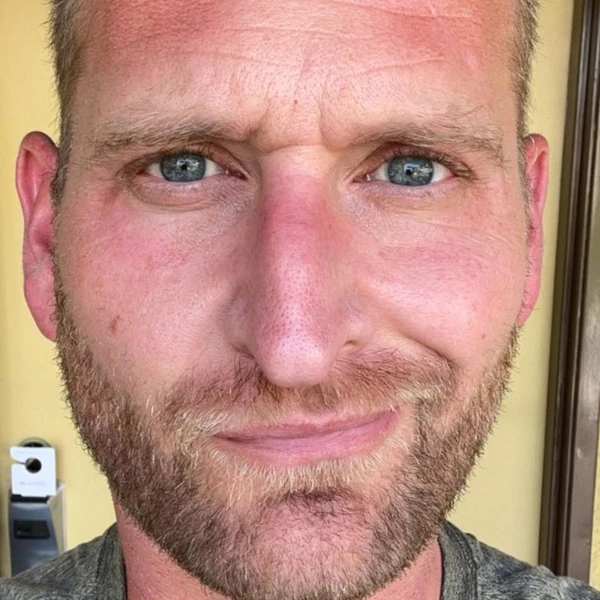
I am non-traditional among non-traditional students. My checkered past has provided an extraordinary amount of life experience. I battled homelessness on the streets of Los Angeles, am in recovery from an intravenous drug habit approaching 5 years, and served time in prison. I have been clean and sober after nearly a decade of using, so I have yet to discover who I am in full.
Education
University of California-Berkeley
Bachelor's degree programMajors:
- Philosophy, Politics, and Economics
Los Angeles Pierce College
Associate's degree programMajors:
- Liberal Arts and Sciences, General Studies and Humanities
John B Connally High School
High SchoolMiscellaneous
Desired degree level:
Doctoral degree program (PhD, MD, JD, etc.)
Graduate schools of interest:
Transfer schools of interest:
Majors of interest:
Career
Dream career field:
Law Practice
Dream career goals:
Establishing a Law practice that centers around advocation for those less fortunate.
Regional Trainer
BJ's Brewhouse and Restaurant2009 – 20178 years
Sports
Golf
Varsity2002 – 20053 years
Football
Varsity2002 – 20053 years
Research
Philosophy
UC Berkeley — Researcher/Writer2024 – Present
Arts
Television
ActingBar Rescue2014 – 2014
Public services
Volunteering
Goodwill — Sales person2009 – 2012Volunteering
Canine Hilton — Kennel Technician1998 – 2007
Future Interests
Advocacy
Politics
Volunteering
Philanthropy
Entrepreneurship
Emma Jane Hastie Scholarship
I am a nontraditional student, a philosophy major, and someone whose life has taken a long and difficult route back to stability. I have experienced homelessness, addiction, incarceration, and the slow work of rebuilding from the ground up. Those experiences shape how I move through the world now. I pay attention to people who are overlooked. I notice systems that confuse instead of help. And I believe service matters most when it is quiet, consistent, and rooted in respect rather than charity.
One of the most meaningful ways I have made a positive impact on my community came after I returned to school. I quickly realized that many people around me were struggling with barriers that felt invisible to others. Housing insecurity, past convictions, missed paperwork deadlines, fear of authority, and deep distrust of institutions were common. I recognized those problems immediately because I had lived them. Instead of trying to distance myself from that past, I leaned into it.
I began helping people navigate practical challenges that often determine whether someone stays on track or falls back into crisis. This included helping formerly incarcerated individuals understand expungement options, walking people through court forms they were afraid to touch, and explaining how to communicate with public defenders or legal aid offices. These were not grand gestures. They were small moments of clarity that reduced panic and restored a sense of control.
One specific instance stands out. A man I knew from a transitional housing program was facing a missed court date for an old misdemeanor. He was convinced that showing up would mean immediate jail time. Because of that fear, he was avoiding all contact and making the situation worse. I sat with him for hours, explained what a bench warrant actually meant, what recall looked like, and how to prepare himself mentally and practically. I helped him write down questions, gather documents, and plan transportation. When he finally went to court and resolved the issue without being taken into custody, the relief on his face was overwhelming. More importantly, he stopped spiraling. He kept his job. He stayed housed.
Service, for me, is about reducing fear through knowledge. Many people are not failing because they lack motivation. They are failing because the systems around them are complex, intimidating, and unforgiving. When someone takes the time to explain things clearly and without judgment, it can change the entire trajectory of a person’s life.
I also serve by being visible. I show up in academic spaces, community meetings, and conversations where people with my background are rarely present. I speak openly about my past, not for attention, but to normalize growth and accountability. That openness has led others to ask for help, advice, or simply reassurance that change is possible. Sometimes the most powerful form of service is proof of survival paired with humility.
Who I am today is shaped by who helped me when I was at my lowest. I try to repay that debt by offering steadiness, patience, and honesty to others. I do not believe service requires perfection or authority. It requires showing up, listening, and staying when it would be easier to walk away. That is how I contribute to my community, and it is how I plan to continue doing so as I move forward.
Let Your Light Shine Scholarship
Legacy, to me, is not about reputation or recognition. It is about interrupting cycles that quietly destroy people long before anyone notices. My life has moved through homelessness, addiction, prison, and finally back into education. Because of that trajectory, I do not think of legacy as something abstract or symbolic. I think of it as something concrete, lived, and practical. My goal is to leave behind systems, institutions, and people who are better equipped to survive and to exercise agency than I was at their most vulnerable moments.
I plan to create my legacy by building pathways where none currently exist. The systems I moved through were designed to manage harm, not reduce it. They punish failure while ignoring the structural conditions that produce it. Having lived inside those systems, I now want to operate from the other side of the table. That means law, policy, and enterprise aimed at people who are written off early and permanently. My future is oriented toward building something that combines legal advocacy, education, and economic access for people with criminal records and severe social marginalization.
The business I hope to create is not a traditional startup driven by extraction or scale for its own sake. I envision a mission driven legal and social enterprise that focuses on reentry, expungement, record mitigation, and access to higher education and stable employment. Part law firm, part nonprofit, part incubator. It would provide low cost or sliding scale legal services while also offering structured mentorship, academic support, and job placement pipelines. The goal would be to treat people as long term projects, not short term cases. Success would not be measured only by wins in court, but by years of stability afterward.
I also want this business to hire the very people it serves. One of the deepest failures of reentry is that individuals are told to rehabilitate while being denied any role in building the world they are reentering. I want formerly incarcerated people to be case managers, legal assistants, peer counselors, and eventually attorneys within the organization. That is how knowledge compounds and dignity is restored. That is how a legacy becomes self sustaining.
As for how I shine my light, it is not through perfection or moral posturing. It is through visibility, consistency, and refusal to disappear. I show people what survival looks like when it is paired with discipline and intellectual seriousness. I speak honestly about prison, addiction, and failure without romanticizing any of it. I show up in academic spaces where people like me are statistically absent, and I do the work at a level that makes it impossible to dismiss me as an exception or a charity case.
I also shine my light through service that is unglamorous. Writing letters. Explaining forms. Walking people through processes that are intentionally confusing. Many lives are lost not because people lack intelligence or will, but because they lack guidance at the moment it matters most. I try to be that guide whenever I can.
Ultimately, my legacy will not be my name. It will be the quiet fact that someone else made it through because I built something that did not exist when I needed it. That is enough