Ethnicity
Hispanic/Latino, Caucasian
Hobbies and interests
Teaching
Meditation and Mindfulness
Anthropology
Environmental Science and Sustainability
Beach
Coffee
Reading
Health
Humanities
Novels
I read books multiple times per week
Benjamin Jones
2x
Finalist2x
Winner
Benjamin Jones
2x
Finalist2x
WinnerBio
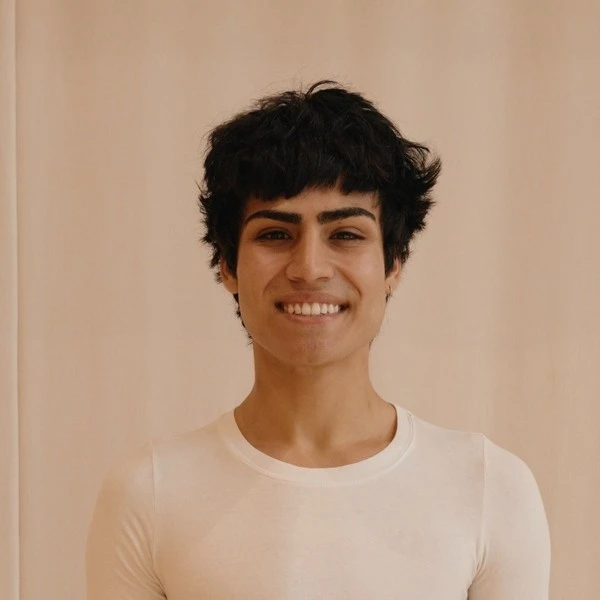
Benjamin Jones is a Latinx dance artist, educator, and emerging choreographer from Albuquerque, New Mexico, entering his senior year at the USC Glorya Kaufman School of Dance. Beginning ballet at four years old, he discovered movement as a language for self expression long before he had the words to tell his own story. His artistic practice explores identity, vulnerability, and human connection through contemporary dance, improvisation, and theatrical storytelling.
Benjamin has performed alongside Ballet BC through USC and trained with Nederlands Dans Theater in The Hague, Ballet BC in Vancouver, Orsolina28 in Italy, and The School at Jacob's Pillow Contemporary Program.
Beyond performing, Benjamin serves in USC Kaufman's Student Services and Affairs office, supporting student programming, auditions, summer intensive communications, alumni initiatives, prospective student tours, and major school events. As a teaching artist through USC Kaufman Connections, he leads weekly dance classes that help elementary students build confidence, creativity, and belonging through movement.
Following graduation, Benjamin hopes to dance professionally before transitioning into choreography and higher education. He is committed to expanding access to dance education so that young artists from underrepresented communities have the opportunity to discover their own voice through movement.
Education
University of Southern California
Bachelor's degree programMajors:
- Dance
Public Academy Performing Arts
High SchoolMiscellaneous
Desired degree level:
Bachelor's degree program
Graduate schools of interest:
Transfer schools of interest:
Majors of interest:
Career
Dream career field:
Performing Arts
Dream career goals:
Become a dancer under Nederlands Dance Theatre in The Hague, Nederlands
Student Services and Academic Affairs
USC Kaufman2025 – Present1 yearTeaching Artist under Kaufman Connections
USC Kaufman2023 – Present3 years
Sports
Dancing
Club2018 – 20235 years
Research
Arts, Entertainment, and Media Management
Orsolina28 Arts Foundation, BalletBC 44 Summer intensive — Student at Intensive2024 – 2024
Arts
VIIIZONS Academy
Dance2024 – PresentSandra's School of Dance
Dance2025 – PresentThe School at Jacob's Pillow Contemporary Dance Program
Dance2025 – 2025Nederlands Dans Theater - Summer Intensive
Dance2025 – 2025Zeitgeist Dance Theatre
Dance2023 – 2023BalletBC
Dance2024 – 2024Orsolina28
DanceInformal Showings2024 – 2024
Public services
Volunteering
USC Kaufman — Teaching Artist2023 – Present
Champions Of A New Path Scholarship
I deserve this scholarship because I believe my work will create a ripple effect throughout society's cultural fabric. Growing up in Albuquerque, New Mexico, I became intimately familiar with scarcity. Many people expect scarcity to produce surrender and simply accept the hand life has dealt them. Instead, it became my creative fuel.
The hardships New Mexicans face, both structurally and culturally, have helped shape an incredibly rich artistic community. Chicano and Latin culture are deeply rooted in resilience, storytelling, and expression, and I am proud to come from that lineage. Through perseverance and hard work, I earned the opportunity to attend USC's Glorya Kaufman School of Dance. When I applied, I knew my chances of being admitted to USC were around ten percent, and my chances of being accepted into Kaufman were even smaller. Being admitted taught me never to take opportunity for granted.
Growing up in New Mexico has taught me to approach every day with intention. Every ballet class, choreographic process, rehearsal, and repertory experience is another opportunity to absorb knowledge from teachers who carry generations of artistic lineage before them. Many people see dance and think of talent or virtuosity. I see the body as a blank slate filled with infinite possibility. Every body possesses a unique anatomical architecture capable of making an audience feel something profound, whether inside a theater or out in the world.
When dancers move together as one organism, like a school of fish, it is not simply a militaristic formation traveling through space. It is a collection of human beings, each carrying individual stories, sacrifices, and dreams, choosing to unite in a single moment. Behind every performance are years of blood, sweat, and tears. I have devoted my life to that process.
What gives me an advantage over everyone else is not that I believe I am better than anyone competing alongside me. It is my unwavering belief that what is meant for me will find me, provided I continue to show up with discipline, curiosity, and generosity. That mindset has carried me across the world, allowing me to train in the Netherlands, Italy, Canada, New York, and Los Angeles through the generosity of people who believed in my potential before I fully believed in it myself.
I have made it my responsibility to bring that knowledge home. Through USC's Kaufman Connections program, I have taught dance at 32nd Street Magnet Elementary School, and I continue sharing what I learn with my students in New Mexico. Whether I am teaching ballet, contemporary dance, or creative movement, my goal is never simply to produce better dancers. My goal is to help students discover confidence, autonomy, and a deeper relationship with themselves. You never know what a child may be carrying when they walk into a dance class. If I can create even a small pocket of joy where they feel safe to express themselves, then the work has already mattered.
Dance, to me, is not about collecting accolades or chasing validation from choreographers. It is about uncovering the parts of ourselves we hide from the world and giving them a voice through movement. That visceral emotional connection to our bodies, our humanity, and our stories is what I believe society desperately needs. We spend so much of our lives searching for fulfillment in places that cannot truly provide it, when what we seek has always existed within us.
I hope to continue creating work that shifts culture, expands the way audiences experience dance, and dissolves the boundaries between choreography, music, costume, lighting, and visual art. I want to build immersive worlds that remind people of their humanity. The first art form any of us ever learns is dance. Before we speak, we move. Before we understand language, we master the choreography of walking. In many ways, we are dancers our entire lives.
As a dancer, choreographer, and educator, I have already begun planting these seeds. Now, entering my final year at USC, I am beginning to witness what they can grow into. My greatest advantage is not simply my technical training. It is my fearlessness, my ownership of my body, and my belief that my body will continue carrying me wherever I am meant to go.
Regardless of whether I receive this scholarship, I have already won in many ways. Dance has given me a world far greater than financial circumstances could ever limit. It has given me discipline, empathy, intelligence, resilience, and an infinite sense of possibility. It has taught me that my greatest resource has never been money. It has always been the blank slate I carry with me every day, my body.
Lotus Scholarship
Growing up in a low income, single parent household, I learned early that perseverance is not a single decision. It is a daily practice. My mother worked tirelessly to raise my sisters and me while doing everything she could to keep opportunities within reach, even when finances made those opportunities seem impossible. Alongside those financial challenges, I also experienced personal hardships that made self expression feel unsafe. Dance became the place where I could exist authentically. It transformed my relationship with my body, my mental health, and my confidence, allowing me to imagine a future beyond the circumstances I grew up in.
That perseverance led me to the USC Glorya Kaufman School of Dance, where I have trained, performed alongside one of my dream companies, Ballet BC, and taught through USC Kaufman Connections. Teaching young students showed me that dance is about far more than movement. You never know what a child may be carrying with them when they walk into the studio. My goal is to create a pocket of joy where every student leaves feeling more confident, more seen, and with a stronger sense of self than when they arrived.
My long term goal is to perform professionally before transitioning into choreography and education. I hope to create holistic movement classes centered on emotional healing, where people can reconnect with themselves through creativity, expression, and community. I want to use my experiences to create spaces where others feel empowered to grow, heal, and believe in their own potential.
Bright Lights Scholarship
As a dancer, my goals are defined by many major milestones rather than one fixed destination. After graduating, I hope to earn a position with an international touring contemporary dance company. Through USC, I have already had the opportunity to dance alongside one of my dream companies, Ballet BC in Vancouver, British Columbia. I also aspire to perform with GöteborgsOperans Danskompani in Gothenburg, Sweden, or Nederlands Dans Theater in The Hague, Netherlands, where I had the once-in-a-lifetime opportunity to train for two weeks last summer. I am inspired by the way these companies use movement to reveal deeper aspects of the human experience and challenge audiences to think, feel, and connect in new ways.
As I continue to grow as a performer, I also hope to choreograph works for major companies. Beyond dance, I have a deep love for writing, reading, music, visual art, textile design, and set design. I want to bring these disciplines together by collaborating with lighting designers, composers, visual artists, and filmmakers to create immersive worlds that invite audiences into temporary universes where collaboration is at the forefront of creation. I am especially interested in how choreography can reshape cinema and visual media through films, music videos, and interdisciplinary performance. I believe that when we place humanity at the center of our creative process, we unlock deeper parts of ourselves that encourage empathy, curiosity, and critical thinking about the way we move through life.
Pedagogy also fulfills me deeply. I love sharing the tools and embodied knowledge passed down by the dancers and teachers who came before me, inspiring the next generation of artists to unlock their creative potential, whether or not they choose to pursue dance professionally. Dance has the power to help people feel at home in their own bodies while giving them the autonomy to express themselves with confidence, sensation, and authenticity. Teaching dancers in my hometown has been one of the most rewarding experiences of my life, and I hope to remain both a student and an educator throughout every stage of my career.
Having already worked professionally as both a performer and dance educator, I have learned one lesson that continues to guide me: do it, and do it scared. That mindset has never failed me. Every meaningful opportunity in my life has required me to step into uncertainty with courage, and each experience has made me a stronger artist and person.
This scholarship would help me complete my final year at the University of Southern California Glorya Kaufman School of Dance with greater financial stability. It would allow me to fully immerse myself in my conservatory training, take advantage of every artistic opportunity available, and prepare for the demanding audition season ahead without the constant weight of financial stress. More than anything, it would bring me one step closer to becoming an artist who creates meaningful cultural impact through interdisciplinary collaboration, performance, and education. My goal is not only to perform, but to help redefine how people experience creativity, human connection, and the transformative power of art for generations to come.
Sloane Stephens Doc & Glo Scholarship
The impact I hope to make is helping people feel more deeply connected to themselves through movement. As a dancer, choreographer, and future educator, I want to create work that reminds people what it means to be human, even if only for a few moments. Whether someone leaves a performance feeling understood, inspired, or simply able to forget their hardships for an hour, I believe dance has the power to transform the way we experience ourselves and one another.
This vision became clearer after training this summer with Dutch choreographer Imre van Opstal. Throughout our creative process, Imre constantly reminded us that if a movement did not make her feel something, it should change. Technique was never enough. Every gesture, every breath, every pause, and every transition had to carry emotional intention. As a dancer learning and performing an excerpt from her work, I experienced firsthand what it felt like to embody choreography that demanded complete emotional honesty.
One rehearsal that will stay with me forever was learning an excerpt from I'm Afraid to Forget Your Smile. The work reflects on the loss of a close friend and the way we continue carrying people in our bodies after they are gone. Even as we slowly forget the small details that once felt unforgettable, we continue to feel them through the way they shaped our lives. As Imre spoke about the piece, she was brought to tears. Watching her become emotional while speaking about her own work made me realize that dance could become far more than movement. It could become memory, grief, love, and healing made visible.
That rehearsal fundamentally changed my understanding of what dance could be. I want to perform works and create choreography with that same emotional honesty, where every finger, every step, and every moment is intentional because it invites people to feel something true. I want audiences to leave carrying questions about shame, love, death, rebirth, guilt, joy, and becoming. If someone walks away from a performance feeling less alone, more understood, or simply reminded of their own humanity, then the work has done its job.
My education at the USC Glorya Kaufman School of Dance has given me the technical and artistic foundation to pursue that vision, but it has also shown me that knowledge becomes most meaningful when it is shared. Through teaching elementary school students in Los Angeles and choreographing for young dancers in my hometown of Albuquerque, New Mexico, I have discovered that performing, creating, and teaching are inseparable. I want my students to understand that dance is not simply about executing movement correctly. It is about trusting their instincts, discovering their artistic voice, and finding a way to express emotions they may not yet have words for.
Ultimately, I hope to build a career performing with companies that create deeply human work while continuing to choreograph and mentor the next generation of artists. I want to create worlds that invite audiences to confront the beauty and complexity of being alive, while giving young dancers the same sense of possibility that my teachers gave me. If I can help someone reconnect with their own personhood, whether from the stage or inside a studio, then I will know I have used my education to create the impact I set out to make.
J&Y Law Yahouda Yahoudai Service Scholarship
One of the most meaningful ways I have served my community has been through dance education. Throughout my first three years at the USC Glorya Kaufman School of Dance, I volunteered with Kaufman Connections, an outreach program founded by Professor Tiffany Bong that brought dance education to elementary school students just across the street from USC. Many of these students had little or no prior exposure to dance. Every week, I had the opportunity to introduce them to movement, creativity, and self expression while helping them build confidence in themselves and one another.
Kaufman Connections taught me that dance is about much more than technique. It is about creating a space where young people feel safe to explore, make mistakes, and discover who they are. Watching students who were initially hesitant begin to move with confidence reminded me why arts education matters. Dance became that space for me growing up, and being able to provide that same experience for someone else has been one of the most rewarding parts of my college education.
Equally meaningful has been returning home to New Mexico to teach and choreograph for local dance studios. Coming back to my hometown and working with students who have chosen to deepen their relationship with art has allowed me to create spaces for young artists who are hungry for self expression, artistry, and a deeper understanding of the world around them. One of my favorite things to do is choreograph competition solos because every solo is an opportunity to help a dancer discover their unique artistic voice rather than simply execute choreography.
Being able to bring the knowledge, tools, and corrections I receive from my dance conservatory education at USC back to my hometown is incredibly fulfilling. I have seen firsthand how young people flourish when they are given time, attention, encouragement, and access to quality artistic training. Watching students grow in both their technical ability and their confidence reminds me that investing in young artists creates ripple effects that extend far beyond the studio. They begin believing in themselves, taking creative risks, and supporting one another in the process.
These experiences have shaped the kind of artist and leader I hope to become. Whether I am teaching elementary school students in Los Angeles or mentoring young dancers in New Mexico, my goal remains the same: to help others discover that their voice matters. I hope to continue building communities where art is accessible, where curiosity is celebrated, and where every student feels empowered to create something honest, beautiful, and uniquely their own.
Larry Darnell Green Scholarship
Coming from a single parent household has shaped my educational journey in ways that have both propelled me toward my goals and highlighted how far behind I sometimes felt compared to peers who had the support of two parents. As a dancer at the USC Glorya Kaufman School of Dance, I never realized how much exposure often translates into opportunity. I used to watch classmates book tours, music videos, dance films, and professional work while questioning why my circumstances looked so different. Over time, I realized that the adversity I experienced was also building resilience. It gave me a framework for understanding how quickly circumstances can change and taught me not to take opportunities for granted.
My mom always said, "Easy come, easy go." Although our relationship has been difficult and is something I continue to work through, that mindset shaped much of my educational experience. I often found myself worrying about tuition, rent, and where my next meal would come from while trying to keep up with the demands of conservatory training. Even now, returning home can be emotionally challenging. Despite those hardships, I would not change my journey. It has lit a fire within me to express myself more honestly and to keep moving forward when it feels like the ground beneath me is shifting. When I hear thoughts telling me, "You won't graduate," or "You can't afford to finish school," I work harder. That uncertainty has pushed me to become more disciplined, more intentional, and more committed to my goals.
One of the most meaningful parts of my education has been giving back through Kaufman Connections, an outreach program founded by Professor Tiffany Bong that brought dance education to elementary school students across the street from USC. I participated throughout my first, second, and third years before the program paused due to the school's relocation. Every time I stepped into that classroom, I saw myself. I saw children who were curious, creative, and discovering the joy of self expression, many of whom may never have otherwise been exposed to dance.
That experience reaffirmed the kind of artist and educator I want to become. When I return home to New Mexico to teach at local dance studios, I always emphasize self expression and using dance as an outlet, just as it became one for me while growing up through hardship and uncertainty. I want every student to know that their voice matters and that movement can become a place of healing, confidence, and belonging.
Growing up with financial instability taught me that scarcity is not something I have to carry forever. Wherever I go, I bring an abundance of knowledge, gratitude, joy, and compassion into every room I enter. My circumstances have given me a deeper understanding of both joy and hardship, and that perspective is something I hope to share with every student I teach. No matter what happens in my own life, no one can take away the knowledge of dance, the confidence it has given me, or my ability to help others build a healthier relationship with themselves through movement. That is the legacy I hope to leave in my community.
Pamela Branchini Memorial Scholarship
Growing up in an abusive household, I learned early on the art of being a chameleon; doing what I was told, staying quiet, and learning to read energy, microexpressions, and body language. Living in high stress, I carried tension in my body from an early age. I was enrolled in ballet when I was five years old, and I never realized what a blessing in disguise that would become.
I felt alone at home, but in dance I discovered my attention to detail and my heightened awareness of my body through stress. Being the black sheep in my household gave me an overwhelming hunger to express myself because articulating my identity often came with consequences, whether physical or emotional. Metacognition taught me how to apply corrections, push myself harder in class, and believe that maybe, by the good graces of the universe, my hard work would place me somewhere I could finally spread my wings and fly; even if those wings felt sticky from the shame poured onto them like hot wax, I eventually found the strength to push through.
When I auditioned for the USC Glorya Kaufman School of Dance, it felt like a call to action. I realized without dance, I might not live the fulfilling life I dreamed of. I worried I would become another statistic from my hometown of Albuquerque, New Mexico; someone who lost hope because they lacked the resources to discover and express themselves.
My community of artists at USC has become a life raft for me. Collaboration, to me, means creating spaces where we can understand ourselves and each other more deeply. It means trusting one another enough to tell the stories our bodies carry. I have performed works that brought me to tears by uncovering emotions I had buried for years. My collaborators have held me, wiped away my tears, wished me 'merde' and 'toi, toi, toi,' and greeted me with flowers after the curtain falls.
My family has never come to see me perform in Los Angeles. For a long time, I felt embarrassed that I did not have the same support system as many of my peers; eventually, I realized the support I needed most was the courage to keep making art that allows others to feel seen.
One collaboration that transformed me was performing in my close friend and roommate Chris Chun's duet, For All We Know, alongside Stella Wong. I portrayed a son navigating a fractured relationship with his mother. Throughout the piece, we separated into vignettes of solos that explored the aftermath of conflict from both perspectives. My character was left angry, confused, and heartbroken; he questioned why his mother had subjected him to years of emotional and physical abuse while also wrestling with the guilt of stooping to the same emotional level as someone suffering but unwilling to ask for help. In the final moments, the mother collapses into the son's arms, symbolizing death; we are left with the words, "For all we know."
This collaboration gave me a safe space to share pieces of my own story with my inner circle of artists. It allowed me to process trauma I had carried for years and transform it into something honest, vulnerable, and human. Performing that work was liberating; it restored a part of myself that had been missing and gave me the confidence necessary to pursue an art form built on vulnerability.
That is what collaboration means to me. It is chosen family; it is the people who stand beside you as you create, helping you carry stories never meant to be carried alone.
Future Leaders Scholarship
I used to think leadership had to be loud—decisive, polished, always sure. But I’ve learned that real leadership is often quiet. It looks like staying after class to comfort a peer. Like holding eye contact with a student who’s never been told they matter. Like showing up when no one else does, even when your hands are shaking.
Growing up in a single-parent household, I learned how to lead myself early. I had to. With limited financial resources and emotional support stretched thin, I learned how to self-direct, self-soothe, and survive. I didn’t always have models of what leadership “should” look like—but I had people who taught me what it feels like. I saw leadership in my mom’s ability to keep going. I saw it in my mentors—Francisco Gella, Sandra Rubi—who carved out room for me to grow when there wasn’t much space to begin with.
One of my most formative leadership experiences came this year through teaching dance at 32nd Street USC Magnet School and back home in Albuquerque. These weren’t just jobs—they were personal. I was leading students who come from the same underserved communities I did. Kids who are told to be quiet. Who are rarely asked, “What do you feel?” I didn’t just teach movement—I taught them to listen to their bodies, to trust instinct, to use dance as a voice when words failed.
But leadership isn’t clean. I’ve been told no more times than I can count. Rejection from programs I thought I was made for. Unseen effort. Funding falling through. But every no became a redirection. Each one pushed me toward rooms I never would’ve considered—toward spaces like Jacob’s Pillow, Orsolina028, and Nederlands Dans Theater. Each no shaped the leader I’ve become: more compassionate, more creative, and more unshakably committed to those coming up behind me.
I lead by example, by empathy, and by showing up. I lead in rooms where no one looks like me—brown, queer, full of feeling—and I lead by refusing to shrink. I lead because I know what it’s like to feel small, and I want to ensure no one else forgets their worth.
In my future, I’ll continue to use dance not just to perform, but to transform. I plan to create more accessible arts programs for BIPOC youth, using movement as a tool for healing, storytelling, and liberation. I want to be a director, choreographer, and educator who sees leadership as relational—something you grow through, not into.
This scholarship wouldn’t just support my education. It would affirm that leadership isn’t about being the loudest voice in the room—it’s about being the one who listens first, moves with purpose, and dares to reimagine what’s possible.
Lotus Scholarship
I come from a single-parent household where love looked like sacrifice. My mom raised three of us on her own, and while I’m grateful for her strength, the truth is—I grew up fast. I learned how to self-soothe, self-advocate, and hold things in until I had a place to put them.
That place became dance.
It started as an outlet and became a life raft. It taught me how to express what I didn’t have language for—the fear of walking through the world in a brown queer body, the grief of losing friends who never got to share their voice, the urgency to create something honest and whole in a world that often isn’t.
Now I study at USC Kaufman, where I’m working toward a future where movement can be a tool for healing and resistance. I teach hip-hop to K–5 students at 32nd Street USC Magnet School and return home to Albuquerque to teach ballet, contemporary, and choreography to young dancers who remind me of myself. Many come from communities where the arts feel like an unreachable luxury. I’m helping them make it real.
I want to make space—for students to take up room in their bodies and their stories. For movement to live outside of performance and inside classrooms, neighborhoods, and inner worlds. My choreography is about activating something in the audience—awakening memory, inviting emotion, pushing people to be more embodied in their everyday lives.
This scholarship would help me meet the costs most people don’t talk about—gear, tools, survival logistics—so I can keep showing up for the people and places that need this work most. I don’t just want to move—I want to ripple.
WCEJ Thornton Foundation Music & Art Scholarship
WinnerDance gave me a voice before I had the words.
As a queer Latinx artist from Albuquerque, New Mexico, I grew up in spaces that didn’t always see or hear me. But movement saw me, held me, and gave me the tools to speak—without having to open my mouth. It became my first language. A way to process identity, emotion, and existence in a world that often asked me to shrink.
I’ve stayed in this work because of the mentors who poured into me. Francisco Gella, a Filipino choreographer, and Sandra Rubi, my studio director, showed me that art is more than skill—it’s legacy. Their leadership taught me to pass that legacy forward.
Today, I volunteer under Kaufman Connections under the direction of Tiffany Bong. Under this program I teach hip-hop at 32nd Street USC Magnet School, serving elementary students in a minority-majority classroom. I also return home to Albuquerque to teach ballet, contemporary, and choreography at Sandra’s School of Dance and open classes at VIIIZONS Academy. In these spaces, I help young dancers—many from underserved communities—unlock expression they didn’t know they had.
My own movement practice deepened when I discovered Gaga, a technique that helped me stop performing and start listening. Gaga taught me to move from sensation, not expectation. It allowed me to show up raw, instinctual, and unfiltered—fully myself.
The solo I’m submitting was created using movement scores by my friend and fellow Latinx artist Garris Muñoz. It explores the split cognitive processes carried by many marginalized people: code-switching, hyper-awareness, emotional compression. The work lives in contrast—small to big, slow to fast, release to activation—and reveals truth over polish.
I don’t make art to impress—I make it to awaken. I hope my movement stirs something in the audience: a long-buried feeling, a moment of reflection, a shift in how they move through their own life. My goal is to inspire autonomy, embodiment, and deep sentience.
But for that to happen, the artistic voices of marginalized communities must be heard. We deserve space, support, and platforms. I don’t just dance for myself—I dance to expand what’s possible.
Diane Amendt Memorial Scholarship for the Arts
Growing up, arts education gave me the space to feel fully present in my body.
Before I had the words, I had movement. Dance became the first place I could express truth—where I could process, explore, and make sense of my identity as a queer Latinx artist growing up in Albuquerque, New Mexico. Navigating this path hasn’t always been easy, but it’s helped me carve out a version of myself that feels whole.
Along the way, I’ve had mentors who shaped me the way Diane Amendt shaped her students—meeting me with belief, patience, and purpose. Francisco Gella, a Filipino choreographer based in New Mexico, poured into my growth as a young artist. He returned to my hometown studio across several years—setting group pieces, teaching master classes, and choreographing my senior solo, The Final Phase. That solo became a reflection of my transformation. It held my history and carried me forward into my next chapter: USC Kaufman.
Francisco’s mentorship continued through Zeitgeist Dance Theatre’s trainee program and national dance conventions, helping me understand that movement can be both personal and communal—an offering of presence, power, and representation.
Sandra Rubi, my studio director, also modeled what it looks like to create access in overlooked communities. She fought for students from all backgrounds and stood beside me every step of the way. With her support and Francisco’s guidance, I’ve reached opportunities that once felt out of reach, including training at the Nederlands Dans Theater Summer Intensive and the Jacob’s Pillow Contemporary Program.
Now, I’m committed to passing that mentorship forward. I teach back home at Sandra’s School of Dance as a contemporary and ballet teacher, planting seeds for growth and exploration within movement to the budding generation of BIPOC artists of Albuquerque, New Mexico. On top of this I offer drop-in classes at VIIIZONS Academy open to the public regardless of level or experience. During my first year at Kaufman I’ve been able to become Kaufman Connections teaching artist in Los Angeles at 32nd Street USC Magnet school, where I teach hip-hop to K-5 students in a minority-majority classroom. Watching students who look like me light up through movement—finding joy, freedom, and creative agency—fuels everything I do. These children remind me why arts education matters. They are the future artists, healers, storytellers—and the reason I continue this work with heart.
Dance is how I remember. How I honor the people who helped me rise. How I hold space for those still finding their voice.
This scholarship wouldn’t just support my education—it would reflect the cycle of care, guidance, and belief that Diane Amendt embodied. It would help me keep showing up: for my students, my community, and the stories our bodies are still learning to tell.
Mad Grad Scholarship
When I was four, my mom placed me into ballet after watching my older and younger sisters in class. From that moment on, movement became how I understood the world—before I knew how to explain who I was or how I felt. As a queer Latinx boy in ballet, I was often met with resistance: side-eyes from parents, teasing from peers, and a general sense that I didn’t belong. But dance always held me without question.
As I grew, so did my understanding of what dance could be. It wasn’t just choreography or performance—it was witnessing, responding, remembering. That’s what led me to improvisation, and more deeply, to Gaga, a movement language developed by Ohad Naharin of the Batsheva Dance Company. At USC Kaufman, under the guidance of Professor Brett Easterling, a former Batsheva dancer himself, I began to study Gaga more intimately. Before, improv felt like creating dance on the spot. But Gaga taught me something deeper—that improvisation is sensation-led awareness, a way of moving that stems not from performance, but presence. It’s about bearing witness to the body in real time, listening to its history, and allowing that to guide how we move through space.
That practice—of being inside the body, letting memory and sensation surface, and letting instinct guide form—has become the core of my artistic purpose. I create work rooted in emotional honesty, somatic awareness, and the desire to mirror back the depth of the human experience. Whether I’m teaching young students in the Kaufman Connections Program, performing a solo shaped by personal grief, or experimenting in a studio, my why remains the same: I move to remember, to process, to resist—and to give others permission to do the same.
In a time when AI is generating scripts and digital avatars are being cast in commercials, I’m not interested in replicating perfection. I’m interested in being human. In work that is flawed, breathing, trembling, uncertain. I want to make performance that feels alive—work that says, “I felt this, and maybe you did too.”
What motivates me is this aliveness. The pulse of something real. In a world where art is being streamlined by AI, where scripts can be written instantly, and movement can be replicated digitally, I still believe in the irreplaceable power of human presence. Of breath. Of weight. Of sweat and stillness and surrender. Technology will change the tools, but not the need to be moved.
As a student of the arts, I’m not afraid of change—I’m moved by it. The heartbeat of what I do will always come back to the body—its pain, its joy, its contradictions, its truth.
The arts are often undervalued because we forget what they offer: connection, empathy, transformation. I dance because I want to keep that spirit alive. Because movement taught me how to be in the world. And because I believe, deeply, that there is still someone out there waiting to feel seen.
And if I can be that mirror—if even one person watches and says me too—then every step will have been worth it.
Abran Arreola-Hernandez Latino Scholarship
One of the most important experiences I’ve had at USC has been through Kaufman Connections, a community engagement program led by Professor Tiffany Bong. As part of this program, USC Kaufman students become teaching artists for 32nd Street USC Magnet School, working directly with elementary students in a weekly Hip-Hop workshop. We introduce these young dancers to a form that was born out of resistance and joy—a movement language developed by Black and Hispanic communities. We honor that history, and the kids feel it. The studio becomes a space for more than just learning choreography—it becomes a place of expression, identity, and connection.
These students, from all backgrounds, learn not just how to move, but how to support one another, how to tell stories with their bodies, and how to take pride in their voice. The year ends with a culminating performance, and witnessing their transformation—from shy first-timers to proud, expressive movers—is a moment that reminds me why I dance in the first place. It reaffirms that everyone, regardless of income, race, or background, deserves access to creative tools that help them feel seen.
Growing up in Albuquerque, New Mexico, I didn’t always have that access. I know what it’s like to feel invisible. My family didn’t come from wealth or cultural capital. What we had was grit, love, and the guidance of a few rare mentors who believed in me. One of those mentors was Sandra Rubi, my studio owner. She created a space for all dancers—especially those who were often overlooked. As a Hispanic woman, she knew firsthand how limited access can be for our community, and she made it her mission to change that. She supported me not just as a dancer, but as a person—and with her belief in me, I began to dream bigger than the borders of my city.
With Sandra’s support and the mentorship of Francisco Gella—a Filipino choreographer who choreographed my senior solo and introduced me to professional standards—I eventually earned a place at USC Kaufman. And because of that, I’ve now had the privilege to train at places I once only dreamed of such as the opportunity to attend USC Kaufman.
Kaufman Connections brought that truth full circle. It reminded me that visibility is powerful—that when young dancers of color see someone like me in front of them, they’re not just seeing a teacher. They’re seeing proof that they can take up space too. My presence in that classroom is a reminder to the children that everything they're capable of is within them. My dancing, with honesty, is a mirror for those students—just as they are for me. We all have stories stored in our skin, in our gestures, in the way we hold breath and tension and release. Movement gives us a way to tell those stories without needing permission.
That’s what I’ve learned: the world isn’t equal in the access it gives, but art can be a bridge. The studio can become a space of transformation, and representation can spark belief. My experience teaching through Kaufman Connections reshaped how I view the relationship between art and community. It showed me that being a performer isn’t just about being onstage—it’s about who you bring with you, and how you choose to lift others while you climb.
I hope to one day create similar programs for low-income and marginalized students in my own hometown. Because someone once gave me a chance. Because Sandra Rubi opened a door. Because Francisco Gella saw potential. And now, it’s my turn to do the same.
Bunker Performing Arts Scholarship
WinnerMy favorite part of dancing is the experience of movement as an art form. At USC Glorya Kaufman school of dance, my understanding of movement deepened. Under Brett Easterling, I was introduced to Ohad Naharin’s Gaga technique, which completely reshaped my relationship to dance. Gaga taught me to move from sensation and inner listening rather than outward perfection. I began to trust my instinct, my rawness. At the same time, working with Fiona Lummis Eddy, a former dancer with Nederlands Dans Theater, gave me access to the subtlety and emotional clarity of Jirí Kylián’s choreography. She set his work on us, performing Kylian's Sarabande comprised of multiple male solos and through that, I learned how to hold weight, tension, and stillness with intention. These professors didn’t just refine my movement—they helped me discover the language I was meant to speak.
Outside the university, mentorship has played a vital role in shaping my journey. Francisco Gella, a Filipino choreographer based in New Mexico, taught at my studio across multiple years—setting my junior year group piece, guest teaching, and ultimately choreographing The Final Phase, my senior solo. That solo became a milestone—it held my history and momentum, and helped me get into USC. Francisco’s guidance through Zeitgeist Dance Theatre continues to inform the way I move—with integrity, generosity, and curiosity.
Sandra Rubi, my studio owner, believed in me when I didn’t yet know how to believe in myself. By supporting and fighting for me, she helped me reach spaces that once felt out of reach. With her advocacy and Francisco’s mentorship, I’ve had recently received opportunity to train at the Nederlands Dans Theater Summer Intensive in The Hague, Netherlands, and the Jacob’s Pillow Contemporary Program in Massachusetts. I’ve fought to stand in these esteemed rooms with artists I once looked up to from afar. My dedication has also led me to Orsolina028 in Turin, Italy, where I studied the repertoire of Crystal Pite and Marco Goecke, and to the Ballet BC Summer Intensive in Vancouver, British Columbia.
These experiences didn’t just sharpen my technique—they deepened my purpose. I’m drawn to movement that is instinctual, animalistic, emotional—language that lives in the bones. Artists like Crystal Pite, Goecke, and Kylián showed me that dance can be intimate and enormous at once. That’s what I want my work to hold: the tension of vulnerability and power, the echo of a personal history moving through space.
After graduation, I plan to perform with contemporary companies that engage with social and emotional storytelling. I want to choreograph and collaborate on work that speaks to ecological awareness, memory, and transformation—creating space for others to feel seen through movement the way I was. My dream companies include Nederlands Dance Theatre, and Ballet BC, and Batsheva Dance Company all of which I've attended an intensive, plan to attend one, or have been exposed to the movement languages within these companies. All of this happened because I was believed in and somebody took a chance on me.
This scholarship wouldn’t just support my education—it would allow me to continue to deepen my knowledge of dance and movement to share with others, and help me invest in the ongoing journey of an artist still uncovering what’s possible. I move to process, to express, to remember. I move in hopes that someone, somewhere, feels a little less alone. And I’ll keep moving—for all of us who are still finding our way back into our bodies and into belonging.
Gayle McKinney-Griffith Memorial Scholarship
I believe the body is a site of remembrance. It holds everything we’ve lived through—every experience, every joy, every trauma, every lesson. The body is never blank. Every scar, birthmark, blemish, or stretch is evidence that we’ve moved through the world, that we’ve survived something, learned something, or felt something deeply. We tend to overlook these details, but to me, they’re reminders of what it means to be human.
As a dancer, I’m constantly reflecting on how my body holds memory. The way I move is shaped by my lived experience—my queerness, my Latin identity, moments of intimacy that felt confusing, and moments of power that felt freeing. Dance has helped me process things I didn’t have words for. It's been the place where I’ve been able to reframe past experiences, especially those where I didn’t feel in control of my body or my boundaries. I’ve learned that movement can be a form of reclamation—of saying, “This is mine again.” Dance has acted as a way to allow myself to strip the societal contracts placed onto my body. To see myself as a natural being and straying away from a notion of "other" by simply being. Exploring the space in my skin has allowed me to love myself and share my experiences through the art of movement.
When I perform or create, I’m not doing it just to be watched. I move with the hope that someone in the room might feel something—might feel seen, or understood, or not so alone. Even if they don’t know exactly what they’re connecting to, maybe something in the imagery or physicality resonates. That’s when dance feels most important to me—when it becomes a mirror or a window for someone else.
My work is rooted in human experience. I don’t want to just entertain, I want to express what it feels like to exist in a body, especially a body that has often had to fight to be heard, respected, and held. I want to create visual, emotional experiences through movement that go beyond surface-level beauty. I want to make work that reaches into people, that opens something up.
For my work I have submitted a video from my Sophomore Composition/Choreography class where I'm dancing my own choreography with Eloise Valero in a piece titled "Scars of Sancity" The bio reading, "what generational experiences have been etched in flesh?" This piece explores the emotions, feelings, and stored experiences we carry in our bodies. How has my mother and her mother's experiences live through my body? Alongside is are action shots from a shoot I did for this piece with Emiko Ohta.
I also think dance can radically resist the societal narratives placed on marginalized bodies. As someone who hasn’t always felt safe or celebrated in traditional dance spaces, I understand how important it is to create space—for myself and for others. When I take up space on stage, it’s an act of resistance, but also of healing. And every time someone tells me they felt something during a piece, I’m reminded that this work matters—not just for me, but for everyone trying to see themselves reflected in movement.
Kozakov Foundation Scholarship for Creatives in Theater, Film, or Dance
I’m pursuing a career in dance because movement is where I’ve always found the most truth. As a queer Latin artist, dance became the space where I felt powerful, honest, and capable of connecting beyond language. I’m currently studying at my dream conservatory, and although the rigor is intense, it’s taught me how to be both resilient and responsive—to meet my body where it’s at while still pushing forward.
Last summer, I trained at Orsolina28 in Turin, Italy, where I had the opportunity to perform and learn the esteemed works of Crystal Pite’s repertoire as well as Marco Goecke. That same summer, I also attended the Ballet BC intensive, training with and learning Medhi Walerski's "Sway" as well as learning "Last Flower" By Out Innerspace. Those experiences were huge for me—not only in refining my technique but in helping me understand the kind of mover and collaborator I want to be: rigorous, generous, and deeply attuned to sensation.
I’ve since been accepted to the esteemed NDT Summer Intensive (Nederlands Dance Theater) in the Hague, Netherlands and the school at Jacob’s Pillow Contemporary Program, but financial strain is putting my education as well as those opportunities at risk. I’ve worked hard to earn those acceptances and still hope to find a way to attend.
I’m committed to making dance that feels real—work that is embodied, emotional, and rooted in connection. Whether performing or choreographing, I want to move people the way dance has always moved me.