Hobbies and interests
Soccer
Wrestling
Track and Field
Boy Scouts
Movies And Film
US CITIZENSHIP
US Citizen
LOW INCOME STUDENT
Yes
FIRST GENERATION STUDENT
No
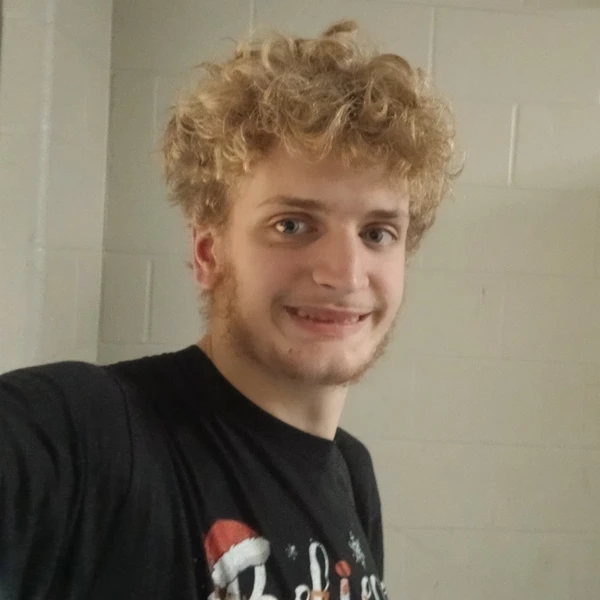
Benjamin Hayes
1x
FinalistBenjamin Hayes
1x
FinalistBio
18 year old Senior. Became Michigan’s youngest Eagle Scout at the age of 13, thanks to down time from COVID-19. At 14 earned all 139 merit badges. Earned youth Volunteer of the Year award. Earned the bronze, silver and gold Congressional medals. Volunteer of the year by United Way, 3 sport academic athlete. Soccer, wrestling and track and field.
Education
Montague High School
High SchoolMiscellaneous
Desired degree level:
Bachelor's degree program
Majors of interest:
- Mechanical Engineering Related Technologies/Technicians
Career
Dream career field:
locomotives engineer
Dream career goals:
Sports
Track & Field
Varsity2018 – Present8 years
Wrestling
Varsity2018 – Present8 years
Soccer
Varsity2022 – 20253 years
Awards
- varsity
Public services
Advocacy
Autism awareness — Lead2022 – PresentVolunteering
United Way — Lead2021 – PresentVolunteering
Boy scouts — Lead2022 – Present
Future Interests
Advocacy
Volunteering
Philanthropy
Entrepreneurship
Sola Family Scholarship
Growing up with a single mother has shaped every part of who I am today. My mom has been my constant source of strength, support, and belief especially during the moments when life felt uncertain. When I was diagnosed with autism, it could have easily become a limitation placed on my future. Instead, my mom made it her mission to ensure it became a reason to fight harder for every opportunity I deserved.
When my parents first received my diagnosis, their reactions were very different. My dad struggled to accept what it meant and eventually left, unable to handle the challenges that came with it. My mom, however, did the opposite she stepped up in every way possible. She became my advocate, my voice when I didn’t have one, and the person who refused to let anyone define my limits. Watching her stay when things got hard taught me what true strength looks like.
She pushed me, sometimes beyond what I thought I could handle, but always with the belief that I was capable of more. From therapy appointments to countless IEP meetings, she was always prepared to stand her ground. When others suggested I should pursue a certificate of completion instead of a diploma, she refused to accept that path for me. She saw my potential clearly, even when others didn’t, and she made sure I had the chance to prove it. Because of her persistence, I am now earning a high school diploma, something that once felt uncertain.
Her determination shaped my mindset. I learned that challenges are not excuses; they are opportunities to grow. Living with autism means that some things don’t come easily to me, but my mom taught me how to adapt, persevere, and keep moving forward. Those lessons have carried over into every part of my life. I am ranked in the top half of my graduating class, have taken all grade-level classes, and have pushed myself academically in ways that once seemed out of reach. Beyond academics, my mom’s influence has shaped my character. She showed me the value of resilience, hard work, and self-advocacy. She taught me that it’s okay to be different, and that those differences can become strengths. Because of her, I don’t back down from challenges, I face them head-on.
Being accepted to Penn State Altoona to study Rail Trail Transportation Engineering is a direct reflection of everything she has poured into me. It represents not just my hard work, but the years of dedication, sacrifice, and belief that my mom invested in my future. I carry her lessons with me as I take this next step.
Growing up with a single mother was not always easy, but it gave me something invaluable: a role model who showed me what it means to be strong, determined, and unwavering in the face of adversity. My background has shaped me into someone who refuses to settle for less, who believes in pushing beyond limitations, and who understands the importance of standing up for oneself and others. Most importantly, it has taught me that no matter the obstacles, success is possible with resilience, support, and belief.
District 27-A2 Lions Diabetes Awareness Scholarship
Living with a sibling who has type 1 diabetes has shaped who I am in ways I never fully realized until I stepped back and reflected on it. Diabetes is not just something my brother deals with, it affects our entire family. It requires constant attention, planning, and sacrifice, and because of that, it has taught me responsibility, empathy, and the importance of supporting others.
From a young age, I have seen how much effort it takes to manage diabetes. My brother has to carefully monitor his blood sugar, watch what he eats and drinks, and stay on top of his health every single day. There are no breaks or days off. Watching him go through this has given me a deep appreciation for resilience. Even when he is exhausted or frustrated, he keeps going. That has influenced how I approach challenges in my own life. When things get difficult, I remind myself of what he handles daily, and it pushes me to keep moving forward. This experience has also made me more aware and compassionate. I have learned to pay attention to the needs of others, even when they are not always obvious. There are moments when my brother might not feel well or when something small could become serious quickly. Being part of that environment has taught me to stay alert, patient, and understanding. It has helped me grow into someone who values helping others and being dependable in times of need.
Diabetes has also strengthened my family bond. It truly is a team effort in our household. My mom has to be incredibly diligent about what my brother eats and drinks, and all of us play a role in supporting him. Whether it is adjusting plans, helping monitor situations, or simply being there for him, we work together. This has brought us closer because we understand that we rely on each other. It has shown me the importance of family, teamwork, and being there for the people you love no matter what.
Looking toward the future, I know this experience will continue to influence me. It has already shaped my mindset and values, and I believe it will guide my decisions moving forward. I am more likely to pursue opportunities where I can help others, whether that is through a career in healthcare, education, or community service. Even if I choose a different path, the lessons I have learned patience, resilience, and compassion, will stay with me.
More importantly, I will continue to be a strong support system for my brother. Diabetes is something he will live with for the rest of his life, and I know that my role as a sibling does not change as we get older. I will always be someone he can rely on, whether that means helping in big ways or simply being there when he needs encouragement.
Overall, my experience with diabetes in my family has shaped me into a more understanding, responsible, and determined person. It has taught me that challenges do not just affect individuals, they can bring people together. And in my case, it has made my family stronger and has helped define the kind of person I want to be moving forward.
Christian Fitness Association General Scholarship
I believe I should be considered for this scholarship not because my journey has been easy, but because it reflects persistence, growth, and a commitment to serving others. My academic accomplishments, extracurricular involvement, and community service all tell the same story: I have worked to turn challenges into strengths and opportunities into impact.
Academically, my success is not best measured by a transcript alone, but by the path I took to get there. For much of my education, I was in special education programs due to the challenges I faced living with autism. Learning did not come easily, and traditional classroom structures often did not align with how I process information. However, I made it a goal to push beyond those limitations. Over time, through persistence and support, I transitioned out of special education and into mainstream classes. Today, I maintain an A/B average, something that once felt completely out of reach. For me, those grades represent more than academic achievement; they represent years of effort, adaptation, and determination to prove to myself that I am capable.
In addition to academics, I am a three-sport varsity scholar-athlete. Balancing athletics with school has required discipline, time management, and resilience. Being part of a team has taught me how to push through challenges, support others, and stay committed even when things get difficult. These lessons extend far beyond sports and into every aspect of my life.
Outside of school, my commitment to leadership and service is best demonstrated through my work as one of Eagle Scout’s youngest recipients in Michigan. Achieving this rank required years of dedication, leadership, and community involvement. For my Eagle Scout project and beyond, I have led monthly community cleanups, bringing people together to improve our shared environment. One of my most meaningful projects was organizing a tire collection initiative, where discarded tires were recycled and repurposed into playground safety surfaces. This effort not only helped clean the community but also created safer spaces for children.
My service also extends to honoring those who have served our country. I play the bugle at military funerals, providing a final tribute through the playing of Taps. I also participate in veterans’ pinning ceremonies by reciting the Pledge of Allegiance, and I spend time cleaning military headstones to ensure that those who served are remembered with respect. On Memorial Day and Labor Day, I continue this work by playing Taps and volunteering my time in remembrance events. These experiences have taught me the importance of gratitude, respect, and honoring something greater than oneself.
During the COVID-19 pandemic, I wanted to find a way to support those on the front lines. I independently raised funds to provide over 8,000 snack bags for hospital staff who were working tirelessly to care for others. This initiative allowed me to give back in a tangible way during a time of uncertainty and demonstrated my ability to organize, lead, and follow through on a large-scale project.
My commitment to service has been recognized through several honors, including the Congressional Award Bronze, Silver, and Gold Medals, culminating in earning the Congressional Gold Medal. I was also honored with a STEM Star Award, which was presented to me at the White House. Additionally, I have been named Volunteer of the Year by United Way, an acknowledgment that reflects my ongoing dedication to serving others.
One of the most meaningful parts of my service is my volunteer work at DeVos Children’s Hospital, where I read to children. This experience reminds me of the importance of small acts of kindness. Taking the time to sit with a child, read a story, and offer comfort can make a lasting difference, even in difficult circumstances.
What ties all of these experiences together is a desire to make a difference while continuing to grow as an individual. Living with autism has shaped how I see the world, but it has never defined what I am capable of achieving. Instead, it has given me a unique perspective, strong determination, and a deep sense of empathy for others.
This scholarship would not only support my continued education but also allow me to expand the impact I hope to make in the future. I plan to carry forward the lessons I have learned resilience, service, leadership, and compassion, into my college experience and beyond. I am committed to continuing my work in my community, advocating for others, and striving to create meaningful change wherever I can.
I am not defined by the challenges I have faced, but by how I have chosen to respond to them. That is why I believe I am a strong candidate for this scholarship.
Katherine Vogan Springer Memorial Scholarship
My experience in speech and debate has prepared me to share my Christian faith in ways I did not initially expect. Unlike many traditional competitors, my focus has not been on abstract topics or purely academic arguments. Instead, I use my voice to advocate for individuals on the autism spectrum, a community I am personally part of. Because I speak from firsthand experience, my speeches often invite strong reactions, which naturally lead to meaningful, and sometimes challenging, debates.
These conversations have taught me one of the most important skills in both debate and faith: how to listen. Many people I encounter do not have a deep understanding of autism. Their perspectives are often shaped by limited exposure, maybe a distant relative or a brief interaction. At times, this can lead to misconceptions or statements that feel personal. In the past, I might have responded with frustration or defensiveness. However, through speech and debate, I have learned how to separate emotion from communication. I have learned to pause, to truly hear what someone is saying, and to respond in a way that is thoughtful rather than reactive.
This skill directly connects to how I share my Christian faith. My faith teaches me to approach others with love, patience, and grace, even when we disagree. In debate, winning an argument is often the goal, but in faith, the goal is connection. Because of my experience, I understand that people are more open to listening when they feel respected. Just as I hope others will take the time to understand autism beyond stereotypes, I also recognize the importance of understanding where others are coming from in their beliefs and experiences.
Advocating for myself and others on the spectrum has also given me confidence. For many years, speaking up did not come easily to me. Living with autism can make communication feel overwhelming, especially in high-pressure situations. However, speech and debate pushed me to step outside of my comfort zone. Each time I stood in front of an audience or engaged in a discussion, I grew more confident in my ability to express my thoughts clearly. That confidence now carries over into sharing my faith. I am no longer as afraid of saying the wrong thing or being judged. Instead, I focus on being honest and genuine.
Another important lesson I have learned is that not every conversation needs to end in agreement. In both debate and faith, there will always be differing opinions. My role is not to force someone to change their mind, but to share my perspective respectfully and plant a seed. Sometimes, the most impactful moments come not from a perfectly crafted argument, but from showing kindness and understanding in the middle of disagreement.
Ultimately, speech and debate have helped me become a better communicator, listener, and advocate. These skills have strengthened my ability to share my Christian faith in a way that reflects what I believe, not just through words, but through actions. By leading with empathy, patience, and respect, I strive to represent my faith in a way that invites conversation rather than conflict.
David Foster Memorial Scholarship
Mr. Frank changed how I see myself in a way no one else ever had. For most of my life, school felt like a constant uphill battle. I understood the material in class, I paid attention, and I tried my best, but when it came time for quizzes and tests, everything seemed to fall apart. Living with autism, I have always struggled with anxiety, especially in high-pressure situations. Tests were the worst of all. My mind would go blank, my thoughts would scramble, and no matter how much I thought I knew, my grades never showed it. For eleven years, I never passed a single test. Every failure chipped away at my confidence and made me question my abilities.
By the time I reached my senior year, I had almost accepted that this was just how things would always be. Then I met Mr. Frank.
He noticed something that many others had overlooked. Instead of focusing on my test scores, he paid attention to how I participated in class. He saw that I understood the material when I spoke about it and that I was putting in effort, even if the results didn’t reflect it. One day, he pulled me aside and asked me a simple question: “How do you study?” I didn’t have a good answer, because the truth was, I didn’t really know how.
That conversation turned into hours of his time. Mr. Frank sat down with me and taught me how to take notes in a way that actually made sense to my brain. He showed me how to organize information so it didn’t feel overwhelming and how to break things into smaller, manageable pieces. Most importantly, he helped me build a system that worked with my anxiety instead of against it. Instead of cramming or panicking, I learned how to review consistently and approach tests with a plan.
At first, I was skeptical. After years of failure, it was hard to believe that something as simple as changing my study habits could make a difference. But slowly, things began to change. I started to feel more in control. When I walked into tests, I wasn’t as overwhelmed. For the first time, I felt prepared.
The results spoke for themselves. During my senior year, the worst test grade I received was a C+. Every other test, across all my classes, was an A or a B. It wasn’t just about the grades, it was about what those grades represented. They showed me that I was capable, that I had been capable all along. I just needed the right tools.
Mr. Frank didn’t just teach me how to study. He changed how I see myself. He helped me understand that my struggles didn’t mean I was less intelligent or less capable, they just meant I needed a different approach. That lesson is something I will carry with me far beyond high school.
As I prepare for college, I know I will continue using the methods he taught me. More importantly, I will carry the confidence he helped me build. For the first time, I don’t feel defined by my past failures. Instead, I feel ready for what comes next.
Finance Your Education No-Essay Scholarship
Wicked Fan No-Essay Scholarship
Miley Cyrus Fan No-Essay Scholarship
Taylor Swift Fan Scholarship
One of the most moving performances by Taylor Swift, in my opinion, is her live rendition of All Too Well. There is something uniquely powerful about the way she delivers that song, not just as music, but as a story unfolding in real time. The emotion in her voice, the deliberate pacing, and the vulnerability she allows the audience to witness all come together to create a performance that feels deeply human.
As someone living with Autism spectrum disorder, I experience the world a bit differently. Emotions can feel overwhelming, and expressing them in ways others understand is often a challenge. That is part of why this performance resonates with me so strongly. Taylor does not rush through the song or hide behind perfection; instead, she leans into every feeling, even the uncomfortable ones. Watching that gave me a sense of permission, to feel deeply, to process things at my own pace, and to express myself in my own way. In many ways, “All Too Well” reflects the idea that memories and emotions are not always neat or easy to organize. For me, thoughts can loop, details can stand out intensely, and moments can replay over and over. Rather than seeing that as something to fix, this performance helped me see it as something that can be meaningful. Taylor turns detailed, specific memories into something powerful and relatable, and that mirrors how my mind often works.
Another reason this performance stands out is the connection she creates with the audience. Even though the song is deeply personal, it becomes something shared. As someone who sometimes struggles with social connection, seeing that kind of bridge being built through honesty is incredibly impactful. It reminds me that connection does not always come from saying the “right” thing, it can come from being real. Ultimately, this performance is moving not just because of the song itself, but because of what it represents: embracing emotion, honoring personal experiences, and finding strength in vulnerability. For someone like me, navigating life with autism, that message is not only powerful, it is reassuring.
K-POP Fan No-Essay Scholarship
Rick Levin Memorial Scholarship
Special education, for many, is meant to be a bridge to opportunity, a space where support transforms limitations into potential. For me, however, it began as a place where my abilities were underestimated, my voice dismissed, and my potential questioned. Early in my educational journey, the very teachers who were supposed to nurture me made assumptions based solely on my inability to speak. In my ECSE class, some believed that because I couldn’t talk, I couldn’t understand; they assumed I couldn’t hear or process what was happening around me. In reality, I heard everything the doubts, the criticisms, and the low expectations. I was acutely aware of the words whispered behind closed doors, the assumptions that I would “never amount to anything,” and the dismissive attitudes that painted me as incapable. For some, such experiences might have been crushing. For me, they became fuel. The failure of my early special education program did not define me it inspired me. It taught me that my success would not be about proving others wrong; it would be about proving to myself what I could achieve. I learned to rely on my own drive, creativity, and resilience to navigate a world that often underestimated me. I discovered that the path to achievement is not always paved by external validation, but by the quiet insistence to push forward despite skepticism and doubt. Each small success became a declaration of self-determination. I excelled not for recognition, but because I refused to allow assumptions about my potential to dictate my life. This determination became a defining feature of who I am today.
One area where I found comfort and inspiration was in trains. The predictable rhythms, the engineering marvels, and the intricate systems fascinated me. They became both a personal interest and a symbol of order and possibility in a life that often felt chaotic. My fascination evolved into a concrete goal: pursuing rail and transportation engineering at Penn State Altoona. What once was a personal passion now aligns with my professional aspirations. Choosing this path is not coincidental; it is a direct extension of the resilience and self-reliance I developed in the face of early educational challenges. Where others saw limitation, I saw opportunity. My goal is to transform curiosity into expertise, and to turn a childhood interest into a lifelong career.
Challenges continued to play a central role in my life beyond the classroom. They shaped my drive, motivated my actions, and fueled my desire to grow. I am Michigan’s youngest Eagle Scout, earned the Congressional Gold Award, and was named Volunteer of the Year in my community. These achievements were not handed to me they were the result of setting ambitious goals and pushing myself beyond my comfort zone. In scouting, I learned the value of perseverance, strategic planning, and service. I discovered that leadership is not defined by what others think you can do, but by what you commit to accomplishing. Each project, each challenge, and each award became a building block in a foundation of resilience, self-discipline, and purpose.
Athletics has also been a crucible for growth. As a three-sport athlete, I have faced physical and mental challenges that tested my endurance, focus, and teamwork. Sports have taught me that effort and consistency outweigh natural talent, and that true growth often comes from the willingness to fail, learn, and try again. These lessons echo the challenges I faced in my educational journey: success is not immediate or guaranteed, but emerges from persistence and a refusal to let obstacles define one’s trajectory. The combination of athletics, scouting, and volunteer work has created a pattern in my life: I seek out challenges not to prove something to others, but to push myself toward becoming the best version of myself.
Reflecting on my experiences, I realize that the role of difficulty in my life has been transformative. Early failures and misjudgments in my special education program sparked a drive that shaped my goals and my understanding of myself. Challenges are not interruptions to my path they are the path. They have taught me that personal growth, achievement, and fulfillment are inseparable from struggle. Overcoming difficulties requires resilience, creativity, and determination, but it also builds confidence, insight, and empathy. I have learned to approach life proactively, identifying challenges as opportunities rather than threats, and to harness setbacks as catalysts for growth. My aspiration to pursue rail and transportation engineering is a direct reflection of this mindset. It is the natural intersection of passion, curiosity, and resilience. I am not pursuing this field because it is easy or guaranteed, but because it demands the kind of focus, problem-solving, and dedication that my experiences have prepared me to provide. It is an opportunity to translate personal interest into professional expertise, and to demonstrate that early limitations do not determine one’s potential. My drive was forged in response to challenge; it is what compels me to aim higher, think critically, and pursue excellence in every endeavor. In conclusion, my experiences with special education, challenge, and difficulty have fundamentally shaped who I am and the goals I pursue. Early failures in my ECSE program could have limited me, but instead they became a source of motivation and self-determination. Facing skepticism, misunderstanding, and doubt taught me resilience, self-reliance, and the importance of setting my own path. Challenges in athletics, scouting, and volunteerism further reinforced these lessons, showing me that growth is inseparable from effort and perseverance. My drive to succeed academically and professionally, especially in rail and transportation engineering, is the result of lessons learned from overcoming adversity. I have come to understand that challenge is not something to avoid, but a force to embrace an opportunity to define oneself, pursue meaningful goals, and create a life of purpose and impact.
Ethel Hayes Destigmatization of Mental Health Scholarship
Mental health is often spoken of as a quiet undercurrent in life, invisible to others but profoundly influential in shaping one’s path. For me, it has been both a challenge and a guide, a force that has defined my goals, shaped my relationships, and deepened my understanding of the world. Living with autism, my mental health reached its lowest point during the years I was relentlessly bullied for being different. The coping mechanisms that helped me navigate life making noises to self-soothe, struggling to communicate verbally became sources of ridicule and isolation. Yet, through this adversity, I have come to understand myself, others, and the world in ways I would not have without these struggles.
During the time I faced constant bullying, my mental health suffered deeply. Social environments that were meant to foster growth and learning became spaces of anxiety and fear. Simple interactions could feel like minefields, and the act of being seen, heard, and understood became a daily challenge. The noises I made to self-soothe, once a vital tool for managing sensory overload and emotional tension, became marks of difference that invited scorn. My inability to communicate easily with peers left me feeling disconnected, misunderstood, and powerless. These experiences contributed to feelings of isolation, frustration, and sadness, which in turn affected my sense of purpose and confidence. It is difficult to explain the quiet erosion of self-worth that occurs when every attempt to participate in life is met with misunderstanding or mockery, but it is in these moments that I first began to recognize the profound connection between mental health and the ability to pursue one’s goals.
The struggle to maintain mental health in the face of bullying and misunderstanding became the foundation of my ambitions. I realized early that I wanted to create spaces where differences are not only accepted but valued. I have developed a commitment to fostering inclusion, whether through peer mentoring, advocacy, or simply standing up for those who are marginalized. My goals are rooted in the belief that understanding and empathy can transform communities, and that a person’s mental health should never be sacrificed for conformity. My experience has also taught me to approach challenges with perseverance and creativity. When the world misunderstands me, I have learned to find alternative ways to communicate, connect, and succeed, which has strengthened my determination and resilience. The difficulties I faced have not limited my aspirations they have clarified them.
Mental health has also profoundly influenced my relationships. In the past, my struggles created barriers between me and my peers. Social interaction was fraught with tension, and trust was difficult to establish when others reacted to difference with judgment or ridicule. Over time, however, I have learned the importance of intentional communication, empathy, and self-advocacy. I have developed deep bonds with people who respect and understand me, and these relationships have reinforced the importance of mutual support and patience. Mental health challenges have taught me that meaningful relationships require honesty about one’s needs and boundaries, and that vulnerability is not weakness but a bridge to connection. I am drawn to people who value sincerity, who see beyond surface behaviors, and who recognize that understanding someone’s mind requires more than superficial observation. These relationships have not only nurtured my mental health but have shaped my capacity for empathy and insight.
Furthermore, my experiences have transformed how I understand the world. The isolation and bullying I endured exposed me to the harsh realities of human behavior, including judgment, cruelty, and fear of difference. At the same time, they opened my eyes to resilience, kindness, and the capacity for understanding. I have learned that the world is not simply a reflection of individual effort, but a complex landscape of social, cultural, and systemic forces. My challenges with mental health have made me more attuned to the experiences of others who feel marginalized or misunderstood. They have also instilled in me a sense of responsibility: to contribute to a world where compassion and acceptance are more common than scorn, and where mental health is recognized as integral to human dignity.
Autism, combined with the bullying I experienced, forced me to develop self-awareness at an early age. I learned to recognize triggers for anxiety, to identify strategies that help me regulate emotions, and to communicate my needs in ways that others can understand. This self-awareness extends beyond personal benefit; it informs how I interact with the world. I have come to see mental health as a shared responsibility an interplay between the individual, the community, and society at large. The lessons I have learned about self-care, empathy, and advocacy continue to influence my goals, guiding me toward endeavors that prioritize both personal growth and collective well-being.
Equally important, my struggles with mental health have fostered resilience and adaptability. The experiences that could have left me bitter instead have taught me the value of persistence and resourcefulness. I have learned that setbacks are not definitive, and that the act of continuing despite difficulty is itself a measure of strength. These lessons extend to every aspect of life, from academics to personal development. I approach challenges with a mindset that sees opportunity in adversity, understanding that growth often comes not despite difficulty but because of it.
In conclusion, my experience with mental health, shaped by autism and compounded by bullying, has profoundly influenced my life. It has clarified my goals, teaching me the importance of inclusion, empathy, and perseverance. It has shaped my relationships, emphasizing vulnerability, trust, and mutual respect. And it has deepened my understanding of the world, revealing both its challenges and its potential for kindness and transformation. My mental health journey is ongoing, but it has become a source of insight, purpose, and resilience. It has shown me that even in the darkest moments, there is the potential for growth, understanding, and meaningful contribution. My experiences have not defined my limitations they have defined my capacity for strength, empathy, and hope.
RonranGlee Literary Scholarship
In “Meditations” by Marcus Aurelius, he reflects on the Stoic principle of resilience:
“The impediment to action advances action. What stands in the way becomes the way. Never forget that the obstacles we encounter are not merely to be endured, but to be transformed into opportunities for growth. Each challenge is a lesson in patience, courage, and perseverance, and by meeting it with a calm and disciplined mind, we discover the strength within ourselves to continue onward, no matter how steep the path.”
In Meditations, Marcus Aurelius presents a philosophy that reframes obstacles not as hindrances, but as essential instruments for personal growth. The underlying meaning of his words lies in the assertion that life’s difficulties are not merely unfortunate events to endure but are inherently instructive, shaping character, resilience, and wisdom. Aurelius challenges the reader to recognize that the challenges encountered in life are not detours from the path of success, but rather the path itself. In this light, success is inseparable from struggle; the journey of overcoming obstacles defines both the individual and the achievements they pursue.
At the heart of Aurelius’ reflection is the concept of transformation. He asserts, “What stands in the way becomes the way,” suggesting that obstacles themselves are opportunities in disguise. This principle undermines a common perception that challenges obstruct progress.
Instead, Aurelius encourages the reader to see impediments as active agents in the process of self-improvement. An obstacle is a test of patience, courage, and discipline, and by confronting it directly, the individual cultivates qualities that cannot emerge in a life of ease. By framing difficulty as an opportunity, Aurelius shifts the responsibility for growth from external circumstances to internal engagement: the power to learn, adapt, and endure lies within the individual.
This transformative perspective resonates deeply in the context of modern life, where adversity is often seen as a setback rather than a catalyst for growth. Many people respond to obstacles with frustration or avoidance, perceiving challenges as interruptions to their goals. Aurelius’ wisdom, however, suggests that this mindset is counterproductive. Every barrier, whether personal, professional, or social contains a lesson waiting to be discovered. The process of overcoming these barriers strengthens not only practical skill but also moral and emotional resilience. In other words, success is not a product of circumstances, but a product of the character forged through engagement with life’s difficulties.
Furthermore, Aurelius’ philosophy emphasizes the importance of perspective. By instructing readers to meet challenges “with a calm and disciplined mind,” he highlights the Stoic principle that interpretation, rather than circumstance, dictates experience. Two individuals may encounter identical obstacles, yet their responses define the outcome. The first might succumb to frustration, viewing the challenge as an insurmountable hindrance; the second embraces the obstacle as an opportunity for growth. Aurelius’ insight underscores that life’s roadblocks are neutral by themselves, the meaning we assign to them determines whether they become sources of despair or catalysts for progress. This lesson extends beyond intellectual understanding into practical daily life: through conscious choice and disciplined response, individuals can transform difficulty into achievement.
The passage also conveys a subtle but critical dimension of resilience: patience. Aurelius implies that personal growth is rarely instantaneous. Transformation requires sustained effort, reflection, and endurance. By encountering obstacles repeatedly and responding with composure, the individual gradually develops the capacity to act with clarity and confidence, even under pressure. The notion that “each challenge is a lesson in patience” reflects a temporal understanding of success: it is not the immediate resolution of difficulty that matters, but the cumulative shaping of character over time. Life, therefore, becomes a series of exercises in fortitude, with each trial refining the individual’s ability to navigate subsequent challenges.
Beyond individual resilience, Aurelius’ reflection carries a moral dimension. By viewing obstacles as instruments for self-improvement, the individual aligns their actions with the natural order and purpose emphasized in Stoicism. Challenges are not arbitrary misfortunes; they are integral to the human experience, necessary for cultivating virtue. Confronting difficulty is thus both a practical and ethical endeavor. It is practical because it develops skill and competence; it is ethical because it strengthens qualities such as patience, courage, and integrity. Success, then, is inseparable from virtue, and obstacles are not merely impediments, they are the tools through which one becomes a better human being.
The application of Aurelius’ insight can be seen in numerous aspects of contemporary life. In education, the struggle to understand complex concepts develops analytical thinking and perseverance. In athletics, physical and mental challenges build endurance and discipline. In professional or creative pursuits, setbacks and failures refine strategy and resilience. In all these domains, the principle remains the same: what appears as an impediment is, in reality, the pathway to mastery and growth. By internalizing Aurelius’ perspective, individuals can reframe failure and difficulty as productive components of a meaningful life, rather than as negative disruptions to be avoided.
In conclusion, Marcus Aurelius’ reflection in Meditations provides a profound meditation on the transformative power of obstacles. The passage conveys that challenges are not mere interruptions to life but are central to the cultivation of character, virtue, and success. By confronting difficulties with patience, courage, and disciplined thought, individuals convert adversity into opportunity. Aurelius’ philosophy insists that the path to success is inseparable from the trials encountered along the way, and that resilience is cultivated not in the absence of difficulty, but through deliberate engagement with it. In embracing this perspective, one discovers a profound truth: the obstacles we face are not detours from our purpose, they are the very instruments through which purpose is realized.
James T. Godwin Memorial Scholarship
My grandfather served in the United States Navy, and he has always been one of the most influential people in my life. Like many veterans, he carried countless stories from his time in the service. Some were serious, others were funny, but each one carried a lesson that helped shape how I see the world.
One story he told me often involved his time serving during Operation Desert Storm in the Persian Gulf. After returning home from deployment, he and several of his shipmates decided to celebrate being safely back in the United States. They went out for the evening, shared stories, and enjoyed a few too many adult beverages before heading back to their ship.
Somewhere along the way, my grandfather’s keys ended up in the water near the ship. Despite the fact that he had clearly celebrated a little too much, he decided that jumping into the ocean to retrieve them sounded like a good idea. According to him, he could barely walk straight, let alone swim effectively. Needless to say, he never found the keys.
When he told me the story, he always laughed about it, but he used it to teach an important lesson. I have autism, and when I was younger I had a very strong fear of water. Swimming seemed overwhelming and frightening to me. My grandfather used that story as a way to talk to me about fear.
He told me that water itself is not something to fear if you respect it and approach it responsibly. He admitted that jumping into the ocean that night probably was not the most responsible decision, but he said the experience helped him realize that fear often comes from not understanding something.
He encouraged me to focus on controlling my breathing and to take small steps toward learning how to swim. With patience, practice, and a lot of encouragement from him, I eventually overcame that fear and learned to swim.
My grandfather also taught me another lesson that has stayed with me: “If there’s a need, fill the need.” Because of his example and his service, I have tried to honor veterans in my own way. I play the bugle at military funerals, recite the Pledge of Allegiance at veterans’ pinning ceremonies, and volunteer at events that recognize those who have served our country.
Seeing how my grandfather balanced service, humor, and resilience showed me that even after experiencing difficult things, people can still find ways to enjoy life and help others. His stories helped me overcome fears and inspired me to serve my community.
Student Referee Scholarship
One of the most rewarding experiences I have had is serving as a youth sports referee. Officiating wrestling and soccer games has given me the opportunity to give back to the same kinds of programs that helped shape my own love for sports. More importantly, it has allowed me to play a role in helping younger athletes grow, both on and off the field.
One of my favorite memories as a referee happened during a youth wrestling tournament. A young wrestler stepped onto the mat looking extremely nervous. It was clear that it might have been one of his first matches. His opponent was more experienced, and the match ended quickly. As the young wrestler walked off the mat, he looked disappointed and discouraged.
Later that season, I saw that same athlete again at another event. This time he stepped onto the mat with more confidence. His stance was stronger, and he showed improvement in several techniques. By the end of the match, he had earned his first win. The excitement on his face and the pride from his parents and coaches were incredible to see.
Moments like that remind me why youth sports matter. They are not just about winning or losing. They are about growth, learning, and building confidence. As a referee, I get a front-row seat to that development. Watching athletes improve season after season is one of the most rewarding parts of the job.
Being a referee has also helped me develop important life skills. Officiating requires strong communication, fairness, and the ability to make quick decisions under pressure. Sometimes coaches or parents disagree with a call, and I have learned how to remain calm, respectful, and confident in my judgment. Those experiences have strengthened my leadership abilities and taught me the importance of integrity.
In addition, officiating has helped me become a role model for younger athletes. Referees help set the tone for sportsmanship and respect during competition. I always try to encourage athletes, remind them to compete fairly, and create an environment where everyone feels supported.
Looking ahead, I plan to continue officiating youth sports as long as possible. I want to remain involved in athletics and continue giving back to the programs that help young athletes grow. Whether through officiating, mentoring, or coaching someday, I hope to continue supporting youth sports and helping the next generation develop confidence, discipline, and a love for being active.
Serving as a referee has shown me that leadership is not always about being the center of attention. Sometimes leadership means quietly helping others succeed. Being part of those moments of growth and accomplishment is something I will always value.
Gabriel Martin Memorial Annual Scholarship
Living with chronic asthma has shaped many parts of my life, especially as both a student and an athlete. Asthma is often unpredictable, and even though I prepare as much as possible for flare-ups, there are moments when it interferes with my daily routine, my sports, and sometimes even my confidence.
As an athlete, asthma can present unique challenges. During intense practices or competitions, my breathing can suddenly become difficult. Even during the off-season, when my conditioning changes, managing symptoms can be harder. I have learned to monitor my breathing carefully, always carry my inhaler, and recognize early warning signs before symptoms become severe. Despite being prepared, episodes can still happen unexpectedly. When an asthma attack occurs in public, it can draw attention. At first, that attention was difficult to deal with. When people stare, it can make an already stressful moment feel even more overwhelming. The anxiety of the situation sometimes makes breathing even harder, creating a cycle that can be difficult to break.
Over time, however, I have learned an important lesson: I cannot control what others think of me. What I can control is how I respond. Instead of allowing those moments to discourage me, I have used them as opportunities to strengthen my resilience. Living with asthma has taught me patience, self-awareness, and discipline. I have learned how to stay calm under pressure, focus on my breathing, and push through challenges that might cause others to give up.
These lessons extend far beyond athletics. Asthma has taught me to prepare for obstacles, adapt quickly when situations change, and remain determined even when things do not go as planned. Those skills are just as valuable in the classroom as they are in sports.
Looking toward the future, I plan to continue pursuing my education while staying active and involved in athletics and my community. My experiences managing asthma have inspired me to help others who face challenges of their own. Whether it is mentoring younger athletes, volunteering in my community, or simply encouraging someone who is struggling, I want to show that limitations do not define what a person can achieve.
Asthma may always be a part of my life, but it does not define my goals or my future. Instead, it has strengthened my determination to succeed and to support others along the way. Through perseverance, preparation, and a positive mindset, I have learned that challenges can become opportunities for growth. Those lessons will continue to guide me as I pursue my future goals and strive to make a meaningful impact in my community.
$25,000 "Be Bold" No-Essay Scholarship
Let Your Light Shine Scholarship
Legacy, to me, is not about recognition, it is about impact. It is about leaving systems, communities, and people better than I found them. Everything I have done so far, from Scouting to community service to starting my own business, reflects that mindset. I have always believed that when you see a need, you step forward and fill it. That principle will continue to guide my future.
Growing up with autism shaped how I view the world. I learned early that progress often requires persistence, structure, and courage. From not speaking until age 8 to becoming one of Michigan’s youngest Eagle Scouts, my journey has been built on showing up even when things felt uncomfortable. Through earning the Congressional Bronze, Silver, and Gold Medals, being named United Way Youth Volunteer of the Year, organizing monthly community cleanups, and playing the bugle at military funerals, I discovered that shining your light often means serving quietly and consistently. My light shines through leadership, reliability, and action.
As I pursue my degree in Rail Trail Transportation Engineering, I plan to build a legacy through innovation and sustainability. Transportation connects every part of society, jobs, healthcare, education, and recreation. Yet traditional systems can also contribute to pollution and environmental harm. My goal is to be part of the solution. Once I become a rail trail transportation engineer, I plan to help design and develop environmentally sustainable and energy-efficient train systems. I envision trains powered by renewable energy sources, built with lightweight sustainable materials, and designed to reduce carbon emissions while increasing accessibility. I want to create infrastructure that serves communities without compromising the environment for future generations. One day, I hope to start my own engineering and transportation consulting firm focused on sustainable rail and trail development. This business would specialize in designing green rail systems, revitalizing underused rail corridors into community trails, and integrating smart technology into transportation networks. I would aim to partner with local governments and private organizations to build systems that are both environmentally responsible and economically practical. My company would prioritize hiring diverse talent, including individuals with disabilities, because I believe innovation grows stronger when different perspectives are included.
Beyond engineering, I plan to create a legacy by mentoring young people, especially those with autism or other challenges, who may doubt their potential. Representation matters. If my journey can show even one young person that limitations do not define them, then I will have succeeded in shining my light. I want my story to demonstrate that adversity can become strength and that differences can drive innovation.
Ultimately, my legacy will not just be trains, railways, or businesses. It will be connection, connecting people to opportunity, connecting communities to sustainable solutions, and connecting young leaders to belief in themselves. I will shine my light by continuing to serve, to innovate, and to build systems that move society forward responsibly. That is the legacy I intend to create: one rooted in service, strengthened by resilience, and powered by purpose.
Valerie Rabb Academic Scholarship
Growing up with autism has shaped every part of who I am. I did not begin speaking until I was three years old, and early on, many people questioned what I would be capable of achieving. Communication and social interaction did not come easily to me, and there were times when I felt different or misunderstood. However, those challenges became the foundation of my strength. Autism taught me persistence, focus, and the ability to dive deeply into the things I care about. Over time, I learned that while I may approach the world differently, that difference is also my greatest asset.
From a young age, I made a decision whether consciously or not, that I would show up. When something felt difficult, I leaned into it instead of walking away. That mindset carried me through the ranks of Scouting, where I eventually became one of Michigan’s youngest Eagle Scouts. Earning the rank of Eagle was not just about completing merit badges or finishing a project; it was about leadership, resilience, and service. I learned how to organize teams, manage setbacks, and complete long-term goals even when the path forward felt overwhelming.
Service has always been at the center of my journey. I have earned the Congressional Bronze, Silver, and Gold Medals for sustained volunteerism. I was honored as United Way Youth Volunteer of the Year. I have played the bugle at ten military funerals, standing before grieving families to honor veterans who served our country. I have recited the Pledge of Allegiance at veteran pinning ceremonies and organized monthly community clean-ups to care for local spaces. When I see a need, I feel compelled to step forward and help fill it. Service gives my challenges purpose.
The adversity I faced growing up required me to develop strategies to succeed. I worked closely with mentors, teachers, and leaders who believed in me. I practiced communication skills, stepped into leadership roles even when they felt uncomfortable, and set structured goals to measure progress. Rather than viewing autism as a limitation, I learned to see it as a different operating system, one that allows me to focus intensely, analyze systems carefully, and remain committed long after others might give up.
In my chosen career path in Rail Trail Transportation Engineering, I plan to make a positive impact by helping design infrastructure that connects communities safely and efficiently. Transportation systems are more than roads and rails, they are lifelines that link people to education, healthcare, jobs, and each other. I want to contribute to projects that improve accessibility, sustainability, and safety for everyone, including individuals with disabilities. My lived experience gives me a unique perspective on how environments can either create barriers or remove them.
My journey from a nonverbal toddler to a leader, volunteer, and future engineer has not been easy, but it has prepared me well. Adversity has strengthened my resilience, service has shaped my character, and engineering will give me the tools to create lasting, meaningful impact. I plan to continue showing up, filling needs where I see them, and building systems that help others move forward, both literally and figuratively.
Scorenavigator Financial Literacy Scholarship
Financial education has been one of the most empowering parts of my personal growth. While many students first learn about money through a class in high school, my journey started earlier and in a unique way. Because I have autism, I tend to become deeply focused on topics that capture my interest. For me, investing and personal finance became one of those interests. I was fascinated by how money could grow over time, how compound interest worked, and how businesses created value. I would spend hours researching stocks, learning about markets, and trying to understand financial trends. What started as curiosity gradually became practical knowledge. My understanding became more structured when I earned the Personal Management Merit Badge through the Boy Scouts. That experience gave me a foundation in budgeting, saving, setting financial goals, and understanding credit. It wasn’t just about theory; it required me to track expenses, create a budget, and plan for future purchases. I learned the importance of delayed gratification—choosing to save and invest rather than spend impulsively. The merit badge helped connect the investing knowledge I had already explored with real-life financial discipline.
After completing the badge, I wanted to apply what I had learned in a practical way. In high school, I started my own lawn care and snow removal business. Instead of working a traditional part-time job, I built something of my own. I created my own schedule, managed clients, set pricing, tracked expenses, and reinvested profits into better equipment. Running that business taught me lessons that no textbook could. I learned about cash flow, customer service, marketing, and responsibility. If I didn’t show up, the job didn’t get done. If I didn’t plan ahead, I would fall behind. It required discipline, organization, and communication.
Managing my own earnings also gave me a sense of independence. I had pocket money, but more importantly, I had ownership over the process of earning it. I practiced saving a portion of every payment and setting aside funds for taxes and equipment maintenance. I saw firsthand how planning ahead reduced stress. During winter months when snow removal demand increased, I understood the importance of preparing during slower seasons. These experiences reinforced the value of consistency and long-term thinking.
Looking ahead, I plan to use my financial education to build a stable and successful future. As I pursue higher education and eventually a professional career, I will continue budgeting carefully, avoiding unnecessary debt, and investing early. I understand that financial security is built over time through steady, informed decisions. My goal is not just to earn money, but to manage it wisely—saving for retirement, investing strategically, and possibly expanding entrepreneurial ventures in the future.
Financial literacy has given me confidence. It has shown me that with knowledge, planning, and discipline, I can create opportunities for myself. The lessons I learned through personal interest, scouting, and entrepreneurship will continue to guide my decisions and help me build a future defined by stability, independence, and growth.
Dylan's Journey Memorial Scholarship
If you had asked my elementary school teachers whether I would one day graduate with a high school diploma and be accepted to college for engineering, many of them would have laughed. I did not speak until I was eight years old. I struggled socially. I was bullied until fifth grade. I have autism, but it does not have me.
Now, at eighteen, I am in my final semester of high school and have been accepted to Penn State Altoona to study Rail Transportation Engineering. The path here was not simple, but it was deliberate.
Middle school is when something shifted. I stopped seeing autism as a limitation and began understanding it as part of how my brain is wired. I learned that my mind thrives on systems, structure, and precision. Instead of fighting how I think, I began working with it. I set goals, some ambitious, some intimidating and I chased them. I achieved some things quickly. Others required rewriting, adjusting, and trying again. But I never stopped.
At thirteen, I became Michigan’s youngest Eagle Scout. At fourteen, during the isolation of COVID-19, when many students felt lost without structure, I built my own. I earned 139 merit badges, using my time intentionally. That same drive led me to earn the Bronze, Silver, and Gold Congressional Award Medals, and I was honored as United Way’s Youth Volunteer of the Year. I spent a month participating in the National and World Scout Jamboree, traveling to South Korea, an experience that changed how I see the world and my place in it. These accomplishments were not accidents; they were the result of discipline, resilience, and a refusal to be defined by early expectations. I am also a three-sport scholar-athlete. Balancing academics, athletics, and leadership has required focus and sacrifice. I study harder than many of my peers because I have to. I hold myself to high standards. At times, that pressure has been intense, but it has also shaped me into someone who does not quit when things are difficult.
I have always loved trains. Their systems make sense to me. The precision, the logistics, the way every component must work together seamlessly, it aligns with how my brain processes the world. Rail Transportation Engineering is not just a major; it is a field where my strengths are assets. My attention to detail, my persistence, and my ability to focus deeply are qualities that will help me succeed in this discipline.
I am a strong candidate for this scholarship not because I have autism, but because of how I have responded to it. I have chosen not to use it as an excuse. Instead, I have used it as motivation. I have transformed challenges into structure, isolation into productivity, and doubt into determination.
My journey proves that early limitations do not determine final outcomes. I am not the student my elementary teachers once doubted. I am a future engineer, a leader, and someone who understands that success is built one disciplined step at a time.
This scholarship would not only support my education, it would invest in my ability to set ambitious goals and achieve them. Receiving this scholarship would allow me to focus my studies rather than financial stress. It would give me the opportunity to pursue internships, research opportunities, and leadership roles within my field. It would reinforce the belief that hard work, resilience, and determination matter more than early labels or expectations. Yes, I want to build efficient rail systems, but also to serve as an example to other students with learning differences that success is possible.
Coach "Frank" Anthony Ciccone Wrestling Scholarship
I have been an underdog for as long as I can remember. Growing up with autism meant that from the very beginning, I was seen as different. I didn’t always communicate the way others did. Social situations were confusing. Processing instructions or high-pressure moments sometimes took me longer. Before I ever stepped on a wrestling mat, I was already fighting battles most people couldn’t see.
But being an underdog has never meant being defeated. It has meant starting from a different place and choosing to move forward anyway.
When I joined wrestling in sixth grade, I quickly realized how far behind I felt. The sport demands quick reactions, constant adjustments, and intense mental focus. I lost, a lot. There were seasons where the scoreboard didn’t reflect the hours I put in. Teammates advanced faster. Opponents overpowered me. It would have been easy to accept that maybe I just wasn’t built for the sport.
Instead, I embraced the role of the underdog.
Wrestling became more than wins and losses; it became proof that effort is a choice. Autism has taught me how to focus deeply and commit fully. When something matters to me, I give it everything. I studied film. I drilled the same moves repeatedly until muscle memory took over. I learned that improvement isn’t always visible right away, but consistency compounds. Being the underdog meant I never expected anything to be handed to me. Every small victory a better stance, a longer match, escaping a tough position, mattered.
There were times I questioned whether all the work would ever pay off. This year, during my senior season, it did. I earned a varsity pin. To someone else, it might have just been another mark in the win column. To me, it was years of doubt, sweat, and perseverance coming together in one moment. It proved something I had been building toward since sixth grade: even when results don’t come when you want them to, they come when you refuse to quit.
Being an underdog has shaped my ambition. It has forced me to develop resilience, discipline, and patience. I understand that progress is not linear. I understand that comparison is distracting. Most importantly, I understand that growth belongs to those who show up every day, regardless of the scoreboard.
I carry that mindset into everything I pursue. Whether in academics, athletics, or future career goals, I don’t measure myself by where I start, I measure myself by how far I am willing to push. Autism is part of my story, but it is not my limitation. Wrestling has reinforced that lesson daily.
I am proud to be an underdog because underdogs learn how to work. We learn how to endure. We learn how to believe in ourselves before anyone else does. And when the moment finally comes, when the hard work shows, we appreciate it in a way that only someone who fought uphill can.
Being an underdog hasn’t held me back. It has built me.
Big Picture Scholarship
The movie that has had the greatest impact on my life is Rocky.
Rocky said it best, when he said, "Going in one more round when you don't think you can. That's what makes all the difference in your life" and "It's about how hard you can get hit and keep moving forward". This is the most meaningful statement because it can give insights to anyone's life.
On the surface, it is a story about boxing. But at its core, it is about discipline, resilience, and refusing to let circumstances define your ceiling.
Rocky Balboa is not the most naturally gifted fighter. He is not the favorite. He is underestimated. What sets him apart is not talent, it is work ethic. He trains relentlessly, waking up before dawn, running when others rest, pushing himself beyond comfort. His goal is not necessarily to win; it is to go the distance.
That mindset resonates deeply with me.
Growing up with autism, I often felt underestimated. I did not speak until I was eight years old. Social and academic challenges required deliberate effort. Like Rocky, I learned early that progress would come from discipline rather than ease.
Rocky’s training scenes are iconic because they show consistency. Improvement is not dramatic, it is incremental. One early morning run at a time. One repetition at a time. That mirrors my approach to life. Earning Eagle Scout at 13, completing all 139 merit badges, becoming a three-sport scholar athlete, none of these happened overnight. They were the result of steady work.
What impacts me most about Rocky is that he measures success by endurance. He wants to prove he can stand in the ring with the best and not quit. That philosophy has shaped how I approach challenges. Whether navigating autism, family hardship, or athletic competition, my goal has never been to avoid difficulty. It has been to withstand it.
The film also reinforces humility. Rocky remains grounded despite opportunity. He values relationships, loyalty, and integrity more than recognition. That balance of ambition and character is something I strive to model.
Rocky reminds me that effort compounds. That showing up daily matters more than natural advantage. And that resilience is built quietly long before it is visible publicly. Like Rocky, I may not control every obstacle placed in front of me. But I control how I prepare, how I respond, and whether I keep moving forward.
And I intend to go the distance.
Raise Me Up to DO GOOD Scholarship
I was five years old when my father left.
He struggled to handle my autism and my brother’s complex medical condition. Suddenly, my mother became the sole provider, advocate, and emotional anchor for three children navigating uncertainty.
She worked tirelessly to create stability. She made every effort to ensure we felt normal, supported, and capable. She attended appointments, advocated in schools, balanced finances, and still found time to be present for each of us individually. Watching her strength redefined my understanding of responsibility.
Being raised in a single-parent household shaped my future goals in two significant ways: it instilled discipline and it instilled empathy.
There was no room for complacency. My mom expected effort. She pushed me to work for everything I wanted academically, athletically, and personally. That expectation became internalized. I became driven not out of pressure, but out of gratitude. At the same time, experiencing hardship cultivated empathy. I understand what it feels like when circumstances seem heavier than your age. I understand the importance of advocacy because I watched my mother fight for resources and fairness. That awareness influences how I lead and serve today.
Through Scouting, athletics, and volunteer work, I pursued excellence not just for achievement, but as preparation. Becoming Michigan’s youngest Eagle Scout, earning the Congressional Gold Medal, and being named Youth Volunteer of the Year are milestones I am proud of, but they are also reflections of the values my mother instilled: perseverance, service, and integrity.
In the future, I envision using my talents to create systems that improve lives. Whether through transportation engineering or broader community leadership, I want my work to provide stability and opportunity, the same stability my mother worked tirelessly to create for us.
I already strive to give back through organizing community clean-up days and mentoring younger students. These acts may seem small, but they are rooted in a larger vision: strengthening communities through consistent effort.
Being raised in a single-parent household did not limit my perspective, it expanded it. It taught me that leadership is often quiet, sacrificial, and steady. It taught me that hard work is not optional. And it taught me that adversity can build compassion rather than resentment.
My future goal is simple in principle, though ambitious in scale: use the discipline I have developed and the empathy I have learned to build environments, physical and social, where others can thrive. My mother raised me not just to succeed, but to do good.
That responsibility is one I carry forward intentionally.
Arthur and Elana Panos Scholarship
My faith has been a steady foundation in a life that has not always felt steady.
Growing up with autism, I often felt different. Social misunderstandings, sensory challenges, and being underestimated created moments of isolation and depression. During those times, my relationship with God became a source of reassurance. I believe God never judges, never mocks weakness, and always listens. In a world where I sometimes felt misunderstood, that consistency mattered. It mattered because I knew I was here for a reason and that God has plans for everyone, even if we don't understand his path to get there.
When my father left our family, and when my brother faced serious medical challenges, uncertainty became part of daily life. My mom carried immense responsibility, and I witnessed both her strength and her exhaustion. Faith gave me perspective during those seasons. It reminded me that hardship does not mean abandonment, and that purpose often grows in adversity.
Faith has shaped my character more than my circumstances. It has taught me humility in achievement and perseverance in difficulty. When I became Michigan’s youngest Eagle Scout and later earned the Congressional Gold Medal, I did not see those accomplishments as personal victories alone. I saw them as stewardship, gifts and opportunities entrusted to me.
My faith encourages service over recognition. As I pursue a career in Rail Trail Transportation Engineering, I believe my faith will guide my integrity. Engineering requires precision, responsibility, and ethical decision-making. The systems designed today affect communities for generations. My belief in accountability, both personal and professional, will influence the way I approach my work.
Faith also keeps my goals aligned with purpose. It reminds me that success is not measured solely by titles or income, but by impact. Whether organizing community clean-up initiatives or mentoring younger students, I strive to serve in ways that reflect gratitude for the opportunities I have been given.
Most importantly, faith keeps me grounded. It reminds me that identity is not determined by diagnosis, hardship, or achievement, but by character.
As I move into higher education and eventually my career, I know challenges will continue. But I also know I will not face them alone. My faith provides direction when decisions are unclear and steadiness when outcomes are uncertain.
God has shaped who I am by teaching me resilience without bitterness, ambition without arrogance, and leadership through service.
That foundation will continue to guide both my education and my career.
Raise Me Up to Do Good
Joieful Connections Scholarship
My journey toward higher education has not been linear, but it has been intentional.
I did not speak until I was eight years old. Communication, something many take for granted, requires years of therapy, patience, and persistence. For me it meant a lot of frustration and confusion. Growing up with autism meant constantly navigating roadblocks that were invisible to others but overwhelming to me. Being judged for things I simply couldn't control. Social situations required analysis. Sensory environments demanded adjustment. Academic settings required self-advocacy. Everything from getting dressed to going to school required patients and repetition because what worked one day, didn't necessarily work the next day.
At the same time, my family faced significant hardship. My father left when I was five, unable to handle my autism and my brother’s complex medical condition. Shortly after, my brother nearly lost his life. Stability was never guaranteed it was built daily through resilience.
Those experiences shaped my mindset early: adversity is not an excuse; it is preparation. It's how we handle the hard things that truly show our strengths even if it means meltdowns and stares from others in the process.
Through Scouting, I found structure, leadership, and purpose. I became Michigan’s youngest Eagle Scout at 13. I later earned the Congressional Gold Medal and was named Youth Volunteer of the Year. I pushed myself academically and athletically, becoming a three-sport scholar athlete. These accomplishments were not about recognition, they were about proving to myself that obstacles do not define ceilings.
Higher education represents the next structured challenge I am ready to pursue.
I plan to study Rail Trail Transportation Engineering. Trains have fascinated me for as long as I can remember. Their systems I believe leadership is demonstrated through action, not titles.
In the field of transportation engineering, I hope to extend that principle. I want to design systems that are not only efficient but equitable. Infrastructure should serve all communities, including those historically underserved. My experience navigating a world not always built for neurodiverse individuals has given me a heightened awareness of accessibility and design gaps.
Autism has required me to approach challenges methodically. Athletics have taught me discipline. Scouting has taught me service. Family hardship has taught me resilience.
Higher education is not simply the next academic step, it is the foundation for building systems that move communities forward.
Just as trains connect destinations, I hope my education will connect innovation with responsibility, and design with service.
Ava Wood Stupendous Love Scholarship
One of the most meaningful acts of kindness I’ve offered was simply listening.
An underclassman confided in me that they were considering ending their life. They felt invisible, overwhelmed, and convinced no one would understand. I did not have a perfect script or professional training, but I had presence.
For weeks, I made time. I listened without interrupting. I validated feelings without reinforcing hopelessness. I reminded them of their strengths when they couldn’t see them. I encouraged them to speak with trusted adults while continuing to check in daily.
The most important thing I gave them was not advice, it was consistency.
As someone with autism, I know what it feels like to be misunderstood. I know what isolation can feel like. That perspective allowed me to sit in uncomfortable conversations without trying to fix everything immediately. Instead, I focused on helping them recognize their worth.
Over time, I watched their confidence slowly rebuild. They began setting small goals. They started reconnecting with activities they once enjoyed. Seeing that growth reminded me that kindness is often quiet and patient.
That moment mattered because it reinforced something I believe deeply: sometimes saving a life doesn’t require grand gestures, it requires showing someone they are seen.
I am, unapologetically, a rule follower.
Whether it is my autism or the way I was raised, structure makes sense to me. Rules provide clarity and fairness. However, there was a time I considered compromising that part of myself just to fit in.
In high school, I wanted to be accepted by a group of guys who valued bending rules more than respecting them. There were moments where I felt pressure to participate in things that went against my standards. I thought that maybe if I loosened up, I would belong.
But the truth is, belonging at the cost of integrity is not belonging at all.
I chose not to cross lines. I chose fewer friends over false approval.
That decision wasn’t dramatic, but it was defining. It meant accepting that I might always be a little different. It meant understanding that authenticity sometimes narrows your circle, but strengthens your character.
Today, I would rather be respected for who I truly am than liked for someone I pretend to be.
Being boldly myself means honoring my values even when it would be easier not to. It means having higher standards, not just for myself but for those around me.
Dr. G. Yvette Pegues Disability Scholarship
Living with autism has meant navigating a world not always designed for the way my brain works. I did not speak until I was eight years old. Communication, social cues, sensory environments, everything required conscious effort. Growing up, I was told I would struggle academically and socially. Some even suggested I would never achieve independence or leadership.
Those predictions became fuel. Autism has given me challenges, but it has also given me focus, discipline and an ability to think in structured systems. When something captures my interest, I pursue it relentlessly. That mindset helped me become Michigan’s youngest Eagle Scout at age 13. By 14, I had earned all 139 merit badges available at the time. I later earned the Congressional Gold Award medal and was named United Way’s Youth Volunteer of the Year. This year I published a book called, "Living Through Autism".
Navigating life with autism has required constant adaptation. I had to learn social communication intentionally observing, practicing, analyzing interactions the way others naturally absorb them. I learned to advocate for myself in classrooms. I learned resilience when I was underestimated. I learned to persist when situations felt overwhelming.
These experiences have shaped how I plan to use my education. I intend to study Rail Trail Transportation Engineering. Transportation systems are structured, integrated and interconnected, concepts that align naturally with the way my mind processes information. But beyond engineering design, I want to advocate for accessibility in infrastructure. Communities with disabilities are often overlooked in transportation planning. Mobility is independence. Access is opportunity. My lived experience allows me to see gaps others may miss. I also plan to continue working with underserved communities through mentorship and service. I have organized community clean-up initiatives and volunteered extensively. I understand what it feels like to be underestimated and I want to create systems, physical and social, that empower people rather than exclude them.
Autism has taught me that difference is not deficiency. It is perspective. By pursuing higher education in engineering, I hope to design environmentally sustainable rail systems that connect communities efficiently and equitably. But just as importantly, I hope to represent what neurodiverse individuals can accomplish when given opportunity instead of limitation. My disability is not something I overcame. It is something I learned to harness. And I intend to use both my education and my experience to build systems and communities where everyone has access to forward motion.
My Brother's Keeper Scholarship
My relationship with God began in a way that might sound unusual. He was my first friend. Growing up as a non-verbal autistic child in a single-parent household, the world often felt overwhelming and isolating. Simple life skills were difficult, social interactions were intimidating, and for years, I struggled to communicate at all. But even in those early moments of silence, I felt God’s presence. He didn’t just see me; He built me for success, even when it was hard for me to see it myself. That foundation of faith gave me strength, hope, and a sense of purpose that carried me through every challenge.
Speaking for the first time at age eight marked a turning point in my life. It was more than finding my voice; it was discovering that I could overcome challenges, even when they seemed impossible. Faith guided me through that journey, teaching me patience, resilience, and trust. It allowed me to embrace the opportunities before me, from transitioning out of special education into a regular school setting to building meaningful relationships with peers.
One of my proudest accomplishments came through Scouting. By thirteen, I had earned Eagle Scout, completing 139 merit badges by the following year. Each badge represented not just a new skill, but lessons in leadership, perseverance, and service to others. Later, earning the Congressional Gold Award, the most elite recognition a youth can receive, taught me that success is not just personal achievement, but using one’s talents to positively impact the community. My faith has always been intertwined with these accomplishments. It inspired me to serve, to lead with integrity, and to use the abilities God gave me for the benefit of others.
Selective mutism added another layer of challenge. Even after learning to speak, I could only communicate when I felt safe and comfortable. This affected friendships, schoolwork, and social experiences. Yet, through God’s guidance, I learned resilience, empathy, and the importance of listening as much as speaking. These experiences shaped how I approach life: I strive to support and uplift others, recognizing that everyone has their own struggles, often invisible to the world.
Looking forward, I am committed to pursuing higher education to further develop my skills and fulfill the purpose God has placed in my life. Whether at college or trade school, I see education as a tool to not only achieve personal growth but also to serve others, contribute meaningfully to my community, and honor the gifts I have been given. Receiving this scholarship would make that path possible, allowing me to continue pursuing my God-given purpose with focus and determination.
Faith has been my anchor, my guide, and my source of hope. It has taught me that challenges are not obstacles to fear but opportunities to grow, serve, and glorify God through action. My vision for the future is rooted in that principle: to use my abilities, hard-earned skills, and experiences to make a positive difference in the world, guided by the values and purpose He has instilled in me.
Hodge Legacy Community Service Scholarship
Service isn’t just something I do, it’s the thread that has shaped nearly every part of my life. It has carried me through difficult moments, connected me to my community, and helped me understand the impact one person can make when they choose to show up for others.
My commitment to service took two separate but equally meaningful paths: Scouting and the Congressional Award Program. Though they sometimes overlapped in action, each taught me different lessons about leadership, responsibility, and compassion.
Through Scouting, I pushed myself to grow in every direction I could. Becoming the youngest Eagle Scout in Michigan at the time, and earning all 139 merit badges available in 2021, taught me the value of hard work and the importance of stepping forward instead of waiting for someone else to lead. It’s also where I learned how to lift others up, whether I was supporting younger scouts, organizing volunteer events, or learning skills that challenged me to become a better version of myself.
The Congressional Award Program became a companion to that growth, but with a different kind of weight. Earning the Bronze, Silver, and eventually the Congressional Gold Award required thousands of hours of dedication. When I stood there last summer receiving the Gold Medal, presented by the President, with Congressman Moolenaar in attendance, I felt the meaning of every hour, every challenge, and every moment of service. It wasn’t about the medal. It was about knowing that the work I had done truly mattered.
Some of that work came from a desire to bring comfort to people who were carrying heavy burdens. During the pandemic, I made over 15,000 snack bags for hospital staff. Each bag was a small gesture, but together they represented appreciation for people who were exhausted, afraid, and still showing up every day.
I also organized 18 environmental cleanups in my community, not because anyone asked me to, but because I wanted the place I call home to be better, cleaner, safer, healthier for everyone who lived there.
And there were the moments of service that changed me the most: playing the bugle at five military funerals and leading the Pledge of Allegiance at four veteran pinning ceremonies. Those experiences were emotional in a way I never expected. Standing there, honoring people who had given pieces of their lives for our country, I learned what service truly means. It means sacrifice. It means courage. And it means remembering and respecting the people who came before us.
Everything I’ve done comes back to one belief: service should make people feel valued and seen, especially during their hardest moments.
As I move toward college and a future in engineering, I want to continue building a life centered on helping others, whether that’s through better transportation systems, safer communities, or stronger support for the people who serve.
Service shaped my past. It guides my present. And it will always be the heart of the future I’m working toward.
Selective Mutism Step Forward Scholarship
Growing up with selective mutism has shaped my experiences in ways that were both challenging and transformative. Even after I began speaking at age eight, my voice emerged only when I felt safe and comfortable. Before that, I was entirely nonverbal, and communication with the world felt impossible. Being nonverbal and experiencing selective mutism made everyday interactions making friends, participating in class, or even asking for help, an uphill battle. I remember sitting in classrooms, understanding the lessons but unable to speak, feeling trapped by my own inability to communicate.
I was formally diagnosed with selective mutism around the time I began talking. The diagnosis explained many of the struggles I had faced, from social isolation to academic difficulties. It also marked the beginning of a journey toward self-awareness and resilience. With therapy, support from my family, and my own determination, I learned strategies to communicate in safe environments, gradually expanding my voice to more situations. This journey taught me patience, empathy, and the value of persistence.
Selective mutism affected not only my communication but also my confidence and social life. Making friends was difficult because others often misunderstood my silence as disinterest or rudeness. Group activities in school were intimidating, and I sometimes felt excluded from experiences that seemed effortless for others. Academically, I had to find alternative ways to participate and demonstrate my knowledge. These challenges, while difficult, also gave me unique strengths: I became a careful observer, a listener, and a person deeply attuned to the feelings of those around me.
Despite these challenges, I have developed a strong desire to pursue higher education, whether at a college or a trade school. Education represents opportunity and independence, a chance to continue learning and growing beyond the limitations imposed by selective mutism. It is important to me not only to gain knowledge and skills but also to prove to myself that I can succeed in environments that once felt overwhelming. I am motivated by the possibility of contributing to my community, applying my abilities in meaningful ways, and continuing to challenge myself both academically and personally.
Selective mutism has been a defining part of my life, shaping my interactions, my perspective, and my ambitions. It has taught me resilience, patience, and empathy, qualities that I carry into every part of my life. While communication may still be challenging at times, it has also made my voice, when I choose to use it, stronger and more intentional. Pursuing higher education is not only a step toward personal and professional goals but also a continuation of the journey I started as a nonverbal child learning to navigate a world that often seemed impossible.
Resilient Scholar Award
Growing up in a single-parent household has shaped who I am in ways I could never have imagined. My journey began at age six when my father left, and my mother became my sole support system. At the time, I was a non-verbal autistic child, struggling with even the simplest life skills. The world felt like an impossible puzzle, full of confusing rules, loud noises, and social expectations I could not yet understand. But strangely, when my father left, something shifted. For the first time, I felt a spark of agency and possibility. By age eight, I began to speak, transitioning out of special education and into a regular school setting. The experience taught me resilience and adaptation in the most fundamental way: I learned that I could thrive even when circumstances felt impossible.
From that foundation, I discovered a space where I could challenge myself and grow: Scouting. At thirteen, I achieved Eagle Scout, earning 139 merit badges by age fourteen. Each badge represented not only a new skill, like first aid, public speaking, or wilderness survival, but also lessons in patience, perseverance, and community service. Scouting became more than an extracurricular activity; it became a way to connect with others, to learn leadership, and to realize that I was capable of accomplishing goals that once seemed out of reach.
One of the most significant accomplishments of my life came when I earned the Congressional Gold Award, the most elite recognition a youth can receive. The project required months of planning, dedication, and reflection. It challenged me to use the skills I had learned through Scouting organization, leadership, and problem-solving, in a meaningful way that impacted others. Completing the project gave me a profound understanding: success is not just about individual achievement but about using your abilities to make a difference in your community.
These experiences have shaped my understanding of both myself and others. I have learned that challenges do not define you, they refine you. Growing up in a single-parent household as a non-verbal autistic child taught me empathy, patience, and perseverance. Achieving milestones like Eagle Scout and the Congressional Gold Award taught me that with determination and support, you can accomplish things that might initially feel unattainable. Most importantly, I realized that understanding others begins with understanding yourself: knowing your strengths, your struggles, and your potential.
Looking back, I see that my upbringing, while difficult, instilled in me a unique sense of resilience and adaptability. I am proud of how far I have come, not only in measurable accomplishments but in the self-awareness and empathy I have developed along the way. These experiences continue to guide me, inspiring me to pursue challenges with determination and to approach others with understanding.
Dr. Michal Lomask Memorial Scholarship
As someone who is high functioning on the autism spectrum, my mind naturally gravitates toward understanding the world through logic, patterns, and structure. From an early age, I have been driven by a deep curiosity to understand not only what things do, but how and why they work. While others might accept systems at face value, I feel compelled to take them apart, mentally and sometimes physically, to see how each component contributes to the whole. This way of thinking has shaped how I learn, solve problems, and interact with the world, and it is the primary reason I am passionate about pursuing an education in STEM.
STEM became a central part of my development through my journey in Scouting, particularly while earning my Eagle Scout rank. Through a wide range of merit badges focused on science, technology, engineering, and mathematics, I discovered how curiosity can be transformed into practical knowledge. These experiences allowed me to apply abstract concepts to real-world challenges, whether that meant understanding engineering principles, working through technical problem-solving scenarios, or applying mathematical reasoning to improve efficiency and accuracy. Scouting gave me the opportunity to learn by doing, reinforcing that STEM is not just academic, it is essential to leadership, innovation, and service.
The path to Eagle Scout was not easy, but it was deeply formative. The process required perseverance, critical thinking, and adaptability, qualities that align closely with STEM disciplines. As someone on the spectrum, I sometimes faced challenges with communication or change, but STEM provided a framework where effort, logic, and consistency mattered more than anything else. When obstacles arose, I learned to break problems down into manageable steps, test solutions, analyze outcomes, and revise my approach. This iterative process taught me resilience and reinforced my confidence in my abilities.
Beyond Scouting, STEM has given me a sense of purpose and belonging. It provides an environment where my strengths, attention to detail, focus, and analytical thinking, are valued and useful. Rather than seeing my neurodivergence as a limitation, STEM has helped me recognize it as an advantage. It has shown me that different ways of thinking are not only acceptable, but necessary for progress.
I am passionate about an education in STEM because it allows me to turn curiosity into impact. Through STEM, I hope to contribute meaningful solutions to real-world problems, improve systems that people rely on every day, and continue growing as both a learner and a leader. For me, STEM is more than a career path, it is how I understand the world and how I intend to make a difference within it.