Hobbies and interests
Advocacy And Activism
Anatomy
Biology
Tennis
Running
Neuroscience
Medicine
Business And Entrepreneurship
DECA
Psychiatry
Mental Health
Reading
Academic
Religion
Self-Help
How-To
Suspense
True Story
I read books multiple times per week
Bella Rose
1x
Finalist1x
Winner
Bella Rose
1x
Finalist1x
WinnerBio
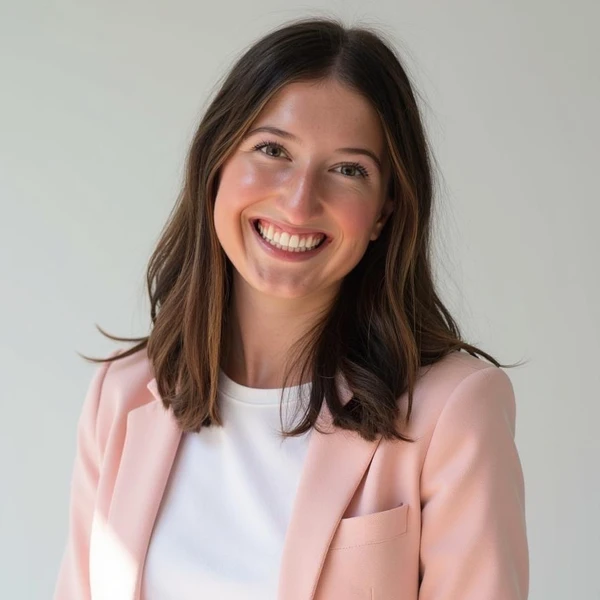
I am the salutatorian of Dripping Springs High School, ranked in the top 1% of my class. I founded and serve as president of NeuroClub, my school’s first neuroscience organization, where I connect students to research, outreach, and hands-on learning in brain science and mental health. As Vice President of Competition for DECA and a two-time international finalist, I lead peers in strategic problem solving and innovation. I am also a varsity tennis captain and cross-country athlete, experiences that have shaped my discipline and resilience. Through my blog, Mind & Medicine, I explore adolescent mental health and cognitive development. I plan to pursue neuroscience and contribute to research that improves youth mental health outcomes.
Education
Dripping Springs High School
High SchoolMiscellaneous
Desired degree level:
Doctoral degree program (PhD, MD, JD, etc.)
Majors of interest:
- Neurobiology and Neurosciences
- Medicine
Career
Dream career field:
Medicine
Dream career goals:
Neurosurgeon
Server; host; curbside; expeditor
The League Kitchen & Tavern2023 – Present3 years
Sports
Cross-Country Running
Varsity2022 – 20253 years
Awards
- Top 10 in districts twice
Tennis
Varsity2021 – 20254 years
Awards
- MVP
- Most Improved
- 2nd at Districts
Research
Neurobiology and Neurosciences
iResearch — Primary Student Investigator2025 – Present
Be A Vanessa Scholarship
Most people at my school know me for one thing: if there is a gap, I will build something to fill it.
When I realized our campus had no space dedicated to neuroscience or mental health education, I founded NeuroClub. When I saw younger students struggling to understand the science behind anxiety, I started writing my blog, Mind and Medicine, to translate research into language families could actually use. When I noticed how often students dismissed stress as weakness, I organized outreach events that made brain science interactive and approachable. I have become known not just for ambition, but for action.
I am a senior at Dripping Springs High School in Texas, and I plan to pursue a degree in neuroscience on a pre medical track. My goal is to become a physician specializing in adolescent mental health. I want to combine research, clinical care, and education to improve how we understand and treat young people navigating stress, anxiety, and identity in a rapidly changing world.
Education, to me, is not just a pathway to a career. It is a tool for impact. Through rigorous coursework and research, I will gain the scientific foundation necessary to practice evidence based medicine. Through leadership and outreach, I will continue building programs that make healthcare knowledge accessible beyond hospital walls. I want to create systems that prevent crises, not just respond to them. That means advocating for mental health literacy in schools, improving communication between providers and families, and addressing disparities in access to care.
Adversity has shaped this commitment. My family has navigated seasons of uncertainty that required resilience and discipline. There were moments when balancing high academic expectations, athletics, and financial realities felt overwhelming. Instead of shrinking, I leaned in. I took on a part-time job, earned healthcare certifications, and managed my time with intention. Watching my family work tirelessly to create opportunity instilled in me a deep sense of responsibility. Nothing has been handed to us without effort.
I also witnessed adversity through service. At El Buen Samaritano, I met families who could not access the care they needed due to cost or language barriers. I remember translating for a woman seeking medical help and realizing compassion alone was not enough without resources. That moment clarified my purpose. I do not want to practice medicine in isolation from the community. I want to advocate for equitable systems that ensure care reaches those who need it most.
Vanessa was known for her kindness and the way she stood out with her bows and pink. I may not wear bows, but I am known for bold initiative and relentless follow-through. I plan to use my education not simply to succeed personally, but to create structures that make success and health more attainable for others. That is how I will make the world better: by turning knowledge into access and ambition into service.
Siv Anderson Memorial Scholarship for Education in Healthcare
The first time I translated for a family asking about medical care, I realized how fragile access to healthcare can be. A woman stood in front of me at El Buen Samaritano, asking if we offered free medical services. I explained, as gently as I could, that we did not. She nodded, thanked me, and walked away. That moment stayed with me. Compassion was present. Resources were not. I understood then that healthcare is not just about knowledge. It is about access, communication, and advocacy.
I am a senior at Dripping Springs High School in Texas, and I plan to pursue a degree in neuroscience on a pre-med track. My commitment to healthcare is rooted in both science and service. I am fascinated by the biological foundations of mental health, particularly how adolescent brain development intersects with anxiety and environmental stressors. At the same time, I am deeply aware that understanding the brain in a lab means little if patients cannot access care in their communities.
Throughout high school, I sought experiences that strengthened this commitment. I became a Certified Patient Care Technician and completed CPR, AED, and OSHA certifications to build practical clinical skills. I founded NeuroClub to expose students to neuroscience and health-related careers, organizing outreach programs for younger students to make complex medical concepts approachable. Through my blog, Mind and Medicine, I translate research on topics such as screen time and anxiety into language families can understand. I believe healthcare should be grounded in evidence but communicated with clarity.
My interest in medicine centers on adolescent mental health. During my independent research on screen time and emotional regulation, I examined how overstimulation can impact attention networks in developing brains. The data was compelling, but what mattered most was the human side of it. Behind every data point was a student navigating pressure, comparison, and stress. I want to be the kind of physician who understands both the neural circuitry and the lived experience of the patient sitting across from me.
Healthcare requires resilience, empathy, and discipline. As a varsity athlete balancing advanced coursework and leadership roles, I learned to manage time intentionally and perform under pressure. These habits will carry into the demanding years of medical training. More importantly, I have learned to listen. Whether leading teammates or mentoring younger students, I have seen how trust is built through attention and consistency.
Siv Anderson dedicated her life to preparing students for healthcare careers. I share that commitment to growth and impact. My goal is not only to enter the medical profession but to improve how care is delivered, especially for adolescents and underserved communities. I am committed to pursuing rigorous education, engaging in research that advances understanding of mental health, and practicing medicine with both competence and compassion. Healthcare, to me, is not simply a career path. It is a responsibility to bridge science and service in a way that changes lives.
Nicholas Hamlin Tennis Memorial Scholarship
Match point. Down 5–6. Second serve.
There is nothing quite like the silence before you toss the ball. In that pause, everything is exposed. Your preparation. Your composure. Your ability to trust yourself.
I have played varsity tennis for three years at Dripping Springs High School, eventually earning MVP and serving as Team Captain. But what tennis has taught me extends far beyond footwork and forehands. It has shaped how I handle pressure, lead others, and envision my future.
Early on, I treated tennis like a performance. I obsessed over winning quickly and hitting harder. When I lost, I internalized it. A bad match felt like a personal failure. Over time, especially in high stakes district matches, I realized that the athletes who endured were not the most explosive. They were the most composed. Tennis forced me to separate identity from outcome. One missed shot did not define me. One lost set did not erase months of work. That mental recalibration changed everything.
As captain, I learned that leadership in tennis is subtle. You cannot step onto the court and play the match for someone else. You lead through tone, preparation, and consistency. I made it a priority to show up early, to stay late rallying with younger players, and to check in with teammates after tough losses. I discovered that influence is not loud. It is steady. That lesson has carried into every other area of my life, from leading the neuroscience club I founded to competing internationally in DECA.
Tennis also refined my relationship with pressure. Balancing AP coursework, research, and extracurricular leadership while competing in season required discipline. I learned to manage my time with intention, structuring study blocks around practices and tournaments. The court became my training ground for focus. When you are down in a third-set tiebreak, distractions are not an option. You narrow your attention to the next serve, the next return. That skill of controlled focus now defines how I approach exams, presentations, and future ambitions.
Perhaps most importantly, tennis reshaped my definition of success. The sport is inherently individual. When you step onto the singles court, there are no substitutions. Yet it is also deeply communal. Your teammates line the fence, tracking every point. You win and lose together. I learned that excellence is personal effort in the service of something larger than yourself. That mindset has shaped my long-term goals. I plan to pursue neuroscience on a pre-medical track, and the discipline of tennis instilled in me will carry into research labs, lecture halls, and eventually patient care.
Tennis has been my teacher in resilience, composure, and quiet leadership. It has shown me that growth is incremental, that setbacks are temporary, and that confidence is built through preparation. When I step onto a court, I trust my training. As I step into my future, I carry that same trust.
Matthew Hoover Memorial Scholarship
At 5:30 a.m., before most of my classmates are awake, I am already lacing up my spikes in the dark. The air is quiet, my legs are heavy, and my to do list for the day is already running through my head. That is where most of my growth has happened, not just as an athlete, but as a student.
I am a three year varsity cross country runner and three year varsity tennis player at Dripping Springs High School. In cross country, I have been a two time top ten finisher and learned what it means to push through discomfort when no one is cheering. In tennis, I served as Team Captain and earned MVP, leading practices and supporting teammates through tough matches. Competing in multiple sports has required discipline, but more importantly, it has shaped how I approach academics and leadership.
Balancing athletics with a 4.0 unweighted GPA and a course load filled with AP classes has never been accidental. During season, my days are structured down to the hour. Practice ends, I grab dinner, and I move straight into studying. I learned quickly that waiting for motivation is not a strategy. Systems are. I plan my week every Sunday, breaking assignments into manageable pieces around meets and matches. Long bus rides to tournaments become study sessions. Recovery time becomes reading time.
There were weeks when this balance felt almost impossible. During cross country season, I was simultaneously preparing for DECA international competition and leading the neuroscience club I founded. I remember finishing a meet exhausted, then opening my laptop that night to finalize research slides. It would have been easier to choose one area and scale back. Instead, I chose to grow into the challenge. Athletics taught me endurance, and I applied that same endurance to my academics.
Sports have also strengthened my leadership. As tennis captain, I learned that influence is earned through consistency. Showing up early, staying late, and modeling composure under pressure built trust. That same mindset translated into the classroom and my extracurriculars. When I lead meetings or present research, I bring the calm focus I developed before stepping up to the service line at match point.
Most importantly, being a student athlete has shaped my character. Cross country taught me that progress is incremental and often invisible before it becomes obvious. Tennis taught me that setbacks are temporary if you adjust your strategy. Both sports reinforced time management, accountability, and resilience. I do not see academics and athletics as competing priorities. I see them as complementary forces that sharpen each other.
Matthew Hoover believed in well-rounded students who balance responsibility with ambition. As a multi-sport athlete maintaining academic excellence, I have learned that discipline is not about perfection. It is about commitment. That commitment is what I will carry with me into college and beyond, whether I am in a classroom, on a court, or pursuing my long-term goal of becoming a physician.
Peyton Heart Project Scholarship in Memory of Peyton James
WinnerWhen I was fourteen, I thought mental health was something you learned about in a textbook and moved on from. That changed the day a fourth grader asked me why his brain “wouldn’t be quiet.” I was volunteering at a local elementary school through NeuroClub, the neuroscience organization I founded at Dripping Springs High School in Texas. Sitting on the classroom floor, trying to explain anxiety in a way a child could understand, I realized mental health is not abstract. It is immediate, personal, and often misunderstood.
My name is Bella Rose, and I am a senior at Dripping Springs High School. This fall, I plan to attend a four-year university where I will study neuroscience on a pre-med track. My long-term goal is to become a physician who bridges research and patient care, particularly in adolescent mental health. Throughout high school, I have explored this field through independent research, community outreach, and writing my blog, Mind and Medicine, where I translate complex neurological concepts into accessible stories.
During these years, I learned that mental health exists at the intersection of biology and environment. In my research on screen time and anxiety, I examined how overstimulation affects emotional regulation and attention in developing brains. Data points became real stories about students navigating constant notifications and social pressure. At the same time, during my internship at El Buen Samaritano, I saw how access to care is shaped by language barriers, financial constraints, and stigma. A diagnosis means little if someone cannot afford treatment or feels ashamed to seek it.
I also learned that stigma often hides in subtle ways. I have heard therapy reduced to a joke and stress dismissed as weakness. Yet I have watched entire rooms shift when someone speaks honestly. When a student shared her experience with panic attacks during a NeuroClub discussion, others quietly admitted they felt the same. Silence reinforces stigma. Conversation disrupts it.
In the years to come, I will apply these lessons intentionally. In college, I plan to engage in research on mood and development while continuing outreach efforts that make neuroscience practical for families and students. I want to create spaces where mental health is discussed with both scientific rigor and empathy. As a future physician, I will prioritize listening as much as diagnosing, ensuring that patients feel understood rather than judged.
High school taught me that mental health is not a side issue. It shapes how we learn, connect, and define ourselves. By grounding conversations in science and approaching them with compassion, we can replace stigma with literacy. That is the perspective I will carry with me into every classroom, lab, and clinic I enter.