Hobbies and interests
Band
Reading
Literary Fiction
I read books multiple times per week
Bella Kelly
1x
Finalist1x
Winner
Bella Kelly
1x
Finalist1x
WinnerBio
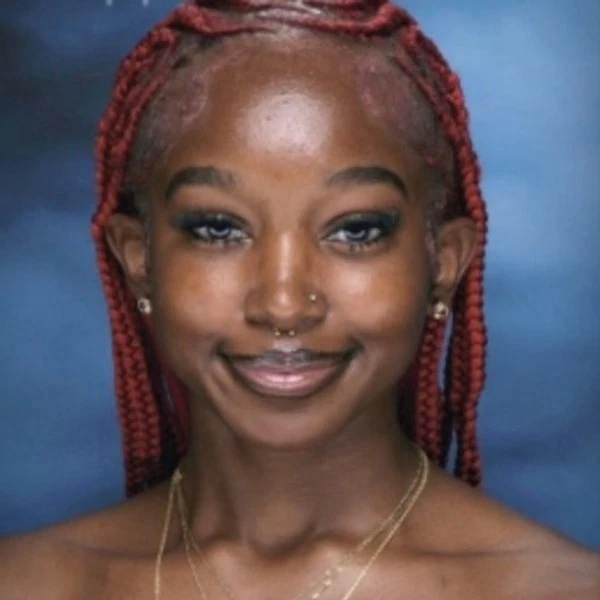
Bella Kelly is an 18-year-old senior from Atlanta, Georgia, currently attending Forest Park High School. She has been an active member of her school’s marching band for five years, playing both the trombone and saxophone. With a strong academic record and a 3.8 GPA, Bella is dedicated to excellence in both her studies and extracurricular activities. She plans to pursue a career as a pediatrician, driven by her passion for helping children and making a positive impact in her community.
Education
Forest Park High School
High SchoolMiscellaneous
Desired degree level:
Bachelor's degree program
Majors of interest:
- Medicine
Career
Dream career field:
Medical Practice
Dream career goals:
Cashier
Rack Room Shoes2024 – 20251 yearCashier
Publix Supermarket2025 – 20261 year
Arts
Band
Music2022 – PresentBand
Music2022 – Present
Public services
Volunteering
Beta, SGA, Community Service — Volunteer2022 – Present
WCEJ Thornton Foundation Low-Income Scholarship
The transition from high school to college represents an incredible opportunity for me as I pursue higher education. Higher education is much more than just fulfilling a requirement; it is a path toward achieving my goals and making a positive impact on the world around me. I envision that this experience will help me grow academically as well as give me all of the knowledge, resources, and experiences I'm going to need to have a successful future.
As I pursue higher education, I will acquire specific skills and knowledge within my field that will lead towards a fulfilling and long-lasting career. However, attending college will challenge me to develop life skills in critical thinking, effective communications, and adaptability regardless of what field I ultimately choose to provide me with the ability to succeed in this fast-paced environment. Having the chance to engage with others through clubs, leadership opportunities, and campus activities will build my confidence and networks—all which will help me develop the capacity to positively impact people's lives.
I hope to be successful, and use that success to give back to my community. I want to support my community through mentorship, service, and being an example of what one can achieve if they have the dedication and perseverance necessary. I understand the difficulties of having limited financial means, so I want to be there for others who may feel hopeless or left out.
In addition, I will create a positive impact by being involved and also being intentional about the things that I do. This means being involved in community outreach programs, supporting programs that create access to higher education, and advocating for access to opportunities for students like me. I have faith that the way impact occurs is not necessarily through big, attention-getting actions, but through the small, consistent things that you do to help and encourage others around you.
Getting a higher education will provide me with the necessary tools, but what I do with those tools is what is really important. I intend to use my education as a stepping stone not only for my individual success but also as an avenue to create a greater purpose. I am investing in myself today so I will be ready to invest in others tomorrow. I will use my education to grow, give back, and create opportunities for others while building a future rooted in purpose and impact.
Bettie Lott and Vera Times Public Health Scholarship
WinnerBeing born from Emory Midtown, and growing up in Forest Park, Georgia, I have seen how the access to quality healthcare can shape a child’s future and determine their development in a school system. One of the most pressing issues on public health in my community is the limited access to affordable and consistent pediatric healthcare. With many neighborhoods across the South Metro Atlanta area, families are increasingly faced with barriers whether that be: insurance, transportation, long wait times, or just the mere shortage of nearby primary health providers. These obstacles prevent children from being accessible to preventive care and early treatment, leaving them susceptible to long term health consequences. As an aspiring pediatrician, this issue deeply matters to me because I see how it directly affects the students and families around me.
In my community, it is common for families to rely on the emergency room instead of primary care physicians. Even though emergency rooms are critical for urgent situations, they are not designed to be the leading output to provide ongoing preventative care. Children often miss out on annual physicals, developmental screenings, vaccinations, and mental health check in’s which are essential for spotting issues like: asthma, obesity, anxiety, and other untreated infections early on. I’ve seen classmates of my own miss school for periods of time due to preventable illnesses, and younger children fall short academically because of unmanaged health concerns that interfere with their focus and attendance. When healthcare is inconsistent, education indirectly suffers, and when education suffers, the cycle of inequality continues.
To improve healthcare access in my community, I would suggest several inventive and community-centered solutions. First, expanding school-based health clinics would bring medical assistance directly to the students. Since schools are already trusted and accessible facilities, and providing on-site healthcare professionals would allow students to receive vaccinations, mental health support, and routine check-ups without requiring the parents to miss work or arrange transportation. School-based clinics could also contribute health education workshops that advise students on healthy nutritional lifestyles, stress management, and the vision behind preventative care.
Secondly, mobile pediatric health units could travel to underserved neighborhoods on a consistent schedule. With these units, they can be in coalition with local hospitals and universities to provide screenings, physicals, and referrals at little to no cost. By meeting these families where they are, once again it will eliminate the transportation barriers and reduce overcrowding seen often in emergency rooms. The technology in these units could further enhance these efforts as they can consult directly with healthcare professionals virtually for non-emergency concerns.
Lastly, strengthening community alliances would be essential. If collaborations between local organizations, schools, healthcare providers, and churches could help families enroll in insurance programs or at least expose them and connect them to affordable care resources. Outreach campaigns led by trusted community leaders like your mayor, pastor, or teachers could reduce the stigma around issues like mental health and encourage people to get the help the deserve early on.
Addressing healthcare access isn't just about treating illness, it's about build a healthier and more sound future generation. When children receive support they are more likely to develop healthier life-long habits, perform better in school, and engage in extracurricular activities. As I matriculate down the path of becoming a pediatrician, I hope to return to communities like mine to serve families who deserve honest care. By implementing these strategies we can move toward a healthcare system where every child in Atlanta has the opportunity to succeed.