Hobbies and interests
Roller Skating
Beekeeping
Public Health
Mental Health
Education
Reading
Fantasy
Adventure
Mystery
Romance
Suspense
Thriller
Horror
I read books multiple times per month
Beatriz Reynoso De La Cruz
1x
FinalistBeatriz Reynoso De La Cruz
1x
FinalistBio
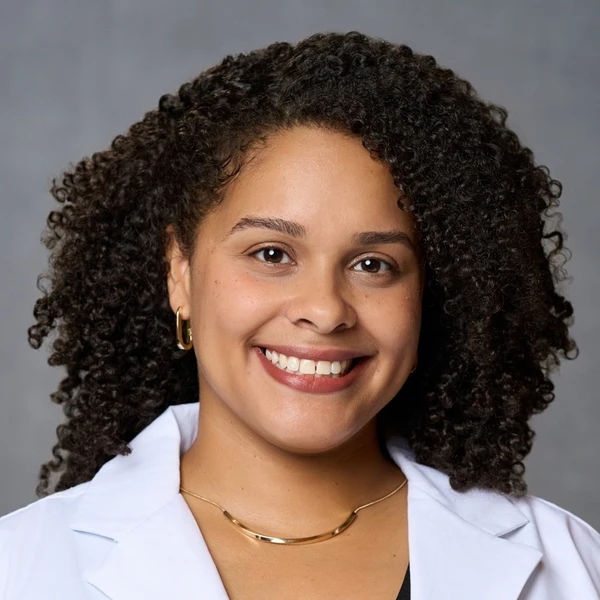
Hi, I’m Beatriz, a first-generation, non-traditional medical student. Before medical school, I spent 12 years as a special education teacher in my South Bronx community, where I worked closely with students and families to support growth, resilience, and self-advocacy. I am now pursuing medicine as another way to give back to the community that shaped me.
As a first-generation American, I am deeply committed to destigmatizing mental health in immigrant communities. I struggled with mental illness for much of my life, but it was not something openly discussed where I grew up. I often felt alone until attending college, where I learned that what I was experiencing was common and treatable. Accessing care gave me the language and tools to better understand myself and begin healing.
Through my work as a teacher, I witnessed the effects of generational trauma on families with limited resources, and through volunteer work in harm reduction, I supported individuals experiencing addiction and homelessness. These experiences strengthened my belief that mental healthcare should be compassionate, accessible, and free of stigma.
In medical school, my goal is to become a child and adolescent psychiatrist who creates safe, culturally responsive spaces where young people and their families feel heard, supported, and empowered. By combining my personal experiences, educational background, and medical training, I aim to help break the cycle of stigma and remind others that they are not alone.
Education
Ponce Health Sciences University-St Louis
Doctoral degree program (PhD, MD, JD, etc.)Majors:
- Medicine
LIU Brooklyn
Master's degree programMajors:
- Special Education and Teaching
Fordham University
Bachelor's degree programMajors:
- Sociology
Bronx High School For Medical Science
High SchoolMiscellaneous
Desired degree level:
Doctoral degree program (PhD, MD, JD, etc.)
Graduate schools of interest:
Transfer schools of interest:
Majors of interest:
- Medicine
Career
Dream career field:
Medicine
Dream career goals:
To become a compassionate physician who advocates for the underserved.
Equity Team, Co-Founder
NYC Public Schools2020 – 20255 yearsRestorative Justice Action Team, Co-Founder
NYC Public Schools2015 – 202510 yearsSpecial Education Teacher
NYC Public Schools2013 – 202512 years
Sports
Dancing
Intramural2015 – 20183 years
Research
Sociology
Dr. Norma Fuentes-Mayorga — Research Assistant2012 – 2013
Arts
Bronx United Cheer and Dance Team, Coach
Dance2024 – 2025
Public services
Volunteering
Alliance LES Harm Reduction Center — Harm Reduction Volunteer2023 – 2025
Future Interests
Advocacy
Volunteering
Philanthropy
Entrepreneurship
Women in Healthcare Scholarship
I decided to pursue healthcare because I have experienced how access to compassionate, informed care can shape a person’s life. Healthcare is not only about diagnosing and treating illness; it is about being heard, believed, and supported during moments of vulnerability. My journey into this field has been shaped by my experiences as a first-generation immigrant woman and by my own relationship with mental health.
Growing up, healthcare, particularly mental healthcare, often felt inaccessible and intimidating. Cultural stigma, limited resources, and lack of representation made seeking care difficult, especially for women in immigrant communities where endurance and silence were often valued over vulnerability. Mental health was something to push through, not discuss openly. When I eventually accessed compassionate mental health care, it transformed my understanding of what healthcare could and should be. That support quite literally changed the course of my life, showing me how powerful care can be when it is rooted in empathy, cultural awareness, and respect for the whole person.
I am now a medical student pursuing a career in psychiatry because I want to be part of the change I once needed. Mental health remains deeply stigmatized, and many individuals delay or avoid care due to fear, shame, or prior experiences of being dismissed. As a woman in healthcare, I hope to help normalize conversations around mental health and create clinical spaces where patients feel safe being honest about their struggles. Women bring essential strengths to healthcare - empathy, collaboration, and attentiveness to the social factors that influence health - and these qualities are especially vital in psychiatric care.
At the same time, I am acutely aware of the barriers women continue to face in healthcare education and leadership. Historically, women have been underrepresented and have had to fight for recognition in academic and clinical spaces. Pursuing a healthcare degree is also financially demanding, and for students without generational wealth or strong safety nets, the burden can be overwhelming. As a low-income, first-generation student, financial stress has often competed with my ability to focus on learning and self-care fully. Scholarships like this are affirmations that women’s contributions to healthcare are valued and worth investing in.
Looking ahead, I hope to make a difference by providing accessible, culturally responsive mental healthcare to individuals who feel unseen within traditional systems. I also hope to mentor other women who may question whether they belong in the healthcare field. Representation matters, and I want to be visible proof that women from diverse backgrounds can not only enter this field but also lead within it.
With the support of this scholarship, I will continue my training to shape a more inclusive, compassionate healthcare system - one where women’s voices, lived experiences, and leadership strengthen the care we provide and expand who healthcare is truly for.
Ethel Hayes Destigmatization of Mental Health Scholarship
My experience with mental health has shaped every part of who I am - how I see the world, how I connect with others, and the goals I now hold with intention and purpose. Living with depression taught me early that pain does not always look the way people expect it to. For many years, I learned how to survive while feeling deeply alone.
As a first-generation American raised in an immigrant community, mental health was rarely discussed. Emotional struggle was something to endure privately, and I absorbed the belief that asking for help was a sign of weakness or failure. Because of this, I learned to suppress my feelings and minimize my pain, even to those closest to me. This shaped my relationships in profound ways. I often felt disconnected, unable to fully explain what I was carrying, and afraid that honesty would burden or disappoint others. The silence protected me on the surface, but underneath, it deepened my isolation.
Everything began to shift when I gained access to mental health care. For the first time, I was given language for what I had been experiencing and reassurance that I was not broken. Therapy helped me understand that depression is not a moral failing, but a human response shaped by biology, environment, trauma, and culture. That realization was both painful and liberating. It allowed me to grieve the years I spent suffering quietly, and it permitted me to imagine a different way of living.
This journey transformed my relationships. I became more open, more compassionate, and more attentive to what others might be carrying beneath the surface. I learned that vulnerability is not something to fear, but something that builds trust and connection. I now approach relationships with greater patience and empathy, understanding that everyone is fighting battles that may never be visible. Mental health taught me how to listen deeply, not just to words, but to silence.
Most powerfully, my experience shaped my aspirations. Mental health care quite literally saved my life, and that truth guides my path forward. I am currently a medical student pursuing a career in psychiatry because I want to be part of the support that once made survival feel possible for me. I am especially committed to working with young people and immigrant communities, where stigma and silence often delay care and deepen suffering. I want to help create spaces where people feel safe naming their pain without fear or shame.
Living with depression has also reshaped how I understand the world. It has shown me how deeply interconnected we are, and how much harm is caused when mental health is ignored or misunderstood. Recovery is not a straight line, and healing is not something that happens once and ends. It is an ongoing process that requires compassion, support, and honesty.
The legacy behind this scholarship resonates deeply with me because it honors the cost of silence and the power of openness. My journey has taught me that bringing darkness into the light is not easy, but it is necessary, and often life-saving. That belief shapes how I live, how I love, and how I hope to serve others.
Safak Paker-Leggs Science Education Scholarship
My journey into science has been shaped as much by persistence as by passion. As a first-generation immigrant woman pursuing advanced training in health sciences, I entered this field without the generational knowledge, mentorship, or reassurance that often make scientific careers feel attainable. Instead, I learned to navigate this journey alone - asking questions and teaching myself how to belong in spaces that were not always built with women like me in mind.
My interest in science grew from a desire to understand the human body and mind from a place of compassion. Studying medicine has shown me how deeply science intersects with lived experience, culture, and access. However, entering these spaces as a woman, and especially as a first-generation immigrant, came with barriers that were both visible and invisible. I often felt pressure to prove my competence and to take up less space. In male-dominated and highly competitive environments, confidence is often mistaken for arrogance in women, while silence is interpreted as a lack of ability.
One of the greatest challenges I faced was the absence of mentorship. Few people looked like me or shared my background, and fewer who could explain the unspoken rules of getting into medical school and succeeding in medical school. As a first-generation immigrant, my family valued education deeply but could not guide me through applications, funding structures, or professional networking. I learned to navigate these systems largely on my own, through trial, error, and resilience. Financial limitations added another layer, forcing me to balance survival with academic excellence.
Despite these challenges, my background has become a source of strength. Being an immigrant taught me adaptability, perseverance, and humility. It has also shaped my commitment to mentorship. I understand how isolating it can feel to pursue a career without role models or affirmation, and I am intentional about supporting other women who are just beginning to see themselves as physicians or in other health-related careers.
Safak Paker-Leggs’ legacy resonates deeply with me because mentorship is a lifeline. I have experienced how one person’s encouragement can change the trajectory of a career, and how its absence can delay confidence and opportunity. My goal is not only to advance in medicine but to uplift other women, particularly immigrants and first-generation students, by offering the guidance and support I once needed.
This scholarship affirms that women, especially immigrant women, have a place in science, and that our perspectives strengthen the field. I am committed to carrying that legacy forward by mentoring others, advocating for equity in scientific spaces, and ensuring that the path to medicine feels less intimidating for the women who follow.
Redefining Victory Scholarship
Ella's Gift
For much of my life, I lived with severe depression in silence. As a first-generation immigrant woman, mental health was not openly discussed in my family or community. Struggle was something to endure quietly, and women were expected to push through for the "good of the family." I learned early how to mask: to meet expectations, perform well, and appear capable, while privately carrying a weight that made daily life feel overwhelming.
My depression was not fleeting or situational; it was persistent and isolating. There were long periods when getting out of bed felt impossible, and the future felt unreachable. I internalized the belief that my suffering was a personal failure rather than an illness, reinforced by cultural stigma that framed emotional pain as weakness or ingratitude. My brain echoed the words people would say to me: "It could be worse. You're not really struggling; you have a roof over your head." So, I kept it inside. That silence deepened my despair and delayed my ability to seek help, leaving me to believe I had to survive alone.
What ultimately saved my life was access to compassionate mental health care. Therapy gave me language for experiences I had never been allowed to name and helped me understand that depression is not a moral failing, but a medical condition deserving of treatment and care. Being seen, believed, and supported fundamentally changed my relationship with myself. I learned that recovery is not linear or finite. Recovery is an ongoing process of awareness, support, and self-compassion.
Even now, as a medical student, depression is something I actively manage. Medical training is demanding and often isolating, especially as a low-income, first-generation student without financial or familial safety nets. I moved to a new city to begin a new life all on my own. This triggered a mental health crisis in which I learned the importance of community support. Even though there are days when stress and exhaustion threaten to pull me back into silence, choosing to prioritize my mental health in this environment requires intention and courage. It means continuing therapy, recognizing early warning signs, setting boundaries, and reminding myself that my well-being is foundational to my education.
My lived experience is the reason I aspire to become a psychiatrist. Psychiatry did not just treat my symptoms; it gave me my life back. I want to be the physician who understands how culture, stigma, and silence shape mental illness, and who creates space for patients to feel safe being honest about their struggles. I am particularly drawn to working with individuals from backgrounds where mental health remains taboo, and where asking for help feels risky or shameful.
My plan for continuing recovery is grounded in consistency, accountability, and self-compassion. I remain engaged in mental health care, maintain routines that support emotional stability, and stay connected to supportive relationships. I approach recovery as a lifelong commitment rather than a destination. In honoring Ella’s fighting spirit, this scholarship represents belief in women who persist despite invisible battles. My journey is one of survival, growth, and hope, and it is the foundation of the physician I am becoming.
Second Chance Scholarship
I want to make a change in my life because I know what it means to be in survival mode and I want to help others move away from that. For over a decade, I worked as a special education teacher in underserved communities, supporting students whose academic struggles were often rooted in unmet mental health needs. While advocating for my students, I was also navigating my own mental health journey and learning how powerful compassionate, accessible care can be. Seeing both sides of this reality made it clear that I wanted to do more than support individuals within a system; I wanted to help change the system itself. That realization led me to pursue medicine.
Transitioning from teaching to medicine required starting over in nearly every sense. As a low-income, first-generation student without financial support, I returned to school while working full-time, completed prerequisite coursework, strengthened my academic record, and prepared for the MCAT. Throughout this process, I remained grounded in service through community outreach and harm reduction work, which reinforced my commitment to caring for people who are often marginalized or overlooked. Each step I took affirmed that my lived experiences were not barriers, but sources of empathy, resilience, and purpose.
This scholarship would be deeply impactful. Financial strain is a constant reality that competes with my ability to focus fully on my medical education and well-being. I cannot work while in medical school, so I rely on loans to cover all my living expenses. At times, I skip meals to save money on groceries. Support from this scholarship would reduce that burden and allow me to continue my training with greater stability and focus. I would feel like I can breathe easier. More than financial assistance, this scholarship would represent belief in my journey and in the value of physicians who come from, and remain committed to, underserved communities.
I plan to pay this forward by becoming a psychiatrist who provides compassionate, culturally responsive care to individuals struggling with mental illness, particularly those from low-income and first-generation backgrounds. I hope to mentor students who feel out of place in medicine, advocate for mental health equity, and continue community-based work that prioritizes dignity and access to care. Just as others have supported me during pivotal moments of transition, I intend to be that source of guidance and encouragement for someone else - because no one should have to navigate healing or ambition alone.
Dr. Tien Vo Healthcare Hope Scholarship
As the child of immigrant parents and a first-generation college student, my path to medicine has been anything but traditional. My only experience in medicine was spent translating paperwork, navigating systems my family didn’t understand, and learning early that care isn’t always accessible to those who need it most. That experience has fueled my desire to become a physician.
My journey has been shaped by persistence. For over a decade, I worked as a special education teacher in my hometown of the South Bronx, supporting students with disabilities, advocating for equity, and uplifting families who, like mine, were navigating institutional barriers. When I realized I wanted to pursue medicine, I didn’t have the luxury to pause my life and go back to school full-time. I worked full days, studied at night, and spent weekends volunteering at a harm reduction center. Balancing full-time work with post-baccalaureate coursework and medical school preparation was exhausting, but it was also a test of how deeply I believed in my calling. I knew that medicine was how I envisioned giving back to my community.
The application process itself was another hurdle. Without a roadmap or family experience to guide me, I had to build my support network from scratch, seek out mentors, and learn from every setback. I also had to be resourceful in finding ways to fund the high application costs. I applied to medical school while teaching, caregiving, and managing my own health. It was challenging and, at times, discouraging. But I never stopped moving forward.
Now, as I move forward with a clearer purpose, I plan to use my medical degree to bring compassionate, culturally grounded care to the very communities I come from. I am particularly committed to serving Latinx populations, women, LGBTQ+ individuals, and people navigating addiction and mental health challenges - those who too often experience healthcare as a place of judgment or exclusion. I want to be the kind of doctor who listens, affirms, and advocates. I want to be someone who helps build systems of care that truly include everyone.
Medicine is more than a career to me; it’s a continuation of a lifelong mission to serve, uplift, and make justice tangible. However, medical education is costly, requiring loans to cover both my tuition, fees, and living expenses. This scholarship would not only ease the financial burden of this journey, but it would be a recognition that stories like mine belong in medicine, too.
Pay It Forward Scholarship
I chose to pursue medicine because I’ve spent my life serving people in systems that weren’t built for them, and I want to help build something better. As a special education teacher for 12 years in my neighborhood of the South Bronx, I worked with students who faced the compounded challenges of poverty, disability, language barriers, and systemic inequity. As a South Bronx native to immigrant parents, I've also faced similar obstacles in my journey. This fueled my passion to advocate for my community in my work as an educator; now I want to expand my advocacy by serving people through healthcare.
My experiences showed me that health and well-being are deeply connected to how people are treated by the institutions meant to serve them. I’m pursuing medicine to help transform those systems from the inside. I want to become a physician who provides culturally responsive, human-centered care to communities that have historically been neglected - especially Latinx patients, women, and LGBTQ+ individuals.
My clinical interests include psychiatry, reproductive health, and harm reduction. These are fields where stigma often prevents people from accessing the care they need. I currently volunteer at the Alliance LES Harm Reduction Center, where I lead overdose prevention trainings and helped develop wound care kits in response to an increase in Xylazine-related injuries. Designed with input from participants, these kits reflect the kind of medicine I hope to practice: compassionate, collaborative, and grounded in trust.
As a bilingual future physician, I also want to close the gap in language access that so often alienates patients from their providers. I want to ensure my patients feel safe naming their identities and needs, whether that means offering gender-affirming care, discussing contraception options, or simply listening without judgment.
Ultimately, I chose medicine because I want to walk alongside people in their most vulnerable moments and ensure they are met with dignity, not dismissal. I see healthcare as both an act of healing and a platform for justice. I’m entering medicine to serve, bringing with me years of experience in education, deep roots in my community, and a steadfast commitment to justice. With this degree, I hope to work in community-based clinics or public hospitals that serve the very populations I’ve dedicated my career to. However, medical education is costly, requiring loans to cover both my tuition, fees, and living expenses. This scholarship would provide me with much-needed financial relief as I work to carry forward Dr. Michael Paglia's legacy of providing our most vulnerable with compassionate care.
Catrina Celestine Aquilino Memorial Scholarship
I’m a first-generation student and former special education teacher pursuing a career in medicine to serve my community by providing quality and compassionate healthcare. After 12 years working in public schools in my South Bronx neighborhood, I witnessed how structural inequality impacts everything from education to health. That insight has guided my transition into medicine and continues to shape the kind of physician I hope to become.
My goal is to provide human-centered, culturally responsive care to underserved communities, particularly Latinx, LGBTQ+, and women-identifying patients. These populations often face systemic barriers to healthcare, along with stigma or mistrust in clinical settings. I want to create spaces where patients feel heard, respected, and cared for holistically.
As a bilingual future physician, I plan to bridge gaps in language and cultural understanding, especially for Latinx patients who may hesitate to seek care. I am also committed to reproductive justice and gender-affirming care, and hope to support patients whose needs are too often overlooked or misunderstood. I believe medicine should be collaborative, where care is shaped with, not just for, patients.
My work in harm reduction has helped me see what this looks like in action. At the Alliance LES Harm Reduction Center, I lead overdose prevention trainings and co-developed participant-informed wound care kits in response to an increase in Xylazine-related injuries. The kits include test strips, first aid supplies, and educational materials designed with direct input from our participants. This work has taught me that care must be collaborative, nonjudgmental, and rooted in trust, especially for those who have been failed by traditional healthcare systems. It is this philosophy I hope to carry with me into medicine.
Catrina Celestine Aquilino’s life and work resonate deeply with me. Her belief that a person’s background should never determine care mirrors my own values. Her global and multilingual approach to service inspires me to stretch beyond the clinical setting and remain rooted in community, in advocacy, and human connection. Like her, I believe in equity, global thinking, and making systems more accessible to all.
I’m entering medicine to serve, bringing with me years of experience in education, deep roots in my community, and a steadfast commitment to justice. However, medical education is costly, requiring loans to cover both my tuition, fees, and living expenses. This scholarship would provide me with much-needed financial relief as I work to carry forward Catrina’s legacy of care, advocacy, and inclusion.