Hobbies and interests
Violin
Advocacy And Activism
Biotechnology
Coffee
DECA
Genetics
Concerts
Global Health
Health Sciences
HOSA
Batul Siddiqui
1x
Finalist1x
Winner
Batul Siddiqui
1x
Finalist1x
WinnerBio
Bioengineering Student | Undergraduate at UW
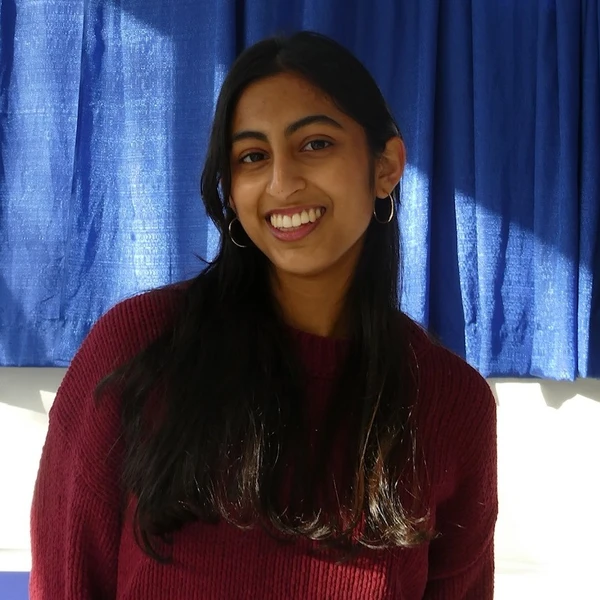
I am an incoming freshman at the University of Washington with a deep passion for healthcare and bioengineering. My goal is to become a biomedical engineer/researcher so that I can help underserved communities and innovate in the technology and healthcare space.
When I’m not hitting the books to study, you can find me volunteering with Indus Hospital and Health Network, developing and mentoring through my self-founded internship program for healthcare projects, performing as a violinist Chamber Orchestra, or getting comfortable with a good book.
I am seeking scholarships to bridge the gap between my dreams and the rising costs of tuition, ensuring I can focus on my studies and give back to my community.
Education
Eastlake High School
High SchoolMiscellaneous
Desired degree level:
Bachelor's degree program
Majors of interest:
- Biomedical/Medical Engineering
- Biological/Biosystems Engineering
Career
Dream career field:
- Nanotechnology
Dream career goals:
Sports
Badminton
Junior Varsity2022 – 20242 years
Research
Biological/Biosystems Engineering
Friends of Indus Hospital — Lead Software and Hardware Engineer2025 – 2026Microbiological Sciences and Immunology
Polygence — Lead Researcher2024 – 2025
Arts
Eastlake High School Chamber Orchestra (Upper Level)
Music5 concerts performed each year, 2 festival competitions, 1 community center performance.2023 – 2026Bellevue Youth Symphony Orchestra
Music2018 – 2023
Public services
Volunteering
Essentials First — Volunteer2020 – 2023Volunteering
The Citizens Foundation — Volunteer2019 – PresentAdvocacy
Friends of Indus Hospital — Founder and Coordinator of Youth Ambassador Program2023 – PresentVolunteering
Friends of Indus Hospital (FOIH) — Volunteer2018 – Present
Future Interests
Advocacy
Entrepreneurship
Sloane Stephens Doc & Glo Scholarship
I still remember walking through the halls of an Indus Hospital in Karachi for the first time. Years of fundraising, babysitting donors' kids at events, and building projects from thousands of miles away had led to that moment. Words still can't fully capture how it felt taking those steps, knowing I was one of the bricks that completed that colossal structure. That feeling is what drives everything I want to do with my education.
I grew up volunteering with Friends of Indus Hospital, a US-based organization funding free healthcare across Pakistan. For a long time, my role was one I'd inherited from my parents. But I wanted more than to show up at fundraisers. I wanted to build something of my own. So I created the FOIH Youth Ambassador Program, an internship giving other teens a way to put their skills toward real impact. Recruiting interns, ideating projects, and coordinating with the Pakistan team taught me how to lead without a rubric to follow. It also introduced me to the people who inspire me most. I met interns who worked tirelessly to find where their own strengths were needed and the FOIH Pakistan team who trusted me, a teenager an ocean away, to spearhead projects that had lifesaving potential.
That partnership led to my proudest project. When flooding devastated Pakistan in 2022 and 2023, I learned how badly disaster zones needed portable, automated respiratory support. So I built one. Version 0 of the AutoAmbuBag was rough, but it worked. Getting there meant trying out at least twelve motors, each either too weak or too strong. Not to mention the countless nights spent debugging code and re-fastening stubborn hardware. These setbacks and struggles taught me that failure isn't permanent or a punishment; it's just new information that pushes me in the right direction. That mindset carried me from a bare-bones prototype to a working device that earned recognition and opened discussions about field testing, and it's the same mindset I bring to every group I've worked with since.
But my curiosity and desire to learn didn't stop at engineering. Through my school's Technology Student Association, I explored CRISPR/Cas9 as a potential solution to muscle atrophy in microgravity, work that pulled me deeper into genetics. That led me to independent research on leukemia, where I studied immunotherapies and nanoparticle treatments and found real gaps in how we prevent toxicity to healthy cells while targeting cancer cells. Those gaps are the ones I want to spend my career closing.
As a biomedical engineering student, my vision is to pursue undergraduate research in gene therapy and immunology, the fields where I believe the next real breakthroughs in accessible medicine will happen. I want to build technologies and treatments that don't require a hospital in a major city or a family that can afford the bill, because I've seen firsthand what it costs entire communities when neither is accessible. The Sloane Stephens Doc & Glo Scholarship would let me pursue lab access, research opportunities, and most importantly higher education that I couldn't otherwise obtain. The kind of experience and knowledge that turns a research paper into a real solution isn't gained through luck, but through hard work and lifelong continuation of learning.
I think back often to that hallway in Karachi. Every hospital, every blood center, every patient treated exists because people decided to build something bigger than themselves, one brick at a time. I intend to keep laying my own bricks, one device, research project, and one achievement at a time.
Science and Advocacy Scholarship
Did you know that most cells in the human body contain six billion nucleotide pairs? A six billion piece puzzle that makes you unique from anyone or anything that has ever existed. That alone was almost impossible to wrap my mind around. But getting to cut and explore parts of that complex puzzle with my own two hands has shown me the endless possibilities unlocked by curiosity.
My biotechnology class was the first to introduce me to the complex nature of genetics and was my first taste of freedom in the labs that I chose. Fascinated by how DNA affects everything about who we are, I conducted experiments testing theories like whether a particular phenotype is linked to a dominant or recessive gene. From there, I wanted to further explore my interest in cellular biology with the idea of using technology to alter cellular functions. So, I joined the biotechnology event for Technology Student Association (TSA). Through TSA, I explored CRISPR/Cas9, a powerful gene editing tool, as a solution to severe muscle atrophy, specifically focusing on muscle atrophy from a microgravity environment.
These opportunities ignited my passion for investigating the intersection of technology and healthcare. So, I began pursuing my own independent research into cancer treatments. While many other diseases I had heard of were incredibly complex, none were quite as undeniably clever as cancer appeared to be. It seemed to know exactly when to spread, where to go, and how to avoid detection. So I decided to study it and the ways that it could be treated beyond conventional approaches like chemotherapy. Of course, I couldn’t exactly conduct clinical trials, so instead, I did a deep dive to find data I could interpret on the specific disease I was tackling: leukemia. I focused on data from experimental treatments, including immunotherapies and nanoparticles. In conducting my study, I found significant gaps in the research on those treatments. My research paper discusses a path forward to address gaps in knowledge such as how to avoid toxicity to healthy cells which is a path I hope to pave with my career in biomedical engineering.
The truth is that inadequate healthcare access plagues countless individuals around the world. Individuals who are punished for their financial situations and geographic locations. This injustice cannot continue. Everyone from healthcare providers to international organizations to the broader public has a moral responsibility to do their part in making healthcare affordable, high quality, and accessible through donations, activism, research, volunteering, and more.
I refused to stand by and watch this suffering. In the coming years, I see myself expanding on my path towards improving access to healthcare worldwide through biomedical research that will contribute to medical innovations to save lives and through international advocacy to amplify the voices of communities in need. As a biomedical engineering student, I will expand on my interest in gene therapy and immunology by seeking out undergraduate research opportunities in biomedical laboratories. The Science and Advocacy Scholarship will help me gain insights from my professors, network and make friends, and advance my own independent research projects to create a better tomorrow.