Hobbies and interests
4-H
Agriculture
Animals
Barrel Racing
Farming
Horseback Riding
JROTC
Ranching
Rodeo
Showing Livestock
Aziyah Bla ckwell
1x
FinalistAziyah Bla ckwell
1x
FinalistBio
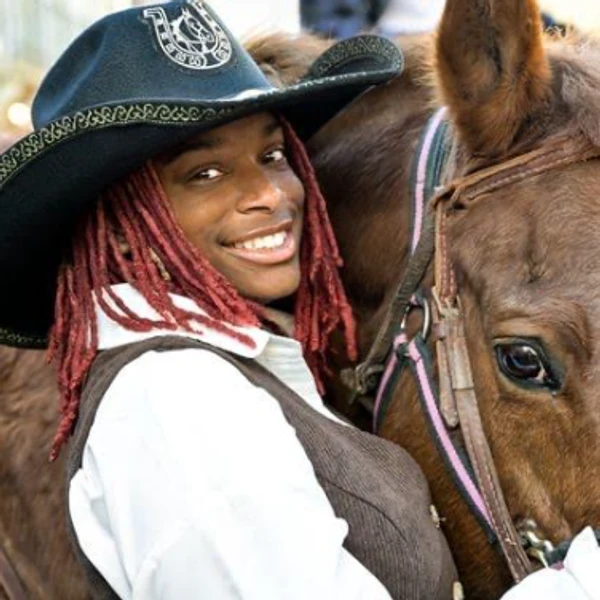
Who am I? My name is Aziyah Deneata Blackwell or better known as “ThatPhillyCowgirl” professionally on my social media platform. I was born and raised in Philadelphia Pennsylvania. I’m a senior in high school and aspire to attend a historically black college to obtain my Bachelors Degree in Agriculture. Naturally as any young girl would be, I had an obsession with horses. As got older, I realized that there weren’t many horse stables around me and the ones that are were incredibly expensive or very far. Then one day in 2021, while scrolling on Instagram, I come across a post on my timeline. I see a horse and a young black boy with the caption “Volunteer day” in all capital letters. I then follow the page and attend the volunteer day. Ever since then, i’ve been apart of this riding club called Fletcher Street Urban Riding Club. Being around and being involved with horses means everything to me and i’m so happy to be a Black Cowgirl. Fletcher street is my family. From rodeos, to camping, to horse shows, we’ve done it all together. I am so grateful for everything that we do and I am grateful for what it made me and who i am. I am Aziyah Blackwell, That Cowgirl From Philly. Usually during the week, I work a part time job at a grocery store. Other days, I enjoy spending time at the barn with my ex-racing thoroughbred, Victory Tour. I also have a whole bunch of plants and am starting to grow my own fruits and veggies at home. Attending college and majoring in AG will help me pursue my dream of becoming a farmer and sustaining myself off my land and animals.
Education
Tacony Academy Charter Hs
High SchoolMiscellaneous
Desired degree level:
Bachelor's degree program
Majors of interest:
- Agricultural and Food Products Processing
Career
Dream career field:
Farming
Dream career goals:
Ranch hand, Member
Fletcher Street Urban Riding Club2021 – Present5 years
Sports
Equestrian
Club2021 – Present5 years
Public services
Volunteering
Fletcher Street Urban Riding Club — Ranch hand, Member2021 – Present
Future Interests
Advocacy
Politics
Volunteering
Entrepreneurship
Zedikiah Randolph Memorial Scholarship
My name is Aziyah Blackwell. I was born and raised in Philadelphia, Pennsylvania. I am currently a senior in high school attending Tacony Academy Charter high school and when I graduate I plan to attend Delaware Valley University and major in Agriculture and obtain my Bachelors degree. Usually during the week, I work a part time job at a grocery store. Other days, I enjoy spending time at the barn with my ex-racing thoroughbred, Victory Tour. I also have a whole bunch of plants and am starting to grow my own fruits and veggies at home. Attending Delval and majoring in AG will help me pursue my dream of becoming a farmer and sustaining myself off my land and animals.
Farming is one of the many lucrative industries and one of the most rewarding to citizens around the country. The agricultural industry helps many families keep food on the table and nourishes households. Agriculture-related work provides many different jobs for millions of American citizens. They also contribute to about 5.5% US gross domestic product, which helps strengthen the economy. Agriculture also opens up opportunities for food export, allowing families around the world to be able to eat as well. Unfortunately, not all Americans are able to enjoy nor afford the opportunity to support families through farming. In America, black farmers face discrimination in the form of systemic racism.
To start, more often than not, many African Americans wanting to start up their farms face issues with obtaining and holding land. Discrimination due to race makes it extremely difficult for Black Americans to buy land compared to White Americans. According to the USDA, in 2022, of the 2 million farm plots in America, 91% were white owned, 4% were Hispanic owned, 2% were American Indian or Alaskan, 1% were Asian and the remaining 1% were black owned. In 2022, only 36% of black farmers were granted loans from the United States Department of Agriculture. In comparison, 72% of white applicants were granted loans.
Statistics from the USDA also show that in 2022, there were 46,736 black producers, and 32,653 black farmers. They made up one 1.4% of America's 3.4 million producers alone in the entire country. In Texas, they make up 3% of Texas’ producers in total. Higher percentages of producers were found in Georgia (4%), Alabama (6%), Carolina (7%), Louisiana (7%), and with the highest being Mississippi with a total percentage of twelve. A census in 2022 showed that the makeup of acreage that was owned from Black Americans in Texas was 3,245,991, and the acreage that was rented was 2,077,663. The total acreage in possession was 5,323,654. If we compare this number of black operated farms and producers combined, 79,391, which is nowhere close to the total number of farms owned in the US, 1,900,487.
Black farmers are subject to discrimination in the form of systemic racism. This is because it is incredibly difficult for black people to gain funding through grants and loans due to being denied even with proven paperwork. Black farmers also make up less than 1% of America’s entire farming population. This makes them a minority. Due to them being a minority, it is difficult for their farms to succeed. As part of the minority group, it is important that the path I am following is clear so that others can follow. As a future first-gen farmer, I will be setting an example. African American Farmers make up only 1% of the entire population nationwide, and my college education will help me change that, even if only by a little bit.
Youth Equine Service Scholarship
Being around and being involved with horses means everything to me and i’m so happy to be a Black Cowgirl. Fletcher street is my family. From rodeos, to camping, to horse shows, we’ve done it all together. I am so grateful for everything that we do and I am grateful for what it made me and who i am. I am Aziyah Blackwell, That Cowgirl From Philly. Usually during the week, I work a part time job at a grocery store. Other days, I enjoy spending time at the barn with my ex-racing thoroughbred, Victory Tour.
I came across Fletcher Street Urban Riding Club in 2021. I initially went there as a young, arrogant teenager. My behavior was changed because of a pony I met named Tip Toe. Together, Tip Toe and I built a bond. I took falls that would humble me, but I would get back up. Teaching and learning. I also started building responsibility and learned a few lessons as well. Tip Toe unfortunately passed away in 2022; this was sort of a breaking point for me as Tip Toe was like an emotional support for me. I mourned for days after that. A week after she passed, the founder of the club took me to a horse auction and bought a little white pony just for me. I named that pony Slim Shady. Just like the name suggests, he was a bit of a loose cannon. Whenever I mounted his back to ride, he threw me off. He would nip and bite and kick as well. There were times when I considered throwing in the towel and giving up, but I persevered regardless. I watched videos and learned from the club members around me. I asked for advice and took criticism to help me.
Eventually, I stopped fearing him and I learned how to balance his rough ride. I worked with him to gain his respect on the ground. In the end, through many months of hard work, failure and success, he was made a much better pony, and I became an even better horsewoman. Throughout the years I've had many different experiences and amazing opportunities with FSURC Including ride outs, rodeos, horse shows, camping trips, dinners and so much more. I am so grateful for these experiences and I can not thank FSURC enough for helping mold me into the horsewoman I am today. Being a horsewoman has taught me so much. It has also improved my mental health tenfold. I have been an inspiration to those who have seen my story, and those who want to follow in my footsteps, and soon, I will be getting my very own horse from the American Quarter Horse Association, because of the horsewoman that I am.
Stephen "Mike" Flinders Agriculture and Animal Care Scholarship
My name is Aziyah Blackwell. I was born and raised in Philadelphia, Pennsylvania. I am currently a senior in high school attending Tacony Academy Charter high school and when I graduate I plan to attend Delaware Valley University and major in Agriculture and obtain my Bachelors degree. Usually during the week, I work a part time job at a grocery store. Other days, I enjoy spending time at the barn with my ex-racing thoroughbred, Victory Tour. I also have a whole bunch of plants and am starting to grow my own fruits and veggies at home. Attending Delval and majoring in AG will help me pursue my dream of becoming a farmer and sustaining myself off my land and animals.
Farming is one of the many lucrative industries and one of the most rewarding to citizens around the country. The agricultural industry helps many families keep food on the table and nourishes households. Agriculture-related work provides many different jobs for millions of American citizens. They also contribute to about 5.5% US gross domestic product, which helps strengthen the economy. Agriculture also opens up opportunities for food export, allowing families around the world to be able to eat as well. Unfortunately, not all Americans are able to enjoy nor afford the opportunity to support families through farming. In America, black farmers face discrimination in the form of systemic racism.
To start, more often than not, many African Americans wanting to start up their farms face issues with obtaining and holding land. Discrimination due to race makes it extremely difficult for Black Americans to buy land compared to White Americans. According to the USDA, in 2022, of the 2 million farm plots in America, 91% were white owned, 4% were Hispanic owned, 2% were American Indian or Alaskan, 1% were Asian and the remaining 1% were black owned. In 2022, only 36% of black farmers were granted loans from the United States Department of Agriculture. In comparison, 72% of white applicants were granted loans.
Black farmers are subject to discrimination in the form of systemic racism. This is because it is incredibly difficult for black people to gain funding through grants and loans due to being denied even with proven paperwork. Black farmers also make up less than 1% of America’s entire farming population. This makes them a minority. Due to them being a minority, it is difficult for their farms to succeed. As part of the minority group, it is important that the path I am following is clear so that others can follow. As a future first-gen farmer, I will be setting an example. African American Farmers make up only 1% of the entire population nationwide, and my college education will help me change that, even if only by a little bit.
Peter and Nan Liubenov Student Scholarship
My name is Aziyah Blackwell. I was born and raised in Philadelphia, Pennsylvania. I am currently a senior in high school attending Tacony Academy Charter high school and when I graduate I plan to attend Delaware Valley University and major in Agriculture and obtain my Bachelors degree. Usually during the week, I work a part time job at a grocery store. Other days, I enjoy spending time at the barn with my ex-racing thoroughbred, Victory Tour. I also have a whole bunch of plants and am starting to grow my own fruits and veggies at home. Attending Delval and majoring in AG will help me pursue my dream of becoming a farmer and sustaining myself off my land and animals.
Farming is one of the many lucrative industries and one of the most rewarding to citizens around the country. The agricultural industry helps many families keep food on the table and nourishes households. Agriculture-related work provides many different jobs for millions of American citizens. They also contribute to about 5.5% US gross domestic product, which helps strengthen the economy. Agriculture also opens up opportunities for food export, allowing families around the world to be able to eat as well. Unfortunately, not all Americans are able to enjoy nor afford the opportunity to support families through farming. In America, black farmers face discrimination in the form of systemic racism.
To start, more often than not, many African Americans wanting to start up their farms face issues with obtaining and holding land. Discrimination due to race makes it extremely difficult for Black Americans to buy land compared to White Americans. According to the USDA, in 2022, of the 2 million farm plots in America, 91% were white owned, 4% were Hispanic owned, 2% were American Indian or Alaskan, 1% were Asian and the remaining 1% were black owned. In 2022, only 36% of black farmers were granted loans from the United States Department of Agriculture. In comparison, 72% of white applicants were granted loans.
Black farmers are subject to discrimination in the form of systemic racism. This is because it is incredibly difficult for black people to gain funding through grants and loans due to being denied even with proven paperwork. Black farmers also make up less than 1% of America’s entire farming population. This makes them a minority. Due to them being a minority, it is difficult for their farms to succeed. As part of the minority group, it is important that the path I am following is clear so that others can follow. As a future first-gen farmer, I will be setting an example. African American Farmers make up only 1% of the entire population nationwide, and my college education will help me change that, even if only by a little bit.
Billy Downey Memorial Agriculture Scholarship
My name is Aziyah Blackwell. I was born and raised in Philadelphia, Pennsylvania. I am currently a senior in high school attending Tacony Academy Charter high school and when I graduate I plan to attend Delaware Valley University and major in Agriculture and obtain my Bachelors degree. Usually during the week, I work a part time job at a grocery store. Other days, I enjoy spending time at the barn with my ex-racing thoroughbred, Victory Tour. I also have a whole bunch of plants and am starting to grow my own fruits and veggies at home. Attending Delval and majoring in AG will help me pursue my dream of becoming a farmer and sustaining myself off my land and animals.
Farming is one of the many lucrative industries and one of the most rewarding to citizens around the country. The agricultural industry helps many families keep food on the table and nourishes households. Agriculture-related work provides many different jobs for millions of American citizens. They also contribute to about 5.5% US gross domestic product, which helps strengthen the economy. Agriculture also opens up opportunities for food export, allowing families around the world to be able to eat as well. Unfortunately, not all Americans are able to enjoy nor afford the opportunity to support families through farming. In America, black farmers face discrimination in the form of systemic racism.
To start, more often than not, many African Americans wanting to start up their farms face issues with obtaining and holding land. Discrimination due to race makes it extremely difficult for Black Americans to buy land compared to White Americans. According to the USDA, in 2022, of the 2 million farm plots in America, 91% were white owned, 4% were Hispanic owned, 2% were American Indian or Alaskan, 1% were Asian and the remaining 1% were black owned. In 2022, only 36% of black farmers were granted loans from the United States Department of Agriculture. In comparison, 72% of white applicants were granted loans.
Statistics from the USDA also show that in 2022, there were 46,736 black producers, and 32,653 black farmers. They made up one 1.4% of America's 3.4 million producers alone in the entire country. In Texas, they make up 3% of Texas’ producers in total. Higher percentages of producers were found in Georgia (4%), Alabama (6%), Carolina (7%), Louisiana (7%), and with the highest being Mississippi with a total percentage of twelve. A census in 2022 showed that the makeup of acreage that was owned from Black Americans in Texas was 3,245,991, and the acreage that was rented was 2,077,663. The total acreage in possession was 5,323,654. If we compare this number of black operated farms and producers combined, 79,391, which is nowhere close to the total number of farms owned in the US, 1,900,487.
Black farmers are subject to discrimination in the form of systemic racism. This is because it is incredibly difficult for black people to gain funding through grants and loans due to being denied even with proven paperwork. Black farmers also make up less than 1% of America’s entire farming population. This makes them a minority. Due to them being a minority, it is difficult for their farms to succeed. As part of the minority group, it is important that the path I am following is clear so that others can follow. As a future first-gen farmer, I will be setting an example. African American Farmers make up only 1% of the entire population nationwide, and my college education will help me change that, even if only by a little bit.