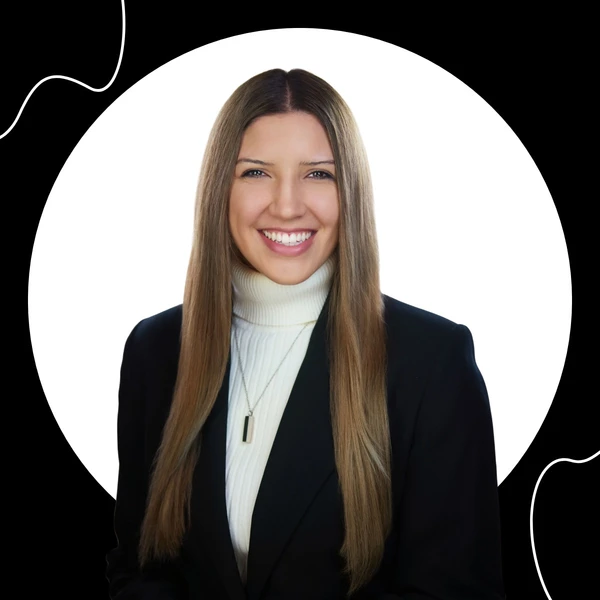
Gender
Female
Hobbies and interests
Basketball
Camping
Biomedical Sciences
Beekeeping
Clinical Psychology
Cognitive Science
Dance
Fitness
Counseling And Therapy
Coaching
Gardening
Jiu Jitsu
Law
Reading
Research
Mental Health
Public Health
Health Sciences
Global Health
Nutrition and Health
Meditation and Mindfulness
Medicine
Reading
Psychology
Philosophy
Education
Health
Leadership
Self-Help
Spirituality
I read books multiple times per week
Ayiana Uhde
1x
FinalistAyiana Uhde
1x
FinalistBio
I realized that returning to school and entering the field of neuroscience is where my passion truly lies. I love the brain. After experiencing adverse childhood events, losing my father to suicide, witnessing how head trauma affected his emotional health, and surviving a traumatic brain injury myself after a severe car crash in 2021, I began to take healing more and more seriously over the years. The study of the connection between the brain and behavior fascinates me. I have a deep drive to support individuals who are struggling with the effects of disrupted blood flow, maladaptive neural patterns, and complications arising from complex brain trauma. I envision a future where brain health is recognized as a fundamental part of mental health within our healthcare systems, creating pathways to break cycles of abuse and addiction and to better support traumatic brain injury survivors.
Education
Johnson County Community College
Associate's degree programMajors:
- Liberal Arts and Sciences, General Studies and Humanities
Conservatory of Recording Arts and Sciences
Trade SchoolMajors:
- Audiovisual Communications Technologies/Technicians
Miscellaneous
Desired degree level:
Doctoral degree program (PhD, MD, JD, etc.)
Graduate schools of interest:
Transfer schools of interest:
Majors of interest:
- Neurobiology and Neurosciences
Career
Dream career field:
Mental Health Care
Dream career goals:
Integrate Brain Imaging and Brain Health into the common practices for Mental Health treatments and support
Transaction Manager, Real Estate Agent
Advance Realty and Engel & Volkers2021 – Present5 years
Sports
Basketball
Varsity2014 – 20206 years
Awards
- yes
Arts
Olathe West Highschool
PhotographyYes2016 – 2018
Public services
Volunteering
Local Hospice and Local Urban Gardens — Volunteer2016 – Present
Future Interests
Advocacy
Politics
Volunteering
Philanthropy
Entrepreneurship
A Man Helping Women Helping Women Scholarship
I have always been fascinated by what happens beneath the surface, in the quiet space between thought and feeling. I have come to believe that brain health is not just about neurons or chemistry. It is about understanding the human experience, the way we process pain, connection, and the stories we tell ourselves.
As a woman who has rebuilt herself after deep loss, I have learned how fragile the mind can feel and how powerful it truly is. Healing is both a science and an art. My vision is to work in the field of brain health, combining neuroscience, psychology, and compassion to help others understand their inner worlds and break free from cycles of trauma, confusion, and shame.
I am inspired by people like Gabor Mate, who teaches that trauma is not the event but the internal impact it leaves behind. His work helped me see the quiet ways people carry pain in their bodies, habits, and relationships. Andrew Huberman gave me the language of the brain itself, showing that understanding our biology gives us the ability to change it. Esther Perel taught me about emotional patterns and the complexity of love. Dr. Daniel Amen showed me that the brain deserves the same care and precision as any other organ, and that mental health is rooted in science rather than shame.
Their teachings shaped my mission to help people nurture their mental and emotional ecosystems.
I also believe that the healing of women is connected to the healing of men. Growing up, I saw the impact of unspoken pain in fathers and how it can turn into silence or anger. My father’s struggles taught me that unhealed men can pass on their wounds without meaning to, and women often become the ones who absorb them.
If we want women to live freer and safer lives, we must help men feel safe enough to heal as well. When men learn to understand their emotional worlds, they become less likely to cause harm and more capable of empathy, presence, and love. Healing fathers heals daughters, and healing men changes the world women walk in.
Mental health is not gendered. It is human. When we give both men and women tools to care for their minds, we create a culture of understanding instead of blame. Through my education, I hope to bridge neuroscience with empathy and teach brain literacy that empowers people to take responsibility for their healing.
I want to research and advocate for trauma informed care that brings together the science of the brain with the gentleness of compassion. I imagine leading workshops and programs that invite everyone into conversations about emotional health, generational trauma, and the science of safety, where no one has to hide behind shame or toughness.
For me, ambition is not about perfection but about service. My drive comes from turning pain into purpose and building bridges between people who have forgotten how to meet one another with grace. I believe the future of healing is not divided by gender but united by understanding.
The brain is like a garden. It grows where we water it. I plan to dedicate my life to teaching others how to tend to theirs with patience, curiosity, and light, so that no daughter will have to heal from a father’s pain and no father will have to carry it alone.
Healing Self and Community Scholarship
I believe healing begins when we are given the language to name our pain and the safety to speak it out loud. After living through trauma, brain injury, and anxiety, I learned how isolating mental health struggles can be, especially in communities where silence feels safer than honesty. What I needed most was not pity. I needed access to care, understanding, and affordable support.
My vision is to help bridge that gap by combining science, storytelling, and advocacy. I want to create community programs that bring together art, neuroscience, and trauma education. These spaces would help people understand how their brains respond to stress and give them creative ways to express their healing. Healing must be supported on a larger scale. Preventive brain health care, including imaging and early diagnostic tools, is often out of reach because insurance companies refuse to cover it. This lack of access harms individuals and families and delays the support that could save or change lives.
I hope to work toward policy reform that treats mental health as an essential part of public health. By advocating for fair coverage of brain imaging and other preventive resources, I want to help make early diagnosis and treatment available to everyone.
Mental health should not be something only a few can afford. It should be as natural to access as sunlight.
Community College Matters Scholarship
I have realized that returning to school and pursuing neuroscience is where my true passion is. I have always been drawn to the brain, to its complexity, its resilience, and its vulnerability. After growing up with adverse childhood experiences, losing my father to suicide, seeing how his head trauma affected his emotional health, and surviving my own traumatic brain injury from a car crash in 2021, I began to see healing through both a scientific and compassionate lens. These experiences were painful, but they shaped my empathy and motivated me to pursue Behavioral Neuroscience.
With a more stable home life and several years of healing behind me, I am returning to Johnson County Community College to finish my associate degree and then transfer to the University of Kansas for a Bachelor of Science of Psychology in Behavioral Neuroscience. I am genuinely excited for the challenge. I want to understand the biological foundations of behavior, emotion, and trauma, and I am ready to put in the work. This degree will help me contribute to research and advocacy for traumatic brain injury survivors, trauma informed care, and mental health awareness.
Financially, things have been difficult. After struggling to keep up with my mortgage and bills, I had to sell my home and move in with my boyfriend's parents. I work part time as a waitress at a European bistro, doing my best to cover my expenses, help out where I can, and save for school. Even with hard work, it has been tough to rebuild stability after everything that happened. But I am determined not to let money be the thing that keeps me from pursuing an education or a career that gives my life meaning. Receiving this scholarship would relieve a lot of pressure and allow me to focus on my classes instead of constantly worrying about making ends meet.
Outside the classroom, I hope to become an advocate for trauma informed care, traumatic brain injury survivors, and the use of neuroscience and brain imaging in public health policy. I believe that understanding the brain is essential to understanding behavior, and that connecting neuroscience with psychology and policy can change how society approaches trauma, addiction, and mental health. I want to work with organizations or research institutions that focus on these areas and eventually help create programs that treat brain health as a central part of overall well-being.
Every step I have taken through hardship, recovery, and now education has strengthened my commitment to turning pain into purpose. I am grateful for every opportunity to move forward. This scholarship would not only support me financially but would also affirm the effort I have put into rebuilding my life and pursuing this path. Thank you for considering my application and for supporting students who are working to turn adversity into meaningful impact.
Henry Respert Alzheimer's and Dementia Awareness Scholarship
There are scents that carry memory, faint traces that open a doorway back in time. For me, that scent is lavender. Its soft, calming fragrance will forever remind me of my grandmother, Jane Yancey, of her gentle smile, her grace through adversity, and the quiet strength she carried even as her memory began to fade.
In 2012, my grandmother passed away at home after a long battle with both Alzheimer’s and cancer. My mother was her caregiver, balancing night shifts as a nurse with the endless and tender work of caring for her own mother. I was still young then, but I remember how our home shifted, how the rhythm of our days began to circle around my grandmother’s needs. Alzheimer’s does not just take memories; it slowly rearranges the roles within a family. My mom became both daughter and nurse, caregiver and witness to loss, tending to her while watching pieces of her drift away.
There is one day I will never forget. We were at the hospital with my grandfather, Charlie, my grandmother’s husband. The air was heavy with that mix of sadness and sterile light. Grandpa was sitting beside her, holding her hand, trying to reach her through the fog of memory. He started talking softly about their wedding day, how they met, how he first saw her walking down a country road with a fishing pole in her hand, a farmer’s daughter, barefoot in the grass. He had been driving with a buddy on his way to pick up another girl for a dance, but when he saw my grandma, he knew she would be the catch of his life.
As he spoke, my mom played their wedding song, Elvis Presley’s “Can’t Help Falling in Love.” And it was as if the music opened a door inside her mind. For a few shining moments, she came back to us. She smiled, her eyes lit up, and she started to tell us stories, how they danced that night, how nervous he was, the small details of their early love that Alzheimer’s had long since buried. It felt like watching light pour into a room that had been dark for years. That moment changed me. It showed me that even when memory falters, love remembers. It showed me that music and emotion live in parts of the brain untouched by time.
After she passed, my sister and I got lavender tattoos together, a symbol of healing, memory, and connection. It still makes me smile to think how my grandmother would have been appalled that we tattooed our skin, though I am sure she has forgiven us by now. For us, it was not only about remembering her; it was about honoring what she represented, unconditional love and the quiet miracles of healing. Lavender is not only symbolic. Research has shown that it can calm the nervous system, improve sleep, and may even help prevent cognitive decline. That intersection, where nature, science, and compassion meet, is where I want to build my life’s work.
Watching my mom care for her mother fundamentally changed how I see the world. It showed me what real strength looks like, quiet, steady, and selfless. It also revealed how much we still do not know about the brain, how many families are left to navigate this illness without answers. The slow unraveling of memory felt like watching a library burn down one page at a time. And yet in that loss, I found my purpose: to help rebuild what can be saved and to understand what cannot yet be explained.
When my father later passed away, grief revisited our family in a new form, one marked by mental illness, trauma, and heartbreak. But this time, I had context. I had already seen how diseases of the mind and brain ripple through generations. I had already seen what unhealed pain can do. Those experiences, painful as they were, became the soil from which my purpose grew.
Since then, I have dedicated myself to understanding the mind, reading the works of Gabor Maté, Esther Perel, and Dr. Daniel Amen. I have learned how trauma and stress can reshape the brain, how early interventions and compassionate care can change the entire trajectory of a life. My fascination with neuroscience is not abstract; it is deeply personal. I have lived its consequences. I have seen what happens when we overlook it, and I have seen the small miracles that happen when we pay attention.
That is why I am returning to school in Spring 2026 to pursue a degree focused on brain health, psychology, and medical research. I want to study the neurological mechanisms behind memory, emotion, and trauma, and how those pathways can be healed. I am especially drawn to research in neuroplasticity and dementia prevention, areas where science is beginning to illuminate possibilities that once felt out of reach.
I believe that healing, like memory, is multidimensional. It is biological, psychological, and spiritual all at once. My vision is to one day help expand access to brain imaging and early intervention programs, to bring what is often hidden in research into the light of public awareness. I want to help design systems that identify warning signs before they turn into crises and to contribute to the growing field of trauma-informed care that connects mental health, family history, and physical well-being.
But beneath all the scientific ambition, my motivation is profoundly human. It is the image of my mother, exhausted but unwavering, helping my grandmother brush her hair even when she could no longer speak. It is the memory of my grandfather singing along to Elvis in that hospital room, calling her “my girl,” and watching her remember, even if only for a moment. It is the scent of lavender drifting through a home filled with both loss and love.
Alzheimer’s taught me that memory is more than recall; it is relationship. It taught me that science and compassion are not opposites, but allies. And it gave me a direction: to dedicate my education and career to studying the brain, not only to understand how we lose memories but how we can preserve them, how we can protect the essence of who we are.
Every time I see lavender, I am reminded of both fragility and resilience. It is delicate, yet it endures. That is what I carry forward from my grandmother’s life, from my mother’s caregiving, and from my own journey, the belief that even in the face of forgetting, love remembers.
And that is what I want to build my future around: remembering what matters and finding ways to help others hold on.
Jean Ramirez Scholarship
I always felt like “that would never happen to me.” I think most people feel that same level of disbelief when they lose a loved one to suicide. I pray for everyone who has had to endure the waves of grief and confusion that follow such a loss, because grief is already a storm, and suicide adds layer upon layer of complexity, making the process so much longer, heavier, and lonelier.
My father was not the best man, yet all of his girls knew he carried pain far longer than he needed to. He was the “push through” type, strong, silent, full of baggage, but beneath that toughness was a boy who just needed to feel safe and loved within himself.
You cannot prevent someone’s decision, no matter how much love surrounds them. In my father’s case, we realized afterward how premeditated it all was. And as if loss was not already unbearable, only a month before his passing we also lost our grandfather, my father’s father. The toll of grief hit like a wave upon a wave. My entire family was left stunned in the undertow of “I can’t believe this is real.”
Suicide is not the same for everyone. Those who are left behind share their grief with all who were connected to the one they lost. I will always remember my father’s celebration of life, the friends, coworkers, and family who gathered, each holding their own memories of him. Some saw his complicated side, the man who struggled to love well. Others saw the version of him trying to make amends, the glimmer of someone reaching toward light.
What my father never understood was that he was already forgiven. Even now, I offer him forgiveness, love, and acceptance. My father was my abuser, but he was also my best friend. The complexity of that truth reflects what my sisters, my mother, and I endured, and how we learned to love in spite of pain. We love purely. We love with spiritual strength. We love without conditions.
Time has given us room to heal, to talk, to process. Through that, we have come to understand what love truly means, that it can coexist with hurt and that healing does not erase what was broken but reshapes it into something softer. Together, we have found ways to remember our father not with bitterness but with acceptance. There were beautiful, joyous moments, and beautiful, tragic ones too.
People often define resilience as the ability to “push through,” but I have come to see it differently. True resilience is the choice to keep loving, to fold yourself gently into pain rather than run from it. For anyone struggling with depressive thoughts, please remember that these feelings will pass. Time truly does heal.
Grief is a hill we climb, carrying everything we thought we could not bear. But one day, you find yourself standing at the top, breathing again. You look out at the view, at all you have carried and all you have survived, and realize it is okay to set some of that weight down.
That is where I found resilience. Not in the pushing, but in the soft, deliberate act of choosing hope.
Ella's Gift
There are moments that divide your life into before and after. For me, that moment came with the loss of my father. He was both our light and our dark, magnetic, wounded, and unpredictable. His presence filled every space, and his absence swallowed them whole. When he took his life, the world I knew cracked open, and my family and I were left standing in the silence that followed.
Grief moves through a house like weather, sometimes like a storm and sometimes like fog. We each felt it differently. My mom, already the backbone of our family, tried to be strong, but I could see the weight behind her eyes and the creeping dread in the question, “Could I have helped him?” It was a thought that seemed to rise for all of us. My sisters and I clung to one another, learning how to breathe through something that didn’t make sense.
I remember one night not long after it happened. My youngest sister was fifteen then, fragile in her own grief, crying until her body gave out. I sat beside her in the dim light of the bathroom, helping her into a warm bath. I lit candles, washed her hair, and whispered prayers into the quiet air. She leaned her heavy head against my hand, too exhausted to speak, and I realized that healing sometimes begins not with answers but with presence, simply being there for someone when there are no words left to say.
That night changed me. It showed me that love can still exist in the ruins, that tenderness has power even in the aftermath of pain.
After his death, I moved back home from Phoenix to Kansas City. I needed to be near my family, to help hold us together while we each tried to make sense of what had happened. My mother, who has battled her own depression, taught me that love is unconditional even when life is unkind. Together, we began the long process of healing, learning how to grieve honestly, forgive freely, and begin again.
In the years since, I have done my own kind of studying, not in classrooms but through books, therapy, and voices that helped me understand trauma and the human mind. I read the works of Gabor Maté, Esther Perel, and Dr. Daniel Amen. Their insights helped me trace the connections between pain and compassion, addiction and attachment, memory and meaning. Through them, I learned that mental illness and substance abuse are not signs of weakness. They are reflections of wounds left untreated.
My father’s struggles, my mother’s endurance, and my own battles with anxiety and loss have all shaped the way I see the world now. They have given me a sense of purpose far larger than myself: to understand the brain, to help others heal from trauma, and to prevent families from breaking under invisible burdens.
That is why I am returning to school in the spring of 2026. This time, I am entering education not just as a student but as someone who has lived the very topics I want to study. I want to bring together neuroscience, psychology, and advocacy, to expand access to brain imaging, fund research in trauma-informed care, and raise awareness around mental health. My ultimate goal is to contribute to early intervention and prevention programs that make treatment accessible before crisis strikes.
But beyond degrees and titles, I want to be a voice, someone who can translate science into empathy and empathy into action. I have seen what happens when suffering goes unseen, and I have seen what happens when love, even tired and broken, refuses to give up.
My recovery is a daily practice. It lives in my morning routines: journaling, prayer, therapy, movement, gratitude. It is in the way I set boundaries, nurture relationships, and stay connected to my family’s continuing healing. We are all in a more grounded place now, my mom, my sisters, and me. We have grieved long enough to let light back in. We are dreaming again, living again, and learning that survival can grow into joy.
Losing my father taught me that pain is a teacher, not a life sentence. It taught me that healing is slow but sacred, that forgiveness can coexist with grief, and that education can be a bridge from what was to what can be.
Like Ella, I want to live fiercely, to love and to compete for my own peace, to keep pushing forward even when life demands everything. I carry my scars not as reminders of what broke me but of what rebuilt me.
And that, to me, is the essence of recovery: turning pain into purpose and purpose into possibility.
Eden Alaine Memorial Scholarship
My father was both our light and our dark, a man whose presence filled every room and whose pain cast long shadows over our lives. He was brilliant, unpredictable, and broken in ways I didn’t understand until I was older. Loving him was like standing in a storm, with moments of warmth and laughter followed by lightning that struck without warning.
When he was gone, the world went still. The chaos that had always surrounded us suddenly fell silent, but the quiet didn’t feel like peace. It felt like an aftermath. My sisters and I were left to pick through the pieces of what remained, the love, the trauma, the confusion. I didn’t know where I stood in that storm’s wake. I didn’t know what I believed or who I was supposed to become after losing someone who had shaped so much of my world.
For years, his loss felt like a wound that refused to heal. But somewhere in that pain, something shifted. I began to see how much of his suffering had lived unseen, how much of what tore our family apart came from the invisible battles inside his mind. I started to learn about mental illness, trauma, and the way the brain carries scars that can’t be seen on the surface. And with that understanding came both grief and determination: grief for what we lost, and determination to make sure others don’t have to lose the same way.
My father’s death changed the course of my life. It pushed me toward something larger than my own pain, a desire to bring light into the shadows that mental illness creates. I want to dedicate my life to advancing brain health research, to build awareness, expand access to mental and neurological imaging, and fight for more funding in a field that desperately needs it. As Dr. Daniel Amen says, “You can’t change what you don’t measure.” If we can see the brain clearly, maybe we can help heal it. Maybe we can end the cycles of abuse and loss that pass silently from one generation to the next.
There was a time when life felt like survival. Now it feels like purpose. The same storm that once left me lost now fuels my drive to create change. I want to transform my pain into prevention and my grief into guidance.
Every step I take in my education is a step toward that vision. Returning to school after years of instability wasn’t easy, but it felt right, like a promise kept to both myself and to the memory of my father. I want to honor him not by erasing his darkness, but by understanding it and by helping others find healing before it is too late.
Losing him taught me that love can be complicated, grief can be transformative, and perseverance can rise even from heartbreak. My father’s story may have ended in pain, but mine doesn’t have to. Through science, compassion, and education, I want to be part of a movement that rewrites what healing looks like.
Because the truth is, even storms can teach us how to find the light.
Dylan's Journey Memorial Scholarship
Living with a learning disability can sometimes feel like running a marathon through fog — you’re moving forward, but the path keeps shifting beneath your feet. I’ve learned to live within that fog, shaped by ADHD, anxiety, complex PTSD, and a traumatic brain injury I survived in 2020. Together, they’ve tested me, remade me, and ultimately taught me how powerful persistence and neurodiversity can be.
All through school, I was the student who cared deeply and tried endlessly, yet somehow always finished last. I remember being the final one sitting in a quiet classroom, still working through my test long after others had turned theirs in. My brain was always alive with thought — hyperfocused one moment, scattered the next. It wasn’t lack of effort; it was the way my mind worked. I saw connections others missed, but struggled to switch gears or organize my thoughts. For years, I thought this meant I wasn’t smart enough.
My ADHD diagnosis helped me see the truth: my brain wasn’t broken — it was simply built differently. And then, when I sustained a traumatic brain injury in 2020, that truth deepened. Recovery was slow, exhausting, and humbling. Simple tasks — reading, concentrating, remembering — suddenly took monumental effort. But I also discovered the incredible adaptability of the human brain. Neuroplasticity became more than a scientific concept; it became my lifeline. I had to relearn how to learn.
That experience reshaped not just my academics, but my worldview. Healing from TBI taught me that patience is a form of strength, and that progress rarely looks linear. It also renewed my commitment to understanding the mind — why some of us process the world differently, and how compassion and science can intersect to make learning more accessible.
Anxiety and trauma still walk beside me, but they’ve given me empathy. My experiences have taught me to listen — to myself, to others, to the quiet signals of struggle that often go unseen. They’ve inspired me to study neuroscience and psychology, with a focus on trauma, attention, and cognitive recovery. I want to be part of the research and advocacy that helps others living with ADHD, TBI, and learning disabilities discover their strengths and strategies — to help them see that difference is not deficiency.
When I read about Dylan’s story, it struck a chord in me. His determination to learn and grow despite his diagnosis mirrors the resilience I’ve had to cultivate. Like Dylan, I’ve come to understand that success isn’t defined by speed or ease, but by persistence — the courage to keep showing up even when every part of you feels behind.
My brain has been through storms — from trauma to neurodivergence to literal injury — yet it continues to adapt, to create, to hope. That’s why I’m pursuing higher education again in 2026: not in spite of my challenges, but because of them. I believe lived experience is one of the most valuable forms of expertise. I want to bring that perspective into the field of neuroscience, where understanding the brain can be both deeply personal and powerfully transformative.
Living with a learning disability and a brain injury has taught me that healing and learning share the same language — patience, curiosity, and faith in growth. I may learn differently, but I’ve learned deeply. And that, I believe, is its own kind of brilliance.
Ethel Hayes Destigmatization of Mental Health Scholarship
“The essence of trauma is disconnection — from ourselves, from others, and from the world. Healing, therefore, is reconnection.” — Gabor Maté
I have lived the truth of those words. For a long time, I felt the quiet ache of disconnection — from safety, from trust, from the version of myself that existed before loss. My father’s death was the moment that divided my life into before and after. He was both our light and our dark — magnetic, wounded, unpredictable. His laughter could fill a room, his creativity was electric, but the pain he carried was silent and relentless. He battled his mind for years, trying to be the father and husband he wanted to be, but the weight of his own history—trauma, depression, and addiction—eventually grew too heavy.
When he took his life, the world I knew cracked open. There was no preparing for that kind of silence — the kind that hums through the walls, reshaping every sound in a home. My sisters and I stood in the wreckage of questions we could never fully answer. My mom, already the anchor of our family, carried the unbearable — holding us together while quietly unraveling inside.
I remember one night, not long after it happened. My youngest sister was fifteen then — fragile in her grief, crying until her body gave out. I sat beside her in the dim light of the bathroom, helping her into a warm bath. I lit candles, washed her hair, and whispered prayers into the quiet air. She leaned her heavy head against my hand, too exhausted to speak, and I realized that healing sometimes begins not with answers, but with presence — simply being there when there are no words left to say. That night changed me. It showed me that love can still exist in the ruins — that tenderness can coexist with loss.
After his death, I moved back home from Phoenix to Kansas City. I needed to be near my family, to help hold us together while we each tried to make sense of what had happened. My mother, who has faced her own battles with depression, taught me that love is unconditional even when life is unkind. Together, we began the long process of healing — learning how to grieve honestly, forgive freely, and begin again.
My father’s illness forced me to see mental health for what it truly is — not a weakness or moral failure, but a human wound that deserves compassion and understanding. For years, I tried to make sense of the “why,” tracing his story back through generations of silence, addiction, and unspoken pain. In the process, I discovered a purpose: to understand the mind not as something to be fixed, but something to be tended to — with care, science, and empathy.
I began studying on my own — reading When the Body Says No by Gabor Maté, listening to Esther Perel’s conversations on relationships and repair, diving into Dr. Daniel Amen’s research on brain imaging and trauma. I became fascinated by how deeply the mind and body are intertwined, and how early intervention could change the trajectory of someone like my father — how awareness and access to mental healthcare could rewrite generations of pain.
My mom’s resilience became my blueprint. She worked nights as a nurse, caring for others even while grieving her own mother, who passed away from cancer and Alzheimer’s in 2012. I still remember the day my grandfather sat beside my grandmother in the hospital, playing their wedding song — Elvis Presley’s “Can’t Help Falling in Love.” For a moment, her eyes lit up, and she began telling us stories about the day they met — how she was just a farmer’s daughter walking down the road to go fishing when he drove by and knew instantly, “I’m going to marry that girl.” That moment reminded me that memory, like love, never truly disappears — it just waits for something gentle enough to awaken it.
I carry those lessons into my purpose now. I’m returning to school in the spring of 2026 to study neuroscience and psychology, with the goal of expanding access to brain health research and trauma-informed care. I want to help families like mine — those walking the quiet road of grief and confusion — to find understanding before tragedy strikes. My dream is to work where science meets humanity: creating programs that destigmatize mental illness, increase funding for brain imaging, and bring compassion back into the conversation about healing.
Recovery, for me, is not just personal. It’s generational. It’s in how my sisters and I now speak openly about mental health, how my mother prioritizes rest and joy again, how we’ve each found a steadier rhythm after years of survival. Healing doesn’t erase what happened — it transforms it into purpose.
My father’s story taught me that pain, when faced, can become a bridge. That empathy is its own form of activism. And that reconnection — to ourselves, to each other, to life — is the truest form of healing.
Like Gabor Maté says, trauma begins with disconnection. But I believe the opposite is also true — love, compassion, and understanding are how we find our way back.
Sola Family Scholarship
My mother has always been the quiet hero of my story — the kind of strength that doesn’t ask to be seen but changes everything it touches.
When my parents’ marriage ended, it wasn’t just a relationship that dissolved — it was a life we’d known, breaking apart piece by piece. My father’s abuse had already left deep marks on our home, and when he left for good, my mom had no choice but to rebuild from the rubble. She became both mother and father, comfort and protector, provider and nurturer.
She worked nights as a nurse — long, endless hours caring for others while her own heart was stretched thin. I remember the sound of her keys jingling at dawn, the quiet creak of the door as she slipped into the house after another shift. She barely slept, but somehow, every morning, she’d wake us up for school. She’d braid our hair, pack our lunches, and drive us to practice — bleary-eyed but smiling. She made exhaustion look like devotion and sacrifice look like love.
When my father took our college funds as he left, I saw the heartbreak in her eyes when we all found out. She’d worked for years hoping to give her girls a better start, and in a single act, that dream was stolen. But instead of giving up, she doubled down. She juggled bills, shifted schedules, and quietly sacrificed her own comfort to keep our lives moving forward — all while caring for her own mother as she declined from cancer and Alzheimer’s. She never complained. She just kept going.
For years, I didn’t realize how much she carried. I only knew that her love was constant — that no matter how tired she was, she’d listen to our stories, laugh at our jokes, and make sure we never felt unloved. Only as I’ve grown older have I seen the depth of her strength. She wasn’t just surviving — she was teaching us how to endure with grace.
When my father passed away in 2021, the grief reopened wounds we thought had healed. But again, my mother stood firm. She showed me that forgiveness doesn’t mean forgetting and that grief can coexist with gratitude. Her resilience became my blueprint for hope.
For a while, I lost my way. Life felt heavy, and school slipped through my fingers. But my mom never stopped believing in me. She reminded me that our past doesn’t define us — that it can be the soil from which new growth begins. That’s why I returned to school, determined to turn our story into something beautiful. My sister and I are both back in college now, and our youngest sister just started her first year. Our oldest sister helps support my mom, returning the care she gave us all those years.
We’re each chasing dreams that once felt out of reach because one woman refused to let hardship steal our future.
Being raised by a single mother taught me that love isn’t always gentle — sometimes it’s fierce, unrelenting, and brave. It taught me that strength can be quiet, that perseverance is an act of faith, and that the purest form of ambition is wanting to give back to the person who gave you everything.
Everything I am — every ounce of drive, compassion, and purpose — traces back to her. My mom didn’t just raise four daughters; she raised four women who believe that resilience is a form of love. And that’s the legacy I carry forward.
Leading Through Humanity & Heart Scholarship
When I was a child, I sat across from a psychologist who looked at me like a puzzle to be solved. I remember the fluorescent lights, the clipboard, and how quickly I learned to hide the parts of myself that didn’t fit the questions. I wasn’t met with curiosity — I was studied, misunderstood, and quietly labeled. That moment planted a seed in me: a knowing that healing requires more than observation; it requires understanding.
Years later, after surviving a severe car accident that left me with a traumatic brain injury, I found myself back in that same fluorescent light — this time as a patient in a trauma unit. My scans showed “no bleeding,” so I was sent home, even as my mind worked tirelessly to remember how to walk, balance, and see without pain. I realized how invisible suffering can be when it doesn’t appear on a chart.
These experiences shaped my calling. I want to build bridges between science and sensitivity — to advocate for brain health, trauma-informed care, and early intervention that sees the person beyond the symptom. Healing, I’ve learned, begins not when someone is fixed, but when they are finally understood.
Empathy, to me, is sacred attention — the act of truly seeing another person in their wholeness. It’s not a gesture or a skill; it’s a practice of listening with both intellect and intuition. My understanding of empathy was forged through experiences of being unseen.
As a child in therapy, I longed for a question that never came: “What happened to you?” Instead, I felt watched through a lens of judgment. Later, after a car accident that left me with a traumatic brain injury, I saw how our healthcare system often confuses absence of proof with absence of pain. Because there was no visible bleeding, my suffering was invisible too. I went home from the trauma unit that night, disoriented, sensitive to light and sound, learning once again how to walk without dizziness.
That gap — between visible and invisible injury, between procedure and presence — is where empathy must live. Trauma-informed care recognizes this space. It teaches us to ask, to listen, and to look deeper before deciding what someone needs. It replaces the coldness of “What’s wrong with you?” with the compassion of “What happened to you?”
In my future career in brain and mental health, empathy will be both my compass and my method. I want to advocate for policies that make preventative neuroimaging and trauma-informed education accessible — so that care is not only reactive but proactive. No one should have to reach a breaking point before being believed.
Working through a human-centered lens means remembering that each patient is not a case, but a constellation of stories, histories, and hopes. It means making space for the emotional realities that often accompany physical conditions — fear, fatigue, grief, resilience. It also means building systems that make care equitable and affordable for everyone, not just those with privilege or insurance coverage.
Empathy is what transforms science into healing. It invites humility into medicine, reminding us that even the most advanced imaging or data cannot replace the human need to be seen.
I’ve walked through recovery with both confusion and awe, and what I’ve learned is this: empathy is not just part of healthcare — it is healthcare. It’s what reminds us that behind every diagnosis is a story worth hearing, and behind every patient is a person who still believes, somehow, in the possibility of wholeness.
College Connect Resilience Award
Resilience, to me, is not about pushing through everything; it’s about learning when to pause, listen, and begin again. Living with the ongoing effects of a traumatic brain injury, complex PTSD, and anxiety has taught me that strength isn’t always visible. Sometimes, it’s quiet — the kind that wakes up each morning, checks in with the body and mind, and chooses to keep moving toward something meaningful, even when it takes extra effort to do so.
After my TBI, life became less predictable. Concentration, memory, and sensory overload became daily hurdles. The simplest things — reading a chapter, focusing in class, or following a conversation — often required more energy than most people realize. Add the layers of trauma and anxiety, and it can feel like my mind and body are speaking two different languages. For a while, I thought resilience meant fighting against that — trying to perform like nothing was wrong. But I’ve since learned that resilience is actually about cooperation with myself, not resistance.
My brain has taught me how to listen. It has shown me the value of slowing down, pacing my energy, and creating structure around my recovery and education. I plan assignments around my cognitive limits, and I’m honest with professors about what I need to succeed. There are days I study from bed, or take breaks to calm my nervous system before continuing. I’ve learned to adapt instead of apologize.
Through all of this, I’ve developed a deep compassion for others navigating invisible struggles. My experiences with TBI and CPTSD have sparked my passion for understanding brain health and trauma recovery — how the mind can heal itself when given safety, care, and time. I’m drawn to the work of Gabor Maté and Andrew Huberman, who show that healing is both biological and emotional. Their insights help me make sense of my own journey and fuel my dream of working in brain and mental health advocacy.
Resilience, for me, is not about perfection or endurance. It’s about the daily act of returning — returning to hope, to learning, to purpose — even after moments of exhaustion or fear. It’s finding steadiness in uncertainty and meaning in healing.
I used to see my brain as broken. Now I see it as rebuilding — rewiring itself, just like I am. That’s what resilience is: a quiet, ongoing reintroduction to yourself. It’s choosing to stay curious about life even when it’s hard, and believing that the same brain that has known trauma can also know peace, creativity, and joy again.