Hobbies and interests
Bible Study
Baking
Psychology
Psychiatry
Church
Community Service And Volunteering
Fashion
Mental Health
Journaling
National Honor Society (NHS)
Neuroscience
Youth Group
Studying
Social Media
Yearbook
Reading
Romance
Adventure
History
I read books multiple times per month
Ayiana Mendoza
1x
Finalist1x
Winner
Ayiana Mendoza
1x
Finalist1x
WinnerBio
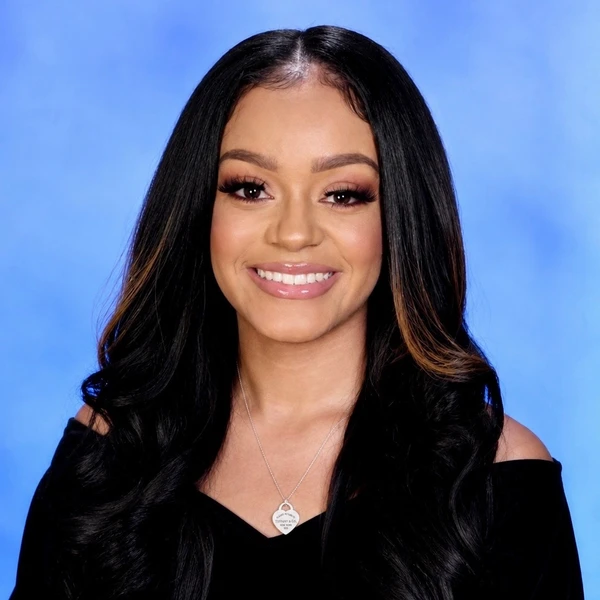
My name is Ayiana Mendoza, and I am a recent high school graduate from Miami, Florida. I will be attending Florida Agricultural and Mechanical University as a sophomore. As a biracial Hispanic and Black woman, I have always been passionate about advocating for underrepresented communities, especially in the area of mental health. My fascination with how the brain works and my desire to reduce the stigma surrounding mental illness inspired me to pursue a career as a psychiatrist. I hope to provide compassionate, culturally competent care while helping create meaningful change in the way mental health is understood and treated.
A defining part of my journey is that I was born with one hand. Rather than allowing this to limit me, it has taught me resilience, confidence, and determination. Growing up, I learned that my disability does not define my abilities or my potential. Instead, it has motivated me to work hard, embrace challenges, and prove that nothing can stop me from achieving my goals. I hope my story inspires others to believe in themselves and persevere, regardless of the obstacles they may face.
Education
Florida Agricultural and Mechanical University
Bachelor's degree programMajors:
- Psychology, General
Northeast High School
High SchoolMiscellaneous
Desired degree level:
Bachelor's degree program
Graduate schools of interest:
Transfer schools of interest:
Majors of interest:
- Psychology, General
- Neurobiology and Neurosciences
- Biology, General
Career
Dream career field:
- Hospital & Health Care
Dream career goals:
psychiatrist
Public services
Volunteering
Living Seed Ministry — Church volunteer- Assisted with church events, greeting members and vistors, helped with event setups and cleanups, and supported ministry leaders with activities for the congregation.2024 – PresentVolunteering
BMajor Foundation — Volunteer/ Event Assistant- Assisted with community events by helping with event setup, registration, organization, distribution of supplies, and supporting foundation staff to provide a positive experience for families and youth.2026 – Present
Future Interests
Volunteering
Khalil Mack 52 Scholars Program
WinnerMost people don't notice the small tasks that shape their day, but for as long as I can
remember, I've spent my life thinking about every one of mine. Tying my shoes. Cutting and gluing things. Adjusting backpack straps. Playing an instrument. Presentations. For me, everything required an extra layer of calculation. I didn't complain; I adapted. I learned to do things differently and silently, because I didn't want to be seen as different. I kept my difference tucked away. Literally. Pose for a group picture? Pocket. Walk into a classroom? Pocket. Present a project? Pocket. It became second nature. I didn't even think about it anymore; it was a way to feel invisible in a world where I never really was.
The truth was: I was born without my left hand. Through middle and high school, I kept it hidden in my pocket almost every day.
I never introduced myself that way. In fact, I avoided mentioning it if I didn't have to. I wasn't ashamed of how I was created; I just didn't want who I was to be reduced to one thing. When people noticed, their expressions shifted to confusion, awkwardness, and curiosity. I wanted to be known as a good student, a funny friend, and an independent person, not "the girl with one hand."
As I got older, hiding became exhausting. I avoided participating in class, not because I didn't know the answer, but because I didn't want the attention. I avoided meeting new people and participating in sports. Social anxiety became a constant presence, not because I feared myself, but because I feared being defined by something I couldn't change. The more I tried to hide, the more I questioned: Why does this one visible detail feel so defining? Why did I let it shape how I navigated my life?
Those questions finally found a place in my eleventh-grade psychology class. Learning about identity, fear, and human behavior helped me realize that my habits weren't signs of weakness; they were shaped by how people experience belonging and perception. Instead of asking, "What's wrong with me?" I started asking, "Why do people think the way they do?" For the first time, I realized psychology wasn't just a subject, it was a way to understand both myself and others.
Discovering my love for psychology changed a lot for me, but it wasn't overnight. I still kept my hand in my pocket. I still overthought small social moments. But I started to look inward with less judgment and more curiosity. I realized my anxiety wasn't a weakness; it was a signal pointing me toward understanding. I noticed how classmates avoided eye contact when speaking in front of the class and how they hesitated before asking the teacher for help. I began seeing people the way I wanted to be seen: whole.
I still have days when my hand finds its way into my pocket. But I no longer believe that my confidence depends on whether people notice it. Growth isn't about changing what others see, but about transforming how you see yourself. Studying psychology isn't just a career path for me; it is deeply personal because it grew from questions I once carried in silence. As I continue my education and work toward becoming a psychiatrist, I hope to create the kind of space I once needed, a space grounded in compassion. My experiences have taught me that healing begins when people are seen as complete individuals. That is the future I'm working to build: one conversation, one patient, and one act of compassion at a time.