Hobbies and interests
Reading
Crocheting
Painting and Studio Art
Exercise And Fitness
Reading
History
Science Fiction
Adventure
Self-Help
Romance
Biography
Folklore
Art
I read books daily
Ayanmo Adebajo
3x
Finalist1x
WinnerAyanmo Adebajo
3x
Finalist1x
WinnerBio
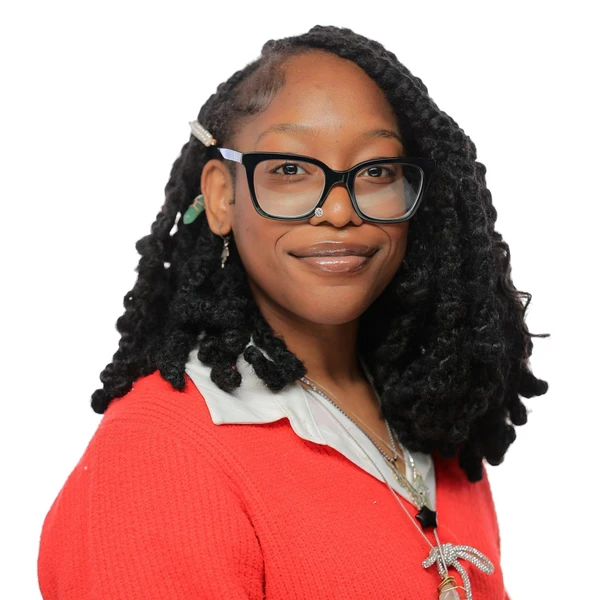
My name is Ayanmo Adebajo, and I am a senior Biomedical Engineering student at Rensselaer Polytechnic Institute. I am deeply involved in campus leadership, serving as President of the Black Student Alliance, Secretary of the National Society of Black Engineers, and Public Relations Chair for the African Student Association. Outside of campus, I have been a dedicated volunteer at the RCCG Food Pantry for over eight years, where I have learned the importance of community care and collective support.
As a Nigerian American, I am particularly motivated to give back to underserved communities, such as the one I come from. Growing up, I saw how limited access to affordable medical care and reliable medical technology can significantly impact health outcomes in Nigerian communities. These experiences shaped my passion for biomedical engineering and biomaterials, with a focus on creating safe, effective, and affordable medical solutions.
My long-term goal is to help advance medical technologies that reduce the cost of disease treatment and medical devices, making quality healthcare more accessible worldwide. Through my work, I hope to support communities that are often overlooked by modern healthcare systems and contribute to closing global and racial health equity gaps.
Education
Rensselaer Polytechnic Institute
Bachelor's degree programMajors:
- Biomedical/Medical Engineering
Minors:
- Public Health
Miscellaneous
Desired degree level:
Bachelor's degree program
Graduate schools of interest:
Transfer schools of interest:
Majors of interest:
- Biomedical/Medical Engineering
Career
Dream career field:
- Biotechnology
Dream career goals:
My long-term career goal is to use biomedical engineering to develop innovative medical technologies that reduce health disparities and advance health equity. I aspire to work in Manufacturing or R&D to strengthen my technical expertise, drive improvements in medical device design and production, and create solutions that make high-quality healthcare accessible to underserved communities.
Peer Advisor
Rensselaer Polytechnic Institute2023 – 20241 yearRecreational Aide
Eleanor Nursing Care2023 – 20241 yearVolunteer
Redeemed Christian Church of God Food Pantry2018 – Present8 yearsLearning Assistant Coordinator
Rensselaer Polytechnic Institute, Advising & Learning Assistance Center2024 – Present2 yearsIntern
Mid-Hudson Regional Hospital Biomedical Engineering Department2024 – 2024Quality Operations Intern
Johnson and Johnson Vision2025 – 20261 yearSales Associate
Harmon Face Values2022 – 2022Sales Associate
Dollar General2022 – 2022
Sports
Cheerleading
Varsity2021 – 20221 year
Research
Biomedical/Medical Engineering
Rensselaer Polytechnic Institute, Palermo Lab — Undergraduate Researcher2024 – 2025
Arts
AP Drawing and Painting
Painting2020 – 2021
Public services
Volunteering
RCCG Food Pantry — Volunteer2018 – Present
Future Interests
Advocacy
Politics
Volunteering
Philanthropy
Dr. Samuel Attoh Legacy Scholarship
To me, legacy is not about the recognition or awards, but about the impact you leave behind and how you use your knowledge and actions to inspire others. Legacy means learning from those who have come before you and using those lessons to create opportunities and leave meaningful gifts for those who come after.
The legacy I strive to continue is one built by Black women who promoted innovation despite systemic barriers. Women such as Dr. Marie Maynard Daly, the first Black woman to earn a PhD, and my mother, Julianah Ogundimu, who earned a master's degree in social work while raising three children, embody this legacy. These women endured barriers not for recognition, but to create opportunities for those who followed.
Growing up in an immigrant single-income household, I learned early what resilience looks like through watching my mother struggle to support three children while also navigating the financial and emotional burden of the healthcare system. When I was diagnosed with Type II diabetes, I realized how survival can depend on access. Seeing a man holding a sign that read "Need Diabetes Test Strips" reinforced the reality I had already started to know: lifesaving care is not equally accessible, and too often, health outcomes are determined by income or background.
I could have allowed these experiences to limit my path, but instead, they motivated me to change it. I chose to pursue Biomedical Engineering because of the opportunity to design solutions that close these gaps rather than perpetuate them. Through education and leadership, I am actively breaking cycles of limited representation and access, especially as a Black woman entering a field where we are highly underrepresented. By planning mentorship programs such as STRIVE, partnering with other multicultural organizations to build camaraderie, and planning professional events to promote career growth, I strive to continue the legacy of Black leaders before me.
Throughout my academic career, I have worked to become not only technically adept but also a strong leader and teammate. At RPI, I have held leadership roles, including Secretary of the Black Student Alliance during my sophomore year, followed by my involvement in the National Society of Black Engineers to promote academic and professional excellence through the Secretary role. I now serve as the President of the Black Student Alliance, where I focus on connecting the Black Diaspora on campus through informative and social events, while creating opportunities for mentorship and multicultural engagement. In addition to leadership, I have also participated in research opportunities, including developing a polymer that slowly degrades and releases estrogen for spinal injury recovery, which could then be translated into other hormones such as insulin.
Looking ahead, I plan to build a legacy rooted in equity and service. By creating affordable medical technologies, mentoring students from underrepresented backgrounds, and advocating for inclusive innovation, I hope to ensure that future generations do not have to choose between their health and livelihood. My legacy will be one of progress and compassion, where access replaces barriers and opportunity replaces limitation.
Rev. and Mrs. E B Dunbar Scholarship
When I was a Junior in high school, most people my age were worried about prom or about SATs, but I was worried about keeping my blood sugar from spiking over 200. After being diagnosed with Type II Diabetes at 16, I had to navigate new exercise regimens, healthier eating habits, and simply making it until college. Although it was a difficult experience, it taught me resilience and opened my eyes to the world of Biomedical Engineering. Especially coming from an immigrant single-income household, I understood the true cost of medical care and witnessed the struggles my mother faced taking care of three children on her own. The privilege of having insulin never eluded me, especially after seeing first-hand a man holding a sign saying, "Need Diabetes Test Strips”, a reminder of how inaccessible lifesaving care can be in our society.
Rather than letting these challenges hold me back, I turned them into motivation. These experiences pushed me to explore more accessible options within diabetes care. I began researching breakthroughs in the field, such as lower-cost methods to produce insulin, connected insulin pen caps to help patients better manage dosing without a full insulin pump, and continuous glucose monitors to lower economic barriers over time. For me, it opened up the world of using technology within healthcare to expand access. These experiences sparked my passion for biomedical engineering, leading me to my current college, Rensselaer Polytechnic Institute, where researchers had been developing a "closed-loop" glucose control system. From that moment, I knew I wanted to contribute to more affordable healthcare systems so that people like me, from lower-income backgrounds, would not have to worry about medical costs while trying to recover and thrive.
Throughout my academic career, I have worked to become not only technically adept but also a strong leader and teammate. At RPI, I have held leadership roles, including Secretary of the Black Student Alliance during my sophomore year, followed by my involvement in the National Society of Black Engineers to promote academic and professional excellence through the Secretary role. I now serve as the President of the Black Student Alliance, where I focus on connecting the Black Diaspora on campus through informative and social events, while creating opportunities for mentorship and multicultural engagement. In addition to leadership, I have also participated in research opportunities, including developing a polymer to slowly release estrogen for spinal injury recovery, which could be translated for other hormones such as insulin.
My journey with Diabetes has taught me that survival should never depend on your background or income, and as a future biomedical engineer, I aim to create systems to close these economic gaps, ensuring no one has to choose between their health and livelihood. What once sustained my life has helped shape my purpose, and this scholarship would allow me to finish my education and join the 2% of Black women in engineering, equipping me to continue a legacy of compassion, innovation, and meaningful change in my community.
Mohamed Magdi Taha Memorial Scholarship
Mohamed Magdi Taha truly believed in using his voice to stand up for others and displayed what a true upstander in the community is. I strive to be an upstander in the same way through showing up in my own community, using my voice to create safe spaces, and ensuring people feel supported and empowered.
As an immigrant from Nigeria, I have seen firsthand how systemic inequities, especially within healthcare, can disproportionately affect underserved communities. These experiences have shaped my career aspirations to become someone who actively pushes and contributes to health equity and community-building. Early on, I learned that silence allows inequity to persist, while even the smallest action can truly create meaningful change.
On my campus, I use my voice through my leadership experiences. As President of the Black Student Alliance, I work to create inclusive spaces where students can feel a sense of belonging and community. In response to setbacks caused by new DEI legislation, I advocated for the continuation of our school's X-Lounge, preserving a multicultural space within the predominantly white institution. I also prioritize increasing representation by organizing tutoring initiatives to support struggling students, professional events to foster career growth, and educational events centered on Black American History to help students contextualize the present through the past. As Learning Assistant Coordinator, I connect with incoming freshmen to ensure they feel supported and seen, pairing them with upperclassmen mentors to help them thrive. Whether it is organizing events to celebrate culture, addressing student concerns to administration, or amplifying underrepresented voices, I view advocacy as an ongoing responsibility, not just a one-time deal.
Beyond campus, I have been an active volunteer at the RCCG Food Pantry for over eight years, witnessing it grow from a small room to an entire church filled with food, especially as it rose to meet the economic challenges brought by COVID-19. As someone who strongly benefited from a food pantry when I was younger, it is truly an honor to give back to the community that once supported me. This experience reinforced my belief that being an up-stander is not always about being the loudest voice in the room, but being consistent, compassionate, and present for others.
Looking forward, I plan to continue using my voice and technical skills to give back to my home community in Nigeria by helping develop affordable, high-quality medical technologies. My goal is to reduce the cost of disease treatment and improve access to healthcare for populations that are often overlooked. Through combination advocacy, leadership, and innovation, I hope to continue building communities rooted in quiet, access, and care.
To me, being an upstander means refusing to look the other way when change is needed and means speaking up, taking action, and using every platform to uplift others. This is the legacy I aim to carry forward, and the legacy I hope to leave behind.
Ja-Tek Scholarship Award
Most people are introduced to their fields through a high school career fair or by meeting professionals, but I was introduced to biomedical engineering through a glucometer and a hospital visit. Before I even knew what biomedical engineering was, I depended on a glucometer to stay alive. I once lived with this disease, and now I don't, but this shift made me ask myself: how can engineering give people their lives back?
When I was a Junior in high school, most people my age were worried about prom or about SATs. After being diagnosed with Type II diabetes, I was worried about new exercise regimens, eating healthier, and simply making it until college. Although it was a difficult experience, it opened my eyes to the world of biomedical engineering. Especially coming from an immigrant household, I understood the true cost of medical care and witnessed the struggles my mother faced taking care of three children on her own. The privilege of having insulin never eluded me, especially after seeing firsthand a man holding a sign saying, "Need Diabetes Test Stripz”, a reminder of how inaccessible lifesaving care can be in our society.
These experiences pushed me to explore more accessible options within diabetes care. I began learning about lower-cost methods to produce insulin, connected insulin pen caps to help patients better manage dosing, and continuous glucose monitors to lower economic barriers over time. It opened up the world of using technology within healthcare to expand access, leading me to my current college, Rensselaer Polytechnic Institute, where researchers were developing a "closed-loop" glucose control system to increase accuracy. From that moment, I knew I wanted to contribute to more affordable healthcare systems so that people like me, from lower-income backgrounds, would not have to worry about medical costs while trying to recover and thrive.
Throughout my academic career, I have worked to become not only technically adept but also a strong leader and teammate. At RPI, I have held leadership roles, including Secretary of the Black Student Alliance during my sophomore year, Secretary of the National Society of Black Engineers during my Junior year, and my current role as the President of the Black Student Alliance. In addition to leadership, I have also participated in research opportunities, including developing a polymer to release estrogen for spinal injury recovery, which could be translated into other hormones such as insulin.
I am still driven by the same question that formed when I first held the glucometer, and today, that question fuels my commitment to creating technologies that are not just innovative but also equitable. My journey with diabetes has taught me that survival should never depend on your background or income, and as a future biomedical engineer, I aim to create systems to close these economic gaps, ensuring no one has to choose between their health and livelihood. What once sustained my life has helped shape my purpose, and I am determined to use biomedical engineering to return that gift to others.
Dr. Soronnadi Nnaji Legacy Scholarship
Oluwagbemisola means "the God who has carried me". This is the name I was legally given as a child and my life's motto. Whether it was from my mother carrying the weight for a better future as she moved our entire family from Ogun State, Nigeria to a small quaint town in New York, or my grandmother's hands raising me as my mother worked tirelessly, or my uncle driving me to museums to nurture my curiosity for science, each step of my journey has been carried by the hands of others and the shared hope for a better future.
I do not consider being a first-generation Nigerian student a limitation, but as a source of motivation for myself and my career. When I was younger, we had moved to New York shortly after my father died, in pursuit of a better education. Since touching American soil, I had vowed to take every opportunity given to me and to use it to my best ability, despite any challenges or prejudice I might face.
Today, I am a rising senior at Rensselaer Polytechnic Institute, where I study Biomedical Engineering, in the hopes of working in the medical technology field. I hope to improve processes in medical technology to expand access to life-saving services for all communities. I had personally watched my mother fight to ensure my family stayed healthy despite the high costs and limited availability of healthcare. I want to build a career that helps people through redesigning and reimagining old ideas into innovative and effective solutions for the future.
Growing up in a large Nigerian family, I was always surrounded by a close-knit community and received an invaluable amount of mentorship. Currently at my college, I serve as President for the Black Student Alliance (BSA), Secretary for the National Society of Black Engineers (NSBE), and as Public Relations for the African Student Association (ASA). It has been an absolute honor to grow alongside other future black leaders in STEM and to connect with individuals from different academic and cultural backgrounds.
Last academic year, as Vice President of BSA, I pushed to increase mentorship opportunities throughout all the multicultural organizations on our campus. Specifically with the cuts in Affirmative Action, there was a lack of programs in place to support incoming freshmen. I helped lead the revival of STRIVE, a mentorship program aimed for students of color that connects incoming underclassmen with upperclassmen mentors to guide them through their first year.
One of the most important outcomes to me was to see that every freshman who had joined the program is enrolled for classes next year. Although this seems like a small feat, the amount of imposter syndrome black students in STEM face has been a long-term challenge within the field. Helping these young Black leaders embrace their potential and stay focused on their goals has been the ultimate reward.
I have always believed that "No man is an island", and have been raised by my Nigerian community to aim high and never settle. I carry these values throughout my college career, whether through mentoring, participating in community service events, or exceeding expectations in my day-to-day tasks.
Receiving the Dr. Soronnadi Nnaji Legacy Scholarship would not only allow me to finish my last year of college, but also allow me to join the 10% of Black Women in the STEM workforce. I aspire to become a leader within the biomaterials field and to uplift those who come after me, carrying forward a legacy of resilience and opportunity.