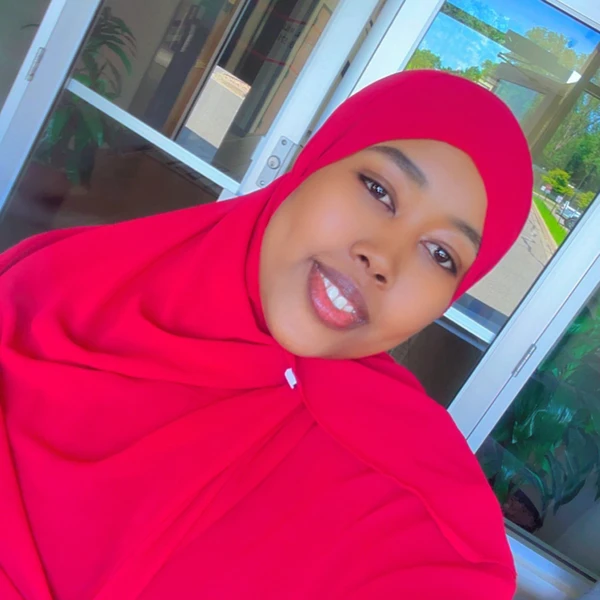
Age
28
Gender
Female
Ethnicity
Black/African
Hobbies and interests
Reading
Coding And Computer Science
Coffee
Data Science
STEM
Studying
Computer Science
Cybersecurity
Reading
technology
Design
Horror
Drama
Women's Fiction
I read books multiple times per week
Credit score
US CITIZENSHIP
US Citizen
LOW INCOME STUDENT
Yes
FIRST GENERATION STUDENT
Yes
Ayan Ibrahim
1x
Finalist
Ayan Ibrahim
1x
FinalistBio
I am a first-generation college student studying Computer Science at Metro State University. My goal is to become a software engineer and build a secure future for my family. As a mother of two young children, finishing my degree means more than earning a diploma. I want my children to see what dedication and education make possible.
I am passionate about technology because I enjoy understanding how things work, solving problems, and turning ideas into working programs. Through my classes, I have studied Java, C, JavaScript, HTML, CSS, SQL, data structures, and cybersecurity. I am still learning, and each course helps me grow more confident in my abilities.
Balancing college, motherhood, and work at the same time is not always easy. It has taught me to manage my time, stay focused, and keep moving forward during difficult days. I believe I am a strong scholarship candidate because I take my education seriously and continue working toward my goals despite the responsibilities I carry.
A scholarship would support me as I complete my degree and prepare for a career in technology. I hope my journey encourages other women, mothers, and first-generation students to keep working toward their goals, even when their path feels difficult.
Education
Metropolitan State University
Bachelor's degree programMajors:
- Computer Science
GPA:
3.4
South Central College
Associate's degree programMajors:
- Computer and Information Sciences, General
GPA:
3.2
Wellstone International High
High SchoolGPA:
3.7
Miscellaneous
Desired degree level:
Bachelor's degree program
Graduate schools of interest:
Transfer schools of interest:
Majors of interest:
- Computer Software and Media Applications
- Computer Science
Career
Dream career field:
- Computer Science
- Software Engineering
Dream career goals:
My long-term goal is to become a software engineer who builds websites and applications that are useful, clear, and easy to use. I am especially interested in front-end development because it combines coding, problem-solving, and design. As I gain experience, I want to contribute to larger projects, continue learning new technologies, and grow into a dependable member of a development team. I also want to build a stable career for my family and show my children what education and persistence make possible.
Future Interests
Volunteering
Entrepreneurship
Young Women in STEM Scholarship
I am a Computer Science student at Metropolitan State University. I enjoy learning how technology works and how it can be used to solve real problems. I did not always imagine becoming a software engineer. At first, computers were simply something I was curious about. As I learned more, I realized that computer science could give me a career that combines creativity, logic, and problem-solving.
What motivates me is seeing myself improve. Programming does not always come easily to me. Sometimes I spend a long time trying to understand why my code is not working. When I finally find the problem, the time and frustration feel worthwhile. Each solution gives me more confidence and makes me curious about what else I could create.
If I could do anything with my life, I would build applications that make everyday tasks easier. I am especially interested in software that can be understood by people who are not comfortable with complicated technology. Families, students, and caregivers already carry many responsibilities. The tools they use should save them time instead of adding more confusion.
I have already taken my first steps toward this goal. I created a weather application called Skylo that lets users search for a city and view current weather information through an API. Building it showed me that I could take an idea, work through the difficult parts, and turn it into something real. I hope to continue growing from a student who is learning to code into a software engineer whose work genuinely helps people.
What excites me most about STEM is the chance to build something that did not exist before. I experienced that while creating Skylo. I started with a blank webpage, designed its appearance, connected it to a weather API, and tested it many times. When I searched for a city and saw the weather information appear, I could not stop smiling. It was a small project, but it worked, and I had built it myself.
That moment showed me that computer science is both logical and creative. Programming requires me to examine a problem, test possible solutions, and learn from mistakes. One incorrect line can prevent an entire program from working. Finding and correcting that line helps me understand not only what went wrong, but also how the program works as a whole.
My computer security course has added another layer to the way I think. I am learning that successful software must do more than look attractive and perform its intended task. It must also respect people’s privacy and protect their information. Security should be considered from the beginning of development rather than added only after a problem occurs.
Through my career as a software engineer, I hope to create applications that are secure, accessible, and useful. I also want to encourage more girls to see themselves as creators of technology. As I gain experience, I hope to help beginners build their first webpages or simple applications. I want them to feel the same excitement I felt when I watched my first project work and realized, “I made this.”
The greatest challenge I have faced is continuing college while raising two young children who need constant care and working overnight shifts. Full-time childcare is more than I can afford, so I arrange help around my class schedule. When I finish work in the morning, my responsibilities do not end. I may still need to care for my children during the day, travel to campus, study, and complete assignments before the next deadline.
At first, I tried to manage the pressure by sleeping less and pushing myself harder. There were days when I stayed awake for more than 24 hours because I was afraid that resting would cause me to fall behind. Eventually, I understood that I could not continue that way. Working harder was not enough; I needed to work differently.
I began planning each week around my shifts, childcare arrangements, classes, and deadlines. Instead of waiting for several free hours that rarely came, I divided assignments into smaller tasks. I might read a few pages while my children rested, complete one section before work, or correct one part of my code during a quiet moment. I also arranged childcare for campus days and began asking for academic support before I became overwhelmed.
This challenge has not disappeared, but I handle it differently now. I no longer believe that everything must go perfectly for me to succeed. When plans change, I adjust and continue with the time I have. Some days, progress happens only twenty minutes at a time, but those minutes still move me closer to my degree. This experience has taught me to be organized, flexible, and patient with myself. It has also taught me that asking for help is not a weakness. Sometimes, it is what makes continuing possible.
Cyrilla Olapeju Sanni Scholarship Fund
When my family and I came to the United States nine years ago as refugees, the hardest part was starting over without knowing how things worked. We were in a new country, learning a new language and trying to understand a completely different way of life. We were happy to have a new beginning, but that did not mean the beginning was easy.
Language was one of our biggest struggles. When you cannot fully understand what someone is saying, even a simple situation can become stressful. I sometimes felt embarrassed to ask people to repeat themselves, and I worried about making mistakes. Over time, I learned that asking questions was the only way I would grow. I slowly became more confident speaking English and handling things on my own.
Education was another challenge. My parents did not have the opportunity to finish their own education, so college was new to all of us. They wanted me to succeed, but they could not explain financial aid, college credits, degree requirements, or internships. I had to learn those things myself. There were times when I felt lost because other students seemed to already understand what to do. I often wondered if I was making the right decisions, but I continued because I knew earning a degree could change my future.
Before coming to the United States, I completed a three-month computer course and earned first place in my class. I remember feeling very proud of myself, but I did not know that technology could become my career. After coming here, it took me some time to find that interest again. Today, I am studying Computer Science at Metropolitan State University and working toward becoming a software engineer.
Learning programming has reminded me of my experience coming to America. Sometimes I look at a problem and do not know where to begin. I try one solution, make a mistake, and try again. Eventually, I begin to understand it. Starting a new life was the same way. I did not have all the answers, but I learned little by little.
Today, I am also raising two young children and working overnight as a personal care assistant while attending college. It can be exhausting, but my children give me another reason to keep going. I want them to grow up watching me finish my degree and knowing that it is possible to build a different future.
Coming to the United States shaped me into someone who is not afraid to learn, ask questions, or begin again. It also made me want to help other refugee, immigrant, and first-generation students who may feel lost when they first enter college or become interested in technology. I hope my journey can show them that not knowing where to begin does not mean they cannot succeed. It simply means they have to take the first step and continue from there.
The Concrete Rose Scholarship Foundation
When I came to the United States as a refugee nine years ago, I had many hopes for my future, but I did not have a clear plan. I was learning a new language, adjusting to a different culture, and trying to understand an education system that was completely unfamiliar to me. Since I am the first person in my family to attend college, I did not have anyone at home who could explain financial aid, college credits, or how to choose a career. Much of what I know today, I learned by asking questions and figuring things out one step at a time.
My interest in technology began before I came to the United States. I took a three-month computer course and earned first place in my class. I still remember how proud I felt. It showed me that I could learn something technical, even though I did not yet know what kind of career I wanted. Years later, when I began studying computer science, I found that same excitement again.
Today, I am working toward my bachelor’s degree in Computer Science at Metropolitan State University. I have learned several programming languages and built small projects, including webpages that use APIs. Programming can be frustrating. Sometimes I spend hours trying to understand why something is not working, only to discover that the problem was one small mistake. But that is also what I enjoy about it. Every time I solve a problem, I feel more confident than I did before.
College is only one part of my life. I am also raising two young children and working overnight shifts as a personal care assistant. After working during the night, I often spend the day caring for my children, studying, and finishing assignments. Some days I feel as if there are not enough hours to do everything. I get tired and overwhelmed, but then I remember why I started. I want my children to have a stable life, and I want them to grow up watching their mother finish what she began.
My goal is to become a software engineer and create applications that make everyday tasks easier. I also hope to help refugee, immigrant, minority, and first-generation students become comfortable with technology. I remember what it felt like to have an interest but not know where it could lead. In the future, I would like to mentor young students and hold beginner coding workshops where they can build a simple webpage or complete their first project. I want them to experience the same pride I felt when I succeeded in my first computer class.
This scholarship would help me pay for tuition, course materials, and other school expenses. It would also reduce some of the pressure of balancing work, childcare, and college. With that support, I could spend more time developing my programming skills, improving my projects, and preparing for a software-engineering internship.
My life has changed greatly since I first arrived in the United States. I am still building the future I imagined, but now I have a clear goal and two children who motivate me to reach it.
Emerging Leaders in STEM Scholarship
When I began learning Java, I heard that the course was incredibly difficult. Instead of treating that warning as a reason to avoid it, I decided to see it as a challenge. Programming was not always straightforward for me. Sometimes I spent hours tracing bugs, testing solutions, and wondering why code that looked correct would not run. Over time, even the frustration became part of what I enjoyed. Every error had a cause, and searching for it gave me another opportunity to learn. I earned an A in the course, and my professor encouraged me to pursue a career in computer science.
I am now pursuing a bachelor’s degree in Computer Science at Metropolitan State University. I have completed coursework in Java, C, Scheme, SQL, data structures, and programming-language concepts. Outside of class, I continue learning through SheCodes and freeCodeCamp. I have built a webpage, practiced working with APIs, and started sharing projects on GitHub. What interests me most about computer science is taking a large, complicated problem, breaking it into smaller pieces, and gradually turning those pieces into a working solution.
My path through STEM has not been easy. As a first-generation college student, I have often had to figure out financial aid, credit requirements, degree planning, and internship preparation without anyone at home who had already experienced college. I am also raising a toddler and an infant while working overnight shifts.
When my summer Organization of Programming Languages course began, I was recovering from a C-section and missed the first class. I explained my situation to my professor, caught up on the material, and stayed in the course instead of withdrawing. I later earned 51 out of 50 points on an exam, including bonus credit. That result reminded me that my circumstances may change my schedule, but they do not have to change my plans.
After graduation, I want to work in software development and build technology that makes everyday tasks easier. I also want to make computing more approachable for students from underrepresented communities, especially refugee, immigrant, minority, and first-generation students. I understand how it feels to enter STEM with little exposure and without a family member who can explain the path. I want students with similar backgrounds to see someone like them succeed and believe they can succeed too.
As I gain experience, I plan to organize beginner coding workshops through schools, libraries, or community organizations. Students could learn basic programming ideas, design a simple webpage, and complete a project that they can proudly show their families. I want them to leave understanding that they belong in technology and that they are capable of creating something of their own.
The challenges I have faced have made me patient, resourceful, and determined. Receiving this scholarship would support my progress toward a software-development career and help me prepare to turn my education into opportunities for students who need an encouraging first step into STEM.
Sloane Stephens Doc & Glo Scholarship
Before I understood what computer science meant, I was already curious about it. Growing up as a refugee, my family did not have much access to technology, but I was interested whenever I had the chance to use a computer. I once took a computer course and won first place. That moment stayed with me because it made my interest feel real and possible.
My family and I came to the United States in 2017, and I began high school. When people asked what I wanted to study in college, my answer was always computer science. If they asked why, my answer was sometimes as simple as, “Because computers.” I did not yet have the words to explain the field. I only knew that I wanted to understand computers and discover what I could create with them.
Now I am studying Computer Science at Metropolitan State University. I have learned Java, C, Scheme, SQL, data structures, and programming concepts. I finally have the words I was missing in high school. To me, computer science is about using logic and creativity to solve problems step by step. Coding can be tough, especially when things do not work, but I really enjoy finding mistakes and fixing them.
As the first person in my family to attend college, I have also had to learn to navigate higher education without someone at home to explain each step. Outside the classroom, I continue learning through SheCodes and freeCodeCamp. I have built a webpage, practiced working with APIs, and started putting my work on GitHub. Each project strengthens my confidence and gives me experience I can eventually share with beginning students.
I hope to become a software engineer and build applications that are helpful and simple for people to use. I also want to help refugee, immigrant, and first-generation girls learn about technology. I know what it feels like to be interested in something but not have much exposure or anyone to guide you. Some students could do well in computer science but never try it because they do not see people like themselves in the field.
As I gain more experience, I want to mentor students and run beginner coding workshops at schools, libraries, or community centers. I would like to teach girls how to make a simple webpage, learn basic programming ideas, and complete a project they can share with their families. I want them to leave with more than just a new skill. I want them to leave thinking, “I can do this.”
My toddler daughter and infant son inspire me every day. I am finishing my degree while raising them and working overnight shifts. I want to give them a stable life, but I also want them to see that education can help others. Receiving this scholarship would help with tuition and reduce the pressure of balancing school, childcare, and daily needs. It would also let me focus on preparing for a software engineering internship.
Sloane Stephens has used her success to help young people and honor the values her grandparents taught her. I want to do the same in my field. My goal is for another refugee or immigrant girl to sit at a computer, discover what she can do, and find her dream sooner than I did.
Chris Jackson Computer Science Education Scholarship
When I was young and living as a refugee, I enrolled in a three-month computer course. At that time, access to technology was limited, so the opportunity to learn about computers felt especially meaningful. I approached every lesson with curiosity and determination and finished first in the class. That experience gave me more than confidence with computers; it showed me how education and technology could open possibilities beyond my circumstances. Years later, it became the foundation of my decision to pursue a bachelor’s degree in Computer Science.
Today, I am studying Java, C, Scheme, Prolog, data structures, and programming-language concepts at Metropolitan State University. What draws me to computer science is the process of turning confusion into a solution. A program may fail many times, but each error provides information. Programming has taught me to be patient, think logically, and keep working until I understand the problem.
My dream is to become a software engineer who builds practical, accessible applications that make everyday tasks easier. I also want to encourage refugee, immigrant, and first-generation girls to explore technology. Many talented students never picture themselves in computer science because they lack early exposure, guidance, or someone whose journey resembles theirs. I want to become that example and eventually provide mentorship and beginner-friendly technology education.
I am a strong candidate for the Chris Jackson Computer Science Education Scholarship because I understand what it means to fight for an education while carrying significant responsibilities. I am raising a toddler and an infant, working overnight shifts, and completing my degree. When my summer Programming Languages course began, I was recovering from a C-section and had to miss the first class. I contacted my professor, caught up on the material, and continued instead of withdrawing. I later earned 51 out of 50 points on an exam. That result represented more than a grade; it showed that becoming a mother again had changed my schedule, but not my commitment.
Chris Jackson’s story resonates with me because he understood the financial struggle of earning a degree and used his education to build an impactful career in technology. Receiving this scholarship would reduce the pressure of balancing school expenses with housing, childcare, and my children’s needs. It would allow me to devote more time to my coursework and to prepare for a software engineering internship.
This degree is not only a path to a career. It is how I am building stability for my children and preparing to open doors for others. Like Chris, I hope to use technology with skill, generosity, and a willingness to help people reach their potential.
Women in STEM Scholarship
While living as a refugee, I had the chance to take a basic computer class. I was the youngest person in the class, and I did not expect to finish in first place. I was proud of myself, but surprised as well. That experience made me realize I was good at learning technology, even though I had very little experience. It was the first time I could imagine myself building a career with computers.
Years later, before taking one of my Java courses, an instructor told me that the class was difficult and that many students struggled with it. That warning made me nervous. I wondered if I should choose something easier, but I enrolled anyway. The class was challenging, but I kept practicing and asking questions when I did not understand something. I finished the course with an A. That grade gave me more confidence than I had before because I had succeeded in a class I was almost afraid to take.
I am currently pursuing a bachelor’s degree in Computer Science and aim to become a software engineer. So far, I have studied Java, C, Scheme, and Prolog. I have worked on assignments involving data structures, files, pointers, and algorithms. In one C course, I completed a cipher lab. Projects like that have taught me to be patient. When my code doesn't work, I check it part by part, make changes, and try again.
That is what I enjoy about Computer Science. It can be frustrating when a program fails, but it is satisfying when I finally understand the problem. Programming also allows me to be creative because there are several ways to achieve the correct result. Every course introduces me to something I have not seen before, and I like knowing that there will always be more for me to learn.
After moving to the United States, many systems were unfamiliar to me. College applications, financial aid instructions, degree requirements, and school websites were not always easy to understand. Since I am the first person in my family to attend college, I did not have someone at home who could explain everything to me. I had to ask questions and learn the process as I went. Because of that experience, I am interested in software that makes complicated information easier to understand. I would like to help create tools that guide immigrants, first-generation students, and families toward educational and community resources.
I also want more women and girls to see themselves in technology. I did not grow up seeing many female software engineers, so this career did not always feel familiar to me. Sometimes seeing another woman succeed can help a young girl believe she belongs in STEM, too. I hope that completing my degree and becoming a software engineer will help me encourage other women to consider this field.
Balancing college, two young children, and overnight work is not easy. There are times when I am tired and still have an assignment waiting for me. However, I continue because I enjoy what I am learning and know what this degree can mean for my family.
I chose STEM because it challenges me, keeps me curious, and gives me skills I can use to help others. I want to build useful technology and help make the field more welcoming to other women.
Organic Formula Shop Single Parent Scholarship
As a single mother and college student, time is the one thing I can never get back. Every hour must be divided among raising my toddler and infant, working overnight to support them, attending college full-time, and finding enough energy to study before doing it all again. The hardest part is deciding what needs my attention first. If my baby needs me while I am studying, I close my laptop because being their mother must come first.
My children depend on me for meals, comfort, bedtime routines, and the small moments that make them feel safe and loved. At the same time, earning my bachelor’s degree in Computer Science requires concentration and hours of practice. A programming assignment that looks short can take hours when my code does not work correctly. Sometimes, I spend a long time searching for one mistake or trying different solutions before a program finally works.
Most of my study time begins after my children go to bed. On the nights I work, my shift ends at 6 a.m., and sometimes I still have schoolwork waiting for me. Deadlines do not change because I am tired, so there are times when I sleep less to finish an assignment. I also feel guilty when studying takes time away from my children, even though I know finishing college will benefit them.
I cannot afford full-time daycare for both of my children, so I depend on help from my family. I arrange my classes, work schedule, and study time around that support. If someone is suddenly unavailable to help, the study time I planned may disappear. As a parent, I cannot ignore an unexpected situation because my children’s needs must come first.
Before I receive a paycheck, I already know where most of it needs to go. Rent, groceries, transportation, diapers, and clothing come first. Then I must consider textbooks, school supplies, and other college costs. Sometimes, I have to delay buying something I need for myself because my children or school need the money more.
I am determined to finish my degree, even when balancing everything feels overwhelming. As the first person in my family to attend college, I did not have someone at home who could explain financial aid, degree requirements, or which classes to take. I learned those things by asking questions and figuring them out one step at a time. Finishing my Computer Science degree would help me qualify for a reliable job and provide for my children without worrying about every expense.
Receiving the $2,000 Organic Formula Shop Single Parent Scholarship would help cover tuition, textbooks, and other educational costs. That would leave more of my paycheck available for childcare and my children’s daily needs. It would also reduce some of the pressure I feel when school expenses and household bills are due at the same time.
After graduating, I want to work as a software engineer. In college, I have learned Java, C, Scheme, and Prolog, and each language has taught me a different way to solve problems. I am still exploring what type of software I want to develop, but I know I want to use my skills to create programs that are clear, useful, and easy for people to use. Most importantly, I want a career that allows me to consistently support my children.
My children are still too young to understand why I work and study so much, but one day I hope they will watch me receive my degree. I want them to know that finishing college was something I did for myself and for them.
Teria Onwuaduegbo Black Women in STEM Scholarship
While living as a refugee, I had the opportunity to take a basic computer course. I was the youngest student in the class, and I never expected to graduate in first place. That experience gave me confidence in my ability to learn and showed me that technology was something I could understand and succeed in. It was the beginning of my interest in Computer Science and the first step toward my goal of becoming a software engineer.
I moved to the United States in 2017 and later became the first person in my family to attend college. Because no one in my family had experienced higher education, I had to learn how to apply for financial aid, choose courses, understand degree requirements, and plan for a career on my own. Although the process was unfamiliar and sometimes overwhelming, it made me more independent and determined to complete my education.
Today, I am pursuing a bachelor’s degree in Computer Science. I chose software engineering because I enjoy solving problems and turning ideas into working programs. In my courses, I have studied programming languages and approaches, including Java, C, Scheme, and Prolog. Each language has challenged me to think about problems in different ways. Through programming assignments and projects, I have practiced working with data structures, files, algorithms, web applications, and different programming styles. I also continue building my skills outside the classroom through coding practice and web-development projects.
Pursuing this goal has required discipline and persistence. I attend college while raising two young children and working overnight shifts to support my family. Some days, I finish work in the morning, care for my children, attend class, and then study after they go to sleep. There are moments when I feel exhausted or overwhelmed, but I keep going because I know why I started. Completing my degree will allow me to build a stable career and create opportunities for my children that I did not have growing up.
These responsibilities have also helped prepare me for a career in technology. Programming requires patience because a solution does not always work on the first attempt. Raising children, working, and attending college have taught me to manage my time, adapt when plans change, and continue working through difficult problems. I have learned that struggling with a challenging assignment does not mean I am incapable; it means I need to try another approach.
My long-term goal is to become a software engineer and develop technology that addresses real needs. I am especially interested in creating accessible tools that make everyday services easier to use for people from different backgrounds. I also want my presence in technology to encourage other Black women, immigrant students, and first-generation college students who may question whether they belong in STEM.
Receiving the Teria Onwuaduegbo Black Women in STEM Scholarship would help me continue developing the knowledge and experience necessary to reach these goals. Teria’s story represents the importance of encouraging women to pursue STEM despite the obstacles they face. I hope to honor that purpose by completing my education, building technology that helps others, and showing my children and other young Black girls that they have a place in creating the future.
Bick First Generation Scholarship
When my children are asleep, my day is not over. After finishing an overnight shift, I come home, care for my family, and then open my laptop to study Computer Science. Those quiet hours are the only time I have to focus on school. Every assignment reminds me why I chose this path, even on the nights when I am exhausted.
In 2017, I came to the United States as a refugee. My parents never had the chance to finish their education. My mother, especially, was never encouraged to pursue schooling because, where she grew up, many people believed girls did not need an education. As the first person in my family to attend college, I had to figure out everything myself, from applying for financial aid to choosing classes and learning how college works. No one could explain the process or tell me whether I was making the right decisions. I learned how to complete financial aid forms, register for classes, and make academic decisions without anyone in my family who had been through college before.
Today, I am raising two young children, working overnight shifts, and working toward my degree. Some days are overwhelming, but giving up has never been an option. What keeps me going is my children. Every late night, every challenge, and every sacrifice is for them. I hope that one day they will understand that every decision I made was to give them opportunities I never had.
My dream of working with computers began while I was living as a refugee. I had the opportunity to take a three-month basic computer course, and even though I was the youngest student in the class, I graduated first. That experience gave me the confidence to believe in myself and realize I could accomplish more than I had ever imagined. Today, I am pursuing a degree in Computer Science with the goal of becoming a software engineer and creating a better future for my family.
Receiving this scholarship would ease the financial pressure of balancing college, work, and raising two children. It would give me more time to focus on developing the skills I need to become a software engineer. It would also bring me one step closer to becoming the first college graduate in my family.
If I earn my degree, I will become the first college graduate in my family. My greatest hope is that my children will grow up believing that college is not something out of reach; it is simply the next step because they watched their mother make it possible first.
Rose Ifebigh Memorial Scholarship
I began my journey not in the United States, but as a refugee. Living in uncertainty at a young age taught me lessons about resilience, adaptability, and hope that continue to shape who I am today. My early experiences showed me that stability is never guaranteed, and that education can become a powerful path toward opportunity. As a woman from the African diaspora and now a mother, I carry both the strength of my cultural heritage and the responsibility to build a better future for my children. My identity has been shaped by perseverance, faith, and a deep respect for hard work.
Adjusting to life in the United States required more than learning new academic material; it required navigating unfamiliar systems, cultural expectations, and complex processes. From understanding paperwork to adapting to classroom environments that felt very different from what I had known, each step required courage. At times, I felt out of place, especially in technical courses where few students shared my background. However, these challenges strengthened my confidence and independence. I learned to advocate for myself, seek guidance when needed, and embrace my differences as strengths rather than barriers.
Through my educational journey, I have gained a new perspective on growth and possibility. Studying Computer Science while raising my child has taught me discipline, patience, and resilience. My refugee background gives me a deeper understanding of how limited access to resources can shape opportunities. That awareness motivates me to succeed not only for personal achievement, but to represent immigrant and minority women in STEM fields where we are often underrepresented. I now understand that my story is not something to hide; it empowers me.
My academic focus in Computer Science connects directly to the impact I hope to make. Technology influences nearly every aspect of modern life, from education and communication to healthcare and economic opportunity. I want to contribute to building systems that improve access to information and create opportunities for underserved communities. In the future, I hope to mentor young immigrant and minority girls who are interested in STEM, showing them that their background does not determine their limits. Representation matters, and I want to be part of expanding what is possible.
Receiving the Rose Ifebigh Memorial Scholarship would ease financial pressure and allow me to focus more fully on completing my degree. As a student balancing motherhood and academic responsibilities, financial support would reduce stress and enable me to pursue opportunities such as internships, certifications, and advanced coursework. More importantly, this scholarship would recognize the resilience and determination that immigrant women bring to higher education.
My journey began with displacement, but it continues with purpose. I am committed to transforming past hardship into meaningful achievement and building a future defined by stability, impact, and opportunity for both my family and my community.