
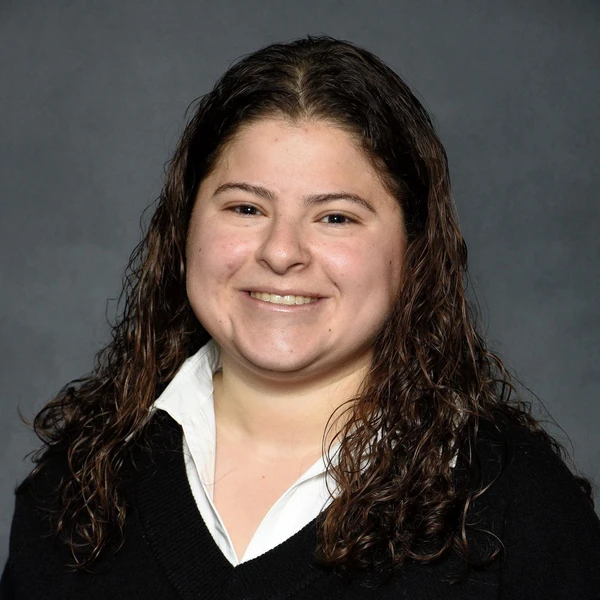
Avery Melam
1x
Finalist
Avery Melam
1x
FinalistBio
Avery is an incoming medical student at the University of Illinois College of Medicine and a passionate advocate for disability inclusion in healthcare and athletics. As Vice President of the United States Volt Hockey Association, Avery works to expand access to adaptive sports nationwide while conducting research on powered wheelchair athletics. Avery has also served as an EMT-B and medical assistant, experiences that strengthened a commitment to compassionate, patient-centered care. As a deaf clinician-in-training using cochlear implant and hearing aid technology, Avery hopes to advance equitable healthcare and empower patients with disabilities through advocacy, research, and medicine.
Education
Northeastern University
Bachelor's degree programMajors:
- Health Professions Education, Ethics, and Humanities
Minors:
- Biology, General
Miscellaneous
Desired degree level:
Doctoral degree program (PhD, MD, JD, etc.)
Graduate schools of interest:
Transfer schools of interest:
Majors of interest:
Career
Dream career field:
Medicine
Dream career goals:
Physician in Physical Medicine & Rehabilitation
Medical Assistant
London Medical Group2026 – 2026Emergency Medical Technician
Cataldo Ambulance Service, Inc2025 – 20261 year
Research
Public Health
Institute of Health Equity and Social Justice Research, Northeastern University — Lead Researcher2023 – Present
Public services
Advocacy
United States Volt Hockey Association — Vice President, Board of Directors2024 – Present
Future Interests
Advocacy
Volunteering
Philanthropy
Women in Healthcare Scholarship
I chose to pursue a degree in healthcare because I have seen how profoundly compassionate, thoughtful care can shape a person’s experience during vulnerable moments. Through my work as an EMT-B, a medical assistant, and a leader in adaptive sports, I have had the privilege of supporting individuals when they needed guidance, reassurance, and trust in the healthcare system. These experiences showed me that medicine is not only about diagnosing and treating illness, but also about advocating for patients, understanding their lived experiences, and helping them navigate complex systems of care.
My commitment to healthcare is also deeply connected to my experiences within the disability community. As someone who is deaf and uses both a cochlear implant and hearing aid, I understand firsthand how communication barriers and accessibility challenges can affect healthcare experiences. I have seen how easily patients with disabilities can feel overlooked or misunderstood within medical settings. These experiences have motivated me to pursue medicine so that I can help create a healthcare environment that is more inclusive, accessible, and responsive to the needs of all patients.
Working in adaptive sports has further strengthened this commitment. Through my role as Vice President of a 501(c)3 nonprofit, the United States Volt Hockey Association, I have seen how athletics can transform physical health, independence, and confidence for athletes with disabilities. Yet I have also seen the gaps in medical knowledge and support that often exist for adaptive athletes. This has inspired my interest in pursuing a career in Physical Medicine and Rehabilitation, where I hope to work closely with athletes and individuals with disabilities to help them maximize function, prevent injury, and continue participating in the activities that bring meaning to their lives.
As a woman entering the healthcare field, I hope to contribute to a culture of leadership, advocacy, and mentorship. Women continue to play an increasingly important role in shaping the future of medicine, and I want to help foster environments where diverse perspectives are valued and patients feel represented by their providers. I also hope to mentor young women and individuals with disabilities who may not always see themselves reflected in healthcare careers, helping them recognize that their experiences can be powerful assets in medicine.
Ultimately, I hope to make a positive impact by practicing patient-centered care, advocating for accessibility and equity, and working to ensure that all patients feel heard and respected. By combining my clinical training with my experiences in disability advocacy and adaptive sports, I aim to build a career that not only improves health outcomes but also empowers individuals and communities to thrive.