Hobbies and interests
Animals
Art
Baking
Babysitting And Childcare
Beach
Writing
Ceramics And Pottery
Tarot
Poetry
Music
Clarinet
Reading
Cooking
Reading
Realistic Fiction
Classics
Mystery
Novels
Romance
Young Adult
Spirituality
I read books daily
Ava Spring
1x
Finalist1x
WinnerAva Spring
1x
Finalist1x
WinnerBio
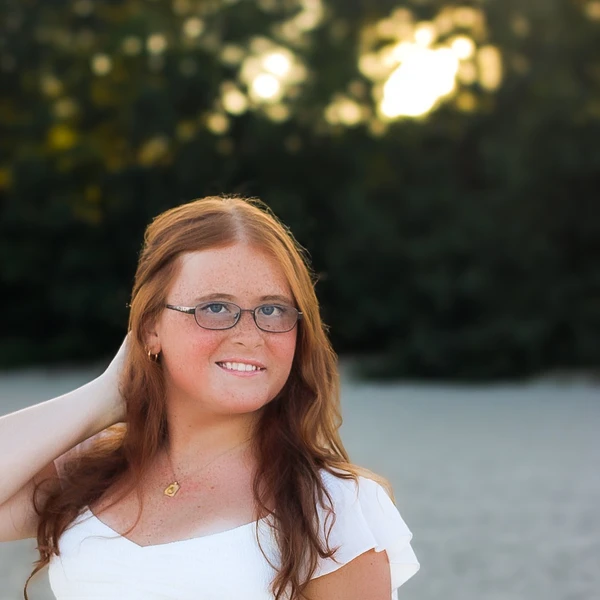
Hello, my name is Ava Spring, and I am currently a junior at Franklin High School in Franklin, Massachusetts. I am deeply passionate about my education, taking pride in the valuable opportunities I’ve had to learn and grow. Academically, I excel, and I am actively involved in extracurricular activities within my community. I volunteer at our local public library and co-lead a pottery club that raises awareness and funds for food insecurity through donations to the local food pantry.
Education has always been a cornerstone of my life, providing focus and purpose, especially through the challenges I’ve faced. At the age of 4, I was diagnosed with Craniopharyngioma and underwent several surgeries, spending one of my birthdays in the hospital. While the surgeries are behind me, I still take daily medications and have limited vision in one eye, relying on glasses for the other. Despite these challenges, I live life to the fullest, supported by my loving family. Their unwavering encouragement keeps me motivated to pursue my goals.
Education
Franklin High School
High SchoolMiscellaneous
Desired degree level:
Master's degree program
Majors of interest:
- Education, General
- Mathematics
Career
Dream career field:
Education
Dream career goals:
Arts
Franklin High School Band
Performance Art2022 – Present
Public services
Volunteering
Franklin Food Pantry — As a volunteer for the Pantry Elf fundraiser, I created and shared a donation page. For the Empty Bowls initiative, I made pottery bowls and served food at the event, sparking meaningful conversations about food insecurity.2022 – PresentVolunteering
Franklin Public Library — My role at the Franklin Public Library was and is being a volunteer. But, this title has many roles within it. I discuss new changes that could be beneficial, setup, cleanup, and manage events, shelve books, etc.2020 – Present
Future Interests
Advocacy
Volunteering
Learner Calculus Scholarship
As someone who has always known I wanted to be a teacher, I have spent a lot of time observing how people learn. I’ve noticed that subjects that are perceived as difficult or boring often lose students’ attention. Over time, I realized that part of my future role as a teacher will be finding ways to make challenging topics engaging and meaningful, helping students see the beauty and purpose in what they are learning. My love for math, and especially calculus, has shaped the way I understand not only STEM subjects, but also the world itself.
To me, calculus is more than just a collection of formulas or procedures—it is a language. Unlike spoken or written languages, which are shaped by culture, region, and personal experience, math is universal. The same principles of calculus can be applied by anyone, anywhere, to describe motion, change, or growth. This universality is one of the reasons I have always loved math so much. In a world that often feels divided—by culture, ideology, or background—math remains constant. It is a set of rules that, while sometimes tricky, binds people together in a shared understanding. It doesn’t matter who you are or where you come from; the derivative of a function is always the derivative of that function, and the same equation will yield the same answer.
Calculus is foundational to STEM because it provides tools for solving real-world problems that impact every aspect of our lives. Engineers use calculus to design safer bridges and more efficient transportation systems. Biologists use it to model the spread of disease or understand population growth. Computer scientists rely on it to optimize algorithms and simulate complex systems. In every case, calculus allows us to quantify and predict change. This ability to understand and shape the world is what makes calculus so powerful—and why it is essential for anyone pursuing a STEM field.
What I find most fascinating about calculus is that, like a good puzzle, it challenges the mind without ever being arbitrary. It is both constant and complex—predictable, yet requiring careful thought and strategy. This duality mirrors my experience in teaching: students often need guidance to see patterns, make connections, and approach problems in the right way. As someone who loves math and plans to be a teacher, I am inspired by the idea that I can help students experience the same satisfaction I have felt when a tricky problem finally “clicks.” Math is difficult, yes, but it is also fair: there is a solution, and with persistence, it can be found.
Funnily enough, this is what makes math so uniquely humanizing. In a world full of uncertainty and division, math is one problem that can certainly be solved—you just need to figure out how. Its rules are consistent, its logic is universal, and its lessons can be applied across disciplines and cultures. For me, calculus embodies this balance of challenge and clarity, difficulty and universality. It has shown me that learning is not just about memorizing facts or procedures; it is about curiosity, persistence, and connecting ideas across boundaries.
As I move forward into a career in teaching, I hope to share that perspective with my students. I want them to see calculus—and all math—not as an intimidating set of rules, but as a universal language that can bridge divides, solve problems, and reveal the patterns that connect our world. In that sense, calculus is more than a subject; it is a tool for understanding, for connection, and for discovery.
Taylor Swift Fan Scholarship
Taylor Swift’s twelfth studio album, The Life of A Showgirl, is a reflection of her journey through fame, artistry, and self-discovery. Throughout her career, she has not only shared her music but has also told stories through her performances, transforming each stage into a narrative that resonates with her audience. While many of her performances are breathtaking, the one that moves me most is her 2019 City of Lover concert in Paris, where she performed “All Too Well (10 Minute Version).” That performance is unforgettable—not only for its musical brilliance, but for the emotional vulnerability and authenticity Taylor brought to the stage.
Watching Taylor perform “All Too Well” live was like witnessing someone reveal a piece of their soul. The song itself is already deeply personal, recounting heartbreak, loss, and self-reflection with a poetic intensity that few artists can match. But in this performance, Taylor’s voice trembled at certain lines, her eyes glistening as though she were reliving every moment of the story she was telling. The audience was completely silent at times, as if collectively holding their breath, swept up in the raw honesty of the moment. There was no flashy production to distract from the music—just Taylor, the piano, and her story. That simplicity magnified the power of her performance, and it felt as though she had invited each listener into her personal experience.
What moved me most was the courage it took to be so vulnerable in front of thousands of people. In an era when celebrities are often pressured to present polished, perfect images, Taylor embraced imperfection and raw emotion. She allowed herself to be seen fully—heartbreak, anger, nostalgia, and hope all visible in her expression and voice. Watching her, I realized that true artistry is not only about technical skill or catchy hooks; it is about connection, storytelling, and the willingness to share one’s authentic self, even when it is uncomfortable. Taylor’s performance reminded me that vulnerability is not a weakness, but a strength, and that sharing our truths can create moments of profound human connection.
That performance also resonated with me on a personal level. I remember listening to the live recording late at night during a particularly isolating week, headphones on, and feeling as though she were singing directly to me. The emotions in her voice mirrored feelings I had struggled to express—heartache, reflection, and the complexity of moving on. It was a moment of recognition, of being understood without words needing to be exchanged. Music has always had the power to make us feel less alone, and this performance crystallized that idea in a way that was immediate, personal, and unforgettable.
Taylor Swift’s City of Lover concert, and particularly her rendition of “All Too Well (10 Minute Version),” exemplifies why she remains one of the most compelling artists of her generation. Through technical skill, emotional depth, and fearless authenticity, she transforms a song into an experience that lingers long after the last note fades. It is a testament to the power of music to tell stories, evoke empathy, and inspire courage—both on stage and in the hearts of listeners.
That performance will always stay with me because it demonstrated how art can hold space for pain, reflection, and growth while inviting others to do the same. It is a reminder that the most moving performances are those that speak to the human experience in its full complexity, and Taylor Swift has mastered the ability to do exactly that.
Sabrina Carpenter Superfan Scholarship
As a child, I remember listening to Sabrina Carpenter while carelessly shooting hoops in my backyard, the crickets chirping as the sun set. On weekends, my sister and I would watch Girl Meets World, laughing at Maya Hart’s sarcastic wit and feeling the subtle warmth in her moments of vulnerability. Sabrina’s early music and acting career became the soundtrack to those carefree, joyful evenings, offering both comfort and inspiration. I was drawn not only to her talent, but to the way she expressed herself authentically even at a young age—a reminder that being honest with yourself can be powerful, even if you’re just a kid in your pajamas, sprawled on the living room floor.
As I grew older, Sabrina’s music grew with me. During the isolation of COVID-19, I returned to her songs, but now her lyrics carried new weight. Tracks like Please, Please, Please spoke to the restless energy I felt, and Espresso reminded me that life’s small moments—late-night conversations, quiet mornings, memories of simpler times—matter deeply. Her music became an escape when I needed it, a thread that tied me back to my childhood evenings yet also reflected my own growing awareness of the world. Listening to her evolution as an artist made me realize that growth is not only natural, but beautiful when it is honest and deliberate.
Watching Sabrina change over the years—from a Disney Channel star to a multifaceted musician and advocate—has been a lesson in courage. Some people look back and judge her for how much she has changed, suggesting she is less “innocent” than she was in her Girl Meets World days. But her evolution is a reminder that we are not defined by one chapter of our lives. She is allowed to grow beyond the image we once held of her, to explore complexity and maturity, and to create art that reflects who she is now. That courage—to embrace change even when others may misunderstand it—is, for me, her most profound message.
Sabrina Carpenter’s work extends beyond music and television; it encourages resilience, creativity, and authenticity in those who engage with it. Her journey reminds fans that pursuing passions while staying true to oneself is not only possible, but transformative. For me, her music and performances have inspired a kind of quiet reflection: to value growth, to embrace change without fear, and to understand that evolution is not betrayal—it is life.
I hope to carry forward that same spirit in my own life and future endeavors. Whether it is in academics, creative pursuits, or the relationships I build, I want to honor authenticity, curiosity, and resilience. Much like Sabrina’s career—shaped by both her beginnings and her evolution—I aspire to approach life with openness, courage, and dedication, celebrating growth while holding onto the values that define me. And in those moments when I feel uncertain, I think of her lyrics, “I’m learning to love the person I’m becoming,” and find comfort in the idea that growth, change, and self-discovery are not only allowed—they are something to be embraced.
Frank and Patty Skerl Educational Scholarship for the Physically Disabled
Living with a physical disability has shaped the way I see the world — quite literally. Because of a medical condition resulting from brain surgery in childhood, I only have vision in one eye. Growing up, this was confusing in ways I didn’t yet have the language to explain. I knew that my field of vision felt narrower than other people’s, that there were angles I missed and moments I had to relearn how to navigate. At times, it felt like I was visually boxed in, trying to understand a world that seemed wider for everyone else.
As a child, that difference made me hyperaware of my surroundings. I learned to turn my head more often, to scan rooms carefully, and to adapt quietly so I wouldn’t fall behind. There were moments of frustration and fear — not because I felt incapable, but because I worried others would assume I was. Yet even as my vision felt limited, my sense of possibility never did. I may have been boxed in visually, but I never felt boxed in by what I could accomplish.
That distinction became especially clear as I grew older and began taking on challenges others might not expect from someone with a visual impairment. Learning to drive was one of them. I was nervous — acutely aware of what could go wrong — but I trusted myself and my preparation. I passed my driving test on the first try and only grew more confident with time. Marching band was another leap of faith. The precision, movement, and spatial awareness required felt intimidating, but again, I pushed forward. I didn’t just participate; I thrived. Each step, each rehearsal, each performance reinforced a belief I had quietly carried for years: my disability might change how I do things, but it does not define what I am capable of doing.
Being part of the disabled community has fundamentally shaped my worldview. It has made me more observant, more patient, and more attuned to the ways systems either support or exclude people. I notice when spaces aren’t designed with accessibility in mind and when assumptions are made about ability instead of effort or intelligence. I understand how isolating it can feel to need accommodations, and how powerful it is when those needs are met with understanding rather than skepticism.
These experiences have deeply influenced my future goals. I plan to pursue a career in education because I know firsthand how transformative a supportive environment can be. I want to be a teacher who sees students fully — not just their challenges, but their potential. I want to create a classroom where students with different needs feel empowered, not singled out; where accommodations are viewed as tools for success, not limitations.
My disability has narrowed my physical field of vision, but it has broadened my perspective in ways I wouldn’t trade. It has taught me resilience, adaptability, and empathy, and it has strengthened my commitment to building a future where all students are given the space and support to succeed. With the help of this scholarship, I hope to continue my education and use my experiences to make that future more inclusive, understanding, and possible for everyone.
Gabriel Martin Memorial Annual Scholarship
Higher education asks students to balance independence, persistence, and self-belief. For students living with chronic medical conditions, those expectations come layered with additional weight. I have lived with acquired hypopituitarism since childhood, following brain surgery to remove a tumor. Long before I understood what the diagnosis meant, my life became structured around medication schedules, hospital visits, and the quiet uncertainty of a body that did not always cooperate. My condition shaped not only my physical health, but also the way I learned to see myself and the world.
As a child, I often felt fragile in ways I could not fully explain. I tired more easily than my peers and struggled to keep up physically, which made me acutely aware of my differences. The hardest part, however, was not the shots or the appointments, but the feeling of being invisible — of carrying something heavy that others could not see. At times, it felt like my body was working against me, forcing me to slow down when all I wanted was to move forward. Yet even in those moments of frustration, I learned endurance. I learned that strength is not always loud or fast; sometimes it is quiet and patient.
Over time, my medical condition required me to grow independent earlier than most. I learned how to advocate for myself, to understand complex medical language, and to take responsibility for my care. That transition was daunting. There is something intimidating about realizing that your health depends on your ability to speak up and stay organized. Still, that responsibility became empowering. I was no longer just a patient — I was an active participant in my own life. That sense of autonomy changed how I approached challenges beyond my health.
School became my refuge during this process. When my body felt unpredictable, learning offered consistency. I found comfort in the structure of mathematics, where problems could be broken down and understood piece by piece. In a world that often felt uncertain, numbers were honest and dependable. Education reminded me that while my condition shaped my experiences, it did not limit my potential. Instead, it sharpened my persistence and taught me to value progress over perfection.
Living with a chronic illness also deepened my empathy. I became more aware of the quiet battles others face and more intentional about offering patience and understanding. Whether mentoring younger students or volunteering in my community, I strive to be the person I once needed — someone who notices, listens, and encourages. These experiences have guided my future goals. I plan to pursue a degree in mathematics and education so I can become a teacher who creates a classroom that feels safe and affirming, especially for students navigating challenges that may not be immediately visible.
My medical condition has made my journey more complex, but it has also given me perspective, resilience, and purpose. Higher education represents not just a career path, but an opportunity to transform adversity into impact. This scholarship would allow me to continue my education with greater stability and focus, bringing me closer to a future where I can support others the way I once needed support myself.
Love Island Fan Scholarship
“Love Island” has remained a cultural phenomenon because it blends romance, competition, and emotional vulnerability in a way that keeps audiences deeply invested. While many challenges focus on physical attraction or humor, the most memorable moments often come from situations that test communication and emotional understanding. To build on what makes the show so compelling, I propose a brand-new challenge called “The Compatibility Lab,” designed to explore how well couples truly know and understand each other beyond surface-level chemistry.
The Compatibility Lab would take place over one episode and unfold in multiple stages to gradually build excitement and tension in the villa. In the first stage, each Islander would privately answer a series of questions in the Beach Hut about their partner. These questions would range from lighthearted topics, such as pet peeves or daily habits, to more meaningful subjects like values and conflict styles. Later, couples would reunite in the challenge area, where one partner must predict how the other answered. Correct predictions would earn points, while mismatched answers would be revealed to the group, often leading to surprised reactions, laughter, or uncomfortable realizations that spark conversation.
The second stage of the challenge would introduce a curveball designed to test communication under pressure. Each couple would receive a surprise scenario card presenting a realistic relationship challenge, such as handling long-distance separation or navigating disagreements with friends or family. Couples would discuss the scenario together and explain how they would handle it. The rest of the Islanders would then vote on which couples demonstrated the strongest communication and most realistic problem-solving skills. These votes would contribute to each couple’s overall score, adding a competitive element while encouraging villa-wide discussion.
In the final stage, the results of the Compatibility Lab would be revealed, ranking couples from most to least compatible based on their performance. The top-ranking couple would earn a reward, such as a private date or special villa advantage, while the lowest-ranking couple would face a difficult choice. They could either commit to staying together despite their results or agree to test their connection by going on dates with new Islanders. This final decision would add emotional stakes and encourage honest reflection about each relationship.
Overall, The Compatibility Lab would enhance the Love Island experience by highlighting emotional awareness, communication, and realism — all qualities that fans know are essential to lasting connections. By combining humor, vulnerability, and meaningful decision-making, this challenge would create memorable moments for both Islanders and viewers, reinforcing why Love Island continues to be such an engaging and beloved show.
No Essay Scholarship by Sallie
Appily No-Essay Scholarship
CollegeXpress No-Essay Scholarship
Sunni E. Fagan Memorial Music Scholarship
Music has been the constant rhythm running through my life. I picked up the clarinet in fifth grade, and since then, rehearsals, concerts, and solo performances have been woven into my daily routine. At first, I loved music simply because it was fun—it was exciting to learn notes, master a scale, and hear my sound blend with others. But as the years passed, my passion deepened. Music became more than performance; it became connection. Through music, I found discipline, creativity, and a way to express emotions that words sometimes cannot capture.
One of the most powerful aspects of music is its ability to bring people together. I have experienced firsthand how a band, orchestra, or small ensemble can unite students of all different backgrounds and create a sense of community. Performing isn’t only about playing notes on a page—it’s about listening to others, supporting them, and contributing to a sound larger than yourself. These lessons extend beyond music into life, and I hope to pass them on to younger generations.
My passion also comes from the personal growth music has given me. Preparing solos for competitions has taught me perseverance, responsibility, and independence. I have had to dedicate hours to practicing passages until they finally felt natural. Standing on stage, I’ve learned to overcome nerves and trust in the work I put in. Music has shaped me into someone who does not give up easily and who knows that challenges can be met with patience and persistence. These are lessons I hope to teach the youth I work with one day—not only in the context of music, but in whatever challenges they face.
In the future, I plan to pursue a career in education, with a focus on teaching math. While my professional path may not center on music, I know music will always be part of my life and the way I contribute to my community. I believe strongly in giving young people opportunities to explore their passions. For some, that passion may be numbers and problem-solving. For others, it may be music. I want to encourage both.
One way I plan to give back to youth is by volunteering to help run music programs in schools or community centers. Many young people do not have access to private lessons or instruments, and yet music can be transformative for them. By helping create spaces where students can learn and grow musically—whether that’s through clarinet sectionals, beginner workshops, or mentoring younger band members—I can help ensure they experience the same joy and confidence that music gave me.
Additionally, as a future teacher, I want to bring music into the classroom in creative ways. For example, I can use rhythm to teach fractions, or pattern recognition in music to strengthen logical reasoning in math. Beyond academics, I can incorporate music as a way to build classroom culture and provide students with a supportive environment where they feel valued and understood.
Ultimately, my passion for music has shaped me into who I am today. It has given me confidence, resilience, and joy, and it has taught me the importance of community and expression. I want to pass on those gifts to the next generation. Whether through teaching, mentoring, or volunteering, I hope to create opportunities for young people to explore music, discover their own passions, and believe in their potential. If music could change my life, I know it has the power to change theirs too.
Marie Humphries Memorial Scholarship
School became my sanctuary when everything else in my life felt uncertain. After being diagnosed with acquired hypopituitarism, a rare medical condition affecting my hormones and overall well-being, I struggled silently with symptoms most people couldn’t see. Amid the doctor visits, treatments, and fatigue, the classroom was where I felt most like myself. It was a place where I could grow, explore, and feel normal. That experience shaped my understanding of what a safe, supportive learning environment can mean to a child. I want to become a teacher to provide that same refuge for students facing invisible battles, whatever they may be.
The power of a dedicated teacher cannot be overstated, and I know that firsthand because I had one: Mrs. Hunzeker, my seventh-grade math teacher. For years, I had been overlooked in math classes, not placed in advanced tracks despite my capability and love for problem-solving. Mrs. Hunzeker saw something in me that others had missed. She recognized my potential and refused to let it go untapped.
She encouraged me to take a geometry placement test over the summer, a test that would allow me to skip a math level and catch up to where I should have been all along. I studied hard, motivated by her belief in me, and passed the test with flying colors. The next year, I was finally in Algebra 2, exactly where I belonged. But Mrs. Hunzeker’s support didn’t stop there. She went out of her way to nurture my passion for learning by giving me extra math puzzles and challenges during class when I finished early. She saw my love for a challenge and made sure I was always engaged.
Her guidance didn’t just help me in math; it changed how I saw myself. She made me feel capable, worthy, and seen. That kind of impact is what I want to have on my future students. I want to be the kind of teacher who recognizes hidden strengths, especially in students who might be quietly struggling with things outside the classroom. I want to create a learning space that feels like home—a place where students feel empowered, supported, and challenged.
Teaching, for me, is not just a profession; it’s a calling. It’s about shaping futures, one student at a time. It’s about believing in kids before they believe in themselves. I want to carry on Marie Humphries’ legacy by dedicating my life to education, advocating for students who need a voice, and ensuring every child knows they matter.
Norton "Adapt and Overcome" Scholarship
WinnerThere's a photo of me from one of my birthdays where I'm sitting in a hospital bed with a party hat on, smiling weakly at a cupcake with a candle. I look small and tired, but also proud. That image sums up a lot of my childhood: trying to hold onto moments of joy while navigating a complicated medical world I never asked for.
I was born with a tumor in my brain, which caused me to live with hypopituitarism, as the tumor wasn't the only thing that was removed from my brain; my pituitary gland was removed as well. This affects many parts of the body, including the immune system. Throughout my early years, I was in and out of the hospital, had routine visits, specialists, emergency illnesses, and countless appointments. Some years, it felt like I spent more time in exam rooms than in the classroom.
The challenges didn't stop in childhood. In middle school, I still had frequent medical absences, and by my freshman year of high school, it hit especially hard. My weakened immune system meant that even a common cold could turn into something more serious. I missed many school days due to illness or doctor's visits. At times, it felt impossible to keep up. I'd come back to class overwhelmed by everything I had to catch up on: notes, quizzes, homework, and even though my teachers were supportive, it was hard not to feel left behind.
But I never gave up. I knew I had to adapt. I created schedules to manage my makeup work. I emailed my teachers from home when I was too sick to come in. I leaned on online resources, took detailed notes, and carved out extra time on weekends to review what I missed. I had to learn discipline quickly, but I also had to be kind to myself and recognize that pushing through meant doing the best I could, not being perfect.
What helped me overcome wasn't just academics, though. It was my mindset. I refused to let my condition define me or my future. Every time I showed up to school after a long absence, I told myself that just walking in the door was a win. I focused on my goals, like becoming a math teacher one day, and reminded myself that setbacks are just part of my story, not the end of it.
Now, as I near the end of high school, I'm proud of how far I've come. I've gotten more involved in my community and taken on leadership roles, including in National Honor Society, and I've poured energy into giving back through volunteering. And most importantly, my health has been the best it's ever been during my junior year. I still have to manage my condition, but I finally feel like I'm moving forward more than I'm falling behind.
It hasn't always been easy to show up, but I've always found a way to. And with the strength I've built through these challenges, I know I'll continue to adapt and overcome whatever comes next in college and beyond.
Thank you for honoring students like Braiden and me, and for encouraging us to keep pushing forward.
Carla M. Champagne Memorial Scholarship
The room was filled with laughter, tiny voices, and the unmistakable smell of syrup. I was crouched next to a group of preschoolers, helping them glue googly eyes onto paper snowmen during our Pancakes and Pajamas holiday event at the Franklin Public Library. One little girl tugged on my sleeve and whispered, "I want to do another one. Can you help me?" In that moment, I wasn't thinking about volunteer hours or community service; I was just fully there, helping a child feel seen, included, and proud of something she had made.
That's what volunteering has become for me: presence, joy, and connection.
I'm Ava Spring, a high school senior from Massachusetts who plans to become a math teacher. But long before I discovered my dream career, I discovered the magic of service through the Franklin Public Library. Whether I'm helping at story time, leading crafts at our Halloween Party, reading one-on-one with a shy toddler, or preparing activities for Saturday programs, I've learned that volunteering isn't about the task; it's about the people.
Over time, I've taken that mindset to other parts of my community. I've volunteered with the Franklin Food Pantry, where I've helped fight food insecurity as a holiday Food Elf and through the Empty Bowls fundraiser at my school. I also work with the Franklin Police Department and Downtown Partnership, supporting local events and initiatives. As a member of the Teen Advisory Board at the Franklin Public Library, I've even started a collage club, offering a creative and safe space for fellow teens and even younger children to relax and connect with their peers.
Through all of this, I've learned the power of showing up. Volunteering has taught me how to lead quietly, support consistently, and step in wherever I'm needed. It's given me empathy, confidence, and a strong sense of purpose. These experiences have also shaped my career goals. I want to continue helping young people as a teacher, someone who not only teaches equations but also builds relationships, fosters curiosity, and makes every student feel valued.
Financially, I know college will be a challenge. Scholarships like this one make it possible for me to pursue my dreams without adding an overwhelming burden to my family. But beyond the financial support, this scholarship means something deeper, it reflects values I truly believe in: service, kindness, and making the world better one small moment at a time.
As I move forward, I plan to continue working with children and families in and out of the classroom. I want to keep volunteering at the library during breaks, create math enrichment opportunities for kids, and someday lead student service clubs that empower teens to give back just like I have.
Volunteering has given me so much: a sense of belonging, a vision for my future, and the belief that I can make a difference. I hope to carry that spirit forward in everything I do, just like Carla M. Champagne did.
Thank you for honoring her legacy and for considering me.
GUTS- Olivia Rodrigo Fan Scholarship
“I’m sorry that I’m not enough / Maybe I’m just not as tough as I thought”
—Olivia Rodrigo, teenage dream
That lyric from “Teenage Dream” cuts deep. When I first heard it, I stopped what I was doing. It was like Olivia had pulled the words straight from the Notes app spiral in my head. In just two lines, she captured a feeling I’ve carried for years—the fear of not being enough, of being “too soft” for everything life expects of me. But also? The quiet realization that maybe I’ve been pretending to be tougher than I really am, just to keep up.
My version of toughness was smiling through hospital visits. I was diagnosed with hypopituitarism as a kid, and the first decade of my life was filled with IVs, MRI scans, medication schedules, and a kind of emotional isolation I didn’t know how to name back then. I even had a birthday in the hospital. It was hard to explain to other kids, and even harder to explain to myself. I used to cry just looking at old photos, wondering if those versions of me deserved the same kind of care and love as the “normal” kids.
Listening to GUTS—and especially “teenage dream”—gave me something I didn’t know I needed: permission to not have it all together. Olivia Rodrigo doesn’t just write about heartbreak from boys. She writes about heartbreak from yourself—the kind that comes when you feel like you’re falling short of who you’re supposed to be. That lyric became a mirror, showing me that I wasn’t alone in feeling like I had to perform strength in a world that rarely stops to ask what’s really going on inside.
But here’s the thing: “not enough” doesn’t mean broken. And “not as tough” doesn’t mean weak. I’ve realized, with time and Olivia’s help, that softness can be its own kind of strength. I’ve taken that with me into the work I do now, especially volunteering with young children at my local library. I design craft activities, read picture books, and try to create the kind of safe, joyful space I used to crave when I felt out of place. I also volunteer with the Franklin Food Pantry, helping fight food insecurity through projects like the Empty Bowls fundraiser and holiday “Food Elf” collections. Even when life feels overwhelming, I know I’m making an impact. And I no longer see my sensitivity as a weakness—just a reflection of how deeply I care.
The GUTS album didn’t fix everything. But it did help me reframe how I see myself. Olivia’s vulnerability opened a door for my own. Her music reminded me that being emotional, scared, or unsure doesn’t make me less—it makes me human. That lyric from “teenage dream” reminded me that I don’t have to be perfectly strong to be worthy. Sometimes just showing up, messy feelings and all, is more than enough.
In the chaos of adolescence, GUTS gave me a soundtrack that said, “Me too.” And when I sing along—when I belt those words out like a personal battle cry—I feel a little braver. A little stronger. A little more okay with being a work in progress.
Wicked Fan Scholarship
When I first saw Wicked, I didn't expect it to feel so personal. I went in thinking I'd enjoy the music and the spectacle, but what I found was a story that echoed my own life in ways I hadn't fully put into words. Elphaba's journey--her strength, her struggle with identity, and her ultimate self-acceptance--felt deeply familiar to me.
I was born with hypopituitarism, a rare condition that caused me to be in and out of hospitals as a child. I even spent one of my birthdays in a hospital room, surrounded by wires and IV poles instead of friends and balloons. Although my childhood was filled with playgrounds and sleepovers, those things were accompanied by checkups, lab results, and managing a condition I didn't fully understand. There are photos from those years that I still struggle to look at without tears. For a long time, I felt isolated and different, as if something about me was fundamentally "wrong."
That's why Elphaba's story resonated so powerfully. She's misunderstood, judged for something she can't change, and yet she refuses to let that define her. She doesn't give in, she rises. Defying Gravity wasn't just a musical number; it became a personal anthem. Every time I hear it, I am reminded that I can take ownership of who I am, that I don't have to be what others expect, and that I don't have to hide the parts of me that used to make me feel broken.
As I've grown older, I've come to accept and even embrace my medical journey and condition. It's shaped who I am: empathetic, strong, and determined to help others. I've channeled that into community work, especially through my volunteering at the Franklin Public Library. There, I work with young children during story time and craft events, always with the hope of making them feel seen and loved for who they are. I know how much it means to feel like you belong, and I try to create that space for every child who walks through the door.
I also volunteer at the Franklin Food Pantry, serving as a "Food Elf" during the holidays and participating in the Empty Bowls fundraiser. I've learned that strength doesn't always look like standing on a stage singing your heart out. Sometimes, it's quietly serving others, offering a helping hand, or listening without judgment. These acts of service, like the friendship between Elphaba and Glinda, remind me that real magic is found in kindness and connection.
Wicked taught me that who you are is enough, that differences are not flaws, but sources of power. Elphaba's transformation isn't about changing to fit in, but learning to love herself despite how others see her. That message gave me the courage to accept my past, embrace my present, and look forward to a future where I can empower others, especially as a future math teacher who hopes to create a classroom where all students feel safe, supported, and celebrated.
In the end, I love Wicked not just for its music or magic, but because it gave me a language for my own story. It reminded me that even when the world tries to label you as "wicked," you still have the power to fly.
Matthew E. Minor Memorial Scholarship
My name is Ava Spring, and I'm a high school student deeply committed to using my time and voice to make my community a better, safer, and more supportive place, especially for kids and teens who may not feel seen or protected. Whether I'm helping young children discover the joy of reading at the pubic library, or working to reduce food insecurity through volunteer programs, I strive to create spaces where everyone feels respected, valued, and safe.
I've been volunteering at the Franklin Public Library since middle school. I assist with youth events, story times, and STEM activities, helping children feel excited about learning. Many of the kids I work with come from different backgrounds, and I've learned how important it is to be patient, inclusive, and kind. I always try to model empathy and make every child feel welcome, especially those who are shy, anxious, or new to the community. I believe that building confidence in kids early is one of the most powerful ways to prevent bullying later.
In addition to my library work, I serve as a "Food Elf" for the Franklin Food Pantry. Each winter, I collect donations in my neighborhood and help distribute them to families in need. I've also participated in the Empty Bowls club and fundraiser that is held every year at my school. The final fundraiser at the end of the year raises money and awareness to fight hunger in our town. These experiences have shown me how much a small act of service can impact someone's life, and how important it is to stand up got people, even when it is quiet or behind the scenes.
Financially, my family does not have the means to fully support the rising costs of college, and I know I will need scholarships and aid to pursue my dream of becoming a math teacher. I hope to pay forward the encouragement I've received by making my future classroom a place of safety and curiosity, where students can thrive not only academically, but also emotionally.
When it comes to bullying, both in person and online, I believe prevention starts with awareness and action. I speak up when I see someone being mistreated, whether it's subtle exclusion in group projects or hurtful comments in a group chat. I've made it a personal rule to check in on friends and classmates who seem withdrawn or isolated, and I try to lead by example, both offline and on social media. I've also shared resources from trusted mental health organizations through my school clubs and personal channels, especially during times when online trends and cyber challenges pose risks to students' well-being.
In this increasingly digital world, teens need to be equipped not only with rules about internet safety but with real conversations about empathy, respect, and the long-term consequences of our words and actions. I hope to continue these conversations, both now and in my future as an educator, so that no child ever feels powerless, online or in person.
By staying involved in my community, standing up for others, and working toward a future in education, I aim to protect and uplift today's youth in the same way I've been supported by those who believed in me.
"Most Gen Z Human Alive" Scholarship
I open my phone to check the time, and suddenly it's been 47 minutes, and I'm crying over a video of a duck and a cat becoming best friends. My camera roll? A chaotic mix of BeReal selfies, aesthetic coffee I didn't even drink, screenshots of texts I haven't replied to, and cursed memes that only my friends and I understand. I have an emotional support water bottle, a Notes app full of unhinged shower thoughts, and a playlist for every mood, including "main character in a coming-of-age film driving away from my problems at sunset."
I communicate in TikToks, emojis, and voice memos that start with "okay, so don't freak out..." I'm somehow in six group chats and haven't turned on notifications for any of them. I romanticize my life with coquette-core and existential dread in the same breath. I overthink everything, yet can multitask with 12 tabs open, music playing, FaceTime on, and still manage to submit an assignment two minutes before the deadline.
I believe that healing starts with a Pinterest board, that vibes matter more than credentials, and that reposting an infographic is activism and aesthetic. My fashion sense is thrifted chaos, my sleep schedule is a suggestion, and my digital footprint is 60% memes, 30% oddly specific Amazon finds, and 10% Google searches like "how to fake confidence in under 3 seconds."
So yeah, I'm not just Gen Z, I'm the Gen Z starter pack with a human heartbeat. I don't just live in the chaos, I am the chaos. And I wouldn't have it any other way.
David Foster Memorial Scholarship
Most students groan when they hear the word "homework." But in seventh grade, I found myself excited to go home, not because I was done with school, but because my math teacher, Mrs. Hunzeker, had given me puzzles to solve, not pages from a textbook, but challenges that made me think. I would sit down, pencil in hand, feeling like a detective chasing the truth through logic. And when I solved one, I felt a kind of joy that stuck with me.
Mrs. Hunzeker taught Algebra, but she didn't just teach equations or rules; she taught curiosity. She often replaced traditional homework with brain teasers and problem-solving activities, and instead of limiting the learning to the classroom, she fueled my hunger to explore math outside of it. I was hooked. I started asking her for more puzzles, and she happily gave me extras to work on, even over the summer.
One day after class, she pulled me aside and said something that changed everything: "I think you're ready to skip geometry." I was shocked. The idea had never occurred to me. But she saw potential in me that I hadn't yet seen in myself, nor had past teachers truly acknowledged. She took the time to explain the process to both my mom and me, walked us through how to test out of geometry, and even gave me resources to prepare. I followed her advice, passed the test, and advanced to Algebra II early. That moment wasn't just about moving ahead in math, it was when I realized what it means for a teacher to truly believe in a student.
Her influence didn't end there. I had always liked math, but Mrs. Hunzeker made me love it. More importantly, she showed me how a great teacher can shape someone's life, not just academically, but personally. Her encouragement gave me confidence. Her creative teaching sparked my imagination. Her belief in me gave me courage. And her passion for math planted the seed of my own.
Today, I want to be a math teacher, just like Mrs. Hunzeker. I want to give students more than equations and worksheets. I want to challenge them with puzzles. I want to recognize their strengths, even the ones they can't see yet. And I want to open doors for them the way she opened one for me.
Mrs. Hunzeker didn't just teach me algebra. She taught me to love learning, to take initiative, and to believe in my own potential. Because of her, I know the kind of teacher I want to be: one who inspires, encourages, and makes learning feel like a puzzle worth solving.