Hobbies and interests
Volleyball
Ava Gorg
1x
Finalist1x
Winner
Ava Gorg
1x
Finalist1x
WinnerBio
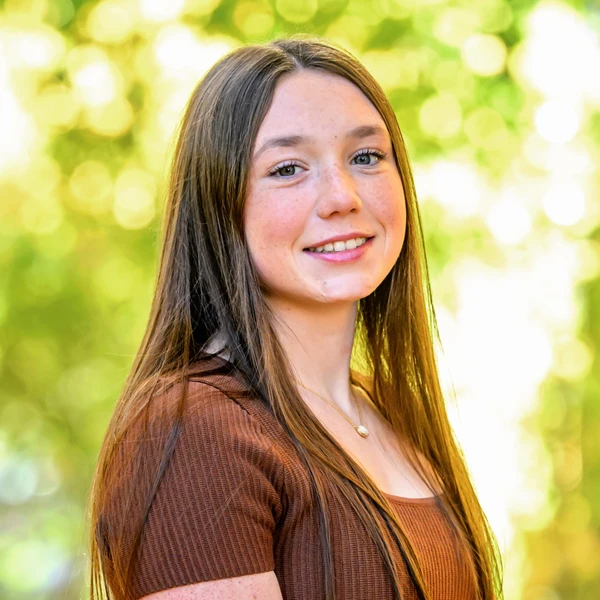
I am a student passionate about biomedical engineering and healthcare innovation. Growing up in a rural community and supporting my father through a stage-four cancer diagnosis exposed me to both the power of medical research and the challenges of accessing quality care. Watching experimental treatments restore hope inspired my goal to pursue a career in biological or bioengineering research focused on developing more effective and accessible therapies. I am driven by curiosity, persistence, and a commitment to turning scientific discovery into real impact for patients and families facing serious illness.
Education
Hughesville Jshs
High SchoolMiscellaneous
Desired degree level:
Bachelor's degree program
Majors of interest:
- Biomedical/Medical Engineering
Career
Dream career field:
Biomedical Engineering
Dream career goals:
Sports
Volleyball
Varsity2023 – Present3 years
Public services
Volunteering
Youth Development Task Force — Active Member2024 – Present
Future Interests
Advocacy
Volunteering
Philanthropy
Entrepreneurship
Gail Lynne Huber S.T.E.M. Scholarship
WinnerWhat interests me most about STEM is its ability to transform fear and uncertainty into knowledge, solutions, and hope. My interest in science began in a deeply personal way. When I was fifteen, my father was diagnosed with stage-four lung cancer. Local doctors offered little optimism, and our family was told to prepare for the worst. Instead, my father chose to fight. He traveled long distances to access specialized oncologists and clinical trials, and I watched experimental therapies restore his strength and give him time that once seemed impossible. Witnessing science extend a life I was told would soon be lost changed my understanding of what STEM can do.
As I followed my father’s treatment journey, I became fascinated by the science behind it. I began asking doctors questions, reading about targeted therapies, and learning how molecular changes in cells can drive disease. I discovered that treatments are not just developed through chance, but through years of research, experimentation, and innovation. What once felt like helplessness evolved into curiosity and motivation. I realized that STEM is not only about equations, lab reports, or textbooks — it is about real people, real lives, and real impact.
Growing up in a rural community also shaped my perspective. I saw how access to quality healthcare often depends on location, resources, and transportation. My father’s survival required constant travel and significant effort to reach treatment that was unavailable locally. This experience made me aware that scientific breakthroughs alone are not enough; they must also be accessible. I am especially interested in how biomedical research and bioengineering can develop treatments and technologies that reach underserved populations rather than remain confined to major medical centers.
Academically, I have challenged myself with rigorous science and mathematics courses to build a strong foundation for future study. I seek opportunities to apply problem-solving, critical thinking, and collaboration beyond the classroom, knowing these skills are essential for scientific research. I am motivated by questions that do not yet have answers and by the idea that persistence in the lab can eventually translate into progress for patients.
I hope to pursue biological or bioengineering sciences in college and contribute to medical research focused on developing more effective and accessible therapies. STEM interests me most because it sits at the intersection of discovery and compassion. It offers the chance to take a devastating diagnosis and replace despair with possibility. I want to be part of that transformation — turning scientific innovation into longer, healthier lives for families like mine.