
Hobbies and interests
Bowling
Golf
Soccer
National Honor Society (NHS)
Babysitting And Childcare
Volunteering
US CITIZENSHIP
US Citizen
FIRST GENERATION STUDENT
Yes
Ava Garcia
1x
Finalist
Ava Garcia
1x
FinalistBio
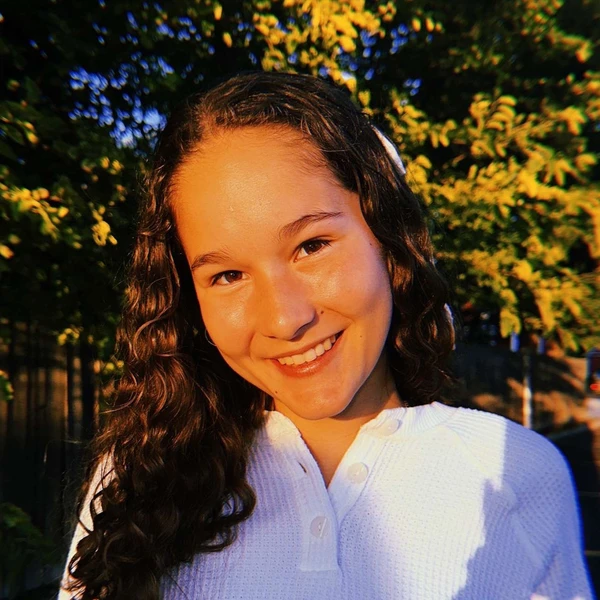
I am currently ending Central Michigan University and majoring in neuroscience on a Pre-Pa route. I love helping people and I do this by volunteering and being an open space. I am a first generation college student who has always had the importance of obtaining an education preached to me. My passion for helping people in the medical field has come from my brother who has a rare brain disease and he is the reason for my major and plays a huge part in who I am today.
Education
Central Michigan University
Bachelor's degree programMajors:
- Neurobiology and Neurosciences
Minors:
- Psychology, General
Whitehall Senior High School
High SchoolMiscellaneous
Desired degree level:
Master's degree program
Graduate schools of interest:
Transfer schools of interest:
Majors of interest:
- Registered Nursing, Nursing Administration, Nursing Research and Clinical Nursing
- Neurobiology and Neurosciences
Career
Dream career field:
Physician Assistant
Dream career goals:
Cashier
American gas & oil2025 – Present1 yearTo put in orders, serve ice cream, and handle money.
Duck Creek RV Resort2024 – 20251 year
Sports
Bowling
Varsity2020 – 20244 years
Awards
- all conference
Soccer
Varsity2020 – 20244 years
Awards
- all conference
- all district
Golf
Varsity2020 – 20244 years
Awards
- All-conference
Research
Neurobiology and Neurosciences
Central Michigan University — Stain slides, watch surgeries on rats, and take microscopic pictures2025 – Present
Public services
Volunteering
National Honors Society — I would cook monthly and plan a monthly meal at a church in my community open for anyone to receive a fresh warm meal.2022 – 2024
Champions for Intellectual Disability Scholarship
It took me a while to accept the concept of death, that death means both the impending loss of life, or the inability to live a life of opportunity. I was once angry seeing the impact disease and illness have on individuals. I grew up having to see sickness inhibit the opportunities my brother could partake in. My brother has had a rare brain disease since the age of six and has outlived his life expectancy by over 25 years. Some say it’s a miracle, I say it is a scary ticking time bomb that can’t be disarmed. He has not walked once my entire life. Some of my earliest memories are of him choking at the dinner table, and my parents yelling for my sister and me to run into their room and not come out until they say so. How to pat his back and who to get if he chokes while they are gone. The thing about growing up around disease and disability is that it impacts the way one grows and influences how they view the world. This never leaves you; even hearing someone cough or laugh in a specific way in public causes my head to jolt to the source to see if they are choking and need assistance.
Now, I have almost become numb to it. I feel ashamed of this sometimes, but I think it is my body’s way of not having to feel constant hurt. In elementary school, I remember how my heart would beat when the classroom phone would ring. I wish it were because I was scared to be sent to the principal’s office; instead, I was scared that his borrowed time had come to an end. However, I have come to accept that there is simply nothing I, nor anyone else, can do to reverse this illness. I wish I could give him a ‘normal’ life, an opportunity to be a father and husband, but I know this will never be. This has become the fuel that powers my passion for healthcare.
Using my personal experiences, I have decided to double major in clinical health neuroscience and general psychology, with an end goal of being a physician assistant. It is also my goal to complete all of my education at Central Michigan University, a place that I have further found my voice. In the future, I want to use my voice and knowledge to eventually concentrate on neurology, specifically brain disease. However, before getting to brain disease I feel as though it is important for me to help people of all illnesses because they deserve quality care just as much as those like my brother with a one in a million-brain disease.
My personal experience with disease has led me to develop empathy and an understanding that is only possible through such personal relations. Knowing I can’t do anything to help my brother hurts, but brings an even greater desire to help every individual I possibly can. This is the opportunity healthcare will bring for me, and why I truly believe it is my purpose in life to serve those who are being prevented from living their best life due to any illness or disease. Thank you for your consideration.
Sammy Hason, Sr. Memorial Scholarship
It took me a while to accept the concept of death, that death means both the impending loss of life, or the inability to live a life of opportunity. I was once angry seeing the impact disease and illness have on individuals. I grew up having to see sickness inhibit the opportunities my brother could partake in. My brother has had a rare brain disease since the age of six and has outlived his life expectancy by over 25 years. Some say it’s a miracle, I say it is a scary ticking time bomb that can’t be disarmed. He has not walked once my entire life. Some of my earliest memories are of him choking at the dinner table, and my parents yelling for my sister and me to run into their room and not come out until they say so. How to pat his back and who to get if he chokes while they are gone. The thing about growing up around disease and disability is that it impacts the way one grows and influences how they view the world. This never leaves you; even hearing someone cough or laugh in a specific way in public causes my head to jolt to the source to see if they are choking and need assistance.
Now, I have almost become numb to it. I feel ashamed of this sometimes, but I think it is my body’s way of not having to feel constant hurt. In elementary school, I remember how my heart would beat when the classroom phone would ring. I wish it were because I was scared to be sent to the principal’s office; instead, I was scared that his borrowed time had come to an end. However, I have come to accept that there is simply nothing I, nor anyone else, can do to reverse this illness. I wish I could give him a ‘normal’ life, an opportunity to be a father and husband, but I know this will never be. This has become the fuel that powers my passion for healthcare.
Using my personal experiences, I have decided to double major in clinical health neuroscience and general psychology, with an end goal of being a physician assistant. It is also my goal to complete all of my education at Central Michigan University, a place that I have further found my voice. In the future, I want to use my voice and knowledge to eventually concentrate on neurology, specifically brain disease. However, before getting to brain disease I feel as though it is important for me to help people of all illnesses because they deserve quality care just as much as those like my brother with a one in a million-brain disease.
My personal experience with disease has led me to develop empathy and an understanding that is only possible through such personal relations. Knowing I can’t do anything to help my brother hurts, but brings an even greater desire to help every individual I possibly can. This is the opportunity healthcare will bring for me, and why I truly believe it is my purpose in life to serve those who are being prevented from living their best life due to any illness or disease. Thank you for your consideration.
José Ventura and Margarita Melendez Mexican-American Scholarship Fund
He didn’t like me because I was Mexican. This is what a boy told me in first grade before I even understood what identity and skin color meant. He may not remember this, but I do.
I do not feel anger towards him as at that age your beliefs are simply a reflection of your parents beliefs, instead I use his words as inspiration to reach higher. No, I do not speak Spanish and yes my mother is white. This seems to mean that I am “white-washed” and not a “real Mexican,” or so I’ve been told many times.
I am a first-generation college student, and this does not mean that my parents are lazy. They are actually the opposite and have not been able to chase their educational dreams due to the lack of opportunity they were given, yet provide for me. Their immense sacrifices to provide me with a life where I never felt unloved and have always felt confident motivates me. I am proud of my parents for not letting the world lead them to believe they are insignificant for not being “educated.” The whole idea that not going to college immediately invalidates one’s opinion is unbelievable to me. Once there was a time where simply graduating high school was considered greatly educated, in fact my grandma was the first one in her family to do so. I remember talking to a friend about how their grandparents went to college and my jaw dropping. I did not fully comprehend the idea that colleges even existed at that time, which looking back now is a little silly. However, this is to say that I am grateful to be a first generation college student because I believe that it makes me much more appreciative and grateful for every opportunity I am given. Even this scholarship that I am applying for right now is an opportunity that I am grateful to have the chance to apply for.
I love telling people that I am a first generation, Mexican-American, female who is one day going to save lives as a physician assistant. Yes, I am scared of failure. I may not have had previous examples of how exactly to accomplish these big dreams I carry. What I do however know is that I will not let my family down. I will not let the words previously said to me be the reason I do not keep pushing and fighting to further my future. The future of the children I may have one day who do not believe someone like them can achieve great things.
Thank you for your consideration, I am excited to make a difference in this world.
Eric W. Larson Memorial STEM Scholarship
Whenever people ask how I have transformed into the being I am today, I often find it hard to collectively summarize my life experiences in a way that won’t dim the mood of the environment around me.
The truth is, I do not feel good calling myself a minority, as my whole life, I have grown up surrounded by people telling me I am not enough of anything to be considered a “real” minority. Although I am of Mexican descent, I often get weird stares if I call myself Mexican because my mom is white and I do not speak Spanish. Yet when I get my tan, I am told that I need to be deported by the same people who previously called me white-washed. These many instances have brought nothing but internal conflict regarding identity, or more so, what identities people will allow me to express. However, this is only the spark in my plethora of experiences that have led to the wildfire of existential crisis I have come to live in.
A driving force in navigating my identity and the advancement of minorities stems from family. My “brother,” who is technically my half-brother but has been a part of my entire life, has an extremely rare brain disease that affects only one in a million. The difference between brother and half-brother may seem insignificant, but sometimes it makes me doubt whether or not I am allowed to use his brain disease as the fuel to the fire that is my passion for studying neuroscience. He has had the same brain disease, Sandhoff disease, that is, my entire life; hence, I have seen it slowly take the life out of him. This disease has caused him to lose his ability to walk and has led to neurological impairment that has hindered his ability to do just about anything. Seeing his daily struggles and needing to provide him with assistance when I was younger made me think of him as more of a chore than a brother, which is still something I feel immense guilt about. Moving him into an assisted living home has helped me unravel these thoughts, and it is still something I am working on.
Mental health is a topic that always silences a room, and I can’t help but think how much simpler things would be if my mind were that silent. Instead, my thoughts tell my mind that everything I do is wrong and that I will never be good enough for myself or anyone as long as my sad, miserable life continues. Pitiful right? I bet whoever is reading this has the same silence that everyone else has when I give them a glimpse of my life. To make these thoughts make more sense, I’ll give these thoughts a name for my reader. Depression, anxiety, suicidal ideation, and body dysmorphia. Therapy has not proven to be helpful, and neither have my prescriptions of Citalopram, Sertraline, and Hydroxyzine. In other words, medication hasn’t fully made the feelings go away either, but on a good note, I am alive to type this essay.
All of this to say I am committed to the advancement of minorities, as I and others close to me fall into the minority category, and we have fought for long enough to deserve credit for our achievements and efforts. Advancement for minorities means that everyone is recognized as an individual with different individual identities and not just thrown into a group of people who have different lived experiences than themself. It means having accessible ramps at every building and not discriminating based on race, sexuality, disabilities, or gender orientation. The advancement of minorities also means the stigma behind mental health is left behind, a thing of the past. I distinguish myself in the advancement of underrepresented groups by belonging to many underrepresented groups myself. I embrace this part of me and use it as fuel to further develop my ability to understand the struggles of other groups and how I can use this knowledge to help every group one day be equally represented.
The physician assistant field is one that excites me. People often ask me why I’d not just become a doctor which I don’t fully understand but I know it isn’t my calling which I am okay with. I believe that part of it is out of fear that I will become a “rich stuck up doctor” that I hear horror stories about. That I will become almost inhuman and not able to develop the connections I dream of building with my future patients. I think that being a physician assistant is the perfect “middle” ground between being powerless and too powerful. I want to be able to make a difference while maintaining a personal connection that I worry I may not get with the title of being a doctor. The STEM and medical field are my passion and my calling. When people ask me what my backup plan is I say I don’t have one, I quite literally cannot think of another possible option for me. This instills fear in me, but also a deep level of excitement to have such a burning passion and fuel igniting it.
Thank you for your consideration.
Clarice Kanouse Memorial Scholarship
Whenever people ask how I have transformed into the being I am today, I often find it hard to collectively summarize my life experiences in a way that won’t dim the mood of the environment around me.
The truth is, I do not feel good calling myself a minority, as my whole life, I have grown up surrounded by people telling me I am not enough of anything to be considered a “real” minority. Although I am of Mexican descent, I often get weird stares if I call myself Mexican because my mom is white and I do not speak Spanish. Yet when I get my tan, I am told that I need to be deported by the same people who previously called me white-washed. These many instances have brought nothing but internal conflict regarding identity, or more so, what identities people will allow me to express. However, this is only the spark in my plethora of experiences that have led to the wildfire of existential crisis I have come to live in.
A driving force in navigating my identity and the advancement of minorities stems from family. My brother has had the same brain disease, Sandhoff disease, that is, my entire life; hence, I have seen it slowly take the life out of him. This disease has caused him to lose his ability to walk and has led to neurological impairment that has hindered his ability to do just about anything. Seeing his daily struggles and needing to provide him with assistance when I was younger made me think of him as more of a chore than a brother, which is still something I feel immense guilt about. Moving him into an assisted living home has helped me unravel these thoughts, and it is still something I am working on.
Mental health is a topic that always silences a room, and I can’t help but think how much simpler things would be if my mind were that silent. Instead, my thoughts tell my mind that everything I do is wrong and that I will never be good enough for myself or anyone as long as my sad, miserable life continues. Pitiful right? I bet whoever is reading this has the same silence that everyone else has when I give them a glimpse of my life. To make these thoughts make more sense, I’ll give these thoughts a name for my reader. Depression, anxiety, suicidal ideation, and body dysmorphia. Therapy has not proven to be helpful, and neither have my prescriptions of Citalopram, Sertraline, and Hydroxyzine. In other words, medication hasn’t fully made the feelings go away either.
The advancement of minorities is something I’m committed to as I and others close to me fall into the minority category, and we have fought for long enough to deserve credit for our achievements and efforts. Advancement for minorities means that everyone is recognized as an individual with different individual identities and not just thrown into a group of people who have different lived experiences than themself. It means having accessible ramps at every building and not discriminating based on race, sexuality, disabilities, or gender orientation. The advancement of minorities also means the stigma behind mental health is left behind, a thing of the past. I distinguish myself in the advancement of underrepresented groups by belonging to many underrepresented groups myself. I embrace this part of me and use it as fuel to further develop my ability to understand the struggles of other groups and how I can use this knowledge to help every group one day be equally represented.
Simon Strong Scholarship
“I don’t like you because you’re Mexican” was something I was told when I was just in 3rd grade by a white boy in my class. At the time I was confused because I was nice to everyone and didn’t do anything wrong. This was my first encounter with race. Looking back now as a college freshman who is a MAC scholar at my college with the mission of expanding multicultural awareness I forgive him. I understand that those were not his thoughts as no 3rd grader is naturally racist. Rather they are his parent’s thoughts and beliefs passed to him. I can only hope that his parents no longer hold these beliefs and use them to discriminate against BIOPC members.
Through my MAC scholarship at Central Michigan University, I have learned about the many disparities that different communities undergo. I have became more aware of the privileges I have and the privileges I lack. As a Hispanic women I don’t have the same voice and privilege as the White male. However, because my mom is white and I am receiving college education I have a greater voice than a Mexican immigrant who can’t afford college. I continue to learn and become more aware on how I can use my privileges to stand up for the injustice I continuously see in the world around me.
As an older sister I want nothing but the best for my younger sister. I am a first generation student and the idea of paving a path for her to obtain a college education motivates me. I would hate for her being Hispanic to make her think she is unworthy and less than. She is currently a high school junior and because of our relatively small age difference I have had the privilege to play sports with her. One time during a soccer game she was called a wild animal and a “monkey” by parents on the sidelines and other players on the opposite team. It was shocking considering that school is known to have many Mexican members. It was shocking to hear such rude comments coming from what was supposed to be our allies as they should understand that discrimination is unfair and unacceptable.
My advice for my sister and other members of the BIPOC community who may relate to my experiences is to stand up for yourself and understand that what they say about you is not who you are and therefore doesn’t define you. Use their words to motivate you to achieve greatness and show them that your skin color and ethnicity does not define your capabilities and that their cruel words mean nothing to you.
Women in Healthcare Scholarship
Disease is very relevant in my life. Growing up I have had to see the toll it can take on someone not only with the disease but those caring for them as well. My older brother has a rare disease called Sandhoff disease and it has greatly changed the course of his life. He was diagnosed at age six and told that he wouldn’t live to age ten, he is now in his thirties. He is unable to walk and always needed extra care from us, because of this we had to move him into a special home. I felt like I was betraying him even though I was only eighteen there was nothing I could do and I felt helpless.
This was when I decided I was going to major in neuroscience and study the brain as his disease affects the brain. I have also chosen to go a Pre-Physician Assistant route and plan on working in pediatric neurology or pediatric oncology. I want to help families like mine navigate the unknown and help them live a more fulfilling and healthy life that I couldn't give to my brother.
I remember always sitting in class when I was younger. I would hear the phone ring in the class and automatically I would freeze up and sweat. I always thought it was going to be the call saying that my brother’s battle for life is over. This hasn’t happened yet, but I know that he’s been living on borrowed time for the last 20 years and soon that time will run out.
People close to me are confused when I break down when talking about him. I always make jokes about him because if I don’t laugh about it I know that I will cry. I remember hearing him cry one night as his bedroom was right across from mine. My mom was in the room with him talking to him and I heard him asking why him and being upset that he would never get to live a “normal” life. On Thanksgiving he would often choke on his food, I was so used to this that when it happened at the big family Thanksgiving I was confused when my older cousin cried. I have become numb to the daily pain he experienced, the feeling of not knowing, and not knowing if he would wake up the next night.
Now I can admit that this has been a great stressor in my life and made me much more grateful for my own life. I can also admit now that I saw things and have experienced things that no one should have to go through and had thoughts of death at a very young age which I should not have. I hope to use these experiences to relate to my patients in the future, but also ensure that they won’t have to go through the pain and unknown that I still have to live with.