Hobbies and interests
Anatomy
Babysitting And Childcare
Basketball
Athletic Training
Biology
Exercise And Fitness
Softball
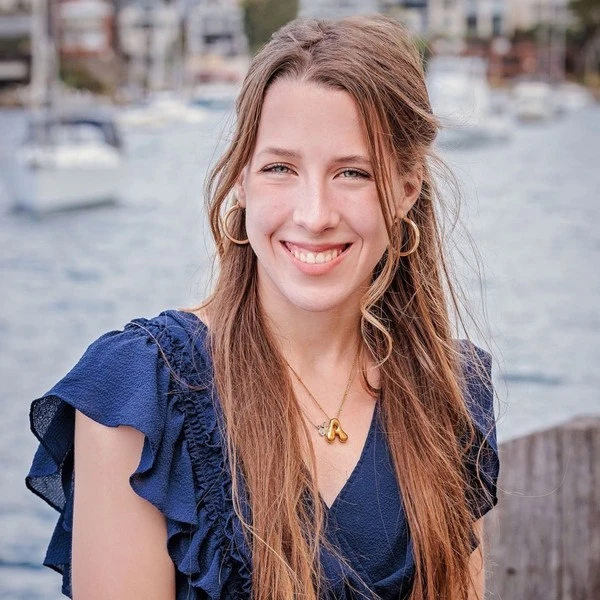
Ava Cosler
1x
Finalist
Ava Cosler
1x
FinalistBio
Hi! My name is Ava, and I'm really passionate about healthcare and working with kids. My goal is to study nursing and eventually work as a pediatric nurse.
Education
Severna Park Senior High School
High SchoolSeverna Park Senior High School
High SchoolMiscellaneous
Desired degree level:
Master's degree program
Majors of interest:
- Registered Nursing, Nursing Administration, Nursing Research and Clinical Nursing
Career
Dream career field:
nursing
Dream career goals:
Sports
Basketball
Junior Varsity2022 – 20242 years
Awards
- yes
Softball
Junior Varsity2023 – 20252 years
Awards
- no
Public services
Volunteering
Luminis Health — Student Volunteer2025 – Present
Patricia Lindsey Jackson Foundation - Eva Mae Jackson Scholarship of Education
For the longest time, faith was a complicated subject for me. For the most part, I considered myself agnostic, even an atheist at times. During middle school going into high school, I truly did not believe that there was a God out there. I was experiencing struggles with my mental health, and I simply couldn’t believe that there was a God who would allow me to experience such misery. During sophomore and junior year, things changed for me a little. Faith started to become a crutch for me when things were difficult or went wrong. It was a comfort for me to believe that what I was experiencing was part of God’s plan.
Senior year, my faith began to evolve. Without me really realizing it, I started having these conversations with God, and I started to feel this presence that I had never felt before.
This presence manifested in a really significant way for me during the marathon I ran in the spring of my senior year. As I started to hit the wall, I felt the presence of God willing me forward, even pushing me. 2 miles from the finish line, this older man ran up behind me and asked me to run with him. No one else was around, it had just been me and then him on that section of the trail. At first I resisted, telling him I couldn’t go any faster. But he still encouraged me, and I felt this new wave I hadn’t felt before. As we ran, he talked about his friends who run ultramarathons and his experience with running, and he asked me about school and college plans. He wasn’t even racing the marathon, he just happened to be going for a run on the trail. We ran almost those last two miles until we came to an intersection. Where he continued down the trail while I went up to the high school towards the finish line.
I couldn’t help but feel like it was a religious experience, like God had physically manifested himself in my time of need. From that day on, I was certain of God’s presence in my life.
To me, my faith is more of a relationship than a religion. I didn’t grow up going to church, so I’m not really sure of the right way to do things, but I feel like getting to figure that out for myself has made my relationship with God feel really special and unique to me.
As far as my academic and future goals go, I feel that my faith pushes me to be the best that I possibly can. I believe that God has a plan for me, but it's my job to work hard enough to earn what that plan has in store for me. That belief has shaped a lot of how I approach my future and higher education as a whole.
Additionally, I’ve felt guided towards higher education by my experiences, specifically those with
healthcare. One day, I was walking a patient to radiology as a volunteer, and he asked me, “So, do you have to do this for some sort of court-mandated community service?”. I laughed and responded, "No, I'm just here because I like it". He was likely joking about the community service, but I really couldn’t tell. However, this is what sealed my interest in nursing. During my time as a hospital volunteer, I gained experiences with patients that made me recognize what a privilege it is getting a window into their lives. Later that shift, a Spanish-speaking patient had her whole family with her for support, and I got to see her face light up when I asked about her day in Spanish. I fell in love with health science, then I fell in love with the patient care aspect of healthcare. That love is what I want to bring everyday as a nurse.
With my faith and love for the field by my side, I feel energized to start the next chapter of my life in higher education and work towards becoming the best provider I can be.
Instagram:
@avacosler
Wieland Nurse Appreciation Scholarship
When I was around 10, I had a crowd of kids surrounding me as I pulled a splinter out of another girl’s foot. I had a makeshift pair of pliers made out of two pointy sticks and a hair tie. These homemade chopsticks did the trick and looking back this may have been one of the formative experiences that solidified my interest in healthcare. I wanted to be able to use my skills and knowledge to help others. Eight years later, little has changed. I keep a first aid kit in the back of my car should anyone ever need it, which turns out to be a lot. Usually I just use it to disinfect and dress my friends’ wounds, but I aspire to one day help people to recover from more than superficial cuts and scrapes. Recently, I was lucky enough to have the opportunity to volunteer at my local hospital - the same one where I was born - and have seen advanced care in action. This, I knew, was what I was meant to do. I observed what pushing medicines through an IV looked like and the compassion of the nurses who carried out the procedures. They made people feel safe during procedures and showed me what a good nurse is. During my time as a volunteer, I had the opportunity to volunteer in the Pediatric Emergency Department. Through seeing Peds nurses in action and the resilience of the kids they treated, I found that I wanted to specialize in Pediatrics. One time, this little boy came in with his dad, and I took them to X-Ray, where they found that the boy's arm was broken. The whole time the kid was bouncing off the walls, to the naked eye, no one would have guessed his arm was broken. As they left and said bye to me, he was still bouncing around, just with a cast added to his arm. I think that kids push us to see the good and be positive, which is what I want to bring into my career and my life as a whole. Volunteering in the Pediatric Emergency Department showed me that healthcare is not just about treating injuries, but about meeting people where they are emotionally. Children don’t always understand what is happening to them, which makes the role of a nurse even more important. I learned how reassurance, patience, and positivity can change an experience that is scary into one that feels manageable. Watching nurses balance technical skill with empathy reinforced my desire to pursue nursing and confirmed that this career aligns with both my strengths and my values. As a pediatric nurse, I hope to help kids feel safe and protected while being treated. I want to aid in their visits being as comfortable as possible so that they later grow into adults who have trust in medicine and healthcare, therefore encouraging that same trust in others, so that no one is afraid to seek the medical attention they may need.
I found this scholarship on bold.org
Sara Jane Memorial Scholarship
When I was around 10, I had a crowd of kids surrounding me as I pulled a splinter out of another girl’s foot. I had a makeshift pair of pliers made out of two pointy sticks and a hair tie. These homemade chopsticks did the trick and looking back this may have been one of the formative experiences that solidified my interest in healthcare. I wanted to be able to use my skills and knowledge to help others. Eight years later, little has changed. I keep a first aid kit in the back of my car should anyone ever need it, which turns out to be a lot. Usually I just use it to disinfect and dress my friends’ wounds, but I aspire to one day help people to recover from more than superficial cuts and scrapes. Recently, I was lucky enough to have the opportunity to volunteer at my local hospital - the same one where I was born - and have seen advanced care in action. This, I knew, was what I was meant to do. I observed what pushing medicines through an IV looked like and the compassion of the nurses who carried out the procedures. They made people feel safe during procedures and showed me what a good nurse is. During my time as a volunteer, I had the opportunity to volunteer in the Pediatric Emergency Department. Through seeing Peds nurses in action and the resilience of the kids they treated, I found that I wanted to specialize in Pediatrics. One time, this little boy came in with his dad, and I took them to X-Ray, where they found that the boy's arm was broken. The whole time the kid was bouncing off the walls, to the naked eye, no one would have guessed his arm was broken. As they left and said bye to me, he was still bouncing around, just with a cast added to his arm. I think that kids push us to see the good and be positive, which is what I want to bring into my career and my life as a whole. Volunteering in the Pediatric Emergency Department showed me that healthcare is not just about treating injuries, but about meeting people where they are emotionally. Children don’t always understand what is happening to them, which makes the role of a nurse even more important. I learned how reassurance, patience, and positivity can change an experience that is scary into one that feels manageable. Watching nurses balance technical skill with empathy reinforced my desire to pursue nursing and confirmed that this career aligns with both my strengths and my values. As a pediatric nurse, I hope to help kids feel safe and protected while being treated. I want to aid in their visits being as comfortable as possible so that they later grow into adults who have trust in medicine and healthcare, therefore encouraging that same trust in others, so that no one is afraid to seek the medical attention they may need.
Ava Wood Stupendous Love Scholarship
Kindness in Action:
One summer when I worked as a camp counselor, my group was scheduled to go on a hike. While most of my campers were excited, one girl in my group was terrified of bugs, so the idea of going into the woods was overwhelming for her . Rather than forcing her to walk through the woods and have her go home with a miserable experience, I chose to stay back with her, far away from any bugs, while another counselor took my group on the hike. Together, we made up a game and spent the time playing it until our group came back. The way the game worked was pretty simple: we drew a bunch of squares on the ground, numbered them, and rolled a big foam dice to determine how many squares we could move at a time.
Later that day, during free play, I saw that little girl teaching the game to another group of kids. Before I knew it, the game grew exponentially, with a large group of kids playing and expanding it by drawing more and more squares to hop through until it spanned most of the main drive of the camp.
That moment of staying back with her became so important to me because it showed how one small act of kindness can create a ripple effect. By meeting her where she was instead of pushing her limits, I felt like I helped turn her fear into confidence and connection. Seeing her lead an activity she cared about reminded me that kindness is not just about making someone feel better in the moment, it’s about giving them the space to belong and to be themselves.
Creating Connection:
In late February of my junior year, my class took a field trip to a local elementary school. We would pair up with a student, get to know them, then write a personalized children’s book. A teacher pointed me towards the little girl I was paired with. Sitting at the U-shaped table in the reading nook was Anllely, an adorable girl who was hunched over a coloring page, crayon clenched in her tiny fist. When I went to sit down with her, a translator came over, holding out Google Translate on their phone. That was when I realized that Anllely did not speak a word of English. Drawing on the past 5 years of Spanish classes and countless hours spent on Duolingo, I introduced myself in Spanish. She shyly responded, and I started to get to know her. As I left later that afternoon, I saw Anlelly struggling to connect with classmates during their free play time.
When I got home that night, I decided to do both an English version and a Spanish version of my children’s book. Six weeks later, I walked back into the elementary school classroom, sat down at that same U-shaped table and read the book to Anllely in Spanish. We flipped back and forth between the English and Spanish version and she excitedly pointed to the pictures I’d drawn by hand; I saw her face light up like never before.
Moments like this have shown me I am happiest when I can make others feel seen and cared for, and I want to bring those values into my future career and my life as a whole.
"The Math Gift" Scholarship for High School Students
Almost everyone I know has that core childhood memory of crying over their math homework in the kitchen while their parents tried to help them with their math homework. For me, that was the situation I had most nights in the 5th grade. Math didn’t really click for me until middle/high school, so I spent a good portion of elementary school hating math with every ounce of my being.
A lot of people who like math like it because it is “clear cut”, it doesn't have the degree of subjectivity that subjects like English do. However, that same quality of math that makes some people love it can be what drives other people away. Since there's usually only one right answer, math can feel cruel and unforgiving.
Still, most people would argue that math is important. It’s a part of our everyday life, from buying groceries to figuring out how much to Venmo someone, math is everywhere. However, knowing math has benefits outside of these applications. Research from Duke University suggests that engaging in mental math activates the dorsolateral prefrontal cortex, a region of the brain associated with both cognitive flexibility and emotional regulation. This same area has been linked to conditions such as depression and anxiety, with higher activity correlating to fewer symptoms.
According to researcher Matthew Scult, more complex math problems may help individuals “learn how to think about complex emotional situations in different ways.” In other words, practicing math doesn’t just train the brain to solve equations, it trains the brain to adapt. That ability to reframe problems, consider multiple approaches, and persist through difficulty mirrors the skills needed to navigate real-life emotional challenges.
This connection highlights an often-overlooked benefit of learning math: resilience. Struggling through a difficult problem requires patience, flexibility, and the willingness to try again after failure. These are the same skills that help people cope with setbacks, regulate their emotions, and adjust to unexpected situations.
Ultimately, math is not just a tool for calculating numbers; it is a tool for shaping how we think. It strengthens our ability to problem-solve both logically and emotionally. While many people remember the frustration of learning math, those moments of difficulty are where growth happens.
Math may help someone calculate how long it takes to get from one place to another, but more importantly, it helps them adapt when the route changes and be able to handle when things don’t go as planned.
Losinger Nursing Scholarship
1.
When I was 10, I had a crowd of kids surrounding me as I pulled a splinter out of another girl’s foot. I had a makeshift pair of pliers made out of two pointy sticks and a hair tie. These homemade chopsticks did the trick, and looking back, this may have been one of the formative experiences that solidified my interest in healthcare. I wanted to be able to use my skills and knowledge to help others. Eight years later, little has changed. I keep a first aid kit in the back of my car, should anyone ever need it, which turns out to be a lot. Usually, I use it to disinfect and dress my friends’ wounds, but I aspire to one day help people recover from more than superficial cuts and scrapes. Recently, I was lucky enough to have the opportunity to volunteer at my local hospital - the same one where I was born - and see advanced care in action. I observed what pushing medicines through an IV looked like and the compassion of the nurses who carried out the procedures. During my time as a volunteer, I volunteered in the Pediatric Emergency Department. Through seeing Peds nurses in action and the resilience of the kids they treated, I found that I wanted to specialize in Pediatrics. One time, this little boy came in with his dad, and I took them to X-Ray, where they found that the boy's arm was broken. The whole time the kid was bouncing off the walls, and to the naked eye, someone would never have guessed his arm was broken. I think that kids push us to see the good and be positive, which is what I want to bring into my career and my life as a whole.
2.
To me, "human touch" means having empathy for others, seeing them as individuals, and working to make them feel safe and supported.
In a world that sometimes feels like things are moving too fast, slowing down and valuing human connections becomes all the more important. Volunteering in the Pediatric Emergency Department showed me that healthcare is not just about treating injuries, but about meeting people where they are emotionally. Children don’t always understand what is happening to them, which makes the role of a nurse even more important. I learned how reassurance, patience, and positivity can change an experience that is scary into one that feels manageable.
Outside of healthcare, I’d had the opportunity to see the impact that a “human touch” can have on kids. As a camp counselor, I got to lead kids through traditional camp activities, but more importantly, I also had the opportunity to see the kind of growth a kid can experience over just a week at camp. I think that one of my most important roles as a camp counselor was guiding kids through every aspect of camp, from how to paddle a canoe to how to handle feelings of homesickness. I don’t interact with every kid in the same way because every kid is different, and I think adjusting the way I choose to communicate and guide each kid individually creates the most potential for growth and an overall fun camp experience.
The applications of this in healthcare are clear to me, as I think the best way to build trust with patients is to meet them where they are emotionally and use that to give the best care possible. To me, this also means building empathy for patients and treating them like humans. Hospitals are overwhelming for most people, so recognizing the fear that a lot of people bring with them is important for being able to guide them through their care in a comfortable manner.
By making a patient's experience as comfortable as possible, they’re more likely to return when something is wrong and receive the care they need, rather than being afraid to go back. In my career, I want to be the nurse who makes patients feel safe enough to come back.
Sammy Meckley Memorial Scholarship
It was the last day of camp, and one of the kids in the group I counseled, the Tide, was standing at the front of the dining hall with the microphone. He announced to the camp his gratitude for the support he had received during the cannonball competition at the water carnival. Not many adults, let alone a 10-year-old, would be willing to speak to a group of over one hundred, but he did. Moments like that are the reason that the most meaningful commitment I’ve had in high school has been a camp counselor at Arlington Echo Outdoor Education Center. From the moment they get out of their parents' car, most kids are nervous and scared to be away from home. But over the week, that fear fades as they make new friends and try new things. One of my favorite things to do was to ask the campers to make up their own game. Even when personalities clashed, they struggled through and managed to figure it out. Throughout the week, I saw them gain the confidence to be themselves. By the end, the kid who wouldn't say a word on day one would be leading an enthusiastic game of “shipwreck.” The kid who avoided attention like the plague would be volunteering to speak in front of the whole camp.
Seeing their growth is what makes this so meaningful to me. When they leave camp, even if they are just a little less scared to talk to a new person or to be their authentic self, I feel like I had a small part in that.
As a future pediatric nurse, helping kids to be more confident is really important to me. Confidence isn’t just a social skill, it’s critical to their personal well-being and safety. Confident kids are more likely to speak up when something is wrong, whether that be medically or just standing up for their friend. At camp, I’ve witnessed more outgoing kids putting a stop to teasing before it even got severe enough that an adult had to get involved. These kids lift each other up and create this ripple effect where they in turn instill more confidence in their peers, creating a more confident culture where kids want their voices to be heard.
Being a camp counselor has taught me that small moments, like encouraging a shy kid to speak up, can have huge impacts. The opportunity to create change in my community through working with kids has been incredibly fulfilling and it has helped me to realize that this is the kind of work that I want to spend the rest of my life doing.
Gloria Rickett Memorial Scholarship
When I was around 10, I had a crowd of kids surrounding me as I pulled a splinter out of another girl’s foot. I had a makeshift pair of pliers made out of two pointy sticks and a hair tie. These homemade chopsticks did the trick and looking back this may have been one of the formative experiences that solidified my interest in healthcare. I wanted to be able to use my skills and knowledge to help others. Eight years later, little has changed. I keep a first aid kit in the back of my car should anyone ever need it, which turns out to be a lot. Usually I just use it to disinfect and dress my friends’ wounds, but I aspire to one day help people to recover from more than superficial cuts and scrapes. Recently, I was lucky enough to have the opportunity to volunteer at my local hospital - the same one where I was born - and have seen advanced care in action. This, I knew, was what I was meant to do. I observed what pushing medicines through an IV looked like and the compassion of the nurses who carried out the procedures. They made people feel safe during procedures and showed me what a good nurse is. During my time as a volunteer, I had the opportunity to volunteer in the Pediatric Emergency Department. Through seeing Peds nurses in action and the resilience of the kids they treated, I found that I wanted to specialize in Pediatrics. One time, this little boy came in with his dad, and I took them to X-Ray, where they found that the boy's arm was broken. The whole time the kid was bouncing off the walls, to the naked eye, no one would have guessed his arm was broken. As they left and said bye to me, he was still bouncing around, just with a cast added to his arm. I think that kids push us to see the good and be positive, which is what I want to bring into my career and my life as a whole. I learned how reassurance, patience, and positivity can change an experience that is scary into one that feels manageable. As a pediatric nurse, I hope to help kids feel safe and protected while being treated. I want to aid in their visits being as comfortable as possible so that they later grow into adults who have trust in medicine and healthcare, therefore encouraging that same trust in others, so that no one is afraid to seek the medical attention they may need.
Matthew E. Minor Memorial Scholarship
It was the last day of camp when one of the boys in my group, the Tide, stood at the front of the dining hall holding a microphone with both hands. His voice shook at first, but he thanked the entire camp for cheering him on during the cannonball competition at our water carnival. A week earlier, he had barely spoken above a whisper. Now he was addressing over one hundred people. That moment affirmed why being a camp counselor has been the most meaningful commitment of my high school years.
From the minute campers step out of their parents’ cars, many are nervous, homesick, or unsure of themselves. Over the course of the week, though, I see fear turn into belonging. Some of my favorite things to do to get campers out of their shell are to ask them to invent their own games, solve small conflicts on their own first, and encourage each other before I step in. When personalities clash, I guide them through the conflict in a way that promotes respect, rather than just separating them. By the end of the week, the quietest camper is often leading an energetic round of “shipwreck,” and the kid who was terrified of arrows is trying archery by the time they get picked up.
These experiences have shaped how I think about safety in my community. Policies matter, but culture matters more. I believe the most effective way to protect children from bullying, both in person and online, is to build confidence and community before problems arise. By promoting community in kids, they’re more likely to do something about bullying when they see it. In real life, I’ve witnessed how the more confident kids are likely to step in before an adult even notices teasing or bullying.
At camp, I emphasize that everyone deserves to be heard. I model how to respond when someone makes a hurtful comment, and I teach campers how to include others intentionally. Empowering kids to speak up and support one another creates an environment where bullying is less likely to thrive.
Beyond camp, I am involved in volunteer work and school activities such as my high school’s red cross club and equity club. I enjoy volunteering at my local hospital and I work as a server. In addition to those activities, I enjoy playing softball and basketball, and I love getting to share that love with younger kids through volunteering at sports camps. Whether teaching a kid to do a lay-up helping to mitigate team conflicts, I try to lead in a way that prioritizes inclusion. I have learned that safety is not just about stopping harm, it is about fostering belonging.
As I prepare to enter college and beyond, financial aid is essential for me. While my family has always prioritized education, the cost of tuition, housing, books, and my twin brother and I attending college at the same time present a significant burden I plan to pursue a career in healthcare, and minimizing debt will give me the flexibility to pursue internships, volunteer work, and eventually patient care.
At camp, I watched a ten-year-old find the courage to speak in front of a crowd. That courage did not appear overnight; it grew from small moments of encouragement and inclusion. In my community, I strive to create those same moments. While I cannot control every challenge a kid will inevitably face, I can help them to build the tools they need to be able to handle those moments and help others as well.
Community Health Ambassador Scholarship for Nursing Students
When I was around 10, I had a crowd of kids surrounding me as I pulled a splinter out of another girl’s foot. I had a makeshift pair of pliers made out of two pointy sticks and a hair tie. These homemade chopsticks did the trick and looking back this may have been one of the formative experiences that solidified my interest in healthcare. I wanted to be able to use my skills and knowledge to help others. Eight years later, little has changed. I keep a first aid kit in the back of my car should anyone ever need it, which turns out to be a lot. Usually I just use it to disinfect and dress my friends’ wounds, but I aspire to one day help people to recover from more than superficial cuts and scrapes. Recently, I was lucky enough to have the opportunity to volunteer at my local hospital - the same one where I was born - and have seen advanced care in action. This, I knew, was what I was meant to do. I observed what pushing medicines through an IV looked like and the compassion of the nurses who carried out the procedures. They made people feel safe during procedures and showed me what a good nurse is. During my time as a volunteer, I had the opportunity to volunteer in the Pediatric Emergency Department. Through seeing Peds nurses in action and the resilience of the kids they treated, I found that I wanted to specialize in Pediatrics. One time, this little boy came in with his dad, and I took them to X-Ray, where they found that the boy's arm was broken. The whole time the kid was bouncing off the walls, to the naked eye, no one would have guessed his arm was broken. As they left and said bye to me, he was still bouncing around, just with a cast added to his arm. I think that kids push us to see the good and be positive, which is what I want to bring into my career and my life as a whole. Volunteering in the Pediatric Emergency Department showed me that healthcare is not just about treating injuries, but about meeting people where they are emotionally. Children don’t always understand what is happening to them, which makes the role of a nurse even more important. I learned how reassurance, patience, and positivity can change an experience that is scary into one that feels manageable. Watching nurses balance technical skill with empathy reinforced my desire to pursue nursing and confirmed that this career aligns with both my strengths and my values. As a pediatric nurse, I hope to help kids feel safe and protected while being treated. I want to aid in their visits to be as comfortable as possible so that they later grow into adults who have trust in medicine and healthcare, therefore encouraging that same trust in others, so that no one is afraid to seek the medical attention they may need.
Evan James Vaillancourt Memorial Scholarship
When I was around 10, I had a crowd of kids surrounding me as I pulled a splinter out of another girl’s foot. I had a makeshift pair of pliers made out of two pointy sticks and a hair tie. These homemade chopsticks did the trick and looking back this may have been one of the formative experiences that solidified my interest in healthcare. I wanted to be able to use my skills and knowledge to help others. Eight years later, little has changed. I keep a first aid kit in the back of my car should anyone ever need it, which turns out to be a lot. Usually I just use it to disinfect and dress my friends’ wounds, but I aspire to one day help people to recover from more than superficial cuts and scrapes. Recently, I was lucky enough to have the opportunity to volunteer at my local hospital - the same one where I was born - and have seen advanced care in action. This, I knew, was what I was meant to do. I observed what pushing medicines through an IV looked like and the compassion of the nurses who carried out the procedures. They made people feel safe during procedures and showed me what a good nurse is. During my time as a volunteer, I had the opportunity to volunteer in the Pediatric Emergency Department. Through seeing Peds nurses in action and the resilience of the kids they treated, I found that I wanted to specialize in Pediatrics. One time, this little boy came in with his dad, and I took them to X-Ray, where they found that the boy's arm was broken. The whole time the kid was bouncing off the walls, to the naked eye, no one would have guessed his arm was broken. As they left and said bye to me, he was still bouncing around, just with a cast added to his arm. I think that kids push us to see the good and be positive, which is what I want to bring into my career and my life as a whole. Volunteering in the Pediatric Emergency Department showed me that healthcare is not just about treating injuries, but about meeting people where they are emotionally. Children don’t always understand what is happening to them, which makes the role of a nurse even more important. I learned how reassurance, patience, and positivity can change an experience that is scary into one that feels manageable. Watching nurses balance technical skill with empathy reinforced my desire to pursue nursing and confirmed that this career aligns with both my strengths and my values. As a pediatric nurse, I hope to help kids feel safe and protected while being treated. I want to aid in their visits being as comfortable as possible so that they later grow into adults who have trust in medicine and healthcare, therefore encouraging that same trust in others, so that no one is afraid to seek the medical attention they may need.
Beverly J. Patterson Scholarship
When I was around 10, I had a crowd of kids surrounding me as I pulled a splinter out of another girl’s foot. I had a makeshift pair of pliers made out of two pointy sticks and a hair tie. These homemade chopsticks did the trick, and looking back, this may have been one of the formative experiences that solidified my interest in healthcare. I wanted to be able to use my skills and knowledge to help others. Eight years later, little has changed. I keep a first aid kit in the back of my car, should anyone ever need it, which turns out to be a lot. Usually, I just use it to disinfect and dress my friends’ wounds, but I aspire to one day help people to recover from more than superficial cuts and scrapes. Recently, I was lucky enough to have the opportunity to volunteer at my local hospital - the same one where I was born - and have seen advanced care in action. This, I knew, was what I was meant to do. I observed what pushing medicines through an IV looked like and the compassion of the nurses who carried out the procedures. They made people feel safe during procedures and showed me what a good nurse is. During my time as a volunteer, I had the opportunity to volunteer in the Pediatric Emergency Department. Through seeing Peds nurses in action and the resilience of the kids they treated, I found that I wanted to specialize in Pediatrics. One time, this little boy came in with his dad, and I took them to X-Ray, where they found that the boy's arm was broken. The whole time the kid was bouncing off the walls, to the naked eye, no one would have guessed his arm was broken. As they left and said bye to me, he was still bouncing around, just with a cast added to his arm. I think that kids push us to see the good and be positive, which is what I want to bring into my career and my life as a whole. Volunteering in the Pediatric Emergency Department showed me that healthcare is not just about treating injuries, but about meeting people where they are emotionally. Children don’t always understand what is happening to them, which makes the role of a nurse even more important. I learned how reassurance, patience, and positivity can change an experience that is scary into one that feels manageable. Watching nurses balance technical skill with empathy reinforced my desire to pursue nursing and confirmed that this career aligns with both my strengths and my values. As a pediatric nurse, I hope to help kids feel safe and protected while being treated. I want to aid in their visits to be as comfortable as possible so that they later grow into adults who have trust in medicine and healthcare, therefore encouraging that same trust in others, so that no one is afraid to seek the medical attention they may need.
Dashanna K. McNeil Memorial Scholarship
When I was around 10, I had a crowd of kids surrounding me as I pulled a splinter out of another girl’s foot. I had a makeshift pair of pliers made out of two pointy sticks and a hair tie. These homemade chopsticks did the trick, and looking back, this may have been one of the formative experiences that solidified my interest in healthcare. I wanted to be able to use my skills and knowledge to help others.
Eight years later, little has changed. I keep a first aid kit in the back of my car, should anyone ever need it, which turns out to be a lot. Usually, I just use it to disinfect and dress my friends’ wounds, but I aspire to one day help people to recover from more than superficial cuts and scrapes. Recently, I was lucky enough to have the opportunity to volunteer at my local hospital - the same one where I was born - and have seen advanced care in action. This, I knew, was what I was meant to do. I observed what pushing medicines through an IV looked like and the compassion of the nurses who carried out the procedures. They made people feel safe while performing procedures, and they showed me what a good nurse is. During my time as a volunteer, I had the opportunity to volunteer in the Pediatric Emergency Department. Through seeing Peds nurses in action and the resilience of the kids they treated, I found that I wanted to specialize in Pediatrics. One time, this little boy came in with his dad, and I took them to X-Ray, where they found that the boy's arm was broken. The whole time the kid was bouncing off the walls, to the naked eye, no one would have guessed his arm was broken. As they left and said bye to me, he was still bouncing around, just with a cast added to his arm.
I think that kids push us to see the good and be positive, which is what I want to bring into my career and my life as a whole. Volunteering in the Pediatric Emergency Department showed me that healthcare is not just about treating injuries, but about meeting people where they are emotionally. Children don’t always understand what is happening to them, which makes the role of a nurse even more important. I learned how reassurance, patience, and positivity can change an experience that is scary into one that feels manageable. Watching nurses balance technical skill with empathy reinforced my desire to pursue nursing and confirmed that this career aligns with both my strengths and my values.