user profile avatar

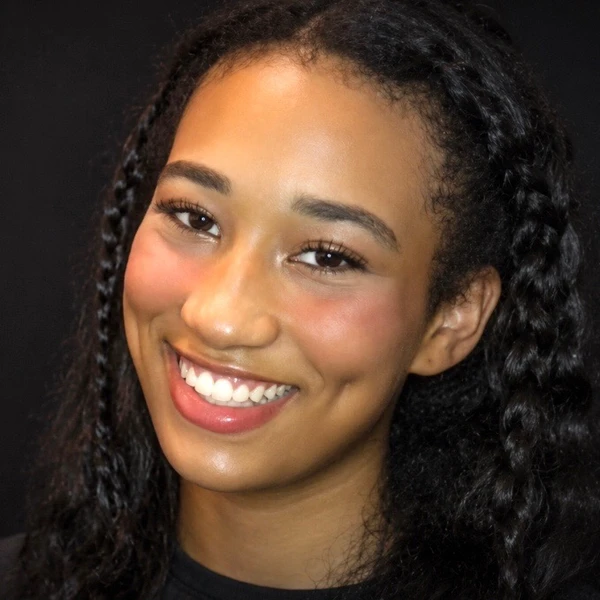
Autumn Perez

1x

Finalist

Bio

Hi, I’m Autumn. I’m a soon-to-be 16-year-old high school graduate with a passion for improving the overlooked parts of my community. Growing up, I saw things most people walked past — broken glass on playgrounds, unsafe public areas, and neglected spaces that stayed the same year after year. Instead of ignoring it, I took action. I spent my free time cleaning up yards and shared spaces with my own supplies, not for recognition, but because I believed someone had to care. Finishing high school early gives me a head start. While others are completing their senior year, I’m using this time to find a job, earn professional certificates, volunteer, and prepare for college. My goal is to pursue a degree that helps me create real change — whether that’s through social work, advocacy, or community development. I want to work directly with underserved populations and help rebuild the systems that have failed them. This work is personal to me. I’ve seen what it’s like when communities are forgotten, and I’m committed to being part of the solution. If given the resources, I will give back ten times over — not just to those who support me, but to every community I serve. I don’t just want to study change — I want to lead it. If you choose to nominate or support me, you’re not just investing in my future — you’re investing in the future of every community I plan to impact. I’m ready to take the next step and turn purpose into action.

Education

Agora Cyber Charter School

High School
2019 - 2026

Miscellaneous

  • Desired degree level:

    Bachelor's degree program

  • Graduate schools of interest:

  • Transfer schools of interest:

  • Majors of interest:

    • Design and Applied Arts
    • Film/Video and Photographic Arts
    • Sociology
    • Psychology, General
  • Not planning to go to medical school
  • Career

    • Dream career field:

      Public Policy

    • Dream career goals:

      To create sustainable change thorough film, art, story telling and public policy to improve the lives of my community and beyond.

      Arts

      • School violin classes

        Music
        2018 – 2020
      • Temple University's violin classes

        Music
        No
        2018 – 2019

      Public services

      • Volunteering

        Girls Scouts of Eastern PA - Calling All Girl Bosses — Girl Boss participant: identified challenges in my community, developed sustainable solutions, and planned initiatives to create positive change.
        2024 – 2025
      • Advocacy

        Agora Cyber Charter — Editor-in-Chief
        2025 – Present
      • Volunteering

        National Honor Society — Assistant coordinator
        2025 – 2025

      Future Interests

      Advocacy

      Politics

      Volunteering

      Philanthropy

      Entrepreneurship

      Ethel Hayes Destigmatization of Mental Health Scholarship
      I remember my mom saying she did not want to go back to a shelter again. She was emotionally and physically exhausted from constantly having to leave everything behind and rebuild life in places that never felt stable or safe. But she still packed our things. She told us she was doing it for her children, for us. I did not fully understand the weight of that when I was younger, but I understood enough to know it came from sacrifice and love. Growing up, my understanding of mental health came from what I observed in my own family. My mom carried a lot of emotional weight that came not only from her present circumstances, but also from her past. She experienced verbal and emotional abuse as a child, which affected how she later saw herself and relationships. She also went through significant loss, including her best friend dying from cancer in her twenties and her own mother passing away early. These experiences, along with financial struggles and an unstable home environment, shaped her mental and emotional well-being in ways that were not always visible. I also witnessed how emotional strain can exist in relationships and communication. There were periods of instability and tension that made it clear how unresolved emotional pain can affect how people speak to and understand one another. It showed me how mental health is not only internal, but also reflected in environments and interactions. Through my childhood, we ended up in abuse shelters four times. It never felt normal, even though over time it became familiar. Each time meant starting over completely. A new environment, new people, and the same instability we were trying to escape. That constant lack of stability shaped how I understood safety and emotional well-being at a young age. I began to realize that mental health is deeply connected to environment, history, and ongoing stress, even when it is not openly discussed. My experience with mental health has shaped my goals in a very direct way. Instead of feeling defined by what I witnessed, I became more motivated to understand it. I decided to graduate a year early so I could begin building a future with intention and direction. I want to study psychology and sociology because I want to understand how trauma, environment, and generational patterns affect human behavior. I am especially interested in why cycles of emotional distress continue and how they can be interrupted through awareness and support. It has also shaped how I see and understand people. I used to view strength in a simple way, but now I understand it as something more complex. My mom often appeared strong on the outside, but I learned that strength can exist alongside emotional struggle. This has made me more empathetic and more aware that people are often carrying things that are not visible. My understanding of the world has changed as well. I used to think stability was something people either had or did not have, but now I understand how deeply mental health, environment, trauma, and financial stress are connected. These factors shape how people think, cope, and move through life, often in ways that are not immediately visible to others. Art has also been part of how I process and understand these experiences. I have loved it since I was young, but now I see it as more than creativity. It is a form of communication and emotional expression. Through art, especially murals and community work, messages can reach people in meaningful ways and create awareness on a larger scale. It made me realize that expression can influence how people think and how communities understand one another. Everything I am working toward is connected to my experiences and my family. I want to build a future where my mom and my sisters do not have to live with the same emotional strain and instability that shaped my childhood. My experience with mental health has shaped not only my goals, but also how I understand people and the world. It taught me that healing and change are possible, but they require awareness, understanding, and compassion.
      Mema and Papa Scholarship
      Helping others has always been something I’ve valued, and I believe that’s because of the examples I’ve seen in my own family. My great-grandfather served in the Korean War. His bravery, resilience, and lifelong commitment to serving others even after the war taught me what real strength and sacrifice look like. I also have a family member who is a nurse and another who is an epidemiologist. During the COVID-19 pandemic, I saw firsthand how hard they worked to protect others. One was on the frontlines caring for sick patients, and the other was working behind the scenes, helping track the spread of the virus and keep communities safe. Watching their tireless dedication made me realize how important it is to give back in any way you can, no matter how big or small. Inspired by their example, I’ve tried to live my life with the same sense of service. One way I’ve demonstrated helpfulness is by being someone others can count on—especially during hard times. I’ve helped take care of younger family members, especially when things got overwhelming during the pandemic. I’ve also supported classmates who were struggling academically, offering to study together or help them understand homework when they felt behind. At school, I’ve stepped up when teachers needed help organizing, cleaning, or supporting classmates who felt left out. I try to treat others with care and attention because I know how much it means to feel seen and supported. One example where I had to rely on persistence and perseverance was during a time when I was overwhelmed with school and responsibilities at home. There were nights I stayed up late helping with things around the house, then still had to wake up early to study or finish assignments. I felt exhausted and stressed, but I reminded myself of the people in my family who never gave up, even when things were hard. My great-grandfather didn’t quit when things got tough. The nurse in my family kept going through long, emotionally draining shifts. My epidemiologist family member worked day and night when no one had clear answers. Their strength pushed me to keep going too. I stayed focused, kept doing the work, and eventually I saw my grades improve and felt proud that I didn’t give up. Being helpful isn’t always about doing something big. Sometimes it’s about showing up, being consistent, and doing what you can with what you have. That’s what I’ve learned from my family and what I try to live by every day.
      Big Picture Scholarship
      The movie that has had the biggest impact on my life is The Pursuit of Happyness. Watching Chris Gardner’s story hit me so hard because it felt like I was watching my own life play out on screen. The scene that stuck with me the most is when Chris and his son have to sleep in a subway station bathroom. They had nowhere else to go. I remember thinking, that could’ve been me. That feeling of being lost, scared, and having to protect someone you love while you’re falling apart inside—it’s something I know all too well. But there’s another scene that really stuck with me—the moment when Chris gives his son a basketball as a gift. It wasn’t anything fancy or expensive, just a simple basketball. But to his son, it was the best thing in the world. That hit me hard because I’ve been there too. There were times when I didn’t have much, and the little things meant everything to me. Something as simple as a small gift, a kind word, or even just a moment of peace felt like the most precious thing in the world. That’s how I learned to appreciate the little victories in life when everything else felt so hard. Chris didn’t give up, even when everything was against him. He was homeless, struggling to find a job, and still somehow kept pushing forward for his son. That kind of strength and determination gave me hope. It made me realize that no matter how hard life gets, I can keep fighting too. There were times in my life when I thought giving up was easier, when I felt like no one understood what I was going through. But watching Chris’s journey showed me that struggle isn’t the end. It’s part of the process. It’s about how you keep going, even when you’re tired and scared. The movie also reminded me how important it is to hold onto your dreams, even when everything else seems impossible. Chris’s fight wasn’t just about survival; it was about proving to himself and his son that they deserved a better life. That’s something I connect with deeply. Like Chris, I’m fighting to build a future where I can be proud of who I am and what I’ve overcome. The Pursuit of Happyness isn’t just a movie to me. It’s proof that pain and struggle don’t define you—your courage to keep going does. It showed me that even in the darkest moments, there’s a chance for something better. And that’s the kind of hope I carry with me every day.