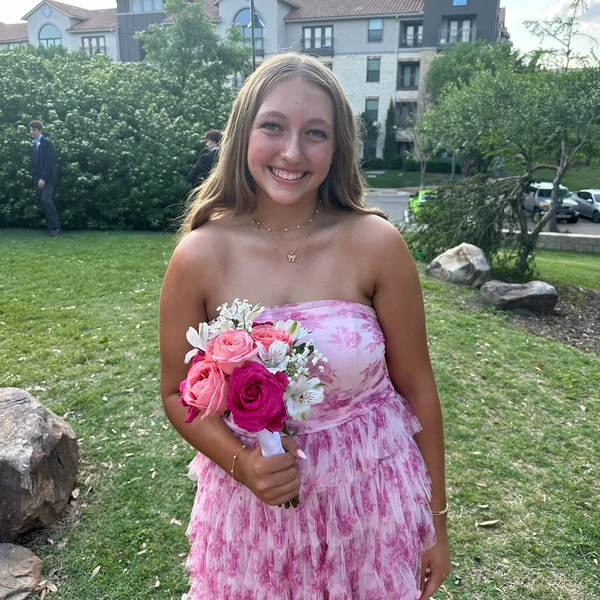
McKinney, TX
Age
18
Gender
Female
Ethnicity
Caucasian
Religion
Christian
Church
Nondenominational
Hobbies and interests
Soccer
Reading
Walking
Exercise And Fitness
Nutrition and Health
Nursing
Music
Anatomy
Babysitting And Childcare
Beach
Bible Study
Church
Cleaning
Exploring Nature And Being Outside
Fitness
Reading
Christian Fiction
Christianity
Adult Fiction
Classics
Fantasy
Young Adult
Historical
Mystery
Academic
Biography
Realistic Fiction
Health
Romance
Thriller
Contemporary
Science Fiction
I read books daily
Aubri Donovan
1x
Finalist
Aubri Donovan
1x
FinalistBio
I am a high school senior who is determined to become a nurse. I want to work my way to becoming a CRNA as my end career goal. I am a very hard working and dedicated person who is willing to go the extra mile to achieve my goals.
Education
ROCK HILL H S
High SchoolGPA:
3.9
Miscellaneous
Desired degree level:
Bachelor's degree program
Majors of interest:
- Registered Nursing, Nursing Administration, Nursing Research and Clinical Nursing
- Practical Nursing, Vocational Nursing and Nursing Assistants
Test scores:
1250
SAT31
ACT1270
PSAT
Career
Dream career field:
- Hospital & Health Care
Dream career goals:
Certified Registered Nurse Anesthetist (CRNA)
Referee & Mentor/Marshal
Prosper Area Soccer Organization2022 – Present4 yearsCashier/Barista
Honi's Coffee Shop2024 – Present2 years
Sports
Soccer
Varsity2022 – Present4 years
Awards
- Academic All Distric
- All District Honorable Mention
Research
Bible/Biblical Studies
Researcher & Writer2025 – 2025
Public services
Volunteering
Fellowship Church — Connect group leader & Children's ministry leader2025 – PresentVolunteering
Feed My City — Worker2024 – Present
Future Interests
Volunteering
Philanthropy
Big Picture Scholarship
Greta Gerwig’s 2019 adaptation of Little Women has had the greatest impact on my life because it transformed how I view the ambition, sacrifice, and the often-overlooked value of quiet stories. As a young woman who has spent years balancing the high-stakes world of competitive soccer and an accelerated academic path to earn my Associate degree early, I have often felt the pressure to define my success through external achievements and masculine traits like grit and stoicism. Watching Jo March navigate her fierce desire for independence alongside her deep, sometimes painful love for her family felt like looking into a mirror.
The film’s impact stems from its unapologetic defense of female agency and the diversity of what success looks like. In many modern narratives, a woman’s strength is only recognized if she rejects tradition entirely. However, the 2019 version of Little Women gives equal weight to Jo’s literary ambition and Amy’s artistic pragmatism, while also validating Meg’s choice to pursue a traditional domestic life. There is a specific line where Meg says, "Just because my dreams are different than yours doesn’t mean they’re unimportant." This resonated with me deeply as I prepared to enter the nursing field. It reminded me that choosing a career rooted in care and empathy, roles that society sometimes dismisses as soft, is just as bold and vital as any other path.
The movie also reshaped my understanding of resilience. In my own life, I’ve had to be a steadying force for my family, especially when my mother lost her job during the pandemic. Seeing the March sisters navigate poverty, illness, and loss without losing their sense of play or their commitment to one another was a profound lesson in emotional endurance. Jo’s struggle to be "great or nothing" is a sentiment I’ve felt while officiating heated matches or studying for my BSN prerequisites. The film taught me that greatness isn't found in a single moment of triumph, but in the persistent, everyday work of showing up for the people you love.
Furthermore, the 2019 adaptation uses a non-linear structure that emphasizes how our past experiences inform our future. This reflected my own journey of realizing that my years in the PALS Club and Hope Squad weren't just extracurricular activities, they were the foundation of my professional identity. Just as Jo weaves the stories of her sisters into a novel that secures her future, I am learning to weave my experiences in faith, leadership, and service into a career as a CRNA.
Ultimately, Little Women impacted me by proving that a life lived for others is not a diminished life. It gave me the language to appreciate the small moments, the quiet acts of kindness and the domestic sacrifices, that actually hold the world together. As I move forward into a career dedicated to helping others in their most vulnerable moments, I carry the film’s central message with me: that our stories matter, and that there is immense power in being both fiercely ambitious and deeply compassionate.
Ava Wood Stupendous Love Scholarship
Kindness in Action:
During my time as an officer in the PALS Club, I witnessed a peer who was typically reserved sitting alone while another student with special needs experienced a severe sensory meltdown in a crowded hallway. While most people walked past or looked away out of discomfort, I saw this student choose to sit down on the floor right in the middle of the high-traffic corridor to meet their peer at eye level. Seeing this, I immediately moved to join them, using my position to gently redirect the crowd and create a physical buffer of space.
I stayed there for nearly twenty minutes, not trying to fix the situation with loud instructions, but simply offering a calm, steady presence and validating the student’s feelings until the environment felt safe again. This moment was incredibly important because it shifted my understanding of support. As someone who has spent years balancing a high-pressure schedule of competitive soccer and early college coursework, I was often focused on efficiency and results. However, this interaction taught me that the most impactful act of kindness isn’t always a grand gesture; sometimes, it is the quiet, counter-cultural choice to be still and present for someone when the rest of the world is rushing by. It reinforced my commitment to entering the nursing field not just as a technician, but as a person who prioritizes the dignity and comfort of others above social convenience.
Creating Connection:
In my community, the pressure to maintain a perfect image often leads to a culture of isolation, particularly among student-athletes. To address this, I have used my leadership roles in the Fellowship of Christian Athletes (FCA) and Hope Squad to bridge the gap between high performance and genuine belonging. I realized that many of my peers felt their value was tied strictly to their scoreboard results or their GPA, which created an environment of competition rather than connection.
I took the initiative to facilitate small group discussions that prioritized mental well-being and vulnerability over achievement. By sharing my own challenges of balancing a part-time job as a referee with a rigorous academic load, I helped create a safe space where others felt comfortable dropping their guard. Additionally, through the PALS Club, I worked to ensure that students with disabilities were not just included in events, but were truly integrated into our social fabric. We organized inclusive sports days and social mixers that broke down the barriers between the general student body and the special education department.
These efforts have helped transform our local community into a more inclusive place where people are seen for who they are, not just what they can do. My motivation has always been to ensure that no one feels they have to navigate their hardest days alone. Whether I am mentoring a younger athlete or acting as a link for suicide prevention, my goal is to build a community where every individual feels they truly belong.
Valerie Rabb Academic Scholarship
Since I was fourteen, my life has been a study in high-speed multitasking and discipline. While many of my peers were focused on a single sport or hobby, I chose to maintain a heavy balance across several different fields, including competitive soccer, a part-time job as a referee, and an intense academic load that allowed me to earn my Associate degree before high school graduation. This pace was not just about staying busy; it was a deliberate strategy to build the mental stamina and work ethic I will need for my chosen career as an ICU nurse and, eventually, a Certified Registered Nurse Anesthetist (CRNA).
I plan to make a positive impact on the world by being a steadying force for people during their most vulnerable moments. In the field of medicine, it is easy to get lost in clinical data like heart rates and lab results. I intend to use my foundation in psychology to bridge the gap between physical stabilization and emotional healing. My decade of experience in Hope Squad taught me that a medical crisis is almost always a mental health crisis, too. By being the provider who notices the silent anxiety of a patient or the unspoken fear of a family member, I am choosing to be more than a technician; I am choosing to be a source of peace in the middle of a hospital’s chaos.
However, my path has not been without its challenges. The most significant adversity I have had to overcome was during the pandemic when my mother lost her job. As the oldest of three children, I had a front-row seat to the financial and emotional stress that followed. Watching my parents navigate that season of uncertainty without losing their drive or their kindness was a turning point for me. I overcame the pressure of that situation by taking on more responsibility at home and working extra hours as a soccer referee to help alleviate the burden on my family.
This experience with adversity taught me that resilience is a team effort. It gave me a firsthand understanding of how a sudden crisis can shake a person’s stability, which is a perspective I will carry into the Intensive Care Unit. I learned that you cannot always control the situation, but you can always control your reaction and your level of effort. This realization pushed me to work even harder in my dual-enrollment classes because I realized that education is a privilege and a tool for creating a better future for my community.
Ultimately, I want to leave a legacy of service. Whether I am administering anesthesia or leading a small group at my church, I want to be known as someone who leads with both clinical excellence and radical empathy. I plan to use my career to prove that the highest level of medical expertise is most effective when it is paired with the same heart for advocacy I have practiced in the PALS Club and Hope Squad. By helping others regain their health and their dignity, I believe I can make a lasting, positive impact on every family I serve.
Chi Changemaker Scholarship
In my community, the invisible struggle with mental health among students is an issue I felt compelled to address. Growing up in a fast-paced environment where many of us juggle a triple-threat of competitive sports, jobs, and heavy academic loads, the pressure to appear perfect often leads to isolation. I saw too many of my peers suffering in silence, feeling that their value was tied strictly to their performance on the field or their GPA.
My motivation to tackle this problem came from my role as a leader in the Fellowship of Christian Athletes (FCA) and as a long-term member of Hope Squad. I realized that while our school provided academic resources, there was a gap in peer-to-peer emotional support. I wanted to be a bridge for those who felt overwhelmed but were afraid to seek professional help. My faith also played a major role; I believe we are called to bear one another’s burdens, and I wanted to create a culture where vulnerability was seen as a strength rather than a weakness.
So far, I have taken the initiative by leading small groups at my church and facilitating discussions within FCA that prioritize mental well-being over athletic achievement. In Hope Squad, I have worked to train other students to recognize the warning signs of distress in their friends, effectively creating a safety net within our social circles. These efforts have resulted in a more connected community where students feel comfortable reaching out for help before a crisis occurs.
If I were to expand these efforts, I would focus on integrating mental health advocacy into youth sports organizations. As a soccer referee, I see firsthand how high-pressure sidelines affect young athletes. I would love to develop a mentorship program that pairs older student-athletes with younger players to discuss resilience and identity beyond the scoreboard. By taking the lessons I have learned in the PALS Club and Hope Squad and applying them to the broader community, I hope to ensure that no student feels they have to navigate their hardest days alone.
Philippe Forton Scholarship
During my time as an officer in the PALS Club, I witnessed a moment of compassion that fundamentally changed how I view my future as a healthcare provider. The club is designed to bridge the social gap between the general student population and students with special needs, and while we often participate in organized events, the most impactful moments usually happen in the quiet, unplanned spaces in between. One afternoon, I watched a fellow student, who was typically very quiet and reserved, interact with a peer who was having a severe sensory meltdown in the hallway. Instead of walking past or looking away like many others did, this student sat down on the floor right in the middle of the high-traffic corridor to meet their peer at eye level.
There was no audience and no reward for what he was doing, but the compassion he showed was extraordinary. He didn't try to fix the situation with loud words or physical force; instead, he simply stayed present. He used a soft, steady voice to validate the other student’s feelings, staying there for nearly twenty minutes until the overwhelming environment felt safe again. I was struck by how he prioritized someone else’s dignity over his own comfort or the social pressure of looking normal in a crowded school hallway. It was a masterclass in the kind of radical empathy I have tried to practice throughout my own life in Hope Squad and the Fellowship of Christian Athletes.
This situation affected me deeply because it highlighted the difference between sympathy and true compassion. Sympathy is feeling sorry for someone from a distance, but compassion is getting down on the floor with them. As someone who has balanced a triple-threat lifestyle of competitive soccer, officiating, and intense academics to earn my Associate degree early, I have often been focused on efficiency and results. However, witnessing that interaction reminded me that in the medical field, and specifically in the ICU where I plan to work, the most efficient thing a nurse can do is often to just be still and present for a patient who is overwhelmed.
That moment has become a guiding light for my future goals of becoming a CRNA. It taught me that compassion is a form of bravery; it takes courage to sit with someone in their distress without trying to rush them out of it. It reinforced my belief that every person deserves to be seen as an individual rather than a problem to be solved. Because of what I saw that day, I am committed to being a healthcare provider who values the human connection just as much as the clinical data. I want to be the professional who, even in the busiest hospital, has the heart to sit on the floor with a patient or a grieving family member, ensuring they never have to face their hardest moments alone.
Christian Fitness Association General Scholarship
Since I was fourteen, my life has been a constant exercise in high-speed multitasking. While many people my age were focused on a single sport or hobby, I was diving into a triple-threat lifestyle that involved competitive soccer, a part-time job as a referee, and an academic load heavy enough to earn my Associate degree before high school graduation. This pace didn’t just keep me busy; it forged a level of discipline that I plan to bring into the medical field. I believe you should consider me for this scholarship because I have already proven that I possess the work ethic, the academic foundation, and the heart for service required to succeed in a high-stakes nursing career.
My academic journey has been defined by a desire to push beyond the standard curriculum. I recognized early on that the path to becoming a Certified Registered Nurse Anesthetist (CRNA) is rigorous and competitive. To prepare, I took full advantage of dual-enrollment opportunities, effectively balancing college-level coursework with the demands of being a high school student-athlete. Completing my Associate degree before graduating high school required more than just intelligence; it required extreme time management. I often spent my weekends traveling for soccer tournaments, using the time between games to study anatomy or psychology. This academic accomplishment is noteworthy because it demonstrates that I am ready for the intensity of a Bachelor of Science in Nursing (BSN) program. I have already developed the detective-like study habits and critical thinking skills that are essential for someone working in an Intensive Care Unit (ICU).
Beyond the classroom, my extracurricular activities have focused on being a steadying force for others. My faith became the anchor of my life when I was fifteen, and it has fundamentally shifted how I view leadership. As a leader in my Fellowship of Christian Athletes (FCA) club and a small group leader at my church, I have learned that true leadership is about service and radical empathy. In these roles, I am responsible for guiding my peers through difficult conversations and providing a safe space for them to share their struggles. This experience in spiritual mentorship is exactly what I plan to bring to the bedside of my future patients. I want to be a nurse who doesn't just treat a physical injury, but who also provides a sense of peace and security to a family in crisis.
My commitment to the well-being of others is also reflected in my nearly ten-year involvement with Hope Squad. As a peer-to-peer suicide prevention link, I have been trained to notice the subtle signs of distress in my classmates and to provide the bridge to professional help. Similarly, as an officer in the PALS Club, I have advocated for students with special needs, ensuring they feel included and valued in our school community. These activities have taught me that a medical crisis is almost always an emotional crisis as well. I believe my background in psychology and my experience in peer advocacy make me a unique candidate for this scholarship, as I am already practicing the holistic care that the nursing profession requires.
You should also consider my candidacy because of the resilience my family has modeled for me. As the oldest of three children, I have had a front-row seat to what it takes to overcome serious trials. When my mom lost her job during the pandemic, our family faced a season of intense uncertainty. Watching my parents navigate that time without losing their drive or their kindness made me realize that education is a powerful tool for stability. I took on more responsibility at home and worked extra hours as a soccer referee to help alleviate the pressure. This experience with adversity didn't discourage me; it fueled my ambition. It gave me a firsthand understanding of the collateral damage of financial and medical crises, which will make me a more compassionate and observant nurse.
My future goals are clear and ambitious. I plan to use my education to make the world a better place by becoming an ICU nurse and eventually a CRNA. I see the medical field as my mission field. I want to be the professional who stays calm when a patient’s vitals are crashing and who knows exactly how to communicate with a terrified family. I plan to make a positive impact by bridging the gap between clinical excellence and mental health advocacy, ensuring that the healthcare system is a place of genuine healing for both the body and the spirit. Furthermore, I intend to pay it forward by mentoring other triple-threat students. I want to support those who are trying to balance work, sports, and school while chasing a dream in medicine. I know how difficult that path can be, and I want to use my platform to provide the same encouragement and resources that have helped me succeed.
I am a candidate who understands the value of hard work because I have lived it every day since I was fourteen. Whether I am officiating a heated soccer match, leading a discussion in FCA, or studying for a nursing exam, I lead with integrity and a heart for service. This scholarship would not just be a financial benefit to me; it would be an investment in a future healthcare leader who is dedicated to treating every patient with the dignity and respect they deserve. I am ready to take the lessons of resilience, faith, and academic discipline that I have cultivated and apply them to a lifetime of service in the nursing field.
Our Destiny Our Future Scholarship
Since the age of fourteen, my life has been a constant exercise in high-speed multitasking. While many people my age were focused on a single sport or hobby, I was diving into a triple-threat lifestyle that involved competitive soccer, a part-time job as a referee, and an academic load heavy enough to earn my Associate degree before high school graduation. This pace didn’t just keep me busy; it forged a level of discipline that I plan to bring into the medical field. I plan to make a positive impact on the world by becoming an ICU nurse and, eventually, a Certified Registered Nurse Anesthetist (CRNA), focusing my career on being a steadying force during the most critical moments of human vulnerability.
In the field of medicine, it is easy to become focused solely on data points—heart rates, blood pressures, and lab results. I plan to make a difference by using my foundation in psychology to bridge the gap between physical stabilization and emotional healing. My decade of experience in Hope Squad taught me that a medical crisis is almost always a mental health crisis as well. I will use my education to ensure that my patients are not just surviving their time in the hospital, but are being treated with a level of dignity and empathy that promotes holistic recovery. By being the nurse who notices the silent anxiety of a patient or the unspoken fear of a family member, I am choosing to be more than just a provider; I am choosing to be a source of peace in the midst of chaos.
Furthermore, my plan to impact the world is rooted in the leadership skills I’ve developed within my faith community. As a leader in my Fellowship of Christian Athletes (FCA) club and a small group leader at my church, I have learned that the greatest impact often happens in one-on-one interactions. I want to carry this heart for mentorship into my professional life. As the oldest of three children, I’ve seen my family navigate serious adversity, especially when my mom lost her job during the pandemic. Those trials taught me that resilience is a team effort. Once I have established my career, I want to use my platform to support other student-athletes and workers who are chasing their own dreams in medicine, ensuring they have the resources and encouragement to succeed.
I also intend to make a tangible impact by advocating for the special needs community, a passion I discovered through my time as an officer in the PALS Club. Whether I am in the operating room or the Intensive Care Unit, I want to be a practitioner who ensures that healthcare is accessible, compassionate, and personalized for everyone, regardless of their background or abilities. I believe that by combining clinical excellence with the radical empathy I have practiced since my youth, I can change the trajectory of a person’s life during their most frightening hours.
Ultimately, my education is a tool that allows me to serve my community with excellence. I am ready to transition from a student-athlete into a healthcare professional who leads with both my head and my heart. To me, making a positive impact means recognizing that every patient I encounter is someone’s child, parent, or sibling, and they deserve to be treated with the same value and respect that I would want for my own family.
Patricia Lindsey Jackson Foundation - Eva Mae Jackson Scholarship of Education
Since I was fourteen, my life has been a constant exercise in high-speed multitasking. While many people my age were focused on a single sport or hobby, I was diving into a triple-threat lifestyle that involved competitive soccer, a part-time job as a referee, and an academic load heavy enough to earn my Associate degree before high school graduation. At the center of this whirlwind is my faith, which became the anchor of my life when I was fifteen. It isn’t just a background detail for me; it is the lens through which I view every slide tackle on the field, every long night of studying, and every shift spent officiating.
Faith plays the role of a steadying compass in my life, and I’ve tried to live that out through active leadership. As a leader in my Fellowship of Christian Athletes (FCA) club, I get to help other student-athletes navigate the same pressures I face, showing them that our identity isn't found in a scoreboard but in something much more permanent. I also lead small groups at my church, where I have the privilege of guiding younger students through their own questions about life and faith. These roles have taught me that leadership isn't about being the loudest person in the room; it’s about being the person who listens the best and serves the most.
In the high-pressure environment of youth soccer, where parents and coaches can sometimes lose their composure, my faith reminds me to lead with patience and integrity. This perspective has fundamentally shifted my academic goals. I don’t just want to get a degree in psychology and nursing to have a stable career; I want to use those tools to be the hands and feet of Jesus in a broken world. My faith has instilled in me a sense of stewardship, pushing me to work harder because I believe I am called to use my talents to serve others at their most vulnerable.
This spiritual foundation is what drives my future goal of becoming an ICU nurse and eventually a CRNA. I see the medical field as a mission field where I can offer a calm, prayerful presence in the midst of medical emergencies. When I imagine my future in the Intensive Care Unit, I don’t just see monitors and medications; I see an opportunity to provide hope to families who are facing their worst days. My faith has taught me that every person is created with immense value, and that belief will be the driving force behind the empathy I plan to bring to the bedside of every patient I serve.
Beyond my faith, the people who have pushed me most toward higher education are my parents. As the oldest of three children, I have had a front-row seat to their resilience. When my mom lost her job during the pandemic, it could have been a breaking point for our family. Instead, it became a lesson in grit. Watching my parents navigate that season of adversity without losing their drive or their kindness made me realize that education is a privilege and a powerful tool for stability. They have sacrificed so much to ensure I could play soccer and stay on top of my dual-enrollment classes, and I feel a deep responsibility to honor that by taking the financial burden off them. They pushed me to be a leader in Hope Squad and the PALS Club because they knew that serving others would make me a better person and a better professional.
Ultimately, my pursuit of higher education is a team effort between my faith, my family’s example, and my own internal drive. I am ready to transition from a student-athlete into a healthcare professional who leads with both clinical excellence and spiritual conviction. I want to spend my life proving that the best way to move forward is to reach back and help someone else up, using my career in medicine to be a steady, reliable light for my community.
Instagram: @aubri.donovan
Pinterest: @aubri_claire
Facebook: @Aubri Donovan
Brian Moore Memorial Scholarship
Since I was fourteen, my life has been a constant exercise in high-speed multitasking. While many people my age were focused on a single sport or hobby, I was diving into a triple-threat lifestyle that involved competitive soccer, a part-time job as a referee, and an academic load heavy enough to earn my Associate degree before high school graduation. This pace didn’t just keep me busy; it forged a level of discipline that I plan to bring into the medical field. To me, being more in nursing means refusing to settle for just being a clinical technician. It means becoming a radical advocate for the human spirit within the high-pressure environment of the Intensive Care Unit and eventually as a Certified Registered Nurse Anesthetist.
In medicine, it is easy to get lost in data points like heart rates, blood pressures, and lab results. I plan to be more by using my foundation in psychology to bridge the gap between physical stabilization and emotional healing. My years in Hope Squad taught me that a medical crisis is almost always a mental health crisis, too. I will use my education to ensure that my patients are not just surviving their time in the ICU, but are being treated with a level of dignity that promotes actual recovery. Whether I am officiating a heated soccer match or managing a patient’s airway, I’ve learned that being a leader means noticing the silent anxiety of a person or the unspoken fear of a family member. I am choosing to be more than a provider; I am choosing to be a steadying light in their darkest hours.
Furthermore, I want to create a lasting impact by mentoring the next generation of students who are trying to balance it all. As the oldest of three children, I’ve seen my family navigate serious adversity, especially when my mom lost her job during the pandemic. Those trials taught me that resilience is a team effort. Once I have established my career, I want to use my platform to support student-athletes and workers who are chasing their own dreams in medicine. By providing mentorship and advocating for better mental health resources within the healthcare profession, I can ensure that this legacy of service extends far beyond my individual shifts.
Ultimately, my education is a tool that allows me to serve others at their most vulnerable. Whether I am administering anesthesia or working through a complex recovery plan, I will lead with the same tenacity I showed on the soccer pitch and the same heart I brought to my church and the PALS Club. To be more is to recognize that my career is a calling to serve my community with excellence, ensuring that every life I touch is treated with the value and respect it deserves.
Losinger Nursing Scholarship
Personal Inspiration:
My inspiration for pursuing a career in nursing is a mosaic of my experiences as a student-athlete, a peer advocate, and a witness to family resilience. Since the age of fourteen, I have balanced a triple-threat lifestyle, maintaining a rigorous academic schedule, competing in soccer, and holding a part-time job. This pace taught me the discipline and mental stamina required for the medical field, but my heart for nursing was truly forged through my involvement in Hope Squad. Serving as a peer-to-peer suicide prevention link for nearly a decade taught me that the most critical moments in a person’s life require a professional who is both clinically precise and deeply empathetic.
Furthermore, my aspiration to work in the Intensive Care Unit (ICU) and eventually become a CRNA is driven by my family’s history of overcoming adversity. When my mother lost her job during the pandemic, I saw firsthand how a crisis impacts the entire family unit. This experience instilled in me a desire to be the steadying force in the room when others are facing their most frightening days. I want to be a nurse because I believe that my background in psychology, combined with the quick decision-making skills I developed as a soccer referee, will allow me to provide high-level care that respects the dignity of every patient. I am inspired to enter a field where my daily work is not just a job, but a mission to provide a sense of security and healing to those who need it most.
Meaning and Impact:
To me, the phrase "human touch" represents the intersection of clinical excellence and radical empathy. It is the realization that a patient is never just a room number or a diagnosis, but a person with a story, a family, and a future. While modern medicine relies heavily on advanced technology, monitors, and complex pharmacology, the human touch is the detective-like intuition that allows a nurse to see the person behind the symptoms. It means being present in the silence, offering a steady hand during a painful procedure, and recognizing the psychological weight of a medical crisis. It is the commitment to treating the human spirit with the same level of precision that we treat the physical body.
In the context of patient care, the human touch has a transformative impact on recovery and outcomes. In a high-stakes environment like the ICU, patients are often surrounded by beeping machines and sterile equipment, which can lead to feelings of isolation and hospital delirium. When a nurse implements the human touch, through active listening, clear communication, or a compassionate gesture, it lowers the patient’s cortisol levels and fosters a sense of safety. This psychological stability is a vital catalyst for physiological healing. As someone who has worked extensively with special needs students in the PALS Club, I have seen how a calm, affirming presence can de-escalate anxiety and build the trust necessary for successful intervention.
Moreover, the human touch extends beyond the patient to their family. During my family’s season of adversity, I realized that the care a healthcare provider shows to the relatives in the waiting room is just as important as the care shown to the person in the bed. By providing clear, empathetic updates and acknowledging the family’s fears, a nurse can turn a traumatic experience into a manageable one. As I pursue my goal of becoming a CRNA, I plan to carry this philosophy into every procedure. Whether I am administering anesthesia or monitoring vital signs, I will ensure that my patients feel seen, heard, and valued. The human touch is what transforms a clinical interaction into a healing encounter, ensuring that the dignity of the individual remains the highest priority in the healthcare system.
Aserina Hill Memorial Scholarship
Since the age of fourteen, my life has been a study in balancing a rigorous triple-threat schedule of academics, competitive soccer, and part-time work. This discipline allowed me to complete my Associate degree through dual enrollment before even graduating high school, giving me a head start on my journey toward becoming an ICU nurse and, eventually, a CRNA. My extracurricular interests are deeply rooted in service, I have served as an officer for the PALS Club, where I advocate for students with special needs, and have been a long-term member of Hope Squad, a peer-to-peer suicide prevention program. Whether I am officiating youth soccer matches or volunteering at my church, my focus remains on being a steady, empathetic leader for those around me.
If I were to start my own charity, my mission would be simple yet profound, to restore the dignity of those who have been marginalized by homelessness and poverty. Often, society looks past those in need, stripping them of their humanity. My organization, which I would call "The Human Bridge," would serve individuals and families struggling with housing and food insecurity. The core of our mission would be to ensure that every person we help feels seen and valued as an individual, rather than just another statistic. We would provide a safe, high-quality environment where people could access healthy meals, clean clothing, and a secure place to sleep without feeling the weight of judgment.
In this charity, volunteers would play a crucial role that goes beyond just manual labor. While some volunteers would assist with food preparation and organizing clothing donations, their primary service would be human connection. I would train volunteers to be active listeners and companions, sitting down to share a meal with those we serve, hearing their stories, and offering genuine conversation. This approach mirrors the empathy I’ve learned in Hope Squad and PALS, it’s about recognizing that a hot meal and a warm bed are essential, but being treated with dignity is what truly helps a person begin to heal and move forward.
My post-high school plans are an extension of this same heart for service. I will be attending a four-year university to obtain my Bachelor of Science in Nursing, using my background in psychology to provide holistic care. I believe that my experience in the ICU will give me the clinical expertise needed to one day lead a charity like this, where I can combine medical advocacy with basic human necessities. By using my education to bridge the gap between clinical care and community outreach, I hope to spend my life proving that no matter a person’s circumstances, they deserve to be treated with the same respect and care that I would give to my own family.
Second Chance Scholarship
Since the age of fourteen, my life has been a series of deliberate steps toward a single, unchanging goal, to become a high-level healthcare provider. My desire to make a change in my life is not born out of a dislike for where I am, but out of a deep calling to move from being a student and observer to being a practitioner and lifesaver. While my years spent balancing competitive soccer, a part-time job, and academics have been fulfilling, I am ready to transition from managing my own potential to managing the recovery and well-being of others in their most critical hours. I want to evolve from the triple-threat student I have been into the ICU nurse and future CRNA I am meant to be.
To bring myself closer to this goal, I have taken proactive steps to ensure I am academically and mentally prepared for the rigors of nursing. I am entering college with my Associate degree already completed through dual-enrollment, a move that required immense discipline while I was still in high school. Beyond the classroom, I have served as a leader in Hope Squad for nearly a decade and as an officer in the PALS Club, where I cultivated the emotional intelligence and advocacy skills necessary for patient care. I have also maintained consistent employment and officiated youth soccer, which has taught me how to handle high-pressure environments and conflict with a level head. These steps were taken to ensure that when I finally step into a hospital room, I am a well-rounded professional who understands both the science of medicine and the art of human connection.
This scholarship will be a vital tool in helping me achieve this vision by alleviating the financial weight of my Bachelor of Science in Nursing. As the oldest of three children, I am acutely aware of the sacrifices my parents make, especially after my mother faced job loss during the pandemic. This award would allow me to focus entirely on my clinical rotations and the intensive study required for my psychology and nursing degrees without placing an undue burden on my family's stability. By securing this funding, I am ensuring that I can complete my education with the focus and excellence that my future patients deserve, rather than being distracted by financial gaps.
Finally, I plan to pay it forward by dedicating my career to mentorship and advocacy. Once I have established myself as an ICU nurse and progressed toward my goal of becoming a CRNA, I intend to mentor students who are navigating the same triple-threat path I did. I want to provide scholarships or guidance to students from hardworking families who are balancing jobs and sports while chasing their dreams. Furthermore, I will pay it forward daily in the hospital by being an advocate for the special needs community and mental health awareness. I want to ensure that every patient I encounter feels that they have a champion in their corner, passing on the same support and opportunity this scholarship has provided for me.
Patricia Lindsey Jackson Foundation-Mary Louise Lindsey Service Scholarship
Since the age of fourteen, my life has been a constant exercise in balancing the needs of others with my own academic and professional responsibilities. While soccer and my job taught me the value of hard work, my most meaningful impact has come through my service in Hope Squad, a peer-to-peer suicide prevention program. I was inspired to take action by a simple but heavy realization. Many of my peers were fighting silent battles that they felt they had to face alone. Growing up as the oldest of three children, I felt a natural calling to be a protector and a listener, and Hope Squad provided the formal training I needed to turn that instinct into a life-saving service for my community.
The challenges I faced in this role were deeply personal and emotionally taxing. It is one thing to play a high-stakes soccer match, it is quite another to sit with a friend who is experiencing a mental health crisis. I had to learn how to maintain my own composure and mental health while being a link for those in despair. There were moments of fear and uncertainty, especially when the weight of someone else’s safety felt overwhelming. However, these challenges forced me to develop a level of maturity and detective-like empathy that most people my age haven't yet experienced. I learned that true service isn't about having all the answers, but about having the courage to stay present in the darkness until professional help can be reached.
This experience fundamentally reshaped my understanding of leadership and faith. I realized that leadership is not defined by a title or a loud voice, but by the ability to serve as a bridge for those in need. It is about radical empathy and the discipline to put others first. My faith in Jesus, which became the center of my life at age fifteen, provided the spiritual foundation for this work. My relationship with Him taught me that every person is created with immense value, and my service became an extension of His love. I began to see my role in Hope Squad not just as a school responsibility, but as a calling to be the hands and feet of Christ in a broken world.
Ultimately, this journey of service has directly inspired my career aspiration to become an ICU nurse and a CRNA. I want to spend my life in the gap where people are at their most vulnerable, providing both clinical excellence and spiritual comfort. My time in Hope Squad taught me that you cannot treat a physical body without also caring for the mind and spirit. I am ready to take the lessons of resilience, leadership, and faith that I have cultivated since I was fourteen and apply them to a lifetime of service in the medical field, making a tangible difference in the lives of my patients and my community.
Social Media Handles:
Instagram: @aubri.donovan
Pinterest: @aubri_claire
Evan James Vaillancourt Memorial Scholarship
My career goals in nursing are rooted in a lifelong commitment to high-stakes service and compassionate advocacy. Having balanced the demands of competitive soccer, a part-time job, and rigorous academics since the age of fourteen, I have developed the mental stamina and discipline necessary for the Intensive Care Unit (ICU). My immediate goal is to excel as an ICU nurse, where I can apply my focus and technical skills to stabilize patients in their most critical hours. Ultimately, I plan to return to school to become a Certified Registered Nurse Anesthetist (CRNA), a path that will allow me to provide advanced clinical care and pain management with the highest level of autonomy and precision.
I plan on making a difference in my community by bridging the gap between clinical excellence and mental health awareness. Through my years in Hope Squad and the PALS Club, I have learned that the human spirit needs as much care as the physical body. In my community, I want to be a resource for health education and a mentor for future healthcare students who, like me, are balancing heavy workloads. By bringing my background in suicide prevention into the hospital setting, I hope to ensure that patients and their families feel seen and supported emotionally during medical crises, fostering a culture of holistic healing that extends beyond the hospital walls.
Regarding my connection to the military, my family carries the legacy of my great uncle, who served in the United States Army. Although I did not have the opportunity to know him personally before he passed away, his commitment to our country has always been a point of pride and a source of inspiration for my family. His service represents the ultimate form of selflessness, the willingness to put one’s life on the line for the safety and freedom of others. This legacy of service has quietly influenced my own life, reinforcing my belief that a career is most meaningful when it is dedicated to protecting and caring for one's community.
Ultimately, my journey toward nursing is an extension of the values of discipline and service that have been modeled for me. Whether I am drawing on the lessons of resilience I learned from my family’s history or the technical skills I will gain in nursing school, my focus remains on making a tangible, positive impact. I am ready to transition from a student-athlete and worker into a dedicated nurse who honors the past by serving the future, ensuring that every patient receives care that is both clinically expert and deeply human.
Lexi Nicole Olvera Memorial Scholarship
My passion for nursing is not a sudden realization, but a conviction that has been built through years of discipline, advocacy, and personal experience. Since the age of fourteen, I have balanced the demands of competitive soccer, a part-time job, and a rigorous academic schedule. This lifestyle taught me how to perform under pressure and manage my time with precision, but it was my involvement in Hope Squad and the PALS Club that gave those skills a purpose. I realized that my greatest fulfillment comes from being a steadying presence for others during their most vulnerable moments. I am passionate about nursing because it is the ultimate intersection of clinical science and radical empathy, a field where my technical skills can directly save lives while my compassion provides much-needed hope.
As the oldest of three children, I have also seen my family navigate seasons of adversity, such as when my mother lost her job during the pandemic. Watching my parents lead with resilience during a time of uncertainty taught me that healthcare is about more than just physical recovery; it is about supporting the whole person and their family. This perspective is why I am specifically driven toward the high-stakes environment of the Intensive Care Unit (ICU). I want to be the professional who monitors every vital sign with expert precision while ensuring that the human being behind the diagnosis is treated with dignity. My goal to eventually become a Certified Registered Nurse Anesthetist (CRNA) is fueled by this same desire for clinical excellence and the ability to provide comfort and safety during critical surgical procedures.
I hope to contribute meaningfully to the nursing field by bridging the gap between acute medical care and mental health advocacy. My background in suicide prevention and my upcoming degree in psychology have taught me that a patient's mental state is often the foundation of their physical recovery. In the fast-paced world of the ICU, the emotional needs of patients and their families can sometimes be overlooked. I intend to be a nurse who advocates for a holistic approach, ensuring that we are treating the trauma of the situation just as aggressively as we are treating the injury or illness. By bringing a "detective-like" empathy to the bedside, I hope to improve patient outcomes and foster a more compassionate culture within the hospital.
Ultimately, my contribution to the field will be defined by the same tenacity I have shown since I was fourteen years old. I am not just entering nursing to have a career; I am entering it to be a lifelong advocate for those who cannot speak for themselves. Whether I am managing a complex patient load in the ICU or preparing for my future as a CRNA, I will remain committed to the highest standards of care. I plan to use my education and my voice to mentor future nurses and to prove that the best medical professionals are those who lead with both their heads and their hearts.
Sammy Ochoa Memorial Scholarship
Since the age of fourteen, I have been driven by the need to be disciplined and to give back to the community. I have learned that the most important quality that a person can have is the ability to persevere, which I have learned from juggling the challenges of competitive soccer, a part-time job, and intense academic work. I have been a youth soccer referee and a Hope Squad member, which has meant that I have had to be a leader in high-pressure situations. I have become a "triple threat" student who is not only focused on academic excellence but also committed to giving back to the community that I am a part of. I am focused on becoming an ICU nurse and later a CRNA, so that I can give back to the community by helping to save lives in the most critical moments of their lives.
My understanding of the concept of resilience has been put to the ultimate test during the recent global pandemic, as it has been arguably one of the greatest challenges that my family has ever had to endure. For instance, during this period, my mother lost her job, and as a result, there was a great sense of uncertainty in our lives. Being the eldest in a family of three children, I have learned that my parents have handled this situation with great poise and determination. Instead of allowing this situation to bring us down, I have learned that our faith in our relationship with one another has helped to bring us closer together. I have learned to take responsibility for my younger siblings to make sure that they remained focused on their studies as I continued to focus on my own responsibilities. I have learned that in spite of the situation that we find ourselves in, we have the power to choose our response to it. We did not only endure this situation; we came out stronger as a family.
My experience with my mother’s trial of job loss has been a very powerful learning experience in terms of understanding the importance of having empathy towards people who are going through unexpected trials. I want to use my education to make a positive impact on the world, and I want to be a healthcare professional who understands the "collateral damage" of illness and hardship. When I’m in the ICU, I know that people are having some of the worst days of their lives, and there are fears of financial stability, as well as life-altering news. Because of my family’s experience, I know I can walk into a hospital room with people who are having one of the worst days of their lives and have a real understanding of what it means to be under pressure.
Ultimately, I hope to leave a legacy of service that reflects the work ethic that my parents taught me in our most difficult seasons. I hope to use my degree in nursing and my background in psychology to bring together the science of medicine and the art of human connection. By becoming a CRNA, I will be in a position to advocate on behalf of patients in their most vulnerable moments, to make sure that they receive the best possible care. While my life has not been easy since I was fourteen, it has all been leading to this moment, and I am ready to use the lessons that I have learned to create a better and more supportive world for all patients that I meet.
Be A Vanessa Scholarship
Since I was fourteen, I have thought of my life as a training ground for service. Managing my life between competitive soccer, a part-time job, and schoolwork has never been just about personal achievement; it has always been about cultivating the strength and character needed to help others. I aim to use my education to make the world a better place as an ICU nurse and eventually a CRNA, specializing in the most critical moments of humanity’s vulnerability. With the skill and expertise of a medical professional and the radical compassion I have worked to develop as a mental health advocate, I aim to be a healthcare provider who not only heals the body but also the soul.
My desire to make the world a better place through healthcare stems from my family’s journey with adversity. Being the eldest of three children, I have learned the strength it takes to overcome adversity. Growing up with parents who have worked diligently to provide for our family, at times at the cost of their own wants to give their children the opportunity to participate in sports and excel in school, has been a great learning experience. I have learned that adversity is not a wall to be broken down, but rather a forge that makes us stronger. I have taken this with me into my own life, using the "triple threat" of work, sports, and school to make a better life for myself in order to take the burden off my family in the future.
Besides that, my family has learned to be financially resilient. Furthermore, my relationship with my cousin, who has autism, and my role as the president of the PALS Club have been instrumental in helping me comprehend adversity. I have learned that the world can be a very inaccessible place for people with disabilities. I have made it my mission to be an advocate for people with disabilities. I have learned that I can make the world a better place by being a nurse that can make the healthcare system a more caring place. I want to be that nurse that understands that "adversity" for a patient is not simply the disease they have, but the fear that accompanies it.
At the end of the day, my plan for creating change comes from my understanding that one dedicated person can change the course of a person’s life in a moment of need. Whether I am working to prevent suicide as a Hope Squad advocate or provide life-saving care in the Intensive Care Unit, I will be using my education to be a source of stability. I will be working to prove that empathy is just as important as medicine. I am graduating with my BSN and working towards becoming a CRNA because I am preparing myself to go into the most high-stress environments in the world and bring a sense of peace, excellence, and hope to every person I meet.
Autumn Davis Memorial Scholarship
Since the age of fourteen, I have lived a life of intentionality and service. Managing a competitive soccer career, a part-time job, and a rigorous academic course load has taught me that the most valuable thing we have to give is our time and presence. But it is not on the soccer field or at my part-time job that I have learned the most about myself and my potential; it is within the halls of my school as a member of Hope Squad that I have learned and grown as a person and solidified my career goals.
My experience with mental health advocacy has helped me realize that struggle is not indicative of weakness but is instead a testament to the profound strength of vulnerability. This realization has led me to adopt a lifestyle of radical empathy and understanding, seeking not just to hear the words people are saying but also to understand what is behind their responses. In my personal relationships, I have become a source of grounding for my friends, helping them navigate the gap between their silent struggles and the professional support they need. I have learned that you cannot care for a person’s physical health without also respecting and prioritizing their mental and emotional state.
This underlying need for mental well-being is the motivation for my desire to pursue a career in the healthcare and psychology fields. I am entering college with my Associate degree already complete. This will give me the opportunity to take a specialized course of study. My immediate goal for the next two years will be to attain a Bachelor’s degree in Psychology. I know that this will be instrumental in understanding the intricacies of human behavior and the underlying psychology of a nervous system in crisis. I am focusing on psychology first to make sure that I am fully equipped to provide for the whole person, not just the physical symptoms of illness, once I begin my career as a nurse in the ICU.
I intend to create a positive impact in the world by becoming a bridge between clinical medicine and mental health advocacy, and I aim to achieve this goal regardless of whether I become a nurse or reach my ultimate goal of becoming a CRNA. I aim to become a professional who understands that the most critical moments in a person’s life are often associated with psychological trauma, and I intend to use my education to advocate for the integration of mental health care in acute care settings, so that in the midst of medical emergencies, the human spirit is treated with the same care as the physical body, to bring hope to those in their most vulnerable hours.
Kalia D. Davis Memorial Scholarship
My life has revolved around responsibility, discipline, and service since I was fourteen years old. Being the eldest of three siblings, I learned at a tender age that my life is the rhythm and tempo of our family. This led me to strike a balance between my busy schedule of playing competitive soccer, keeping up with my academic performance, and having a part-time job for nearly half a decade of my life. These experiences have molded me into a disciplined and resilient person with the capacity to handle multiple priorities and stay focused on my long-term goal of becoming an Intensive Care Unit nurse and eventually a Certified Registered Nurse Anesthetist.
My drive towards a career in healthcare stems from my need to provide stability and calm during times of crisis. Through my work with Hope Squad, I have learned how to effectively support those dealing with mental health issues, and through my work as a youth soccer referee, I have perfected the art of keeping my cool under pressure. Additionally, through my work ethic, honed from working a job since my teens, I feel as though I have created a unique set of circumstances for a career in nursing. Not only am I looking for a degree, but I’m looking for a calling that demands a very specific set of skills, and I have honed those very skills through my work in my community.
However, the journey to becoming a CRNA requires academic rigor and a certain degree of cost. As the eldest of three children, I recognize the cost associated with higher education for my family. My parents have worked incredibly hard to provide for my siblings and me and support our various endeavors, and it is one of my biggest goals to take as much pressure off them as possible. It is my hope that my decision to pursue a degree in nursing will not take away from the opportunities my younger siblings will have as they prepare for their own college careers. It would be a vital bridge for me to be able to concentrate on my clinical rotations and academic studies without the pressure of cost lingering over my household.
Ultimately, receiving this scholarship would be an investment in a student who has already proven a commitment to hard work and community service. It would provide the financial freedom necessary for me to excel in a Bachelor of Science in Nursing program and begin my career in the ICU. By supporting my education, you are helping a dedicated student-athlete and worker transition into a compassionate healthcare leader. I am ready to apply the same tenacity I have shown since age fourteen to my medical career, and I am deeply grateful for any support that helps me protect my family’s financial stability while I pursue my dream of saving lives.
Student Referee Scholarship
Since the age of fourteen, I have stood on the soccer pitch not only as a soccer player, but also as a youth soccer referee. While most people see the person in the yellow jersey as the 'bad guy' who enforces the rules, I have learned to see the person in the yellow jersey as a mediator, mentor, and leader. Being a referee at such a young age, while simultaneously holding a second job and attending school, has been one of the most influential contributors to my personal development, as I have had to find my voice, command respect, and keep my cool in situations that would intimidate most adults.
One of my favorite memories as a referee is of a very tense and high-pressure championship game for a U-10 boys' league. The environment had become electric with the competitive passion of parents and coaches who were becoming more and more vocal about a disputed out-of-bounds call. However, rather than becoming defensive and standing my ground, I blew my whistle and stopped play, and approached the sideline. I talked to the head coach and parents, acknowledging their passion and excitement for the game, but reminding them that for that hour, it was about the kids on the field. The change in environment was palpable. At the end of the game, one of those kids came up and thanked me for "keeping it fun." This had a big impact on me because it showed me that it is not about being the loudest person in the room, it is about being the calm and rational one.
Being part of sports as a referee has helped me develop my character in ways that a classroom could only dream of. For one, it has helped me master the art of conflict resolution, an essential skill set for everyday life. Interacting with adults who were frustrated with me as a referee helped me master the art of communication with authority and compassion. Interacting with children helped me master the art of being a mentor and guide. I have learned to make decisions quickly and stand behind them, even if they are unpopular. This is a direct result of the hundreds of games I have refereed since I was fourteen years old. I have learned that my ability to calm a group of adults on the sidelines is very similar to my ability to work with a family in crisis or a patient in pain.
Looking to the future, my ambitions in officiating are directly related to my ambitions in becoming an ICU nurse and eventually a CRNA. I would like to officiate at the college level, continuing to hone my abilities in this area, as I believe this is a unique way to remain involved in the sport I love while also developing the leadership qualities I will need in my future medical career. I would like to officiate at the higher level, where the games are more intense and leadership qualities are even more imperative. I would like to become the kind of official and the kind of nurse who is known for being a calm in the eye of the hurricane, making sure every "game" I am involved in is played with integrity, heart, and honesty.
Nasser Seconi Scholarship Fund
The duality of sports is that the same sport can give you both your lowest points and your most defining moments. For me, playing soccer since I was a kid while working and going to school has been a unique character development experience. My soccer career has not been just about my physical abilities; it has been about my emotional and mental toughness, which has made the person I am today and the nurse I want to be.
The lowest point of my soccer career happened during my sophomore year when I got a serious injury that caused me to sit out for a long time during the season. At the age of fourteen, I was already used to living a fast-paced life with my first job and school, as well as daily training sessions for soccer. Being forced to be still and stationary was a culture shock for me because I was already so used to being on the go. I learned a lot during this time because I felt like I was in a state of total isolation as I sat on the bench and observed my teammates play without being able to contribute anything to our team goals and objectives. However, I learned that my worth and contribution did not lie in my physical performance on the field but in my attitude and my capacity to encourage others even during their own frustrations and disappointments.
On the other hand, the highlight of my soccer career was not the winning of a championship, but a particular game in which we were down by two goals and had only ten minutes left in the game. The mood was gloomy, but I drew from the discipline I had learned from juggling my busy lifestyle and managed to communicate my teammates into tying the game in the last seconds. It was a culmination of all those late nights spent studying and working, and I learned that tenacity and not giving up can turn around a hopeless situation. It was a triumph of the mind over circumstances. I have become a strong and compassionate person because of these experiences. My time spent on the sidelines has given me the ability to relate to those who are hurting, which will be important to me in the ICU, and my "comebacks" have shown me the strength I will need to follow my non-traditional career path to become a CRNA. I have realized that no matter if I am winning or losing, I am the one who will define who I am based on how I react to the situation.
This type of scholarship would be a fundamental impetus in assisting me in accomplishing these objectives. Earning a degree in the field of nursing is a highly strenuous process that demands considerable dedication. By removing the burden of financial responsibility associated with tuition costs, this type of scholarship would provide me with the opportunity to transfer the dedication I have for the soccer field to the hospital and the classroom. I would be able to concentrate exclusively on becoming a highly skilled healthcare professional, knowing that the values of discipline and compassion I learned on the soccer field would be utilized to save lives and give back to my community.
God Hearted Girls Scholarship
The moment I completely gave my life over to Jesus at the age of fifteen, my path in life, my focus on the future, turned from a personal drive to succeed to a drive to serve. Prior to that, my focus on my successes in sports and in school was a personal accomplishment, but my focus on my life with Jesus gave me a sense of purpose that goes far beyond a win-loss record in sports or a grade point average in school. My faith is not just something that I do on the weekends; it is the framework upon which I hope to build my character, my relationships, and my professional goals, and it is the faith that I hope to carry with me into the rigors of a nursing program of study.
My relationship with Jesus has been most evident through the community I’ve created and the service I’ve given back to the church. Some of the strongest relationships I’ve ever had were created through the pew and through service work. By volunteering with my youth group and assisting with Sunday morning services, I’ve learned that leadership is synonymous with servant hood. Whether it was assisting with planning a service or simply sitting with a classmate who needed prayer support, I’ve learned to see the world through the eyes of Christ. It is through this way of thinking that I’ve gone from a place of empathy to a place of active, sacrificial love, further illustrating the idea that my life is at its best when it is poured out for the service of others.
As I move forward in this nursing program, I plan to utilize my faith in the following manner. I plan to be a steady source of light in a place that is often dark and overwhelming. The field of nursing, especially in the Intensive Care Unit, is a place where human suffering is on full display. I know that nursing is a field that is emotionally draining and often very upsetting. However, I know that through my relationship with Jesus, I have the strength to overcome these difficulties. I know that I will utilize prayer and the strength that the Holy Spirit gives me to be a source of comfort to those patients who are at their lowest point. My faith tells me that every human being is created in the image of God, and this faith will propel me to treat each patient with a level of dignity that exceeds the standards that are set in the field.
Furthermore, I intend to incorporate my faith into my educational path by carrying a spirit of humility and excellence. For example, I believe my education is a way to serve the God who has blessed me with the gifts and talents I possess. As a result, I intend to work unto the Lord rather than unto the approval of man. I hope to be a student who uplifts my fellow classmates and supports my instructors with the love and compassion of Jesus Christ. By staying connected with my church and true to my personal walk with Christ, I will be sure that my entrance into the world is one guided by eternal principles. I hope to graduate not only as a professional nurse, but also as a servant who brings the hope of the Gospel into the walls of the hospital.
Tebra Laney Hopson All Is Well Scholarship
My main academic objective is to earn a degree in a Bachelor of Science in Nursing (BSN). This degree is the fundamental requirement for fulfilling my career objectives, as it equips me with the necessary knowledge and training for the dynamic environment of an Intensive Care Unit. Although it is possible to pursue a nursing degree in a more accelerated manner, I wish to pursue a BSN because it offers a more in-depth understanding of leadership, research, and physiology, all of which are essential for a career in such a dynamic field. From the age of fourteen, I have always been committed to multiple aspects of life, including sports, work, and academics, and I intend to bring the same level of commitment to this challenging degree program.
The reason I am seeking this particular degree is that it is the first major milestone in a long-term professional journey. My long-term career aspiration is to become a Certified Registered Nurse Anesthetist (CRNA), a position that demands a certain level of autonomy and expertise. To become that expert, I first have to become proficient in the basics of patient care and critical thinking at the undergraduate level. BSN will give me the credentials to gain entry to the ICU, where I can gain the practical experience I need to qualify for graduate-level programs in anesthesia. This is not simply a degree to me; it is the tools I need to save lives and advocate for patients in their darkest hours.
Moreover, my motivation for this degree stems from the empathy I was able to create throughout my years with Hope Squad. I have witnessed firsthand the undeniable correlation between mental and physical health, and the BSN program offers the holistic healthcare model that I believe is imperative to the advancement of modern medicine. I want to become a nurse who understands the "why" behind every prescription and the "how" behind every healing process. By completing this degree, I will be able to bridge the gap between the complex science of the human body and the human touch that I believe every patient deserves.
As for the second part of the prompt, I was not privileged to have been a student in Ms. Tebra Hopson’s class. However, I have always been in awe of the immense impact that teachers have on their students. Just as the mentors in my life have helped to encourage and facilitate my journey to nursing and to suicide prevention, it is evident that teachers such as Ms. Hopson have been the spark that ignites inspiration in their students that lasts a lifetime. I hope to emulate this spirit of mentorship and dedication in my own career to have a lasting impact on each and every individual that I meet in the field of nursing.
Proverbs 3:27 Scholarship
My life has been characterized by a fierce commitment to strike a balance between self-development and community service since the age of fourteen. Whether I am on the soccer field, in my workplace, or in the classroom, I have consistently aimed to stretch beyond the bare minimum in all my undertakings. My commitment to self-development and community service was instilled in me from a tender age as I navigated the complexities of being a student-athlete and a part-time employee. These undertakings have taught me the importance of time as a resource to be managed with meticulous detail and the value of success, which can only be achieved through a commitment to excellence in all facets of life.
My dedication to service work is perhaps best demonstrated by my involvement with Hope Squad, a peer-to-peer suicide prevention organization. Throughout my middle school and high school years, I was a trusted link for those who needed help with mental health crises. This meant that I had to be more than just a classmate to those who needed my help. It meant that I had to be an advocate, an active listener, and a bridge to those who could help my peers. Perhaps my work with Hope Squad has been the most rewarding of all my service work experiences because it allowed me to take my observations of others' struggles and translate them into action.
The lessons that I learned through my experiences with community service, as well as my personal experiences, have inspired my goal of becoming an Intensive Care Unit (ICU) nurse, with the ultimate aspiration of becoming a Certified Registered Nurse Anesthetist (CRNA). I would love the opportunity to spend my career helping people at the most critical times in their lives, providing them with the high-level care and compassion that people need in the ICU. This career would allow me to utilize the exact combination of skills, mental endurance, and inner compassion that I have been developing over the last several years. I want to be able to make a difference in the healthcare world, ensuring that all people receive the medical care that they need, as well as the dignity that comes with it.
If blessed with this scholarship, it will be a tremendous help in offsetting some of the costs that come with my nursing education. By reducing the financial burden that comes with completing my undergraduate studies, it will enable me to remain focused on my pursuit of academic excellence and clinical education without the stress that comes with making up for tuition fees. This scholarship will be a big step in investing in my future as a healthcare professional ready to give back to the community that raised me. I am completely committed to making a difference in the lives of others through my education, and this scholarship will be a vital tool in assisting me in reaching the ICU and beyond, ready to save lives that need it the most.
Siv Anderson Memorial Scholarship for Education in Healthcare
My commitment to the healthcare profession stems from my aspiration to offer high-level care in the most critical moments of an individual's life. Having spent years juggling the pressures of competitive soccer, work, and academic excellence, I have acquired the mental strength and discipline required to excel in the high-pressure environment of the medical industry. My aspiration is to start my medical career as an Intensive Care Unit (ICU) nurse, where I can utilize my mental acumen and skill set to nurse patients in life-threatening situations. Nursing is not just a job for me; it is a lifelong commitment to excellence and patient advocacy.
The ICU demands a special mix of quick thinking and compassionate care. Through my experience with Hope Squads, I learned to stay calm in a crisis and care for people at their worst. In the ICU, patients cannot speak for themselves, and families are often seeing their worst fears come true. I want to be the nurse who pays meticulous attention to all the vital signs, but at the same time, the humanistic side of the job is never forgotten. I believe my experience in athletics has prepared me to face the physical challenges of a 12-hour shift, and my history of community service has given me the emotional intelligence to face the complexities of the ICU.
My commitment to the healthcare industry also means that I have a vision for professional development. While I am looking forward to the foundational years of bedside nursing in the ICU, my ultimate goal is to return to school to become a Certified Registered Nurse Anesthetist (CRNA). This is an immense undertaking, but one that I am prepared for. This is because I have already been managing a heavy workload since the age of fourteen. While it is true that becoming a CRNA is not a sprint, but a marathon, I am ready to take on the challenge of managing anesthesia and pain relief for those undergoing surgery.
Ultimately, my commitment to this profession stems from my desire to create a real-world impact on my local community's health and well being. Whether I'm by my patients' bedside within the ICU or assisting a patient with a procedure as a future CRNA, my sole focus will always be safety, excellence, and compassion. I've spent my entire life preparing myself for the demands and stresses of this role and am ready to give my life to the service of others via this noble profession of nursing. My educational process isn't an end point for me, but merely the beginning of my lifelong pursuit of knowledge and saving lives.
JK and Mary Ann Newville Memorial Engineering and Nursing Scholarship
My entry into the healthcare world came while walking the hallways of middle school, participating in Hope Squad. At a time when many of my friends were worried about how they fit into the social puzzle, I was learning how to spot the silent cries for help that many people around me were sending out, whether they knew it or not. Being part of this program for almost a decade has been more than just learning about mental health; it has changed my belief system, helped me become a better friend, and given me the spark for my desired career as a nurse. I have learned that while a person’s physical well-being is important, it is the mental and emotional state that really determines how well that person lives.
As a bridge for friends in need, growing up has given me an intimate understanding of the toll that mental health issues can take on the lives of young people. These experiences have disabused me of any preconceived idea of what it means to be strong. It is not the absence of adversity, but the strength to get help in the middle of it. This has defined all of my relationships as empathetic and listening-based. My friends have come to know me as someone who looks beyond the superficial or evasive response because I have an authentic understanding that they are all carrying a heavy burden at some time. I have become the bridge, linking those who are in pain with the help they need, and in so doing, have found that the one thing that has always been with me is the ability to stay calm and empathetic in the face of those who are at their most vulnerable.
This immersion in the world of advocacy has been the driving force for my decision to become a nurse. Though many people enter the medical world with the goal of mastering procedures, my goal has always been based on the holistic, patient-centered approach. I've witnessed how the course of a patient's treatment can be completely changed by one individual noticing that patient's pain, and I want to bring that same level of awareness and empathetic understanding to the medical world. Nursing, to me, is the ultimate marriage of science and art. I do not want to be a nurse who simply treats the body; I want to be the nurse who treats the whole individual, who sees the person behind the diagnosis. Working with Hope Squad has shown me that the body cannot be treated without the mind and spirit, and I plan on bringing that same philosophy with me into the nursing world.
Ultimately, the challenge of fulfilling my role as a student and a mental health advocate for nearly half a decade has prepared me for the challenges that a university environment will present. I have come to find my purpose in life by assisting others and view my future career path as an opportunity to prove my commitment to the welfare of others. As I prepare for my future college career, I am confident that my resolve and compassion that I have developed since I was a young person will enable me to excel academically while making a worthwhile contribution to the nursing field. I am ready to take the field, hit the books, and work towards a future where I can make a worthwhile difference in the lives of my patients.
Matthew Hoover Memorial Scholarship
Since the age of fourteen, the contours of my life have been marked by a repetitive cadence of the soccer field, the classroom, and the office. For many high school freshmen, the first year of high school represents a time of exploration and social discovery. For me, however, this first year of high school became a time to commit to a more challenging lifestyle by adding a part-time job and competitive sports to the academic equation. This "triple-threat" lifestyle has been my reality for many years, and I have come to realize that the true essence of success is not necessarily tied to the time we have, but rather the dedication we possess to utilize the time we are afforded to the best of our ability. Not only has this balance of the three been a challenge, but it has been the architect of my character.
The reality of that balance demanded a level of organization that the majority of my peers didn't experience until much later. At fourteen, my "study hall" often consisted of the passenger seat in a car en route to an away game or a secluded section of a break room during a fifteen-minute rest period at a job. Procrastination, it became very clear, was a luxury that I simply could not afford. Having a major research paper due on Monday and a soccer tournament scheduled for the entire weekend, followed by a Sunday evening shift, meant that the paper had to be completed by Thursday night. This attitude became my "game plan." Soccer had taught me how to read what my opponent's next move would be, and I applied that same logic to my school syllabi and my work schedules, making sure that a deadline was never missed, despite the density of my schedule.
Of course, there is the logistical aspect of it as well, but the intersection of sports and work has given birth to a very unique form of strength. On the soccer field, I have come to understand the value of grit and high-pressure performances, and it is something that has translated very easily to the workplace and school. Whether it is sprinting to the finish of an intense soccer match or working an intense shift at work after an arduous day of school, I have come to understand that my work ethic is far more robust than I initially gave it credit for. This lifestyle has forced me to cultivate a "pivot" mentality, one that allows me to shift focus instantly from the tactical necessities of the soccer field to the analytical necessities of the exam, and finally to the social necessities of the workplace.
Ultimately, the ability to balance sports, school, and work for nearly half a decade has prepared me for the demands of a university lifestyle better than any one of those activities ever could alone. I am not simply a student or an athlete; I am a tested individual with the ability to effectively manage my own life and my own potential. I have learned to find a sense of purpose within the "grind" and view my complicated schedule as an opportunity to prove my resolve. As I begin my college career, I am confident that the determination I have developed since I was fourteen years old will allow me to thrive academically while making a significant contribution to my new community. I am ready to take the field, open my book, and work towards a future where my varied past can serve as a strong foundation for my future successes.