Hobbies and interests
Biology
Biotechnology
Coding And Computer Science
Cognitive Science
Law
Artificial Intelligence
Data Science
Environmental Science and Sustainability
Health Sciences
Neuroscience
Social Sciences
Athena Krikorian
1x
Nominee2x
Finalist1x
WinnerAthena Krikorian
1x
Nominee2x
Finalist1x
WinnerBio
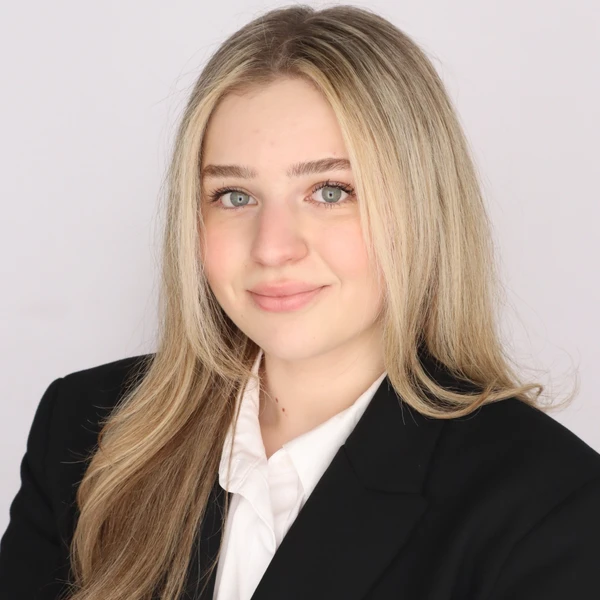
I am a student at the University of Pennsylvania studying Data Science and Biology, driven by a passion for using technology to solve real-world health and sustainability challenges. My work bridges AI, biotechnology, and environmental systems, from conducting research at Penn Medicine to building Bioberry, an AI-driven drug discovery platform.
Beyond academics, I lead and mentor through Venture Lab’s startup community, the Armenian Students Association, and programs like Girls Into VC and Wharton Women, empowering others to explore innovation and entrepreneurship.
I am especially interested in applying machine learning to environmental and biological systems, including wastewater treatment and sustainable resource management. My goal is to create technologies that make scientific progress more human-centered, ethical, and accessible to all.
Education
University of Pennsylvania
Bachelor's degree programMajors:
- Health and Medical Administrative Services
- Health Professions and Related Clinical Sciences, Other
- Finance and Financial Management Services
- Data Analytics
- Data Science
- Biology/Biotechnology Technologies/Technicians
- Neurobiology and Neurosciences
- Biotechnology
- Computer Science
- Biochemical Engineering
- Biological/Biosystems Engineering
Miscellaneous
Desired degree level:
Doctoral degree program (PhD, MD, JD, etc.)
Graduate schools of interest:
Transfer schools of interest:
Majors of interest:
Career
Dream career field:
Hospital & Health Care
Dream career goals:
Intern
Nabla2025 – 2025
Sports
Alpine Skiing
Intramural2023 – 20241 year
Research
Biological and Biomedical Sciences, Other
Penn Medicine — Assistant Researcher2023 – Present
Schlosser Healthcare Risk Equilibrium Scholarship
One healthcare problem I am deeply motivated to solve is the normalization of chronic illness in the United States. Conditions such as diabetes, cardiovascular disease, obesity, and depression are often treated as inevitable rather than preventable, and our systems are optimized around managing decline instead of extending healthy lifespan. My interest in longevity comes from the belief that longer, healthier lives are possible, but only if we fundamentally rethink how risk is measured, propagated, and acted upon across individuals, communities, and policy.
Most current healthcare risk models are static and siloed. They assign scores based on isolated variables such as age, diagnosis codes, or prior utilization, without accounting for how behaviors, environments, and policy incentives reinforce each other over time. I want to model health risk as a networked equilibrium rather than an individual trait. This is where iterative risk propagation and eigenvector based methods become especially powerful.
I conceptualize the healthcare system as a graph where nodes represent individuals, food environments, healthcare providers, insurers, and policy levers. Edges encode influence, such as how food availability affects metabolic health or how reimbursement structures shape preventive care behavior. A baseline risk vector r₀ can be initialized using biomarkers, claims data, or longitudinal health indicators. Risk is then updated iteratively using a normalized adjacency matrix A:
rₜ₊₁ = α A rₜ + (1 − α) r₀
This formulation mirrors eigenvector centrality, where risk accumulates not only from personal health factors but from exposure to structurally unhealthy systems. The steady state solution highlights which nodes and pathways disproportionately drive long term health decline. Rather than flagging individuals as high risk, the model identifies systemic contributors to chronic disease.
Longevity matters to me because chronic illness has become culturally normalized rather than structurally challenged. I strongly believe that reversing longevity decline requires policy level intervention, particularly within food systems. Nutritional guidance like the food pyramid influences population health only when it is reflected in pricing, access, and incentives. Using risk propagation models, we can simulate how changes to food policy, subsidy structures, or environmental access shift long run population health equilibria rather than short term utilization metrics.
I explore these ideas actively through my work with intris, where I analyze early stage healthcare and technology systems through a systems level lens. Writing and researching in this space has sharpened how I think about healthcare not as a collection of isolated actors, but as an interconnected network where incentives determine outcomes. This perspective informs how I approach modeling and solution design.
My goal is to build healthcare technology that supports longer, healthier lives by aligning incentives with prevention rather than decline. Iterative risk propagation and eigenvector methods provide a mathematical foundation for identifying leverage points within complex healthcare systems. By shifting focus from individual blame to systemic structure, we can design policies and technologies that meaningfully extend healthy lifespan at scale.
Liz & Wayne Matson Jr. Caregiver Scholarship
Caring for my grandfather during my early years of college became one of the most meaningful and formative experiences of my life. It shaped how I view responsibility, compassion, and purpose. Balancing his care with my studies taught me that love and perseverance can coexist with ambition, and that caring for others is both a privilege and a calling. What began as a family responsibility became a defining part of my identity and career path.
My grandfather had several health complications that required daily attention and constant monitoring. During my first years at the University of Pennsylvania, I often went from lectures and lab sessions to checking in on him, organizing his medications, and helping him through physical discomfort. There were days when I studied with one eye on my textbooks and the other on his needs, making sure he was comfortable and safe. It was not easy to balance everything. I often felt torn between my academic obligations and my desire to be fully present for him. Yet over time, that struggle taught me discipline, patience, and resilience.
Those moments by his side changed how I saw medicine and the human experience. Watching someone I loved grow weaker made me realize how vital empathy and dignity are in care. I began to think deeply about the systems that support patients and their families and how often they fall short. That awareness inspired my decision to study Biology and Data Science, with the goal of improving healthcare accessibility and designing better systems for patients and caregivers alike.
In Dr. Anne Marie McCarthy’s lab at Penn Medicine, where I study breast cancer risk and prevention, I learned that every dataset represents a person with fears, hopes, and a story. My time as a caregiver helped me see beyond the numbers, reminding me that behind every piece of data lies a human being deserving of care and understanding. This experience shapes how I approach research. I analyze patterns, but I also think about the people who live within them. My grandfather’s experience taught me that science is not only about discovery but about service.
Caregiving also taught me endurance and adaptability. Illness does not follow a schedule, and there were many days when plans had to change unexpectedly. I learned to adjust quickly, stay calm under pressure, and find balance even when I felt overwhelmed. Those same habits now guide me in research and academics. I have become more organized, more intentional, and more empathetic in every setting.
Caring for my grandfather also reshaped my definition of success. It is no longer about grades or recognition, but about showing up for others and bringing comfort when it is needed most. True success, I have learned, is quiet. It lives in the small, unseen moments of compassion and patience that change someone else’s day for the better.
My caregiving experience grounded me in empathy and gave direction to my ambitions. It taught me that service to others is not separate from achievement, but the foundation of it. As I continue my studies, I carry my grandfather’s memory and the lessons he gave me into everything I do. His care taught me that strength is gentle, compassion is powerful, and helping others can be the greatest form of success.
Autumn Davis Memorial Scholarship
Mental health has shaped how I see people, how I build relationships, and how I want to spend my life. I have seen the quiet pain that hides behind a smile, the fear that keeps people from asking for help, and the strength it takes to keep going when life feels heavy. These experiences have given me a deep respect for the mind’s resilience and a desire to help others find peace, stability, and purpose.
Growing up, I learned early that mental health challenges are not rare. I have seen loved ones struggle silently under the weight of anxiety and stress, and I have experienced periods of self-doubt myself. For a long time, I thought strength meant keeping everything inside, but I came to understand that vulnerability is strength too. This realization changed how I interact with others. I learned to listen more openly, to offer encouragement, and to build spaces where people feel safe to share their truth. These moments have made me passionate about promoting mental health awareness and destigmatizing open conversation.
At the University of Pennsylvania, where I study Biology and Data Science, I have seen how mental health connects deeply with physical health. In Dr. Anne Marie McCarthy’s lab at Penn Medicine, I research factors related to breast cancer risk and prevention. While my focus is biological, I constantly see how emotional health influences recovery, resilience, and patient outcomes. It has shown me that healthcare must treat the whole person, not just the disease. I want to use my background in research to develop better methods for integrating mental health support into medical settings, especially for patients navigating long-term illness.
I also volunteer at the Children’s Hospital of Philadelphia, where I have witnessed the courage of patients and families who face not only medical challenges but also emotional ones. I have learned how much small acts of compassion can matter in moments of fear. Whether it is a reassuring conversation or simply showing kindness, these experiences have reminded me that mental and emotional care belong at the heart of medicine.
My academic and personal experiences have strengthened my belief that mental health is a foundation for every other aspect of life. It affects how people learn, love, work, and dream. When we invest in mental health, we invest in stronger, kinder, and more creative communities. My goal is to pursue a career that combines scientific research and mental health advocacy to make healthcare more holistic and inclusive. I want to focus on prevention, early intervention, and data-driven approaches that help identify mental health needs before they become crises.
In the future, I hope to help build programs that integrate counseling, education, and technology to make care more accessible. I also hope to use my voice to encourage more honest conversations about mental health in academic and professional environments. Too often, achievement is measured by productivity, not well-being. I want to change that narrative by emphasizing that caring for one’s mind is essential to success, not separate from it.
Mental health has taught me empathy, patience, and faith. It has shown me that people are capable of growth even after pain, and that every person deserves understanding. My career will be dedicated to helping others heal, whether through research, advocacy, or direct care. I want to continue creating spaces where people feel seen and supported, where they know that hope is possible and that they are not alone.
Through compassion, science, and faith, I hope to spend my life helping others rediscover peace within themselves and strength within their stories.
Champions Of A New Path Scholarship
I believe that what sets me apart is not just ambition, but the determination to turn every opportunity into something that uplifts others. I have faced challenges that tested my confidence and endurance, yet each one taught me how to transform uncertainty into progress. My story is one of resilience and purpose, and I am driven by a belief that education is not only a path to personal success but also a responsibility to create change.
At the University of Pennsylvania, I study Biology and Data Science because I want to combine scientific research with technology to advance public health. I work in Dr. Anne Marie McCarthy’s lab at Penn Medicine, where we study breast cancer risk and prevention through large-scale data analysis. Our research explores how body composition and breast density relate to cancer outcomes, and it has taught me the power of data in saving lives. What gives me an advantage is my ability to bridge technical skill and compassion, approaching science not only as research but as service to humanity.
Outside of the lab, I lead two ventures that reflect my passion for impact. I founded Bioberry, a project that uses artificial intelligence to accelerate drug discovery for proteins linked to cancer, and Intris, a student-led initiative exploring how AI can drive innovation across fields like healthcare and sustainability. These experiences taught me how to lead, adapt, and innovate under pressure. I have learned to approach every challenge as an opportunity to think creatively and act with empathy, which I believe is the true mark of leadership.
I have also balanced these commitments with financial and academic pressures that made me appreciate every resource I have. Coming from a family that values hard work and education above all else, I understand the weight of opportunity. My parents’ sacrifices inspire me to excel not for recognition, but to open doors for others who share similar beginnings. I have faced moments where the cost of education felt daunting, yet I never let it deter me. Instead, it motivated me to work harder, apply for scholarships like this one, and continue pursuing my dream of making healthcare more equitable and data-driven.
What sets me apart from other applicants is my deep commitment to innovation with integrity. I do not see education as a competition, but as a calling to build, serve, and discover. I want to be part of the generation that reshapes medicine to be more human-centered, using data science to detect disease earlier, reduce barriers to care, and improve lives globally. My unique combination of scientific curiosity, entrepreneurial spirit, and compassion for others allows me to bring a multidisciplinary perspective that few students possess.
Receiving this scholarship would mean more than financial support. It would be a recognition of persistence, faith, and purpose. It would allow me to continue my studies without financial strain, focus more deeply on my research, and grow Bioberry and Intris into platforms that empower others to create.
I believe I deserve this scholarship because I will use it to multiply impact. Every opportunity I am given, I share. Every lesson I learn, I apply toward something larger than myself. I am not only striving for academic success but for the chance to contribute to a future where science, technology, and empathy work together to make the world healthier, fairer, and more hopeful.
RELEVANCE Scholarship
My journey toward medicine began with my own experience as a patient. Growing up with scoliosis meant years of doctor visits, X-rays, and long hours wearing a back brace that shaped not only my spine but also my perspective on resilience. At first, I felt frustrated and limited by my condition. I had to give up sports I loved and adjust to the constant reminder that my body was different. But over time, those experiences taught me strength, patience, and empathy. They showed me what it meant to depend on medical professionals who combined technical skill with compassion, and that realization planted the seed for my future in medicine.
Wearing a brace for years forced me to develop quiet perseverance. I remember sitting in waiting rooms surrounded by other patients, noticing how the right words from a doctor could completely change the energy in the room. My orthopedic specialist never treated me as just another case. He listened, encouraged, and helped me see that healing was as much emotional as it was physical. His example showed me how medicine can restore confidence as well as health. From that point on, I wanted to become the kind of physician who could make patients feel seen, supported, and capable of overcoming what once felt impossible.
As I grew older, my interest in medicine deepened through volunteer work. At UCLA in high school, I supported patients and families navigating difficult diagnoses and learned how much empathy matters in moments of uncertainty. Later, at the Children’s Hospital of Philadelphia, I saw firsthand how collaboration between doctors, nurses, and researchers leads to better outcomes. Those experiences taught me that medicine is both a science and a service—one that thrives on compassion, curiosity, and connection.
At the University of Pennsylvania, I study Biology and Data Science to better understand how health outcomes are shaped by both biological and social factors. In Dr. Anne Marie McCarthy’s lab at Penn Medicine, I research how body composition and breast density relate to cancer risk. This work has helped me appreciate the importance of preventive care and the power of data to guide earlier interventions. I hope to apply these insights in my future as a physician, combining evidence-based research with empathy to provide care that is both precise and personal.
There have been moments when the path felt overwhelming. Balancing challenging coursework, research, and the lingering effects of scoliosis has required discipline and self-belief. Yet these challenges have strengthened my resilience. They remind me that setbacks can be transformed into motivation when you focus on growth rather than limitation. That mindset—one I learned through my own medical journey—continues to guide how I approach every goal.
In the future, I hope to specialize in a field that allows me to help patients who, like me, have faced long-term medical challenges that affect both body and identity. I want to ensure that every patient I treat feels heard and empowered in their healing process. My experiences with scoliosis taught me that true care extends beyond treatment—it involves understanding a person’s fears, frustrations, and hopes.
Medicine, to me, is about turning pain into purpose. The years I spent wearing a brace shaped more than my back; they shaped my determination to bring comfort and confidence to others. Every appointment, every struggle, and every lesson from that period became part of my purpose. I carry those experiences with me as I pursue a career in medicine, determined to help others stand taller, both physically and emotionally, just as my doctors helped me.
Future Green Leaders Scholarship
Sustainability should be at the heart of every modern discipline because our planet’s health determines the future of every field, from economics to medicine. At the University of Pennsylvania, where I study Data Science and Biology, I have learned that sustainability is not only an environmental challenge but also a systems challenge that requires rethinking how we use resources and design technology. My goal is to use data-driven insights and biological research to create solutions that promote environmental resilience and human health together.
The connection between biology and sustainability became clear to me when I studied ecological systems and realized how fragile the balance between human activity and natural resources has become. In laboratories and research courses, I saw how small changes in environmental conditions can have cascading effects on entire ecosystems. This understanding motivated me to look beyond theory and toward the practical applications of sustainability, where data can guide more informed decisions about energy use, conservation, and resource management.
Data science offers a powerful lens for sustainability because it allows us to measure, predict, and improve the impact of human actions. I have been involved in projects that analyze environmental and public health datasets to uncover trends related to pollution, urban health disparities, and resource consumption. For example, while studying air quality data and its correlation with hospital admissions, I saw how data visualization can make invisible problems visible, leading to real policy and behavioral change. I hope to expand this approach by creating predictive models that help cities and organizations monitor sustainability indicators and respond proactively.
In biology, sustainability is equally crucial because the health of humans and the health of the planet are interconnected. Climate change affects disease patterns, nutrition, and access to clean water, while unsustainable agricultural practices degrade biodiversity and soil quality. Through my research in Dr. Anne Marie McCarthy’s lab at Penn Medicine, I have learned how biological systems depend on stability and adaptation. I plan to bring this same perspective to environmental issues by designing solutions that strengthen ecological balance instead of depleting it. My long-term vision is to combine biotechnology and data analytics to develop sustainable innovations in fields such as environmental health, renewable materials, and bioengineering.
Beyond research, I am inspired by the potential of entrepreneurship to accelerate sustainable change. Many of the startups I engage with through Penn’s Venture Lab and the Hustle Fund focus on how technology can address climate challenges while remaining economically viable. I have learned that sustainability must also make sense from a business standpoint, aligning environmental responsibility with financial innovation. I plan to contribute to this intersection by building ventures or advising companies that use artificial intelligence and data analytics to track environmental footprints, improve energy efficiency, and guide consumers toward greener choices.
Sustainability should not be treated as a specialized concern, but as a shared value that shapes every decision. Whether it involves developing cleaner production methods or designing digital tools that help people understand their environmental impact, the future depends on professionals who make sustainability a priority in their fields. I see myself among that group, using my education in data science and biology to bridge environmental research, technology, and entrepreneurship.
In the future, I hope to work with interdisciplinary teams to build data-driven frameworks that help governments, companies, and communities reduce their carbon footprint. By combining curiosity, compassion, and science, I want to help build a future where progress does not come at the planet’s expense, but in partnership with it.
Maxwell Tuan Nguyen Memorial Scholarship
My inspiration to pursue medicine began with a simple desire to help people live healthier, longer lives. Growing up, I was fascinated by how medical professionals could combine science, empathy, and dedication to make a lasting difference. That fascination grew into purpose through my volunteer experiences at UCLA in high school and the Children’s Hospital of Philadelphia during college. Seeing firsthand how doctors connected with patients in moments of fear, pain, and hope shaped my understanding of what it means to heal. I realized that medicine is not only a science of the body but also an art of compassion.
At UCLA, I volunteered in hospital units that cared for patients facing both chronic and acute conditions. I witnessed the tireless efforts of nurses, residents, and attending physicians who balanced technical expertise with human warmth. Even small moments, such as delivering water to a patient or assisting with comfort items, reminded me how kindness can bring light to someone’s hardest day. Those early experiences gave me a deep respect for the profession and taught me that healing begins long before a treatment plan—it begins with presence, patience, and understanding.
My motivation continued to grow at the Children’s Hospital of Philadelphia, where I became more aware of how research and clinical care come together to create better outcomes. Working alongside medical staff and observing pediatric care reinforced my desire to study biology and data science at the University of Pennsylvania. I wanted to understand health not only from the perspective of the clinic but also from the systems and data that shape patient experiences. Through my studies and research in Dr. Anne Marie McCarthy’s lab at Penn Medicine, I analyze how body composition and breast density influence cancer risk. This work has strengthened my appreciation for preventive care and shown me how data-driven approaches can help physicians anticipate and manage disease earlier.
Although I am deeply interested in research, my heart remains in clinical care. I want to be the kind of physician who can bridge research and patient interaction, bringing innovation directly to those in need. The most meaningful lessons I have learned have not come from textbooks or laboratories, but from observing the quiet, steady compassion of medical professionals who treat each patient as a whole person. These experiences have taught me that while medicine depends on precision and science, it is equally defined by empathy and integrity.
Looking ahead, I plan to attend medical school and eventually specialize in a field that allows me to connect closely with patients while contributing to research and public health. I am particularly interested in oncology and preventive medicine because they represent the intersection of science, compassion, and long-term impact. My goal is to develop community health programs that promote early detection and wellness education, especially for underrepresented populations. By integrating my background in data science, I hope to build better systems that make healthcare more proactive and equitable.
I see medicine as both a personal calling and a collective responsibility. Every patient interaction, every research question, and every moment of service brings me closer to understanding what it means to heal. My experiences at UCLA and CHOP have shown me the depth of dedication required in this profession, and I am ready to continue growing into that commitment. Through medicine, I want to carry forward the legacy of compassion and excellence that inspired me in those hospital halls, and I will dedicate my life to ensuring that every person I treat feels seen, supported, and cared for.
Brandon Repola Memorial Scholarship
My area of focus is the intersection of data science, digital storytelling, and entrepreneurship. As a Data Science and Biology student at the University of Pennsylvania, I have become passionate about using technology to tell meaningful stories that can educate, inspire, and transform communities. Whether through videography, digital marketing, or data-driven research, I believe that innovation begins when creativity meets purpose.
I first discovered my love for digital storytelling when I began producing short videos for student organizations at Penn. I realized that behind every visual project is a story waiting to be told, one that can motivate others to think differently or take action. Brandon Repola’s message about changing the world deeply resonates with me because I also see creativity as a tool for impact. My work in videography has taught me that even a thirty second clip can shift someone’s mindset or make them feel part of something larger than themselves.
As I continued to explore technology and entrepreneurship, I found that digital marketing could amplify the reach of ideas that matter. I currently lead content and strategy initiatives for early stage startups within Penn’s Venture Lab ecosystem. Working with founders has shown me that innovation often depends on how effectively a message is communicated. I have helped design and launch digital campaigns that share founder stories, highlight product missions, and inspire people to support new ventures. These experiences have reinforced my belief that technology is not just a tool for efficiency but also for storytelling and connection.
Beyond marketing, I am deeply interested in how computers and artificial intelligence can transform industries, particularly health and wellness. I have been working on projects that analyze public health data to identify trends and build visual dashboards that help communities understand how small behavioral changes can improve overall well-being. Through this work, I have learned to see computers not only as machines but as creative instruments capable of expressing human insight through data visualization. I plan to expand this approach by developing digital platforms that blend analytics and storytelling, helping people see themselves as active participants in creating change.
My long term goal is to build a company that merges technology, design, and education to make innovation more accessible. I want to empower young people, especially those without traditional technical backgrounds, to use digital tools to build projects that matter to them. In the same way that Brandon sought to show youth that “if you put your mind to it, it will happen,” I want to create learning environments where students can turn their ideas into action. I hope to provide mentorship, creative resources, and access to tools that allow others to explore coding, videography, and entrepreneurship as paths toward personal and social growth.
To pursue these goals, I am combining technical coursework in data science with creative projects that allow me to apply what I learn in real world contexts. I am constantly building, experimenting, and finding new ways to merge art with analytics. Each project brings me closer to understanding how technology can tell stories that move people toward positive change. In this way, I am honoring Brandon’s legacy by following his example of bold creativity and purpose driven ambition.
Brandon’s passion for mechanics, media, and innovation represents everything that drew me to technology in the first place. He understood that technical skill and imagination together could change the world. I see my education as an opportunity to carry that vision forward, to build a future where storytelling, technology, and compassion come together to shape a better world.
Dr. Steve Aldana Memorial Scholarship
WinnerDr. Steve Aldana’s philosophy that meaningful health improvement begins with small, consistent changes deeply resonates with how I approach both research and community impact. As a Data Science and Biology student at the University of Pennsylvania, I see my education as a bridge between evidence-based wellness research and real-world behavioral change. My goal is to create tools that make health education more accessible and personalized, helping people adopt sustainable habits that improve both individual and community well-being.
Through my academic work, I have explored how data can uncover the relationships between lifestyle, environment, and long-term health outcomes. In Dr. Anne Marie McCarthy’s lab at Penn Medicine, I study population-level trends such as the relationship between body composition, breast density, and cancer risk. This experience has shown me how even small shifts in preventive behaviors can dramatically change outcomes when applied across large populations. I have learned that effective wellness initiatives require more than just medical data; they must integrate empathy, behavioral science, and communication to help individuals make informed, incremental changes.
Outside of the lab, I am driven by the same belief that inspired Dr. Aldana’s work: wellness is a daily practice built on compassion and education. At Penn, I organize wellness-focused events through student initiatives that encourage mindful eating, outdoor activity, and mental health awareness. I have found that the most lasting impact often comes from meeting people where they are, whether that means creating easy walking routes near campus or offering simple nutrition workshops that focus on realistic improvements rather than perfection. These experiences have reinforced that small, accessible interventions can create powerful ripple effects across communities.
I also bring creativity to my work through the integration of technology and wellness education. As part of my data science coursework, I am developing interactive dashboards that visualize community health metrics and behavioral trends. My long-term vision is to apply these analytical skills to design digital wellness platforms that personalize health recommendations based on individual data. By turning insights into actionable steps, I hope to help organizations implement Dr. Aldana’s principle that small, measurable changes can lead to lasting transformation.
My personal wellness philosophy reflects his emphasis on balance and consistency. I bike regularly, spend time outdoors, and value the restorative power of movement and mindfulness. These activities remind me that wellness is not about control or extremes, but about cultivating small habits that nurture long-term vitality. This perspective keeps me grounded as I pursue research and community projects, ensuring that my work aligns with both scientific rigor and human compassion.
In the future, I hope to expand my work into the field of employee wellness and organizational health. I am inspired by Dr. Aldana’s efforts to make workplace well-being a collective responsibility and a source of empowerment. Using my data science background, I want to build scalable programs that help employers understand how small policy changes, like flexible scheduling, outdoor breaks, or community challenges, can reduce burnout and improve overall productivity. These initiatives would continue Dr. Aldana’s mission by translating academic research into real workplace culture shifts.
Ultimately, I want my career to reflect Dr. Aldana’s legacy of kindness, integrity, and education. By combining my technical training with a commitment to empathy, I aim to continue his mission of helping people live healthier, more meaningful lives through sustainable habits. The most powerful changes often begin quietly, one step or choice at a time, and I hope to carry forward that belief in everything I do.
STEAM Generator Scholarship
As the daughter of Armenian immigrants, I grew up in a home where resilience was spoken more fluently than English. My parents worked tirelessly to give me the opportunities they never had, and education was always seen as the greatest privilege. Still, navigating higher education as a second-generation immigrant often made me feel like an outsider, someone trying to translate two worlds at once.
My family’s story has always been rooted in perseverance. My grandparents fled instability and discrimination, and my parents arrived in America with little more than determination and faith. They taught me to see education not just as a personal achievement but as a generational victory, proof that their sacrifices had meaning. Yet, being raised in a household where no one had gone through the American university system meant that there was no roadmap for how to get there. Every step, from financial aid forms to college applications, was something I had to figure out on my own. I remember explaining FAFSA to my parents while also trying to understand it myself, realizing that being first-generation meant being the family’s translator, researcher, and trailblazer all at once.
When I arrived at the University of Pennsylvania, I carried both excitement and a quiet sense of responsibility. I wanted to make the most of the education my parents had dreamed of for me, but I also wanted to make it my own. I chose to study Data Science and Biology because I saw them as tools to create change, disciplines that could help me bring structure to complexity, whether in science, society, or opportunity itself. In research labs and startup programs, I began to see how my perspective as an outsider was actually a strength. It made me adaptable, empathetic, and unafraid to ask questions others might overlook.
At times, I have felt the quiet weight of not belonging. In classrooms filled with legacy students or conversations about family alumni networks, I have been reminded that my path is different. But rather than seeing that as a disadvantage, I see it as a calling. My family’s story has taught me that education is not just about climbing a ladder but about holding the door open for others. I want to use my experiences to mentor students from underrepresented backgrounds who are navigating the same uncertainty I once felt, to be the voice I needed when I was learning to find my own.
Looking ahead, I hope to bridge the gap between technology, science, and community impact. I want to apply my background in data and biology toward advancing healthcare access, especially for immigrant and underserved communities who often face systemic barriers to care. My faith and upbringing have instilled in me a belief that progress means little unless it uplifts others, and I want my career to reflect that purpose.
Entering higher education as a second-generation immigrant has not always been easy, but it has been deeply meaningful. It has given me a sense of gratitude that drives me every day and a vision that extends beyond myself. My journey has been one of translation, of turning my family’s sacrifices into opportunity, of turning uncertainty into purpose, and of turning education into empowerment. I may have entered higher education as an outsider, but I am leaving it determined to make sure no one who comes after me ever feels the same.
Natalie Joy Poremski Scholarship
My faith in Jesus Christ is not just a part of my life; it is the foundation of everything I do. Every goal I set and every dream I pursue begins with the desire to glorify Him. Living out my faith means more than believing; it means acting with compassion, humility, and love. Each day, I try to reflect His teachings through the way I study, serve, and interact with others.
At the University of Pennsylvania, my faith has become both my anchor and my compass. It is not always easy to live as a Christian or as a Pro-Life advocate in an environment that can be skeptical of both. Yet, those challenges have strengthened my conviction. I have learned that being Pro-Life means more than protecting the unborn; it means valuing every human life with love and dignity. I have realized that the only way to truly protect life is to truly love it. Jesus loved people unconditionally, even when they rejected Him, and that is the love I strive to reflect in all I do.
Being at a university where my beliefs are often in the minority has taught me to lead through kindness rather than confrontation. I have learned that faith is most powerful when lived out quietly through patience, empathy, and grace. When people see peace and compassion in your actions, they begin to ask why, and that opens the door to sharing the Gospel. My conversations, friendships, and service work on campus have all become ways to show Christ’s love through example.
My faith has also shaped my career path. I have always been drawn to medicine because of the deep desire to heal and serve others. Over time, I realized that this calling was not just professional but spiritual. I want to become an oncologist to bring both healing and hope to patients facing cancer. My goal is to treat every patient as a child of God, deserving of compassion, respect, and care. When a patient thanks me for their recovery, I will remind them that it was not me who healed them, but Jesus working through me.
I believe that medicine and faith are deeply connected. Science can describe the body, but only God gives it life. My studies in biology and data science are preparing me with the technical tools to help others, but my faith will guide how I use those tools. I want to care not just for the body, but also for the soul, showing patients that healing is both physical and spiritual.
Through oncology, I hope to honor Christ’s commandment to love others as He loved us. Whether I am providing treatment, comforting a family, or praying with a patient, I want every moment to reflect His presence. I will use my education to protect life in all forms by practicing ethical medicine and upholding the sanctity of every person.
My faith calls me to serve with humility, courage, and love. I want my life’s work to reflect that all life is sacred and worth protecting. My mission is simple: to do everything in the name of Jesus. If I can help others feel His healing power and grace through my work, then I will have fulfilled my purpose as both a doctor and a disciple devoted to the Author of Life Himself.
CF Boleky Scholarship
I met my best friend, Elizabeth, during my first year of college, and from the very beginning, I knew she was someone special. She has a way of listening deeply and speaking thoughtfully, which is probably why I’m never surprised when she introduces me to a new word or idea she’s learned from her philosophy classes. What started as casual conversations between two curious people quickly became one of the most meaningful friendships of my life.
Elizabeth has taught me so much about the world, but even more about myself. She is endlessly curious, and she has this gift of finding beauty in the simplest things, like a poem, a walk across campus, or a late-night conversation about faith and purpose. Through her, I’ve learned to slow down, to reflect, and to see life not just as something to achieve in, but something to be present in.
One of the defining parts of our friendship has been how much we’ve grown together in our Christian faith. We started reading the Bible together during a season when both of us were searching for grounding and peace. What began as a weekly study soon became something much deeper, shared prayer, church on Sunday mornings, and long talks about how to live with kindness and purpose. I used to see faith as something individual and quiet, but through Elizabeth, I learned that faith can also be shared, nurtured, and strengthened in community.
Some of my favorite memories are the small, ordinary moments that somehow feel sacred, like laughing together while we try to make pancakes after church, sitting under the trees on Locust Walk talking about what we’re grateful for, or walking back from service with worship songs playing softly between us. She has this rare mix of depth and joy; she’ll quote Kierkegaard one minute and crack a joke the next, and that balance has made me a more grounded and joyful person.
Elizabeth has been there for me during times of uncertainty, reminding me of God’s grace when I struggled to see it for myself. She’s taught me that friendship is one of the purest ways we experience love, because it’s a choice to show up, again and again, with patience and care.
Our friendship is important to me because it has shaped the way I see the world, not as something to conquer, but as something to understand and appreciate. She’s made me a better thinker, a better believer, and a better friend. I know that no matter where life takes us, the lessons we’ve shared, in philosophy, in faith, and in love, will stay with me forever.
Kyle Lam Hacker Scholarship
When people think of hacking, they often imagine code, automation, or breaking through systems. For me, hacking has always been about curiosity, taking things apart to understand how they work and rebuilding them to help others. My proudest “hack” was not a line of code or a hardware build, but a moment where I used my data science and tinkering instincts to make science more approachable for others.
It started with my research in Dr. Anne Marie McCarthy’s lab at Penn Medicine, where I analyzed how body composition and breast density influence cancer risk. The work was complex and deeply meaningful, but the data itself felt inaccessible. Friends outside the lab would ask, “What does that even mean?” or “How can this help real patients?” I realized that a big part of science’s problem was not lack of innovation, but lack of storytelling.
That realization became the seed for Intris, a project I built by combining code, curiosity, and communication. I wanted to create a place where people could understand how artificial intelligence was changing everything from healthcare to climate modeling. I started small, writing a simple Python script that scraped public datasets and AI papers, then trained a language model to summarize them in plain English. What began as a weekend experiment soon became a full-fledged AI insights platform and newsletter.
The tinkering never stopped. I stayed up late optimizing scripts, cleaning text outputs, and designing the website layout. But the real magic happened when people started reading. The first time a founder messaged me saying, “I used your summary to explain our AI model to a potential investor,” I realized I had built something that delighted people. My code was helping translate complexity into clarity.
That experience led me deeper into the intersection of hacking and biotech. Around the same time, I was building Bioberry, an AI-driven drug discovery project inspired by intrinsically disordered proteins, a class of proteins that refuse to fold into stable structures yet play critical roles in disease. Traditional modeling methods struggled to capture their behavior, so I began experimenting with Meta’s ESM2 protein language model. I spent nights fine-tuning embeddings, visualizing protein interactions, and tweaking architectures to reveal hidden patterns.
At one point, I adapted a model originally designed for natural language processing to interpret protein data more intuitively. When I shared the results with a small group of biotech founders, their excitement was immediate. One founder told me, “You made something I thought was impossible actually make sense.” That was my kind of hacking, repurposing tools from one field to illuminate another.
Through both Intris and Bioberry, I discovered that tinkering is not only about solving technical problems, but about building bridges between disciplines and people. Whether I was debugging a function, editing an HTML block, or rephrasing a protein model into a metaphor about origami, I was driven by one goal: to help others feel the same spark of discovery that I did.
The most delightful moments are not when the code runs without errors, but when someone else lights up because of what you built. Watching classmates, founders, and readers engage with my projects reminded me that innovation is most powerful when it invites others in.
Today, I still see hacking as an act of generosity, an invitation to explore, learn, and share. Every script I write, every model I build, and every startup I imagine carries that same spirit of curiosity and joy. My tinkering may begin in a Jupyter notebook, but its purpose lives in the connections it creates between people, ideas, and possibilities.
Saswati Gupta Cancer Research Scholarship
When I first entered the University of Pennsylvania, I planned to follow a traditional premed path. I wanted to become a doctor because I loved science and wanted to help people directly. But as I began exploring research and technology, I realized that my real passion was not only in treating individual patients but in building systems and tools that could improve healthcare on a larger scale. That realization led me to shift my focus toward data science, biology, and entrepreneurship, where I could combine my scientific foundation with innovation and impact.
While working in Dr. Anne Marie McCarthy’s lab at Penn Medicine, I analyzed breast density and body composition data to understand cancer risk. Through that experience, I discovered how computational biology and bioinformatics could drive discovery faster than any single medical practice could. I became fascinated by how data could predict outcomes, optimize systems, and shape the future of medicine.
At the same time, I fell in love with startups, the speed, the creativity, and the sense of possibility. I founded Bioberry, an AI-driven platform exploring drug discovery through intrinsically disordered proteins, and Intris, an AI insights platform connecting deep learning trends across industries. Through these ventures, I learned that innovation is not just about building technology; it is about creating access, community, and progress.
Looking forward, I aspire to become an AI-driven biotech founder and investor, using data and design to tackle global health and environmental challenges. My goal is to bridge science and entrepreneurship to make innovation more human centered and sustainable. By combining the empathy I once sought in medicine with the creativity I found in startups, I hope to redefine what it means to care for people through science.
Bushnell Bioinformatic Scholarship
My interest in bioinformatics began with a fascination for how data could reveal hidden biological patterns. I have always been drawn to intersections where computation meets biology, where discovery meets design, and where data meets empathy. As a student at the University of Pennsylvania, majoring in Data Science and Biology, I have built my academic journey around understanding how computational models can accelerate scientific discovery and transform healthcare delivery.
I currently conduct research in Dr. Anne Marie McCarthy’s lab at Penn Medicine, where we study how body composition and breast tissue density interact to influence breast cancer risk. My work involves handling large-scale datasets, cleaning and coding variables, and applying statistical models to uncover meaningful trends in patient data. Through this research, I have learned how to integrate clinical data with computational techniques, from exploratory data analysis to predictive modeling. What excites me most about bioinformatics is its ability to translate information into insight and to turn numbers into knowledge that can improve real lives.
Beyond my academic research, I have extended my work into entrepreneurship and applied innovation. I co-founded Bioberry, an AI-driven drug discovery platform that focuses on intrinsically disordered proteins, an area of structural biology that holds immense potential for uncovering new therapeutic targets. At Bioberry, I apply machine learning models such as protein language models like ESM2 to map protein interaction networks and identify areas of functional disorder. Through this project, I have seen firsthand how bioinformatics, when paired with artificial intelligence, can make drug discovery more efficient and creative. It also taught me that technical innovation thrives when guided by clear biological questions and ethical intent.
I also founded Intris, an AI insights platform that bridges technical research with public understanding. Each week, I write about how artificial intelligence is reshaping industries like biotechnology, energy, and construction. Through Intris, I aim to democratize knowledge by helping others understand how deep learning can improve fields from health diagnostics to environmental systems. This effort represents another dimension of bioinformatics for me, the ability not only to analyze data but to communicate its impact effectively.
These experiences have reinforced my belief that bioinformatics is not just a field of study; it is a language of progress. It enables collaboration between disciplines, fosters innovation across boundaries, and provides the foundation for more equitable healthcare systems. My technical training in data science, my laboratory experience in biomedical modeling, and my leadership in innovation communities have all shaped my perspective that the future of health lies at the intersection of biology, computation, and human-centered design.
Looking forward, my career goal is to work at the intersection of AI, biotechnology, and environmental health, developing technologies that detect and prevent disease while promoting sustainability. I hope to build systems that integrate genomics, imaging, and environmental data to model how human health connects to the ecosystems around us. Whether through academic research, biotech innovation, or venture building, I want to use bioinformatics as a tool to make science more accessible, ethical, and impactful.
Ultimately, I envision a career where data-driven discovery becomes not just a means of innovation, but a way to bridge science with society, creating a world where information serves humanity as thoughtfully as it serves progress.