
Hobbies and interests
Accounting
Acting And Theater
Advertising
Advocacy And Activism
American Sign Language (ASL)
Animation
Art
Reading
Academic
I read books daily
Asia Evans
1x
Finalist1x
Winner
Asia Evans
1x
Finalist1x
WinnerBio
Hi, I’m Asia! I’m a rising sophomore majoring in Biochemistry at Howard University with a strong passion for neuroscience, neurodegenerative disease research, and scientific innovation. My long-term goal is to become a physician-scientist (MD-PhD) focused on Alzheimer’s disease, dementia, schizophrenia, autism, and other neurological disorders.
I enjoy blending science, leadership, healthcare, and mentorship in everything I do. Through my volunteer work with Boys & Girls Clubs of America, I support and uplift younger students while serving my community.
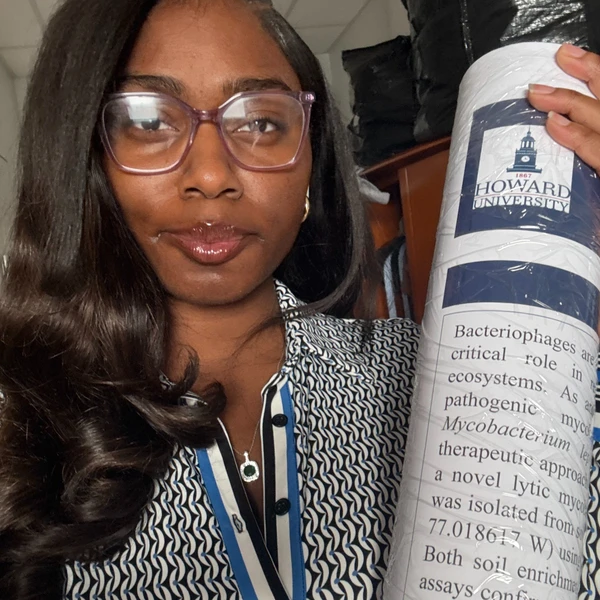
My research experiences have shaped my academic path. Through American Chemical Society Project SEED, I studied Fragile X syndrome, strengthening my interest in neuroscience research. In college, I’ve worked in bacteriophage discovery and bioinformatics labs where I annotate genomes and analyze genomic data, building both scientific and computational skills.
I also work as a medical assistant with Hemphill Services, supporting patients with Alzheimer’s, Parkinson’s, and autism, which has deepened my understanding of patient care and strengthened my commitment to neuroscience.
I maintain a 3.9 GPA and was recently accepted into a neuroscience research internship at University of California, Irvine for Summer 2026. I aim to connect research, treatment, and community impact to create meaningful change.
Education
Howard University
Bachelor's degree programMajors:
- Neurobiology and Neurosciences
Minors:
- Computer Science
Chattanooga State Community College
Associate's degree programMajors:
- Communication, General
Brainerd High School
High SchoolMiscellaneous
Desired degree level:
Doctoral degree program (PhD, MD, JD, etc.)
Graduate schools of interest:
Transfer schools of interest:
Majors of interest:
- Neurobiology and Neurosciences
- Second Language Learning
- Biotechnology
- Chemical Engineering
- Polymer/Plastics Engineering
Career
Dream career field:
Chemicals
Dream career goals:
My career goal is to make a meaningful, potentially groundbreaking contribution to neurodegenerative disease research, particularly in Alzheimer’s disease, dementia, schizophrenia, and autism. I aim to push the boundaries of neuroscience by uncovering insights that improve prevention, diagnosis, and treatment, with the long-term hope of reducing the impact these conditions have on individuals and families and moving us closer to more effective care and understanding.
Lead Student Researcher
UC Irvine Neuroscience Instutite2026 – Present5 monthsMedical Assistant
Hemphill Services2025 – Present1 yearStudent Researcher
Howard University SEA-PHAGES Lab2025 – 20261 yearStudent Researcher
American Chemical Society2024 – 2024Youth and Development Intern
Boys and Girls Club of Chattanooga2023 – Present3 yearsTeacher Lead
ArtsBuild2024 – 2024Website Developer
BHE Happy Apprenticeship Program2022 – Present4 years
Sports
Golf
Varsity2024 – 2024
Awards
- MVP Award
Softball
Club2022 – 2022
Research
Chemistry
American Chemical Society — Student lead2024 – 2024
Arts
Artsbuild
Graphic Art2024 – 2024Brainerd High School Theater Program
ActingSherk the Musical2023 – 2023Artspark
Graphic ArtWrapped EPB Unit2023 – 2023
Public services
Volunteering
Brainerd High School Student Government Association — SGA President2024 – 2024Volunteering
Boys and Girls Club — Student Lead2023 – PresentVolunteering
Urban League of Greater Chattanooga — Student lead2023 – 2023Advocacy
Urban League of Greater Chattanooga — Student lead2023 – 2024
Future Interests
Advocacy
Politics
Volunteering
Philanthropy
Entrepreneurship
Growing up in the Family Restaurant Business Scholarship
My mother was a single parent who raised me on her own, and most of the time she worked long hours to provide for us. But whenever she needed help, she would sometimes drop me off at our family restaurant, the Buffalo Shack. It was started by my great-grandmother and grand-uncle back in the 1980s in Chattanooga, Tennessee a small town where everybody knows everybody, and the restaurant really felt like part of the community.
The Buffalo Shack wasn’t just a place to eat. It was where people came to laugh, talk, and feel at home. I remember watching people connect over food, and even though I was young, I could feel how much care went into creating that space. Being there also meant I got pulled into helping out sometimes. I learned how to fry wings, season food, and even barbecue. My grandfather used to say, “Hard hands = hard work,” and that really stuck with me.
At the time, I didn’t realize it, but those moments shaped my work ethic. I learned how to stay on my feet, move quickly, pay attention to details, and keep going even when things got busy or stressful. Those same habits followed me into school and life. Now instead of working behind a fryer, I find myself selling baked goods I make myself and working in wet lab research, where I still rely on patience, focus, and hands-on work.
Growing up around the restaurant also showed me what it means to build something from the ground up as a family. We were never wealthy, but I never felt like I was missing love or support. In a way, the restaurant taught me that success isn’t only about money it’s also about community, consistency, and showing up even when things are hard.
If I could change something about the restaurant industry, I would want better support for small, family-owned businesses like mine. So many restaurants like the Buffalo Shack carry generations of history, but they don’t always have access to the resources, funding, or protection that bigger chains have. I would love to see more programs that help small restaurants stay open, grow, and pass their legacy down without financial stress weighing them down.
I would also want the industry to value the people behind the food more. Working in a restaurant teaches you discipline, teamwork, and resilience, but it can also be exhausting work that people overlook. I think there should be more respect and support for the workers who keep those spaces alive every day.
Overall, my experience with my family’s restaurant taught me how to work hard, stay grounded, and appreciate where I come from. It showed me that even if we didn’t have a lot financially, we had something strong in love, effort, and pride in what we built together.
STEAM Generator Scholarship
Entering higher education has always felt like stepping into a space my family had to learn about alongside me. My parents had not attended college, so my path forward was different from what they had known or experienced. They were familiar with hard work, long days, and coming home exhausted, and while they did not have the opportunity to pursue higher education themselves, they instilled in me the values of discipline, resilience, and never stopping at the first “no.”
Growing up, I often found myself curious about the choices available to me, and choices that went beyond what I saw in my immediate environment. I wondered what it would look like to enter rooms where people shared my curiosity and ambition, where I could push myself further and be surrounded by others who were also striving to build something beyond their starting point. That curiosity became the foundation of my educational journey.
At times, navigating higher education has felt unfamiliar and overwhelming, not because I lack ability, but because I did not grow up with a roadmap. I had to learn how to ask questions I did not always know how to phrase, seek out opportunities I did not initially know existed, and advocate for myself in spaces where I was still figuring out how everything worked. Being a first-generation college student means that every step forward is both progress and learning at the same time.
Despite these challenges, my curiosity has always pushed me forward. I am currently pursuing a Biochemistry degree at Howard University, with a strong interest in neuroscience and neurodegenerative disease research. What drives me is not only the science itself, but the possibility of understanding how conditions like Alzheimer’s disease, dementia, schizophrenia, and autism affect individuals and families in deeply personal ways.
My academic path has also been shaped by the awareness that I am building something new for my family. Every opportunity I step into feels like I am expanding what is possible not just for myself, but for those who come after me. That responsibility can feel heavy at times, but it is also deeply motivating. It reminds me that my education is not just personal—it is generational.
I have learned to navigate higher education by actively seeking out support systems and communities that help me grow. Through research in bacteriophage discovery and bioinformatics, I have learned how to work through uncertainty and trust the process of learning complex material over time. Through student organizations, I have also found spaces where I feel less alone in my journey and more supported in my goals.
My hopes for higher education are rooted in growth. I hope to continue developing as a scientist, thinker, and contributor to my field. I hope to gain the skills and knowledge needed to participate meaningfully in neuroscience research and to one day help bridge gaps in understanding neurological disorders.
At the same time, I do carry fears. I worry about whether I will always have to figure things out alone or whether I will be able to fully step into spaces that were not originally designed with students like me in mind. But even with those fears, I continue, because being the first in my family to walk this path also means I am helping create a clearer path for others.
My background has taught me that I do not need to come from a system to succeed in it. I just need the persistence to learn it, the courage to stay in it, and the belief that I belong in it.
Byte into STEM Scholarship
I am a Black student in STEM whose journey has been shaped by curiosity, resilience, and growing up with financial barriers that often made educational opportunities feel out of reach. I am currently studying Biochemistry at Howard University, with a strong commitment to neuroscience and neurodegenerative disease research. My long-term goal is to become a physician-scientist studying conditions such as Alzheimer’s disease, dementia, schizophrenia, and autism, with the hope of improving how these illnesses are understood, prevented, and treated in real communities.
My passion for STEM did not come from easy access to resources, it rose from learning how to create opportunities when they were not given to me. Growing up, I saw financial strain shape what was possible for my family, and I learned early that if I wanted something different, I would have to actively work toward it. That mindset became the foundation for how I approach education, leadership, and science.
One of the most defining parts of my journey has been learning to grow in spaces where I am often underrepresented. In STEM environments where Black women are still few in number, I have had to keep showing up even when I did not always see myself reflected. Over time, that experience became motivation rather than discouragement. It pushed me to pursue STEM not only for myself, but to help make it more accessible for others like me.
My interest in neuroscience became personal after my uncle’s diagnosis with epilepsy. Watching how a neurological condition affected both his life and my family changed how I understood the brain. It was no longer just a scientific subject, it became something deeply connected to memory, identity, and care. That experience pushed me to ask deeper questions about neurological disorders and the science behind them.
To pursue this path, I have sought out research experiences that build both skill and confidence. Through the American Chemical Society Project SEED program, I conducted research on Fragile X syndrome, which introduced me to laboratory science and research discipline. In college, I continued in bacteriophage discovery and bioinformatics labs, where I worked on genome annotation and data analysis. These experiences taught me that science is not only about answers it is about learning to sit with uncertainty, think critically, and persist even when results are not immediate.
Alongside research, service has been central to my growth. I have worked with Upward Bound TRIO and the Boys & Girls Clubs of America, where I mentored younger students from underserved communities. I am also involved in Black in Neuroscience, where I help introduce students to neuroscience and research opportunities. In these spaces, I have learned how even small moments of encouragement can change how a student sees their future.
This STEM program represents more than academic support it represents access and continuation. It will allow me to strengthen my technical skills while continuing to grow as a researcher. More importantly, it will support my goal of increasing representation in STEM and helping build a pipeline where Black students feel seen, supported, and capable of entering these fields.
With my education, I plan to contribute to neuroscience research while staying grounded in service. I want to be a scientist who does not separate research from impact someone who ensures that scientific knowledge reaches the communities that need it most.
Ultimately, I am pursuing STEM not only to build a career, but to help build pathways for others who are still learning that they belong in these spaces too.
Tia Lukeya Woods from Books Pages to Boarding Passes Scholarship
Tia Lukeya Woods believed that learning is something you actively pursue through books, curiosity, and experiences that push you beyond what is familiar. I relate deeply to that idea because some of the most transformative learning experiences I have had did not happen inside a classroom, but across borders that challenged how I see science, community, and myself.
In the summer of 2025, I was accepted into the Karsh STEM Scholars Program at Howard University. The program brought together a cohort of 38 students, and for eight weeks we were immersed in academic development, mentorship, and community building. What stood out most was not just the rigor, but the sense of connection among students who came from different backgrounds but shared similar ambitions.
During the final two weeks, our cohort traveled to Ghana, where we visited the University of Accra and engaged with local schools, scientists, and researchers. That experience reshaped how I understand science globally. Before that trip, I often thought of research as something mainly happening in structured laboratories in the United States. In Ghana, I saw something different but equally powerful: science as deeply connected to community needs, environment, and daily survival.
We worked alongside educators in primary schools and observed how students learned STEM in environments shaped by very different resources than what I had experienced. We also met scientists working on issues such as water quality, pollution, and computational engineering. Hearing them speak made me realize that scientific questions are often shaped by geography and lived experience. In some places, science is not just about advancement it is about access to clean water, safe environments, and sustainability.
One of the most impactful parts of this experience was realizing how innovation can emerge even in resource-limited environments. It challenged my assumptions about what “advanced” research looks like and reminded me that brilliance exists everywhere, even when resources do not match it.
This experience also made me reflect on my own position as a student who has had access to opportunities many others may not. As a student at an HBCU like Howard University, I am learning that education is not only about personal advancement, but also about responsibility what you do with what you gain and who you bring along with you.
Financial barriers have always shaped how I move through opportunities like this. Traveling abroad for academic enrichment is not something I take for granted. It required support, preparation, and access to programs like Karsh that made it possible. Without them, experiences like Ghana would have remained something I could only read about.
What I gained from this experience continues to shape how I approach neuroscience and biochemistry. I now think beyond molecular mechanisms and clinical outcomes, and also consider environmental and global factors that influence health and disease. It has made me more intentional about the kind of scientist I want to become: one who thinks beyond borders, disciplines, and assumptions.
If I am awarded this scholarship, I will continue seeking experiences that expand my understanding of the world and deepen my commitment to research that serves communities, not just institutions. More importantly, I will carry forward what I have learned by sharing it through mentorship, outreach, and supporting students who may not yet see global learning as accessible.
Tia Lukeya Woods believed in learning that expands who you are and how you see the world. My time in Ghana taught me exactly that: learning is not just what you know, but how far you are willing to go to understand what is beyond you.
ESOF Academic Scholarship
My educational and professional goal is to become a physician-scientist in neuroscience, focusing on neurodegenerative diseases like Alzheimer’s disease, dementia, schizophrenia, and autism. I am currently studying Biochemistry at Howard University, and I hope to use my education to connect scientific research with real people’s lives, especially in communities that are often overlooked or underserved in healthcare.
What draws me to this path is not just curiosity about the brain, but the human experiences behind it. I think about what it means when someone forgets pieces of themselves, when families watch loved ones slowly change, or when mental health conditions are misunderstood instead of treated with care. I don’t want my work to stay in journals or labs. I want it to reach people in a way that actually changes how they are seen, diagnosed, and supported.
My path here hasn’t always felt straightforward or easy. I’ve had to learn how to adjust, ask questions even when I felt unsure, and grow into spaces where I was often one of the few students who looked like me. Through research in bacteriophage discovery and bioinformatics labs, I worked on genome annotation and data analysis. At first, I didn’t always feel confident, but over time I learned that science is not about already knowing it is about being willing to stay with something long enough to understand it.
Earlier in my journey, I participated in the American Chemical Society Project SEED program, where I studied Fragile X syndrome. That experience was one of the first times I saw myself as someone capable of doing real scientific work. It taught me patience, teamwork, and the reality that research is built through small, steady steps rather than instant answers.
Alongside research, service has been a grounding part of my life. I stay involved in programs like Upward Bound TRIO and the Boys & Girls Clubs of America because those spaces remind me of where I come from. Working with younger students has been especially meaningful. When I help them with STEM activities or talk to them about college, I don’t just see "kids" I see myself at earlier stages, trying to figure things out and hoping someone would tell me I belonged in those spaces.
That is also why my involvement in Black in Neuroscience matters to me. It’s not just an organization it feels like a reminder that I am not alone in this field. Through outreach and education, we try to make neuroscience feel more accessible to students who might not have seen themselves in it before. I take that responsibility seriously because I know how powerful representation can be.
At Howard University, I also serve as an ambassador within COAS Scholars. In that role, I help connect students to academic and leadership opportunities, but I’ve also learned how important it is to simply show up for people sometimes just being a familiar face in an unfamiliar environment can make a difference.
Everything I do comes back to the same belief: my education is not just for me. It is something I carry with responsibility. I want to use it to mentor, to give back, and to help create pathways for students who might not always see those opportunities clearly.
At the end of the day, I don’t only want to be a scientist who understands the brain. I want to be someone who remembers the people behind the science and makes sure they are not forgotten in the process.
Teria Onwuaduegbo Black Women in STEM Scholarship
My career interest is in biochemistry and neuroscience, with the goal of becoming a physician-scientist who studies neurodegenerative diseases like Alzheimer’s disease, dementia, schizophrenia, and autism. I’m currently studying biochemistry at Howard University, but what really drives me isn’t just the science itself it’s the people behind it. I want my work to eventually help families better understand, prevent, and treat conditions that can completely change a person’s life.
I became interested in this path very early on after watching how neurological illness affected someone close to me. That experience made science feel personal, not just academic. I started asking questions I didn’t have answers to yet, and over time, those questions turned into a goal I’m still working toward every day.
To move toward that goal, I’ve taken steps that slowly built my confidence in STEM, especially in research. Through the American Chemical Society Project SEED program, I worked on Fragile X syndrome research. It was my first real experience in a lab, and I remember how unfamiliar everything felt at first. Over time, I learned how to read results more carefully, think through experiments, and understand that mistakes are part of learning not failure.
In college, I pushed myself further by joining multiple research labs. In a bacteriophage discovery lab, I worked on plaque assays and helped contribute to identifying and characterizing a novel phage. Later, in a bioinformatics lab, I worked with genomic data and annotated genes, which taught me how much biology and data analysis overlap. That experience made me realize I enjoy thinking through patterns and information in a very structured way, even when the work is challenging or slow.
Outside of the lab, I work as a medical assistant with Hemphill Services, where I support patients living with Alzheimer’s, Parkinson’s, and autism. This is one of the most meaningful parts of my journey because it reminds me that behind every dataset or diagnosis is a real person and a real family. Those moments have made me more patient, more observant, and more intentional about the kind of scientist I want to become.
I’ve also been accepted into a neuroscience research internship at the University of California, Irvine for Summer 2026, which I see as another step forward in growing both my technical and research skills.
At every stage, I’ve tried to move forward even when I didn’t feel fully ready. I didn’t always have perfect preparation or confidence, but I learned that growth in STEM is built through persistence and curiosity. My goal is to continue building those skills so I can contribute to research that not only advances science, but also feels meaningful to the people it’s meant to serve.
HBCU LegaSeed Scholarship
I grew up in a single-parent household in Chattanooga, Tennessee, where I watched my mother work long hours to support me and my siblings. In a small rural community with limited resources, I learned early on that if I wanted something different for my future, I would have to actively work toward it myself. That mindset shaped who I am today.
One of my earliest lessons in resilience came when I was around 10 years old. I did not have enough money to participate in my school’s book fair, something I deeply wanted. Instead of accepting that limitation, I started selling baked goods in my community to earn the money myself. That experience showed me that creativity and determination could turn barriers into opportunity.
As I got older, those challenges continued. In high school, I wanted to attend out-of-state college tours, but the field trip costs were often too expensive for my mother to cover. I responded the same way I always had by working harder. I expanded my baking efforts and became more involved in my community to create opportunities for myself. Through programs like Upward Bound TRIO, the Boys & Girls Clubs of America, and BHE Happy, I gained access to mentorship, academic support, and leadership experiences designed for students from underserved backgrounds. These programs helped me realize that while resources may be limited, support systems can still open doors.
I am now a student at Howard University, where I continue to build on that foundation. I knew I wanted to pursue neuroscience by the age of 14, after learning about my uncle’s diagnosis with epilepsy. Seeing how a neurological condition impacted both his life and my family pushed me to understand the science behind the brain. That curiosity became purpose, and I committed myself to entering scientific spaces where I could contribute meaningfully.
During my junior year of high school, I conducted research on Fragile X syndrome at the University of Tennessee through Project SEED. That experience introduced me to real laboratory work and strengthened my confidence as a researcher. In college, I continued this path by working in bacteriophage research, where I helped identify and annotate a novel phage. These experiences confirmed that I belong in research spaces, even when they lack representation from students like me.
Now at Howard University, I continue building my legacy through both science and service. I am involved in organizations such as Black in Neuroscience, where we engage with schools in the Washington, D.C. community to introduce students to neuroscience and research opportunities. I want younger students, especially those from backgrounds like mine, to see that they belong in these spaces too.
My goal is to build a new legacy defined not by limitation, but by access, education, and impact. I plan to use my education in neuroscience to contribute to research on neurological disorders while ensuring that knowledge reaches underserved communities. I want my journey to show that where you start does not define where you can go, and that with opportunity and perseverance, new paths can be created for those who come after me.
GD Sandeford Memorial Scholarship
I will use my degree in Biochemistry at Howard University to help my community by entering and contributing to research spaces where African American representation remains significantly limited. In many scientific fields, especially neuroscience and biomedical research, less than 5% of professionals are people of color. I want to change that reality not only by being present in these spaces, but by actively using my education to create impact that reaches back into my community.
My long-term goal is to conduct research in neurodegenerative diseases such as Alzheimer’s disease, dementia, schizophrenia, and autism. These conditions disproportionately affect underserved communities due to disparities in healthcare access, education, and preventative resources. I plan to use my scientific training to help close that gap by improving awareness, early education, and understanding of neurological conditions. I believe that knowledge is one of the most powerful forms of prevention, and I want to ensure that families in my community are not left behind when it comes to understanding brain health and mental health.
Currently, I volunteer with the Boys & Girls Clubs of America, where I have had the opportunity to work closely with young students in predominantly underserved communities. As a former member and Youth of the Year candidate, I understand firsthand the importance of exposure and mentorship. Through leading a STEM-based segment, I was able to teach students about biochemistry, health, and the importance of caring for both the mind and body. My goal in these moments is not only to educate, but to inspire students to see themselves in science, research, and healthcare spaces that they may not have previously considered accessible.
I am involved in spaces such as Black in Neuroscience, where African American students, researchers, and professionals come together to support one another in a field where we are often underrepresented. Being part of this community reinforces my belief that success in science is not just individual, but collective. I want to help build and strengthen these networks so that future students do not feel isolated in their academic or professional journeys.
Beyond outreach and mentorship, I plan to use my education to advocate for improved awareness and prevention strategies for neurodegenerative diseases within my community. Many individuals are not given early education about conditions like Alzheimer’s or Parkinson’s until they or their loved ones are directly affected. I want to change that by contributing to research while also helping translate that knowledge into accessible education and community outreach.
Ultimately, I will use my degree not only to advance scientific discovery, but to ensure that those discoveries reach the communities that need them most. My goal is to bridge the gap between research and real-life impact by combining neuroscience, education, and advocacy. I want my work to contribute to a future where underrepresented communities are not only included in science, but empowered by it.
Ethel Hayes Destigmatization of Mental Health Scholarship
Moving into college marked one of the most challenging transitions of my life, especially in relation to my mental health. Leaving home to attend Howard University meant moving nearly ten hours away from everything familiar my family, my support system, and the routines that once gave me comfort. While I was excited about the opportunity to pursue higher education, the distance and sudden independence triggered anxiety, periods of depression, and persistent insomnia that I had never fully experienced before.
Anxiety became a constant presence during my first months on campus. I worried about academic performance, finances, fitting into a new environment, and whether I truly belonged in spaces that often felt intimidating. As a first-generation college student, I carried not only my own expectations, but also the weight of my family’s hopes. There were moments when the pressure felt overwhelming, and the isolation of being so far from home made it harder to process those emotions. At times, this anxiety blended into brief episodes of depression, where motivation felt low and the excitement I once had for learning seemed distant.
Insomnia became another major challenge. Sleepless nights left me physically exhausted and emotionally drained, making it difficult to focus in class or fully engage socially. The quiet hours of the night often amplified feelings of loneliness, especially as I adjusted to life in a new city where I had not yet built close relationships. Being surrounded by people did not always prevent me from feeling alone, and that realization forced me to confront my mental health more directly.
Despite these struggles, this experience has deeply shaped my goals, relationships, and understanding of the world. It taught me the importance of self-awareness and asking for help, something I once viewed as weakness. I learned to seek support through campus resources, trusted peers, and personal reflection. Over time, I became more intentional about building community, prioritizing rest, and practicing patience with myself.
This journey has also strengthened my empathy toward others. I now understand that many people carry unseen struggles, and that success often looks different from the outside than it feels on the inside. This awareness has influenced how I interact with peers, allowing me to be more present, compassionate, and supportive in my relationships.
Most importantly, my experience with mental health has reinforced my long-term goals in STEM. As someone passionate about neuroscience and biochemistry, I am increasingly interested in the biological and environmental factors that shape mental health. I want my future work to contribute not only to scientific discovery, but also to reducing stigma and improving access to mental health care, especially for students and communities that feel overlooked.
While the transition to college tested me in unexpected ways, it also helped me grow. I am learning that resilience does not mean avoiding struggle, but moving forward with greater understanding, strength, and purpose.
AB Foundation Scholarship
WinnerMy experience with teen motherhood has significantly shaped my career aspirations and influenced my determination to pursue a path in neuroscience. My mother, who gave birth to me at the age of 14, has always strived to provide me with a good life. She worked hard to ensure I had nice clothes, video games, and other things that brought me joy. Her sacrifices were a testament to her love and desire to give me opportunities she was not able to have.
However, as I approached my teenage years, I began to notice changes in my mother's behavior. By the time I was 13, she started showing signs of emotional distress—talking to herself, crying in her room, and disappearing for hours on end. Her behavior became increasingly erratic and troubling. After a few medical consultations, she was diagnosed with borderline personality disorder, depression, and obsessive-compulsive disorder (OCD).
Learning about her mental health issues was a pivotal moment in my life. Her diagnosis helped me understand the patterns of her behavior that had previously been confusing and distressing. It became clear that her struggles were not just random but were deeply rooted in her mental health conditions. This revelation had a profound impact on me and influenced my career choice.
My desire to become a neuroscientist was born from this understanding. Neuroscience offers the potential to explore the complexities of the brain and the underlying mechanisms of mental health disorders. I became fascinated with the idea of studying the brain's functions and dysfunctions to gain insights into why disorders like those my mother experiences occur. I am driven by the hope that my research could contribute to the development of better treatments or even preventative measures for these conditions.
The challenges my mother faced has given me a unique perspective on mental health. I have witnessed firsthand the impact of these disorders on both the individual and their family. This experience has deepened my empathy and fueled my commitment to making a difference in the field of neuroscience. I am motivated by the possibility of helping others who face similar struggles and improving their quality of life.
In pursuing my goals, I have been actively involved in academic and extracurricular activities that align with my aspirations. My participation in the Project SEED research internship, where I studied Fragile X syndrome, has provided me with valuable research experience and a deeper understanding of genetic and neurological disorders.
I am committed to raising awareness about mental health issues and advocating for those affected by them. I believe that understanding and addressing mental health is crucial for overall well-being and societal progress. By becoming a neuroscientist, I aim to contribute to a more comprehensive understanding of mental health disorders and work towards effective solutions that can improve lives.
Despite the difficulties my mother has faced, I appreciate her unwavering effort to provide me with a better life. Her struggles have been a driving force behind my desire to pursue a career in neuroscience. I am dedicated to using my knowledge and experiences to make a meaningful impact in the field and to support others who are navigating similar challenges.
To conclude, my personal experiences with teen motherhood and mental health have profoundly influenced my career path. They have given me a unique perspective on the importance of understanding and addressing mental health disorders. Through my studies and research in neuroscience, I hope to contribute to advancements that can offer hope and relief to those affected by mental health conditions, ultimately making a positive difference in the world.