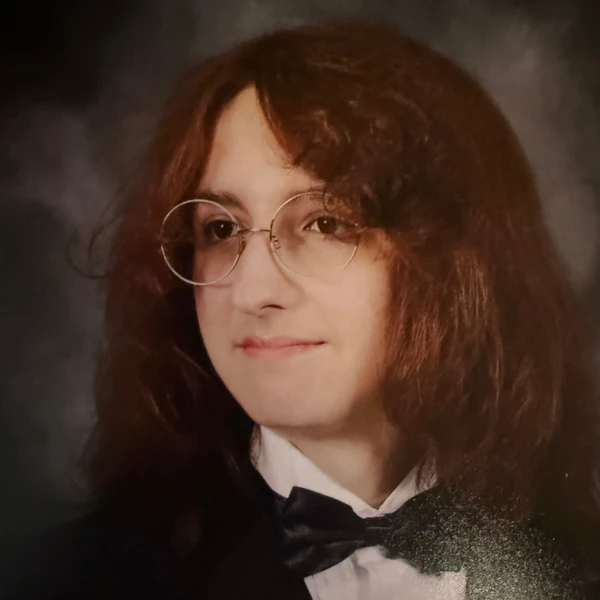
Ashton Black
1x
FinalistAshton Black
1x
FinalistBio
My main life goal is to become a nurse who combines scientific knowledge with compassion to make a real difference in people’s lives. Growing up with conditions like cold urticaria, Raynaud’s, erythromelalgia, hEDS, JIA, ADHD, and dysgraphia has given me a unique understanding of what it feels like to navigate medical challenges that are not always visible. These experiences have shaped my passion for helping others feel understood, supported, and cared for, especially when they might feel overlooked.
I have always been drawn to learning. Whether I was memorizing the periodic table song, coding simple video games, or sharing random science facts with my friends, curiosity has always been part of who I am. I am most passionate about using that curiosity to help others. Volunteering with Austin Allies since sixth grade, tutoring classmates for years, and getting involved in National Honor Society and HOSA have all taught me how good it feels to lift someone else up.
I believe I am a strong candidate because I bring both academic dedication and genuine empathy. Earning a 1500 on my SAT during my first attempt was a proud moment for me, but I am equally proud of the small things, like helping a friend understand a difficult assignment or making someone feel included. My challenges have never stopped me. Instead, they’ve helped me grow into someone patient, resilient, and committed to serving others.
These qualities are exactly why I know I will be a strong and compassionate nurse, and why I am determined to pursue this path with everything I have.
Education
James Bowie High School
High SchoolMiscellaneous
Desired degree level:
Bachelor's degree program
Majors of interest:
- Registered Nursing, Nursing Administration, Nursing Research and Clinical Nursing
Career
Dream career field:
nursing
Dream career goals:
General make ready, cleaning and yard work
J&B Residential Investments2020 – 20255 years
Arts
Austin isd
Music2018 – 2022Austin isd
Music2019 – 2024
Public services
Volunteering
Austin Allies, keep Austin Beautiful, Austin ISD — Volunteer2019 – 2025
Lexi Nicole Olvera Memorial Scholarship
My passion for nursing began long before I understood what a diagnosis was. As a kid, I was proud of the strange tricks my body could do, like licking my elbow, popping nearly every joint I had, and casually throwing my leg behind my neck at the breakfast table just to annoy my mom. She warned me that popping my neck would give me a stroke, advice she picked up from YouTube, right alongside her belief that the moon landing was staged. While I questioned her sources, I never questioned science. I loved it. Science and space were my favorite subjects, and my default phrase became “Fun Fact,” usually followed by information no one asked for.
That curiosity followed me into an unexpected role as a frequent patient. After coming out of a freezing pool covered in hives, an allergist taped an ice cube to my arm for five minutes and celebrated when a welt appeared. That was my introduction to cold urticaria. Later, during seventh grade, my hands turned purple after virtual school, leading to more tests, more blood draws, and more diagnoses. Raynaud’s explained the color changes. Erythromelalgia explained why my hands and feet burned during PE and hot showers. Hypermobile Ehlers-Danlos syndrome explained my “party tricks.” Juvenile idiopathic arthritis explained the knee pain I thought was just growing pains.
Through all of this, nurses were often the people who made medical spaces feel manageable. They were the ones who explained procedures, noticed when something seemed off, and treated me like more than a chart. Because I like science and am not squeamish, I even watched my blood being drawn, much to my mom’s horror. I realized early on that understanding what is happening to your body can be empowering, and nurses play a huge role in that.
Living with chronic and rare conditions means constantly adapting. I carefully choose what I wear to avoid getting too hot or too cold, plan routes to limit walking, and manage both physical and cognitive challenges that most people never see. I had to stop participating in physical education and eventually leave marching band after trying to push through in ninth grade. Losing those activities was hard, but it taught me how quickly life can change and how important support and understanding are during those moments.
These experiences shaped the kind of nurse I want to be. I hope to work in pediatric or medical-surgical nursing, particularly with patients managing chronic or rare illnesses. I want to be the nurse who understands invisible symptoms, believes patients, and knows that “normal” is not the same for everyone. My impact will come from combining evidence based care with empathy, patient education, and advocacy. I want patients and families to feel heard, informed, and supported, not dismissed or confused.
What I hope to get out of my career as a nurse is purpose. Nursing allows me to turn curiosity into care, science into service, and personal challenges into something meaningful. I want to transform the experiences that once made me different into the reason I make a difference.
Evan James Vaillancourt Memorial Scholarship
My passion for nursing began long before I understood what a diagnosis was. As a kid, I was proud of the strange tricks my body could do, like licking my elbow, popping nearly every joint I had, and casually throwing my leg behind my neck at the breakfast table just to annoy my mom. She warned me that popping my neck would give me a stroke, advice she picked up from YouTube, right alongside her belief that the moon landing was staged. While I questioned her sources, I never questioned science. I loved it. Science and space were my favorite subjects, and my default phrase became “Fun Fact,” usually followed by information no one asked for.
That curiosity followed me into an unexpected role as a frequent patient. After coming out of a freezing pool covered in hives, an allergist taped an ice cube to my arm for five minutes and celebrated when a welt appeared. That was my introduction to cold urticaria. Later, during seventh grade, my hands turned purple after virtual school, leading to more tests, more blood draws, and more diagnoses. Raynaud’s explained the color changes. Erythromelalgia explained why my hands and feet burned during PE and hot showers. Hypermobile Ehlers-Danlos syndrome explained my “party tricks.” Juvenile idiopathic arthritis explained the knee pain I thought was just growing pains.
Through all of this, nurses were often the people who made medical spaces feel manageable. They were the ones who explained procedures, noticed when something seemed off, and treated me like more than a chart. Because I like science and am not squeamish, I even watched my blood being drawn, much to my mom’s horror. I realized early on that understanding what is happening to your body can be empowering, and nurses play a huge role in that.
Living with chronic and rare conditions means constantly adapting. I carefully choose what I wear to avoid getting too hot or too cold, plan routes to limit walking, and manage both physical and cognitive challenges that most people never see. I had to stop participating in physical education and eventually leave marching band after trying to push through in ninth grade. Losing those activities was hard, but it taught me how quickly life can change and how important support and understanding are during those moments.
These experiences shaped the kind of nurse I want to be. I hope to work in pediatric or medical-surgical nursing, particularly with patients managing chronic or rare illnesses. I want to be the nurse who understands invisible symptoms, believes patients, and knows that “normal” is not the same for everyone. My impact will come from combining evidence based care with empathy, patient education, and advocacy. I want patients and families to feel heard, informed, and supported, not dismissed or confused.
What I hope to get out of my career as a nurse is purpose. Nursing allows me to turn curiosity into care, science into service, and personal challenges into something meaningful. I want to transform the experiences that once made me different into the reason I make a difference.
Community Health Ambassador Scholarship for Nursing Students
My passion for nursing began long before I understood what a diagnosis was. As a kid, I was proud of the strange tricks my body could do, like licking my elbow, popping nearly every joint I had, and casually throwing my leg behind my neck at the breakfast table just to annoy my mom. She warned me that popping my neck would give me a stroke, advice she picked up from YouTube, right alongside her belief that the moon landing was staged. While I questioned her sources, I never questioned science. I loved it. Science and space were my favorite subjects, and my default phrase became “Fun Fact,” usually followed by information no one asked for.
That curiosity followed me into an unexpected role as a frequent patient. After coming out of a freezing pool covered in hives, an allergist taped an ice cube to my arm for five minutes and celebrated when a welt appeared. That was my introduction to cold urticaria. Later, during seventh grade, my hands turned purple after virtual school, leading to more tests, more blood draws, and more diagnoses. Raynaud’s explained the color changes. Erythromelalgia explained why my hands and feet burned during PE and hot showers. Hypermobile Ehlers-Danlos syndrome explained my “party tricks.” Juvenile idiopathic arthritis explained the knee pain I thought was just growing pains.
Through all of this, nurses were often the people who made medical spaces feel manageable. They were the ones who explained procedures, noticed when something seemed off, and treated me like more than a chart. Because I like science and am not squeamish, I even watched my blood being drawn, much to my mom’s horror. I realized early on that understanding what is happening to your body can be empowering, and nurses play a huge role in that.
Living with chronic and rare conditions means constantly adapting. I carefully choose what I wear to avoid getting too hot or too cold, plan routes to limit walking, and manage both physical and cognitive challenges that most people never see. I had to stop participating in physical education and eventually leave marching band after trying to push through in ninth grade. Losing those activities was hard, but it taught me how quickly life can change and how important support and understanding are during those moments.
These experiences shaped the kind of nurse I want to be. I hope to work in pediatric or medical-surgical nursing, particularly with patients managing chronic or rare illnesses. I want to be the nurse who understands invisible symptoms, believes patients, and knows that “normal” is not the same for everyone. My impact will come from combining evidence based care with empathy, patient education, and advocacy. I want patients and families to feel heard, informed, and supported, not dismissed or confused.
What I hope to get out of my career as a nurse is purpose. Nursing allows me to turn curiosity into care, science into service, and personal challenges into something meaningful. I want to transform the experiences that once made me different into the reason I make a difference.
Beverly J. Patterson Scholarship
My passion for nursing began long before I understood what a diagnosis was. As a kid, I was proud of the strange tricks my body could do, like licking my elbow, popping nearly every joint I have, and casually throwing my leg behind my neck at the breakfast table just to annoy my mom. She warned me that popping my neck would give me a stroke, advice she picked up from YouTube, right alongside her belief that the moon landing was staged. While I questioned her sources, I never questioned science. I loved it. Science and space were my favorite subjects, and my default phrase became “Fun Fact,” usually followed by information no one asked for.
That curiosity followed me into an unexpected role as a frequent patient. After coming out of a freezing pool covered in hives, an allergist taped an ice cube to my arm for five minutes and celebrated when a welt appeared. That was my introduction to cold urticaria. Later, during seventh grade, my hands turned purple after virtual school, leading to more tests, more blood draws, and more diagnoses. Raynaud’s explained the color changes. Erythromelalgia explained why my hands and feet burned during PE and hot showers. Hypermobile Ehlers-Danlos syndrome explained my “party tricks.” Juvenile idiopathic arthritis explained the knee pain I thought was just growing pains.
Through all of this, nurses were often the people who made medical spaces feel manageable. They were the ones who explained procedures, noticed when something seemed off, and treated me like more than a chart. Because I like science and am not squeamish, I even watched my blood being drawn, much to my mom’s horror. I realized early on that understanding what is happening to your body can be empowering, and nurses play a huge role in that.
Living with chronic and rare conditions means constantly adapting. I carefully choose what I wear to avoid getting too hot or too cold, plan routes to limit walking, and manage both physical and cognitive challenges that most people never see. I had to stop participating in physical education and eventually leave marching band after trying to push through in ninth grade. Losing those activities was hard, but it taught me how quickly life can change and how important support and understanding are during those moments.
These experiences shaped the kind of nurse I want to be. I hope to work in pediatric or medical-surgical nursing, particularly with patients managing chronic or rare illnesses. I want to be the nurse who understands invisible symptoms, believes patients, and knows that “normal” is not the same for everyone. My impact will come from combining evidence based care with empathy, patient education, and advocacy. I want patients and families to feel heard, informed, and supported, not dismissed or confused.
What I hope to get out of my career as a nurse is purpose. Nursing allows me to turn curiosity into care, science into service, and personal challenges into something meaningful. I want to transform the experiences that once made me different into the reason I make a difference.
Sammy Hason, Sr. Memorial Scholarship
"Look Mom, they say you can't lick your elbow, but I can!" I was eight years old and had many tricks I could do with my body, contorting my arms behind my back and bending my fingers further back than anyone else I knew. But my favorite trick would be to throw my leg behind my neck while eating breakfast, just to annoy my mom. Again at 8 years old, I went swimming and came out covered in hives. After the "allergic reactions" and an appointment with my allergist, then being tested for cold urticaria, this was the first of my rare diseases to be diagnosed. When I went to my Rheumatology appointment to see if I had Raynauds the doctor ordered several tests that required about 6 vials of blood to be drawn. When I left that appointment I had three new rare disease diagnoses: Erythromelalgia, hEDS (ehlers danlos syndrome), and Juvenal Idiopathic Arthritis.
Managing these diseases is a full time job. Add ADHD and dysgraphia and you have a lot of medication and environments to manage. I must carefully select what I wear to keep my body at the correct temperatures. I optimize routes to minimize walking and juggle physical and cognitive hurdles most people never notice. I do not participate in physical education anymore due to Juvenal Idiopathic Arthritis and Erythromelalgia. My own body heat from exercising was enough to cause a flare up.
What I have gained from these struggles is a capacity for empathy and understanding. Through my own hardships, I've learned the power of small gestures, helping peers with homework, being patient with mistakes, or simply holding the door open for people. These acts make people feel seen, especially when their challenges are invisible.
My education and my own medical challenges have shaped my desire to become a nurse in ways I could never have imagined. Growing up with conditions like cold urticaria, Raynaud’s, erythromelalgia, hEDS, JIA, ADHD, and dysgraphia has given me a firsthand understanding of what it is like to navigate complex medical needs, manage treatments, and advocate for myself in healthcare settings. Experiencing the frustration, uncertainty, and sometimes isolation of dealing with invisible conditions has made me deeply empathetic toward others who are struggling with their health.
At the same time, my love of learning and curiosity about science have driven me to understand how the body works. From memorizing the periodic table song to watching videos about proteins and the human body, I have always been fascinated by biology and medicine. Combining that passion with my personal experiences has inspired me to pursue nursing, a career where I can use both my knowledge and my empathy to support patients.
I want to be a nurse who truly understands the invisible challenges people face and provides care that is both informed and compassionate. My own journey has taught me patience, resilience, and the importance of small gestures, and I hope to use those lessons to make a difference in the lives of others every day.
Dream BIG, Rise HIGHER Scholarship
"Look Mom, they say you can't lick your elbow, but I can!" I was eight years old and had many tricks I could do with my body, contorting my arms behind my back and bending my fingers further back than anyone else I knew. But my favorite trick would be to throw my leg behind my neck while eating breakfast, just to annoy my mom. I've always been able to pop any joint in my body, again, much to the annoyance of my mother. She still tells me I am going to give myself a stroke by popping my neck. I find it hard to believe some of the stuff she says because she has the audacity to believe that we never landed on the moon. When we went to the Smithsonian Air and Space museum in Washington D.C., I avoided her in the moon landing section so she wouldn’t spoil the fun. Science and space were two of my favorite subjects to learn about in elementary and middle school. While other kids checked out “Diary of a Wimpy Kid" from the library, I read books about planets in the solar system. While my friends talked about the latest anime, I was rewatching Bill Nye the Science Guy. My favorite saying to this day is "Fun Fact", and then blurt out whatever information I have about the subject.
Again at 8 years old, I went swimming outside in November. When I got out of the pool I was covered in hives. My mom was sure I was having an allergic reaction, gave me a benadryl and I took a shower. Next summer, I went swimming again and came out with hives! After the "allergic reactions" my mom made an appointment with my allergist. It's not fun getting poked with 100 needles and having all of them make my skin welt up and itch. I came back positive for every allergy they tested: every grass, tree, etc. My mom calls me the boy in the bubble. Later, the doctor ran one more test. This test sounded like some weird YouTube challenge. He taped a piece of ice to my arm for 5 minutes. After that, he removed the ice cube and there was a huge welt! He was excited to see this, too excited if you ask me. This test was for cold urticaria, the first of my rare diseases to be diagnosed.
When Covid hit, my mom noticed that I would come down to lunch and my hands would be a bluish purple. She thought I might have Reynaud's. When I went to my Rheumatology appointment, the doctor ordered several tests that required about 6 vials of blood to be drawn. My mom thinks I'm weird because I like to watch them draw the blood, again- science. One question he asked was what happens to my body when I get hot. My hands and feet turn bright red and start itching and burning. When I left that appointment I had three new rare disease diagnoses: Erythromelalgia, hEDS (ehlers danlos syndrome), and Juvenal Idiopathic Arthritis.
Managing these diseases is a full time job. Add ADHD and dysgraphia and you have a lot of medication and environments to manage. I must carefully select what I wear to keep my body at the correct temperatures. I optimize routes to minimize walking and juggle physical and cognitive hurdles most people never notice. I do not participate in physical education anymore due to Juvenal Idiopathic Arthritis and Erythromelalgia. My own body heat from exercising was enough to cause a flare up.
My education and my own medical challenges have shaped my desire to become a nurse in ways I could never have imagined. Growing up with conditions like cold urticaria, Raynaud’s, erythromelalgia, hEDS, JIA, ADHD, and dysgraphia has given me a firsthand understanding of what it is like to navigate complex medical needs, manage treatments, and advocate for myself in healthcare settings. Experiencing the frustration, uncertainty, and sometimes isolation of dealing with invisible conditions has made me deeply empathetic toward others who are struggling with their health.
At the same time, my love of learning and curiosity about science have driven me to understand how the body works. From memorizing the periodic table song to watching videos about proteins and the human body, I have always been fascinated by biology and medicine. Combining that passion with my personal experiences has inspired me to pursue nursing, a career where I can use both my knowledge and my empathy to support patients.
I want to be a nurse who truly understands the invisible challenges people face and provides care that is both informed and compassionate. My own journey has taught me patience, resilience, and the importance of small gestures, and I hope to use those lessons to make a difference in the lives of others every day.