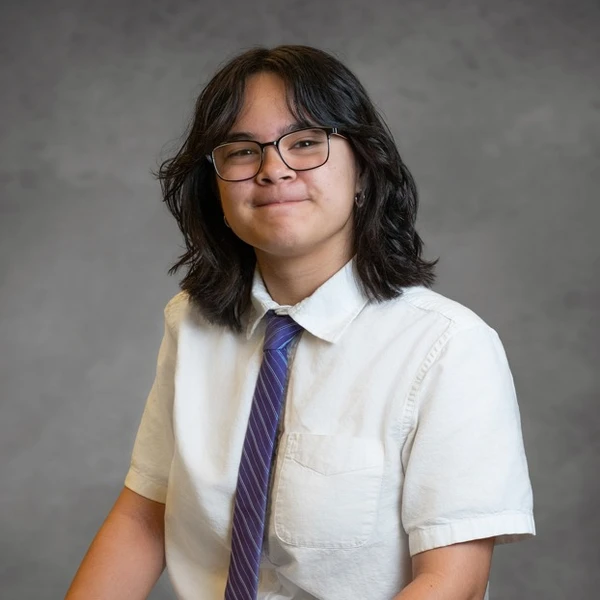
Hobbies and interests
3D Modeling
Aerospace
Soccer
Engineering
Crocheting
Embroidery And Cross Stitching
Sewing
Cello
Piano
Music
Sports
Community Service And Volunteering
Babysitting And Childcare
Chess
Cooking
Legos
Robotics
Reading
Adventure
Classics
Crafts
Fantasy
Historical
History
Young Adult
True Story
Social Science
Realistic Fiction
Adult Fiction
Biography
Education
Magical Realism
Mystery
Science
I read books multiple times per month
Ashlyn Santos
1x
Finalist
Ashlyn Santos
1x
FinalistBio
I am a high school senior aiming to pursue mechanical engineering. I have a passion for designing solutions that are both functional and meaningful. My interest in engineering comes from hands-on experiences where I have been able to apply creativity and problem-solving to real challenges, including earning Best in Show at the Makers of Change Assistive Technology Challenge for developing an adaptive solution to improve accessibility.
Throughout high school, I have challenged myself with rigorous coursework, including multiple AP classes, while balancing leadership roles, employment, and family responsibilities. As the co-founder and Vice President of my school’s Society of Women Engineers chapter, I have worked to create opportunities for other students to explore engineering and build confidence in STEM. I am also a varsity soccer player, where I have learned discipline, resilience, and the value of teamwork.
Outside of school, I work as a math tutor, babysitter, and at an ice cream shop. These are experiences that have strengthened my communication skills and ability to connect with others. I take pride in being someone others can rely on, whether that is helping a student understand a concept or supporting a team.
My long-term goal is to become an engineer who creates innovative, impactful solutions while continuing to grow as a leader and mentor. After fulfilling my time in the industry, I hope to become an engineering educator to give back to the community that helped shape who I am. I am driven by curiosity, persistence, and a commitment to making a difference.
Education
Higley High School
High SchoolMiscellaneous
Desired degree level:
Bachelor's degree program
Majors of interest:
- Mechanical Engineering
- Mechatronics, Robotics, and Automation Engineering
Career
Dream career field:
Mechanical or Industrial Engineering
Dream career goals:
Work at various companies to accommodate my growing curiosity for multiple types of projects in the engineering field. One day, I hope to end up working at LEGO. After gaining experience in the industry, I hope to become an engineering teacher in my later years to give back to the community that helped shape me.
Summer Youth Soccer Referee
Apple Valley Storm Soccer Club2023 – 2023Service Crew Member
McDonald's2024 – 20251 yearBabysitter
Independently Organized2022 – Present4 yearsMath Tutor
Independently Organized2024 – Present2 yearsScooper
Stella's Ice Cream2025 – Present1 year
Sports
Soccer
Club2016 – 20248 years
Soccer
Varsity2023 – Present3 years
Awards
- Silver Sword (Most Improved Player)
- Knight Award (Best Exemplified the Attributes of Sportsmanship, Athleticism, and Scholarship)
Arts
University Preparatory School
MusicVarious Concerts2020 – 2023
Public services
Volunteering
Rho Kappa — Member2025 – PresentVolunteering
Church of Jesus Christ of Latter-Day Saints Young Womens Group — Young Womens Class President (2024-Present)2020 – Present
Future Interests
Advocacy
Volunteering
Philanthropy
Chi Changemaker Scholarship
When I entered Higley’s engineering program, there were two girls in my class, including me. By the next year, I was the only one left. That pattern was not unique to my class. Each year, a handful of girls start in the introductory course, but fewer continue as the pathway progresses.
I have learned that the issue is not just about numbers. In engineering spaces, it can be difficult for girls to be heard. I have had friends tell me they stop trying to contribute because their ideas are overlooked or dismissed. I have seen it happen in real time, where the only correct approach comes from the one girl in the room, yet no one listens. Over time, that kind of environment makes it easier to step back instead of continuing to push forward.
I did not want that to continue, so I worked to co-found a chapter of the Society of Women Engineers at my school. It took nearly a year of planning, organizing, and working with administration before we became official. Once established, we focused on creating a space where girls in engineering felt supported, heard, and encouraged to stay in the pathway. While the club is girl-dominated, it is not exclusive. Boys also participate and advocate alongside us, helping build a more supportive and collaborative environment.
Since then, I have helped increase female participation in our engineering program by roughly 30 percent. More importantly, I have seen a shift in confidence and involvement. Girls who may have stayed quiet are now more willing to contribute and continue in engineering.
As I prepare to graduate, I am focused on ensuring that this work continues beyond me. I am guiding leadership transitions, organizing elections, and passing down what we have built so the club can grow and outlive my time at the school. We are also planning outreach efforts to introduce younger students, including middle and elementary schoolers, to engineering early on. My goal is that future students enter high school already seeing engineering as an attainable path, with a community waiting for them from the very beginning.
David Foster Memorial Scholarship
There is something oddly specific that I will always associate with Mr. Edney, and that is writing utensils. Not just any pens or pencils, but the kind where you notice the weight, the balance point, and the way the ink or graphite flows across the page. We would compare favorites and talk about what made one better than another. Whenever one of us found something new that wrote especially well, we would let the other try it. It was such a small thing, but it felt meaningful because of the level of attention we both gave it. Over time, he would give me small gifts like pencils or paperweights when I reached milestones. They probably seemed simple to everyone else, but I still use each one.
That attention to detail was not limited to something as small as a pen. It showed up in the way he chose to be present. Mr. Edney never confined his role to the classroom. He showed up to my soccer games and made time to ask about my life outside of school, whether that was work, church, or anything else I had going on. Those conversations mattered because they made it clear that I was not just another student. I was someone worth investing in.
That same level of care carried into the way he taught. Instead of following a set curriculum, he rebuilt his courses to focus on real-world, hands-on projects that forced us to think for ourselves. At first, that was uncomfortable. I was used to looking for clear direction. In his classroom, that approach did not work. I had to learn how to test ideas, adjust when they failed, and keep going without waiting for someone to tell me I was on the right track.
That shift did more than change how I approached engineering. It changed how I approach my life. I stopped waiting for structure to be handed to me and started building it myself. I became more confident in my ability to make decisions, even when I was not completely sure of the outcome. I learned that progress does not come from getting everything right the first time, but from being willing to refine and improve.
Mr. Edney modeled that same mindset in how he treated people. He listened when it mattered and gave honest advice when I needed it. During important moments like my college and program applications, I turned to him for guidance. He would stay after hours so I could use the lab computers, offering his time even when he was not required to. That kind of consistency showed me what it looks like to genuinely show up.
Because of him, I have carried that same approach into my own life. Whether I am supporting my younger sister, mentoring others, or taking on leadership roles, I try to be intentional in the way I show up. I do not just focus on what needs to get done, but on how I can support the people around me in a way that actually matters.
I plan to pursue mechanical engineering because I am drawn to problems that require creativity, persistence, and thoughtful design. In the long term, I hope to return to education as an engineering teacher. I want to create an environment that challenges students to think for themselves while also making them feel seen and supported, the same way Mr. Edney did.
Mr. Edney did not just change how I learn. He changed how I approach problems, how I support others, and how I show up in every part of my life.
Ava Wood Stupendous Love Scholarship
"Kindness in Action"
I became aware of what it meant to support someone consistently when my younger sister moved to Arizona the year after I did. With our one parent rarely home and an unpredictable schedule, she needed someone steady to rely on. Without much discussion, that role became mine.
Supporting her does not look like one defining moment. It shows up in the everyday. I cook meals, help her with school, show up for her emotionally, and keep our space functioning. More importantly, I try to be someone she can turn to without hesitation. When she is overwhelmed or frustrated, I slow things down instead of reacting and invite her to do the same. Over time, she has learned that my guidance comes from care, not control.
The impact of that trust shows up in small ways that matter to me. I will find notes slipped under my door or drawings left on my desk. Sometimes she will come into my room and lie on the floor while I work, not needing anything except to be near someone she feels safe with. Those moments remind me that being present for someone consistently builds something deeper than any single act of kindness.
This experience has changed how I understand kindness. It is not always visible or recognized, but it is rooted in reliability. Supporting my sister has shown me that love is often quiet, built through daily choices to show up, even when no one else sees it.
"Creating Connection"
When I was first asked to serve as Young Women’s President, I hesitated. I have always been more reserved, and I did not see myself as someone who naturally leads from the front. Still, I accepted the role, knowing that the position was less about me and more about the people I would be responsible for.
At first, I focused on what I thought leadership should look like. I planned lessons, organized activities, and made decisions. Over time, I realized that what mattered most was not structure, but connection. I began paying closer attention to the girls in my class, noticing when someone felt left out, when someone needed encouragement, or when someone simply needed to be seen.
I made it a priority to reach out individually and create space for everyone to feel included. I worked to bring together girls who might not have naturally connected, and over time, the group began to shift. Conversations became more open, friendships formed across different circles, and the class grew into a space where everyone felt like they belonged.
At the same time, I changed. I became more confident speaking, making decisions, and trusting my ability to lead. What I once saw as a limitation, my quieter nature, became one of my greatest strengths. It allowed me to listen more closely and lead in a way that made others feel valued. By reaching out intentionally and creating space for every voice, I helped build a community where girls who once felt separate began to feel connected. This experience showed me that creating connection is not about being the loudest person in the room, but about paying attention, building trust, and making sure no one feels overlooked.
Big Picture Scholarship
There are certain stories that do not stay the same each time you return to them. Instead, they seem to shift alongside you, revealing something new depending on who you are in that moment. For me, The Little Prince has always been one of those stories. What once felt simple and imaginative has gradually become something much deeper, offering a perspective that continues to reshape how I understand what truly matters.
Watching The Little Prince reshaped how I understand what truly matters, especially during a time in my life when structure and stability were not guaranteed. It showed me that meaning is not something we are given, but something we build through the responsibilities we take on, the relationships we invest in, and the perspective we choose to carry with us as we grow.
One of the ideas that stayed with me most is the distinction between what is visible and what is essential. The film presents a world where adults are consumed by numbers, plans, and expectations that, while practical, often feel disconnected from anything meaningful. In contrast, the perspective of the Little Prince is rooted in curiosity, imagination, and an understanding that not everything important can be measured. This contrast challenged me to think more carefully about the way I define success and growth. At a time when my own life felt uncertain, that idea gave me a sense of direction. It reminded me that even when everything around me felt unstructured, I still had control over what I chose to value.
The film also reshaped how I understand responsibility, particularly through the relationships it portrays. The Little Prince’s connection to his rose and the lesson he learns from the fox emphasize that meaning is created through care and attention. What we choose to invest in becomes significant not because it is inherently important, but because we make it so. That idea has stayed with me in a quiet but constant way. As I began taking on more responsibility in my own life, I started to understand that showing up for others is not always easy or convenient, but it is what gives those relationships depth. The value of something is not defined by how it appears on the surface, but by the time, effort, and intention behind it.
Another reason this film has had such a lasting impact on me is its perspective on growing up. It does not suggest that maturity requires abandoning imagination or curiosity. Instead, it presents the idea that growth is about balance. The Aviator serves as a reminder that it is possible to move forward without losing the parts of yourself that see the world differently. That message has influenced the way I approach my own education. Rather than seeing it as a rigid path defined by expectations, I have come to view it as something I actively shape, guided by both discipline and curiosity.
What makes The Little Prince especially meaningful to me is that its message has never felt fixed. Each time I return to it, I notice something I had not fully understood before. The story has not changed, but I have. That shift in perspective is what gives it lasting impact. It continues to remind me that meaning is not found in what is most visible, but in what we choose to care about, protect, and carry with us over time.
Dream BIG, Rise HIGHER Scholarship
Education has not always felt like something that was simply given to me. For a long time, it felt like something I had to build around everything else. Structure, consistency, and support are often assumed parts of a student’s experience, but I learned early on that they are not always guaranteed. Because of that, education became more than just a place I went each day. It became the one area where I could create direction for myself.
When I moved from California to Arizona right before my sophomore year, everything felt uncertain. I arrived the night before school started and spent weeks living out of a suitcase in a temporary space. I walked into a new school the next morning without a routine, without familiarity, and without the stability I had relied on before. At home, there were days where I did not cross paths with my mom at all, and I took on a larger role in supporting my younger sister while trying to adjust to everything at once. My days were no longer structured for me. They felt fragmented, and it was up to me to figure out how to hold them together.
That realization changed the way I approached education. Instead of seeing school as something separate from the rest of my life, I began to use it as a framework to rebuild consistency. I became more intentional with how I managed my time, often planning my days down to small details just to make sure everything fit. Learning was no longer just about completing assignments. It became a way to develop a mindset that I could rely on when things around me felt uncertain. I found myself drawn to problems that did not come with a clear starting point, the kind where there is no single correct answer, but instead a process of testing, adjusting, and refining over time. That way of thinking is what led me toward engineering. It gave me a sense of control in situations where I otherwise had very little.
As I became more confident in my ability to create structure for myself, I also began to recognize how many students struggle with that same sense of uncertainty. As a math tutor, I work with students who are not only trying to understand the material, but also trying to believe that they can. One of my students came to me hesitant to speak and unsure of her answers, often second guessing herself before she even finished a problem. Over time, I watched that hesitation shift into confidence. She began to explain her thinking out loud, take risks, and even share small successes from school before we started working. Moments like that have shown me that progress often begins with confidence, and that sometimes the most meaningful support is patience and consistency.
I have carried that perspective into my role as co-founder and Vice President of my school’s Society of Women Engineers chapter. When we started the chapter, there were few spaces where girls at my school felt comfortable exploring engineering. Through outreach, mentorship, and creating a more welcoming environment, we have been able to increase participation and give students a place where they feel like they belong. That experience reinforced something I had already begun to understand. Education is not just something you work through on your own. It is something that can open doors for other people when you choose to share it.
Looking ahead, I plan to study mechanical engineering because I am drawn to problems that do not come with a clear starting point. I want to continue building solutions that require creativity, iteration, and thoughtful design. In the long term, I hope to return to education as an engineering teacher. I want to create the kind of environment where students feel supported in figuring things out, where they are encouraged to test ideas, make mistakes, and trust their ability to improve over time. I know how much of a difference that kind of space can make because it is something I had to learn how to create for myself.
Education has shaped my direction by giving me something steady to build from, even when everything else felt uncertain. It taught me how to create structure, how to approach challenges with patience, and how to carry that mindset into the way I support others. More importantly, it has shown me that growth does not happen all at once. It is something that is built over time, through small decisions, consistency, and the willingness to keep moving forward. That is the approach I will continue to carry with me, both in engineering and in the way I choose to shape the spaces and people around me.
"The Math Gift" Scholarship for High School Students
While working with a student during a tutoring session, I noticed that the problem in front of her was not what was holding her back. She hesitated before writing anything down, second-guessed each step, and looked for confirmation before continuing. Even when she was close to the right answer, she did not trust herself enough to follow through. As we worked through the problem together, I saw that the shift was not just in her understanding of the math, but in her willingness to keep trying. That moment changed how I think about what it means to know math.
Math helps people in ways that go beyond solving equations or passing tests. It builds confidence and shapes the way people approach challenges. Many students begin to believe they are “not good at math” after struggling with it, and that belief often leads them to avoid opportunities that require it. When someone understands math, even at a basic level, they are more willing to engage, take risks, and trust their ability to figure things out. Knowing math gives people a sense of control over problems that might otherwise feel overwhelming.
I understand this because I have experienced both sides of it. During my sophomore year, I struggled in Honors Pre-Calculus and earned a D during the first semester. At the time, I was adjusting to a new environment and dealing with a lack of stability that made it difficult to stay focused. For the first time, I began to question whether I was capable of succeeding in a subject that had always felt like one of my strengths. The grade reflected more than just my understanding of the material. It reflected a loss of confidence and structure.
Over time, that began to change. I improved to a B second semester, and by junior year, I was taking AP Calculus AB and performing at a much higher level. The progress was gradual and required consistency, but it showed me that ability is not fixed. Learning math again was not just about improving my grades. It was about rebuilding my approach to problems and trusting myself to work through them. That experience reshaped how I see math. It is not something that separates people into those who can and cannot do it. It is something that can be developed with time, effort, and the right mindset.
This is what I carry into my work as a math tutor. When I work with students, I recognize the hesitation and doubt that I once felt. I focus on helping them stay with the problem, even when it is uncomfortable, and showing them that progress is possible. Knowing math allows me to support others in a way that goes beyond the material. It allows me to help them build confidence and keep opportunities open that they might otherwise close off.
Knowing math helps people because it changes how they see challenges. It teaches them that difficult problems are not permanent barriers, but something that can be approached step by step. When people understand that, they begin to trust themselves more, take on new challenges, and see more possibilities for their future.
Sunshine Legall Scholarship
Access to opportunity is often talked about as if it is evenly available, but I have learned that it rarely is. In my experience, access is something that often has to be built. Between school, work, leadership roles, and responsibilities at home, I have had to learn how to create structure and opportunity for myself instead of relying on it to already exist. That understanding has shaped both my goals and the way I approach supporting others.
I plan to study mechanical engineering because I am drawn to problems that do not come with a clear starting point. I am most engaged when I can test, adjust, and refine a solution over time, building something that is both functional and meaningful. I am especially interested in work that combines creativity with thoughtful design, which is why I am drawn to companies like LEGO that create products centered around imagination, accessibility, and user experience. After gaining experience in the industry, I hope to pursue opportunities with companies like this. Beyond the technical side, I want my work to feel meaningful to the people who interact with it.
In the long term, I want to return to education as an engineering teacher. I have seen how much of a difference the right environment can make in whether a student feels capable of pursuing STEM. I want to create a space where students feel supported, challenged, and confident in their ability to solve problems, especially those who may not have initially seen themselves in that field.
The way I have approached giving back to my community reflects that same mindset. As a math tutor, I work with students who are not only trying to understand the material, but also trying to believe that they can. I have learned that progress often begins with confidence, and that sometimes the most meaningful support is patience and encouragement. In co-founding and serving as Vice President of my school’s Society of Women Engineers chapter, I focus on creating an environment where students feel comfortable exploring engineering, especially those who may not have considered it before. Through my role as Young Women’s President, I lead lessons and support a group of peers with different needs, which has strengthened my ability to listen, adapt, and take responsibility for the environment I help create. At home, I take on a significant role caring for my younger sister, which has further shaped my sense of accountability and consistency.
These experiences are closely connected to my understanding of access. There have been times where financial limitations, a demanding schedule, and limited support made it difficult to fully take advantage of opportunities that others may assume are easily available. I have not always had the ability to step away from responsibilities or access resources without careful consideration. Because of this, I have learned to be intentional with my time and to create opportunities where I can, not only for myself but for others.
Higher education represents more than a personal goal for me. It is a way to expand what I am able to build and who I am able to reach. Through engineering and future work in education, I want to continue creating environments where people feel supported, capable, and included. Access to opportunity should not depend on circumstance, and I want to be part of the process that makes it more widely available.
Valerie Rabb Academic Scholarship
Impact is often associated with large achievements or defining moments, but I have come to understand it differently. In my life, impact is built through consistency. It is found in the way someone shows up each day, even when no one is paying attention, and in the quiet decisions to support others despite competing demands.
My days move between classrooms, a soccer field, a shift at work, and time spent helping someone else. As a math tutor, I work with students who are not only trying to understand the material, but also trying to believe that they can. I have learned that progress often begins with confidence, and that sometimes the most meaningful support is patience and encouragement. In my role as co-founder and Vice President of my school’s Society of Women Engineers chapter, I focus on creating an environment where students feel comfortable exploring engineering, especially those who may not have seen themselves in that space before. As the president of my church’s young women’s group, I lead lessons and support a group of peers with different needs, which has strengthened my ability to listen, adapt, and create a space where others feel supported. At home, I take on the responsibility of caring for my younger sister, which has required me to be adaptable and dependable in ways that extend beyond structured commitments. Across each of these roles, I have learned that responsibility is not just about completing tasks, but about how you show up for the people who rely on you.
This understanding was shaped by a period of instability during my sophomore year of high school. After my parents’ divorce, I moved from California to Arizona with almost no notice. I arrived the night before school started and spent the following weeks living out of a suitcase in a temporary space. Adjusting to a new environment without a sense of stability made it difficult to focus, and for the first time, I struggled academically. Without consistent support, I had to rebuild my routines and regain confidence on my own. That experience did not just challenge me academically, it changed how I recognize and respond to challenges in others.
Now, when I work with students or lead within my community, I am more aware of the struggles that are not immediately visible. I understand how quickly confidence can shift when someone feels seen, and I try to create that environment for others. Whether I am helping a student work through a difficult concept or encouraging someone to step into a new opportunity, I approach each situation with intention and patience. These small interactions may not always be visible, but they contribute to a larger impact over time.
I plan to pursue mechanical engineering, a field that allows me to approach problems with both creativity and purpose. Engineering gives me the opportunity to create tangible change, but I also want my impact to extend beyond the designs themselves. After gaining experience in the field, I hope to return to education as an engineering teacher, where I can continue to support and encourage students in the same way others have influenced me.
My experiences have shown me that impact does not always begin with a single moment or achievement. More often, it is built through consistent effort, quiet support, and a willingness to show up for others. That is the approach I carry with me now, and it is the foundation of the difference I hope to make in the future.
InnovateHER Engineering Scholarship
I have learned that impact does not always begin on a large scale. Sometimes, it starts with a single conversation. While working with a student who was struggling in math, I realized that the challenge was not just understanding the material, but believing she could. As we worked through the problem together, I saw how quickly confidence could shift when someone felt supported. That experience reshaped how I understand leadership. It is not just about guiding a group, but about creating environments where others feel capable of succeeding.
As I took on leadership roles, I began to realize that creating that kind of environment requires more than organization or direction. It requires consistency, patience, and a willingness to show up for others even when it’s not easy. In my role as Young Women’s President, I was responsible for planning lessons, leading discussions, and supporting a group of peers with different needs. Over time, I learned how to listen more carefully, adapt my approach, and take responsibility for the environment I was helping to create. That experience changed how I lead. I became more intentional, more aware of how my actions affected others, and more committed to making sure people felt supported and included.
I carried that same mindset into my role as co-founder and Vice President of my school’s Society of Women Engineers chapter. When we first began, female participation in our engineering programs was limited, and many students felt unsure of whether they belonged. Through outreach events, mentorship, and consistent engagement, we worked to create an environment where students felt encouraged to explore engineering. Over time, I saw a measurable increase in participation, but more importantly, I saw a shift in confidence. Students who once stayed on the outside began to take an active role in learning and creating, reinforcing that access and encouragement can change how someone sees themselves.
Beyond group leadership, I have continued to focus on individual impact through tutoring and mentorship. These experiences have taught me that leadership is often quiet. It is built through small, consistent actions that help others feel capable over time. That understanding has shaped how I lead and how I approach problems.
This perspective directly influences how I approach engineering. During the Makers of Change Assistive Technology Challenge, my team designed a collaborative piano system for a young child with cerebral palsy. Rather than focusing only on functionality, we centered our design around the user’s experience. We developed multiple play modes and adjustable settings to reduce frustration and encourage interaction, ensuring the design was both accessible and engaging. This process required constant testing, feedback, and refinement, but it also reinforced an important idea. Effective solutions are not created in isolation. They are developed through understanding people and adapting to their needs.
As I pursue mechanical engineering, I want to continue building on this approach. I am interested in designing solutions that are not only efficient, but thoughtful and responsive to the people who use them. I also want to continue supporting and mentoring students who may not initially see themselves in engineering, helping to create spaces where they feel encouraged to explore and grow.
My impact has not come from a single role, but from the way I have learned to show up for others over time. Leadership has taught me to be intentional in my actions and accountable for the environments I help create. Engineering will allow me to extend that impact further by combining problem-solving with purpose, ensuring that the solutions I design are not only functional, but meaningful to the people they are built for.
Resilient Scholar Award
Growing up in a single-parent household, I learned early on how to manage responsibilities without being asked. When something needed to be done, I figured out how to do it. Over time, that mindset became less about circumstance and more about how I approached everything in my life. After moving to Arizona, that independence was no longer just something I practiced. It became something I relied on daily.
When I moved, I was living with my mom, but much of the time, it felt like I was operating on my own. Our schedules rarely aligned, and there were days when we did not see each other at all. With her often away or occupied, I became responsible for managing our home environment and caring for my younger sister. That meant making sure things were handled, routines were followed, and responsibilities were met without being reminded. There was no consistent structure to fall back on, so I learned how to create it myself.
Adjusting to this environment while starting at a new school was overwhelming at first. I was navigating a completely new place while also taking on a level of responsibility that required me to think beyond just my own needs. For a period of time, everything felt uncertain and unsteady. Without someone actively guiding me through that transition, I had to learn how to move forward on my own.
Over time, I came to a realization that reshaped how I understood myself. I was not just someone responding to difficult circumstances. I was someone capable of building stability within them. If I wanted consistency, direction, and progress, I had to create it. That meant developing routines, holding myself accountable, and showing up every day whether I felt prepared or not. Responsibility was no longer something placed on me. It became something I chose to take ownership of.
As I adjusted, that mindset began to shape how I approached every part of my life. I learned how to balance school, work, and responsibilities at home without waiting for external structure. Caring for my sister required patience and awareness, while managing my own commitments required discipline and follow-through. Over time, I became more confident in my ability to handle what was in front of me, even when it felt overwhelming.
That same understanding later shaped how I approached one of the most difficult decisions I have had to make. After being admitted to the MITES Semester program, I initially accepted the opportunity, determined to make it work. However, as I looked more closely at the expectations and my existing responsibilities, I realized that I would not be able to fully commit to the program. For the first time, I had to accept that effort alone was not enough to overcome every limitation. Through that process, I came to understand that effort is not meaningful if it is divided beyond what is sustainable. Opportunities deserve the full commitment of the person pursuing them, and I knew I could not offer that under my circumstances.
My upbringing in a single-parent household has shaped how I approach both challenges and opportunities. It has taught me how to be independent, take ownership of my path, and act with intention. The responsibility I carry is not something I view as a burden. It is something that has prepared me to move forward with clarity, discipline, and purpose.
Aserina Hill Memorial Scholarship
I have built my life around learning how to take on responsibility and follow through with it. By moving between school, athletics, work, leadership, and time spent supporting the people around me, my days have come to reflect that. While my schedule is full, it represents a sense of structure and intention I have developed through experience. I have learned how to manage what is in front of me and stay committed to the roles I take on.
I am currently a senior in high school planning to pursue mechanical engineering, a field that allows me to combine problem-solving, creativity, and hands-on design. I am drawn to engineering because it challenges me to approach problems without a clear starting point and work through them by testing, adjusting, and refining ideas over time. This mindset has shaped how I approach both academic and real-world challenges, allowing me to build thoughtful, practical solutions.
Outside of the classroom, I have taken on leadership roles that allow me to contribute to my community. As the co-founder and vice president of my school’s Society of Women Engineers chapter, I have worked to create opportunities for younger students to explore STEM and feel confident in their abilities. Through this effort, we have helped increase female participation in engineering pathways at my school. I also serve as Young Women’s President in my church, where I plan weekly lessons and activities, organize service opportunities, and support members of my group. In addition, I work as a math tutor, helping students build confidence and improve their understanding through consistent support. Each of these roles has taught me the importance of showing up for others and following through on commitments over time.
Alongside these responsibilities, I have taken on a significant role at home as a caregiver for my younger sister. This responsibility is not formally recognized, but it has shaped my daily life in meaningful ways. It has required me to balance my time carefully, prioritize the needs of others, and remain consistent even when it is difficult. Through this experience, I have gained a deeper understanding of what it means to carry responsibility quietly while still working toward personal goals.
If given the opportunity to start my own charity, I would create an organization focused on supporting students who carry significant responsibilities at home, such as caregiving or contributing to family stability. These students are often capable and motivated, but they are frequently overlooked because their challenges are not always visible in traditional academic settings.
My organization would provide flexible academic support, including tutoring that adapts to unpredictable schedules, as well as mentorship from individuals who have experienced similar responsibilities. Volunteers would work directly with students to help them navigate academic demands, manage their time, and build confidence in their ability to succeed. In addition to academic support, the organization would offer a sense of community where students feel understood rather than isolated in their responsibilities.
Through my experiences, I have learned that support does not always have to be large or visible to be meaningful. Small, consistent efforts can create opportunities for others to move forward. By creating a space for students balancing responsibilities similar to my own, I would aim to continue that cycle of support and help others reach the goals they are working toward.
Robin Irving Memorial Scholarship
I have found that I am most engaged by problems that do not come with a clear starting point. The kind where there is no single correct answer, but instead a process of testing, adjusting, and refining over time. For me, math and science are not just subjects I study. They are tools that allow me to break down complexity and build something meaningful from it. The structure they provide for creativity is what ultimately led me to pursue engineering.
One experience that reshaped how I understand this process was my work in the Makers of Change Assistive Technology Challenge. My team was tasked with designing a solution for Levi, a five-year-old with cerebral palsy who experiences challenges with mobility, coordination, and fine motor skills. Going into the project, I expected the challenge to be primarily technical. Instead, I quickly realized that the most important part of the process was understanding how Levi interacted with the world around him. He loved music and spending time with his siblings, but traditional activities made it difficult for him to participate alongside them.
With that in mind, we designed a collaborative, adaptive piano system that allowed Levi to engage in play more independently while still interacting with his family. The system included multiple accessibility settings, such as allowing adjacent keys to trigger notes or enabling any key press to produce sound, reducing frustration and encouraging participation. Every design decision required more than calculations or mechanical planning. It required observation, patience, and a willingness to adjust when our initial ideas did not fully meet the need. Over time, my focus shifted from simply making something functional to developing a solution that was intentional, flexible, and responsive to the individual using it.
What continues to drive my interest in math and science is that process of refinement. I am drawn to the idea that solutions are not fixed, but can always be improved with more thought and iteration. Whether I am working through a concept in calculus or developing a design in an engineering project, I find myself returning to problems to better understand them and improve my approach. I am not motivated by arriving at an answer as quickly as possible, but by understanding why it works and how it can be strengthened.
At the same time, I have come to recognize that the most meaningful applications of math and science extend beyond the problem itself. Through tutoring others, I have seen how differently individuals approach the same concept and how much clarity and confidence can come from the right explanation. That experience has reinforced the idea that knowledge is most impactful when it is shared in a way that others can access and apply.
As I continue my education in mechanical engineering, I plan to build on this approach by developing solutions that are both practical and thoughtfully designed. I want to contribute to work that considers not only how something functions, but how it is experienced by the people using it. Beyond that, I hope to continue mentoring others in STEM and, eventually, return to education in a more formal capacity. Being able to help others develop confidence in math and science is something I value, especially in fields where that confidence is often discouraged or overlooked.
Math and science have shaped more than my academic interests. They have influenced how I approach challenges, how I think through uncertainty, and how I connect ideas to real-world impact. By continuing to develop these skills, I hope to not only create meaningful solutions, but also help others recognize their ability to do the same.
Simon Strong Scholarship
During my sophomore year of high school, my academic performance was affected by a sudden change in my home life. My parents finalized their divorce, and with almost no warning, I had to leave California to live with my mom in Arizona. I arrived alone the night before school started and spent the next several weeks living out of my suitcase in a temporary space. Trying to adjust to a new school and environment while lacking any real sense of stability made it extremely difficult to focus on my academics.
The impact that stress and emotional strain had on me was immediate and unfamiliar. I had always considered myself a strong student, but that year my grades slipped and I experienced challenges I had never faced before. I no longer recognized the student I used to be and started to believe that my circumstances had placed a permanent limit on what I was capable of. That belief was just as difficult to work through as the situation itself.
After getting through the first semester, I realized that I was the only one who could turn my situation around. Without external support, I had to rebuild myself and relearn how to manage my schoolwork while dealing with mental fatigue that made even simple tasks feel overwhelming. There was no clear turning point or moment where everything suddenly improved. Progress was slow, inconsistent, and often felt invisible, but I continued to show up and put in the effort anyway.
Although my grades at the end of that year did not fully reflect my goals or potential, the work I put into improving became the foundation for the student I am today. I treated my junior year as my comeback and committed to rebuilding my academic confidence. I took on more challenging coursework, even when others questioned that decision, and worked to prove to myself that I could succeed in rigorous classes while balancing responsibilities that had once felt unmanageable. Each semester since then reflects growth, discipline, and a renewed belief in my capabilities.
Overcoming this experience taught me resilience, independence, and self-reliance, but more importantly, it changed how I understand progress. I learned that growth is not always immediate or visible, and that rebuilding takes consistency long before it shows results. While my circumstances did not suddenly improve, my ability to respond to them did, and that shift has shaped the way I approach both challenges and opportunities moving forward.
For someone facing a similar situation, my advice would be to focus on what is still within your control, even when everything else feels uncertain. It is easy to feel like you have fallen too far behind or that you are no longer capable of reaching the goals you once had. I felt that way too. However, progress does not come from waiting for stability. Progress comes from continuing to move forward without it. Even small, consistent effort matters more than it seems in the moment. You may not be able to change your circumstances right away, but you can decide how you respond to them. Over time, that decision becomes the difference between staying stuck and rebuilding something stronger than what you had before.
Kalia D. Davis Memorial Scholarship
By the time my day ends, I have moved between classrooms, a soccer field, a shift at work, and time spent helping or caring for someone else. My schedule is full, but it reflects a sense of intention I have developed over time. I have learned how to take on responsibility by consistently showing up and following through on the commitments I make.
I am a senior in high school planning to study mechanical engineering, a field that allows me to combine problem-solving, creativity, and hands-on design. I am drawn to engineering because it challenges me to think critically and persist through uncertainty. That same mindset extends beyond academics. As a varsity soccer player, I have learned discipline, teamwork, and how to perform under pressure. Through leadership roles such as co-founding my school’s Society of Women Engineers chapter and serving as Young Women’s President in my church, I have learned how to support others, communicate effectively, and lead with accountability. In addition to my academic and extracurricular commitments, I have also taken on a significant role at home as a caregiver for my younger sister. This role has required patience, adaptability, and a willingness to prioritize the needs of others, further shaping how I approach responsibility in every part of my life.
One of the most meaningful ways I have applied these values is through tutoring. As a math tutor, I work with students who often begin with frustration or self-doubt. Rather than focusing only on the material, I also prioritize helping them rebuild confidence in their abilities. I have seen how patience, encouragement, and diligence can change how someone approaches learning. Watching students go from feeling stuck to solving problems independently over time is one of the most rewarding experiences I have had. It reminds me that impact is not always measured by grand, one-time accomplishments, but by the small wins achieved by those we support.
During my sophomore year, I experienced a major transition that disrupted both my academic and personal stability. For the first time, I struggled in school and questioned my worth and abilities. Instead of accepting that setback, I made the decision to invest in myself and take control of the future I wanted to build. Since then, I have developed stronger study habits, took on more rigorous coursework, and proved to myself that I could succeed in challenging environments. That experience reinforced my belief that growth stems from persistence and accountability, not from avoiding difficulty.
Earning this scholarship would allow me to continue pursuing my education and passion for engineering while maintaining the balance between academics, work, and service that has shaped who I am. Financial support would reduce the strain of managing these responsibilities simultaneously and give me more flexibility to stay involved in leadership and mentorship opportunities. With my parents divorced and limited emotional and financial support on either side, it is up to me to find the resources to support myself throughout college. This scholarship would support my goal of continuing to create meaningful impact in my own life and in the lives of others.
I strive to live with the same sense of discipline, encouragement, excellence, and ambition that this scholarship honors. In everything I do, I aim to not only improve myself, but to contribute positively to the communities I am part of and the people within them.
Overcoming Adversity - Jack Terry Memorial Scholarship
Resilience is often measured by how someone responds when everything familiar is taken away. In reading about Jack Terry’s life, I was struck not only by the adversity he endured, but by his ability to rebuild a future from almost nothing. At fifteen, alone in a new country without language or formal education, he chose to move forward with determination and purpose. His story reinforces that circumstances do not define what someone is capable of becoming.
At the same age, I also experienced the loss of all that was familiar. During my sophomore year of high school, my parents finalized their divorce, and with almost no warning, I moved from California to Arizona. I arrived the night before school started and, for several weeks, lived out of a suitcase, sleeping on an air mattress in someone else’s living room. Adjusting to a new environment without stability made it difficult to focus, and for the first time, I struggled academically. I began to feel disconnected from the student I had always been and questioned whether my circumstances had permanently limited what I could achieve.
After that first semester, I realized that waiting for stability was not an option. Without external support, I began rebuilding my routines, relearning how to manage my time, and pushing through the mental fatigue that made even simple tasks feel overwhelming. Although that year did not fully reflect my goals, the effort I put into improving became the foundation for the growth that followed.
The following year, my younger sister moved to Arizona, and my role within my family shifted further. With our one parent often away, I became the most consistent person she could rely on. I took on responsibilities beyond school, including managing our household, helping her academically, and providing steady support. At the same time, I committed to rebuilding my academic performance, taking on more rigorous coursework and proving to myself that I could succeed while balancing these responsibilities. Each semester since reflects not only improvement, but my ability to sustain that progress.
These challenges have directly influenced how I plan to use my studies in mechanical engineering to give back. I am drawn to designing solutions that are not only functional, but meaningful and accessible to those who rely on them. Through the Makers of Change Assistive Technology Challenge, I helped design an adaptive activity for a child with cerebral palsy, allowing him to play more independently with his siblings. That opportunity showed me how thoughtful, human-centered engineering can improve everyday life. In the future, I hope to continue creating solutions that address real needs, particularly for individuals often overlooked in traditional design.
Beyond the solutions I hope to create, I also want to expand who feels included in engineering. Through mentoring and my involvement in the Society of Women Engineers, I have begun supporting others in building confidence in STEM. I have seen how access, encouragement, and representation shape whether someone believes they belong in these spaces. In the future, I hope to return to education and help students see that they can not only pursue engineering, but use it to make meaningful contributions to their communities.
Jack Terry’s story is a powerful reminder that adversity does not limit potential. It is the response to adversity that shapes the future. My experiences have taught me how to adapt, persevere, and move forward with purpose. I am committed to using what I have learned to create meaningful differences, support others, and build a future defined not by my circumstances, but by how I choose to respond to them.
Eric W. Larson Memorial STEM Scholarship
Responsibility shaped how I approached my life long before I had the stability to support it. As the middle child in my family, I learned early to be independent and dependable.
During my sophomore year of high school, my parents finalized their divorce. With almost no warning, I had to leave California and move to Arizona with my mom. I flew alone and arrived in Arizona the night before school started, becoming the first of my siblings to move away. For several weeks, I lived out of my suitcase and slept on an air mattress in someone else’s living room, doing homework wherever I could find space. Trying to adjust to a new school on my own while lacking stability made it difficult to focus on my academics.
The impact of that transition was immediate and unfamiliar. I had always considered myself a strong student, but my grades slipped and I experienced challenges I had never faced before. I no longer recognized the student I used to be and started to believe that my circumstances put a permanent limit on my abilities and aspirations.
After the first semester of my sophomore year, I realized that I was the only one who could turn my situation around. Without external support, I rebuilt myself and relearned how to manage my schoolwork while dealing with mental fatigue that made everything feel impossible. Although my grades that year did not fully reflect my goals, the effort I put into improving became the foundation for the student I am today.
The following summer, my younger sister moved to Arizona to join me, shifting my role in our family even further. With an unpredictable schedule and our one parent often away, I became the most consistent person she could depend on. At home, responsibility is not something I step into occasionally, but something I carry every day. I cook meals, maintain our household, provide transportation, help her academically, and act as a steady emotional support system. These responsibilities are rarely seen or recognized, but they have taught me consistency, patience, and what it means to show up for someone without being asked.
At the same time, my roles did not exist in isolation. I had to continue showing up for my family while managing my own academic struggles and rebuilding my performance.
I treated my junior year as a turning point. I took on more challenging coursework and worked to balance commitments that had previously burned me out. I proved to myself that I could maintain strong grades in rigorous classes while continuing to work and support my family. Each semester since reflects growth, discipline, and a renewed belief in my capabilities. More importantly, it reflects my ability to sustain that growth over time.
My family’s financial situation added another layer of difficulty. With my parents in separate households, there is limited income. My dad’s work has been inconsistent for several years, and he relies on SNAP benefits to cover basic necessities. My mom is the primary provider for our household, and we have relied on fee waivers and programs like free and reduced-price lunch to help meet our needs. Because of this, many opportunities that other students can access more easily, such as travel, campus visits, or multiple application fees, required careful consideration or were simply not possible.
To support myself and contribute where I can, I have worked multiple jobs throughout high school, including tutoring, babysitting, and my current job at an ice cream shop. Balancing employment alongside a demanding academic schedule and responsibilities at home has required me to manage my time with intention. I have learned how to transition quickly between roles, from student to employee to caregiver, without letting one responsibility diminish another. These experiences have strengthened my discipline, accountability, and ability to work under pressure.
These experiences have shaped the way I approach engineering. I am drawn to mechanical engineering because it allows me to solve problems in ways that are both creative and practical. I believe engineering can improve everyday life when approached with the user in mind. My most meaningful experience with this came through the Makers of Change Assistive Technology Challenge, where my team designed an adaptive activity for a five-year-old boy with severe cerebral palsy. By analyzing his needs and refining our design through multiple iterations, we created a system that allowed him to play more independently with his siblings.
That experience showed me how thoughtful, human-centered design can directly improve someone’s life. It reinforced my belief that engineering is not just about building functional systems, but about creating solutions that are accessible, responsive, and meaningful to the people who use them. This perspective connects directly to the way I approach responsibility in my own life. I pay attention to what people need, adapt when something is not working, and continue improving until I find a solution that makes a difference.
Beyond the work I hope to create, I also want to contribute to expanding who feels included in engineering. Many students lack early exposure or encouragement in STEM, which can limit their confidence in pursuing these fields. Through my involvement in the Society of Women Engineers and my work as a tutor, I have already begun supporting others in building that confidence. In the future, I hope to continue mentoring students and eventually return to education as an engineering teacher, using my experiences to help others see that they belong in these spaces.
Responsibility has shaped my life in ways that extend far beyond any single experience. It has taught me how to adapt, how to persevere, and how to find purpose in the challenges I face. While my path has required me to balance more than many of my peers, it has also given me a clear sense of direction. I am committed to using what I have learned to create meaningful solutions, support others, and continue building a future defined not by my circumstances, but by how I choose to respond to them.