Hobbies and interests
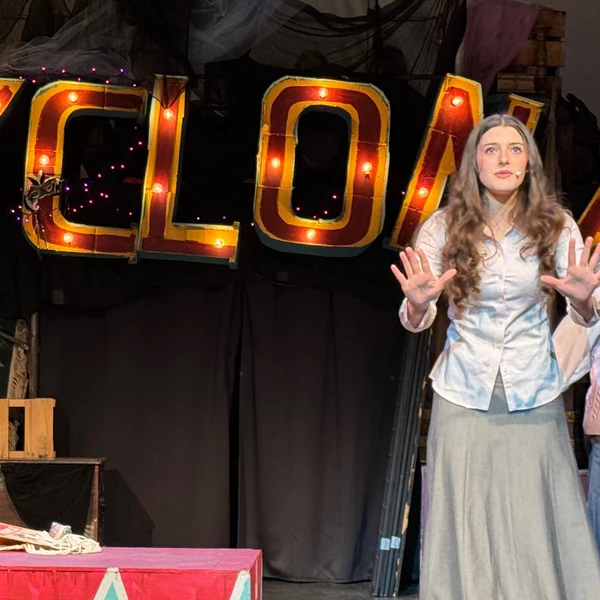
Acting And Theater
Volleyball
Basketball
Tennis
Babysitting And Childcare
Ceramics And Pottery
Child Development
Coaching
Coffee
Human Resources
Movies And Film
Music
Paddleboarding
Playwriting
Screenwriting
Singing
Shopping And Thrifting
Spending Time With Friends and Family
Social Justice
Teaching
Theater
Television
Voice Acting
Reading
Reading
Social Issues
I read books multiple times per week
Ashlyn OMalley
1x
Finalist
Ashlyn OMalley
1x
FinalistBio
I found theatre the summer before my sophomore year. I went to visit my family in New York and they signed me up for a camp. I’d always wanted to act, but it wasn’t cool at my school. In fact, the theatre kids were the worst kind of kid you could be. But not in New York. In New York, I got the lead in The Prom and realized that I could make a difference in the hearts and minds of others through this story-telling medium.
Education
Vashon Island High School
High SchoolMiscellaneous
Desired degree level:
Bachelor's degree program
Majors of interest:
- Drama/Theatre Arts and Stagecraft
- Visual and Performing Arts, General
- Teacher Education and Professional Development, Specific Subject Areas
Career
Dream career field:
Performing Arts
Dream career goals:
Barista
Cafe Luna2024 – 20251 year
Sports
Tennis
Junior Varsity2022 – 20231 year
Basketball
Junior Varsity2015 – Present11 years
Volleyball
Junior Varsity2022 – 20231 year
Arts
Phillipstown Theatre, Vashon Island HS
Acting2023 – Present
Public services
Volunteering
Journeymen — Camp counselor2022 – Present
Future Interests
Volunteering
David Foster Memorial Scholarship
One teacher who changed the way I see myself and my future is someone who didn’t just see me as I was, but as who I could become. When I was younger, I was kind of known as the “weird kid.” I got in trouble, pushed boundaries, and didn’t always fit into the spaces I was in. A lot of adults saw that and treated me like a problem to manage. But this teacher saw something different.
He didn’t focus on what I was doing wrong. Instead, he gave me responsibility. He trusted me with younger students, asked me to step up, and expected more from me than I expected from myself. At first, it honestly felt confusing. I remember thinking, “Why me?” I didn’t feel like a leader. But he kept showing up the same way—steady, consistent, and confident in me. Over time, I started to believe him. I started making different choices, not because I was forced to, but because I didn’t want to let him—or myself—down. He treated me like a leader, and what do you know, I became one.
At the same time, theatre was becoming a huge part of my life. It gave me a place where I could express myself and feel like I belonged. On stage, I could take risks without fear of being judged in the same way. I found confidence there, and I started to see that my voice mattered. Theatre and mentorship worked together in a way I didn’t expect. In both spaces, I was learning how to show up, how to be accountable, and how to support others.
One moment that stands out is when I was asked to help guide younger students. I saw so much of myself in them—the hesitation, the fear of messing up, the need to be accepted. Instead of correcting them or shutting them down, I tried to do what my teacher had done for me. I gave them encouragement, responsibility, and space to grow. Watching them open up, take risks, and start to believe in themselves was one of the most meaningful experiences I’ve had.
That’s when it really clicked for me. The way a teacher sees you can change everything. Being seen as capable instead of problematic can shift your entire path.
Because of this, I want to pursue a future where I can combine theatre and teaching. I want to create environments where young people feel safe enough to be themselves, take risks, and grow into who they are meant to be. I know what it feels like to be misunderstood, and I know what it feels like to be seen. I want to be that person for someone else.
Sometimes all it takes is one person to believe in you before you believe in yourself. For me, that person was my teacher—and because of him, I am becoming the person I once needed.
Aserina Hill Memorial Scholarship
I am a high school senior with a strong passion for theater, storytelling, and making a difference in my community. Over the last few years, I have been involved in theater both on stage and behind the scenes. I have performed, choreographed, and mentored younger kids, which has become one of the most meaningful parts of my life. I am especially drawn to the way theater can bring people together and create space for people to feel seen and understood.
Outside of theater, I have also been involved in leadership programs like Journeymen, where I’ve worked as a mentor and camp counselor. I’ve had the chance to support younger students and help create environments where they feel safe and supported. I’ve seen how powerful it is when someone feels like they belong, and that has shaped the way I show up in everything I do.
One moment that stands out is working with a younger student in theater who was extremely shy and afraid of making mistakes. I spent time working with her one on one, encouraging her to take small risks. By the end, she was more confident and expressive. Opening night when she walked out on that stage, she belted out the song and it was one of the best moments of my life.
My life at home has also played a big role in who I am. My mom is disabled, and my family has faced financial challenges for a long time. Because of that, I’ve had to grow up quickly and learn how to be more responsible than my peers. These experiences have made me more aware of what others might be going through, even when it’s not visible.
After high school, I plan to pursue a degree in theater while also studying education and the business side of the arts. My goal is not only to perform, but also to work with kids so they can grow and feel confident in who they are.
If I could start my own charity, it would focus on providing access to theater and arts programs for young people who might not otherwise have that opportunity, especially those from low-income families who feel like they don’t fit in. The charity would offer workshops, mentorship programs, and community productions at no cost, with volunteers helping guide students and build their confidence.
When I read about Aserina, I couldn’t help but feel like we would have been friends. The way she showed up for others and gave what she could so people could reach their goals is something I connect with. That’s the kind of impact I want to have. I want to use what I’ve learned, both through my experiences and my education, to support others, create opportunities, and help people feel like they belong.
Isaac Yunhu Lee Memorial Arts Scholarship
One of my favorite pieces of art I’ve made is a drawing of a person sitting on top of a really tall, uneven stack of colorful books, reading, with a huge sky and moon around them. The stack goes way down, like they built their way up one step at a time, and the person is kind of just sitting there in this quiet space that feels separate from everything else.
This was inspired by how I’ve used books, theater, and storytelling as a way to both escape and understand my life. Growing up, things haven’t always been easy. My mom is disabled, and my family has struggled financially for a long time. There have been a lot of moments where things felt overwhelming or uncertain, and I didn’t always feel like I fit in at school either. Because of that, I turned to stories. Reading and theater gave me a place where I could step outside of my own situation for a little while, but also start to understand it in a different way.
The stack of books represents what supports me. It’s not just reading, but learning, creativity, and the people in my life, especially my family. Each book is like something I’ve leaned on to keep going. The stack is tall and colorful, but also a little wobbly, because that’s what support has felt like for me. It’s not always stable or perfect, but it’s still there, and it’s still helped me grow.
The person sitting at the top is still really small compared to the sky, and that was on purpose. To me, it shows that even though I’ve grown and learned a lot, there is still so much ahead of me. It’s not about reaching some final point, it’s about continuing to grow.
There’s also a sense of being alone in the piece. That is really about me and how being creative can sometimes feel isolating, especially when you don’t feel like you fully fit in. But at the same time, that quiet space is where a lot of creativity comes from.
This drawing means a lot to me because it represents how I’ve built myself up over time with what I have, even when things felt unstable. It reminds me that I am still growing, still creating, and still finding my place as well as helping others feel a sense of connection and growth.
Ava Wood Stupendous Love Scholarship
Kindness in Action
One of the most meaningful moments where I showed kindness was working with a younger student in a show who was extremely shy and afraid of making mistakes. She barely spoke during rehearsals and would hold herself back, even when she knew what to do. I saw a lot of myself in her.
Instead of pushing her, I worked with her one on one and encouraged her to take risks. I kept reminding her that she didn’t have to be perfect and that her voice mattered. At first, even simple things like speaking up felt hard for her.
Over time, I saw a shift. She started to trust herself. There was one rehearsal where she belted out the song instead of holding back, and you could see how proud she was.
It wasn’t about getting something right. It was about helping someone believe in themselves. I know what it feels like to hold back, and being able to create a space where someone felt safe enough to show up as themselves meant a lot.
Boldy, Unapologetically Me
For a long time, I felt like the “weird” kid. I didn’t always understand how to fit into school or social situations, and I was constantly second guessing myself. Other students seemed to know what to say and how to act, while I felt out of place.
Because of that, I would sometimes end up being loud and trying to be funny or “a lot.” When people reacted negatively, I would swing the other way and shut down. I became really aware of what people thought of me and it made it hard to just be present. It’s difficult to focus on learning when so much of your energy is going into trying to get it right socially.
The place where that started to change for me was when I went to theater camp the summer after sophomore year. It was one of the first spaces where being different wasn’t something to hide, it was valued. I realized that the things I thought made me “weird” were actually strengths.
Now, I try to show up as myself, even if that looks different from others. I don’t try to fit into a specific mold anymore. Being “weird” is no longer something I hide. It’s something I carry with pride.
Creating Connection
I’ve learned that connection doesn’t just happen because people are in the same space. It happens when people feel safe, included, and supported.
When I was choreographing a show, I made it a priority to create that kind of environment. I checked in with people, encouraged them, and reminded them that they didn’t have to be perfect. I wanted everyone to feel like they belonged.
One moment that stands out is working with a younger student who was really shy and unsure of herself. She held back a lot, and you could tell she didn’t feel fully comfortable. I spent time supporting her and creating space where she felt safe. Over time, she became more confident and expressive.
I’ve learned that when people feel like they belong, they show up differently. They take risks, connect more, and grow.
Because I know what it feels like to not fully fit in, I try to create spaces where people don’t have to question if they belong. That’s something I want to keep doing wherever I go.
Scorenavigator Financial Literacy Scholarship
My experience with finances has mostly come from real life, not from school. Growing up, money has always been tight. My mom is disabled, and that has affected everything from our daily life to what we can afford. I became aware of money at a pretty young age. Not in a “learning how to invest” kind of way, but in a “we need to make this work” kind of way.
Even though things have been difficult, my mom has taught me a lot about budgeting and saving. She has always had to be intentional with money, and I’ve seen firsthand what it looks like to stretch every dollar and plan carefully. Because of her, I understand the importance of being responsible with money and thinking ahead.
One example of this is when I decided I wanted to buy my own car. I worked for a year and saved consistently, even when it was hard not to spend money on other things. There were definitely times I wanted to give up or use that money for something easier or more fun, but I stayed focused on my goal. When I was finally able to buy my car, it felt like more than just a purchase. It was proof to myself that I could set a goal, stay disciplined, and follow through.
At the same time, I’ve also seen how stressful it can be when there isn’t much room for error financially, and that’s something I want to change for my future. Because of my background, I feel like I’ve had a different kind of financial education. It hasn’t been formal, but it has been real.
That’s why I’m really interested in the financial education part of my degree, especially learning about the business side of the arts. I want to pursue theater, but I also want to be smart about it. I don’t want to go into a creative career blindly and end up struggling the same way my family has. I want to understand how to manage my finances in a way that allows me to keep doing what I love.
In the future, I plan to use what I learn to build a more stable life for myself and my family. I want to take the lessons my mom taught me and build on them, creating more security and opportunity. I also want to share that knowledge with others, especially people in the arts who may not have access to financial education.
My experiences with money haven’t always been easy, but they’ve made me motivated. I don’t just want to get by. I want to understand, grow, and create something better.
Nicholas Hamlin Tennis Memorial Scholarship
Tennis has taught me more about mental strength and resilience than anything else I’ve done. One moment that really stands out to me was during a match where I was already overwhelmed before I even stepped on the court. Things at home had been really hard. My mom is disabled, my family struggles financially, and my younger brother, who is also my best friend, deals with mental health challenges. It felt like a lot to deal with, and I couldn't turn off my brain when I got to my match.
I started playing tight and missing easy shots. I was distracted and started to get frustrated, and honestly I just wanted it to be over. I remember being down and feeling like everything was slipping, not just in the match but in general. I stood at the baseline between points and had this moment where I realized I had a choice. I could either give up and let everything overwhelm me, or I could reset and just focus on one point at a time.
So that’s what I did. I stopped thinking about everything else and told myself to just play the next point. Not perfectly, just intentionally. Slowly, I started to come back. I moved better and stayed in it mentally. I didn’t play the best match of my life, but I finished strong, and that meant more to me than winning.
That moment stuck with me because it showed me that even when everything feels out of control, I still get to decide how I respond.
My coach, Art Rack, always said that tennis is a lifelong sport. At the time, I thought he meant something physical like something you could keep playing as you got older. But I’ve realized it applies to something bigger. The mental strength tennis requires is also a lifelong skill. Learning how to reset, stay focused, and keep going when things are hard is something I will carry with me far beyond the court.
Tennis is an individual sport, and that has taught me accountability in a way nothing else has. There is no one else to rely on. You have to face your mistakes, adjust, and keep going. Growing up, there have been a lot of moments where it would have been easy to shut down or give up. Tennis gave me something steady, something that pushed me to keep showing up even when things were hard.
In the future, I know what I’ve learned from tennis will stay with me. It has taught me resilience, discipline, and how to move forward even when things feel overwhelming. That mindset will shape how I approach my education,my career, and whatever challenges come next.
Pamela Burlingame Memorial Scholarship for Dance/Theater
Theater has become one of the most important parts of my life, not just as a performer but as someone who wants to make a difference through storytelling. In the future, I want to pursue acting, and also be involved in the creative side of productions. I’m really drawn to work that actually means something, that makes people think differently about something. I love working with kids and having them blossom into storytellers too.
I’ve been involved in theater both on stage and behind the scenes, since the summer between freshman and sophomore year. My dad signed me up for a theatre camp and I got the lead. For the first time in my life, I felt like I belonged.
I’ve also taken on leadership roles like choreographing and mentoring younger performers. One of the experiences I’m most proud of was choreographing Next to Normal with EverRise Theatre. It’s a show about mental health, and it really showed me how powerful theater can be. On opening night when I introduced the show, I shared the 988 hotline because I wanted people to know they weren’t alone. That moment felt bigger than just performing.
I’ve also seen the impact on a smaller level. When I was an assistant director on a youth show, I worked with a younger girl who was super shy and terrified of messing up. She barely spoke during rehearsals and would hold herself back even when she knew what she was doing. I spent time working with her one on one, just encouraging her to try and reminding her that she didn’t have to be perfect. One day in rehearsal she really opened up and belted out the song. It was one of the best things I’ve ever seen. By the time the show opened, she was more confident, more expressive, and actually taking up space. There’s nothing better than that.
Growing up, I always felt like the 'weird kid', and theater gave me a place where being different was actually a good thing. That’s what made me want to do this for a career.
In the future, I want to give back by creating spaces where kids feel safe to be themselves and take risks. I want to keep mentoring and helping people find their voice, especially the ones who feel out of place. Theater changed my life, and I want to be part of doing that for someone else.
Kenneth G. Tanner Memorial Scholarship
One of the biggest hardships I have faced has been growing up in a household where instability was the norm. My mom is disabled, which has shaped every part of our daily life, from finances to responsibilities. We have struggled financially for as long as I can remember, and at the same time, my younger brother, who is also my best friend, has faced ongoing mental health challenges. There have been many times where it felt like everything was happening at once, and I often felt the weight of trying to hold things together while still having homework.
During my junior year, that pressure reached a point where it felt overwhelming. Things at home were especially difficult, and I found myself constantly distracted, exhausted, and unsure of how to keep up with school, theatre, and my responsibilities at home. It would have been easy to shut down or start letting things slip. Instead, I made a decision that I was not going to let all of that define what I could do.
I started by figuring out what I needed. I asked for help from teachers I trusted and began to advocate for myself in a way I never had before. I started using a planner, setting small manageable goals and working on things early rather than wait until they were almost due. Theatre became an anchor for me. It was a place where I could focus, be myself, and have a sense of control. Even on the hardest days, I showed up.
That year, despite everything happening at home, I stayed committed. I continued to work hard, both academically and in theatre, and proved to myself that I was capable of more than I thought. The achievement was not just about grades or performances, but about resilience. I learned how to keep going when things felt overwhelming, how to ask for support, and how to balance caring for others with not losing myself in the process.
What I accomplished was not a single moment, but a change in who I am. I learned that I am strong, that I can face difficult circumstances without giving up, and that I have the ability to create something positive even when things are hard.
This experience has shaped the way I look at my future. This is why I want to work with kids, especially those who feel like their circumstances are holding them back. I understand what that feels like, and I want to be someone who helps them see that their situation does not define their potential.
Susan Jeanne Grant Heart Award
Growing up, my life has not been easy. My mom is disabled, and my family has struggled financially for as long as I can remember. My younger brother, who is also my best friend, faces mental health challenges, and being there for him has been a big part of my life. There have been times when everything felt overwhelming, but I have learned how to keep going.
At the same time, I found theatre which gave me a sense of purpose and belonging. Being involved in theatre has allowed me to be myself in ways I could not always do in everyday life. It gave me confidence when I felt like the “weird” kid who did not quite fit in. It also showed me how powerful storytelling can be. Theatre creates connection, builds empathy, and gives people a space to feel seen.
My dream is to become an educator who uses both my life experiences and my passion for the arts to make a difference in kids lives. I want to create a place where students feel safe, supported, and able to be who they are.
This scholarship would help with the financial pressure that has always been a part of my life and allow me to focus on my education. More than that, it would allow me to give back. I plan to use what I have learned, both in and out of the classroom, to support students who feel weird too and help them realize how unique they are.
Gabriel Martin Memorial Annual Scholarship
Living with asthma has been part of my life for as long as I can remember. It’s not just “having an inhaler.” It’s the constant interruption. I’ve been to the ER more times than I can count because a flare-up went from ok to terrifying in a matter of minutes. There’s something scary about struggling to breathe and not being able to control it. Those moments stick with me.
Asthma has interrupted so many parts of my life. I’ve had to leave sports games in the middle of playing because I couldn’t catch my breath. I remember the embarrassment of walking off the court while everyone else kept going, trying not to draw attention to myself but knowing everyone noticed. I hated feeling like I was letting my team down, even when I knew it wasn’t my fault. It’s hard being the one who has to sit out when all you want is to push through like everyone else.
In school, I missed 20-30 days a year because of flare-ups, doctor’s appointments, or staying home after a bad episode. Missing school doesn’t just mean missing assignments, it means missing group projects, performances, games, and just normal time with friends. There were social events I had to skip because I wasn’t feeling well or because I was worried about triggers like cold air or allergies. I felt alone and angry that my health decided my schedule.
And honestly, it can be embarrassing. Asthma is invisible most of the time, so people don’t always understand how serious it can be. There were moments when I felt dramatic for needing my inhaler or anxious about having an attack in front of people. It made fitting in harder at an age when all I wanted was to blend in.
The same feeling followed me into theatre. Where I grew up, it wasn’t exactly “cool” to love performing. Choosing theatre meant choosing to stand out. Over time, I realized that I had already been standing out my whole life. Asthma forced me to be different. Theatre became the place where I chose it.
That same mindset carries into my work in theatre now. Acting requires vulnerability and courage. It asks you to take risks and sometimes fail in front of others. When I work with younger students in theatre settings, I often see the same hesitation of a fear of embarrassment, a fear of not being good enough, or a fear of standing out. Because I understand that feeling so personally, I’m intentional about creating an environment where students feel safe enough to try.
There is nothing more fulfilling to me than watching someone break through a barrier they once thought defined them. Seeing a shy kid project their voice confidently for the first time, or watching a hesitant performer take a bold risk on stage, reminds me why this work matters. It isn’t about recognition. It’s about impact.
My dream is to pursue acting professionally and be someone who tells stories that make people laugh, cry, and maybe even shift the way they see the world. I hope to tour, to perform in places like New York and beyond, and to fully immerse myself in the performing arts. But I also see myself working with young people, teaching and mentoring through the arts.
Asthma used to make me feel like I stood out in ways I couldn’t control. Theatre allows me to stand out with purpose. And in my future, I hope to use resilience, empathy, and courage to build a career that is not only successful, but meaningful.
Curtis Holloway Memorial Scholarship
Math has always been the hardest subject for me. While other classes seemed easy to me, math never did. No matter how hard I tried to pay attention in class, it just didn’t click. I would understand the lesson while I was in class and then when I tried to do my homework I felt confused. My mom was so busy trying to keep everything going for me and my brother, she didn't have time for this. For a long time, I felt frustrated and pretty defeated.
I was in a math class with Ms. Granum, and she made a huge difference for me. Even though I struggled to understand the material in class, she never gave up on me. Almost every day, she met with me during lunch and after school to go over the concepts again. I was often too embarrassed to ask questions in front of my classmates, so meeting with her became a safe space where I could slow down, admit what I didn’t understand, and keep trying.
What made this experience difficult wasn’t just the subject itself — it was accepting that math wasn’t something I was naturally good at. At first, I saw that as a weakness and told myself I must just be bad at math. I believed that I should be able to master anything easily, like the other kids. Learning that success isn’t always instant was hard, but it ended up being one of the most important lessons I’ve learned.
Even though my grades didn’t improve as much as I wanted, I didn’t quit. I showed up every day, stayed after school, and kept putting in the work even when progress felt slow. That persistence taught me how to push through frustration and keep going without getting immediate results. I learned how to ask for help, even when it made me uncomfortable, and how to advocate for myself instead of shutting down.
Through this experience, I realized that success isn’t always measured by grades. Sometimes it’s about discipline, resilience, and the willingness to face challenges directly. Math taught me how to sit with discomfort, how to stay committed when something feels overwhelming, and how to separate my self-worth from a test score.
Overcoming my struggle with math didn’t mean becoming great at it. It meant proving to myself that I can handle difficult situations and see them through. I learned that not being naturally good at something doesn’t mean I can’t do it but instead it just means I may have to work harder and approach it differently.
Tawkify Meaningful Connections Scholarship
In a world that is increasingly shaped by screens, algorithms, and constant digital communication, I believe authentic human connection is preserved through presence. Real connection happens when we show up physically, emotionally, and intentionally for one another. It happens when we choose conversation over scrolling, vulnerability over performance, and shared experience over isolation.
All of my community service has taken place either outdoors or on a stage in spaces where connection cannot be filtered or edited. As a mentor in the Vashon Wilderness Program, I helped younger students navigate the outdoors, like learning how to work as a team building a fire or. Out in the woods, away from phones and distractions, I saw how quickly students opened up when they felt seen. Around a campfire or on a trail, conversations became honest. Students talked about fears, friendships, and uncertainty in ways they might never express online.
For two years as a Journeymen Initiators mentor, I worked with elementary-age kids, guiding discussions about growth, responsibility, and identity. These conversations required eye contact, active listening, and trust. They required me to be present. As a fifth grade camp counselor for four years, I supported students as they stepped outside their comfort zones. Whether it was trying a new activity or simply being away from home, I learned that what young people need most is someone steady in their corner, someone physically there encouraging them in real time.
The same is true in theatre. Acting demands vulnerability and courage. It asks you to stand in front of others without hiding behind a screen. When I work with younger students in theatre settings, I often see hesitation, fear of embarrassment, fear of not being good enough, fear of being truly seen. Technology often allows us to curate versions of ourselves, but theatre requires authenticity. It creates a space where people must listen, respond, and connect in the moment.
I have seen how powerful that can be. Watching a shy student project their voice confidently for the first time or seeing a hesitant performer take a bold risk on stage reminds me that authentic connection builds confidence. Theatre creates empathy because it allows people to step into someone else’s shoes. For a few hours, an audience breathes together, laughs together, and sometimes cries together. In those moments, connection is real and shared.
In a world full of phones and watches and computers, I believe we strengthen human connection by intentionally creating spaces where people feel safe to be fully present. Outdoor mentorship programs, arts education, and live performance offer opportunities for people to disconnect from devices and reconnect with one another. They remind us that growth happens face-to-face, through patience, shared experience, and encouragement.
I believe that the future of connection will be made with in person interaction. My dream is to pursue acting professionally and to continue working with young people in the arts. I want to tell stories that move people, but I also want to create environments where students feel seen, heard, and empowered. Education will allow me to refine my craft as an artist while also equipping me to mentor with purpose and care.
Technology will continue to evolve, but authentic human connection will always require the same things: presence, empathy, and courage. Through mentorship and the performing arts, I hope to preserve and strengthen those connections, reminding people that the most meaningful moments in life are not downloaded or streamed, but experienced together.
Forever90 Scholarship
A life of service, to me, means creating space for other people to grow. It means showing up consistently, leading by example, and helping someone see potential in themselves that they might not recognize yet. Service doesn’t always look dramatic. Most of the time, it looks like patience, encouragement, and being willing to stay when something feels hard.
Throughout high school, I’ve tried to live that out through mentorship and leadership. As a mentor in the Vashon Wilderness Program, I helped younger students navigate the transition into middle school which is a time that can feel overwhelming and scary. For two years as a Journeymen Initiators mentor, I worked with elementary age kids, guiding conversations about growth, responsibility, and community. For four years, I served as a fifth grade camp counselor, supporting students as they stepped outside their comfort zones. And as a Cena Family Familiar mentor, I learned the importance of consistency of building trust over time rather than through one single event.
In each of these roles, I noticed something important: young people often just need someone steady in their corner. They need someone who believes in them before they fully believe in themselves. I know this because I’ve been that student. I struggled in math for years, and it was only through perseverance and the mentorship of my teacher that I learned how powerful patient guidance can be. That experience shaped the way I lead. I don’t lead by being the loudest voice in the room. I lead by modeling effort, showing up fully, and encouraging others to keep going.
The same mindset carries into my work in theatre. Acting requires vulnerability and courage. It asks you to take risks and sometimes fail in front of others. When I work with younger students in theatre settings, I often see the same hesitation I once felt. I would have a fear of embarrassment, a fear of not being good enough, or a fear of standing out. Because I understand that feeling, I’m intentional about creating an environment where effort is valued more than perfection. I want students to feel safe enough to try.
There is nothing more fulfilling to me than watching someone break through a barrier they once thought defined them. Seeing a shy kid project their voice confidently for the first time, or watching a hesitant performer take a bold risk on stage, and it reminds me why service matters. It isn’t about recognition. It’s about impact.
My dream is to pursue acting professionally and be someone who tells stories that make people laugh, cry, and maybe even shift the way they see the world. I hope to tour, to perform in places like New York and beyond, and to fully immerse myself in the performing arts. But I also see myself working with young people, teaching and mentoring through the arts. Education will not only strengthen my craft as an actor, but also give me the tools to guide others with intention and care.
Service is not separate from my ambitions, it is them. Whether I am on stage telling a story or in a classroom helping a student find their voice, my goal is the same: to empower others, to build confidence, and to leave people stronger than I found them.
That is the life of service I hope to continue living — one rooted in resilience, creativity, and the belief that everyone deserves the chance to shine.
Christian Fitness Association General Scholarship
Math has always been the hardest subject for me. While other classes seemed to come easily, math never did. No matter how hard I tried to pay attention in class, the concepts just didn’t click the way they did for other students. I would walk out of class feeling confused and stupid, wondering why something that seemed so simple to others felt impossible to me. Frustration turned into self-doubt, and I started to believe that maybe I just wasn’t able to do math.
I was in a math class with Ms. Granum, and she ended up playing a huge role in helping me push through this challenge. Even though I struggled to understand the material during class, she never gave up on me or made me feel like I didn’t belong there. Almost every day, she met with me during lunch and after school to go over concepts again. These meetings became a routine and something I relied on. I was often too embarrassed to ask questions in front of my classmates, especially when it felt like everyone else already understood. Meeting with Ms. Granum gave me a safe space where I could slow down, admit what I didn’t understand, and keep trying without feeling judged or rushed.
What made this experience really difficult wasn’t just the subject itself it was accepting that math wasn’t something I was naturally good at. For a long time, I saw that as a failure. I told myself that I should be able to master anything easily, the same way others seemed to. Watching classmates get concepts quickly while I struggled made me feel behind. Learning that success isn’t always instant, and that effort doesn’t always lead to immediate results, was hard to accept, but it ended up being one of the most important lessons I’ve learned.
Even when my grades didn’t improve as much as I wanted, I refused to quit. I continued to show up every day, stay after school, and put in the extra work even when progress felt slow. There were moments when it felt discouraging to work so hard and still fall short of my expectations, but I learned that consistency matters. That persistence taught me how to push through frustration and keep going without needing instant success as a motivator. I learned how to ask for help, even when it made me uncomfortable, and how to advocate for myself instead of shutting down or giving up.
I began to redefine what success actually means. I realized that success isn’t always measured by grades or how quickly something comes to you. Sometimes it’s about discipline, resilience, and the willingness to face challenges head on, even when they expose your weaknesses. Math taught me how to sit with discomfort, stay committed when something feels like it's too much, and separate my ability from a test score. It showed me that struggling doesn’t mean I'm failing, it means I'm learning.
This experience changed how I handle challenges outside of math too. Instead of avoiding things that feel hard or uncomfortable, I’ve learned to stick with them. I’m more patient with myself now and understand that improvement doesn’t always happen right away. I’ve also gotten better at asking for help and admitting when I don’t understand something, which used to be really hard for me. Because of this, I feel more confident taking on challenges, even when I know they won’t be easy.
I’ve taken this same way of thinking with me into theatre, where things aren't always easy. Acting can be uncomfortable and scary, especially when you are comparing yourself to others. When I work with kids in theatre, I see a lot of myself in them. I see kids who are afraid to ask questions, worried about messing up, or convinced they just aren’t “good enough.” Because I’ve been there, I know how important it is to be patient and encouraging instead of critical. I try to be the person for them that Ms. Granum was for me — someone who shows up, takes the time to explain things again, and makes them feel like struggling doesn’t mean failing. Seeing those kids gain confidence, push past their fears, and succeed in ways they didn’t think they could is the most fulfilling part of what I do, and it’s a big reason why I want to become a teacher.
Overcoming my struggle with math didn’t mean becoming great at it or suddenly excelling in the subject. It meant proving to myself that I can handle difficult situations and see them through, even when the outcome isn’t perfect. I learned that not being naturally good at something doesn’t mean I can’t succeed — it simply means I may have to work harder and approach it differently. That mindset has stayed with me and continues to shape how I approach my education, my goals, and the challenges I know I will face in the future.
Glenda I. Tanner Memorial Scholarship
Math has always been the hardest subject for me. While other classes seemed easy to me, math never did. No matter how hard I tried to pay attention in class, it just didn’t click. I would understand what the teacher was saying and then when I tried to do my homework I would be so confused. For a long time, I felt frustrated and pretty defeated.
I was in a math class with Ms. Granum, and she made a huge difference for me. Even though I struggled to understand the material in class, she never gave up on me. Almost every day, she met with me during lunch and after school to go over the concepts again. I was often too embarrassed to ask questions in front of my classmates, so meeting with her became a safe space where I could slow down, admit what I didn’t understand, and keep trying.
What made this experience difficult wasn’t just the subject itself — it was accepting that math wasn’t something I was naturally good at. At first, I saw that as a weakness and told myself I must just be bad at math. I believed that I should be able to master anything easily, like the other kids. Learning that success isn’t always instant was hard, but it ended up being one of the most important lessons I’ve learned.
Even though my grades didn’t improve as much as I wanted, I didn’t quit. I showed up every day, stayed after school, and kept putting in the work even when progress felt slow. That persistence taught me how to push through frustration and keep going without getting immediate results. I learned how to ask for help, even when it made me uncomfortable, and how to advocate for myself instead of shutting down.
Through this experience, I realized that success isn’t always measured by grades. Sometimes it’s about discipline, resilience, and the willingness to face challenges directly. Math taught me how to sit with discomfort, how to stay committed when something feels overwhelming, and how to separate my self-worth from a test score.
Overcoming my struggle with math didn’t mean becoming great at it. It meant proving to myself that I can handle difficult situations and see them through. I learned that not being naturally good at something doesn’t mean I can’t do it but instead it just means I may have to work harder and approach it differently.