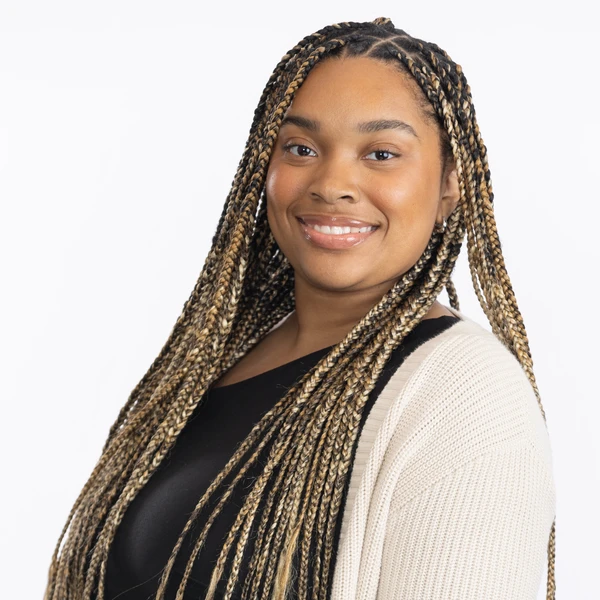
user profile avatar

Ashley Petgrave

1x

Finalist

1x

Winner

General information

Reading

  • Economics
  • Politics
  • Social Science
  • Social Issues
  • Philosophy

I read books multiple times a month.

Bio

I am a first-generation college student and senior at Howard University studying computer science with a sociology minor. My long-term goal is to build and communicate technology that solves meaningful business and social challenges—particularly solutions that expand access, reduce bias, and create opportunities for underserved communities.

Education

Howard University

Bachelor's degree program

2023 – 2027

Majors:
  • Computer Science
Minors:
  • Sociology

Miscellaneous

Desired degree level:
Bachelor's degree program
Majors of interest:
Computer Science
Medical school interest:
No

Career

Miscellaneous

Dream career field:
Computer Software
Work experience:
3 years
Has nursing license:
No

Future Interests

  • Advocacy
  • Politics
  • Volunteering
  • Philanthropy
  • Entrepreneurship
Black Women in STEM Scholarship
Technology is often described as the great equalizer, a force capable of transforming lives regardless of background or circumstance. For much of my academic journey, I believed that innovation alone could create a more equitable future. However, reading Women, Race & Class by Angela Davis challenged me to reconsider that assumption. I began to understand that progress is not inherently inclusive, and that even the most transformative advancements can leave people behind when existing inequalities go unexamined. In Women, Race & Class, Davis explores the interconnected histories of racism, sexism, and class inequality, demonstrating how these forces have shaped women's experiences and access to opportunity. What resonated most with me was her examination of how women's struggles have differed across racial and economic lines. Her work challenged the idea that all women experience inequality in the same way and encouraged me to think more critically about whose experiences are represented when we discuss progress. As a Black woman studying Computer Science with a minor in Sociology at Howard University, I found myself applying these lessons to the technology industry. We frequently discuss the importance of bringing more women into STEM, but Davis's work pushed me to ask a more specific question: Which women are benefiting from these efforts, and which continue to face barriers? That question became especially meaningful during my summer internship at IBM, where I was the only Black woman in a cohort of approximately 45 interns. Although I was grateful for the opportunity, the experience made me more conscious of how representation can shape someone's sense of belonging in professional spaces. I began to recognize that increasing diversity requires more than encouraging underrepresented students to pursue technical degrees. It also requires examining the financial, educational, and professional barriers that influence who can enter and advance within the industry. The book also changed how I approached my own ambitions. Previously, I measured success largely through the opportunities I could earn: scholarships, internships, academic recognition, and eventually a successful career. Davis's examination of structural inequality encouraged me to consider what responsibility comes with gaining access to spaces where others remain underrepresented. That perspective has influenced my work as the founder of Blacktable, a platform connecting underrepresented students with internships, scholarships, and professional development opportunities. Through Blacktable, I also established the Suited for Success Scholarship, providing two students with $300 each toward professional attire. These efforts reflect my growing belief that opportunity must be accompanied by the resources necessary to pursue it. Women, Race & Class did not diminish my ambition to become a leader in technology and business. Instead, it gave that ambition greater purpose. I still aspire to become a CEO, whether of a company I build or an established organization. However, I now think more intentionally about the systems I hope to influence, the people my decisions will affect, and the barriers I may have the power to address. Angela Davis taught me that understanding inequality requires looking beyond individual experiences to the structures shaping them. As I continue my journey in technology, I want to be more than a Black woman who succeeds in STEM. I want to help build an industry where more Black women have the opportunity to succeed alongside me.
Michelle Bellamy Memorial Scholarship for African American Women in Tech
Before I understood what ambition meant, I watched my mother live it. My mother, Antoinette Petgrave, immigrated to the United States from Portland, Jamaica, carrying hopes for a future that extended far beyond herself. Growing up, I did not fully understand the weight of that decision. I simply knew that my mother worked hard, made sacrifices, and consistently encouraged me to pursue opportunities she had never been afforded. As I have grown older, I have come to recognize that much of the woman I am becoming is a reflection of the woman who raised me. As a first-generation college student, I have often had to navigate unfamiliar territory. My mother could not always explain the intricacies of college applications, financial aid, or professional recruitment because these were systems she had never personally experienced. However, she gave me something equally important: the confidence to believe that I belonged in spaces neither of us fully understood. That confidence has carried me through my journey as a Computer Science major at Howard University, through internships at The Coca-Cola Company and IBM, and into opportunities I once could only imagine. Although my mother may not understand every technical concept I study or every professional responsibility I undertake, she has always understood the importance of my aspirations. In 2024, my understanding of my mother's strength deepened when she was diagnosed with breast cancer. Watching someone who had spent so much of her life caring for others confront such a frightening challenge changed my perspective. It reminded me that strength is not simply the ability to endure difficult circumstances. Sometimes, it is the courage to continue moving forward when life becomes uncertain. Her experience also taught me to appreciate the people behind my accomplishments. It is easy to celebrate scholarships, internships, and leadership positions without acknowledging the sacrifices that made them possible. My mother's love and perseverance have been constants throughout my journey, even during moments when she was navigating challenges of her own. Today, my ambitions extend beyond earning a degree or securing a successful career. I hope to become a leader in technology and business, someone capable of creating opportunities for others while building a life that reflects the values my mother instilled in me. I want to approach leadership with the same determination, compassion, and sense of responsibility that I have witnessed in her. When I think about the person who has influenced me most, I do not think of someone with an impressive title or a celebrated career. I think of my mommy, a Jamaican immigrant who taught me that the greatest measure of success is not simply what we accomplish, but what we make possible for those we love. Everything I hope to become began with her.
Harriett Russell Carr Memorial Scholarship
I have learned that excellence is not defined by a single achievement, award, or position. It is reflected in the standards we hold ourselves to, particularly when our responsibilities become demanding and no one is watching. Similarly, service is not something I believe should be reserved for special occasions. Both excellence and service are commitments I strive to practice every day. As a senior at Howard University studying Computer Science with a minor in Sociology, I have worked to demonstrate excellence through discipline, consistency, and a willingness to challenge myself. I maintain a 3.6 GPA and have earned Dean's List recognition four times while balancing my academic responsibilities with leadership, entrepreneurship, and community involvement. For me, academic achievement is not simply about earning strong grades. It reflects my commitment to making the most of the educational opportunities afforded to me. That same commitment guides my leadership as Vice Chairwoman of Howard University's 1867 Undergraduate Assistantship Program. Operating under the Office of Events and Protocol, our organization supports major university traditions, including Homecoming, Convocation, and Commencement, while emphasizing service to Howard and the surrounding community. As Vice Chairwoman, I oversee student leaders responsible for planning significant Homecoming events, including the Fashion Show and both days of Yardfest. My responsibilities involve selecting capable chairs, coordinating multiple teams, addressing challenges, and ensuring that those I lead have the resources and guidance necessary to succeed. This experience has taught me that excellence in leadership is not about personally receiving recognition. It is about ensuring that the people who depend on me can perform their responsibilities successfully. Beyond my campus leadership, I have remained committed to giving back to communities that have supported my growth. As a former recipient of the New York Urban League's Whitney M. Young Jr. Scholarship, I understand how transformative mentorship and educational support can be. Today, I serve as Youth Voice Chair on the organization's Project Ready Advisory Board, supporting programming for students at Bronx Legacy High School, many of whom come from underserved backgrounds. Returning to serve an organization that once invested in me has been especially meaningful. It has reinforced my belief that receiving an opportunity also creates a responsibility to extend opportunities to others. I have carried this philosophy into my entrepreneurial work as the founder of Blacktable, a career resource platform connecting underrepresented students with internships, scholarships, and professional development opportunities. Through Blacktable, I established the Suited for Success Scholarship, raising $600 to provide two students with $300 each toward professional attire. These efforts reflect my belief that giving back does not require waiting until I have achieved every personal or professional goal. Even as a college student, I can use the knowledge, resources, and opportunities available to me to support others. Harriett Russell Carr's legacy reminds me that a spirit of excellence is ultimately demonstrated through service. As I prepare to graduate and pursue a career in technology and business leadership, I hope to carry that lesson with me. I want excellence to define how I approach my responsibilities, and service to define what I choose to do with my success.
J&Y Law Yahouda Yahoudai Service Scholarship
I used to believe that making a difference in my community required having significant resources, influence, or authority. However, my experiences in community service have taught me that meaningful impact often begins with something much simpler: recognizing a need and deciding to do something about it. As a senior at Howard University, I have made community service a central part of my college experience. One of my most meaningful roles was serving as Community Service and Coordination Chairwoman for Howard University's NAACP chapter. In this position, I helped organize initiatives that addressed needs within and beyond our campus community, including hygiene kit distributions and holiday donation drives. These experiences taught me that community service requires more than good intentions. It requires planning, collaboration, and a genuine understanding of the people you hope to support. My commitment to service also extends to my hometown of New York City. As a former recipient of the New York Urban League's Whitney M. Young Jr. Scholarship, I know firsthand how much an organization can influence a young person's future. Beyond the financial assistance, the scholarship introduced me to mentors and a network of individuals invested in my success. Today, I serve as Youth Voice Chair on the New York Urban League's Project Ready Advisory Board, helping support programming for students at Bronx Legacy High School. Many of these students come from low-income and historically underserved communities, where access to educational and professional resources can be limited. Having once benefited from the Urban League's support myself, returning as a college student to help serve the next generation has been especially meaningful. It reminds me that the opportunities I receive carry a responsibility to create opportunities for others. That philosophy also inspired me to create Blacktable, a career resource platform connecting underrepresented undergraduate students with internships, scholarships, and professional development opportunities. While developing Blacktable, I realized that access to an opportunity does not always mean someone has the financial resources to pursue it. For example, a student might secure an interview for a competitive internship but struggle to afford professional clothing. To address this barrier, I established the Suited for Success Scholarship through Blacktable. I raised $600 and awarded two students $300 each toward professional attire. Although these awards were modest, they represented something important to me: I did not need to wait until I became financially successful to begin giving back. Across these experiences, I have learned that community service is not defined solely by the number of hours volunteered or the titles held. Its value lies in whether our efforts meaningfully improve someone else's circumstances. As I prepare to graduate and begin my professional career, I hope to continue expanding the impact of my service. My long-term ambition is to become a business leader, and I want community investment to remain central to how I define success. Ultimately, I want to be remembered not only for the opportunities I pursued, but for the opportunities I helped make possible for others.
Carlos F. Garcia Muentes Scholarship
My parents gave me everything they could, even when they could not give me everything they wanted to. I am the daughter of Donovan and Antoinette Petgrave, two Jamaican immigrants who left behind the familiarity of their home country in pursuit of greater opportunities in the United States. My father is from Clarendon, and my mother is from Portland, two parishes in Jamaica that will forever be part of my identity. Growing up as a first-generation Jamaican American, I understood that my parents' decision to immigrate was about more than their own futures. It was about creating possibilities for the family they hoped to build. My parents taught me the value of hard work long before I understood what a career was. Through my father's entrepreneurial endeavors and my mother's sacrifices, I witnessed the determination required to build a life in a country where opportunities are not always equally accessible. They instilled in me the belief that circumstances should never determine the limits of my ambition. However, being the daughter of immigrants also meant learning to navigate unfamiliar territory. As a first-generation college student, I quickly realized that my parents and I were experiencing the American higher education system for the first time together. They could encourage me, support me, and celebrate my accomplishments, but they could not always explain financial aid, scholarship applications, internships, or the unwritten expectations of college. That experience taught me independence, but it also taught me something more important: access to opportunity is not the same as knowing how to pursue it. When I was initially waitlisted at Howard University, I prepared to attend Queens College instead. Just two days before my first semester began, I learned that Howard had offered me admission for the following spring. I spent that fall at Queens College before beginning my Howard journey in January 2024. The experience reinforced a lesson my parents had demonstrated throughout my life: the path forward is not always predictable, but determination can carry you through uncertainty. Today, I am a senior studying Computer Science with a minor in Sociology at Howard University. My education has opened doors to internships at The Coca-Cola Company and IBM, where I have gained exposure to technology, business strategy, and corporate leadership. Yet my greatest ambition is not simply to succeed within these spaces. I want to eventually lead them. My father's entrepreneurial spirit has inspired my interest in building businesses, while my family's experiences have shaped the kind of leader I hope to become. I founded Blacktable, a career resource platform connecting underrepresented students with professional opportunities, because I recognized how difficult it can be to navigate systems without established networks or guidance. Long term, I aspire to become a CEO, whether of a company I build or an established organization. I want to create innovative solutions while ensuring that opportunity is not reserved for those who already know where to find it. My parents came to America seeking a better future. Their sacrifices gave me the freedom to imagine one beyond what they could have envisioned for themselves. Now, I hope to honor their journey not only through what I accomplish, but through the opportunities I create for others.
Women in STEM Scholarship
I chose computer science because I was fascinated by what technology could make possible. What began as an interest in understanding how things worked eventually became an ambition to build solutions that could change how people live, work, and access opportunities. However, as I have progressed through my education and professional experiences, I have realized that the impact I hope to make in STEM extends beyond the technology itself. I also want to influence who gets to build it, who benefits from it, and who gets to lead. As a first-generation college student and the daughter of Jamaican immigrants, pursuing computer science at Howard University has been both an academic and personal journey. My parents encouraged me to pursue opportunities they never had, even when they could not provide a roadmap for navigating college or the technology industry. Their sacrifices motivated me to approach my education with determination, but my experiences have also shown me that ambition alone does not always guarantee access. During my summer internship at IBM, I was the only Black woman among approximately 45 interns in my cohort. Although I was proud to have earned my place, I became increasingly aware of what it meant to enter professional spaces where few people shared my background. That experience reinforced my belief that representation in STEM matters not simply because women deserve a seat at the table, but because our perspectives influence the problems organizations prioritize and the solutions they develop. My interest in addressing these disparities also inspired me to create Blacktable, a career resource platform connecting underrepresented students with internships, scholarships, professional development programs, and other opportunities. Through Blacktable, I have worked to make information more accessible to students who may lack the professional networks that others take for granted. I also established the Suited for Success Scholarship, raising $600 to award two students $300 each toward professional attire. These experiences have shaped how I envision my future in STEM. While I enjoy the technical aspects of computer science, I am particularly drawn to the intersection of technology, business strategy, and human behavior. My sociology minor has strengthened my understanding that successful innovation requires more than technical expertise; it requires understanding the people who will ultimately use and be affected by technology. I hope to build a career developing and implementing technology that addresses meaningful consumer and organizational needs. Long term, I aspire to lead at the highest levels of business, whether by founding my own company or becoming the CEO of an established organization. In either capacity, I want to help shape an industry where women are not only encouraged to pursue technical careers but are equally empowered to make consequential decisions. To me, making a difference as a woman in STEM means more than succeeding in a field where women have historically been underrepresented. It means using my success to expand access, challenge assumptions about who belongs in technology, and create opportunities for those who follow. I want my career to demonstrate that women in STEM are not simply participants in innovation. We are capable of leading it.
Erin Lanae's HBCU Excellence Scholarship
Two days before I was supposed to begin college, everything changed. I had been waitlisted at Howard University and had accepted that my college journey would begin at Queens College in my hometown of New York. Then, just days before classes began, I learned that I had been accepted to Howard for the following spring semester. I chose Howard because I wanted more than an education. I wanted to experience what it meant to learn in an environment where Black excellence was not the exception, but the expectation. As a first-generation college student and the daughter of Jamaican immigrants, there was something powerful about imagining myself becoming part of Howard's legacy. I spent my first semester at Queens College, and in Spring 2024, I finally arrived at Howard. Now, as a senior, Howard means even more to me than it did when I was waiting for that acceptance. It is where I have grown into a leader, built lifelong relationships, discovered new possibilities for my career, and learned more about who I want to be. Getting into Howard felt like a door finally opening. My experience here has taught me that walking through that door was only the beginning. Howard has challenged me to make the most of the opportunity—and eventually, to hold doors open for others.
LeadHer Learning Scholarship
To me, education means access: access to opportunities, to choices, and ultimately, to a future that may not have been possible otherwise. As the daughter of Jamaican immigrants and a first-generation college student, I grew up understanding the importance of education long before I fully understood how to navigate it. My parents always emphasized that my education could open doors for me, even if they could not always tell me how to find those doors. When I entered college, all three of us were learning together. That meant becoming independent very quickly. I learned how to navigate financial aid, search for scholarships, pursue internships, build relationships with mentors, and advocate for myself. There were moments when that independence felt empowering and others when it felt isolating. But with every new experience, education gave me more than knowledge from a classroom; it gave me choices. Today, I am a senior computer science major and sociology minor at Howard University. My education has taken me into spaces I once knew very little about, including internships with Coca-Cola and IBM. Studying computer science has taught me how to build and solve problems, while sociology has challenged me to think about who has access to the solutions we create and who may be left behind. That perspective has shaped how I lead. I founded Blacktable because I realized that access to education alone does not guarantee access to opportunity. Students can be talented, ambitious, and hardworking and still miss life-changing internships, conferences, and professional development programs simply because they never knew those opportunities existed. Through Blacktable, I work to make those opportunities easier for undergraduate and early-career students to find. I also created the Suited for Success Scholarship, raising $600 to provide two students with $300 each toward professional attire. It was a small way of addressing another barrier I had come to understand: sometimes an opportunity can be within reach, but the cost of being prepared for it can still stand in the way. My education has changed the trajectory of my life, but its value to me is not measured only by what I have been able to achieve for myself. Education means gaining knowledge and then using it. It means entering rooms my parents never had the opportunity to enter and making sure I leave the door a little wider for the person coming behind me. It means transforming the opportunities I have received into opportunities for someone else. That is what education means to me: not simply access to a better future, but the ability to create greater access for others.
The Concrete Rose Scholarship Foundation
Winner
At 11:43 a.m. on the first day of my junior year of high school, I sat in computer science(CS) with my leg bouncing beneath the desk.It was my first day back after a year and a half of remote school. One by one, students who had struggled the previous year were called into the hallway and encouraged to leave the program.My grades told me I could be next. I waited for my name. It was never called. I later learned why. I was one of only two young women in the class and the only Black young woman.My teacher did not know what I might accomplish, but he understood that removing me would take an opportunity from someone already underrepresented in the room.He left the door open, and through tutoring and persistence, I worked to prove I belonged on the other side.His decision taught me that potential does not need to be fully visible before it deserves an opportunity to grow. That opportunity also gave me the chance to reinforce why I wanted to pursue computer science. Long before I knew what CS was, I was fascinated by how things worked. As a child, I would take apart robotic toys and mechanical dolls just to examine the pieces inside. CS gave a name and direction to that curiosity.I could build, solve problems, and eventually create opportunities for others. As a high school senior, I set my sights on Howard University, where I am now a senior studying CS with a minor in sociology. I chose to pair the two because technology does not exist separately from the people it affects. Sociology has allowed me to examine biases within our social systems, while CS has shown me how those biases can be reproduced through data, algorithms, and artificial intelligence. Together, they have shaped the kind of technologist I want to become. That purpose extends beyond the classroom. During my sophomore year, I created Blacktable after realizing how difficult it could be for students to find conferences, internships, and professional-development programs before their deadlines. I built the web application to connect Black undergraduates with opportunities that could otherwise slip through the cracks.I later expanded Blacktable beyond sharing information by raising $600 for the Suited for Success Scholarship and awarding two students $300 each to purchase professional attire. Through these experiences, I have realized that I want to work at the intersection of technology and people.My career goal is to enter client-facing technology, where I can translate complex tools into solutions that address real human needs and help organizations understand how technology can best serve the people using it. Long term, I want the opportunities I receive to extend beyond me. As my career grows, I hope to become a philanthropist, establish a nonprofit for underrepresented girls interested in STEM, and fund scholarships that remove financial and practical barriers from their paths.I want service to become one of the ways I measure my professional success. The $500 Concrete Rose Scholarship would help me take the next step in that journey. As I prepare for my final semester at Howard, I am working to avoid taking out additional student loans.Every dollar I receive reduces what I must borrow and eventually repay with interest, allowing me to enter my career with greater financial freedom. My teacher once kept a door open for me when my potential was not yet obvious. Since then, I have learned what can happen when someone is simply given the opportunity to grow. Through my career, Blacktable, and eventually my own nonprofit, I intend to keep that door open for others.
Ashley Petgrave Student Profile | Bold.org