Hobbies and interests
Advocacy And Activism
Community Service And Volunteering
Health Sciences
Liberal Arts and Humanities
Mental Health
Spending Time With Friends and Family
Pilates
Reading
Biography
Drama
Family
History
Historical
I read books multiple times per month
Ashley Jones
1x
Finalist
Ashley Jones
1x
FinalistBio
For over a decade, I have dedicated my career to serving older adults, veterans, and individuals experiencing housing insecurity through supportive housing and community-based care programs. As a Care Manager, I have witnessed the challenges many older adults face in accessing healthcare, housing, and essential support services. These experiences inspired me to pursue advanced education in aging services so I can advocate for policies and programs that promote dignity, independence, and equitable access to care.
Beyond my professional work, I have organized events for veterans in permanent supportive housing, facilitated donation drives, volunteered at local food banks, and supported meal preparation for vulnerable women through community outreach efforts. These experiences have reinforced my commitment to service and community engagement.
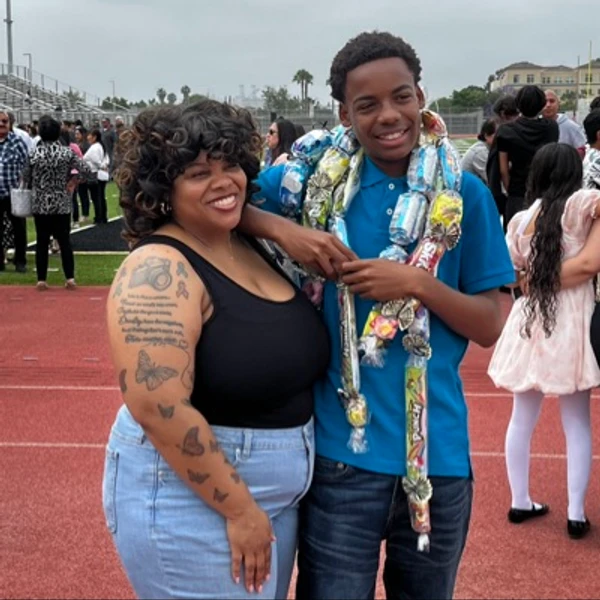
Balancing graduate school, full-time employment, and single motherhood has required determination and sacrifice. My son remains my greatest motivation, inspiring me to break generational barriers and demonstrate the transformative power of education. Through my degree, I hope to advance aging services, strengthen support systems for older adults, and create lasting opportunities for both my family and the communities I serve.
Education
University of Southern California
Master's degree programMajors:
- Gerontology
California State University-Dominguez Hills
Bachelor's degree programMajors:
- Sociology
Long Beach City College
Associate's degree programMajors:
- Family and Consumer Sciences/Human Sciences, General
Miscellaneous
Desired degree level:
Master's degree program
Graduate schools of interest:
Transfer schools of interest:
Majors of interest:
Career
Dream career field:
Mental Health Care
Dream career goals:
Geriatric Case Manager
Food and Beverage Operations Manager
ASM at the Long Beach Convention Center2012 – 20208 yearsVeteran Support Coordinator
United States Veterans Initiative2023 – 20252 yearsCare Manager
Always Best Care Senior Services2025 – Present1 year
Sports
Cheerleading
Varsity2004 – 20073 years
Public services
Volunteering
Long Beach Women's Shelter — Volunteer2025 – 2025Volunteering
Hollywood Food Coalition — Support2024 – 2024
Future Interests
Advocacy
Volunteering
Philanthropy
Entrepreneurship
Christian Fitness Association General Scholarship
One of the most significant challenges I faced during my academic journey was managing my mental health while pursuing a graduate degree, working full-time, raising my son as a single mother, and navigating the financial realities that often accompany higher education. As a first-generation woman pursuing an advanced degree, I entered graduate school with a strong sense of purpose and determination. I was committed to creating a better future for myself, my son, and the older adults I serve. However, I quickly learned that even the strongest individuals can encounter seasons that test their resilience, faith, and sense of self.
At one point in my career, I found myself working in an environment that no longer aligned with my values or professional ethics. The emotional demands of supporting vulnerable populations, combined with workplace stress, family responsibilities, and rigorous academic expectations, began to take a toll on my mental health. I experienced exhaustion, anxiety, difficulty concentrating, and a growing sense that I was losing the empathy and compassion that had originally drawn me to the field of aging services. I was functioning, but I was no longer thriving. For someone who has spent much of her life helping others, admitting that I needed help was one of the hardest things I have ever done. I had convinced myself that strength meant carrying every burden alone.
Instead, I learned one of the most valuable lessons of my life: true strength is recognizing when support is necessary and allowing others to walk beside you during difficult seasons.
Through close supervision from my physician and appropriate medical interventions, I began taking the necessary steps to improve my mental health. However, healing did not happen through medical support alone. It also came through the unwavering support of my circle of friends, who continuously reminded me of who I was when I struggled to recognize myself.
Throughout my journey, my friends became a source of encouragement, accountability, and spiritual grounding.
When I felt overwhelmed by uncertainty, they reminded me of the faith that had carried me through previous challenges. They consistently encouraged me to walk by faith rather than by sight, especially during moments when the future felt unclear. When I focused on obstacles, they reminded me to focus on possibilities. When fear attempted to convince me that I was not capable of finishing my degree, they reminded me that faith and fear cannot coexist in the same space. Their encouragement challenged me to stop viewing myself through the lens of my struggles and instead recognize the strength I had demonstrated throughout my life.
They reminded me to be authentically myself and to embrace the qualities that had helped me persevere through adversity. Most importantly, they encouraged me to see my experiences not as limitations but as opportunities to create meaningful change. As I continued my educational journey, I began to understand that my story carried a purpose beyond my own success. I realized that pursuing a graduate degree was not simply about obtaining credentials; it was about breaking generational barriers and creating new possibilities for those who would come after me. As a first-generation woman earning an advanced degree, I am challenging narratives that often limit what individuals from underrepresented backgrounds believe is possible for themselves.
This realization became especially meaningful as I considered the example I was setting for my son. There were days when balancing school, work, motherhood, and personal healing felt impossible. Yet each assignment completed, each course passed, and each challenge overcome became a lesson for him. I wanted him to see that adversity does not have to determine one's future. I wanted him to understand that perseverance, faith, and education can create opportunities that extend far beyond a single generation.
My experiences have also strengthened my commitment to serving older adults. Working in Gerontology has shown me that many individuals face invisible challenges, including mental health struggles, social isolation, grief, and barriers to accessing support. My own journey has deepened my empathy and enhanced my ability to meet people where they are without judgment. It has reinforced my belief that every person deserves dignity, compassion, and access to resources that support their well-being. Today, I am proud to say that I am healthier, stronger, and more self-aware than I was during that difficult chapter of my life.
While the journey was not easy, it taught me invaluable lessons about resilience, leadership, faith, and self-advocacy. I learned that perseverance does not mean never struggling; it means continuing to move forward despite those struggles. I learned that asking for help is not a sign of weakness but an act of courage. Most importantly, I learned that challenges can become catalysts for growth when met with determination, support, and faith.
As I prepare to complete my graduate education, I carry with me not only academic knowledge but also a renewed sense of purpose.
The obstacles I faced did not define me; they refined me. They strengthened my commitment to serving older adults, supporting my son, and using my experiences as a bridge to inspire others facing similar challenges. My journey has shown me that resilience is built through adversity, faith is strengthened through uncertainty, and lasting change begins when we dare to keep moving forward.
I thank you for considering.
Ruthie Brown Scholarship
As a single mother and first-generation woman pursuing an advanced degree, student loans have been a necessary part of my educational journey. While I have worked throughout my academic career and actively sought scholarships and financial assistance, the reality is that financing higher education while supporting a household on a single income has required me to rely heavily on federal student loans. As I approach my final semester of graduate school, I face the difficult decision of whether to assume additional debt in order to complete my degree.
To address my current and future student loan debt, I have developed a strategic and realistic repayment plan focused on affordability, long-term financial stability, and responsible debt management. My first step will be to consolidate my student loans into a single repayment plan. Consolidation will simplify the repayment process and provide greater flexibility as I navigate changing federal repayment programs and policies.
Additionally, I plan to enroll in the most appropriate income-driven repayment option available to me upon graduation. Based on my current projections, my monthly payments could be as high as $1,300 per month under a standard repayment plan. My goal is to reduce those payments to approximately $400 per month through a repayment structure that aligns with my income and family responsibilities. While this may extend the repayment period, it will allow me to meet my financial obligations without creating undue hardship for my household.
I am also committed to actively managing the interest on my loans. One of the most important lessons I have learned while researching student debt is that unpaid interest can significantly increase the overall cost of repayment. Whenever financially possible, I intend to make additional payments toward accrued interest to prevent my loan balance from growing beyond the amount originally borrowed. This proactive approach will help reduce the total cost of repayment over time.
My long-term plan for managing student loan debt is closely connected to my career goals. I am currently completing a Master's degree in Gerontology at the University of Southern California and plan to continue advancing my career in aging services and geriatric care management. This degree will increase my earning potential and position me for leadership opportunities that will provide greater financial stability for my family while allowing me to continue serving older adults and vulnerable populations.
While I recognize that student loan repayment will be a long-term responsibility, I view my education as an investment rather than a burden. My degree will allow me to create greater economic security for my son, break generational barriers within my family, and contribute meaningfully to the lives of others through advocacy and service. Scholarship support would significantly reduce the need for additional borrowing during my final semester and help me complete my education with less financial strain.
Ultimately, my plan is to approach student loan repayment with the same determination and persistence that have guided me throughout my educational journey: by making informed financial decisions, maintaining manageable repayment obligations, reducing interest whenever possible, and leveraging my education to build a more stable future for my family and community.
Sharra Rainbolt Memorial Scholarship
Cancer has shaped my family’s history across generations, not as an isolated medical condition, but as a persistent and painful thread that has altered our understanding of health, loss, and advocacy. Multiple family members have been diagnosed with various forms of cancer, including prostate, liver, breast and lung cancers. Many of which ultimately resulted in loss. These experiences created a lingering awareness in my family that cancer was not only a disease, but something that demanded vigilance, education, and resilience.
However, the most defining and transformative experience for me was the illness and passing of my mother. My mother was diagnosed at 49 years old with stage 4B colorectal cancer after her symptoms were initially misinterpreted as less serious conditions. Her concerns were minimized, and her early symptoms were attributed to factors such as stress and benign gastrointestinal issues. By the time she received a definitive diagnosis, the disease had already advanced significantly. Within one year, she passed away at the age of 50. Witnessing her physical decline while simultaneously holding onto hope for recovery was one of the most emotionally complex experiences of my life.
In the final months of her life, my mother remained intentional about how she spent her time. She expressed two core wishes: to celebrate the holidays with her family and to mark her birthday surrounded by loved ones. We honored those wishes through meaningful, memory-centered gatherings, including a birthday tea celebration with her closest friends and early observances of Thanksgiving and Christmas so she could be present. These moments became a profound reminder that dignity and joy can coexist with illness, even in the face of terminal diagnosis.
My mother passed away shortly after, and her loss fundamentally reshaped my understanding of time, presence, and the importance of honoring life in real and intentional ways. While cancer brought profound grief and anger, it also became a catalyst for critical learning and personal transformation. One of the most significant lessons I gained from this experience is the importance of patient advocacy within healthcare systems that may overlook or dismiss early warning signs, particularly in younger patients or those without obvious risk factors.
In response to my mother’s experience, I became proactive about my own health, seeking preventative screenings such as colonoscopies and learning to advocate for myself in clinical settings when concerns were dismissed due to age or perceived risk. I learned the value of understanding and communicating genetic health history. My family’s experiences highlighted how essential it is for individuals to be informed about hereditary risk factors and to engage in transparent conversations about illness within families. I also learned that advocacy is not only reactive, but preventative—it involves challenging assumptions, asking questions, and ensuring that symptoms are taken seriously regardless of demographic expectations.
Most importantly, I learned that while cancer can take a life, it does not erase a legacy. My mother’s passing became a turning point in how I approach both healthcare and life itself. Her experience instilled in me a commitment to awareness, early intervention, and advocacy. It also strengthened my resolve to pursue a career in aging and care services, where I can support individuals and families navigating complex health systems with dignity and informed guidance.
In many ways, cancer taught me to transform loss into purpose, and pain into a commitment to ensuring that others are heard, believed, and supported in their most vulnerable moments. I thank you for your consideration.
Jill S. Tolley Scholarship
I did not return to school because it was easy. I returned because I refused to let survival be the final chapter of my story.
I am uniquely deserving of this award because my educational journey has been shaped by sustained resilience, sacrifice, and an unwavering commitment to breaking generational barriers as a single mother. My path through higher education has not been linear or predictable; it has been built in the spaces between grief, responsibility, and perseverance. As the first woman in my family to pursue and complete a graduate degree, every academic milestone represents not only personal achievement, but also a redefinition of what is possible for my son and future generations.
My “why” for pursuing higher education is rooted in both lived experience and purpose. I began my academic journey at Long Beach City College, where I spent nearly a decade completing my associate degree while working full-time to support myself and my son. During this time, I endured significant personal challenges, including the loss of my mother in 2014. That loss created a profound emotional shift in my life, one that I was not fully able to process while simultaneously navigating motherhood, financial hardship, and an emotionally abusive relationship. In that season of my life, I entered survival mode, where immediate needs consistently took priority over long-term goals.
Despite these challenges, I never abandoned my educational aspirations. The turning point came during the COVID-19 pandemic, when I was furloughed from the career I had worked diligently to build. What initially felt like loss became a moment of redirection. Encouraged by a colleague, I returned to school in 2020 with renewed purpose and determination. I re-engaged fully in my academic journey, completing my coursework and earning Associate of Arts degrees in both Human Services Generalist and Sociology. I then transferred and completed my Bachelor’s degree in Sociology at California State University Dominguez Hills within two years, graduating with honors and recognition from both my department and the National Honor Society.
Throughout this journey, I have balanced full-time employment, academic demands, and single motherhood. My son has been present through every stage sometimes sitting beside me while I studied, attending classes with me when needed, and witnessing firsthand what perseverance looks like in real time. These shared experiences have deepened my sense of purpose and reinforced my commitment to showing him that education is not only attainable, but transformative.
My decision to pursue graduate studies in Gerontology at the University of Southern California is rooted in over a decade of experience working with older adults, veterans, and vulnerable populations. In supportive housing and care management roles, I have witnessed the systemic barriers older adults face in accessing healthcare, housing, and essential services. These experiences have shaped my goal of becoming a Geriatric Care Manager who advocates for dignity, equity, and person-centered care for aging populations.
I have pursued higher education while raising my son alone, working full-time, navigating grief, and overcoming financial instability. Even now, I continue to face financial strain while supporting my teenage son and his aspirations. Yet I persist because I understand that education is the most powerful tool I have to create generational change.
My “why” is simple: my son and the older adults I serve. I am driven by the belief that resilience should lead to opportunity, and that lived experience can be transformed into advocacy. This scholarship would not only support my education—it would invest in a future leader committed to service, dignity, and lasting impact.
Jerrye Chesnes Memorial Scholarship
Returning to school has been one of the most defining and transformative journeys of my life, shaped by resilience, loss, and an unwavering commitment to both my education and my role as a mother. I began my academic path at Long Beach City College, where I spent nearly a decade completing my associate degree while working full-time to sustain myself and my son. As a nontraditional student, I quickly learned that education would not be a linear process for me it would be something I pursued in the margins of survival, responsibility, and endurance.
During this period, my life was profoundly altered by the passing of my mother in 2014. Her death marked a pivotal emotional rupture that I was not fully able to process at the time. I was simultaneously grieving, raising my son, navigating an emotionally abusive relationship, and maintaining financial stability. These overlapping challenges forced me into survival mode, where immediate responsibilities consistently outweighed long-term academic goals.
Everything shifted during the COVID-19 pandemic, when the career I had worked hard to build was abruptly interrupted by a furlough. What initially felt like loss and uncertainty ultimately became a turning point. Encouraged by a colleague, I made the decision to return to school in 2020 with renewed focus and intention. I re-engaged fully in my academic journey and completed my coursework with determination. With the guidance of an academic counselor who recognized my potential.
I completed my Associate of Arts degrees in Human Services Generalist and Sociology, graduating with honors and successfully offered admission into multiple California State Universities. I ultimately chose California State University Dominguez Hills, where I completed my Bachelor’s degree in Sociology within two years. During this time, I balanced full-time work, motherhood, and academic rigor. My son was present throughout this journey sometimes sitting beside me during study sessions, accompanying me to campus, and witnessing firsthand the discipline and persistence required to pursue higher education. With the support of understanding professors, we navigated this chapter together as a family.
In 2025, I graduated with honors and received recognition from both the Sociology Department and the National Honor Society. This milestone represented more than academic achievement; it reflected my ability to persist through grief, instability, and years of competing responsibilities while remaining committed to long-term growth. I was subsequently accepted into the University of Southern California, where I am now completing my graduate studies in Gerontology.
Through these experiences, I have learned that resilience is not defined by the absence of struggle, but by the ability to persist and adapt in the face of it. I have also learned to view education not only as personal advancement, but as a tool for transformation both for myself and for the communities I hope to serve. My lived experience has directly shaped my commitment to becoming a geriatric care manager, where I can advocate for older adults navigating complex systems of care, much like I once navigated uncertainty in my own life.
Today, I continue to face financial and personal challenges as I complete my graduate degree while supporting my teenage son and his aspirations. However, these responsibilities have reinforced my sense of purpose rather than diminished it. My son remains my greatest motivation, and every step I take is rooted in creating stability, opportunity, and generational change for him.
My journey reflects not only academic achievement, but also the development of resilience, self-advocacy, and a deep commitment to service values that continue to guide my work in aging services and my vision for the future.
Michael Rudometkin Memorial Scholarship
My commitment to serving older adults has been shaped by both my professional experiences and my belief that every individual deserves to be seen, valued, and celebrated. Throughout my career working with older adults, veterans, and vulnerable populations, I have learned that advocacy extends far beyond connecting individuals to services. It also means recognizing their humanity, honoring their life experiences, and creating opportunities for joy, connection, and belonging.
One of the most meaningful experiences in my career involved working with senior veterans residing in permanent supportive housing. Many of these individuals had experienced years of homelessness, isolation, and instability. As I developed relationships with residents, I learned that many had missed significant life milestones while unhoused, including birthdays, holidays, and personal achievements that most people take for granted. Recognizing the emotional impact of these missed moments, I leveraged my event planning skills to organize personalized celebrations that acknowledged their lives, accomplishments, and service to our country.
These events were more than gatherings; they were opportunities to restore dignity and foster community. I coordinated birthday celebrations, holiday events, and milestone recognitions tailored to the unique interests and histories of individual residents. For many veterans, it was the first time in years that someone had celebrated them. Watching residents reconnect with a sense of pride, belonging, and self-worth reinforced my belief that meaningful care involves addressing emotional and social well-being alongside physical needs.
Today, I continue to incorporate this philosophy into my work with older adults. In my current role, I use my event planning expertise to create engaging and personalized experiences that celebrate the individuals we serve. Rather than taking a one-size-fits-all approach, I strive to understand each person's preferences, cultural background, interests, and life story. Whether recognizing a birthday, celebrating a significant life achievement, or organizing community engagement activities, I believe these moments help strengthen social connections and improve quality of life.
My approach is grounded in person-centered care and advocacy. Older adults often face challenges related to social isolation, loss, and changing health conditions. Meaningful engagement opportunities can help counter these challenges by fostering purpose, connection, and community participation. Through thoughtfully planned events and celebrations, I seek to create environments where older adults feel recognized not only for their needs but also for their accomplishments, resilience, and contributions to society.
As I continue pursuing my graduate education in Gerontology, I hope to further expand my ability to advocate for older adults through innovative programming, community engagement, and service development. My long-term goal is to contribute to aging services that promote dignity, independence, and holistic well-being. I believe that celebrating older adults and honoring their stories is an essential component of effective care.
What continues to inspire me is witnessing the impact that intentional acts of recognition can have on a person's life. A birthday celebration, a personalized event, or simply being acknowledged can remind someone that they matter. Through continued advocacy and meaningful engagement, I hope to ensure that older adults feel valued, respected, and celebrated throughout every stage of life.
Raquel Merlini Pay it Forward Scholarship
My journey into the field of aging services has been shaped by a deep commitment to advocacy, service, and improving the lives of older adults. As a graduate student in Gerontology at the University of Southern California, a Care Manager, and a single mother, I have developed a unique perspective on the importance of compassion, resilience, and person-centered care. My professional experiences have reinforced my belief that every older adult deserves to age with dignity, independence, and access to the resources necessary to maintain their quality of life.
For more than a decade, I have worked with vulnerable populations, including older adults, veterans, and individuals experiencing housing insecurity. Throughout my career in supportive housing and community-based care settings, I have witnessed firsthand the challenges many older adults face while navigating complex healthcare systems, financial barriers, social isolation, and age-related health conditions. These experiences inspired me to pursue advanced education in Gerontology and ultimately work toward becoming a Geriatric Care Manager who can advocate for older adults across healthcare, social service, and community support systems. Aging is often accompanied by complex medical, emotional, and social needs that require coordination across multiple disciplines.
As a future Geriatric Care Manager, I hope to serve as both an advocate and guide, ensuring that older adults receive appropriate care while preserving their autonomy and personal preferences. I am particularly passionate about improving access to community-based services that allow older adults to safely age in place, maintain meaningful social connections, and avoid unnecessary institutionalization whenever possible.
Beyond direct client advocacy, I hope to contribute to broader improvements within aging services through leadership, program development, and policy advocacy.
As the population continues to age, the demand for coordinated care and supportive services will continue to grow. I believe there is a significant opportunity to strengthen systems that support older adults, family caregivers, and healthcare professionals. Through my education and professional experience, I aim to help bridge gaps in service delivery and create more equitable access to care for diverse aging populations.
One of the greatest influences on my life and career is my role as a mother. As a single parent, balancing graduate school, a professional career, and family responsibilities has required perseverance, adaptability, and an unwavering commitment to my goals. While the journey has not always been easy, motherhood has strengthened my sense of purpose and provided a constant reminder of why I continue to pursue higher education and professional growth. My son inspires me every day to lead by example and demonstrate the value of hard work, education, and service to others.
Being the first woman in my family to pursue and complete a graduate degree carries special significance. It represents not only personal achievement but also the breaking of generational barriers and the creation of new opportunities for future generations. I hope my son will see that obstacles can be overcome through determination, resilience, and a commitment to lifelong learning.
What inspires me most each day is knowing that my work has the potential to positively impact the lives of older adults and their families. Whether helping a client access essential services, supporting a family through a difficult decision, or advocating for improved care systems, I am reminded that meaningful change often begins with a single act of compassion. Through my career in geriatric care management, I hope to create lasting change by ensuring that older adults are treated with the dignity, respect, and support they deserve while building a better future for my family and the communities I serve.