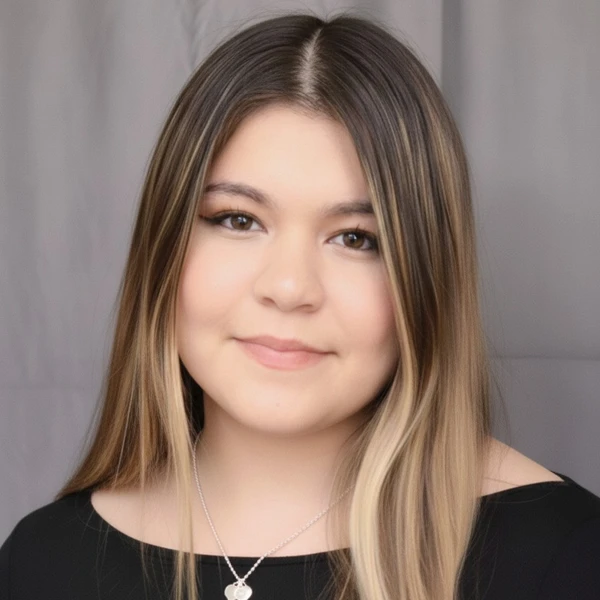
user profile avatar

Ashley Alvarado

1x

Finalist

General information

Location
Dallas, TX
Gender
Female
US Citizenship
US Citizen
Ethnicity
Hispanic/Latino
Religion
Christian

Hobbies & Interests

  • Psychiatry
  • Music
  • Neuroscience

Bio

I’m a high school senior at Townview Magnet Center with a strong interest in neuroscience, medicine, and mental health. I’m passionate about exploring how neuroscience can inform the understanding and treatment of mental health, particularly in children and adolescents. Through my experiences in healthcare, research, education, and advocacy, I’ve tutored elementary students in STEM and literacy, contributed to mental health advocacy with NAMI North Texas, and participated in neuroscience-related writing and research. I’m also a member of my school’s varsity choir. I plan to pursue a career in neuroscience as a pre-medical student and ultimately become a child and adolescent psychiatrist. I am interested in Universities with strong STEM research programs and a strong neuroscience program. Some of my school extracurriculars include: • NHS Activity Coordinator • Mind Matters President and Founder (Mental Health Club) • Varsity Choir Media Specialist • Executive Student Board (ESB) Media Specialist • Junior Class President • Chemistry Club Member

Education

Dallas County Community College District

Associate's degree program

2024 – 2027

GPA3.9 GPA

Rosie Sorrells Education and Social Services High School

High School

2023 – 2027

GPA3.8 GPA

Miscellaneous

Desired degree level:
Doctoral degree program (PhD, MD, JD, etc.)
Majors of interest:
Neurobiology and Neurosciences
Desired degree modality:
In-Person
Medical school interest:
Yes
English as first language:
Yes
Homeschooled:
No

Career

  • Bio Lab Intern

    Museums and Institutions · Perot Museum of Nature and Science

    Jan 2026 – Present

  • Neurodivergent Tutor

    Education · Wesley Rankin Community Center

    Jan 2025 – Jan 2025

  • Workforce Development Intern

    Public Health · Parkland Health - North Texas Poison Center Intern

    Jan 2026 – Jan 2026

Miscellaneous

Dream career field:
Medicine, Psychology, Neuroscience
Dream career goals:
Become a Child And Adolescent Psychiatrist
Work experience:
1 year
Has nursing license:
No
Leadership experience:
Yes

Future Interests

  • Advocacy
  • Volunteering
  • Philanthropy
FIAH Scholarship
I believe mental health support should be accessible to all, regardless of income. At my high school, students in the social services pathway study mental health and counseling. As we learned triggering topics, I noticed classmates needed to step out of the room. During my sophomore year, I did too. Getting mental health support that year helped me understand something my therapist told me: therapists sometimes need therapists to rely on. That year, I created the first mental health club at my school, Mind Matters, to give students a place to practice caring for themselves and their community. We held activities like writing positive affirmations in chalk and making slime. This was our way to pause after school every other Wednesday in room 106. We also made cards for older people in nursing homes during the holidays. As the club grew, I wanted to reach my community, and we decided to step in. We hosted a donation drive for children and teens in mental health care; we made cards and donated toys and hygiene products to children and adolescents at Metrocare Dallas. I collaborated with people from my club, church, and my neighborhood to donate and document our collaboration. Metrocare stood out to me because you can receive support regardless of your expenses or health insurance. I recommended Metrocare to a couple of family members who struggle with finding mental health support because of financial struggles. I saw my cousin, who struggled to get support growing up, finally receive it. The smile I saw on my cousin's face as she told me she was receiving mental health support from Metrocare, and how she wished she had received support earlier, encouraged me to help others, especially children, receive the same support regardless of any financial burdens. Since middle school,ol I always knew I wanted to be a child and adolescent psychiatrist; I doubted myself because I believed I was too “sensitive” to be a psychiatrist because of my past and because I cried if someone told me something personal and upsetting. Since I walked out of class, I felt like I couldn't handle mental health. My therapist had advised me that mental health is important regardless of whether you help others with mental health support. Now, I want to own my own practice and help families feel relieved knowing they can receive the same mental health support as everyone else, even without financial support. I hope the world can do the same; mental health support is just as important as physical support
Marcia Bick Scholarship
Growing up, I saw how financial hardship could affect more than a family's ability to pay bills. It could also determine whether a child had access to the support they needed to understand their own mental health. In my family, professional mental-health care was not always financially accessible. I watched siblings, cousins, and other people I loved navigate difficult emotions without the resources or guidance that could have helped them better understand what they were experiencing. Their circumstances did not define them, but I saw how growing up without mental health support could leave someone without the language or tools to recognize what they were feeling. Those experiences changed the way I think about mental health. I began asking questions: What happens when a child needs help but their family cannot afford it? What happens when parents want to support their children but do not know where to begin? Most importantly, what can I do to make sure children do not have to face those questions alone? My answer is to become a child and adolescent psychiatrist. I want to study neuroscience, pursue medical training, and eventually build a practice where families with limited financial resources can receive compassionate mental health care without feeling that seeking help will put their family's financial stability at risk. I also hope to work beyond a traditional practice by providing outreach to children experiencing homelessness and children in foster care or residential settings, offering care to young people who may have even fewer resources available to them. My own circumstances have taught me to pursue every opportunity I can find. I have challenged myself through advanced science courses and college classes while working toward my associate degree, and I have sought experiences that allow me to understand medicine and public health firsthand. As a high school student, I knew I wanted to make an impact early on. I founded a mental health club at my school to educate the younger generation about mental health and how they can educate others about mental health awareness. My high school is 76% economically disadvantaged. I want students to know early on that mental health struggles are acceptable, and you can reach out for support anywhere. Mind Matters serves 50+ students at my school and hosts open discussions to break the stigma around mental health. Students from disadvantaged backgrounds deserve opportunities because financial circumstances should not determine how far someone's potential can take them. A scholarship would make my undergraduate education more attainable and allow me to devote myself to service, preparing for a career in medicine, and helping future children and teenagers access mental health support. I want my education to become more than a personal achievement. I want it to become a way of ensuring that children and families who once felt that mental-health care was out of reach can finally feel that someone is there for them.
Young Women in STEM Scholarship
1. I am someone who is constantly asking “why?” Why does the brain respond to stress differently from person to person? Why do some experiences affect us for years while others do not? And, most importantly, how can we use what we learn to help people? My curiosity about the human mind led me to neuroscience and shaped my goal of becoming a physician-scientist specializing in child and adolescent psychiatry. But my motivation goes beyond a career title. I want my work to matter to people who may feel overlooked, misunderstood, or unheard, especially young people navigating challenges they may not yet have the words to explain. I have pursued that purpose through both science and service. This past summer, I interned at Parkland Hospital’s North Texas Poison Center, where I contributed to poison-prevention efforts reaching communities across Texas. At the Perot Museum, I help children engage with science through hands-on experiences and discover that science can be exciting and accessible. Each opportunity has shown me that knowledge is most meaningful when it improves someone else’s life. If I could do anything with my life, I would spend it discovering how the brain works and using those discoveries to help people. I hope to combine research, medicine, and advocacy to better understand mental health and improve care for young people. I do not simply want to learn about the world. I want to use what I learn to change it. What excites me most about STEM is that it allows curiosity to become something tangible. A question can become an experiment, an experiment can become data, and data can lead to a discovery that changes people’s lives. 2. I am especially interested in neuroscience because the brain remains one of the most complex and least understood parts of the human body. Information technology gives us increasingly powerful ways to study that complexity. From analyzing large datasets to processing medical images and identifying patterns in brain activity, technology can help researchers see connections that would otherwise be impossible to find. This intersection of technology and neuroscience excites me because it could transform healthcare. As a future physician-scientist, I hope to use technological tools alongside medical and scientific knowledge to understand mental-health conditions better and improve treatment, particularly for children and adolescents. I am especially interested in how data-driven approaches could help researchers identify patterns in conditions that can look different from one patient to another. I also believe positive impact comes from making technology useful and accessible, not simply advanced. Innovations mean little if the people who need them cannot benefit. I want to contribute to solutions that help researchers work more efficiently, physicians make better-informed decisions, and patients receive more individualized care. STEM has taught me that solving a problem begins with being willing to ask difficult questions. Information technology expands the tools we have to answer those questions, and I want to use those tools to make healthcare more informed, innovative, and human. 3. One of the greatest challenges I have faced has been learning to trust myself when I did not feel confident in my abilities. For years, academic pressure made me doubt myself, especially when I faced important exams or unfamiliar challenges. There were times when I knew I had prepared, yet anxiety made me question whether I was capable of succeeding. I began to associate difficult moments with the possibility that I was not good enough. Changing that mindset required me to redefine what success meant. Instead of expecting myself to excel immediately, I learned to ask for help, identify where I needed to improve, and allow myself to learn through mistakes. I began focusing less on proving that I was capable and more on actually becoming capable. That shift changed the way I approached opportunities. I became willing to pursue experiences outside my comfort zone, from healthcare internships and scientific programs to founding a mental-health organization. Each experience challenged me to trust that I could learn as I went. I learned that confidence does not always come before taking a risk; sometimes, it is built because you took the risk anyway. I still experience moments of doubt, but I no longer see them as proof that I should stop. They are reminders that I am challenging myself. Overcoming this challenge taught me something more valuable than how to handle one difficult exam: I learned that my abilities are not defined by one result. I can struggle, adapt, grow, and keep moving forward. That resilience will follow me wherever my education and career take me.
Ethel Hayes Destigmatization of Mental Health Scholarship
Understanding my mental health problems has shaped me to learn and treat others' mental health problems. My high school focuses on learning about different mental health disorders and how to treat others with mental health problems. While I was learning about triggering topics about self-harm in my Counseling & Mental Health course. I had to exit the class and take a deep breath to remind myself that my trauma doesn't define my career goal of becoming a Child and Adolescent Psychiatrist. Since that day forward, I decided to start my mental health club named "Mind Matters." Our mission is to have self-care activities in a school setting to promote self-care of incoming mental health professionals, including myself and my peers who plan to become social workers, psychologists, and psychiatrists. Discussing triggering topics that may reflect on an individual's trauma during class can make us feel like we aren't "good enough" for our future career, it's important to have self-care at an early age if you plan to go into the field of mental health, or even if you don't, it's important to be mindful and understand what your boundriaies are. The events we host include art night, making slime in class, and journaling. Mind Matters has hosted events partnering with Metrocare Clinics to raise funds for youth mental health. We raised over 100+ stress toys, hygiene products, art supplies, and stuffed animals for the youth in crisis at Metrocare. The members, partners, and the sponsor of Mind Matters have shaped me into the person I am at this moment. I am not letting my past define my future goals of helping others with mental health issues.
Gomez Family Legacy Scholarship
In my culture, earning a high school diploma was considered the "bare minimum." No one in my family has tried to achieve higher education beyond high school. What motivates me is being #1. Being #1 in my family to set foot in Europe, being #1 to earn a selective internship, and being #1 to know more about my culture. Watching my parents come from Mexico and work hard to achieve their goals, but not for themselves, but for my siblings and me. As my parents praise my siblings and me for doing well in school and look down on themselves for not getting an education, all I can think about is their hard work for this country. My dad, who is a construction worker, and my mom, who cleans houses for a living, are real-life stereotypes of a Mexican household. My parents reflect on their education, not graduating from high school, makes them feel like they cannot help me whenever it comes to homework, college advice, and trying to understand what "FAFSA" is. Therefore, I don't have connections, and my family didn't donate a 100k building to Harvard; however, my parents motivate me to pursue a higher education after college. I don't need parents with money or an education; I just need my parents who support me while trying to support themselves and my family. Sometimes I struggle getting college advice and financial aid advice, but I am thankful for my school's Education is Freedom (EIF) team. EIF has supported me while stressing about my SAT's, college advice, and just general advice whenever it comes to school. EIF supports students who are like me, mainly first-gen, low-income, and struggling to find which colleges they want to attend. My EIF advisors have been in the same scenario as I am, first-gen, and trying to figure out which college they plan to attend. I am incredibly thankful for the opportunities EIF has supported me with throughout my high school journey, which also primarily motivates me. The only college my parents know about is our local community college, Dallas College. And of course, Harvard University. Just like the phrase "we walked, so you can run" completely applies to my parents, my parents planted a life for me in the U.S., so I can do great things and earn a higher education in this country. I am dedicating this last part of my essay to my mother, Michelle Granados, and my father, Miguel Alvarado. Gracias por todo lo que haces, te amo.
Ashley Alvarado Student Profile | Bold.org