Hobbies and interests
Baking
Writing
Reading
Weightlifting
Running
Hiking And Backpacking
Biking And Cycling
Board Games And Puzzles
Cooking
Bible Study
Camping
Economics
Interior Design
Kayaking
Liberal Arts and Humanities
Movies And Film
Music
Politics and Political Science
Self Care
Real Estate
Studying
Walking
Community Service And Volunteering
Reading
Adult Fiction
Christian Fiction
Business
Education
I read books multiple times per week
Ashleigh Johnson
1x
FinalistAshleigh Johnson
1x
FinalistBio
As a nontraditional student, full-time mom of two, and first-generation college graduate-in-progress, I’ve pursued higher education with heart, grit, and often a toddler on each hip. I'm currently earning my graduate degree in Speech-Language Pathology, fueled by a deep passion for helping individuals with communication challenges—an interest rooted in caring for my autistic brother and later nannying for a child with a speech disorder.
My background is steeped in service. I’ve worked in group homes supporting adults with disabilities and led global outreach and teaching initiatives through Youth With A Mission. That drive to serve continues today in my real estate and freelance work—efforts that help support my family as I study full-time, even when the returns are modest.
Despite financial strain, I’ve maintained a 3.9 GPA, earning spots on the Dean’s and President’s Lists and recognition through multiple scholarships and Phi Theta Kappa honors.
These scholarships would provide more than just financial relief—they’re a lifeline that makes it possible for students like me to keep going without sacrificing our families’ well-being. As a single-income household in today’s economy, it’s tough. But I remain fully committed to this path, determined to become a compassionate, skilled SLP who gives back—because I’ve been on the receiving end, and I know just how much that support can mean.
Education
University of Wisconsin-Eau Claire
Master's degree programMajors:
- Rehabilitation and Therapeutic Professions, General
- Health Professions Education, Ethics, and Humanities
- Health Professions and Related Clinical Sciences, Other
- Physiology, Pathology and Related Sciences
- Communication Disorders Sciences and Services
The University of Montana
Bachelor's degree programMajors:
- Social Sciences, Other
Miscellaneous
Desired degree level:
Doctoral degree program (PhD, MD, JD, etc.)
Graduate schools of interest:
Transfer schools of interest:
Majors of interest:
- Communication Disorders Sciences and Services
- Special Education and Teaching
- Physiology, Pathology and Related Sciences
Career
Dream career field:
Hospital & Health Care
Dream career goals:
To work as an SLP with either pediatric populations or adults recovering from stroke, helping them regain vital communication abilities.
Direct Support Professional for grown men with differing abilities
Black Hills Works2014 – 20151 yearLeader, Volunteer, Teacher, Mentor
Youth With A Mission2015 – 20194 yearsNanny
Nanny2019 – 20212 yearsRealtor
Realtor2022 – Present4 years
Sports
Cross-Country Running
Intramural2011 – 20121 year
Public services
Volunteering
Healthy Beginnings Pediatric Therapy — Volunteer2023 – 2024Volunteering
Youth With A Mission — Leader, Volunteer, Teacher, Mentor2015 – 2019
Future Interests
Advocacy
Politics
Volunteering
HeySunday Scholarship for Moms in College
For as long as I can remember, I’ve been drawn to working with individuals with differing abilities. My older brother has autism, and as the youngest in my family, I was deeply influenced by watching his journey unfold. I learned to see the world through a more compassionate lens, and I grew up naturally advocating for inclusion and understanding. That foundation shaped everything I believed about human potential—and gave me my first sense of purpose.
After high school, I worked as a missionary, serving in various countries. I had the opportunity to build homes in Africa, teach in schools in Malaysia, help remote villages in Nepal get running water, and so much more. I have done humanitarian work in over 13 countries, including my own. These trips were long and challenging, but it was a privilege to see a different side of the world and gain a newfound appreciation for life.
Seeing the impact that dedicated professionals had on my brother’s success inspired me to pursue a field where I could help other families. I started with special education, but after I nannied for a girl with a speech disorder, my mind was quickly changed. Attending her therapy sessions and working with her ignited my passion for communication. This led me to speech-language pathology, where I aim to work with children and stroke survivors. I’m excited to be part of a profession that truly changes lives.
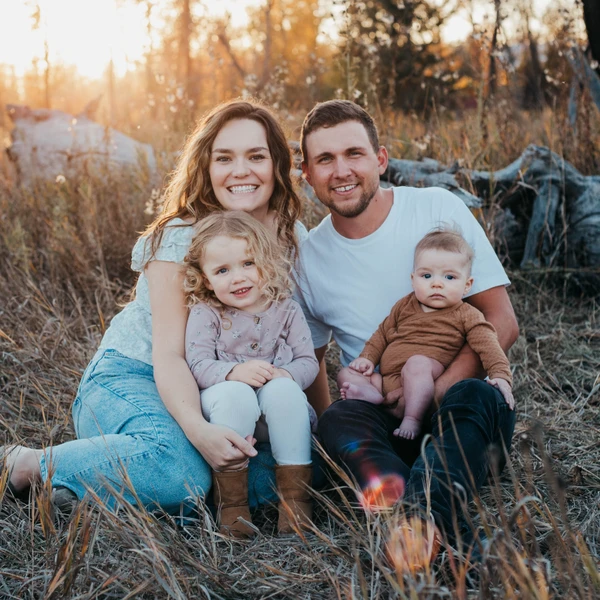
As a mother of two young children—an 11-month-old and a three-year-old—who is also a full-time graduate student, the challenges are real and relentless. My days begin before sunrise and often end long after bedtime routines are complete. I juggle diapers, meal prep, and playtime with research papers, clinical documentation, and endless reading. I always utilize naptime to complete assignments with one eye on the monitor and often finish assignments with a baby on my lap. It’s not glamorous—but it’s real, and it’s mine. And I'm proud.
Despite the exhaustion, I find a deep sense of purpose in what I’m doing. Every sacrifice, every late night, every missed social event feels worth it when I remember why I started. I want my children to see that dreams don’t expire with motherhood—that ambition and caregiving can coexist. I don't regret my early missionary days when I "should have" gone to school. Those days shaped me into who I am today. And I don't regret having kids or starting school later in life. I just hope my kids remember clapping at my graduations (my daughter has already been to my undergrad graduation, now both will be there when I receive my master's) and watching me chase something that matters. I want both my kids to grow up knowing that hard work, resilience, and love can move mountains.
Speech-language pathology is the perfect intersection of everything I care about—advocacy, communication, and human connection. Being a mom has only strengthened my ability to show up for others with empathy and grace. I’m not just pursuing a degree—I’m stepping fully into the life I was meant to live, both for myself and for the little ones who call me “Mom.”
Jennifer Gephart Memorial Working Mothers Scholarship
Caregiving has always been a constant in my life—first as the youngest of four, watching my mom model selfless care, and later, as someone who stepped into those same roles myself. Before becoming a mother, I was a nanny to numerous families and a Direct Support Professional for adult men with differing abilities. I cared for children with speech and behavioral challenges. These early experiences helped me understand the deep emotional labor of caregiving and the value of being present for someone when they need support the most. However, when I became a mother myself, I realized that it was much more taxing and beautiful than I had ever anticipated.
As a mother of two young children (an 11-month-old and a 3-year-old) and a graduate student pursuing a degree in speech-language pathology, the balance between caregiving and professional growth has never been more real—or more challenging. My days start early and end late. They’re filled with feeding, playing, cleaning, soothing, studying, documenting, attending clinical rotations, writing papers, and squeezing in self-care when I can. Often, I’m reading journal articles with a baby on my lap and completing assignments during nap time.
It’s a life that demands constant multitasking, resilience, and flexibility—and it’s made me stronger in ways I never anticipated (and yes, more exhausted too). Still, I hope I’m showing my kids that no matter your age or stage in life, you can pursue your dreams and passions. I hope my daughter remembers coming to my graduations—both undergrad and grad school—and understands the weekend hours I spent studying or the nights I missed bedtime to meet deadlines weren’t time lost, but time invested in a bigger purpose. I want her to grow up knowing that it’s okay to work hard, to make sacrifices, and to chase meaningful goals, even when it’s uncomfortable.
Being a mother has not slowed down my career goals; it's refined them. I’ve become more aware of how caregivers often operate unseen, especially when navigating healthcare systems with children or family members with communication challenges. I want to be a speech-language pathologist who treats patients and supports and empowers the caregivers who often do the most challenging work behind the scenes. I’ve lived that tension of giving your all to your family while still holding onto your dreams—and I know how much it means when someone sees you and steps in to help.
Like Jennifer Gephart, I believe that motherhood and professional growth don’t have to be opposing forces. They can fuel one another. The emotional endurance, adaptability, and compassion I’ve developed through motherhood have directly informed my approach to clinical care. I know how to show up for people in moments of vulnerability because I live those moments every day with my own children.
This scholarship would provide financial relief for my family and allow me to focus more fully on becoming the kind of clinician who walks alongside families, especially those stretched too thin, with empathy and expertise. I’m committed to building a career that supports communication access, uplifts caregivers, and honors the dual identity of being both a mother and a professional. I hope that the work I’m doing now will ripple outward, benefiting not just my own children but the many families I’ll serve in the years to come.
TRAM Panacea Scholarship
A national and global health issue that I am deeply passionate about is the intersection of mental health and communication, particularly for individuals who have experienced a stroke. Many of these individuals face not only physical challenges but also significant emotional and mental health obstacles as they struggle to communicate and navigate a very different life post-stroke. They're life is flipped upside down virtually overnight. As a future speech-language pathologist, I am committed to addressing this issue by helping individuals regain their ability to communicate while also recognizing the mental health challenges they face.
My passion for this issue stems from both personal and professional experiences. A stroke can disrupt not only a person's ability to speak but also their entire sense of self. The emotional and psychological toll that communication difficulties can cause is often overlooked. For stroke survivors, being unable to express themselves can lead to frustration, isolation, and depression. The inability to communicate effectively compounds the mental health struggles, making recovery even more complicated.
As someone who has experience as a caregiver, I understand the importance of empathy and support in unimaginable circumstances. I have cared for children with speech delays, worked as a Direct Support Professional for adults with differing abilities, continue to walk alongside my best friend who has stage four metastatic breast cancer, and am a mother myself. These roles have shown me how important it is for people to feel heard and understood, especially when they are facing major life changes.
Stroke survivors often experience an emotional burden in addition to physical recovery. When they lose their ability to communicate in the ways they once could, it can lead to a loss of identity and a sense of helplessness that severely impacts their mental health.
In speech-language pathology, addressing both the physical and emotional aspects of recovery is crucial. Helping someone regain their ability to communicate can restore their sense of independence and significantly improve their emotional well-being. This is particularly true for stroke survivors, whose mental health can be drastically impacted by their communication challenges. I hope to be a part of the healthcare team that addresses both these aspects, providing holistic care that not only restores communication but also nurtures the emotional healing of the individual and their loved ones.
The intersection of mental health and communication post-stroke drives my desire to pursue this career. I want to support individuals in their recovery by helping them reclaim their confidence, independence, and sense of self. By integrating mental health awareness into my practice as a speech-language pathologist, I believe I can make a lasting impact on stroke survivors, improving both their communication abilities and their overall quality of life.
Bulkthreads.com's "Let's Build Together" Scholarship
What I want to build is a career that helps people communicate when it's hard. That might sound simple, but it can change everything — for the individual, their family, and their daily life.
I’m working toward becoming a speech-language pathologist, and my focus is on real, functional support. That might mean helping a child with a rare disorder access communication through AAC, coaching a parent on how to support their toddler’s language at home, or helping a stroke survivor regain their ability to express basic needs. I’ve seen the impact communication has — both from personal experience with my brother, who has a learning disability, and from working with kids in homes and clinics. I know how frustrating it is when someone can’t get their message across, and how important it is to meet people where they are.
What I’m building is also a life my kids can look at and see effort, follow-through, and purpose. I’m a mom of two young children, and going to school while parenting isn’t easy — but it matters. I want them to see that it's possible to pursue meaningful work while still showing up for your family. Even when it's hard. I want to model resilience, not perfection.
Long term, I want to bring services to communities that often get overlooked. I live in Montana, where many rural families don’t have consistent access to pediatric therapy or post-stroke therapy. I want to be part of closing that gap. Not with flashy programs or one-size-fits-all solutions, but by building relationships, showing up consistently, and offering therapy that actually fits into people’s lives.
This path isn’t about trying to “change the world” — it’s about doing my part in a way that’s sustainable and useful. I want to build something steady. Something real. And something that supports other people in building their own futures, too.
Rebecca Lynn Seto Memorial Scholarship
Working with a child with a rare disorder like Rebecca requires more than clinical knowledge; it demands presence, patience, creativity, and connection. As a future speech-language pathologist with firsthand experience supporting individuals across developmental stages—and as a sister to a brother with a learning disability—I’ve seen that success often begins not with a protocol, but with a relationship. Communication isn’t always verbal, and progress doesn’t always look linear. Sometimes, it starts with a look, a gesture, a shared laugh—the kind of moments that tell you you’ve earned trust.
Rebecca’s story reminds me of a young girl I nannied who had a speech delay. We didn’t begin with flashcards or drills—we began by becoming playmates. I attended her speech sessions, not just as an observer, but as an extension of her support system. At home, we folded her goals into games, snack time, and storybooks. Her breakthroughs didn’t come in silence between prompts, but in joyful moments of connection when she didn’t even realize she was “working.” Just like with Rebecca, progress came not just through structured therapy but through responsiveness, joy, and the safety of relationship.
If I had the opportunity to work with someone like Rebecca, I’d begin by listening—not just to her, but to her family and those who know her best. Families are the experts in their own child. Supporting them is a part of the job. I would want both Rebecca and her loved ones to feel heard, validated, and respected as we co-create a therapy plan. One of the most valuable lessons I’ve learned in graduate school is that there’s no “one size fits all” therapy approach. You can’t pull out a standard plan and hope it fits; therapy has to be molded around each unique child and their lived experience.
With a rare disorder, there’s often no roadmap. That’s when observation, collaboration, and flexibility become your compass. I would approach each session with curiosity and openness, using what I observe—not just in structured tasks, but in play, in mood, in energy—to shape how I respond. I’d assess not only a child’s communication needs and strengths but also what brings them joy, what soothes them, and what helps them feel safe. Multimodal supports—AAC, gestures, sign, visuals—can be life-changing when verbal communication is difficult or not feasible, but only when they are accessible, meaningful, and tailored to the child’s world.
When I picture Rebecca lighting up during “Happy Birthday” or connecting with others at church, I see a child who wasn’t just receiving support—she was being celebrated. That sense of belonging is just as crucial as any therapy target. Families are the constant across all environments—school, home, community—and empowering them ensures carryover that no weekly session alone can provide. That’s why I’m passionate about caregiver coaching, collaborative goal setting, and embedding strategies into real life. Therapy doesn’t stop at the clinic door—it thrives in the daily, unpredictable rhythm of home life. And ultimately, ensuring that my clients experience a high quality of life—not just improved scores—is what I believe matters most.
Rebecca’s legacy reminds me that the best therapists don’t start with data—they start with heart. They meet children where they are, see the person behind the diagnosis, and build bridges into meaningful communication. My ambition is to be one of those bridge-builders: someone who sees possibility where others see limitation, and hears potential, even when a child doesn’t speak.
I’m honored to apply for this scholarship in Rebecca’s name—and more committed than ever to carrying her spirit into my future work as a speech-language pathologist.
Andrea Worden Scholarship for Tenacity and Timeless Grace
I never thought I’d end up here—pursuing my master’s degree in Speech-Language Pathology with two young kids at home, one on my lap, the other climbing up my leg as I type discussion posts and watch lectures. I’m a mom, wife, former missionary, and graduate student living in rural Montana and attending school online. My path has been anything but traditional.
After graduating from high school in 2013, I spent the next six years participating in humanitarian efforts across the globe. After time overseas, I joined the staff at Youth With A Mission as a full-time volunteer. During this time, I got married, mentored and taught young adults, led training schools, and led multiple trips overseas, where we had the opportunity to build homes in Africa, teach in schools in Malaysia, help remote villages in Nepal get running water, and so much more. I have done humanitarian work in over 13 countries, including my own. These trips were long and challenging, but seeing a different side of the world and gaining a newfound appreciation for life was a privilege. The goal was to leave a mark on the communities we were serving and the hearts of the students who came with us. We wanted to teach them that they could make a difference anywhere, even in their backyard, by simply showing up when someone needs them.
In 2019, we decided to leave YWAM and move to China. We moved in with my in-laws temporarily, or so we thought. Then, COVID hit a few months later. We found ourselves stranded in a new city and learned our plans to move to China were dashed as the group we intended to join was barred from reentry. This was a highly unexpected turn of events.
Additionally, just a month before we left YWAM, my brother, who was only one year older than I, tragically lost his life. This was the first loss I had experienced of an immediate family member, and navigating that grief, isolated in a new city, was one of the most daunting challenges I’ve ever faced. We went from a period of profound fulfillment serving in overseas missions to confronting the sudden loss of a loved one and the dissolution of our overseas mission aspirations. Amidst the grief, it seemed all our plans and dreams disintegrated in a matter of months, leaving us adrift without a clear path forward. This was, without a doubt, one of my most challenging seasons in life. However, with time, counseling, and perseverance, I emerged from that season stronger than ever. I gained a deeper understanding of life’s transience, recognizing the importance of cherishing moments with loved ones and pursuing our dreams relentlessly, as unforeseen obstacles may alter our trajectory at any moment. This season taught me resilience and the importance of persevering, knowing there are still great opportunities on the other side. And this perspective has helped me to be a more present mother and wife as I navigate the demands of my graduate studies.
That season of loss also brought clarity. One of my brothers has ASD, and growing up, I witnessed firsthand how much of a difference intentional teachers and professionals made in his life. Their support not only helped him succeed, but it also shaped the way I saw the power of advocacy and specialized care. After stepping away from missions, I spent several years nannying a young girl with a speech disorder. I attended her speech therapy sessions and worked with her at home on the strategies her SLP recommended. Without realizing it at the time, those simple, consistent moments laid the groundwork for my future, and watching her confidence grow as she found her voice sparked something deep in me—a love for communication and a realization of just how transformative it can be. That experience and my family's journey ultimately led me to pursue speech-language pathology, hoping that I could be for someone else what others were for my brother and that little girl.
I’ve taken what I’ve lived through—grief, detours, delayed dreams—and channeled it into empathy. I’ve worked in a group home caring for men with differing abilities and volunteered with children and families navigating early intervention. My heart has always been to help those who need it, for those who are often overlooked or misunderstood. And while my journey here has been anything but linear, every step has been rooted in the desire to show up, listen, and serve.
My goal is to either work with children who have speech disorders or with stroke victims; I think that regardless, the work SLPs do is changing lives, and I'm excited to be a part of it.
I am 30 years old, a work-from-home/stay-at-home mom/student, and will be going into my second year as a graduate student. I hope that I can set an example to my kids that, despite your age, your status in life, or your busy schedule, you can accomplish anything, even going back to school and receiving your degree when it seems like all the odds are against you.
Andrea Worden believed in seeing people beyond their circumstances. I try to live that out daily—in how I parent, study, and show up for people in my life. Kindness, perseverance, and compassion aren’t extras to me—they’re fundamentals I intend to carry into my career.
Throughout my college career, I’ve worked hard to balance my studies with financial responsibilities. During my freshman year of undergrad, I worked full-time, and after having my daughter in 2021, I have continued with part-time jobs to help cover bills. Despite these efforts, the financial strain persists. Support from this scholarship would lighten the financial burden on my young family and allow me to focus more fully on my clinical training, which I believe will have a lasting impact on the people I hope to serve.
This isn’t the story I imagined for myself, but it’s one I’m proud of. And I know it’s only just beginning.
Sloane Stephens Doc & Glo Scholarship
My personal and professional experiences have shaped my journey in profound ways.
Straight out of high school, I set off and became a Christian missionary, which gave me the unique opportunity to travel, serve, and immerse myself in diverse cultures and communities. This experience not only broadened my worldview but also deepened my understanding and appreciation for different backgrounds, beliefs, and ways of life. It taught me the importance of connection, communication, and empathy, which has greatly influenced how I approach relationships and will approach working as a speech pathologist once I begin my career.
After my time in missions came to a close, I had the privilege of working with a young girl who had a speech delay. For two years, I nannied her and worked closely on speech exercises while accompanying her to speech appointments. This hands-on experience was pivotal in sparking my interest in speech-language pathology, and it solidified my passion for helping others in similar situations. Although I had originally planned to pursue a degree in special education, I quickly discovered I had a deep passion for the more niche area of speech-language pathology. Watching her progress and overcome obstacles made me realize just how impactful communication can be in shaping a person’s life, and I wanted to be a part of that endeavor.
My experiences as a missionary and nanny were instrumental in guiding me toward a career in speech-language pathology, and I sought to build on these foundations. From 2022-2023, I volunteered and shadowed at Healthy Beginnings, which gave me invaluable insight into early intervention and the field of speech-language pathology. This opportunity further solidified my commitment to this career path and fueled my desire to make a difference in the lives of children and families facing speech and language challenges.
With a strong background in Communicative Sciences and Disorders, I’ve had the chance to expand my knowledge of speech, language, and communication disorders. Before pursuing this path, I worked in a group home where I cared for 13 grown men with differing abilities. This experience deepened my empathy and understanding of how communication needs vary across different populations, and it solidified my belief that everyone deserves access to the support they need to communicate effectively.
On a personal level, my journey has been shaped by my family. As a daughter, sister, wife, and mom of two, I’ve witnessed firsthand how essential communication is for creating connections and providing support. My brother has autism, and growing up with him gave me a unique perspective on the challenges faced by individuals with speech and language difficulties. I’ve watched him navigate his world and communication struggles, and this has played a significant role in my desire to help others overcome similar obstacles.
Additionally, I’ve also experienced the profound loss of one of my other brothers at the young age of 24. Losing him was a heart-wrenching event, and it has profoundly impacted my approach to communication, empathy, and understanding. The grief and challenges of that loss have deepened my desire to help others, especially those who are facing personal or family struggles, communicate through their emotions, and feel supported during difficult times.
All of these experiences have led me to pursue a career in speech-language pathology. I am currently working on my masters for speech-language pathology. My goal is to provide meaningful, personalized support to individuals, helping them develop the skills they need to communicate confidently and effectively. I hope to be there for people during their most challenging seasons, offering not just professional expertise, but empathy, understanding, and encouragement as they navigate their unique journeys.