Gender
Female
Ethnicity
Black/African
Hobbies and interests
Art
Poetry
Spirituality
Reading
Anthropology
Childrens
How-To
I read books daily
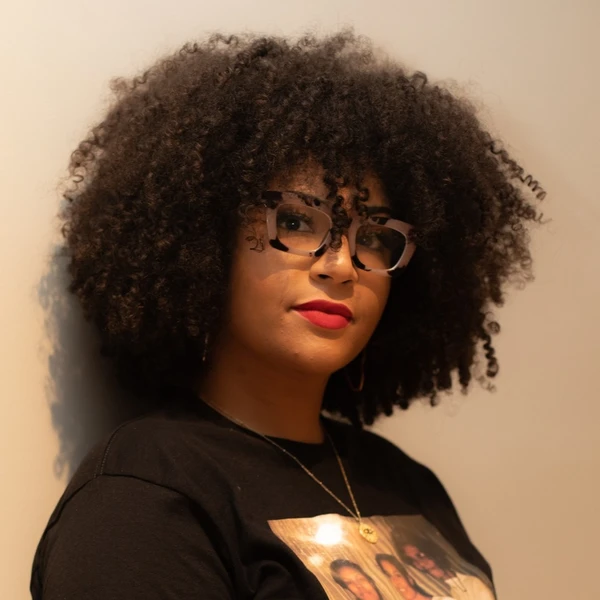
Ashlee Phillips
1x
Finalist1x
WinnerAshlee Phillips
1x
Finalist1x
WinnerBio
I am a passionate artist, advocate, and student clinician who utilizes my innovative, organizational, and leadership skills to support others on their mental health journey. Through an integrative approach, with emphasis in social justice and narrative-based techiques, I aim to make art therapy accessible to all communities by building cultural wellness and creative equity one client at a time.
Currently, I am interning (450+ clinical hours thus far) at Martin & Muir Counseling as an art therapy student clinician, providing individual and group therapy services in after school programming grades 6-12, workshops with adolescents, and co-facilitating Intensive Outpatient Programming (IOP) with a local recovery house for substance abuse.
Going forward, I hope to continue to create healing spaces that go beyond the bounds of disciplinary definition, into the iconic and institutional impact that shifts the trajectory of art therapy and mental health for all.
Education
University of Louisville
Master's degree programMajors:
- Student Counseling and Personnel Services
GPA:
3.8
Spalding University
Bachelor's degree programMajors:
- Psychology, General
Minors:
- Design and Applied Arts
- History
GPA:
4
Jefferson Community and Technical College
Associate's degree programMajors:
- Psychology, General
GPA:
3.6
Atherton High
High SchoolGPA:
3.4
Miscellaneous
Desired degree level:
Master's degree program
Graduate schools of interest:
Transfer schools of interest:
Majors of interest:
- Community/Environmental/Socially-Engaged Art
- Sociology and Anthropology
- Community Organization and Advocacy
- Mental and Social Health Services and Allied Professions
Career
Dream career field:
Mental Health Care
Dream career goals:
To found a nonprofit organization that provides wrap around services and communal art therapy.
Teaching Artist
Fund for the Arts2023 – Present3 years
Arts
Artists and Afros
Visual ArtsImmersive Installation: The Living Room2025 – 2025Louisville Magazine
PhotographyConstellations III2023 – 2024Speed Art Museum
Visual Arts"Can I Grow? The Metamorphosis of the Black Woman"2022 – 2022
Public services
Advocacy
Sisters’ Keeper Achieving Resilience and Success (SKARS) — Advocate2023 – 2023Volunteering
Feed Louisville — Kitchen Prep2024 – Present
Future Interests
Advocacy
Volunteering
Philanthropy
Entrepreneurship
Bick First Generation Scholarship
Being a first-generation college student means perseverance, growth, and legacy to me. My pursuit of post-secondary education began in 2010, after graduating from high school with AP credits and a dream of becoming a cardiologist. It didn’t take long for reality to set in: academic probation, moving back home, and a 10-year gap full of life transitions, including job loss, homelessness, motherhood, and a pandemic. I wouldn’t receive my first college degree until 2021, an Associate's in Psychology from a local community college at the age of 29, while living in a subsidized housing community for single mothers pursuing higher education as a tool to end family poverty. While my participation in this program would earn me my Bachelor's in Psychology, Summa Cum Laude, and complete my first year of graduate school, it was not without trials, tribulations, and tears.
At the end of 2020, my daughter, who was 4 years old, and I moved into our own apartment after living in my mom's one-bedroom apartment for almost 3 years. Full of gratitude, hope, and energy, I was excited to face the challenges of being a non-traditional parent-student while helping my daughter navigate elementary school. Over the course of the last almost 5 years, I have doubted myself as a mother, I discovered art therapy, I questioned if I could ever become self-sufficient, I’ve maintained a 4.0 GPA, I struggled with self-love, and I’ve learned to show myself grace, all while my child is watching. Being able to consistently show up as a woman, mom, and student, regardless of how it may have looked at times, affirmed that becoming a mental health professional is what I’m meant to do: because healing people, help people heal.
I am currently a 2nd-year art therapy graduate student at the University of Louisville, where I am interning at a local community organization as a student clinician. This scholarship would support me financially as I continue to grow not only as an art therapy student but also as a mother, professional, and member of my community. Completing my master’s degree would be the ultimate gift and a token of my appreciation for my support system, who have offered their time, love, and understanding. Becoming the “first” in my family to graduate from college is about creating opportunities for more 'firsts.' First entrepreneur, first Ph.D candidate, first homeowner, first founder, first step. I may be a first-generation graduate, but I won’t be the last.
Thank you for your consideration.
Therapist Impact Fund: NextGen Scholarship
My passion for mental health sparked in 2016, after being diagnosed with Postpartum Depression following the birth of my daughter. Dealing with the responsibilities of motherhood, becoming a single parent, and having a limited support system, I found myself searching for something to help me navigate life's transitions. I discovered art therapy in 2021 while participating in a housing program for single mothers pursuing post-secondary education as a tool to end generational poverty. During the last 4 ½ years, I have gained clinical knowledge as a student within the mental health field, and directly benefited from the power of therapy as a tool to take back control of my life despite past choices. Feeling empowered to reinvent myself is the very resource I aim to provide as an art therapist, reminding clients that they possess the tools within to become who they are, regardless of life's challenges.
If I could make one significant change in today's mental healthcare system, it would be providing free state-mandated therapy for at-risk/offending youth in the juvenile justice system. As an art therapy student-clinician who works primarily with black youth (ages 11-17) in local community centers, I see firsthand the impact that a lack of access to mental health care can have on youth and their families. Keeping in mind the cognitive and emotional development that takes place within the middle/late childhood stages, combined with external factors such as poverty and crime, I have recognized the inability to regulate emotions, lack of socio-emotional skills amongst peers, and the absence of self-discovery, resulting in participants being sent to alternative schools, becoming first time offenders, and unfortunately at times death.
Implementing a nationwide, culturally responsive, trauma-informed, restorative initiative designed to assist at-risk youth allows for collective learning within the mental health profession across the board. It provides opportunities for student clinicians, such as myself, to work with a population across the scope of community care, including schools and detention centers, removing the access barriers many of these clients face. It also creates space for exposure to different types of mental healthcare, like art therapy, that promotes the importance of culturally inclusive care, specifically within BIPOC communities, dismantling the stigma of treatment within these populations.
The most significant benefits of teletherapy are its accessibility and flexibility for clients. Accessibility, within the scope of transportation, is always a potential barrier that clients can face; However, with the rise of teletherapy, that barrier is eliminated, allowing clients to receive adequate care from the comfort of their homes or a designated safe space. While teletherapy can be beneficial for everyone, it can be especially effective for older adults, people with disabilities, people who live in rural areas, and those facing financial barriers. The flexibility teletherapy offers is endless: clients can have sessions in their home/safe space, and it meets each client's scheduling needs.
The biggest challenges within teletherapy are building rapport and client engagement. Building a safe, authentic, and congruent therapist-client relationship in person presents its own challenges, and they become amplified when neither therapist nor client can rely on nonverbal cues and body language to get to know one another virtually. When a client receives treatment at home, distractions such as family members and pets can make it harder for the therapist to keep the client engaged. As mental health professionals, we can be more innovative in our teletherapy approach by adapting interventions by using tools like Jamboard. Jamboards would allow us to replace talk therapy with a creative approach, such as emotional reflection through collage and playing virtual games, both of which support engagement and build rapport.
Joybridge Mental Health & Inclusion Scholarship
My passion for mental health was sparked in 2016, after being diagnosed with Postpartum Depression following the birth of my daughter. Dealing with the overwhelming emotions of being a new mom, paired with also becoming a single mother in what felt at times, like overnight, I was slowly slipping away from the person I knew myself to be. Both physically and mentally, I was becoming unrecognizable, and life was not slowing down, as I experienced my car being repossessed and an eviction. Over four years, I began exploring various tools, including crystals, meditation, and affirmations, to enhance my mental well-being. However, when I first discovered art therapy, I experienced a transformation that I had never thought possible. It was as if I had finally found my holy grail, a tool that not only helped me heal but also inspired me to help others through art therapy.
While pursuing my Bachelor's Degree in Psychology in 2023, I began to see an art therapist once a week through a housing program I was enrolled in. I’ve always been creative and consider myself a multidisciplinary artist, yet this level of creativity was different. It was allowing me to release what was no longer serving me, while also helping me to identify my emotions, assess past situations, and proceed to make better choices, while at times creating tangible artwork to display in my home as a gentle reminder of the work I’ve done so far and will continue to do. I wanted to provide that same feeling to others; I wanted to become an art therapist.
During my undergraduate studies, I was selected to be part of a pilot program, Sisters’ Keeper Achieving Resilience and Success (SKARS) program — a culturally responsive, trauma-informed, restorative initiative designed to support Black girls in Jefferson County who are at risk or involved in the juvenile justice system. This program equipped me with the necessary tools and resources to become an effective advocate. It was through this program that I discovered the transformative power of art therapy in the lives of young individuals. My mentee, in particular, made significant progress through the artistic tools I provided, such as weekly junk journaling, which served as an alternative outlet for situations beyond her control. This experience further solidified my conviction that art therapy was the next step in my career path.
Present day, and I am currently in my 2nd year of the M.Ed. in Counseling and Personnel Services with a concentration in Art Therapy program at the University of Louisville. My goal is to join the 6.5% licensed African American Art Therapists in the U.S., and create culturally empowering practices that serve historically marginalized communities. As a black woman who consistently defies the stereotypes placed upon me due to past choices, I know the power in reinventing yourself through artistic mediums as a way to redefine and resist what society has deemed to be true. Thus far in my journey as a student clinician, I have had the honor of working in predominantly Black and Brown neighborhoods with youth, young adults, and women as they navigate their daily environments, simultaneously activating their innate ability to advocate for themselves. My hope is to continue taking up space both as a clinician and an advocate, creating more room for individuals to access the power of art therapy, while restoring their natural ability and right to learn as they progress.
Marsha Cottrell Memorial Scholarship for Future Art Therapists
WinnerThe year is 2020, and I’ve just moved into my apartment after living with my mom and 4-year-old daughter in a one-bedroom, one-bath apartment for the last three years. I was accepted into the Family Scholar House, a program designed specifically for single mothers providing wrap-around services, under one condition: I had to enroll in post-secondary education. Over the next 4.5 years, I would obtain two degrees and complete my first semester of graduate school. The journey was not without its challenges, as I navigated the academic world as a non-traditional, first-generation, single-parent student, but these struggles only fueled my determination.
One of the services the program offered was weekly Art Therapy, both in group and individual formats. I attended my first group session and knew from that moment forward that I was meant to become an art therapist. These sessions have not only shaped my career path but also had a profound impact on my personal growth. I’m currently a 2nd year art therapy student at the University of Louisville. I’ve had the honor of working in collaboration with the houseless, youth, and substance abuse populations thus far as a student clinician, and I have left each group session feeling that the work I do as an art therapy student is empowering, impactful, and necessary. Being able to share space with women who are experiencing homelessness and the conditions that come along with it, to create watercolor portraits, or collages while also being transparent about life choices, mistakes, and lessons is the reason I continue to push through my trials.
I often say, my art is my activism. Working with individuals who society has deemed as unfit, unworthy, or undesirable allows both me and the participant to humanize their lived experience through art, despite the “norms” we’ve been made to abide by. Being able to release in real time through wheel throwing or sculpting reminds me, as a mother, student, and person, that what I feel and how I feel are normal, and that they will always be valid. I intend to provide that same level of clarity and recognition to each participant I come in contact with. I’m currently interning at a local organization, the Center for Women and Families, that provides wrap-around services to women experiencing Domestic Violence, Intimate Partner Violence, and Sexual Abuse. Over the next year, as an art therapy intern, I plan to continue growing in my knowledge as a student clinician while also furthering my efforts to work with populations who have temporarily forgotten the power they possess within themselves. My dream is to be of and in community, and to serve as a tool of artistic and creative expression for those who need it most.