user profile avatar

Aryaa Dhakar

1x

Finalist

General information

Hobbies & Interests

  • Boxing
  • Martial Arts
  • Marketing

Reading

  • Business
  • Psychology

I read books multiple times a week.

Bio

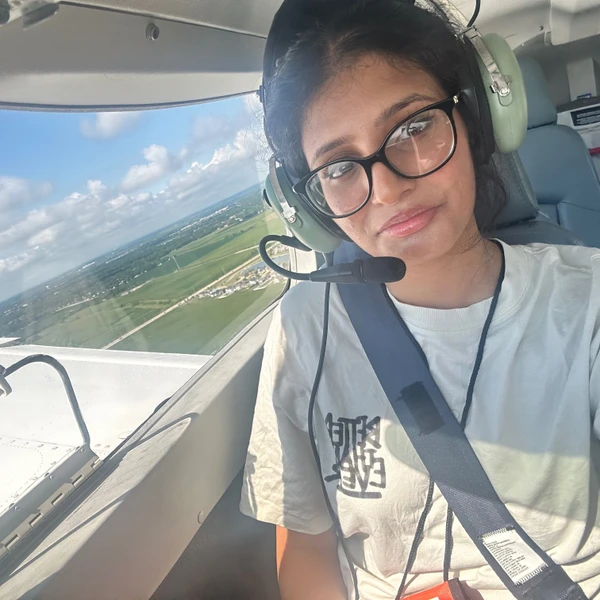
Aspiring mechanical engineer and mathematician pursuing a career in aviation technical sales. Aerospace research experience at Rice University, national first-place Mars habitat design win, 2x Trailblazer Aerospace Scholar with flight hours, and state-ranked boxer / international taekwondo medalist.

Education

Liberty High School

High School

2023 – 2027
Miscellaneous

Desired degree level:
Bachelor's degree program
Majors of interest:
Engineering, Other
Desired degree modality:
Full-Time
Medical school interest:
No

Career

  • Door-to-Door Sales Representative

    Retail · Brightside Windows

    Jan 2026 – Jan 2026

  • Community Marketing Manager

    Marketing and Advertising · Crispy Cones

    Jan 2025 – Present

Miscellaneous

Dream career field:
Aviation & Aerospace
Dream career goals:
C-suite of an aerospace company
Work experience:
1 year
Has nursing license:
No

Future Interests

  • Volunteering
  • Entrepreneurship
FIAH Scholarship
The era of simply exploring space is ending. The era of using it responsibly is beginning, and that shift is exactly why I am pursuing a double major in mechanical engineering and mathematics on my way to a career in aerospace. I want to be part of the generation that builds the propulsion systems, the vehicles, and the infrastructure that make the next phase of space exploration possible, and I want the benefits of that work to reach far beyond the people fortunate enough to be in the room when it happens. That belief did not arrive out of nowhere. It grew out of watching how much of what NASA and other space agencies develop eventually shows up in daily life, from GPS to water filtration systems to the cameras in every smartphone. Aerospace innovation has a way of quietly improving the world long after the headlines about the launch fade, and I want to be part of extending that cycle. Any propulsion system I help design, any vehicle I help build, will not stay confined to a lab. It will ripple outward into global infrastructure, job creation, and the kind of curiosity that gets the next generation looking up at the sky and wondering what else is possible. That last part matters to me as much as the engineering itself. I have spent years trying to make aerospace feel reachable to people who have never been told it was for them. As a Teen Lead intern at the Perot Museum of Nature and Science, I designed interactive exhibitions on astronauts and Mars rover training and helped lead 150 volunteers through a Space Day event that reached a thousand visitors. I also run a Space and STEM content channel that has earned more than 500,000 likes, because representation in this field should not be limited to conference rooms and research papers. It should be visible to a kid scrolling through their phone who has never considered that aerospace could be their future too. Outside of aerospace specifically, I have tried to build that same kind of access closer to home. I founded a school-wide tutoring program through Mu Alpha Theta that has supported more than 500 students, and I volunteer with the Frontiers of Flight Museum and serve on the Teen Advisory Board at the Perot Museum, improving the STEM programs that reach the next group of students behind me. Studying as a double major in a field that is still overwhelmingly male is not always easy, but every problem I solve is proof that my presence belongs here, and every student I tutor or mentor is proof that the door can open wider than it did for me. This scholarship would let me keep pursuing research, flight hours, and mentorship without financial strain narrowing my focus, and it would move me one step closer to a career built on the same principle driving me now: that the point of reaching space is what we bring back down to help everyone else.
Kayla Nicole Monk Memorial Scholarship
I chose STEAM because I have never been able to separate curiosity from responsibility. From the moment I could look up and wonder how something as massive as a rocket could leave the ground, I knew I wanted to understand the mathematics behind it well enough to build it myself. That curiosity became a double major in mechanical engineering and mathematics, and a long-term goal of working in aerospace, ideally in a leadership role shaping where the industry goes next. I did not arrive at that goal casually. As a two-time Trailblazer Aerospace Scholar at the Illinois Aerospace Engineering Camp, I researched aerodynamics and propulsion and later helped run the program's middle school track, because representation in STEM starts with younger kids seeing themselves reflected in it. I won first place at UC San Diego as an Astrobiology and Technology Scholar for a Mars habitat design project, and I have since conducted aerospace research at Rice University through the Envision Program. Each of those experiences confirmed the same thing: I do not just want to work in STEM, I want to help make it a field where more people like me can see a future for themselves. That is a big part of why I chose this path as a female student heading into a field that is still overwhelmingly male. It would have been easier, at points, to choose something with fewer obstacles. But I have found that discipline built in one arena tends to transfer into every other one. Years of training in mixed martial arts and boxing, which earned me recognition as a state-ranked boxer and two-time international medalist, taught me that progress rarely looks impressive in the moment. It looks like repetition and correction, the same qualities that get you through a proof that will not resolve at midnight or a research problem that fails on the first five attempts. I have also tried to make sure my pursuit of STEM does not stay confined to my own achievements. I founded a school-wide tutoring program through Mu Alpha Theta that has reached more than 500 students, and as a Teen Lead intern at the Perot Museum of Nature and Science, I designed STEM exhibitions and led 150 volunteers through a Space Day event for a thousand attendees. I also run a Space and STEM content channel with over 500,000 likes, because I want kids who will never set foot in an aerospace lab to still feel like the field belongs to them. This scholarship would help me keep building toward a career where I am not just present in aerospace but actively expanding who gets to be present in it. It would ease the financial pressure around continuing flight training, research opportunities, and the mentorship programs I have built, and it would be one more piece of proof that the path I am on, however unconventional it looked at the start, is one worth investing in.
Kalia D. Davis Memorial Scholarship
Reading about Kalia D. Davis's life, her work ethic, her drive, her refusal to let anything less than excellence define her, I recognized something familiar. I am a high school student pursuing a double major in mechanical engineering and mathematics, with a long-term goal of working in aerospace and, eventually, earning a seat in the C-suite of an aerospace company. Like Kalia, I have never treated ambition as something to apologize for. Discipline has been the constant thread running through my life, and I found it first through sport. I have spent three years training in mixed martial arts and boxing, earning recognition as a state-ranked boxer and a two-time international medalist. That training taught me that progress is not glamorous. It is repetition, correction, and showing up on the days you would rather not. I have carried that same mentality into the classroom, where I hold a 4.0 GPA, and into the labs and camps that have shaped my interest in aerospace, from researching propulsion and aerodynamics as a two-time Trailblazer Aerospace Scholar to winning first place at UC San Diego for a Mars habitat design project to conducting aerospace research at Rice University through the Envision Program. Ambition, for me, has also meant building things other people can walk into. I founded a school-wide tutoring program through Mu Alpha Theta that has reached more than 500 students, and I led a team of 150 volunteers as a Teen Lead intern at the Perot Museum of Nature and Science, where I designed STEM exhibitions and organized an event that reached a thousand people. None of that came from someone telling me to do it. It came from noticing a need and deciding I was capable of meeting it, a lesson I think Kalia would have understood immediately. College represents something else for me too: the first real chance to build a life according to my own terms. I grew up in an environment where nearly every choice I made was monitored and measured against expectations that were not mine, and while that environment built discipline, it left very little room for me to define success for myself. Securing scholarship support is not just about covering tuition. It is about giving myself the breathing room to move into a dorm, cover the basic costs of independence, and finally make decisions rooted in my own goals rather than someone else's approval. This scholarship would let me keep investing in the things that matter most right now, flight hours, research opportunities, and continued mentoring of the students and athletes who look up to me, without the added weight of financial strain pulling my attention elsewhere. Kalia's legacy was built on excellence pursued for its own sake and kindness extended without being asked. I am trying to build the same thing, one flight log, one tutoring session, and one sparring round at a time.
Craig Huffman Memorial Scholarship
My name is Aryaa Dhakar, and I am a high school student pursuing a double major in mechanical engineering and mathematics with my sights set on a career in aviation technical sales and, eventually, the C-suite of an aerospace company. My interest in aviation did not arrive as a single moment. It built slowly, through nights spent watching launches, through an Illinois Aerospace Engineering Camp acceptance that turned curiosity into research, and through a first-place win at UC San Diego for a Mars habitat design project that made me realize I did not just want to study aerospace, I wanted to help lead it. Leadership, to me, is not a title. It is what happens when you notice a gap and decide you are the person responsible for closing it. That belief has shaped nearly everything I have built outside the classroom. As a Teen Lead intern at the Perot Museum of Nature and Science, I designed two interactive STEM exhibitions on astronauts and Mars rover training and led a team of 150 volunteers to organize Space Day, an event that reached an audience of a thousand people. I did not wait to be handed that responsibility. I saw that younger kids needed a reason to believe aerospace was for them too, and I built the program that gave them one. That same instinct led me to start a school-wide tutoring program through Mu Alpha Theta that has since benefited more than 500 students. I did not start it because I had free time. I started it because I noticed classmates quietly falling behind in math, the same subject I was leaning on to get into the field I loved, and I could not justify keeping that advantage to myself. Leadership has shown up in less academic spaces too. Through years of martial arts training, I earned a Presidential Service Award for mentoring younger athletes, teaching them that discipline in the ring translates directly into discipline anywhere else. And at my part-time job, I was the first employee promoted, not because I asked for it, but because I trained new hires with patience and covered shifts during a winter storm when the roads were too icy for my manager to safely commute. Leadership, I have learned, is usually quiet. It looks like showing up when it would be easier not to. Craig Huffman's legacy, as I understand it, was built on mentorship and diplomacy as much as skill in the cockpit. That is the kind of leader I am trying to become in aviation: someone whose technical expertise is matched by a genuine investment in the people coming up behind them. This scholarship would let me keep building toward that goal without the financial strain pulling focus away from the research, mentoring, and flight training still ahead of me.
James Diorato Memorial Scholarship
I have been chasing the sky since before I understood what chasing it would take. As a kid, I would watch rocket launches on repeat, not just for the flames and the noise, but because I wanted to understand the mathematics quietly holding the whole thing together. That fascination never faded. It became the reason I am pursuing a double major in mechanical engineering and mathematics, and the reason I will not be satisfied simply working near aviation. I want to be prepared for it, step by step, hour by hour, until the field is not something I admire from the ground but something I actively shape. That preparation has already begun. As a two-time Trailblazer Aerospace Scholar at the Illinois Aerospace Engineering Camp, I researched aerodynamics and propulsion, and during my second year I helped run the middle school portion of the program because I know how much it matters for a young person to see someone who looks like them working in this field. At UC San Diego, I was awarded first place as an Astrobiology and Technology Scholar for a project designing habitats on Mars, and I recently completed aerospace research at Rice University through the Envision Program, work I hope to build into a future contribution to the field's literature. None of this has felt like an obligation. It has felt closer to a compulsion. Whenever I am handed a problem in orbital mechanics or propulsion design, I do not just want the answer, I want to know why the answer is true and what happens when a single variable changes. That is the instinct that drew me to aviation in the first place, and it is the same instinct I plan to bring into a cockpit, a lab, or eventually a boardroom, because my goal is not only to fly or to build, but to lead in this industry from the inside. Aviation has also taught me that passion means nothing if it stays private. I run a Space and STEM content channel that has reached over 500,000 likes, because I wanted people who will never set foot in an aerospace lab to still feel the pull of what happens there. I have designed interactive exhibits on astronauts and Mars rover training at the Perot Museum of Nature and Science, and I helped organize a Space Day event that reached a thousand people. Every one of those moments confirmed the same thing: aviation is not an academic pastime for me, it is a way of translating wonder into something other people can hold onto. I am not waiting for the aviation industry to open a door for me. I have been working toward it since I was a kid on a rooftop watching contrails, and receiving this scholarship would mean one less obstacle between where I am now and the cockpit, the lab, or the launch site where I intend to spend my career.
Michael Rudometkin Memorial Scholarship
Selflessness is something I associate with actions that may be considered heroic by ordinary people but that, in reality, should be commonplace. It does not mean performing an act once in a lifetime to prove to oneself or to others that you possess qualities that go beyond selfishness. On the contrary, selflessness is a practice and a way of life based on constantly being ready to sacrifice some of your convenience, comfort, and even health for the sake of helping others. For years now, I have been trying to live up to the idea of selflessness in everything I have been doing within my part time job – Crispy Cones. Some of the most defining moments where selflessness came naturally included walking to work in the winter storm of 2026 when my county experienced a severe storm that forced many schools/businesses to close their doors. The roads were extremely icy, and people were advised to stay at home to avoid putting themselves in harm's way. I understood that my team lacked staff, which meant that I would be needed at work. My boss, in order to keep the business alive, would drive an hour to work everyday. I decided to help them out since I was the employee closest to work. I put on my boots and walked over there carefully. When I met my boss, I could see the look of relief in her eyes, knowing that I had helped her during a challenging moment. The same philosophy applies to all of my shifts, as well. If any of my coworkers were faced with some emergencies preventing them from attending work – whether it was an emergency or some health issues – I stepped in without any hesitation. I never regarded such occasions as additional obligations. I always felt that this was my chance to become a team player and do the right thing. This eventually turned into a part of my character and philosophy of a great team member. A workplace is resilient only because of those employees who are willing to hold it together when it is going through tough times. However, helping other members of my team did not stop there. A lot of effort went into the training of my coworkers. When you train someone, you need to have patience, commitment, and trust. I trained new hires, assisted them in adjusting to the new environment and passed on to them the same value system that I hold dear to me. That is to say, I trained them not only to carry out tasks assigned to them, but also to take pride in their work and assume responsibility for any wrongdoings, working as part of the team. However, my efforts were not going unnoticed, and I was the first team member promoted. Although I must admit I felt proud at that moment, nevertheless, it would be more accurate to say that what took place was not something about me personally, but what it signified. It showed the importance of being there for others always. Being a leader who has qualities of selflessness and reliability makes him much stronger. And being selfless does not mean denying oneself and giving everything up. It means understanding that in helping others one is also helping himself.
Tawkify Meaningful Connections Scholarship
Throughout most of my life, the concept of unconditional friendship eluded me. Having grown up in a controlling and monitoring environment, I quickly learned that relying on anybody for anything would inevitably end up getting me in trouble, so I tended to distance myself from other people as much as possible, assuming that they always have some hidden agendas. It wasn't until I met Mara in 2022 at a boxing tournament that I discovered what unconditional friendship is actually all about. As is often the case, our friendship formed around our common interests in martial arts and boxing. While training, we had to open up to one another and reveal our vulnerabilities, that was the only way to succeed in what we did. From the very first moment, we understood each other and became great friends on the ring. However, our relationship went beyond competing in the same tournament we kept running into each other at various matches, sparring sessions, and camps and, therefore, got to talk more and more as the days passed. Over time, our talks stopped being limited to strategies associated with the sport and turned into discussions of other, personal topics. Throughout 2022, Mara became one of the few people I could fully trust. Unlike everyone else, she would always be available when I needed support. More importantly, she would come by even if I didn't have anything to offer in return: she visited me when I felt burned out due to the combination of school and job, and when I struggled with being honest about my family problems. When I realized my goal to leave my parent's home after early graduation by January 2027, Mara was supportive of this decision and didn't treat me indifferently. On the contrary, we talked through how securing scholarship money would actually give me the breathing room to execute my plan which would include covering dorm deposits, public transportation, and living expenses to move out The main point of importance regarding my connection with Mara is that she does not see me as an individual who fails to conform to society's expectations; instead, she sees me just as I am. Coming from a background where I was raised under the impression that my dreams were unrealistic, that I needed the permission of those close to me to decide on anything, and that everything about me must be done within the scope of everyone else, being around her has taught me that freedom does not necessarily mean selfishness, setting boundaries is vital, and last but not least, that I am capable of making a living on my own without anybody's help. Contrary to many friendships who always strive to change each other, she has been by my side listening to all my worries and giving me hope and strength to push on. As a result, it is through this friendship that I have realized that while I cannot choose the family I am born into, I can choose the family I surround myself with. Having been by my side since 2022, she has shown me how much of a worthy person I am.
Spirit of Wenatchee Aviation Scholarship
Passions can be chosen. Mine could not. From the day I could look up at the stars in the sky and ponder their mysteries, space travel has always been my way of seeing the world. The wonder only intensified as I grew older, eventually solidifying into a passion, and that passion is aerospace engineering. I desire studying both mechanical engineering and mathematics while getting my pilot's license. My aim is clear and precise: to earn as many flight hours and participate in as much research as possible during my studies in order to qualify for NASA’s astronaut candidate training program. I do not wish to simply work in space. I want to be prepared for it, step by step, experience by experience. The journey toward this goal has already begun. I participated in the Illinois Aerospace Engineering Camp as a Trailblazer Scholar on two occasions and did research in aerodynamics and propulsion; and during my second stay there, I observed a professor and helped in the middle school portion of the program because I know how important it can be for a young person to see themselves reflected in those types of activities. I was awarded first place for my final project involving designing habitats on Mars as an Astrobiology and Technology Scholar while at UC San Diego. Lastly, this summer I plan to do engineering research at MSU and will be presenting this work at an upcoming conference, marking my first contribution to the body of literature in my field. Aviation and aerospace are no academic pastimes for me but a passion I share with the world through communication. Volunteering as a Teen Lead intern at the Perot Museum of Nature and Science in Dallas, I designed two interactive STEM exhibitions about astronauts and Mars rover training, planned Space Day to reach an audience of 1,000 people, and led the efforts of 150 volunteers. My work on the Teen Advisory Board entailed interviews with members as well as improvements in STEM education programs. This experience helped me realize that the pathway to aerospace is paved by a child who thinks that space is his or her place. While I volunteer at museums, my work within the community goes beyond those venues. In fact, I started a tutoring program school-wide through Mu Alpha Theta, which has benefited more than 500 students. My martial arts training included mentoring young athletes, earning me the Presidential Service Award. As a STEM worker at KidZania, I led simulations for kids involving aviation and space travel. Through my TikTok platform, in which I have made hundreds of thousands of likes with videos about space and astronomy, I bring aerospace science to life by sharing stories of its wonders. Engineering and communication go hand-in-hand for me. I don’t need to wait for the aerospace industry to let me in. I’ve been working towards this goal ever since I could look up into the sky as a little kid and I won’t slow down anytime soon.
Maggie's Way- International Woman’s Scholarship
While going through the information provided on Malgorzata "Maggie" Kwiecien, I realized that besides appreciating the accomplishments of a great engineer, I found myself drawn to the life experiences of a woman who seemed to share some common ground with me. My parents made the decision to relocate me to America in order to ensure that I received adequate education, which would enable me to create a bright future for myself. Like Maggie, I too arrived here with no backup plans whatsoever – my only objective was to fulfill my dreams. Adjusting to a new surrounding is not easy, and it is an experience that I too have gone through personally. While it was a matter of leaving one's native country and relocating to another part of the world, and dealing with various types of discrimination in the work place, for Maggie, I too had to adjust to a new way of life, while making sure that I earned my right to be where I am. Like Maggie, I won't accept complacency. I stay active and put myself to test as I have found that discipline in sport creates the mental toughness which allows me to overcome any challenge in the form of a particularly tough exam in engineering or a homework assignment that makes no sense whatsoever at midnight. Moving and facing challenges helps me to reboot. Be it running the last mile or struggling to prove something which I have been trying to figure out for several hours, I have understood that there is only one way to cope: perseverance. I could never have thought about giving up, because this kind of mindset was instilled in me many years before the very first STEM class. However, there is something which makes me identify myself with Maggie in an even more powerful way, and it is a desire to learn something to perfection. It is precisely why I pursue the double major in mechanical engineering and mathematics. I want to learn aerospace systems to the bottom by understanding equations underlying the principles of how everything works there. This kind of hunger for knowledge is present both in Maggie and myself in each moment. Similarly, Maggie's intellect was bold and brave, and she never shied away from engaging in debates and discussions. I am the same way. Whenever there is something written in a book, I try to question everything and challenge anything that does not seem right to me. As an engineering student, I know that understanding everything about any topic is essential. However, I always try to get into its depths, which makes me think of what could happen if the theory fails, and what would happen if we change the variables. The reason behind every concept and formula is essential in engineering because it teaches us what can go wrong in our designs and systems. Even though Maggie’s time on earth was short, her perseverance continues to thrive in the hearts of each and every student who will not let anything hinder their success. She made her way through the ranks of an unfamiliar land in a male-dominated industry, all because she refused to back down. This is also true for me. It is an honor to be applying for the scholarship that carries Maggie’s name.
Smith & Moore Uplift Scholarship
As far back as I can remember, I would stay up all night watching launches on my smartphone in complete amazement; not only because of the flames and sound, but also because of the underlying mathematics that made everything possible. That fascination has stuck with me ever since then. It is what ultimately motivated me to become a mechanical engineer and study mathematics as well. The era of space exploration is over; the time of utilizing it has arrived. The world now needs people who will be able to communicate in outer space, study our climate from space, or even survive in space. It is precisely for such purposes that I hope to apply my education as an engineer in the future. Through aerospace and transportation engineering, I aim to be involved in projects which will help advance humanity in terms of efficiency of space exploration – whether it comes to developing more effective propulsion mechanisms or constructing better space vehicles. In turn, those achievements won't be reserved only for the fortunate few. On the contrary, they will enhance global infrastructure, create new job opportunities, and fuel enthusiasm among the youth, who will look up at rockets flying in the sky today and wonder. Unfortunately, many people are unaware of the fact that innovation developed as part of space mission usually found applications outside the realm of astronautics. For example, technologies used by NASA and the space agencies of other countries were incorporated into such daily inventions as memory foam mattresses, advanced water filtration systems, Global Positioning Systems, or cameras built into smartphones. Through becoming part of aerospace engineering, I will participate in creating an endless cycle of improvement which will keep enhancing people's lives on Earth. Indeed, any problem I solve and any system I design will impact the lives of many, regardless of their nationality. In addition to my ambitions in terms of developing the skills I wish to learn, I also feel an obligation to speak up on behalf of those like myself whose presence in such forums has been traditionally limited. Attending school as a double major in mechanical engineering and math is not an easy feat; however, each proof and complicated system I overcome proves one thing – that our presence belongs here. The reason representation in STEM is so important lies in the necessity for youth to witness themselves represented at the launchpad, not merely observing on the sidelines. STEM has taught me to see the world through the prism of unsolved challenges. Now I am ready to face them.
Hines Scholarship
For me, college represents far more than just the next academic step: it represents the catalyst for my journey toward true success. Growing up, my environment has been shaped by strict expectations and a constant demand to fulfill obligations that often felt like they were not my own. The pressure to succeed was not always framed as a tool for my personal growth, but rather as a mandate to satisfy the standards set by my parents. My time, my academic pursuits, and my daily choices were heavily monitored and directed. While this rigorous environment certainly instilled in me a strong work ethic and the discipline necessary to excel in challenging classes, it also came at a significant personal cost. I learned how to be a high-achieving student, but I was rarely given the space to just be myself. I bore the weight of expectations that left little room for my own peace of mind, creativity, or emotional well-being. When I did start taking control of my life, little by little I realized that this is what I wanted forever. Therefore, the transition to college signifies a huge shift in my reality. It represents the freedom to wake up every morning and make choices that align with my own ambitions and desires. In a university setting, I will finally have the opportunity to take ownership of my education and my daily life. I look forward to the simple, profound liberty of managing my own schedule, choosing my community, and engaging in late-night study sessions or research projects because I am genuinely passionate about them not because I am being forced to perform. This independence is not about rebelling; it is about self-actualization. It is about taking the wheel of my future and driving it toward the goals I have set for myself. Ultimately, college means happiness. It means shedding the constant anxiety of living up to someone else’s rigid criteria and embracing the responsibility of defining success for myself. It is the place where I will transform from a student driven by external pressure into a young adult driven by internal purpose. I am ready to unlock this next step, not just to build a successful career, but to finally build a life where I am truly free to thrive, both academically and personally. Additionally, attending college with a scholarship would provide me the financial independence and stability necessary to build a life free from economic strain and parental control, allowing me to thrive both personally and professionally.
Aryaa Dhakar Student Profile | Bold.org