user profile avatar

Arush Choudhury

1x

Finalist

Bio

Aspiring mechanical engineer passionate about robotics, autonomous systems, and sustainable technology. With 12 years in Scouts BSA, I’ve led national youth leadership programs and organized large-scale community initiatives centered on service and mentorship. I also develop independent machine-learning projects using real-world data, from NASA stellar analysis to energy modeling. I hope to use engineering and collaboration to create practical technologies that strengthen communities and improve lives.

Education

Evergreen Valley High

High School
2022 - 2026

Miscellaneous

  • Desired degree level:

    Bachelor's degree program

  • Majors of interest:

    • Aerospace, Aeronautical, and Astronautical/Space Engineering
  • Not planning to go to medical school
  • Career

    • Dream career field:

      Aviation & Aerospace

    • Dream career goals:

    • Instructor

      Ernie Reyes' West Coast World Martial Arts
      2023 – 20252 years

    Sports

    Mixed Martial Arts

    Club
    2016 – Present10 years

    Awards

    • Junior Black Belt State Forms Champion

    Cross-Country Running

    Junior Varsity
    2022 – 20253 years

    Research

    • Environmental/Natural Resources Management and Policy

      Stanford Doerr School of Sustainability — Intern
      2023 – 2023

    Arts

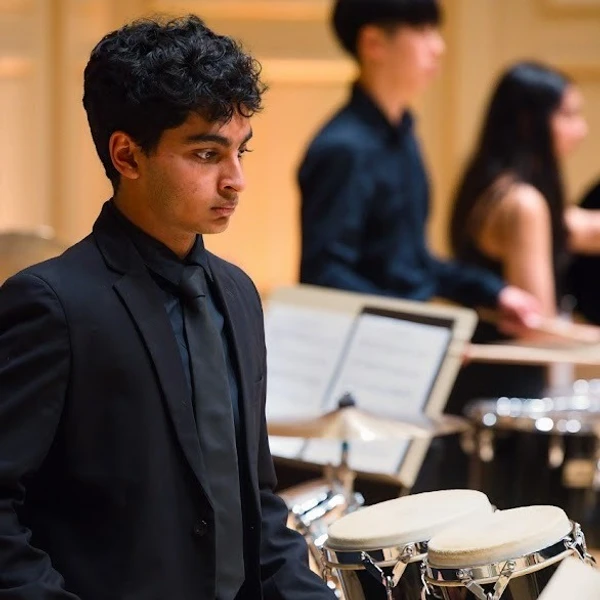
    • Evergreen Valley Philharmonic Orchestra

      Music
      2022 – Present

    Public services

    • Volunteering

      Red Cross — Blood Drive Coordinator
      2021 – Present
    Stitt Family Aeronautics & Aerospace Scholarship
    I want to be at the forefront of aeronautics and aerospace innovation because these fields shape how humanity moves, connects, and explores. Flight represents more than transportation to me—it is a discipline where precision, creativity, and responsibility converge. As global demands for sustainable air travel and advanced space systems increase, aerospace engineers will determine how efficiently and equitably we move forward. I want to contribute to that future by developing technologies that improve aircraft efficiency, reduce environmental impact, and expand access to flight and exploration. My interest in aerospace grew from curiosity into commitment through education and self-directed learning. Physics showed me that flight is not magic, but the result of careful design choices governed by forces, energy, and motion. Learning how small changes in structure or control can dramatically affect performance pushed me to explore aerospace concepts beyond the classroom. I sought out research, studied innovative aircraft designs such as adaptive-wing systems, and worked with quadcopters and flight controls to understand how theory becomes practice. Each step reinforced my desire to engineer solutions rather than simply admire them. Pursuing this path has not been without obstacles. Due to financial constraints, many traditional enrichment programs, camps, and paid research opportunities were inaccessible to me. Instead of stepping away from my goals, I adapted. I relied on free online coursework, independent study, and leadership-based programs to build my skills. I committed myself deeply to activities that offered growth without financial barriers, including long-term leadership roles in scouting, engineering teams, and mentorship programs. These experiences taught me resilience and self-direction—skills essential in aerospace, where progress often depends on persistence in the face of constraints. The financial challenges of entering aerospace are significant. Beyond tuition, meaningful preparation requires access to hands-on experiences, specialized tools, and advanced coursework. These costs compound quickly and can limit how fully a student can engage with their education. Additional financial support would allow me to pursue research opportunities, design projects, and experiential learning that are critical to becoming an effective engineer. It would reduce the need to choose between affordability and opportunity. Iris Cummings Critchell’s legacy represents breaking barriers and opening doors within aviation. That mission resonates deeply with me. With support from this scholarship, I would be able to focus more fully on developing the technical skills and leadership qualities needed to contribute meaningfully to aerospace innovation. In the long term, I hope to extend that impact by mentoring others and helping make aerospace education more accessible to students facing similar obstacles. Innovation thrives when determined students are given the opportunity to participate. This scholarship would not only support my journey toward aerospace engineering, but help ensure that the future of flight includes voices shaped by resilience, adaptability, and purpose.
    Ali Safai Memorial Scholarship
    Flying has shaped how I understand possibility, discipline, and responsibility. From an early age, aviation captured my attention not as spectacle, but as a reminder of how far careful preparation and human ingenuity can take us. Watching aircraft lift off never felt abstract to me; it represented years of training, trust in systems, and people willing to carry others safely into the sky. That understanding has guided my academic goals and the way I approach leadership and service. My interest in aviation grew alongside my love for physics and engineering. As I studied motion, forces, and energy, flight stopped being something mysterious and became something precise. Every equation explained why an aircraft stays aloft and every design choice revealed the balance between efficiency, safety, and performance. Aviation taught me that progress depends on both curiosity and discipline. That lesson has stayed with me as I pursue aerospace and mechanical engineering with the long-term goal of working on advanced aircraft systems that improve efficiency, safety, and sustainability. Aviation has also shaped how I think about mentorship. Pilots, instructors, and engineers all rely on those who came before them. Knowledge is passed down carefully because mistakes carry real consequences. This culture of responsibility has influenced how I lead others in my own life. Through scouting, engineering clubs, and academic mentoring, I have learned to guide peers with patience and clarity, knowing that teaching well matters just as much as performing well. Ali Safai’s dedication to training future aviators reflects the same belief that aviation is not an individual pursuit, but a shared commitment to excellence and care for others. Financial barriers remain one of the greatest obstacles for students pursuing aviation-related paths. Education, training, and access to hands-on experiences often determine who gets to participate and who is left behind. This scholarship would help relieve those pressures, allowing me to focus more fully on developing the technical and leadership skills required to contribute meaningfully to the aviation field. Support like this makes the difference between studying aviation from a distance and being able to actively prepare for a career within it. In the future, I hope to give back in the same way Ali Safai did—by helping others access aviation who might otherwise be excluded. Whether through mentoring students, contributing to educational outreach, or supporting training programs, I want to use my career to expand access to aviation knowledge and opportunity. Flying has taught me that reaching new heights is never a solitary act. It depends on trust, preparation, and people willing to lift others alongside them. Aviation has given my goals direction, my learning purpose, and my leadership meaning. This scholarship would not only support my journey forward, but help me carry Ali Safai’s legacy of inspiration, instruction, and impact into the future.
    Hector L. Villarreal Memorial Scholarship
    I used to gaze through my telescope at night, tracing the same star patterns I had memorized from books and watching astronauts drift above Earth on TV. Those quiet moments made the sky feel large and alive. I learned that everything we have explored in space, from satellites to landers to telescopes, represents only a fraction of what is out there. More than 99 percent of the universe is still beyond human reach. Even within our own solar system, we have touched only a few surfaces and mapped only part of the rest. The unknown deeply motivates me. I believe that learning to build safer, more efficient ways to travel through the sky is the first step toward pushing farther into what we have yet to understand. Physics gave me the structure to see how exploration becomes possible. Through motion-sensor and collision experiments, I learned how the equations describing a pendulum’s swing also define a satellite’s orbit. Concepts that once felt abstract became tools for solving real problems. Outside the classroom, I studied adaptive wing structures and geometric changes that improve efficiency, which showed me how small engineering decisions influence performance and safety. Those moments drew me toward aviation. Before we explore the most distant places, we need strong aircraft, strong engineers, and strong systems here at home. Aviation appeals to me because it blends responsibility and potential. It demands precision, humility, and dedication—qualities I have developed through independent research, service, and mentorship. I want to work on technologies that make flight cleaner, safer, and more reliable. I want to contribute to the systems that allow families to travel, explore, and experience the world together. That personal connection is why the legacy of Hector L. Villarreal resonates with me. He learned aviation skills through discipline, technical training, and service. He became a flight engineer who traveled the world and gave his family a global perspective that shaped their lives. His story reflects values I admire: curiosity, courage, and a commitment to something larger than oneself. His career reminds me that aviation is not only about machines; it is about expanding horizons for the people who depend on them. That is the kind of impact I hope to make. This scholarship would make a meaningful difference. As a first-generation college student navigating financial constraints, support like this allows me to focus on rigorous engineering coursework, research opportunities, and hands-on training that prepare me for an aviation career. It would help me pursue internships and technical experiences that build real skill, not just theoretical understanding. I am driven by a long-term goal: to help advance the systems that transport people safely and push the boundary of what we can explore. This scholarship would help me take the next steps toward that work, and toward honoring the values that defined Hector L. Villarreal’s journey.