Hobbies and interests
Music
Advocacy And Activism
African American Studies
Anatomy
Babysitting And Childcare
Criminology
Reading
Christianity
Academic
I read books multiple times per week
Ariyah Alexandre
1x
Finalist
Ariyah Alexandre
1x
FinalistBio
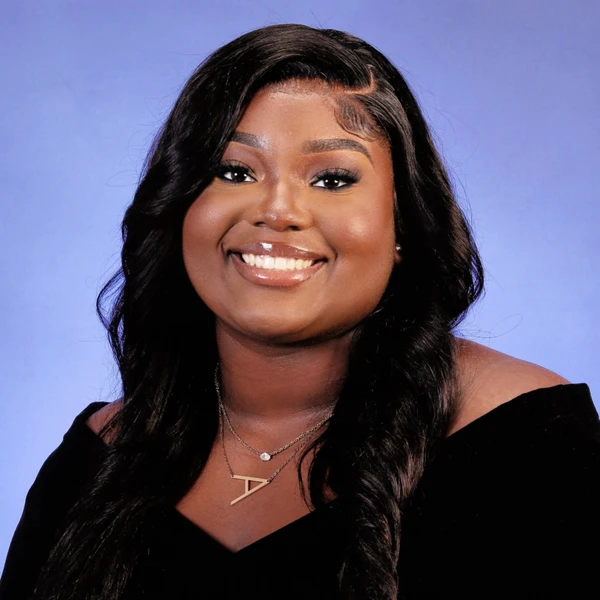
Hello! My name is Ariyah Alexandre, and I am currently a freshman at Florida International University majoring in Criminal Justice on the pre-law track. My long-term goal is to pursue a career as a criminal defense attorney, while also remaining open to potentially specializing in corporate law as my academic journey continues to evolve.
I am a proud Haitian American and fluent in Haitian Creole. Although I was born in the United States, Creole was actually my first language, which is a unique and meaningful part of my cultural identity. Growing up in an immigrant household shaped my perspective on resilience, sacrifice, and the value of opportunity.
My passion for criminal defense stems from my deep interest in fairness within the justice system. As I’ve studied criminal justice, I’ve become increasingly aware of disparities in representation and sentencing, particularly for low income and minority communities. I believe that every individual deserves a fair trial, strong representation, and an attorney who sees them as more than just a case number. My goal is to become that kind of advocate, someone who is strategic, ethical, compassionate, and unafraid to challenge injustice.
Education
Florida International University
Bachelor's degree programMajors:
- Criminal Justice and Corrections, General
GPA:
3.8
Dr. Joaquin Garcia High School
High SchoolGPA:
4
Miscellaneous
Desired degree level:
Doctoral degree program (PhD, MD, JD, etc.)
Graduate schools of interest:
Transfer schools of interest:
Majors of interest:
- Law
Career
Dream career field:
lawyer
Dream career goals:
Criminal justice
receptionist
boss empire tax services2024 – 20251 yearshift leader
chipotle2023 – Present3 yearsCrew member (kitchen)
Raising Canes2024 – 20251 year
Sports
Volleyball
Club2022 – 20253 years
Research
Criminology
Aice Cambridge — To go to prisons and speak with officers, patrol officers, etc. This is the basis of my reasearch in which everything was built on.2024 – 2025
Arts
Melissa and Starling Dance Academy
DanceChristmas Chronicles, Dance Comp 20232022 – 2025
Public services
Advocacy
Florida Associates of Student Councils Convention — Membership Motivation Lead2024 – 2025Volunteering
Melissa and Starling Dance Company — Violin Teacher2023 – 2024Volunteering
Student Government Dr Joaquin Garcia High School — President2023 – 2025Advocacy
Dr Joaquin Garcia High School Mock Trial — To defend and advocate for my defendant.2023 – 2024
Future Interests
Advocacy
Politics
Volunteering
Philanthropy
Entrepreneurship
7023 Minority Scholarship
My name is Ariyah and Iam first-generation Haitian-American undergraduate student pursuing a degree in criminal justice, with the long-term goal of becoming a criminal defense attorney. My passion for this field comes from witnessing how the justice system can often impact individuals differently depending on their race, background, and economic status. Growing up, I saw how many people in my community were not always given fair representation or were misunderstood within the system. Those experiences shaped my purpose early on and motivated me to pursue a career where I can advocate for fairness, dignity, and equal treatment under the law.
Through my major, I plan to make a positive impact by becoming a voice for individuals who feel unheard in the courtroom. I want to ensure that every client I represent is treated as a human being, not just a case number, and that they fully understand their rights and options. My goal is to use my legal education to challenge inequities in the justice system and to provide strong, compassionate representation to those who need it most.
One of the causes I strongly support is the advancement of Haitian-American and first-generation student communities. As someone who comes from that background, I understand the challenges of navigating higher education without a roadmap. I want to encourage and uplift students who are in similar positions by showing them that their background does not limit their future, but can instead be the foundation of their strength and resilience.
My greatest hero is my mother. She raised me as a single parent while navigating unstable environments, yet she always ensured that there was food on the table, clothes on my back, and stability in the ways that mattered most. Her strength, sacrifice, and perseverance are the reason I continue to push forward in life. She taught me what resilience truly looks like, and I carry her example with me in everything I do. My hero is also the Lord, because I believe my faith has guided and protected me through every challenge I have faced.
If awarded this scholarship, it would significantly support my educational journey by easing financial stress and allowing me to focus more deeply on my studies, volunteer work, and career preparation. It would bring me closer to my goal of becoming a criminal defense attorney and continuing my commitment to serving others, especially those from underserved and marginalized communities.
Let Your Light Shine Scholarship
I plan to create a legacy rooted in justice, representation, and service to communities that are often overlooked within the legal system. As a first-generation Haitian-American student pursuing criminal justice, my long-term goal is to become a criminal defense attorney and eventually open my own law firms in Texas and Miami. I chose these locations intentionally because they both have large, diverse populations where many individuals come from low-income or marginalized backgrounds and may not always have equal access to strong legal representation. My goal is to change that reality by building firms that are not only successful, but also deeply committed to fairness and advocacy.
The type of law firm I hope to create is one that prioritizes people over profit. I want my practice to focus on criminal defense, with an emphasis on giving a voice to those who are often misunderstood or judged before their case is even heard. I envision a firm where clients feel respected, informed, and supported throughout the entire legal process. I also want to create opportunities within my firm for young minority attorneys and law students, especially those who may not have traditional access to the legal field, so that representation within the justice system continues to grow and diversify.
My inspiration for this path comes from recognizing how deeply the justice system can impact individuals and families. I have seen how people from communities like mine can face challenges due to limited resources, lack of legal knowledge, or systemic barriers. These experiences fueled my passion early on and continue to drive my desire to make meaningful change. I understand that building a legacy is not just about personal success, but about the impact left on others and the doors that are opened for future generations.
I shine my light through my determination, empathy, and commitment to advocacy. Whether it is through volunteering, supporting peers academically, or speaking up for fairness, I strive to be someone who uplifts others and leads with purpose. I also bring my voice into spaces where it may not always be heard, especially when discussing justice, equality, and representation.
Ultimately, my legacy will be defined by the lives I impact through my work in law. I want to build law firms that stand as symbols of fairness, opportunity, and trust in both Texas and Miami, ensuring that every client, regardless of their background, feels seen, heard, and powerfully represented.
Women of Impact Education Scholarship
I decided to pursue a career in criminal justice and law because I began to recognize, from a young age, that the justice system does not always operate as fairly as it should, especially for women of color and individuals from marginalized communities. As a first-generation Haitian-American woman, I have seen and learned how race, gender, and economic status can all influence how people are treated long before they ever step into a courtroom. Those experiences did not discourage me; instead, they gave me purpose.
What inspired me most was the realization that many people who look like me or come from similar backgrounds often face higher barriers at every stage of the criminal justice process. Whether it is unequal access to quality legal representation, harsher sentencing outcomes, or a lack of understanding about their rights, these disparities made me question how justice is truly being served. Through my academic journey, especially in the AICE Cambridge Program, I began to study these inequalities more deeply and understand how structural issues within the system contribute to unfair outcomes. I learned that justice is not just about having laws in place, but about how those laws are applied to real people whose lives are permanently impacted by every decision made in the courtroom.
These realizations strengthened my decision to enter this field. I chose criminal justice because I want to be part of the solution rather than remain on the outside observing the problem. I understand that meaningful change requires people who are willing to step into the system, challenge its flaws, and advocate for those who are often unheard.
Through my career, I intend to positively impact society by becoming a criminal defense attorney who prioritizes fairness, dignity, and equal representation. I want to advocate for individuals who are too often overlooked or misunderstood because of their race, gender, or socioeconomic status. My goal is to ensure that every client I represent is seen as a human being, not just a case file or statistic.
Beyond courtroom advocacy, I also hope to serve my community by helping individuals understand their rights and the legal process, especially those who may feel intimidated or excluded from it. I want to help bridge the gap between the justice system and the communities it affects most by building trust, providing education, and offering strong legal support.
Ultimately, my purpose in pursuing this field is rooted in equity and representation. I want to contribute to a justice system that is more transparent, more compassionate, and more fair for everyone, regardless of their background.
GD Sandeford Memorial Scholarship
What inspired me to pursue a career in law was the honest realization that the criminal justice system is not always as fair as it claims to be. As a first-generation African American and Haitian American college student, I have witnessed and come to understand how deeply unequal the system can feel for people from underserved communities (Systemically overlooked communities). Growing up, I saw how individuals from lower income backgrounds and communities of color often face steeper obstacles at every stage, from arrest to sentencing. That awareness shaped my perspective early and pushed me to look beyond surface-level explanations of “justice” and question how fairness is actually applied in real life.
As I continued my education, especially through my academic experiences in the AICE Cambridge Program, I began studying how structural inequalities influence outcomes in the justice system. I learned that access to strong legal representation can completely change a person’s future, and that justice is not only about laws written in textbooks, but about how those laws are applied to real people in real courtrooms. That understanding strengthened my desire to become a criminal defense attorney and advocate for individuals who often feel voiceless or overlooked.
I am passionate about using my degree to stand up for others, particularly those who are disadvantaged because of race, gender, ethnicity, or economic status. I want to ensure that every person receives a fair and unbiased trial, and that they are seen as human beings rather than case numbers. My goal is to bring empathy, preparation, and dedication into every case I handle.
Through my legal education, I plan to use my degree to actively serve my community by providing accessible advocacy and legal support. Many people in underserved communities do not fully understand their rights or cannot afford quality representation, which can lead to life-changing consequences. I want to help bridge that gap by being a trusted legal advocate who not only defends clients in court but also educates them about their rights and empowers them to navigate the justice system.
Ultimately, my goal is not only to become a criminal defense attorney, but to be someone who restores trust in a system that many people in my community view with fear or skepticism. I want my clients to feel heard, respected, and understood. Legal representation should not be a privilege it should be a right that is meaningfully accessible to everyone.
Kristinspiration Scholarship
Education is important to me because it represents freedom, opportunity, and transformation. Coming from a first-generation Haitian American household, I was raised with the understanding that education is something no one can take away from you. It is more than grades or degrees; it is access. It opens doors to rooms that once felt out of reach and gives you the language and confidence to stand in those spaces with purpose. For my family, education was never viewed as optional it was the pathway to stability and upward mobility. Watching my parents work tirelessly to create opportunities they did not have themselves made me value every classroom, every book, and every late night spent studying.
Education has also given me awareness. Through my studies in Criminal Justice and rigorous academic programs, I have learned to think critically about the systems that shape our society. I have learned that knowledge is power, especially for communities that have historically been underrepresented or misunderstood. Education equips me not only to succeed personally, but to challenge inequities and advocate for fairness in spaces where decisions deeply impact people’s lives. It has strengthened my voice and clarified my purpose.
In my career, I specifically want to become a criminal defense attorney who does more than simply argue cases, I want to shift outcomes and restore dignity. I plan to build a practice that prioritizes representing individuals who are often overlooked, particularly those from low-income and marginalized communities who cannot afford high-profile legal teams. My goal is to ensure that every client I represent receives thorough preparation, strategic advocacy, and a defense rooted in both legal knowledge and genuine care. I also aspire to eventually open my own law firm, creating a space where accessibility and fairness are foundational values, not afterthoughts. Beyond individual cases, I want to advocate for policy reforms that address sentencing disparities and unequal access to representation. Ultimately, I want my career to reflect not just professional success, but measurable impact, cases where justice was truly upheld, trust in the legal system was strengthened, and people left the courtroom feeling that their voice mattered.
The legacy I hope to leave is one rooted in access and empowerment. I want to be remembered as someone who used her education to create opportunities for others, not just herself. As I pursue a career in law, my goal is to ensure that individuals, particularly those from marginalized communities, receive fair representation and feel seen within the justice system. But beyond my profession, I want to leave a legacy of inspiration for other first-generation students. I want them to see that their background is not a limitation; it is a source of strength.
Ultimately, I hope my legacy reflects courage and commitment, courage to enter spaces where change is needed and commitment to lifting others as I climb. Education has shaped me into someone who understands both struggle and possibility. If I can use what I have learned to advocate for justice, empower my community, and open doors for the next generation, then I will know my legacy is one of meaningful and lasting impact.
Minority Women in LAS Scholarship
Although I was born in the United States, being raised in an immigrant household has deeply shaped my educational journey. As the daughter of Haitian immigrants, I grew up understanding sacrifice before I fully understood opportunity. My parents came to this country seeking stability, security, and a future with greater possibilities. Watching them work tirelessly, often navigating language barriers, unfamiliar systems, and limited resources instilled in me a strong sense of responsibility toward my education. Their resilience became my foundation.
However, the immigrant experience has not only been motivating; it has also presented challenges. As a first-generation college student, there was no blueprint handed to me. I had to learn how to navigate advanced academic programs, standardized testing, college applications, and financial aid largely on my own. While many of my peers could turn to their parents for guidance about higher education, I often had to research, ask questions, and advocate for myself. That process was intimidating at times, but it strengthened my independence and problem-solving skills.
Growing up in an immigrant household also meant balancing cultural expectations with personal ambition. Education was never optional in my home, it was viewed as the primary path to stability and upward mobility. That expectation created pressure, but it also created discipline. I understood that my success was not solely individual; it represented my family’s sacrifices and hopes. Rather than allowing that pressure to overwhelm me, I used it as motivation to excel academically and pursue opportunities that would expand my future.
Financial realities also shaped my experience. I understood early on that scholarships, academic performance, and careful planning would play a major role in attaining my goals. Because of this, I approached my education with seriousness and intentionality. I challenged myself with rigorous coursework and sought leadership opportunities not only to strengthen my resume, but to grow as a person capable of navigating competitive spaces.
Ultimately, my immigrant experience has made me more resilient, resourceful, and driven. It taught me how to persist even when guidance is limited and how to turn obstacles into motivation. Instead of seeing barriers as reasons to step back, I learned to see them as reasons to push forward. My background has not hindered my educational goals, it has fueled them. It reminds me daily that education is both a privilege and a tool, and I intend to use it to honor my family’s sacrifices and create opportunities for others who share a similar story.
First Generation Scholarship For Underprivileged Students
I am a first-generation Haitian American college student who understands firsthand both the pressure and the privilege that come with being “the first.” Being a first-generation student means navigating spaces my parents never had the opportunity to experience themselves. It means learning how to fill out applications, apply for scholarships, and understand financial aid largely on my own. It also means carrying the hopes of my family with me into every classroom. Rather than seeing that responsibility as a burden, I see it as motivation. My journey is not just about earning a degree; it is about opening doors and holding them open for others.
Throughout my academic career, I have been intentional about striving for excellence while remaining grounded in service. From challenging myself in rigorous programs like AICE Cambridge to pursuing a degree in Criminal Justice, I have learned that preparation and persistence are powerful tools. However, I have also learned that many first-generation students struggle not because they lack intelligence, but because they lack guidance and representation. Walking onto a college campus for the first time can feel isolating when you do not see many people who share your background or experiences.
I plan to inspire and motivate other first-generation students by being transparent about my journey, including the struggles. I want them to see that success is not about perfection; it is about resilience. There were moments when balancing academics, work, and leadership felt overwhelming. There were times when I doubted whether I truly belonged in certain spaces. But I continued to show up. By sharing those realities, I hope to normalize the challenges first-generation students face and remind them that difficulty does not equal inadequacy.
In the future, I plan to mentor high school and college students from underrepresented communities, especially those who may not have family members who can guide them through higher education. I want to host informational workshops about college applications, financial literacy, and scholarship opportunities. I also hope to create safe spaces where students can ask questions without fear of judgment. Representation matters, and sometimes simply seeing someone who looks like you, comes from a similar background, and has navigated the same obstacles can shift your mindset from “I can’t” to “Why not me?”
Ultimately, I want my life to serve as proof that being first does not mean being alone. It means being a pioneer. By pursuing higher education and eventually a career in law, I aim not only to build a future for myself, but to spark ambition and confidence in other first-generation students who are capable of achieving more than they may currently believe.
Michele L. Durant Scholarship
I am a first-generation Haitian American college student and a Criminal Justice major who has always been deeply aware of how race shapes opportunity in America. Growing up, I often heard conversations in my community about fairness, about unequal treatment, and about how the justice system does not always feel just, especially for Black individuals. As I became older and began studying the criminal justice system academically, those conversations were no longer just opinions; they were supported by data, case studies, and historical patterns. I learned that Black people are disproportionately arrested, charged more harshly, and often receive longer sentences for similar offenses compared to their white counterparts. I also learned that access to strong legal representation can drastically influence outcomes, and that access is not equally distributed.
These realities have shaped not only my academic interests but my purpose. I want to pursue a career in law because I recognize that Black communities are often underrepresented and misunderstood in courtrooms. Too frequently, stereotypes replace stories. Individuals are reduced to statistics instead of being seen as complex human beings with context, background, and potential. That lack of representation, both in terms of who is being defended and who is doing the defending, contributes to mistrust in the legal system.
I plan to make a positive impact by becoming a criminal defense attorney who advocates fiercely and ethically for those who feel unheard. Representation matters. When defendants see attorneys who understand their cultural background, their community dynamics, and the barriers they have faced, it changes the dynamic of the courtroom. It restores dignity. My goal is to ensure that Black individuals in particular receive fair, unbiased trials where their rights are protected and their full humanity is acknowledged.
Beyond the courtroom, I want to educate my community about legal rights and systemic realities. Many injustices persist because people feel powerless or uninformed. By hosting workshops, mentoring young Black students interested in law, and building a practice rooted in accessibility, I hope to bridge the gap between the legal system and the communities it serves.
Making a positive impact, to me, means confronting uncomfortable truths and choosing to act anyway. It means stepping into spaces where Black voices have historically been minimized and working to amplify them. Through my legal career, I intend not only to defend individuals, but to challenge patterns of inequity and build a justice system that lives up to its name.
Erase.com Scholarship
Through my studies in the AICE Cambridge Program and as a Criminal Justice major, I have read about social inequality, mass incarceration, systemic bias, and the historical foundations of the American legal system. These readings forced me to think critically about the gap between what justice is supposed to be and how it often operates in reality. I learned that laws may be written to be neutral, yet their application can disproportionately impact marginalized communities. That realization did not discourage me; instead, it clarified my purpose. It strengthened my goal of entering the legal field not just to participate in the system, but to help reform it from within.
My experience with mental health, both personally and through observing others, has also shaped my beliefs and relationships in profound ways. I have learned that people carry invisible battles. Stress, trauma, anxiety, and hardship often influence decisions in ways the legal system does not always take time to understand. This awareness has made me more empathetic, more patient, and more intentional in how I approach others. It has reinforced my belief that justice must be human-centered. A courtroom should not be a place where someone’s struggles are ignored; it should be a place where their full story is considered.
These experiences have strengthened my aspiration to become a criminal defense attorney. I want to advocate for individuals who may be judged quickly because of their background, mental health history, or socioeconomic status. Too often, people are reduced to a single mistake without acknowledgment of the circumstances that shaped it. My goal is to ensure that every client I represent is seen as a whole person, not just a case file.
Beyond individual cases, I plan to make a positive impact by educating my community about legal rights and access to resources. Many social issues, particularly the disproportionate targeting of low-income communities, persist because people lack knowledge and representation. I am addressing this issue now by pursuing higher education in Criminal Justice, engaging in research, and preparing myself academically and ethically for law school. In the future, I hope to open my own law practice that prioritizes fairness, accessibility, and community outreach.
Ultimately, I want my career to reflect both intellect and compassion. Justice should not only be about punishment; it should be about understanding, fairness, and opportunity for change. Through law, I intend to stand in the gap between power and vulnerability and make that gap smaller for those who come after me.
Tandy Law Firm Scholarship
What inspired me to pursue a career in law was the honest realization that the criminal justice system is not always as fair as it claims to be. As I grew older and began studying the system more closely, I saw patterns that deeply unsettled me. Certain communities, particularly low income individuals and people of color, seem to face steeper obstacles at every stage, from arrest to sentencing. Recognizing these disparities did not discourage me, instead, it sparked something in me. I understand that simply criticizing a flawed system does not create change. Real change happens when people are willing to step inside the system and work to improve it. I decided I wanted to be one of those people.
Through my academic experiences, especially my research in the AICE Cambridge Program, I began analyzing how certain structural inequalities shape outcomes in the justice process. I saw how limited access to quality legal representation can dramatically impact a person’s future. I learned that justice is not just about laws written in textbooks, it is about how those laws are applied in real courtrooms, to real people, whose lives can be permanently altered by one decision. That awareness strengthened my desire to become an advocate for individuals who often feel voiceless.
I have always had a passion for standing up for others, particularly those who seem to have the odds stacked against them because of race, gender, ethnicity, or economic status. Everyone deserves a fair and unbiased trial. Everyone deserves representation that sees them as a human being, not just a case number. I want to use my legal education to ensure that members of my community are not overlooked or rushed through a system that can feel intimidating and impersonal.
Investing in a legal education is more than a career choice for me, it is a commitment. It is a commitment to fairness, the belief that no one should be rushed to judgment because of their physical appearance, background, or financial status. It is a commitment to advocacy, ensuring that every person, regardless of circumstance, has a strong voice speaking on their behalf. And it is a commitment to equity, recognizing that true justice requires more than equal treatment, it requires intentional effort to level a playing field that has historically been uneven.
My goal is not only to defend individuals in court, but to restore confidence in a system that many people in my community view with skepticism or fear. I want clients to feel heard, respected, and understood, not reduced to stereotypes or statistics. Legal representation should not be a privilege reserved for those with wealth, it should be a right that is meaningfully accessible to everyone.