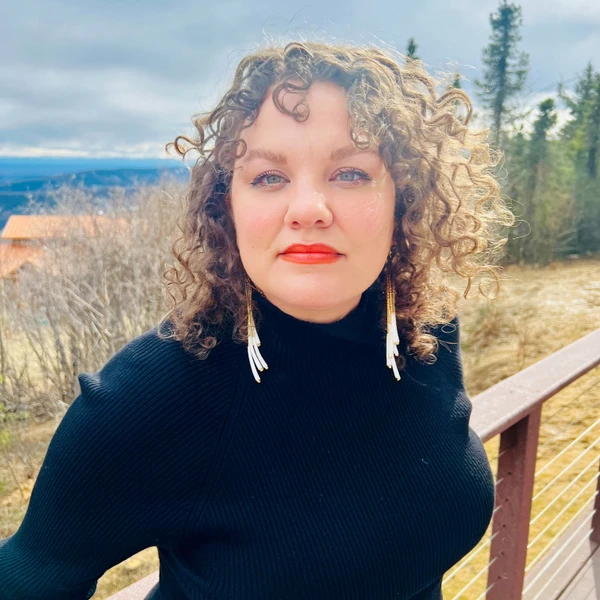
I’ve never taken a straight path; I always tell people that life is never linear, but it is absolutely circuitous. Sometimes I wonder if I might be one of the most unconventional students you’ll ever meet, and then I remind myself, I’m definitely not alone in this. I’m a late-in-life, second-career student who managed to take yet another turn while already on my second career path.
For more than ten years, I was a critical care nurse, standing at bedsides in ICUs where every second mattered and families held on to hope in whispers behind closed curtains. I thought that was where I would always be. Then, on a working trip to Nepal, I stumbled upon an idea called One Health, which recognizes that the well-being of humans, animals, and the environment is inextricably linked. It stirred a passion in me, something I couldn’t ignore. I left nursing for veterinary school, convinced I had found the next chapter.
I loved studying medicine from an entirely different angle, seeing the threads between people, animals, and ecosystems. But somewhere along the way, I realized what I was really drawn to wasn’t just the medicine itself, but the emotional stories underneath it all. Veterinary school, which many people saw as a “wrong turn,” turned out to be the doorway to what I was searching for all along: mental health.
Walking away from veterinary school was humbling. Many people saw it as a setback, even a failure. And then, as if to test me further, I was in a serious car accident. Suddenly, I wasn’t the nurse or the student anymore, I was the patient. I was scared and helpless in ways I had never known before. For someone who had always been the one offering care, it was disorienting to need others to hold me up. But that season softened me. It gave me a deeper understanding of what it feels like to be vulnerable, to live with uncertainty, and to need someone simply to sit beside you. Far from stopping me, the accident strengthened my drive to keep going and to be present with others in their most difficult moments.
My path to psychiatry also began far from any classroom, in small villages along Alaska’s coast and deep in the Arctic. There, winter light is scarce, the land and sea are a lifeline, and the people carry stories of resilience and hardship. I worked alongside communities as they faced climate change, disrupting traditional hunting and fishing practices, and food systems shifting away from ancestral knowledge. At the same time, young people stared into an uncertain future. These weren’t just environmental changes. They were cultural and personal, affecting every aspect of life. The consequences were devastating: substance use, grief, and some of the highest youth suicide rates in America.
Those experiences reshaped how I think about mental health. Healing isn’t only about easing symptoms. It’s about honoring the entire web of relationships that comprise a life, family, culture, land, history, and faith. In communities where trauma and loss are woven into collective memory, care has to meet people in that complexity.
I also learned that mental health work is profoundly relational. It begins with showing up, listening without judgment, and building trust, not as an outsider with solutions, but as a partner who walks beside someone in their own story. In Alaska, this looked like eating meals in community halls, listening to elders share stories of past winters, and hearing young people speak with both pride and pain about their identity. In the ICU, it meant being present when machines kept patients alive, not just with clinical skill but with steady compassion. These relationships taught me that kindness, respect, and presence can be as life-changing as any medication.
Academically, I carried that conviction forward. I earned a Master’s in One Health from the University of Alaska Fairbanks. One Health usually tracks disease outbreaks, but I applied it differently, studying the grief and disruption families felt when avian influenza forced them to cull their small flocks. For many Indigenous and rural families, birds weren’t only food; they were heritage. Losing them was devastating, but often unacknowledged. That research showed me again how grief tied to ecological loss must be part of mental health care.
Professionally, I’ve moved between many fields, trauma ICU, pediatrics, maternal-fetal medicine, and public health outreach. In Nepal, I worked with youth at risk of suicide as climate change and displacement unraveled their futures. Each place provided me with another lens through which to view how human suffering is shaped not just by biology, but also by environment, culture, and community.
I am currently a student in the Psychiatric Mental Health Nurse Practitioner program at Yale, and I am scheduled to graduate in May 2026. Some days, sitting in Ivy League classrooms, I still wonder if I got in on a technicality. But I remind myself: resilience, perspective, and empathy matter just as much as pedigree. Alongside my coursework, I’ve thrown myself into psychodynamic and psychoanalytic training through the Washington-Baltimore Center for Psychoanalysis, the New York Psychoanalytic Society & Institute, and the Institute of Psychoanalysis in the UK. These trainings are preparing me to be a clinician attuned not only to visible pain, but also to the unspoken suffering that lives beneath it.
My goal is to address the intertwined challenges of mental illness, substance use, and generational trauma with a mix of evidence-based psychiatry, cultural humility, relational depth, and ecological awareness. For me, this work is not only professional, it is deeply personal.
I believe success isn’t about following a traditional path. It’s about resilience when everything falls apart, and kindness even in the most challenging times. My journey has been circuitous, messy, and unconventional, but it has given me the empathy, compassion, and perseverance I need to do this work and hold space for others walking their own nontraditional paths.