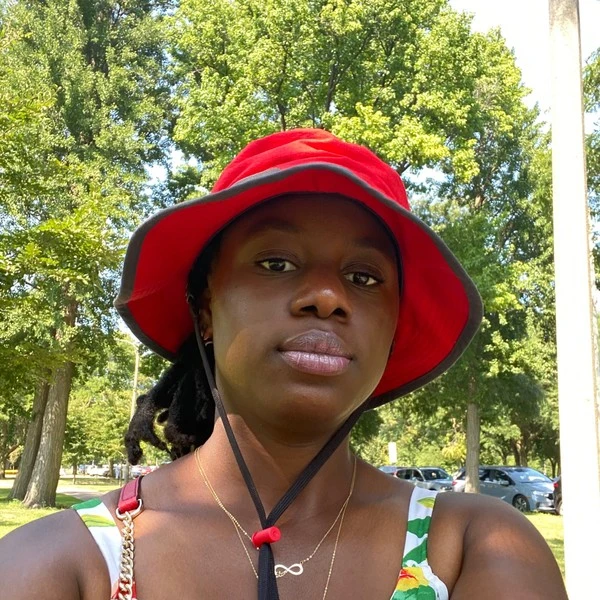
user profile avatar

Arianna Stewart

1x

Finalist

Bio

So many communities around the world continue to be devastated by infectious diseases, and I want to be part of the team that helps to solve this crisis. I plan to major in Public Health and minor in French to broaden the groups I can communicate to and deepen my understanding of how diseases spread. From there, I hope to continue into medical school and pursue my dream of becoming an infectious disease physician. I am deeply passionate about helping others, and I truly believe that, with financial support, I can create that impact.

Education

Plainfield South High School

High School
2022 - 2026
  • GPA:
    4

Miscellaneous

  • Desired degree level:

    Doctoral degree program (PhD, MD, JD, etc.)

  • Majors of interest:

    • Microbiological Sciences and Immunology
    • Public Health
    • Biological and Physical Sciences
    • Biochemistry, Biophysics and Molecular Biology
  • Planning to go to medical school
  • Career

    • Dream career field:

      Medicine

    • Dream career goals:

      Infectious Disease Specialist and Researcher

      Sports

      Cross-Country Running

      Junior Varsity
      2022 – 2022

      Arts

      • High School Marching Band

        Music
        2022 – Present
      • High School Yearbook Committee

        Graphic Art
        2022 – Present
      • High School Jazz Ensemble

        Music
        2023 – Present
      • High School Wind Ensemble

        Music
        2023 – Present

      Public services

      • Volunteering

        High School Band — Student Leader
        2024 – Present
      • Volunteering

        National Honor Society — Member
        2025 – Present
      Anita Moore-Hubbard "Butterfly Effect" Memorial Scholarship
      I believe that to grow as a person, you must be exposed to different perspectives, cultures, and languages. As a second-generation Ghanaian, my dual-culture taught me this firsthand. I vividly remember the mockery I received when I ate ethnic food and the shame I began to feel in my background. These experiences taught me to respect different cultures because I knew what it was like to feel excluded. That perspective only deepened when I began learning French and consuming French media. Thus, I want to continue engaging with new cultures, so I can see the world through a vibrant kaleidoscope. It should come as no surprise, then, that I want to serve in Ghana and its neighboring countries. Through my mother’s stories, I realized the resourcefulness and determination it takes to live in poverty. I can recount the times she explained food rationing, the fear of outgrowing clothes, and the tension between education and earning money. I feel it is my intergenerational duty to serve underserved communities in Ghana. As French is my first love, I also hope to serve in francophone countries through organizations like Medecins Sans Frontières, which has missions in places like Burkina Faso. I want my Butterfly Effect to be a tribute to my mother, who excelled in French as a child and forged a career in health that positively impacts our community today. Through travel, I hope to meet the people behind the statistics and better understand realities that numbers alone cannot capture. With all goals, there must be a journey. I plan to begin mine at Colby College as a Biochemistry major and French and Public Health double minor. As a Pulver Science Scholar, I will have access to research and internships exploring public health. My journey, however, is not self-made. I am a person built by the tribulations and successes of my ancestors, mentors, and elders. I carry the uncles, aunts, and grandparents on my mother’s side who yearned to come to America, who marveled at the sight of snow and believed, perhaps too much, in the American dream that remained just that: a dream. I carry my aunts, who, as student visa immigrants, lived in the cheapest areas of Indiana and were exposed to toxic fumes from a nearby plant. This led to early-onset neurological disorders that limited their ability to travel and live fully. Their journeys have slowed, but I hope to continue them with their determination as my fuel. Most importantly, I carry my mother. Despite the socioeconomic challenges of her childhood, she was the smartest in her class and tested into Achimota, one of the most prestigious schools in Ghana. When she arrived in America, she knew she had the ability to become a medical doctor. She loved biology. She loved helping. She loved learning. But it never worked out. The challenges of being a first-generation immigrant and fighting for her education consumed much of her life. And so, with these ancestors beside me, I hope to connect their forking paths that once were dead ends. Like my mother’s family, I have reveled in America’s health infrastructure, educational opportunities, and, of course, the snow. Like my aunts, I have seen the harm America can inflict on disadvantaged communities for profit. Like my mother, I have excelled in STEM and the arts alike. I have committed to a college that will allow me to pursue medicine and public health while leaving room for study abroad. Like Anita, I have a deep affinity for French, travel, and service. Now, it is time for me to act, for myself and my ancestors.
      Raise Me Up to DO GOOD Scholarship
      My mother was my hero. I remember thinking just that the night the storms railed upon our basement wall as we sat afraid, with our door lock jammed. The impending doom settled within eight-year-old me, who was deathly afraid of storms, let alone tornado warnings. But when I looked up at my hero, still in her scrubs, climbing out the basement bulkhead, with an unbridled determination in her eyes as she braved the storm to open up her four kids from the outside in, I was in awe. All it took was one person and an impenetrable courage to save the day, and I never forgot it. It was her courage that changed the course of my high school years. As a freshman in band, I was timid. For every smile shared, for every ugly mutter whistled through football games, I stayed silent. But by senior year, I was not that eight-year-old kid who needed to be saved anymore, when the same hate I had witnessed freshman year had increased tenfold. After staying silent for so long, my mother’s small act of heroism came to mind. One person was enough to create change. So, with her unbridled determination, I made it my mission to greet everyone, check in regularly, and create the camaraderie our band needed. I invited students of every age, gender, and race to the Band Outreach program so they could experience an environment where service was currency, not gossip or insults. However, my first solo initiative, the Christmas Band Tour, was a shove out of my bubble. I was alone in the unknown, leading rehearsals, struggling to find participants, and doubting I could pull this off. But when I saw the joy on children’s faces as we played Jingle Bells, it established the importance of community service: spreading happiness. Then, the program began to flourish with new initiatives, such as my collaboration with the Language Department to bring a daily musical celebration of culture. As my confidence in the program grew, so did the people's. From one to fifteen, our shared purpose had created a community, one I could call my own. However, one I could never have created without my mother's strength. Being the child of a single mother who balanced a job with full-time grad school and four children taught me the patience and perseverance required to pursue my future goals. I not only hope to continue a similar outreach program at college, but also complement it with a medical factor. With or without support, I hope to use faculty and independent research opportunities at my prospective universities to study music’s effects on hormonal balance, such as dopamine and serotonin; efficacy comparisons between music therapy and other therapies; and how these factors affect our stress levels and, indirectly, our disease susceptibility. Service is my calling, and smiles are my motivation. My mother wore no cape, and she worked alone, but she was my hero. And to continue what she started, I want to continue her small acts of heroism in Public Health, a field dedicated to serving the community. However, whether it's music, medicine, or braving a storm, I know my future lies in service.
      Stewart Family Legacy Scholarship
      Many of my friends who are anti-science have narrowed their understanding to the arduous physics problems they were forced to do, or the chemistry class they never understood. For science to shape our future, we first need to convince the world of its importance. If I were to convince others, I would start by broadening their understanding of STEM to unconventional disciplines. ] For example, the limited STEM extracurriculars in high school made me get creative with my involvement in the field. Founding and heading the Band Outreach program allowed me to use music as a source of medicine for my community. When we perform at retirement homes, that release of stress is science. It's music therapy, a well-regarded, albeit underemphasized part of the field. Scientific research would allow us to study music’s effects on hormonal balances and how these factors impact our stress and health. In simpler words, science could be the reason to get funding for an underdeveloped arts program. However, music is just one example. Scientific research is the answer to advancing other disciplines in the world. More than that, science brings out the best in people, and I’ve seen this firsthand, leading the Band Outreach program in my community. As a freshman in band, I was timid. For every smile shared, for every insult thrown, I stayed silent. By senior year, the same hate I had witnessed had increased tenfold. But with the introduction of the Outreach program, members began to experience an environment where service was currency over gossip and insult. We have to spread the stress-reducing effects of music to kids, elders, and everything in between. When I see freshmen reject bullying and prioritize health-based service, I know my impact. Science is inherently interdisciplinary, and that fact gets lost in translation to the general public. However, with effective leadership, science can begin to elevate other disciplines, bettering our health and our mindsets. With these ideals in mind, I hope to continue a similar outreach program that combines music and health advocacy in college. Whether it's Christmas caroling to promote flu vaccinations or performing for local veterans to raise awareness of homelessness, I want to use my education to advocate for public well-being while spreading joy. More importantly, I hope to inspire others that science is the key to progress.
      Zedikiah Randolph Memorial Scholarship
      I’ve always been passionate about STEM, and the courses I’ve taken, like AP Chem and Calc BC, reflect that. But like many, the pandemic stirred feelings of despondency. I remember seeing Dr. Fauci on CNN and admiring the courage of essential workers like him. To be on the frontline of the next infectious disease was a noble goal that soon became my own. The pandemic underscored the importance of healthcare professionals and their service. Despite my limited STEM extracurriculars in high school, I still wanted to serve in my community. I knew that my love for music could be a source of medicine. Each smile, a reduction of stress; each laugh, a boost to the immune system. I started by heading the new band outreach program alone. It started small, but soon I was organizing a Christmas Band Tour with chamber groups performing at a hospice, retirement home, and elementary and middle schools, reaching over 200 people whose smiles brightened rooms. Moreover, leading the program gave me the unique freedom to mix disciplines and service. For example, I indulged my love for language with our first-ever daily performances celebrating National Foreign Language Week. Still, I was missing science, and it's what led me to Public Health. A mixture of all my loves, music to science, contained in my commitment to service. I thought I would do it alone, but I had inspired others in my first year. Soon, fifteen people had joined the following year. We remedied our weak relationship with our middle schools through concert invitation posters, welcome cards to every 8th grader, and a group of high school band kids with supportive posters at every middle school concert. We came up with countless crafts and games to play with kids or the elderly to end our performances with lasting relationships. The outreach program opened me to the joy of altruism, a core value of public health. But sparking confidence in another was the door to true satisfaction. Through band, I learned I was capable of making an impact. Shy freshmen, especially girls, learned they had a voice and the power to create change because I had proven they could. If I could do that there, could I do it in STEM, a field known to downplay the importance of black women? With only 8-10% of black women making up the Public Health professionals nationally, the task is daunting. I don’t think I can do it. I know I will. I did it before as a black female sophomore section leader. After being constantly dismissed by the white, male leaders in the band, I made it my mission when I became a Drum Major to change the culture. I started by bringing awareness to our leadership team. We had a group discussion on the disrespect female counterparts endure within the band, and I encouraged everyone to stand up for one another. I saw in real time male co-leaders push back on sexist remarks from peers. I showed girls that they did not need to submit to male pressure to lead, that collaboration was possible. In college, I hope to continue a similar outreach program that combines music and health advocacy. Whether it's Christmas caroling to promote flu vaccinations or performing for local veterans to raise awareness of homelessness, I want to use my education to advocate for public well-being while spreading joy. More importantly, I hope to spark the same change I did at home in new communities by showing young people that, regardless of their race or gender, their power to better our world is real and undeniable.
      Snap EmpowHER Scholarship
      “You’re an inspiration.” My name is Ari. I’m a rising senior, and maybe the first black woman to be a drum major in my band. End of sophomore year, the news had ambushed me in the auditorium seat. I had written my leadership essay about my love for helping others, and I had meant that in terms of marching and mental well-being. But empowerment? I hadn’t even acknowledged the significance of what I had done until peers congratulated me, a glint of hope and admiration in their eyes and a newfound belief that maybe they too, black or female, could hold a similar position. And I was their proof. Suddenly, my life’s course started to reveal itself. My love for math and science paired with my heartbreak at the destruction caused by COVID-19 led to my infatuation with epidemiology, and a discovery of my dream job: an infectious disease physician. My innate altruism shifted me from a traditional path to medical school, and encouraged me to major in public health, a field that valued altruism. But that moment, it gave me a purpose. Originally, I was just excited to have an impact stronger than at home, but now I knew that my journey could pave the way for others to follow. So, I started where I was and I began to sow the seeds at my own high school. The grounds to do so became clear when I was officially drum major. Once the door was open, I knew I could do more. As an authority figure to many peers, I used my powers not to control, but empower. I spent much of my time convincing others, especially women who felt discouraged by male-dominated leadership, that they were capable of being just great, if not better leaders. If they could not hear my words, they could see my example. I continued to pave the way with the creation of our band outreach program. I volunteered and became its sole student leader, even when others doubted it could work. It started small with organized welcome cards to incoming freshmen. Then, I began contacting hospices, retirement homes, and schools to organize volunteer performances of Christmas music. We celebrated diversity through music each day of Foreign Language Week before school for the first time and we continue to spread joy as local schools invite us to perform for them. I paved the way, and now, I wanted to convince others they could too. As the year ended, I focused my time with sophomore leaders, encouraging them, especially my female peers, that they were more than capable of taking over, and in my final year, I would teach them the ropes. The outreach program opened me to the joy of altruism, a core value of public health. But sparking confidence in another was the door to true satisfaction, the core reason to be a leader. Through band, I learned I was capable of making an impact. If I could do that there, could I do it in STEM, a field known to downplay the importance of women? I don’t think I can do it. I know I will.
      KC MedBridge Scholarship
      I’ve always been passionate about STEM, but the pandemic highlighted the importance of healthcare professionals, inspiring me to take and earn As in Honors Chem and Bio, AP Physics 1 and Dual Credit PreCalculus. I even plan to take AP Calc BC, Honors Anatomy, and AP Chem. Although my school has limited opportunities for research and national STEM competitions, I have taken initiatives to grow through community service. As Drum Major in my high school band program, this year, I expanded my leadership beyond marching band and led our new outreach program as its sole student leader. It started small, but soon I was emailing local retirement homes, hospices, and schools. I organized a Christmas Band Tour in my community and a National Foreign Language Music Celebration at my school. Our Christmas Band Tour performed at a hospice, retirement home, two elementary schools, and a middle school, reaching over 200 people. I led those chamber groups, coordinated rehearsals and performances, and managed logistics. As someone who would love to major in Public Health, the outreach program opened me to the joy of altruism, a core value in healthcare, and visiting a hospice reinforced the impact of service on patients. Without access to many high-level STEM extracurriculars, I have spent the past three years deepening my knowledge through leadership, volunteerism, and service. This scholarship would ease the financial burden of first-year tuition, allowing me to prioritize service opportunities, focus on public health and my dream of becoming an infectious disease physician.