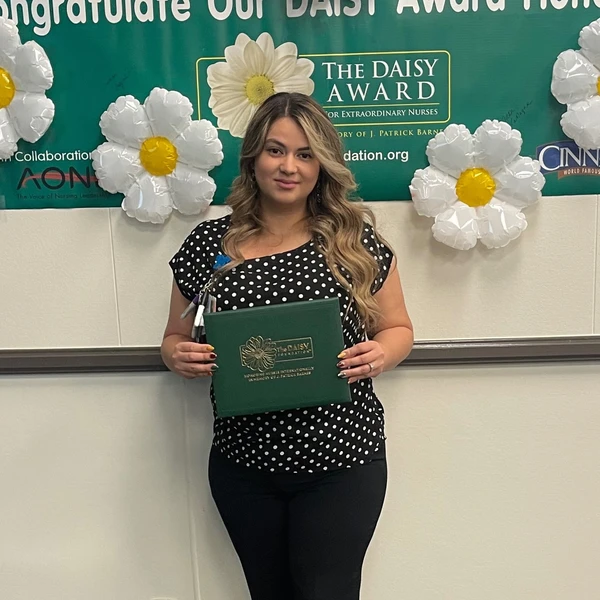
El Mirage, AZ
Age
35
Gender
Female
Ethnicity
Hispanic/Latino
Religion
Christian
Church
Christian Church
Hobbies and interests
Bible Study
Reading
Christianity
I read books multiple times per week
US CITIZENSHIP
US Citizen
LOW INCOME STUDENT
Yes
FIRST GENERATION STUDENT
Yes
Ariana Lopez
1x
Nominee1x
Finalist1x
WinnerAriana Lopez
1x
Nominee1x
Finalist1x
WinnerBio
My goal is to become a Nurse Practitioner who provides compassionate, evidence-based care and improves access to healthcare for underserved populations. I am passionate about advancing my clinical knowledge to better advocate for patients and educate families. With nearly five years of experience in Med-Surg and Progressive Care nursing, I bring resilience, dedication, and real-world insight to my advanced practice training. I am a strong candidate for this scholarship because I balance rigorous academics, clinical responsibilities, and family life with purpose and commitment.
Education
University of Phoenix-Arizona
Master's degree programMajors:
- Registered Nursing, Nursing Administration, Nursing Research and Clinical Nursing
Minors:
- Mental and Social Health Services and Allied Professions
GPA:
3.8
Upper Iowa University
Bachelor's degree programMajors:
- Registered Nursing, Nursing Administration, Nursing Research and Clinical Nursing
GPA:
3.8
Miscellaneous
Desired degree level:
Doctoral degree program (PhD, MD, JD, etc.)
Graduate schools of interest:
Transfer schools of interest:
Majors of interest:
Career
Dream career field:
Mental Health Care
Dream career goals:
Dual degree in family Nurse Practitioner
Registered nurse
Banner health2021 – Present5 years
Research
Health Professions and Related Clinical Sciences, Other
Upper Iowa university — Student2024 – 2024
Public services
Volunteering
Neighborhood — Watcher2021 – Present
Future Interests
Advocacy
Volunteering
Jerrye Chesnes Memorial Scholarship
Returning to school has been both rewarding and profoundly challenging, shaped by experiences that tested my resilience, faith, and determination. In 2020, I faced the heartbreaking loss of my baby, a grief that shook me to my core. At the time, I had no children, and the loss left me navigating deep sorrow while also contemplating my future. The experience forced me to confront pain and uncertainty I had never imagined, but it also strengthened my faith and gave me a renewed sense of purpose: to dedicate my life to helping children and families as a healthcare provider.
After that loss, I was blessed with a miracle baby, an unexpected gift that filled my life with hope and joy. Becoming a mother has been transformative, inspiring me to pursue my educational and professional goals with renewed determination. Raising a child while returning to school has required extraordinary balance, organization, and emotional strength. Each day, I juggle coursework, clinical rotations, and the needs of my family, drawing on lessons I learned through grief and hope to persevere through exhaustion and challenges.
Returning to school as a parent presents unique obstacles. Nights are often spent studying after my baby is asleep, mornings begin with preparing for clinical rotations while caring for my child, and weekends are a careful balancing act between assignments and family responsibilities. Financial pressures compound these challenges, as I manage tuition, childcare, and household expenses while striving to excel academically. Yet, through faith, perseverance, and careful planning, I continue to advance toward my goal of becoming a Family Nurse Practitioner specializing in pediatric care.
Experiencing loss and then the blessing of a miracle child has shaped my professional aspirations. I understand the fragility of life and the impact compassionate care can have on families. These experiences have deepened my empathy and strengthened my desire to serve children and families, supporting not just physical health but also emotional well-being. I am committed to ensuring that the families I care for feel seen, understood, and empowered through their healthcare journeys.
Throughout this journey, I have relied on mentors, colleagues, and my community for guidance and support. I have learned that resilience is cultivated through connection, faith, and intentional action, and that challenges can be transformed into motivation to pursue one’s goals. Receiving the Jerrye Chenes Memorial Scholarship would alleviate financial burdens, allowing me to focus more fully on my studies, my child, and my ambition to make a meaningful difference in pediatric healthcare.
Through grief, hope, and perseverance, I have returned to school with renewed determination and clarity of purpose. My experiences have shaped my compassion, strengthened my resolve, and inspired my commitment to pediatric care. This scholarship would help me continue my journey, ensuring that I can provide care, guidance, and hope to children and families while modeling resilience, faith, and dedication for my own family.
Finance Your Education No-Essay Scholarship
Nabi Nicole Grant Memorial Scholarship
Faith has been my anchor through the most challenging moments of my life, but nothing tested it more profoundly than the loss of my baby in 2020. Becoming a mother is a dream, a responsibility, and a hope for the future, and when that dream was cut short, I felt an emptiness I could not have anticipated. In the days and weeks that followed, I faced not only grief, but also doubt and fear about my ability to continue moving forward in my personal life and professional journey. In that dark place, I turned to my faith—not just as a comfort, but as a guide and a source of strength that helped me navigate a path I could not see on my own.
Every day after the loss, I prayed for resilience, guidance, and purpose. I reminded myself that faith is not only about accepting life’s blessings, but also trusting in the lessons hidden within our trials. Leaning on scripture and prayer, I shifted my perspective from despair to determination. While I could not change what had happened, I realized I could use my experience to fuel a life of service, particularly in healthcare. Faith gave me the courage to return to work as a registered nurse and refocus on my education, determined to pursue my ultimate goal: becoming a Family Nurse Practitioner specializing in pediatric care.
The obstacle I faced was not only emotional—it was practical. Returning to school and advancing my career while processing profound grief required balancing financial strain, personal responsibilities, and the emotional toll of my loss. Faith reminded me that challenges are not signs of failure, but opportunities to grow stronger, lean on my community, and embody the values I hold most dearly: compassion, service, and perseverance. Through prayer, meditation, and daily reflection, I approached each challenge with a mindset of faith-driven action. My ambition—to become an FNP serving children and families—was deeply intertwined with my belief that even in tragedy, we can create hope for others.
Faith also taught me to seek guidance and support from mentors, colleagues, and loved ones. I reached out to my nursing community, engaged with professors, and joined support networks for parents who had experienced loss. Through these connections, I experienced firsthand how faith fosters a sense of community, shared understanding, and mutual empowerment. Life’s obstacles are not meant to isolate us, but to remind us of our shared responsibility to care for others and lift each other up.
Today, my faith continues to drive my ambition and commitment to service. It shapes the way I care for patients, approach my studies, and envision my future as a pediatric Family Nurse Practitioner. The loss of my child will always be part of my story, but through faith, I have transformed that pain into purpose. I am determined to dedicate my career to helping children and families navigate illness, fear, and uncertainty—just as I was guided through my own darkest moments.
This scholarship represents more than financial assistance—it reflects the values I strive to embody every day: faith, perseverance, and the courage to turn adversity into action. Receiving it would allow me to continue my education while staying true to the principles that have carried me through life’s hardest challenges. Faith is not just the foundation of how I survive; it is the engine that drives how I thrive, serve, and aspire to make a lasting difference in the lives of others.
Future Nonprofit Leaders Award
Throughout my career as a registered nurse, I have witnessed firsthand how deeply social, economic, and systemic barriers impact patient health outcomes. Working in both progressive care and medical-surgical units, I have cared for patients who were not only battling illness, but also struggling with limited access to healthcare, unstable housing, lack of education, and inadequate preventive resources. These experiences have shaped my desire to pursue a career as a Family Nurse Practitioner and to dedicate my professional life to working within the nonprofit sector, where I can address these disparities at a deeper and more meaningful level.
My interest in nonprofit healthcare stems from seeing the gaps that exist outside of the hospital setting. Many of the patients I cared for were frequently readmitted, not because their conditions were unmanageable, but because they lacked the support, education, and resources needed to maintain their health at home. I remember caring for patients with chronic illnesses such as diabetes and heart failure who did not have access to healthy food, medications, or consistent follow-up care. These experiences made it clear to me that true healing extends beyond bedside care. It requires community-based interventions, education, and advocacy—areas where nonprofit organizations play a critical role.
As I pursue my education to become a Family Nurse Practitioner, my goal is to work in nonprofit or community-based clinics that serve underserved and vulnerable populations. I am especially passionate about preventive care and patient education, as I believe these are some of the most powerful tools we have to improve long-term health outcomes. Through my work, I hope to empower patients with the knowledge and resources they need to take control of their health, reduce hospital readmissions, and improve their overall quality of life.
In addition to clinical care, I am committed to advocating for health equity and addressing the social determinants of health that disproportionately affect marginalized communities. My experience as a nurse has taught me that many health issues are preventable when patients are supported holistically. As an FNP, I plan to collaborate with nonprofit organizations to develop outreach programs focused on education, chronic disease management, and access to care. Whether it is organizing community health screenings, providing education on disease prevention, or connecting patients with essential resources, I want my work to extend beyond the clinic and into the community.
My long-term vision is to contribute to nonprofit initiatives that focus on improving access to primary care in underserved areas. I am particularly interested in working with organizations that serve low-income families, single parents, and individuals who face barriers to healthcare access. By combining my clinical skills with a passion for service, I hope to help bridge the gap between healthcare systems and the communities that need them most.
Ultimately, my decision to pursue a career in the nonprofit sector is rooted in a commitment to service, compassion, and equity. I believe that healthcare is a fundamental human right, and I am dedicated to being part of the solution in making it more accessible and equitable for all. Through my journey as a Family Nurse Practitioner, I aim to not only treat illness but to uplift communities, advocate for change, and create lasting impacts that extend far beyond individual patient encounters.
Dr. DeNinno’s Scholarship for Mental Health Professionals
Growing up, I didn’t fully understand what mental health was—I just knew that people around me were struggling, and no one really talked about it. In my community, strength often meant staying silent. Emotions were pushed aside, and asking for help was often seen as weakness. Over time, I began to see how much that silence was costing people—their relationships, their stability, and their ability to heal.
My understanding of mental health became deeply personal after the loss of my son. He passed away at just three months old due to congenital heart defects. That experience changed every part of my life. Grief is something people often expect to look a certain way, but mine didn’t. Along with grief came anxiety, depression, and a deep sense of isolation that was hard to put into words. What made it even more difficult was feeling like no one truly understood what I was going through. I was surrounded by people, yet I felt completely alone in my pain.
There were moments when I needed support the most, but didn’t know how to ask for it—or didn’t feel like it would make a difference. That experience opened my eyes to how critical mental health care is, especially for those navigating loss, trauma, and life-altering experiences. It also showed me how easily people can fall through the cracks when their pain isn’t visible or fully understood.
Being a mother, even in loss, has given my life a deeper sense of purpose. My son’s life, though short, continues to shape who I am and the path I am choosing. I carry him with me in everything I do, and he is a major reason why I am pursuing a career in mental health. I want to be the person who listens without judgment, who recognizes pain even when it isn’t obvious, and who creates a space where people feel seen and supported.
As a first-generation student, my journey into higher education has been unlike most. My parents did not have the opportunity to attend school, and neither did their parents before them. My siblings also did not pursue professional careers. Because of this, I have had to navigate my educational path largely on my own, without guidance or a clear roadmap. There have been financial challenges, uncertainty, and moments of self-doubt. However, these experiences have strengthened my resilience and deepened my determination to succeed.
Working in healthcare has allowed me to see how deeply mental health affects every aspect of a person’s life. I have encountered individuals who feel unheard, dismissed, or unsure where to turn. I understand that feeling, and it is what drives me to pursue a graduate degree in mental health. I want to provide compassionate, accessible, and culturally aware care to those who need it most, especially in low-income and underserved communities.
Pursuing this degree is not just about advancing my career—it is about turning my pain into purpose. It is about honoring my son by helping others through their most difficult moments. I want to ensure that no one feels as alone as I once did.
Receiving this scholarship would ease the financial burden of my education and allow me to fully focus on my training and growth as a future mental health provider. More importantly, it would support my mission to make a meaningful difference in the lives of others.
I am committed to using my education to create impact, provide support, and bring understanding to those who feel unseen. This opportunity would bring me one step closer to fulfilling that purpose.
Finance Your Education No-Essay Scholarship
Wicked Fan Scholarship
Wicked has always felt like more than just a musical to me—it’s a story that quietly reshaped how I see myself and others. At its core, it challenges the idea that people are simply “good” or “wicked,” and instead shows how perspective, circumstances, and misunderstanding can shape someone’s story. That message has stayed with me long after the music ends.
One of the most powerful parts of Wicked is the relationship between Elphaba and Glinda. Their friendship isn’t perfect, but it’s real. They come from completely different worlds, yet they learn to understand and care for each other in ways neither expected. Watching their bond grow reminded me that meaningful connections often come from embracing differences rather than avoiding them. It made me reflect on my own relationships and the importance of looking beyond first impressions.
The music is another reason Wicked has had such a lasting impact on me. Songs like “Defying Gravity” feel empowering in a way that’s hard to put into words. It captures the courage it takes to stand alone, to choose your own path even when others don’t understand. That message has inspired me during moments in my life when I’ve had to trust myself and make difficult decisions. It reminds me that growth often comes from stepping outside of expectations.
“For Good” is equally meaningful, but in a quieter way. It speaks to how people can leave a lasting mark on your life, even if they aren’t meant to stay forever. That idea has helped me appreciate the people who have shaped me, and to recognize that every connection, whether long or short, can have value and purpose.
What makes Wicked truly special to me is its message about identity. Elphaba’s journey shows that being different doesn’t make you less worthy—it can be your greatest strength. In a world that often pressures people to fit in, that message feels incredibly important. It’s encouraged me to be more confident in who I am, even when I don’t feel understood.
Overall, Wicked has inspired me to be more open-minded, more courageous, and more accepting—of others and of myself. It’s not just a musical I enjoy; it’s a story that continues to influence how I move through the world.
Ruthie Brown Scholarship
My name is Ariana Lopez, and I am a first-generation Hispanic student pursuing a degree in nursing, with the goal of becoming a psychiatric mental health nurse practitioner. Like many students from low-income and minority backgrounds, the cost of higher education has been one of the greatest challenges I have faced. College is already expensive, and the financial burden is even heavier for students who must balance school with work, family responsibilities, and personal hardships. I have worked full-time and part-time jobs throughout my education to support myself, help my family, and fund my studies. Despite this, I am acutely aware that the rising cost of tuition and living expenses makes student debt almost inevitable.
Addressing my student debt requires planning, discipline, and creative problem-solving. I actively seek scholarships and grants to reduce the amount I need to borrow, understanding that every dollar I earn or receive as aid is a step toward financial independence. I budget carefully, prioritizing essential expenses, and I work extra hours when possible, even while managing the demands of a rigorous nursing program. I have also educated myself about loan repayment programs, forgiveness options for healthcare professionals, and financial planning strategies to ensure that I can manage my future debt responsibly.
Being a BIPOC student and a first-generation college attendee has strengthened my resolve. I know that debt can have long-term consequences, from limiting career choices to delaying life milestones, and I refuse to let financial barriers prevent me from pursuing my goals. At the same time, I recognize that my circumstances give me a unique perspective on the importance of accessible education, financial literacy, and advocating for resources for students who may feel underserved. This scholarship would not only reduce my reliance on loans but also allow me to focus on my studies and clinical training, rather than constantly worrying about how to make ends meet.
My ambition is to become a nurse practitioner who specializes in psychiatric mental health care, serving communities that are often underserved and overlooked. In the long term, I hope to mentor other BIPOC students, particularly first-generation learners, by sharing strategies for managing education costs, applying for financial aid, and balancing work with school. By reducing my own student debt, I can fully focus on developing the skills, knowledge, and experience needed to make a meaningful impact in mental health care, while also serving as an example for others that pursuing higher education is possible despite financial challenges.
Receiving this scholarship would make a tangible difference in my education, reducing the amount I need to borrow and giving me the stability to focus on achieving my academic and professional goals. More importantly, it would affirm that students from underserved communities, who work tirelessly and navigate multiple obstacles, are seen, valued, and supported. I am committed to using every resource available to minimize debt and maximize the positive impact I can have in healthcare and my community.
Learner Mental Health Empowerment for Health Students Scholarship
Mental health has been one of the most defining aspects of my journey as a student. Losing my father and my son within a year of each other was a devastating experience, one that left me struggling with grief, anxiety, and depression. During that time, I faced moments when it felt impossible to continue, when the weight of loss and responsibility made even basic tasks seem overwhelming. Mental health, or the challenges it presents when it’s not properly supported, can profoundly impact every part of life—including education. For me, learning to navigate these struggles while continuing my studies has taught me resilience, self-advocacy, and the importance of community.
Mental health is crucial to me as a student because it affects not only academic performance but overall well-being. When I first struggled with depression and anxiety, I realized how isolating it could be to carry these burdens alone. I often felt misunderstood, unsure of how to seek help, and afraid of being judged. Over time, I learned that acknowledging my struggles and seeking support was not a weakness—it was a form of strength. This realization changed how I approached my education, my goals, and my interactions with others. I became intentional about balancing self-care with academic responsibilities and committed to creating structures that would support both my mental health and my professional ambitions.
Advocating for mental health has become a personal mission. I openly share my experiences with friends, classmates, and younger students whenever appropriate, encouraging conversations about mental well-being and emphasizing that it is okay to ask for help. I volunteer with local youth programs, supporting students who may be struggling and connecting them with resources, guidance, or simply a listening ear. I also mentor peers in my college community, helping them develop strategies to manage stress, cope with setbacks, and prioritize their emotional health alongside their academic responsibilities. By fostering an environment of empathy and understanding, I aim to reduce stigma and normalize discussions about mental health.
My experiences have shown me that mental health advocacy is not only about providing resources—it is about creating culture, building communities where people feel safe to express themselves and seek help without fear of judgment. As I continue my education and prepare for a career in psychiatric mental health nursing, I plan to expand this advocacy, combining clinical knowledge with empathy, outreach, and mentorship to support individuals from all backgrounds. I want to ensure that students, families, and communities understand that mental health is essential, not secondary, and that every individual deserves care, respect, and understanding.
Receiving the Learner’s Annual Mental Health Empowerment Scholarship would help me continue this work, allowing me to focus on my education while amplifying my impact in the community. Mental health has shaped who I am as a student, a mentor, and a future healthcare provider, and I am committed to helping others navigate their struggles while building a culture of awareness, compassion, and resilience.
Pay It Forward Scholarship
My name is Ariana Lopez, and I am a first-generation Hispanic student pursuing a degree in nursing, with the goal of becoming a psychiatric mental health nurse practitioner. Growing up in a household where higher education was unfamiliar territory, I quickly learned that pursuing a healthcare career would require resilience, determination, and self-advocacy. My parents worked tirelessly to support our family, but navigating the complexities of college applications, financial aid, and academic requirements fell largely on my shoulders. These challenges, combined with personal losses—the death of my father followed by the loss of my child—shaped not only my character but also my desire to dedicate my life to serving others in the healthcare field.
I chose nursing because it allows me to combine my passion for science with my commitment to human connection. Mental health care, in particular, is an area where I feel I can make the greatest impact. I have witnessed firsthand how emotional and psychological challenges can affect every aspect of a person’s life, and I want to provide care that addresses both the clinical and emotional needs of patients. My goal as a psychiatric mental health nurse practitioner is to create safe spaces for individuals who feel unseen or unheard, particularly those from underserved or marginalized communities who often face barriers to accessing quality care.
This career path is deeply personal. Losing loved ones and experiencing the weight of grief and mental health struggles showed me the importance of empathy, support, and accessible care. These experiences have strengthened my commitment to providing compassionate, patient-centered treatment and to advocating for those who may not have the knowledge, resources, or confidence to advocate for themselves. I want my work to reflect the values I hold dear: empathy, resilience, and dedication to improving the lives of others.
In the future, I hope to use my degree not only to provide direct care but also to influence the broader mental health landscape. I plan to mentor younger students from first-generation and low-income backgrounds, helping them navigate educational and professional paths in healthcare. I also hope to engage in community outreach, working to reduce stigma around mental health and provide support to individuals and families who might otherwise struggle in silence. Ultimately, I want to be a healthcare professional who bridges gaps—between patients and care, between communities and resources, and between opportunity and access.
Receiving the Dr. Albina Claps-Paglia Memorial Scholarship would not only reduce financial barriers but also honor the values of mentorship, perseverance, and service that Dr. Paglia and Dr. Claps-Paglia embodied. Their dedication to advancing healthcare and supporting others inspires me to continue striving toward excellence, using my experiences, education, and future career to make a meaningful, lasting impact in the lives of patients, families, and communities alike.
Natalie Joy Poremski Scholarship
My faith has been the cornerstone of my life, guiding my choices, shaping my perspective, and giving me strength during my darkest moments. Losing my son at three months of age was an unimaginable heartbreak, one that shook me to my core. Yet, even in that grief, my faith reminded me that every life, no matter how brief, has value and purpose. It taught me to honor his life by living intentionally, by advocating for the vulnerable, and by committing myself to protecting and uplifting those who cannot speak for themselves.
Living out my faith daily means striving to act with compassion, patience, and integrity in every interaction. In practical terms, it is reflected in my dedication to serving others, whether through volunteering, mentoring, or simply offering a listening ear. It is about advocating for life in tangible ways—supporting families in need, encouraging communities to care for the most vulnerable, and showing through action that every life matters. My personal experience with loss has deepened my empathy, allowing me to connect with others who are navigating pain, uncertainty, or grief. I strive to live in a way that reflects my belief that all life is sacred, no matter how small or overlooked.
My faith has profoundly influenced my career path. I am pursuing a degree in nursing with the goal of becoming a psychiatric mental health nurse practitioner. I see this as a vocation not just in medicine, but in service to life in all its stages. Mental health care is a critical part of honoring life—it gives people the support and resources to navigate the challenges they face, to heal from trauma, and to experience life fully. I want to provide care that affirms the dignity of every patient, supporting them emotionally, physically, and spiritually.
Through my education and future career, I plan to enact change by advocating for policies, programs, and care practices that protect and support all stages of life. I want to help families facing difficult pregnancies, provide compassionate mental health support to parents experiencing grief or postpartum challenges, and mentor younger healthcare professionals to approach their work with both skill and empathy. By combining clinical knowledge with a values-driven approach, I hope to build systems of care that honor life and give individuals the resources they need to thrive.
Losing my son made the principles of my faith painfully real, but it also clarified my purpose. It showed me that even the smallest lives leave a lasting impact and that honoring life means fighting for it in every way we can. My faith is not just belief—it is action. It drives me to care deeply, advocate fiercely, and dedicate my education and future career to protecting and nurturing life at every stage. In doing so, I hope to turn personal loss into a lifelong mission of hope, service, and unwavering respect for the sanctity of life.
Joshua’s Light: Suicide Awareness & Resilience Scholarship by Solace Mind®
This is hard for me to express, losing my father and my son within a year of each other changed me in ways I am still learning to understand. Grief didn’t come in waves like people say—it felt constant, heavy, and suffocating. There were moments when the pain was so overwhelming that I questioned how I was supposed to keep going. During that time, I experienced suicidal ideation, something I never imagined I would face. It wasn’t that I wanted to die—it was that I didn’t know how to live with that kind of loss. At times I felt I deserved this loss, other times I felt no one did.
What made it harder was how isolating it felt. From the outside, I looked like I was functioning—going to work, showing up, doing what I needed to do. But internally, I was struggling to hold myself together. I learned very quickly how fragmented mental health support can be, how difficult it can be to ask for help, and how exhausting it is to advocate for yourself when you’re already overwhelmed.
But somehow, I kept going. Not perfectly, not gracefully—but I did. I started to speak up, even when my voice felt small. I reached out for support, leaned on the people I trusted, and allowed myself to be honest about what I was feeling. That was the beginning of self-advocacy for me—not having all the answers, but choosing to stay, to keep trying, even on the days that felt impossible.
These experiences are the reason I am pursuing a master’s degree to become a psychiatric mental health nurse practitioner. I know what it feels like to sit in silence, to feel unseen, and to struggle to find support that truly understands you. I don’t want others to feel that same isolation. I want to be the kind of provider who listens without judgment, who recognizes the weight people carry, and who creates a space where they feel safe enough to speak honestly.
My approach to suicide awareness and prevention is rooted in empathy and presence. Sometimes people don’t need perfect words—they need someone willing to sit with them in their pain without trying to fix it or rush it away. I believe in normalizing conversations around mental health, reducing stigma, and making support more accessible, especially for communities that are often overlooked.
As a first-generation Hispanic student, I am especially committed to serving underrepresented populations who face additional barriers, whether it’s stigma, language, or lack of access to care. I want to bridge those gaps by providing culturally sensitive, compassionate care and by advocating for systems that truly support people, not just in crisis, but long-term.
Joshua’s story reflects something I understand deeply—the quiet strength it takes to keep going. My journey has been painful, but it has also given me the ability to see my purpose. I am here, still trying, still growing, and committed to using my experiences to help others find light, even in their darkest moments.
Special Needs Advocacy Inc. Kathleen Lehman Memorial Scholarship
My name is Ariana Lopez, and I am a first-generation Hispanic student pursuing a degree in nursing, with the goal of becoming a psychiatric mental health nurse practitioner. Growing up, I witnessed how families and individuals often struggle to access the care and support they need, especially when navigating mental health or developmental challenges. From my own experiences supporting loved ones through illness and emotional hardship, I have developed a deep understanding of the importance of compassion, patience, and advocacy—qualities I aim to bring to my work with the special needs community.
I have always been drawn to helping others, particularly those whose voices are often overlooked. The special needs community faces barriers every day—from insufficient educational resources and limited access to therapy services to systemic biases and societal misunderstanding. These inequities have inspired me to dedicate my career to creating safe, inclusive, and empowering spaces for individuals with unique needs. I believe that healthcare professionals have a responsibility not only to treat patients’ physical and emotional health but also to advocate for equitable access to services and support systems that help them thrive.
My personal experiences have shaped my approach to care. As a first-generation student, I had to navigate academic challenges largely on my own, learning resilience, resourcefulness, and self-advocacy along the way. These lessons have translated into a deep empathy for those who face systemic obstacles, whether due to disability, cultural differences, or social inequities. Volunteering in community programs, mentoring students, and supporting families has further reinforced my commitment to advocacy and inclusive care. I have seen how small acts of support—listening, providing guidance, and ensuring access to resources—can make an enormous difference in the lives of individuals with special needs and their families.
In my career as a psychiatric mental health nurse practitioner, I plan to focus on serving children, adolescents, and adults within the special needs community, particularly those who may struggle with emotional or behavioral challenges. I aim to integrate mental health support, family education, and advocacy to address both clinical and social barriers. By working closely with schools, families, and interdisciplinary teams, I hope to develop individualized strategies that help patients reach their full potential while promoting awareness and understanding in the broader community.
Receiving the Kathleen Lehman Scholarship would not only support my education but also reinforce my commitment to serving the special needs community. It would allow me to focus on building the knowledge, skills, and experience needed to create meaningful, lasting change. My goal is to combine professional expertise with empathy and advocacy to ensure that individuals with unique needs are valued, supported, and empowered, and that society becomes a more accessible and inclusive place for everyone.
Christina Taylese Singh Memorial Scholarship
My name is Ariana Lopez, and I am a first-generation Hispanic student pursuing a degree in nursing, with the goal of becoming a psychiatric mental health nurse practitioner. Growing up, I witnessed firsthand how physical and mental health challenges can affect individuals and families. I saw my father struggle with colon cancer and experienced the heartbreak of losing a child due to congenital heart defects. These experiences shaped not only my compassion but also my determination to enter the healthcare field, where I can provide both medical care and emotional support to patients and families navigating difficult circumstances.
Healthcare has always felt like a calling for me. I am drawn to nursing, and specifically mental health care, because it allows me to combine science with human connection. I have always believed that effective care is about more than treatments and procedures; it is about listening, understanding, and empowering patients to take control of their own well-being. I want to create spaces where patients feel heard, validated, and supported, particularly those from underserved communities who often face barriers in accessing mental health services. I believe that empathy, patience, and advocacy are as critical as medical knowledge, and I hope to embody these qualities as a psychiatric mental health nurse practitioner.
Being a first-generation student and a minority has shaped my perspective on healthcare and education. My parents, though incredibly hardworking, were unable to guide me through the complexities of higher education, and I often had to figure out processes like financial aid, college applications, and academic requirements on my own. These challenges taught me resilience, determination, and self-advocacy. They also made me aware of systemic inequities that affect patients from diverse backgrounds, strengthening my commitment to culturally sensitive and equitable care.
Volunteering has been an important part of my journey. Through community health initiatives, mentoring younger students, and providing support to families facing health challenges, I have seen how access to compassionate care can transform lives. These experiences have reinforced my desire to be a healthcare provider who not only treats illness but also addresses emotional, social, and cultural needs.
Receiving the Christina Taylese Singh Memorial Scholarship would be an incredible honor, as it would support my continued education and bring me closer to my goal of making a meaningful impact in mental health care. Christina’s dedication to her patients and her aspirations in occupational therapy are inspiring, and I hope to carry that same spirit into my own career. I want to honor her memory by dedicating myself to helping others, advocating for equitable access to care, and serving as a compassionate, skilled healthcare provider who makes a difference in the lives of patients and communities alike.
Julie Holloway Bryant Memorial Scholarship
My name is Ariana Lopez, and I am a first-generation Hispanic student pursuing a degree in nursing, with the goal of becoming a psychiatric mental health nurse practitioner. Growing up, Spanish was my first language, and learning English became one of the biggest challenges of my life. My parents, though incredibly hardworking and supportive, weren’t fluent in English and couldn’t help me with schoolwork. I remember nights spent staring at homework I didn’t fully understand, feeling frustrated and unsure if I would ever succeed. But I was determined to overcome these obstacles. Through persistence, asking questions, and spending extra hours studying, I learned to read, write, and speak English fluently. That struggle taught me resilience, discipline, and the power of self-advocacy—qualities that continue to guide me in my academic and personal life.
Being bilingual has its challenges. At first, I sometimes felt caught between two worlds, struggling to translate thoughts or ideas in English while maintaining my confidence in Spanish. There were moments of embarrassment in the classroom and times when I felt I had to work twice as hard to prove myself. But there have also been incredible benefits. Speaking both Spanish and English allows me to connect with a wider range of people, understand diverse perspectives, and build trust with patients who may feel more comfortable communicating in their native language. This skill has given me a unique advantage as a future nurse, particularly in mental health care, where communication and empathy are essential.
Post-graduation, I plan to become a psychiatric mental health nurse practitioner. I want to provide compassionate, patient-centered care, especially for underserved communities and individuals who face language or cultural barriers in accessing mental health services. My experiences growing up bilingual, navigating academic challenges without the support of fluent-English-speaking parents, and being a first-generation student have given me empathy and insight that I hope to bring to my work. I want to create safe, understanding spaces for patients, mentor others who may face similar struggles, and demonstrate that resilience, hard work, and determination can overcome obstacles.
I should be awarded this scholarship because it would help reduce financial barriers, allowing me to focus fully on my education and clinical training. Beyond that, it would be an affirmation that overcoming challenges, embracing one’s identity, and working tirelessly to succeed are valued. My journey as a bilingual, first-generation student has shaped my determination to make a meaningful impact in healthcare, and this scholarship would help me take the next step in turning that vision into reality.
EJS Foundation Minority Scholarship
My name is Ariana Lopez, and I am a first-generation Hispanic student pursuing a degree in nursing, with the goal of becoming a psychiatric mental health nurse practitioner. Growing up in a minority household, I quickly realized that opportunities I saw in media or at school were often more accessible to students from privileged backgrounds. My parents worked tirelessly to provide for our family, but they had little experience navigating higher education or healthcare systems. I often felt like I was figuring out everything on my own—from understanding financial aid to navigating college applications—while also trying to excel academically and support my family. These challenges, combined with personal losses I have faced, including the illness of loved ones and other hardships, shaped my determination to succeed and serve others in meaningful ways.
Being a minority in both my community and academic environment has given me a unique perspective on healthcare disparities. I’ve seen how language barriers, cultural misunderstandings, and systemic inequities can prevent people from accessing the care they need. I’ve also experienced firsthand how patients from underserved communities may feel overlooked or dismissed, and I am committed to changing that. These experiences motivated me to pursue nursing, and specifically mental health care, so that I can advocate for patients who might otherwise feel unheard. I want to create spaces where individuals from all backgrounds feel supported, understood, and empowered to take control of their health. Navigating life as a Hispanic first-generation student has strengthened my empathy, cultural awareness, and dedication to inclusive care.
The journey has not been easy. Facing microaggressions, implicit biases, and the feeling of being underrepresented in academic and professional settings has tested my resilience. There were times when I questioned whether I belonged in healthcare or if my background and identity would hold me back. But these experiences also taught me perseverance, resourcefulness, and self-advocacy. I learned to seek mentors, build supportive networks, and embrace my identity rather than hide it. I learned that my perspective as a minority is not a limitation but a strength. These lessons, combined with my passion for science and mental health, prepare me to approach nursing with both competence and compassion.
I should be awarded this scholarship because it would help reduce financial barriers, allowing me to focus fully on my education, clinical training, and professional development. More importantly, it would recognize the value that diverse perspectives bring to healthcare. By combining my personal experiences as a minority with empathy, dedication, and skill, I aim to provide inclusive, patient-centered care, advocate for underrepresented communities, and inspire others who may feel that their background limits their potential. I want to show that first-generation students, minorities, and individuals from underserved communities belong in healthcare and can make a profound, lasting impact on patients and communities alike.
Goths Belong in STEM Scholarship
From the moment I started expressing myself through my alternative identity—punk clothing, music, and even tattoos—I quickly realized that the world outside my home could be unkind. Growing up in a family and community that didn’t always understand my style, I often felt isolated. At school, peers would make cruel comments, questioning why I looked or acted differently, and sometimes even dismissing my intelligence or ambition because I didn’t conform to what they considered “normal.” Music, my chosen form of expression, was often another source of judgment rather than connection. Even within my own family, my interests and style sometimes clashed with expectations, leaving me to navigate self-expression and self-worth on my own.
Despite these challenges, my alternative identity became a source of strength, shaping the way I approach the STEM field. Punk and goth subcultures emphasize individuality, critical thinking, and questioning established norms. These values translated directly into my academic life. In STEM—particularly in healthcare—I’ve learned to think creatively, to challenge assumptions, and to approach problems from new angles. My identity taught me resilience: the same courage it took to walk into a classroom knowing I would be judged is the courage I now bring to patient care, research, and rigorous scientific learning.
There were times when I questioned whether my style and interests would prevent me from being taken seriously in my field. I worried that my piercings, tattoos, and alternative dress would make people doubt my professionalism or commitment. But over time, I realized that authenticity is not a weakness—it is a strength. By embracing my identity, I’ve been able to connect with patients, classmates, and colleagues on a human level. I’ve learned that being different does not preclude excellence; in fact, it enhances it. My perspective as someone who has navigated judgment, bullying, and misunderstanding allows me to approach STEM with empathy, creativity, and an appreciation for diverse voices.
Looking ahead, I envision myself contributing to the future of my field by breaking stereotypes and advocating for inclusion. I want to show that alternative students and professionals belong in STEM, and that innovation thrives when people bring all aspects of themselves to their work. Whether through patient care, research, or mentorship, I aim to create spaces where individuality is celebrated and where people are judged not by appearance, but by the knowledge, skill, and passion they bring.
My punk identity, my music, and my presentation have not been obstacles—they have been guiding forces that shaped my resilience, creativity, and determination. Being alternative has taught me that standing out is not something to hide, but something to embrace. I hope to be a visible example of how authenticity and excellence can coexist in STEM, and to inspire others who may feel they don’t fit the traditional mold that they, too, belong.
Simon Strong Scholarship
Growing up as a first-generation Hispanic student, I quickly learned that education, while deeply valued in my family, wasn’t always easy to access. My parents worked tirelessly to provide for our family, but navigating school systems, college applications, and professional opportunities was largely unfamiliar territory. Unlike some of my peers, I didn’t have family members who could guide me through financial aid forms, scholarship applications, or even the basics of preparing for college. I often felt like I was climbing a mountain without a map, and the weight of responsibility—to succeed for myself and for my family—sometimes felt unbearable.
One of the most challenging moments of my journey came during my first year of college. I was juggling a full course load, a part-time job to help support my family, and the pressure I put on myself to succeed despite feeling unprepared. On top of that, I struggled with anxiety that made even simple tasks feel overwhelming. I remember sitting in my dorm room late at night, staring at assignments I didn’t know how to start, and feeling paralyzed by the fear that I wasn’t capable of achieving my goals. It was a raw moment of self-doubt, but it also became a turning point.
Overcoming this adversity was a process, not an instant fix. I started by asking for help—something I had always been hesitant to do. I reached out to professors and academic advisors, explaining my challenges and asking for guidance. I found a community of peers who were also navigating the challenges of being first-generation students. Together, we shared strategies, encouraged each other, and celebrated small victories along the way. I learned to break down overwhelming tasks into manageable steps, prioritize my mental health, and acknowledge my own progress rather than focusing solely on what I hadn’t accomplished. Slowly, I gained confidence and realized that resilience is built through consistent effort and self-compassion.
This experience shaped me in profound ways. It taught me empathy for others facing systemic and personal challenges, patience with myself, and determination to not let circumstances define my potential. It also inspired my educational and career goals. I am pursuing a path in healthcare because I want to support people facing physical and emotional challenges, especially those who might feel overlooked or underserved, just as I once felt in my own educational journey. I want to help others navigate systems that feel intimidating and provide support that combines knowledge with compassion.
To anyone facing similar circumstances, my advice would be to embrace support and take one step at a time. Seek out mentors, ask questions, and build community around you. Recognize that challenges are not indicators of failure, but opportunities to grow stronger, wiser, and more resilient. Adversity can feel isolating, but it can also teach lessons that no classroom ever could.
Simon M. Humphrey believed in helping people pursue knowledge regardless of their background. I carry that belief with me every day, striving to create a future where my experiences with adversity allow me to lift others up, build bridges to opportunity, and make a meaningful impact in my community.
Miley Cyrus Fan No-Essay Scholarship
Bold.org No-Essay Top Friend Scholarship
Post Malone Fan No-Essay Scholarship
Bulkthreads.com's "Let's Aim Higher" Scholarship
When I think about what I want to build, the first thing that comes to mind is trust—both in myself and in the relationships I cultivate with others. Building trust is not something that happens overnight. It takes patience, consistency, and vulnerability. For me, this is at the core of the future I hope to create: a life and career grounded in empathy, reliability, and meaningful connection.
Personally, I want to build resilience. Life has already challenged me in ways I never expected—losing my father to colon cancer and experiencing the heartbreak of losing my child due to congenital heart defects taught me the fragility of life and the power of perseverance. These experiences shaped my perspective, showing me that strength is not about never struggling, but about continuing to grow, learn, and move forward despite setbacks. By building resilience within myself, I hope to approach my goals with determination, maintain balance in my personal life, and be a source of stability for those around me.
Professionally, I want to build a future in mental health nursing that combines knowledge with compassion. I am pursuing a career as a psychiatric mental health nurse practitioner because I want to create safe, supportive spaces for people who are struggling emotionally or mentally. So often, individuals feel unheard or misunderstood when navigating anxiety, depression, or trauma. By building strong relationships with patients rooted in trust, empathy, and understanding, I can help them feel seen, supported, and empowered to take charge of their own well-being.
Building this future is not only about my own growth—it is about the impact I can have on my community. Strong, compassionate healthcare providers can create ripple effects that extend far beyond the clinic or hospital. Supporting patients through mental health challenges helps families feel more stable, reduces stigma, and contributes to a culture where emotional well-being is valued as much as physical health. Every connection I make, every patient I help, will contribute to a community that feels safer, more understanding, and more resilient.
Ultimately, what I am building is more than a career or a set of skills—it is a foundation for a life centered on care, connection, and purpose. By focusing on resilience, empathy, and trust, I hope to create a future that allows me to grow as a person while making a meaningful, positive difference in the lives of others. Building this future may take time, effort, and persistence, but I know it will be worth it—not just for me, but for everyone I hope to serve.
Elijah's Helping Hand Scholarship Award
Living with depression and anxiety has shaped nearly every part of my life, from the way I see the world to how I relate to the people I love. For a long time, I tried to hide my struggles, thinking I had to “tough it out” or that admitting my mental health challenges made me weak. But over time, I’ve learned that acknowledging and working through these feelings has been one of the most important parts of my personal growth.
There have been days when just getting out of bed felt impossible, when I felt trapped in my own thoughts and worries. Those moments taught me patience with myself, and slowly I realized that healing isn’t about perfection—it’s about progress. Living with anxiety, I’ve learned to plan ahead, to anticipate challenges, and to communicate clearly with others. Living with depression, I’ve learned to recognize the signs when I need help, whether that’s leaning on a trusted friend, journaling, or simply taking a moment to breathe. These coping skills have become a part of who I am and how I approach challenges both personally and professionally.
My experience with mental health has also deeply influenced my relationships. I’ve become more empathetic, patient, and attentive to the struggles of others. I understand that everyone has battles they’re fighting, even if they don’t show it. This has made me a better friend, partner, and family member. I try to listen more than I speak, to offer support without judgment, and to celebrate even the smallest victories with the people I care about. I’ve also learned the importance of setting boundaries and protecting my own mental health, which has strengthened my relationships rather than weakening them.
These experiences have shaped my goals in profound ways. They are a big part of why I’m pursuing a career in healthcare, specifically mental health. I want to create spaces where people feel safe talking about their struggles and seeking help. I want to be the kind of provider who listens first, who treats the whole person—not just their symptoms—and who encourages patients to see themselves with kindness. My personal experiences give me insight into the challenges my future patients might face, and I hope that understanding will allow me to make a meaningful difference in their lives.
Finally, my mental health journey has changed the way I see the world. I’ve learned that everyone has a story, and that compassion, patience, and understanding are far more valuable than judgment. I’ve learned to celebrate small victories, to find joy even in ordinary moments, and to hold space for others to do the same. It hasn’t been easy, and there are still days when my struggles feel heavy—but those days remind me why I’m passionate about helping others, and why I want to dedicate my life to a field where empathy and care matter as much as knowledge and skill.
Living with depression and anxiety has taught me resilience, shaped my values, and strengthened my purpose. It has made me determined to use my experiences to help others, to foster understanding, and to approach the world with compassion, patience, and hope.
Ethel Hayes Destigmatization of Mental Health Scholarship
Living with depression and anxiety has shaped nearly every part of my life, from the way I see the world to how I relate to the people I love. For a long time, I tried to hide my struggles, thinking I had to “tough it out” or that admitting my mental health challenges made me weak. But over time, I’ve learned that acknowledging and working through these feelings has been one of the most important parts of my personal growth.
There have been days when just getting out of bed felt impossible, when I felt trapped in my own thoughts and worries. Those moments taught me patience with myself, and slowly I realized that healing isn’t about perfection—it’s about progress. Living with anxiety, I’ve learned to plan ahead, to anticipate challenges, and to communicate clearly with others. Living with depression, I’ve learned to recognize the signs when I need help, whether that’s leaning on a trusted friend, journaling, or simply taking a moment to breathe. These coping skills have become a part of who I am and how I approach challenges both personally and professionally.
My experience with mental health has also deeply influenced my relationships. I’ve become more empathetic, patient, and attentive to the struggles of others. I understand that everyone has battles they’re fighting, even if they don’t show it. This has made me a better friend, partner, and family member. I try to listen more than I speak, to offer support without judgment, and to celebrate even the smallest victories with the people I care about. I’ve also learned the importance of setting boundaries and protecting my own mental health, which has strengthened my relationships rather than weakening them.
These experiences have shaped my goals in profound ways. They are a big part of why I’m pursuing a career in healthcare, specifically mental health. I want to create spaces where people feel safe talking about their struggles and seeking help. I want to be the kind of provider who listens first, who treats the whole person—not just their symptoms—and who encourages patients to see themselves with kindness. My personal experiences give me insight into the challenges my future patients might face, and I hope that understanding will allow me to make a meaningful difference in their lives.
Finally, my mental health journey has changed the way I see the world. I’ve learned that everyone has a story, and that compassion, patience, and understanding are far more valuable than judgment. I’ve learned to celebrate small victories, to find joy even in ordinary moments, and to hold space for others to do the same. It hasn’t been easy, and there are still days when my struggles feel heavy—but those days remind me why I’m passionate about helping others, and why I want to dedicate my life to a field where empathy and care matter as much as knowledge and skill.
Living with depression and anxiety has taught me resilience, shaped my values, and strengthened my purpose. It has made me determined to use my experiences to help others, to foster understanding, and to approach the world with compassion, patience, and hope.
Love Island Fan Scholarship
Challenge Name: “Heartstrings & Hurdles”
Theme:
A test of emotional connection and physical teamwork. Islanders must prove they can communicate, trust each other, and perform under pressure—perfect for sparking chemistry and tension.
⸻
Set-Up:
• The challenge takes place in a two-level arena:
• Upper Level: A catwalk-style platform with various obstacles (rope swings, small hurdles, balance beams).
• Lower Level: A pool of colored foam or water with “heart tokens” floating in it.
• Each couple starts on the upper level. Above the pool, a large netted frame holds envelopes containing secret dares, compliments, or trivia questions about their partner.
• Props: harnesses, small paddles, foam balls, and rope pulleys for teamwork tasks.
⸻
Objective:
Couples must complete three interconnected stages without dropping a single heart token:
1. Obstacle Connection:
• Partners are physically linked by a heart-shaped harness rope.
• They must navigate a mini obstacle course together while holding a heart token between them.
• If the heart falls, they must answer a “relationship question” (like “When did you first feel sparks with your partner?”) before continuing.
2. Dare or Dare:
• Upon completing the course, couples collect an envelope from the netted frame.
• Inside is either a fun dare (e.g., serenade your partner, do a dramatic slow-motion walk, build a mini sculpture together blindfolded) or a relationship question.
• This tests their chemistry, humor, and willingness to be vulnerable in front of the villa.
3. Heart Hunt:
• For the final stage, partners lower themselves using rope pulleys into the foam/water pool.
• They must retrieve floating heart tokens and bring them back to the starting platform.
• The catch: the pool is slippery, and tokens float away easily, so coordination and communication are key.
⸻
Scoring & Stakes:
• Each successfully retrieved heart token = 1 point.
• Each completed dare/question = bonus point.
• The couple with the highest total points wins:
• Prize Options: Special date, extra villa privileges, or “power to swap a villa partner for a day” (adds drama!).
• Optional twist: the lowest-scoring couple faces a flirty “punishment” like wearing silly costumes for the evening or preparing a romantic toast for the other couples.
⸻
Why It Works:
• Combines physical challenge, mental coordination, and emotional vulnerability.
• Sparks romantic tension, comedy, and drama naturally.
• Offers viewers laughs, suspense, and cute or awkward moments—exactly the Love Island recipe.
Dashanna K. McNeil Memorial Scholarship
My decision to pursue an advanced degree in nursing was not driven by a single moment, but by a series of life experiences that shaped how I view healthcare, compassion, and the role a provider can play in someone’s life. Over time, those experiences made it clear to me that I wanted to do more than simply work within the healthcare system—I wanted to grow into a role where I could advocate, lead, and provide deeper, more comprehensive care to patients.
One of the earliest influences on my path was watching my father battle colon cancer. Seeing someone I loved go through such a difficult illness opened my eyes to the emotional and physical challenges that patients and their families face. During that time, I observed the profound impact healthcare providers had on our family. The nurses who cared for my father were not only skilled professionals, but also compassionate individuals who treated him with dignity and supported our family during a very vulnerable time. Their ability to combine knowledge with empathy left a lasting impression on me and helped guide my decision to enter the nursing field.
Another experience that deeply shaped my perspective was the loss of my child due to congenital heart defects. That grief changed the way I understand both pain and healing. It showed me how important it is for healthcare providers to recognize the emotional weight that patients and families carry. While medicine focuses heavily on treating physical conditions, emotional and mental well-being are just as critical to a person’s overall health. This understanding became one of the main reasons I decided to pursue an advanced degree.
Through my work as a nurse, I have seen how frequently mental health challenges intersect with physical illness. Many patients struggle with anxiety, depression, trauma, or overwhelming life stress while also dealing with medical conditions. Unfortunately, these concerns are sometimes overlooked or under-treated. Witnessing this gap in care strengthened my desire to become a psychiatric mental health nurse practitioner. I want to be able to support patients not only through medical treatment but also through the emotional and psychological challenges they face.
My goal as a future psychiatric mental health nurse practitioner is to provide care that is compassionate, patient-centered, and accessible. I want to create a safe space where patients feel comfortable speaking openly about their mental health without fear of judgment or stigma. Many individuals delay seeking help because they feel ashamed or misunderstood, and I want to be part of changing that narrative. Mental health care should empower patients and help them feel supported as they work toward healing.
I also hope to advocate for greater awareness and understanding of mental health within the communities I serve. Education, early intervention, and accessible care can make an enormous difference in people’s lives. By continuing my education and advancing my role in nursing, I hope to contribute to a healthcare system that recognizes the importance of treating the whole person—mind and body.
Pursuing this advanced degree is both a professional goal and a personal mission. My experiences have shown me how powerful compassionate healthcare can be, and they continue to motivate me to grow into a provider who brings both knowledge and empathy to every patient encounter. Receiving this scholarship would help me continue that journey and bring me one step closer to making a meaningful difference in the lives of others.
Taylor Swift Fan Scholarship
One of the performances by Taylor Swift that I find the most moving is her performance of “All Too Well (10 Minute Version)” during The Eras Tour. What makes this performance stand out to me is the raw emotion and storytelling she brings to the stage. It doesn’t feel like she’s just singing a song—it feels like she’s reliving a memory and allowing the audience to step inside that moment with her.
The first time I watched that performance, I was struck by how honest and vulnerable it felt. There’s something powerful about an artist being willing to share complicated emotions so openly. The song moves slowly, building from quiet reflection to intense emotion, and you can feel the weight of every word. It reminds me that music has the ability to express feelings that are sometimes difficult to explain in everyday conversation.
What I connect with most is the way the performance shows growth. “All Too Well” tells a story about heartbreak and memories that linger long after a relationship ends. Hearing Taylor perform the ten-minute version years after the song was originally written makes it feel like a reflection on the past rather than a moment she’s stuck in. It shows how time can change our perspective on painful experiences. We might still remember them clearly, but we also grow stronger from them.
That idea resonates with me on a personal level. Life often includes moments of loss, change, and emotional challenges, and sometimes it takes years to fully understand those experiences. Watching her perform that song reminds me that those memories can eventually turn into something meaningful rather than something that only hurts. Music has a unique way of helping people process emotions, and that performance captures that perfectly.
Another reason the moment feels so powerful is the connection she creates with the audience. During that performance, thousands of people sing along, and it becomes more than just her story—it becomes a shared experience. Everyone in the crowd brings their own memories and feelings to the song, which makes the performance feel deeply human and universal.
For me, that performance represents what makes Taylor Swift such a compelling artist. She combines storytelling, emotion, and vulnerability in a way that allows people to feel seen and understood. “All Too Well (10 Minute Version)” during The Eras Tour isn’t just a performance—it’s a reminder of how powerful music can be when it reflects real emotions and personal growth.
Women in Healthcare Scholarship
Pursuing a degree in healthcare is not simply a career decision for me; it is deeply connected to my life experiences and the people who have shaped my journey. My path toward healthcare was born from both love and loss, and those experiences continue to motivate me to become a provider who brings compassion, understanding, and strength to the patients I serve.
One of the most defining experiences in my life was watching my father battle colon cancer. Seeing someone I loved face such a difficult illness opened my eyes to the emotional and physical challenges patients and their families experience. During that time, I witnessed the incredible role healthcare providers play not only in treatment, but in offering comfort and reassurance. The nurses who cared for my father showed patience, empathy, and dignity during one of the hardest periods of our lives. Their ability to support our family left a lasting impression on me and planted the first seed that I might one day want to provide that same kind of care for others.
Later, my life was forever changed when I experienced the loss of my child due to congenital heart defects. That grief was profound and reshaped how I view the world and the people around me. Navigating such a painful loss forced me to develop resilience and to recognize how important compassionate healthcare providers are during moments of unimaginable hardship. It also deepened my understanding of how emotional and mental health are connected to physical health. These experiences strengthened my desire to pursue a career where I could help others through their most vulnerable moments.
As a woman pursuing a career in healthcare, I hope to make a positive impact by bringing empathy, advocacy, and understanding to every patient I encounter. Women often play a unique role in healthcare as both caregivers and leaders, and I want to continue that tradition by creating spaces where patients feel heard and respected. Many individuals enter the healthcare system feeling frightened, overwhelmed, or unsure of how to advocate for themselves. I want to be the kind of provider who listens carefully, explains things clearly, and helps patients feel empowered in their own care.
My long-term goal is to become a psychiatric mental health nurse practitioner. Mental health is an area of healthcare that still carries stigma, and many people struggle silently without the support they need. Through my work, I hope to create a safe and compassionate environment where patients feel comfortable seeking help and talking openly about their challenges. I believe that treating the whole person—both mentally and physically—is essential to true healing.
Being a woman in healthcare also means demonstrating resilience and determination. Balancing education, personal responsibilities, and emotional experiences has not always been easy, but those challenges have strengthened my commitment to this path. They have taught me perseverance and reminded me why this work matters.
Ultimately, I chose healthcare because I want to turn my experiences into purpose. The compassion that was shown to my family during our hardest moments inspired me to give that same care to others. My goal is to build a career where patients feel supported, valued, and understood. Receiving this scholarship would help me continue pursuing that mission and allow me to make a meaningful difference in the lives of the people and communities I will serve.
Sabrina Carpenter Superfan Scholarship
I became a fan of Sabrina Carpenter because of the honesty, growth, and confidence she brings to her music and career. Over time, watching her evolve as an artist and as a person has been inspiring to me. She represents resilience, creativity, and the courage to stay true to yourself, even when people try to define you in ways that don’t fit.
What stands out most about Sabrina Carpenter is how she has grown publicly while remaining authentic. Many artists start their careers young, but not everyone manages to evolve while staying grounded in who they are. From her early days in acting to becoming a successful singer-songwriter, she has shown that growth takes patience and persistence. Seeing her transition from television into a serious music career reminds me that people are capable of reinventing themselves and pursuing new passions, even when others expect them to stay in one lane.
Her music also resonates with me because of how openly she talks about emotions, relationships, and self-confidence. Songs like those from her album Emails I Can’t Send explore vulnerability in a way that feels genuine. She does not shy away from sharing difficult feelings or complicated experiences, and that honesty is something I admire. Music can often help people process emotions they struggle to put into words, and her songs capture that feeling in a relatable way.
Another reason I admire her is the confidence she has developed throughout her career. In an industry where public criticism is constant, she has continued to focus on her work and artistic expression rather than letting outside opinions control her narrative. That ability to move forward, grow, and keep creating is something I find motivating. It reminds me that success often comes from perseverance and believing in yourself, even when the path is not easy.
Watching her career has also reinforced the importance of personal growth. Early in her career, she was known mostly for acting, but over time she proved that she was much more than that. Her willingness to take creative risks and step into new spaces shows that people should not be limited by how others initially perceive them. That mindset is something I try to apply in my own life and career. Growth requires stepping outside of comfort zones and trusting that progress happens through experience.
Beyond her music, she also seems to value connection with her fans. Many artists focus solely on performance, but she often emphasizes gratitude toward the people who support her work. That sense of appreciation and humility makes her more relatable and reinforces the idea that success should not come at the cost of kindness or authenticity.
Overall, being a fan of Sabrina Carpenter is not only about enjoying her music, but also about appreciating the example she sets through her career. Her journey reflects determination, creativity, and the courage to keep evolving. Watching her continue to grow as an artist has been inspiring and serves as a reminder that personal growth, confidence, and staying true to yourself are essential no matter what path you pursue.
Ella's Gift
My journey toward a career in healthcare and mental health care has been shaped by personal experiences with grief, resilience, and living with depression and anxiety. These challenges have not only influenced who I am as a person, but they have also deeply shaped the kind of healthcare provider I hope to become. Through difficult moments, I have learned the importance of self-awareness, support, and compassion—lessons that guide both my personal growth and my professional goals.
Mental health has been a part of my life for many years. Living with depression and anxiety has taught me how overwhelming emotions can sometimes feel, even when everything on the outside appears stable. There have been periods where balancing responsibilities, grief, and everyday stress made it difficult to maintain my mental well-being. During those times, I had to learn how to recognize when I needed support and how important it is to take care of my own mental health.
Two of the most defining experiences in my life were losing my father to colon cancer and the loss of my child due to congenital heart defects. Both losses brought profound grief that affected every part of my life. Navigating that grief while continuing to move forward required patience, reflection, and the willingness to seek support when I needed it. These experiences deepened my understanding of how closely emotional and physical health are connected.
Living through these moments also gave me a deeper sense of empathy for others who are struggling. When someone is facing depression, anxiety, or grief, it can feel isolating and overwhelming. Because of my own experiences, I understand how important it is for individuals to feel heard, respected, and supported. This perspective has become one of the most valuable parts of the care I provide as a nurse.
Working in healthcare has shown me how common mental health challenges truly are. Many patients silently carry anxiety, depression, or emotional pain while trying to manage physical illness or life stressors. Sometimes what they need most is someone who listens without judgment and recognizes their struggles as real and valid. These interactions have strengthened my desire to continue my education and focus on mental health care.
My long-term educational goal is to become a psychiatric mental health nurse practitioner. I want to provide compassionate, patient-centered care to individuals who are struggling with mental health conditions. I hope to help reduce the stigma surrounding mental health treatment and create an environment where patients feel safe asking for help. Mental health care should empower individuals, not make them feel ashamed of their struggles.
Equally important is my commitment to continuing to manage my own mental health. I have learned that maintaining well-being requires ongoing attention and self-care. I prioritize building strong support systems with family and trusted friends, practicing healthy coping strategies, and recognizing when I need to step back and focus on my emotional health. These practices allow me to remain balanced and resilient.
Living with depression and anxiety has not defined my limitations; instead, it has strengthened my purpose. It has taught me that healing often begins with understanding and compassion. As I continue my education and move toward my goal of becoming a psychiatric mental health nurse practitioner, I carry these lessons with me and remain committed to supporting others on their own paths toward healing and hope.
$25,000 "Be Bold" No-Essay Scholarship
Brian C Jensen Scholarship
Issa Foundation HealthCare Scholarship
During my clinical training, I believed that good patient care meant being efficient, knowledgeable, and technically skilled. I thought that if I stayed organized, followed protocols, and kept up with the pace of the unit, I would be doing the best job possible. One experience during my training challenged that belief and reshaped how I view patient care and the kind of medical professional I hope to become.
I was completing a shift on a medical-surgical floor when I was assigned to care for an older man who had been admitted with complications from colon cancer. Being around a patient with that diagnosis was already emotional for me because my father had passed away from colon cancer. I tried to push those feelings aside and focus on doing everything correctly from a clinical perspective—checking vitals, reviewing medications, and completing my assessment efficiently.
When I went into his room, I expected a routine interaction. Instead, he began talking about how scared he was. He spoke about his family, the uncertainty of his future, and how overwhelming the diagnosis felt. In that moment, I felt caught between two instincts. One part of me wanted to redirect the conversation back to my assessment so I could stay on schedule with my tasks. Another part of me recognized that what he really needed in that moment was someone to simply listen.
I decided to stay.
As he continued talking, I saw how much relief it brought him just to be heard. I didn’t have the perfect words, and I couldn’t change his diagnosis, but I could be present. That moment reminded me of the vulnerability patients experience and how important it is for healthcare providers to acknowledge the emotional side of illness, not just the physical symptoms.
That experience challenged my assumption that efficiency should always be the priority. Medicine is fast-paced and demanding, but patients are not just tasks on a checklist. They are people going through some of the most difficult moments of their lives. Sometimes the most meaningful care we can provide is our time, empathy, and presence.
It also challenged me personally. Being in that room brought back memories of my own father’s illness, and I realized how deeply personal patient care can become. Instead of letting that make me withdraw, it strengthened my commitment to being the kind of healthcare professional who treats every patient with compassion and dignity.
Since that experience, I approach patient care differently. I still value clinical knowledge and efficiency, but I now understand that true healing often begins with human connection. I make a conscious effort to slow down when patients need to talk, to listen without rushing, and to recognize that every patient carries a story beyond their diagnosis.
That encounter reminded me why I chose this path. It reinforced that the kind of medical professional I want to become is one who balances skill with compassion, knowledge with humility, and treatment with genuine care for the person behind the illness.
Jill S. Tolley Scholarship
Pursuing higher education has never been just about earning a degree for me. It has always been connected to the people and experiences that shaped my life and showed me how important compassionate healthcare really is. My journey toward becoming a nurse practitioner is deeply personal, and it is rooted in both loss and purpose.
One of the most defining experiences in my life was watching my father battle colon cancer. Seeing someone you love go through such a difficult illness changes the way you see the world. I remember the hospital visits, the uncertainty, and the emotional toll it took on our family. During that time, the nurses who cared for him stood out to me. They were not only knowledgeable and skilled, but they also showed kindness during moments when our family felt overwhelmed. They answered questions, explained things in ways we could understand, and treated my father with dignity. That experience planted the first seed that made me want to work in healthcare.
Later in life, I experienced an even deeper loss when my child passed away due to heart defects. Losing a child is something that permanently changes a person. It brings grief, but it also brings a new perspective on life and the fragility of health. During that time, the medical professionals who supported our family reminded me again how important compassionate care is. I realized that healthcare providers are not only treating illnesses—they are caring for entire families during some of the most vulnerable moments of their lives.
These experiences shaped my “why.” I want to be the kind of provider who not only understands medicine but also understands the human side of healthcare. My goal is to become a nurse practitioner specializing in mental health. I believe mental health is just as important as physical health, yet it is often overlooked or misunderstood. Many people struggle silently because they do not have access to care or because they feel stigma around seeking help. I want to change that by providing a safe and supportive space for patients to receive the care they need.
I believe I am uniquely deserving of this award because my motivation comes from real life experiences that have given me resilience and determination. Balancing family responsibilities, personal loss, and my education has not always been easy, but those challenges have strengthened my commitment to this path. I understand the value of hard work and the impact that education can have, not only on my life but also on the lives of the patients I will serve in the future.
Higher education is the tool that will allow me to turn my experiences into meaningful change. By continuing my education and becoming a nurse practitioner, I will be able to advocate for patients, improve access to mental health care, and support families during difficult times just as others once supported mine.
For me, this journey is not just about a career—it is about purpose, compassion, and honoring the people whose lives inspired me to pursue this path.
Tawkify Meaningful Connections Scholarship
One of the most meaningful relationships in my life has been with my father. Losing him to colon cancer when I was in my mid-twenties profoundly shaped who I am today and how I approach connections with others. Watching him face illness with courage and dignity, and witnessing the love and support of our family and healthcare providers, taught me that relationships are not just about shared experiences—they are about empathy, presence, and the willingness to understand another person’s struggles.
During his treatment, I spent countless hours by his side in hospitals and at home, learning how small gestures—a comforting hand, a patient explanation of a procedure, a moment of laughter amidst the pain—could transform a difficult experience into one that felt supported and less frightening. These moments showed me that human connection is not passive; it is active, intentional, and rooted in genuine care. It is in these quiet, sometimes ordinary moments that trust is built and people feel truly seen. I also learned the importance of patience, understanding, and gentle encouragement, especially when emotions ran high. My father’s illness forced me to practice empathy in real time, to anticipate needs without being asked, and to value the unspoken ways people communicate their fears and hopes.
That relationship has deeply influenced the way I interact with others, both personally and professionally. I have learned to listen carefully, not just to words but to unspoken emotions, and to respond with empathy rather than judgment. In my volunteer work at hospice and community health programs, I often draw on these lessons, understanding that patients and families are navigating fear, uncertainty, and vulnerability. Being present, offering reassurance, and creating a sense of safety can be just as powerful as any clinical intervention. Even in everyday interactions with classmates, coworkers, or peers, I strive to bring the same level of attentiveness and respect, recognizing that small gestures of care can have a lasting impact on someone’s day or confidence.
My father’s life and the way our relationship shaped my understanding of care have also inspired my educational and career goals. As a future nurse, I aim to champion human connection as a cornerstone of my practice. I hope to create spaces where patients feel acknowledged, understood, and supported—not just as cases, but as people with complex stories, emotions, and needs. The empathy and awareness I cultivated through my relationship with him guide every interaction I have, ensuring that my leadership and communication are grounded in compassion, patience, and respect.
Ultimately, this relationship taught me that the impact we have on others is measured not only by what we do, but by how present we are in the moments that matter. It instilled in me the belief that genuine connection—rooted in listening, understanding, and care—is a skill worth cultivating throughout life. Receiving this scholarship would not only support my education but also empower me to continue growing as a leader who values human connection as much as knowledge and skill, carrying forward the lessons my father left me and applying them to every patient and peer I encounter.
Lauren Rebekah Uterine Fibroid & Endometriosis Research Scholarship
Growing up, I never imagined that the health of my reproductive system would shape so much of my life and future. My journey with endometriosis, polycystic ovary syndrome (PCOS), and uterine fibroids has not only been physically challenging but also deeply emotional. Facing chronic pain, irregular cycles, and the uncertainty of fertility has given me a firsthand understanding of how these conditions affect both the body and the spirit. The most profound challenge came when I realized that I would likely be unable to conceive naturally, requiring in vitro fertilization (IVF) to have a child. This reality illuminated the gaps in knowledge, treatment options, and patient support that exist for those living with uterine fibroids and related reproductive conditions, and it ignited a passion in me to dedicate my career to advancing research, awareness, and care in this field.
Through my experiences, I have seen how fibroids can be more than a medical condition—they impact daily life, emotional health, and future family planning. These personal challenges have motivated me to pursue a career in healthcare with a focus on reproductive health. My goal is to contribute to both research and patient education, helping others navigate their own diagnoses with hope and clarity. I am particularly interested in exploring less invasive treatments for fibroids, understanding hormonal and genetic factors that influence their growth, and advocating for early diagnosis and individualized care plans. I want to help bridge the gap between clinical knowledge and the lived experiences of patients, ensuring that treatment options consider not only physical health but also emotional well-being and fertility goals.
Academically, I am committed to developing the skills necessary to make meaningful contributions in this area. I plan to continue rigorous study in nursing and reproductive health, participate in research opportunities, and engage with interdisciplinary teams that focus on gynecologic care and women’s health. By combining clinical experience with research, I hope to identify innovative solutions and provide guidance that empowers patients facing the uncertainty of uterine fibroids and related conditions.
Ultimately, my personal journey has shaped both my professional ambitions and my perspective as a future healthcare provider. Living with endometriosis, PCOS, and fibroids has given me empathy, resilience, and a clear understanding of the urgent need for more research and patient-centered care. I am driven not only by the desire to alleviate pain and improve outcomes but also by the hope of creating a future where patients feel supported, understood, and empowered to make informed decisions about their reproductive health. Receiving this scholarship would allow me to focus fully on these goals and dedicate my career to advancing awareness, research, and compassionate care for individuals affected by uterine fibroids.
Christian Fitness Association General Scholarship
From the moment I decided to pursue nursing, I knew this path would demand resilience, dedication, and empathy—qualities I have developed through both personal experience and academic challenges. I believe I should be considered for this scholarship because I have consistently demonstrated perseverance, a commitment to learning, and a deep desire to make a meaningful impact in healthcare.
Academically, I have always strived to challenge myself. In nursing school, I balanced a rigorous course load while working part-time to support my education. Maintaining high grades while learning complex clinical skills required focus, discipline, and careful time management. One of my proudest academic accomplishments occurred during my critical care clinical rotation, when my preceptor commended me for anticipating patient needs, thinking quickly under pressure, and demonstrating compassion in every interaction. It was in moments like these that I realized nursing is more than a career—it is a calling. Each patient is a person with unique fears, hopes, and experiences, and being able to provide care that addresses both their medical and emotional needs is what drives me forward.
Outside of the classroom, I have sought opportunities to strengthen my ability to care for others. I volunteered at a local hospice, assisting families with daily needs and offering emotional support during some of the most difficult moments of their lives. It was both humbling and inspiring to witness the courage of patients and families navigating terminal illness. I also participated in community health fairs and blood drives, educating attendees about preventive care and health choices. These experiences reinforced my belief that nursing is about more than clinical knowledge—it is about connecting with people, building trust, and creating an environment where patients feel seen and heard.
The path to this point has not been without personal obstacles. At 27 years old, I was diagnosed with papillary thyroid carcinoma. Facing treatment and frequent medical appointments while maintaining my daily responsibilities was overwhelming, but it taught me resilience, self-advocacy, and the importance of compassionate care. Four years later, my father was diagnosed with colon cancer. I watched him endure two years of chemotherapy and eventually enter hospice care. Supporting him emotionally while managing my schoolwork and responsibilities required determination, organization, and a deep well of empathy. These experiences profoundly shaped my understanding of patient care—not only addressing physical health but also supporting the mental and emotional well-being of both patients and their families.
My personal experiences with illness and loss have inspired my long-term goal: to become a nurse who provides holistic, compassionate care. I am particularly interested in pursuing critical care or oncology nursing, where I can combine clinical expertise with empathy and emotional support. I hope to advocate for patients and families during life-altering health challenges, ensuring they feel informed, supported, and treated with dignity. I want to be the kind of nurse who not only manages the medical aspects of care but also helps patients and families navigate the fear and uncertainty that accompany serious illness. Witnessing the care my family received—and at times wished we had received—has motivated me to dedicate my career to improving patient experiences and outcomes.
Receiving this scholarship would provide crucial financial support that would allow me to focus fully on my education and professional development. Nursing school is demanding both academically and financially, and this scholarship would help bridge the gap between my current resources and the cost of completing my education. Beyond the financial assistance, this scholarship represents an acknowledgment of the resilience, determination, and commitment I have demonstrated in pursuing my goals despite personal challenges. It would allow me to continue investing in my education and clinical experiences without the constant worry of financial constraints, ultimately helping me become a more skilled and compassionate healthcare provider.
I have also applied the lessons I have learned from personal adversity to every aspect of my life. Balancing school, work, and caregiving responsibilities taught me discipline and perseverance. Volunteering in hospice and community health settings strengthened my ability to connect with people from all walks of life and to recognize the importance of empathy in healthcare. These experiences, combined with my academic achievements, have prepared me to thrive in both educational and professional settings.
In conclusion, I believe I should be considered for this scholarship because I have demonstrated resilience in the face of personal and academic challenges, achieved strong academic results, engaged in meaningful extracurricular experiences, and developed a clear vision for a career in nursing dedicated to compassionate, patient-centered care. My journey has not been easy, but every obstacle has reinforced my commitment to serving others. With the support of this scholarship, I can continue advancing my education, growing as a future nurse, and turning my experiences of hardship into action that benefits patients and families facing the same challenges my family and I once faced.
I am determined to honor the lessons I have learned from my own health challenges and the care my family received by dedicating my career to nursing in a way that combines clinical excellence with emotional support. This scholarship will not only assist financially but also empower me to focus fully on the skills, knowledge, and compassion I will need to make a meaningful difference in the lives of patients. I am committed to using my education to bring hope, comfort, and dignity to those navigating difficult medical journeys, and this scholarship would help me achieve that vision.
Josh Gibson MD Grant
Josh Gibson MD Scholarship
TOMORROW X TOGETHER (TXT) MOA Scholarship
1. I discovered Tomorrow X Together during a time when I needed motivation and positivity in my life. Their music and messages about growth, resilience, and finding your own path really resonated with me. I felt inspired not only by their music but also by the way they encourage fans to keep moving forward even during difficult times.
2. One of the most important characteristics of a MOA is support. MOAs support TXT not only by listening to their music but also by spreading kindness and encouragement within the fandom. Being a MOA means creating a positive community where people uplift each other and celebrate growth, which reflects the messages TXT shares through their music.
3. My bias is OT5 because I admire each member’s personality, talent, and dedication. What stands out to me most is their authenticity and the way they continue to grow while staying humble. Seeing their hard work motivates me to keep working toward my own goals.
4. My ult bias is Choi Yeonjun from Tomorrow X Together because of his incredible work ethic and confidence on stage. I admire how he constantly pushes himself to grow as an artist while remaining humble and supportive of his members. His determination motivates me to continue working hard toward my own goals, even when challenges arise.
5. One of my favorite TXT songs is 0X1=LOVESONG (I Know I Love You). I love this song because it captures the feeling of finding hope and strength even when things feel overwhelming. The emotion in the song reminds me that even during difficult times, there is always something that keeps us going. As someone who has experienced personal challenges and loss in my family, the message of holding onto hope resonates deeply with me. It motivates me to continue pursuing my goals and reminds me that perseverance can lead to growth and healing.
6. I have not had the chance to see TXT live in concert yet, but attending one of their concerts is something I hope to experience in the future. Seeing the energy and connection they share with MOAs would be incredibly meaningful.
7. My favorite album concept is The Chaos Chapter: Freeze. I appreciate how the album explores feelings of uncertainty, growth, and finding comfort during chaotic moments in life. The storytelling and visuals reflect struggles many people experience while trying to find their place in the world. What stands out to me most is the message that even in chaos there can still be hope and connection, which is powerful and relatable.
8. I am currently paying for school through a combination of personal income and financial aid. Balancing education and financial responsibilities can be challenging, but I remain committed to continuing my education and achieving my career goals.
9. Receiving this scholarship would significantly reduce the financial burden of tuition and educational expenses. It would allow me to focus more fully on my studies and professional growth rather than worrying about financial stress. This support would help bridge the gap between my current resources and the cost of completing my education.
10. TXT has influenced me in a positive way by encouraging me to remain hopeful and resilient during difficult times. Their music emphasizes growth, perseverance, and believing in yourself, which has helped me stay motivated while pursuing my goals. Their message reminds me that challenges are part of the journey and that continuing to move forward is what matters most.
11. Through my education in nursing, I plan to make a meaningful impact by caring for patients during some of the most vulnerable moments of their lives. My experiences with cancer in my own life and within my family have shown me how important compassionate healthcare providers are. I want to be the kind of nurse who not only provides excellent clinical care but also offers emotional support to patients and families facing serious illnesses. My long-term goal is to continue advancing my education so I can advocate for patients and improve the quality of care they receive. I hope to bring comfort, understanding, and dignity to those going through difficult medical journeys, just as healthcare providers once did for my family.
Sharra Rainbolt Memorial Scholarship
Cancer has shaped my life in ways I never expected, first as a patient and later as a daughter watching her father fight for his life. These experiences changed the way I see healthcare, resilience, and the impact compassionate providers can have on patients and families during their most vulnerable moments.
At 27 years old, I was diagnosed with papillary thyroid carcinoma. Like many young adults, I felt invincible and never imagined I would hear the words, “You have cancer.” Suddenly, I found myself navigating appointments, treatments, and uncertainty about my future. The experience was frightening, but it also opened my eyes to the human side of medicine. I remember the nurses and providers who took the time to explain things, reassure me, and treat me as more than just a diagnosis. Their compassion helped transform a terrifying time into one where I felt supported and understood. Surviving cancer gave me a deeper appreciation for life and planted the seed that I wanted to dedicate my career to helping others during difficult health challenges.
Four years later, cancer returned to my life in a different and even more painful way. My father was diagnosed with colon cancer. What followed were two long years of chemotherapy, hospital visits, and watching a strong man slowly lose his strength. Our family held onto hope through every treatment and every small victory, but eventually his illness progressed and he entered hospice care. Sitting beside my father during those final weeks was one of the hardest experiences of my life, yet it was also profoundly meaningful. I witnessed the dignity, empathy, and comfort that healthcare providers offered not only to him but to our entire family during such a difficult time.
Losing my father taught me that healthcare is about far more than treating disease. It is about being present, offering reassurance, and helping patients maintain dignity even in the face of devastating illness. These experiences strengthened my resilience and solidified my passion for advancing my career in healthcare so I can continue supporting patients and families navigating life-altering diagnoses.
Receiving this scholarship would provide critical financial assistance that would allow me to focus more fully on my education and professional development. Pursuing higher education in healthcare requires significant dedication and financial commitment, and this support would ease that burden while helping me move closer to my goal of making a meaningful difference in patient care. It would allow me to continue growing as a healthcare professional who not only provides clinical care but also compassion and understanding to those facing serious illness.
While cancer has taken much from my family, it has also given me a clear sense of purpose. I am determined to honor my father’s memory and my own journey by dedicating my career to compassionate patient care and by making a lasting impact on the lives of those facing the same battles we once did.
1000 Bold Points No-Essay Scholarship
Eric Maurice Brandon Memorial Scholarship
My decision to pursue nursing as a Nurse Practitioner comes from both personal experiences and my professional journey as a registered nurse. Throughout my life, I have witnessed how compassionate and knowledgeable healthcare providers can profoundly impact patients and families during some of the most difficult moments of their lives. These experiences shaped my desire to advance my education so that I can provide a higher level of care, advocate for my patients, and support families during vulnerable times.
One of the most influential experiences that inspired my path in healthcare was my father’s battle with Colon Cancer. Watching him go through diagnosis, treatments, and the emotional uncertainty that comes with cancer was incredibly difficult for our family. During that time, I observed how important clear communication, empathy, and clinical expertise were in helping patients understand their condition and feel supported. The providers who took the time to explain treatment plans and address our concerns made an enormous difference in how we navigated such a frightening experience. That experience planted the seed for my interest in pursuing a role where I could have a deeper impact on patient care.
Another deeply personal event that shaped my purpose was the loss of my child due to congenital heart defects. Experiencing that level of grief changed the way I view healthcare and patient advocacy. It gave me a unique perspective on the emotional and psychological needs of families facing devastating diagnoses. I understand firsthand how meaningful compassionate care can be during moments of uncertainty, fear, and loss. This experience strengthened my desire to support not only patients, but also their families, by providing care that is both clinically excellent and emotionally supportive.
As a registered nurse, I have further developed my passion for patient care through direct clinical experience. Working closely with patients has allowed me to build strong assessment skills, collaborate with interdisciplinary teams, and advocate for safe and effective treatment. However, I have also recognized that I want to take on a greater role in clinical decision-making, diagnosis, and treatment planning.
Becoming a Nurse Practitioner will allow me to combine my personal experiences with my clinical training to provide comprehensive, patient-centered care. I hope to serve as a provider who listens, educates, and empowers patients while delivering high-quality evidence-based care. My goal is to make a meaningful difference in the lives of patients and families, just as compassionate healthcare providers once did for mine.
Skin, Bones, Hearts & Private Parts Scholarship for Nurse Practitioners, Physician Assistants, and Registered Nurse Students
I did not come to nursing through a single moment of inspiration, but through loss, resilience, and a growing understanding of how deeply compassionate care can change lives—even when outcomes cannot. My desire to pursue a degree in nursing is rooted in experiences that shaped not only who I am, but who I aspire to be for others in their most vulnerable moments.
At three months old, I lost my child to congenital heart defects. Those months were filled with hospital rooms, monitors, specialists, and an overwhelming sense of fear that no parent should have to carry. While physicians worked tirelessly to manage my child’s condition, it was the nurses who became our constant. They were the ones who noticed subtle changes, explained complex information in ways I could understand, and offered quiet reassurance during long nights when hope felt fragile. In the midst of unimaginable grief, I witnessed nursing as more than a profession—it was advocacy, empathy, and human connection. Even after my child passed, the compassion shown by nurses helped guide me through one of the darkest periods of my life. That experience planted the first seed of my calling.
Years later, I faced another profound loss when my father died from colon cancer. Watching him navigate his illness revealed a different side of healthcare—one that emphasized education, early detection, and continuity of care. I saw firsthand how delayed screenings and limited access to preventive education can have devastating consequences. Again, nurses played a pivotal role: coordinating care, managing symptoms, and supporting our family emotionally while maintaining dignity for my father. His journey reinforced my belief that nurses are not only caregivers, but educators and advocates who can influence long-term health outcomes.
These experiences motivated me to pursue nursing, but my ambition did not stop there. As I progressed in my career, I realized I wanted to expand my scope of practice to serve patients more comprehensively. My goal is to become a Nurse Practitioner so I can combine clinical expertise with compassionate, patient-centered care. I want to be a provider who listens deeply, educates thoroughly, and empowers patients to participate actively in their health decisions.
As a nurse and future Nurse Practitioner, I hope to contribute to my community by focusing on preventive care, chronic disease management, and health education—particularly in underserved populations. I am especially passionate about women’s health, pediatrics, and family-centered care, where early intervention and trust can dramatically alter outcomes. I want to advocate for screening, health literacy, and access to care so that fewer families experience preventable loss.
Ultimately, nursing is deeply personal to me. It is shaped by grief, strengthened by purpose, and driven by a desire to honor the lives I have lost by serving others with compassion and competence. Through advanced nursing practice, I hope to be the steady presence families remember—not only for the care I provide, but for the humanity I bring with it.
Jean Gwyn Memorial Student Loan Repayment Scholarship for Oncology Nurses
WinnerMy journey into oncology nursing was not something I chose lightly—it was shaped by personal loss, lived experience, and a deep understanding of what it means to face cancer not only as a nurse, but as a daughter and a patient. These experiences have grounded my commitment to oncology nursing and continue to inspire my goal of becoming a Nurse Practitioner specializing in cancer care.
My first encounter with cancer’s impact came through my father’s battle with colon cancer. I watched as his diagnosis transformed our family’s world—introducing uncertainty, fear, and countless medical decisions. During this time, oncology nurses became our anchors. They explained complex treatment plans, managed debilitating side effects, and, most importantly, treated my father with dignity and compassion. Their presence showed me that oncology nursing extends far beyond clinical tasks; it is about walking alongside patients and families through some of life’s most difficult moments.
Years later, cancer became deeply personal when I was diagnosed with thyroid cancer myself. Sitting on the other side of the bed changed me in ways no textbook or training ever could. I experienced the vulnerability, anxiety, and emotional exhaustion that patients carry silently. I learned how much a calm voice, honest education, and genuine empathy can ease fear. That experience reshaped how I practice nursing today—it taught me to slow down, to listen more carefully, and to treat every patient as a whole person, not just a diagnosis.
I currently work as an nurse, providing care to patients undergoing cancer treatment and supporting them through all stages of their journey. One particularly meaningful experience involved a patient who struggled emotionally with a new diagnosis and feared losing independence. By taking time to educate them, acknowledge their fears, and include their family in care discussions, I witnessed a shift—from hopelessness to empowerment. Moments like these reaffirm why I remain in oncology nursing: the privilege of making a human connection when it matters most.
Nursing is emotionally demanding. Bearing witness to suffering, loss, and uncertainty can be challenging, yet it is also profoundly rewarding. I approach the emotional and psychological needs of patients and families with presence, honesty, and compassion. I believe that listening—truly listening—is one of the most powerful tools we have as nurses.
Receiving loan repayment support would allow me to continue serving in oncology care while advancing my education to become an Oncology Nurse Practitioner. It would reduce financial burden and enable me to focus on providing high-quality, patient-centered care. My goal is to expand my impact by diagnosing, treating, educating, and advocating for patients with cancer—guided by empathy forged through personal experience and professional dedication.
Nursing is not just my career; it is my calling. I remain in this field because I understand cancer from every angle, and I am committed to being the nurse—and future provider—I once needed myself.
Community Health Ambassador Scholarship for Nursing Students
I did not come to nursing through a single moment of inspiration, but through loss, resilience, and a growing understanding of how deeply compassionate care can change lives—even when outcomes cannot. My desire to pursue a degree in nursing is rooted in experiences that shaped not only who I am, but who I aspire to be for others in their most vulnerable moments.
At three months old, I lost my child to congenital heart defects. Those months were filled with hospital rooms, monitors, specialists, and an overwhelming sense of fear that no parent should have to carry. While physicians worked tirelessly to manage my child’s condition, it was the nurses who became our constant. They were the ones who noticed subtle changes, explained complex information in ways I could understand, and offered quiet reassurance during long nights when hope felt fragile. In the midst of unimaginable grief, I witnessed nursing as more than a profession—it was advocacy, empathy, and human connection. Even after my child passed, the compassion shown by nurses helped guide me through one of the darkest periods of my life. That experience planted the first seed of my calling.
Years later, I faced another profound loss when my father died from colon cancer. Watching him navigate his illness revealed a different side of healthcare—one that emphasized education, early detection, and continuity of care. I saw firsthand how delayed screenings and limited access to preventive education can have devastating consequences. Again, nurses played a pivotal role: coordinating care, managing symptoms, and supporting our family emotionally while maintaining dignity for my father. His journey reinforced my belief that nurses are not only caregivers, but educators and advocates who can influence long-term health outcomes.
These experiences motivated me to pursue nursing, but my ambition did not stop there. As I progressed in my career, I realized I wanted to expand my scope of practice to serve patients more comprehensively. My goal is to become a Nurse Practitioner so I can combine clinical expertise with compassionate, patient-centered care. I want to be a provider who listens deeply, educates thoroughly, and empowers patients to participate actively in their health decisions.
As a nurse and future Nurse Practitioner, I hope to contribute to my community by focusing on preventive care, chronic disease management, and health education—particularly in underserved populations. I am especially passionate about women’s health, pediatrics, and family-centered care, where early intervention and trust can dramatically alter outcomes. I want to advocate for screening, health literacy, and access to care so that fewer families experience preventable loss.
Ultimately, nursing is deeply personal to me. It is shaped by grief, strengthened by purpose, and driven by a desire to honor the lives I have lost by serving others with compassion and competence. Through advanced nursing practice, I hope to be the steady presence families remember—not only for the care I provide, but for the humanity I bring with it.
Kerry Damiano/Oasis Scholarship
Loss has a way of redefining a person’s faith and purpose. I lost my child at only three months old, a moment that forever altered my life and challenged my understanding of God’s plan. In the midst of unimaginable grief and pain, I made a conscious decision to keep going—to hold onto my faith even when answers were absent and the pain felt overwhelming. My Scripture reminds me that “The Lord is close to the brokenhearted and saves those who are crushed in spirit” (Psalm 34:18), and it is this promise that has carried me forward and given me strength.
As I pursue the next step in my life journey, I strive to balance my spiritual walk with the responsibilities of advanced education and clinical practice by remaining grounded in prayer, reflection, and service. My faith is not separate from my goals; it is the foundation that sustains them. When the demands of life feel heavy, I lean on the truth that “Those who hope in the Lord will renew their strength” (Isaiah 40:31). God holds me. Faith gives me clarity, resilience, and the strength to continue serving others even while carrying my own story of loss.
My experiences as a registered nurse have further shaped my calling to pursue becoming a Nurse Practitioner. Working closely with patients and families during moments of vulnerability has reinforced my desire to provide compassionate, holistic care. Grief and pain have deepened my empathy and strengthened my commitment to serve with humility, empathy and understanding. Through both personal loss and professional growth, I have learned that healing is not always about curing, but about presence, advocacy, and compassion—values deeply rooted in my faith and reflected in Christ’s example of servant leadership (Mark 10:45).
I am a nurse, a student, and a parent who believes that purpose can emerge from grief and pain. I plan to use what I have learned and lived —clinically, academically, and spiritually—to make a meaningful impact in my future environment by creating a space where patients feel seen, heard, felt and valued. As I pursue this career in collaboration with my faith walk, my hope is to be a light to others, even in the darkest moments. I strive to live out the calling to “Let your light shine before others” (Matthew 5:16), trusting that God can use my journey, including my loss, to bring healing and hope to others.