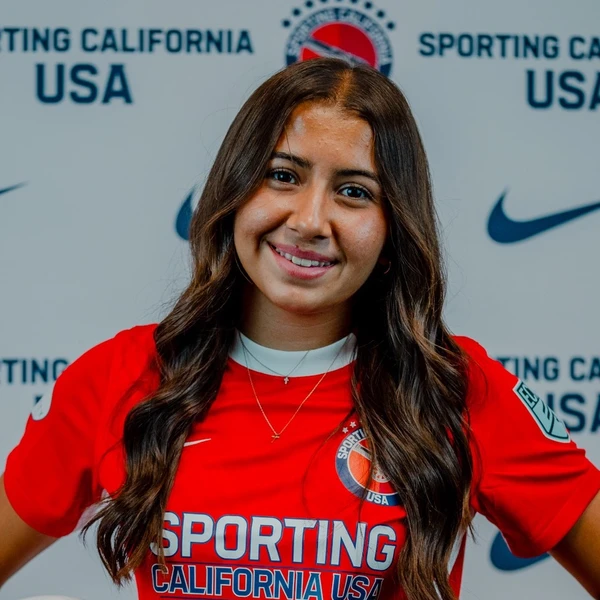
Hobbies and interests
Church
Soccer
National Honor Society (NHS)
Reading
Self-Help
Romance
Adult Fiction
Christianity
Health
Humor
Spirituality
I read books multiple times per month
Aria Burrola
1x
FinalistAria Burrola
1x
FinalistBio
Hello! My name is Aria Burrola, and I aspire to be a future engineer and/or healthcare worker. My future job and college degree are more for others than for myself. Growing up in a home with two veteran parents, I have learned the value of hard work and the importance of serving others. I want to use my education as a way to help others in their life. I also want to go into research work in the future to come up with new ways of thinking and expand the future of our world.
Education
Northview High School
High SchoolMiscellaneous
Desired degree level:
Master's degree program
Majors of interest:
- Architectural Engineering
- Environmental/Environmental Health Engineering
- Surveying Engineering
Career
Dream career field:
Mechanical or Industrial Engineering
Dream career goals:
Go into Research
Summer Youth Worker
Irwindale Senior Center2024 – Present2 years
Sports
Track & Field
Varsity2023 – Present3 years
Awards
- Outstanding Sprinter '23
- Otstanding Sprinter '24
- Outstanding Sprinter '25
- Valle Vista League All Academic '25
- Valle Vista League 400m Champion '23, '24, '25
- Second place Valle Vista 200m '23 '25
Soccer
Club2019 – Present7 years
Awards
- Second Team All Valle Vista League
- Defensive Player of the Year
- Player of the Game
- Player of the Game
Research
Sports, Kinesiology, and Physical Education/Fitness
AP College Board — Author and Researcher Completed by myself2024 – 2025
Public services
Volunteering
Surfrider Foundation — Picked up Trash Around Beach2025 – PresentVolunteering
Shepherd's Pantry — Food Cart Packer2023 – Present
Future Interests
Advocacy
Volunteering
InnovateHER Engineering Scholarship
Leadership has been a central part of my life, both on and off the soccer field. As a captain on my high school and club soccer teams, I lead by example, motivating my teammates to work hard, stay disciplined, and support one another through victories and challenges alike. Committed to playing at the Division 1 college level has allowed me to inspire younger athletes in my community, showing them that dedication, perseverance, and a commitment to excellence can turn dreams into reality. Coaching youth soccer has been another avenue for leadership, where I teach skills, teamwork, and sportsmanship while helping young players develop confidence and resilience. Through this role, I have seen firsthand how encouragement and guidance can transform a child’s attitude and passion for the game. These experiences have taught me that leadership is about inspiring others to grow, achieve, and positively influence their communities further.
Beyond sports, I have taken on leadership in my school and community in meaningful ways. As a Bible club leader, I organize events, discussions, and service projects that foster integrity, empathy, and collaboration among my peers. I also participate in volunteer efforts such as beach clean-ups and food pantry drives, helping those in need while inspiring others to give back. These experiences have strengthened my understanding that impact comes not only from personal achievements but from actively encouraging and uplifting others.
I hope to carry the lessons I have learned through soccer and community leadership into my future career in engineering. Majoring in biomedical engineering, I aim to develop accessible solutions that improve health and quality of life, especially for underserved communities. I want to design medical devices and technologies that address real-world challenges, combining creativity, technical skill, and empathy to create meaningful change. Beyond innovation, I hope to mentor and inspire young people, especially Hispanic girls like myself, to pursue STEM. I want to prove that dedication is valuable both on the field and in the classroom. By demonstrating that youth can excel not just athletically, but academically, I hope to encourage the next generation to reach their full potential.
Ultimately, I want to use my experiences as a student-athlete, leader, and mentor to make a positive difference in my community. Whether through inspiring younger athletes, leading service initiatives, or developing life-changing biomedical technologies, I am committed to strengthening and uplifting those around me. I believe that true leadership and impact come from combining talent, hard work, and service, and I am determined to apply these principles to every aspect of my life, creating opportunities for others to succeed while contributing to a better community.
Aserina Hill Memorial Scholarship
I’m a 17-year-old junior in high school, balancing rigorous academics with athletics, faith, and community involvement. I have a strong interest in STEM, particularly engineering, and I’ve been captivated by how problem-solving and creativity can make a real-world impact. At the same time, soccer has been a central part of my life since I was young. I play for Sporting CA ECNL and my high school team. The sport has taught me discipline, teamwork, and resilience. My faith guides everything I do: it motivates me to serve others, act with integrity, and strive to use my talents to glorify God. Through volunteering and leading in Bible club, youth soccer clinics, beach cleanups, and local food pantries, I’ve seen how service rooted in compassion and faith can create meaningful change in my community.
Post-high school, I plan to pursue a degree in engineering while continuing to play soccer at the collegiate level. My goal is to use my education and skills to address real-world challenges, particularly in underserved communities. I hope to design solutions that improve access to resources, infrastructure, and opportunities, combining technical knowledge with a commitment to service. My faith will continue to guide me in these pursuits, reminding me to use my talents for the good of others, to act with humility, and to give back generously to the communities that have shaped me. I also plan to remain involved in mentoring younger athletes and students, sharing the lessons I’ve learned in teamwork, perseverance, and leadership, and giving back to a community that has given me so much.
If I could start my own charity, its mission would be to provide access, mentorship, and education to youth in underserved communities, with a foundation rooted in faith, service, and encouragement. I would focus on two main areas: STEM education and athletic development. I would have volunteers serve as mentors, tutors, and coaches, helping children gain skills, confidence, and guidance to pursue their passions. STEM workshops would teach hands-on problem solving and engineering projects, while soccer programs would provide both physical activity and lessons in teamwork, leadership, and integrity. I would like to shape it in a way that is similar to the program that made me love sports so much growing up: Kare Youth League. The goal would be to create environments where children feel seen, supported, and empowered to reach their full potential: academically, athletically, and spiritually.
Through both my personal involvement in my community and the vision for this charity, I hope to demonstrate that service and leadership are about showing up, encouraging others, and using the gifts God has given me to make a lasting, positive impact. Combining STEM, athletics, and faith-driven service has been central to who I am, and I want to carry these passions forward to serve and uplift the world around me.
Code Breakers & Changemakers Scholarship
My passion for STEM grew from a mix of childhood curiosity and real-world awareness. I’ve always loved figuring out how things work, from building that playdough dam at my dad’s workplace to breaking down complex problems in class just to understand their roots. What ignites my curiosity most is seeing where science meets human need, those places where people struggle not because of a lack of effort, but because systems around them are broken or outdated. I’m especially drawn to challenges like food deserts, unequal access to resources, and inefficient community infrastructure. These are issues that require both creativity and technical skill, and I’m eager to be part of solutions that genuinely improve people’s lives. STEM excites me because it gives me the tools to not only ask big questions, but to build the answers.
I envision a STEM career centered on designing solutions that support underserved communities, places where infrastructure fails, transportation is unreliable, or access to fresh food is scarce. I want to work at the intersection of engineering and community planning, creating systems that make everyday life safer, more efficient, and more equitable. Whether that means developing better food distribution networks, improving public transit design, or engineering technologies that help cities manage resources more effectively, my goal is to create long-term, sustainable impact. I want to be the kind of engineer who understands that every blueprint affects real people and that the innovations we create can either widen or close gaps in society. My dream is to help close them.
Mitch Albom’s books have had a surprisingly powerful influence on the way I think about my future in STEM. His stories, especially Tuesdays with Morrie, The Five People You Meet in Heaven, and The Time Keeper, all center on purpose, connection, and the impact one life can have on another. Reading Tuesdays with Morrie taught me that the most meaningful work is done with intention and compassion, which is exactly how I want to approach engineering. The Five People You Meet in Heaven showed me how even small actions can change someone’s entire world, reminding me that the systems we build matter, even if we don’t see every person they touch. And The Time Keeper made me reflect on how precious time is, something that motivates me to use my skills to help others rather than settle for doing the bare minimum. Albom’s books shaped my STEM goals by grounding them in humanity; they taught me that behind every design, blueprint, or innovation is a real person whose life could be transformed for the better.
This scholarship would be a crucial bridge between my aspirations and the opportunities I need to achieve them. As someone pursuing both engineering and collegiate athletics, I know the demands on my time, energy, and resources will be intense. Financial support would allow me to focus fully on my studies, research opportunities, and community projects without the constant pressure of financial strain. It would give me the freedom to take on internships, access mentorship, and explore hands-on engineering experiences that align directly with my goal of serving underserved communities. Most importantly, this scholarship would give me stability and support, two things that will help me grow into an engineer who not only understands the world’s challenges, but is equipped and confident enough to solve them.
Harvest Scholarship for Women Dreamers
My “Pie in the Sky” dream is a combination of 2 things important to me: to play college soccer while earning an engineering degree, and to use everything I learn on the field and in the classroom to create real solutions for underserved communities. It’s a dream that feels both incredibly ambitious and incredibly fitting.
This dream didn’t come from a single moment, but from years of small ones: early morning lifts, late-night homework, long practices, tough losses, answered prayers, and the quiet victories no one sees except me. Being a female athlete who also wants to pursue a major as rigorous as engineering means I’ve had to build a level of dedication that reaches far beyond talent. It’s taken sweat, tears, and, honestly, a lot of faith.
Soccer has shaped the way I approach everything. It taught me discipline long before school ever did: how to push through fatigue, how to show up even when things hurt, how to compete with heart, and how to pick myself up after setbacks that felt impossible in the moment. When I train for hours after school and then stay up studying for AP classes, I’m reminded that the life I want won’t come from doing the bare minimum. It will come from showing up fully, every single day, even when no one is watching.
Engineering found its way into my heart in a different way. I’ve always been curious, wanting to understand how things work, how systems fail, and how people’s lives are shaped by the structures around them. When I learned about the reality of food accessibility, something clicked. I realized that engineering isn’t just the math and design my logistical brain fell in love with, but it’s also impact. It’s service. It’s the chance to build something that matters. And I knew I wanted to use whatever God-given intelligence I have not just to “get by,” but to make a difference.
Pursuing both soccer and engineering means I’m choosing a harder path, one filled with adversity I already know is coming. Female athletes don’t always get taken seriously. Women in engineering are often overlooked or underestimated. Balancing both will mean sacrifice: less sleep, tighter schedules, moments of doubt, and times when giving up might feel easier.
But the thing is: I’m resilient. I’ve proven that to myself over and over again. Every long night, every injury scare, every moment I thought I wasn’t enough, I still pushed through. Not perfectly, but faithfully. And every time I did, I became more certain that I’m capable of handling what lies ahead.
My dream is to step onto a college field knowing I earned my spot, then step into an engineering classroom knowing I belong there just as much. And someday, I want to take everything I’ve learned: the discipline from soccer, the creativity from engineering, and the grounding from my faith, and use it to design solutions that help communities that have been left behind.
Maybe that’s what a “Pie in the Sky” dream really is: something big enough to scare you a little, but close enough that you can feel yourself growing toward it. And I’m ready to keep growing.
Dream BIG, Rise HIGHER Scholarship
I’ve always had a huge shadow to fill. A 7-year age gap of accomplishments from my older (and highly favored) brother has always been a passion for me and my goals. I knew I wanted to be him, but better. I wanted to stretch that shadow and make it a mold of myself.
Growing up, my parents nicknamed him the “boy genius,” and I watched that title shape the way everyone saw him and the way they saw me. He grasped things instantly, finished homework in minutes, and impressed teachers without even trying. It felt like his intelligence was effortless, and because of that, everyone assumed he would go far. But what most people didn’t see was that he didn’t care to push himself. He didn’t chase perfect grades, apply for scholarships, or challenge himself beyond what was required. He coasted. He did the bare minimum. And while I admired his natural brilliance, I also saw how potential can go to waste when it isn’t used.
What people also didn’t see was that I had that same spark inside me, that same ability to understand, to create, to learn quickly. I inherited that same “geniusness,” just in a quieter form. But unlike him, I didn’t want to let mine sit unused. I didn’t want my intelligence to be something people talked about only when I was young. I wanted to develop it, challenge it, and direct it into something meaningful. My intelligence wasn’t something I wanted handed back to me as a compliment; I wanted it to show through my work, my growth, and my purpose.
As I got older, my education became the place where I felt that difference. School gave me the space to explore who I was outside of my brother’s shadow. STEM, especially, helped me recognize my own potential. Chemistry taught me how the smallest parts of the world interact and build something greater. Physics showed me how forces, motion, and energy reflect the same patterns I saw in my own life: constant push, pull, resistance, and momentum. Math taught me persistence and precision. These subjects didn’t just confirm that I was capable; they fueled my desire to use what I was learning to make an impact.
The more I learned, the more my goals expanded. Education made me curious about the systems shaping people’s daily lives. I learned about food deserts, environmental injustice, failing infrastructure, and communities that lacked basic access to fresh food or clean water. When my brother introduced me to the idea of food deserts, he talked about it academically, almost distantly. But when I learned about it, I felt something different: responsibility. I didn’t want to just understand the problem. I wanted to be part of the solution. I wanted to use my intelligence to create real change, not just impress people with what I knew.
Balancing rigorous academics with my demanding soccer schedule pushed me further. My days often stretched from early morning classes to afternoon practices, weightlifting, and late-night club soccer. I didn’t have the luxury of coasting, not if I wanted to excel in both school and athletics. There were nights when exhaustion hit hard, but I still opened my laptop, pushed through assignments, and held myself to the standards I set. I refused to become someone who settled for “good enough.” I had watched what that looked like. And I knew I was capable of more.
Education taught me discipline, but it also taught me direction. Every new concept, every project, every challenge shaped the kind of future I want: one where I use my intelligence intentionally. I know I have a gift, just like my brother. But instead of letting it sit untouched, I want to apply it to something larger than myself. I want to design solutions that support underserved communities. I want to work in engineering or a STEM field where research, creativity, and innovation come together to solve real problems. I want to use my knowledge to make food access more equitable, cities more sustainable, and daily life more fair for people who often get overlooked.
For the first time, I stopped seeing my brother’s brilliance as something I needed to match or outdo. Instead, I started seeing my own potential as something separate, something uniquely mine. My intelligence might not earn me a nickname in the family, but it has earned me resilience, motivation, and clarity. It taught me that genius isn’t just what you’re born with, it’s what you choose to do with it. And I choose to use mine.
In the end, my brother’s shadow didn’t define me. It challenged me. It pushed me not only to discover my own strengths, but to use them with purpose. My education didn’t just give me knowledge; it gave me a direction, a responsibility, and a vision for the future I want to build. I don’t want to let my intelligence rest unused. I want to use it to create something meaningful, to uplift others, and to build a future where the work I do has a real impact.
Future Women In STEM Scholarship
Growing up, I was always curious about how things worked. I was drawn to problems that weren't even there, often trying to find solutions. An example of this can be found in the most mundane of places: license plates. I remember when I was little, picking apart the numbers on plates and attempting to make sense of them, making math problems for me to solve. It became a habit of mine on road trips or just running errands, and I can still catch myself doing the same to this day. I expressed this pattern recognition to my father one day on our way to Starbucks, which he then had me explore further as a child in his LA office.
When I was little, I went with my dad to his “Take a Kid to Work Day,” where he let me build a small playdough dam in one of the water-flow models in his workspace. I can still picture it, how confident I felt making the dam, convinced my structure would hold back the water perfectly. Of course, the moment the water started flowing, my dam completely failed. The water burst straight through the middle, washing away everything I had built. I remember feeling embarrassed, frustrated, and confused about what went wrong. I hate failing, but oftentimes it's what has always pushed me forward to strive for more.
Instead of letting me give up, my dad encouraged me to try again. I started to adjust the dam little by little, sealing gaps, thickening the walls, and shaping it more carefully. The second attempt still wasn’t perfect, but it held longer. On the third try, everything finally worked the way I imagined. Watching the water stop and move the way I wanted felt like magic, but the real lesson was in the process. That small moment of failing, observing, and fine-tuning showed me how problem-solving, patience, and creativity all come together in STEM. I fell in love with that feeling. It became something I could share with my dad, who has always had a similar problem-solving, math-oriented way of thinking. For the first time, I felt like I saw the world through his eyes. It made me feel older and wiser at the young age of seven.
As I got older, my interest in STEM expanded beyond hands-on experiments. My brother introduced me to the issue of food deserts, explaining how entire communities, including ones not far from where I live, struggle without access to fresh, healthy food. The idea that something as basic as where you live can determine the quality of food you eat and, in turn, your health shocked me. I wanted to understand the problem better, seeing as it affects me as well as the people around me. I began researching on my own, for my AP Seminar class, learning about the connections between engineering, environmental science, data analysis, and urban planning. I realized that solving problems like food deserts requires more than just awareness; it requires people who understand systems, structures, and solutions grounded in STEM.
Together, these experiences helped shape my passion for STEM. They taught me that STEM is not just about equations or models; it’s about experimenting, improving, and applying knowledge to make life better for others. That combination of curiosity, purpose, and impact is what continues to inspire me to pursue a future as a woman in a STEM field.
Snap EmpowHER Scholarship
Hi! My name is Aria, and I’m a proud Mexican American high school student with a deep passion for STEM, especially civil engineering. But more than that, I’m a young woman determined to carve out space in a field where women, especially Latinas, are still underrepresented. From a young age, I was drawn to science. I remember a certain birthday begging my parents to buy me a chemistry kit because I wanted to be a scientist. I loved building things with Legos, designing tiny cities in my toy shed with my baby brother, and always asking questions about how things worked. That curiosity has never left me, but it hasn’t always been easy to pursue.
As a girl interested in science and math, I’ve often felt underestimated, especially when surrounded by male peers. I remember moments in class where I worked just as hard, or harder, but was overlooked or not taken seriously. It was discouraging to feel like I had to prove myself simply because I’m a girl. These moments pushed me to work even harder, not just to succeed, but to break stereotypes. I’ve come to realize that being a woman in STEM is not a weakness, it’s a strength. I bring a different perspective, grounded in empathy, creativity, and resilience.
My interest in engineering has been shaped by both personal experiences and the world around me. A recent orthopedic appointment for shin splints sparked my curiosity in biomedical engineering and how technology can heal the human body. I also feel deeply connected to environmental engineering because I grew up close to nature and understand the importance of preserving our planet while building our cities. But civil engineering has always stood out the most, thanks to my father’s influence. He was a civil engineer, and his stories about surveying structures and systems for the public good inspired me to follow a similar path. I’ve already researched projects and explored the ways civil engineers make an impact, and I can see myself doing the same.
What excites me most about engineering is that it gives me the power to create solutions that serve entire communities. My dream is to continue my education and eventually go into research, using my God-given gift of intelligence to develop systems and structures that support all people, especially those who are often overlooked. I want to make a difference that crosses boundaries of race, gender, and class.
As a woman, I know what it’s like to feel invisible in STEM spaces. That’s why women’s empowerment is so important to me. I lead by example, in the classroom, on the soccer field, and in my school’s Bible club, showing younger girls that they belong, they’re capable, and they deserve to take up space. I lift up my teammates and peers, celebrate their voices, and remind them that intelligence and strength have no gender.
I don’t just want to be an engineer. I want to be a builder of futures, starting with my own. I want to help redefine what leadership looks like in STEM, and prove that young Latina women like me aren’t the exception; we’re the future.
Rooted in Change Scholarship
An environmental challenge I am passionate about solving is the issue of food deserts. Growing up, I didn’t realize I lived in one. On the way home from school, my family and I would pass the same street corner: a gas station, Burger King, Subway, Little Caesars, a nail salon, and a donut shop, but no healthy grocery store in sight. One day during my sophomore year, my older brother casually pointed out that our neighborhood was a food desert. I was stunned. Until that moment, I hadn’t thought about how far we had to drive just to find fresh, nutritious groceries. I asked myself: "What about those less fortunate, who can’t afford to drive like we do?" That question stayed with me and opened my eyes to the deeper problem of food insecurity in low-income communities.
That moment sparked a deep interest in me. I decided to research food deserts and write about the issue for my AP Seminar class and exam. During my research, I discovered the concept of “food swamps," areas saturated with unhealthy, processed foods, while nutritious options are scarce. When food deserts and food swamps coexist, which is common in low-income neighborhoods, it leads to serious public health crises. The Centers for Disease Control and Prevention explains that poor diets caused by a lack of access to healthy food contribute to chronic illnesses such as heart disease, type 2 diabetes, and obesity. These conditions disproportionately affect marginalized communities, making food insecurity not just a matter of nutrition but a systemic health issue connected to poverty, education, and urban planning.
Knowing that this problem was deeply connected to socioeconomic and environmental systems made me realize how important it is to address the root causes. I began volunteering at Shepherd’s Pantry in Irwindale, dedicating any free moment I could find despite my busy schedule of school, soccer, and leadership roles. At Shepherd’s Pantry, I helped pack food onto carts that were then delivered to families and homeless individuals in need. One moment that stayed with me was when a woman gratefully received a box of food we prepared, It was clear that the small package meant more than just meals; it was a source of comfort and hope. This experience made me understand the urgency of the problem and the importance of community support.
These experiences have shaped my long-term goals. I plan to become a civil engineer with a focus on urban planning because I want to help design cities that work for everyone. I believe that access to nutritious food should not depend on wealth or transportation. Through urban planning, I hope to influence city layouts to include supermarkets in every neighborhood, especially underserved and unincorporated areas. I also want to help create accessible, affordable public transportation systems that connect people to these resources easily and efficiently. My goal is to use engineering and planning to eliminate food deserts and improve the overall quality of life.
What gives me hope is the power of awareness and education. I didn’t know about food deserts until my brother pointed it out, but that small moment changed my outlook and inspired me to take action. I believe that by spreading knowledge, getting involved in my community, and pursuing my education, I can help create meaningful change. Every person deserves access to healthy food, and I am committed to dedicating my career to making that a reality.
In the future, I see myself stepping into leadership roles that combine advocacy, innovation, and community engagement. I want to work with local governments, nonprofits, and urban developers to create policies and projects that break down barriers to food access. My dream is to help design sustainable, equitable cities where food insecurity is no longer a problem, where all families can live with dignity and health.