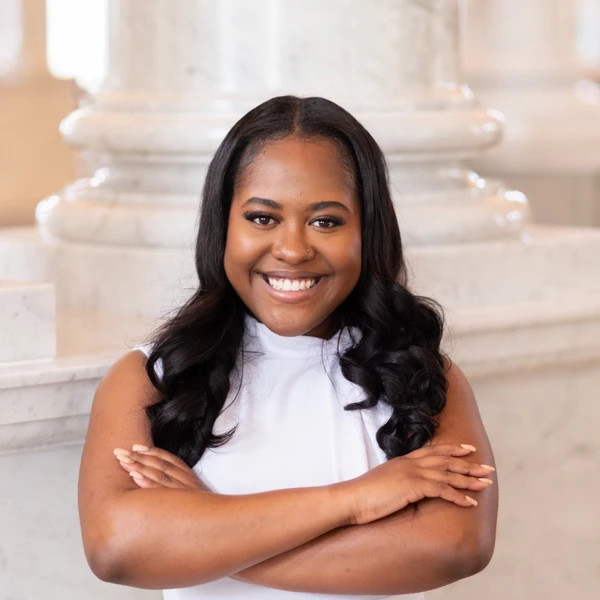
Fairfield, CA
Age
19
Gender
Female
Ethnicity
Black/African
Hobbies and interests
Cheerleading
Student Council or Student Government
Community Service And Volunteering
Reading
Romance
I read books multiple times per month
Anyah Stallworth
1x
Finalist
Anyah Stallworth
1x
FinalistBio
I am super passionate about supporting African American people as well as civil right. I plan to be an OBGYN to help women when it comes to pregnancy as well as advocating for women's voices in the healthcare field. I enjoy to read, listen to music, specifically RnB and Hip Hop, and spend time with my family and friends.
Education
Howard University
Bachelor's degree programMajors:
- Biological and Biomedical Sciences, Other
GPA:
3.5
Miscellaneous
Desired degree level:
Doctoral degree program (PhD, MD, JD, etc.)
Graduate schools of interest:
Transfer schools of interest:
Majors of interest:
- Biological and Biomedical Sciences, Other
Career
Dream career field:
Medicine
Dream career goals:
OB GYN
Assistant
2024 – 20251 year
Sports
Cheerleading
Varsity2021 – Present5 years
Research
Biological and Biomedical Sciences, Other
Researcher2026 – Present
Public services
Volunteering
Alpha Kappa Alpha Inc. — Pursue and help run different community service activities in the community of Vallejo, CA2024 – Present
Our Destiny Our Future Scholarship
mpact, to me, is not about recognition — it is about responsibility. I plan to make a positive impact on the world by committing my life to service, advocacy, and excellence in women’s healthcare. I believe real change happens when compassion meets competence, and I intend to build a career that embodies both.
My goal is to become an obstetrician-gynecologist, with a focus on improving maternal health outcomes for Black women and underserved communities. The reality that Black women are disproportionately affected by maternal mortality and inadequate medical care is unacceptable. I do not see those statistics as distant public health data; I see them as a call to action. I plan to enter the medical field not only to practice medicine, but to actively challenge the inequities embedded within healthcare systems.
However, my impact will extend beyond hospital walls. I want to create spaces where women feel heard long before they ever step into an exam room. This includes organizing community-based health workshops, partnering with local organizations to provide accessible reproductive education, and advocating for policies that expand healthcare access. Education is empowerment, and when individuals understand their bodies and their options, they gain agency over their futures.
I also plan to make an impact through mentorship. Representation profoundly shapes possibility. As a young Black woman pursuing a career in medicine, I understand the power of visibility. I want younger girls — especially those from communities that are often overlooked — to see that they belong in science, in medicine, and in leadership. I hope to mentor students who aspire to enter STEM fields, guiding them not only academically but emotionally, reminding them that resilience and self-belief are just as important as grades.
Beyond my professional aspirations, I am committed to leading with integrity in every environment I enter. Positive impact is built through consistency — in how we treat people, in how we show up prepared, and in how we respond to adversity. I have learned that leadership is not about dominance; it is about service. It is about listening carefully, acting thoughtfully, and remaining grounded in purpose even when challenged.
On a broader scale, I hope to contribute to research and public health initiatives that address systemic disparities. Medicine is constantly evolving, and I want to be part of that evolution — advocating for evidence-based practices that prioritize equity. I believe that improving outcomes for the most vulnerable populations ultimately strengthens society as a whole.
Ultimately, the legacy I want to leave is one of access and empowerment. I want communities to be healthier because I served them. I want young women to feel more confident because they saw what was possible. I want systems to be more equitable because I challenged them. My impact will not be defined by a single achievement, but by a lifetime of intentional action dedicated to healing, advocacy, and uplifting others.
Michele L. Durant Scholarship
Leadership, resilience, and service are the foundations of who I am becoming. I have always believed that success means little if it is not used to uplift others. My experiences — both challenging and empowering — have shaped my commitment to creating meaningful change in my community and beyond. I strive to approach every opportunity with confidence, preparation, and a genuine desire to make a difference.
Throughout my academic journey at Howard University, I have pushed myself to grow both intellectually and personally. Stepping into leadership roles early taught me that courage is developed in moments of discomfort. I learned that being underestimated does not define your ability — your preparation and persistence do. Those lessons strengthened my belief in using my voice intentionally and advocating for spaces where everyone feels valued.
I plan to make a positive impact through a career in obstetrics and gynecology. My passion lies in improving women’s healthcare, especially for Black women who continue to experience disproportionate maternal health disparities. The statistics surrounding maternal mortality and inadequate care are not just numbers to me; they represent real lives and families. I want to be a physician who listens attentively, treats patients with dignity, and ensures that women feel heard and respected in medical spaces. Compassionate care should not be a privilege — it should be a standard.
Beyond clinical practice, I intend to contribute through education and outreach. Many underserved communities lack access to accurate reproductive health information and preventative resources. By partnering with local organizations, hosting informational workshops, and mentoring young women interested in healthcare careers, I hope to bridge gaps in both knowledge and representation. I understand how powerful it is to see someone who looks like you succeeding in spaces that once felt inaccessible.
Service is not something I view as optional; it is a responsibility. Whether through campus initiatives, peer mentorship, or future medical outreach programs, I am committed to being a source of encouragement and advocacy. I want to use my education not only to build a stable career, but to challenge inequities within the healthcare system and promote long-term change.
Ultimately, my goal is to combine skill, empathy, and leadership to create lasting impact. I aspire to build a career rooted in excellence and equity — one that improves health outcomes while empowering women to feel confident in their care. By remaining intentional in my actions and grounded in my values, I hope to leave every community I touch stronger than I found it.
Christina Taylese Singh Memorial Scholarship
As a freshman at Howard University, I am deeply motivated by a desire to serve, advocate, and make a tangible difference in people’s lives. I have always been someone who leads with empathy and determination. Whether stepping into leadership roles on campus or challenging myself academically, I am driven by purpose. My experiences have taught me that resilience, confidence, and compassion are just as important as intelligence. I strive to embody all three.
I plan to pursue a career in obstetrics and gynecology. Becoming an OB-GYN is not simply a professional goal for me; it is a calling rooted in advocacy for women’s health, particularly for Black women and women in underserved communities. I am passionate about addressing disparities in maternal healthcare and ensuring that women feel heard, respected, and safe in medical spaces. Too often, women — especially women of color — experience higher rates of maternal mortality, inadequate pain management, and dismissive treatment. I want to be part of changing that narrative.
My desire to enter this field stems from both observation and conviction. I have seen how critical it is for patients to have physicians who not only understand medicine but also understand them. An OB-GYN plays a unique role in a woman’s life — guiding her through adolescence, reproductive health decisions, pregnancy, and menopause. It is a specialty that combines long-term relationships with life-changing moments. I am drawn to the opportunity to support women during some of the most vulnerable and transformative experiences of their lives.
In addition to patient care, I am interested in education and mentorship within the medical field. Representation matters. I want young girls who aspire to become doctors to see someone who looks like them wearing a white coat. I want to demonstrate that excellence and compassion can coexist. My leadership experiences have shown me that advocacy begins with confidence and preparation. Just as I learned to stand firm in my voice during challenging moments on campus, I will carry that same confidence into hospital rooms and clinics.
Academically, I am committed to building a strong foundation in the sciences while also strengthening my communication and interpersonal skills. Medicine requires both technical precision and emotional intelligence. I am prepared to embrace the rigor of medical school and the demands of residency because I understand the greater purpose behind the work. Every long night of studying is preparation for saving lives and improving outcomes.
Ultimately, I want my career to extend beyond individual patient interactions. I hope to contribute to research, community outreach programs, and policy discussions that aim to reduce healthcare disparities. My goal is not only to practice medicine but to transform systems that have historically underserved certain populations.
Healthcare is more than a profession to me — it is a platform for service and change. By becoming an OB-GYN, I will be able to combine my passion for women’s empowerment, my commitment to equity, and my dedication to excellence into a career that creates lasting impact.
Byte into STEM Scholarship
As a freshman at Howard University, I am constantly reminded that I stand on the shoulders of leaders, innovators, and change-makers. My journey here has been shaped by resilience, faith, and a deep belief in the power of education. From an early age, I understood that growth often comes through challenge. Whether it was navigating new academic environments or stepping into leadership roles before I felt fully ready, I have learned that courage is not the absence of fear — it is the decision to move forward despite it.
One defining experience that shaped me was running my first campaign as a freshman. I entered the race with passion and conviction, even though I was new to campus. During my speak-out, someone publicly dismissed my campaign as “funny” and “silly.” That moment could have discouraged me, but instead it strengthened my resolve. I chose to stand firm in my vision, and ultimately, I won. That experience reinforced my belief in preparation, authenticity, and perseverance. It also deepened my commitment to creating spaces where others feel encouraged rather than diminished.
Service and mentorship are central to who I am. I value collective progress over individual success. I believe leadership is about responsibility — about listening, advocating, and using your voice to amplify others. Whether through campus involvement, peer support, or community engagement, I strive to embody integrity and excellence. My personal values are rooted in uplifting others, especially young women who may question whether they belong in competitive or high-achieving spaces. I want them to see possibility when they look at me.
My passion for my chosen field stems from a desire to merge purpose with impact. I am driven by the idea that knowledge is a tool for transformation. Education is not simply about earning a degree; it is about acquiring the skills, critical thinking abilities, and networks necessary to create meaningful change. The program I am pursuing will equip me with both technical expertise and leadership development. It will challenge me academically while also preparing me to navigate professional spaces with confidence and competence.
Through this course of study, I plan to refine my analytical skills, strengthen my communication abilities, and gain practical experience that positions me to lead effectively. I want to build a career that not only reflects personal achievement but also contributes to systemic improvement. My long-term goal is to use my education to expand access, advocate for equity, and mentor those who come after me.
Ultimately, I measure success not solely by titles or recognition, but by impact. I want my education to serve as a bridge — connecting opportunity to underserved communities and transforming barriers into stepping stones. By investing in my growth now, I am preparing to invest in others later. I am committed to using every lesson, challenge, and accomplishment as preparation for a life dedicated to service, leadership, and lasting change.
Grand Oaks Enterprises LLC Scholarship
As a freshman at Howard University, I walked onto campus with ambition in my heart and a quiet determination to make my mark. Howard is a place known for producing leaders, changemakers, and visionaries, and even as a first-year student, I knew I wanted to step into that legacy. While many freshmen spend their first semester simply adjusting, I made the bold decision to run my first campaign.
Running as a freshman can feel intimidating. You are new. You are still learning the campus culture. You do not yet know everyone, and not everyone knows you. Still, I believed that leadership is not about seniority — it is about service, vision, and courage. I had ideas. I had passion. And I had a genuine desire to contribute something meaningful to my community.
The campaign process itself was both exciting and overwhelming. There were long nights preparing my platform, practicing my speech, and thinking through how I wanted to present myself. I wanted to be authentic. I did not want to imitate anyone else or water myself down to fit expectations. I wanted people to see me — my heart, my dedication, and my commitment to doing the work.
The most defining moment of my campaign came during my speak-out. Standing in front of my peers, sharing my ideas and my vision, I felt nervous but grounded. I knew I had prepared. I knew I had something valuable to offer. But in the middle of that moment, something happened that tested my confidence. A girl publicly referred to my campaign as “funny” and “silly.”
For a split second, I felt the sting of embarrassment. It is one thing to worry privately about whether people are taking you seriously. It is another thing entirely to have someone openly question you in front of an audience. My mind raced. Was I being perceived as naive because I was a freshman? Did they think I was unqualified? Was I aiming too high too soon?
But as quickly as doubt tried to creep in, something stronger rose up inside me. I remembered why I had decided to run in the first place. I was not doing it for validation. I was not doing it to impress anyone. I was doing it because I believed in my platform and in my ability to serve. Instead of shrinking in that moment, I stood taller. I continued speaking with clarity and confidence. I refused to let someone else’s comment define my narrative.
That moment taught me more about leadership than any workshop or seminar ever could. Leadership requires resilience. It requires the ability to remain composed when faced with criticism or dismissal. It requires understanding that not everyone will support you, and that is okay. What matters is whether you believe in yourself enough to keep going.
After the speak-out, I carried that lesson with me throughout the rest of the campaign. I continued talking to students, refining my message, and showing up with consistency. I focused on building genuine connections rather than responding to negativity. I learned that the best response to doubt is excellence.
When election results were announced, I experienced a mix of anticipation and calm. Regardless of the outcome, I knew I had grown. I knew I had stepped outside of my comfort zone in a major way. But when I heard that I had won — and that the same girl who had dismissed my campaign had lost — the victory felt deeper than just securing a position.
It was a victory in self-belief.
Winning proved to me that I was capable, even as a freshman. It showed me that people saw the value in what I was offering. It reminded me that sometimes the very things others label as “silly” are actually innovative, bold, and forward-thinking. What one person mocks, another person may deeply appreciate.
More importantly, that experience shaped how I view challenges moving forward. I now understand that criticism is not a stop sign; it is often a test. It tests your confidence. It tests your preparation. It tests whether your belief in yourself is strong enough to withstand external noise. That campaign taught me that my voice carries weight and that I deserve to occupy leadership spaces, regardless of how long I have been in them.
As a freshman at Howard, I could have chosen to play it safe. I could have waited until I was older or more established. But stepping into leadership early forced me to grow quickly. It strengthened my communication skills. It sharpened my resilience. It deepened my sense of purpose.
Looking back, I am grateful for that moment at the speak-out. Without that comment, I might not have discovered just how strong I was. Sometimes adversity reveals confidence we did not even know we possessed. That experience taught me that leadership is not about avoiding criticism — it is about standing firm in who you are despite it.
Winning my first campaign was not just about earning a title. It was about proving to myself that I belong in rooms where decisions are made. It was about learning that confidence is built in moments of discomfort. And it was about realizing that being underestimated can sometimes be the greatest advantage of all.
As I continue my journey at Howard University, I carry that lesson with me: my ideas are valid, my voice matters, and no one else gets to decide the limits of my potential.
Erin Lanae's HBCU Excellence Scholarship
As a freshman at Howard University, stepping onto campus felt like stepping into purpose. I knew I wanted to make an impact early, so during my very first semester, I ran my first campaign. It was bold. It was ambitious. And honestly, it was a little scary.
At my speak-out, where I shared my platform and vision, I remember a moment that could have easily shaken my confidence. A girl publicly called my campaign “funny” and “silly.” For a split second, I felt embarrassed. But instead of shrinking, I stood firm. I believed in what I was advocating for, and I refused to let someone else’s opinion define my capability.
That experience taught me resilience in real time. Leadership is not about avoiding criticism; it’s about standing tall in the face of it. When the results were announced and she had lost while I had won, it wasn’t just a victory in votes — it was a victory in self-belief.
As a freshman, that moment shaped me. It reminded me that confidence, preparation, and authenticity will always outshine doubt. Winning my first campaign showed me that I belonged in leadership spaces — and that my voice carries weight.
Jeannine Schroeder Women in Public Service Memorial Scholarship
One important social issue I am committed to addressing is the disparity in maternal and reproductive healthcare for Black women. In the United States, Black women face disproportionately high maternal mortality rates and are more likely to experience complications during pregnancy and childbirth. These outcomes are not simply the result of biology; they are shaped by systemic inequities, implicit bias in healthcare, and unequal access to quality medical services. I believe this issue is urgent, and I am intentionally aligning my education, service, and career goals to confront it.
Academically, I am pursuing a path that will prepare me for medical school and a future career as an OB-GYN. By excelling in my science coursework and seeking clinical exposure, I am building the foundation necessary to provide competent and compassionate care. I understand that addressing maternal health disparities requires more than good intentions—it requires clinical excellence, cultural competence, and a deep understanding of how systemic barriers affect patient outcomes. My education is my first step toward becoming part of the solution.
Beyond academics, I actively seek opportunities to serve and engage with my community. Through involvement in service-based organizations and healthcare-related initiatives, I support efforts that promote health awareness and access. Whether through volunteering, shadowing medical professionals, or participating in outreach events, I am gaining firsthand insight into the gaps that exist in care. These experiences strengthen my resolve to advocate for patients who may feel unheard or dismissed in clinical spaces.
I also believe that representation is a powerful tool for change. By pursuing a career in medicine as a Black woman, I hope to contribute to a healthcare workforce that better reflects the communities it serves. Studies show that patients often experience improved trust and communication when treated by providers who understand their cultural context. I want to create safe spaces where Black women feel validated, respected, and empowered to ask questions about their health.
In addition, I aim to address this issue through education and mentorship. I plan to mentor young women of color who are interested in STEM and healthcare careers, helping to increase representation in the field over time. Long-term change requires building pipelines and creating opportunities for future generations.
Addressing maternal health disparities is not a temporary interest for me; it is a lifelong commitment. Through academic preparation, community engagement, representation, and advocacy, I am working intentionally to confront this social issue. My goal is not only to treat patients, but to help reshape a system so that equitable care becomes the standard, not the exception.
Stephan L. Daniels Lift As We Climb Scholarship
I want to pursue a career in STEM because I see it as a powerful intersection of innovation, problem-solving, and service. STEM is not just about formulas, lab work, or research—it is about using knowledge to improve lives in tangible ways. For me, science has always represented possibility. It offers tools to answer complex questions, address systemic challenges, and create solutions that can directly impact communities. I am especially drawn to the medical and health sciences because they allow me to combine analytical thinking with compassion and advocacy.
My passion for STEM is rooted in my long-term goal of becoming an OB-GYN and serving underserved communities, particularly Black women. Healthcare disparities, especially in maternal health, continue to affect communities of color at alarming rates. These disparities are not just social issues; they are scientific, structural, and systemic problems that require educated professionals to address them. By pursuing a degree in a STEM field, I am equipping myself with the clinical knowledge, research skills, and technical expertise necessary to provide competent and culturally responsive care.
Beyond becoming a physician, I plan to use my STEM education to uplift the community in multiple ways. First, I aim to provide accessible, high-quality healthcare in areas where resources are limited. Many underserved communities experience shortages of medical professionals and limited access to preventive care. By practicing in these communities, I can help bridge that gap and advocate for early intervention, education, and holistic support.
Second, I want to engage in community outreach and health education. STEM knowledge should not remain confined to classrooms or hospitals. I hope to host workshops and informational sessions focused on reproductive health, maternal wellness, and preventative care. Education empowers individuals to make informed decisions about their bodies and their futures. When communities are informed, they are better positioned to advocate for themselves.
Lastly, representation in STEM matters. As a Black woman pursuing a career in medicine, I understand the importance of visibility. I plan to mentor young students—especially young girls of color—who may not see themselves reflected in science and healthcare fields. By sharing my journey and providing guidance, I hope to expand their sense of possibility and encourage them to pursue STEM careers as well.
Ultimately, my desire to pursue STEM is not solely about personal achievement. It is about impact. A STEM degree is a tool—one that I intend to use to challenge disparities, improve health outcomes, and invest in communities that deserve equitable care and opportunity. Through service, mentorship, and advocacy, I plan to ensure that my education becomes a bridge to empowerment for others.
Emerging Leaders in STEM Scholarship
I am interested in pursuing a career in medicine, specifically obstetrics and gynecology, because I believe healthcare is one of the most powerful forms of service. The field combines science, advocacy, and compassion in a way that directly impacts lives at their most vulnerable and transformative moments. Women’s health, particularly maternal health, is an area where disparities are both visible and urgent. Black women in the United States face disproportionately high maternal mortality rates and are often unheard or dismissed in clinical settings. I am drawn to this field because I want to help change that narrative. I want to be a physician who not only provides excellent clinical care, but who also listens, affirms, and advocates.
My desire to enter this field is deeply rooted in both purpose and experience. I have always felt called to serve underserved communities, especially communities that look like my own. Representation matters in healthcare. When patients see providers who understand their cultural context and experiences, trust can grow more naturally. I hope to be a trustworthy presence in exam rooms where fear, uncertainty, or past negative experiences may exist. Beyond direct patient care, I want to contribute to addressing systemic inequities through community education, mentorship, and possibly policy advocacy. My ultimate goal is to help create safer, more equitable maternal health outcomes for Black women and families.
Throughout my life, adversity has shaped my resilience and determination. One of the earliest challenges I faced was a speech impediment in childhood. In a school environment where reading aloud and verbal participation were central, I often felt self-conscious and different from my peers. There were moments of frustration when my thoughts felt clearer than my words. However, with the support of my family and teachers, I learned that my speech did not define my intelligence. Over time, I developed confidence, patience, and the ability to persevere even when progress felt slow. That experience taught me empathy—an essential quality for anyone entering healthcare.
Additionally, I have learned to navigate high expectations while balancing leadership roles, academic responsibilities, and service commitments. There have been moments of stress and self-doubt, but each challenge has strengthened my discipline and time management skills. Rather than discouraging me, adversity has refined my sense of purpose.
These experiences have prepared me for a demanding field. Medicine requires resilience, emotional intelligence, and the ability to remain steady under pressure—qualities I have been cultivating for years. I am not drawn to this path simply for professional achievement; I am drawn to it because I want my work to matter. I hope to make an impact that extends beyond individual appointments—an impact that restores trust, promotes equity, and affirms the dignity of every patient I serve.
Pastor Thomas Rorie Jr. Christian Values Scholarship
My journey into Christianity did not begin with a single dramatic moment; it began with consistency. I was raised in the church, where Sunday services, Bible study, and ministry involvement were foundational parts of my upbringing. However, growing up in church and truly knowing the Lord are not the same thing. As a child, faith was something I practiced because my family practiced it. As I grew older, it became something I chose for myself.
There were moments in my life that deepened that choice. One of the most significant was overcoming a speech impediment in my early childhood. During that time, I often felt frustration and insecurity. Through prayer, encouragement from my family, and the support of mentors, I began to understand that my challenges did not define me. Instead, they refined me. I learned to lean on God for confidence and peace in situations that felt overwhelming. My faith shifted from routine to relationship. I began reading Scripture not because I had to, but because I wanted to understand God’s character and His purpose for my life. Over time, I found comfort in knowing that my identity was rooted in Christ, not in my abilities, achievements, or setbacks.
As my faith matured, so did my sense of calling. I aspire to become an OB-GYN, serving underserved communities—particularly Black women who face significant disparities in maternal healthcare. Statistics consistently show that Black women in the United States experience disproportionately high maternal mortality rates and often feel unheard in medical settings. I feel called not only to practice medicine, but to advocate for equitable, compassionate care. My goal is to combine clinical excellence with cultural competency, ensuring that my patients feel seen, respected, and safe.
Receiving this scholarship would directly support my academic and professional journey. Pursuing a career in medicine requires years of rigorous education, research opportunities, clinical experiences, and preparation for medical school. Financial support would alleviate the burden of tuition and related expenses, allowing me to focus more fully on excelling academically and gaining meaningful experience in healthcare settings. It would also enable me to participate in internships, shadowing opportunities, and service initiatives that prepare me to serve effectively in high-need communities.
Looking ahead, my future plans include attending medical school, completing a residency in obstetrics and gynecology, and eventually establishing or working within a practice that prioritizes accessible care for marginalized populations. Beyond clinical work, I hope to mentor young women of color who aspire to enter healthcare, demonstrating that representation and excellence can coexist. I also plan to engage in community education initiatives that empower women with knowledge about their reproductive health.
This scholarship is more than financial assistance—it is an investment in purpose. It would strengthen my ability to pursue higher education without distraction and position me to serve others with integrity and skill. My faith has taught me that blessings are not meant to stop with us; they are meant to flow through us. With this opportunity, I would be better equipped to turn my calling into action and use my education as a tool to uplift and heal communities in need.
Forever90 Scholarship
I embody a life of service through the way I move in every space I occupy. For me, service is not just about volunteering or holding a title—it is about being intentional with my time, my skills, and my presence. I was raised to believe that leadership and service go hand in hand. Whether in church, school organizations, or community initiatives, I have consistently sought opportunities to support others and contribute to something greater than myself.
From a young age, I was involved in ministry and community outreach, where I learned that serving others requires humility and consistency. Service is not always glamorous; often, it is quiet and unseen. It looks like mentoring younger students, showing up to events prepared and dependable, or offering encouragement to someone who needs reassurance. I have learned that service also means listening—truly listening—to people’s experiences and responding with empathy rather than judgment. That mindset shapes how I interact with peers, professors, and community members alike.
Academically and professionally, my goal is to pursue a career in healthcare, specifically as an OB-GYN serving underserved communities, particularly Black women. This calling stems from an awareness of the disparities that exist in maternal healthcare and reproductive services. Black women in the United States face disproportionately high maternal mortality rates and are often unheard or dismissed in clinical settings. I do not just want to enter the medical field; I want to be a trustworthy advocate in spaces where advocacy is desperately needed.
I plan to use my education not only to gain clinical knowledge, but also to understand systemic inequities and how to address them. Education equips me with the science and technical skills necessary to provide competent care, but it also sharpens my ability to think critically about policy, access, and representation. I want to use my training to create environments where patients feel safe, respected, and empowered to ask questions about their bodies and their health.
Beyond direct patient care, I hope to use my education to mentor young women of color who aspire to enter healthcare. Representation matters. When young girls see someone who looks like them in positions of expertise and authority, it expands what they believe is possible for themselves. Service, to me, includes creating pathways for others.
Ultimately, I embody a life of service by grounding my ambitions in purpose. My education is not just a personal achievement; it is a tool. It is something I am preparing myself to use in order to uplift communities, challenge disparities, and provide compassionate care. Service is not a single act—it is a commitment to consistently use what I have learned to improve the lives of others.
MSGT & DET Bridgette Rochelle Horn Memorial Scholarship
I come from a family that has always centered faith, resilience, and service. Growing up, Sunday mornings were not optional in my household—they were foundational. Church was more than a place of worship; it was where I learned discipline, leadership, and the importance of showing up for others. From a young age, I was involved in praise dance ministry, Bible study, and community service events. Those experiences shaped my understanding of responsibility and compassion. My family raised me to believe that who you are is defined by how you treat people, especially in moments when they are vulnerable.
My mother, in particular, has been one of the greatest influences in my life. She has always modeled strength and grace under pressure. Whether it was balancing responsibilities or supporting me through personal challenges, she demonstrated what it looks like to remain calm and dependable in stressful situations. When I struggled with a speech impediment as a child, she worked alongside my first-grade teacher to ensure I never doubted my intelligence. From her, I learned perseverance and the importance of advocating for yourself and others.
As I grew older, I realized that I am someone who naturally steps into leadership roles. I have served in organizations, taken on responsibilities that require accountability, and actively participated in service-based initiatives. I am deeply committed to uplifting underserved communities, particularly communities of color. My long-term goal of working in healthcare—specifically serving Black women—comes from a desire to address disparities and be a trustworthy presence in spaces where trust is often lacking.
I want to be a first responder because I feel called to serve in moments that matter most. First responders are often the first face someone sees on one of the worst days of their life. That role requires composure, empathy, quick thinking, and courage—qualities I have worked to develop throughout my life. I understand the importance of remaining calm under pressure and offering reassurance when others feel overwhelmed. Being a first responder is not just about action; it is about presence. It is about bringing stability to chaos and hope to fear.
Additionally, I am drawn to the discipline and teamwork that first response demands. I value structured environments where accountability and trust are essential. I know that this path requires physical, emotional, and mental strength, and I am prepared to meet those challenges with dedication. More importantly, I want to serve as someone who reflects compassion and cultural understanding within diverse communities.
At my core, I am motivated by purpose. My family taught me that service is not just an act—it is a lifestyle. Becoming a first responder aligns with the values I was raised with: integrity, courage, and care for others. I want to be someone who runs toward situations others may run from, not for recognition, but because helping people in critical moments is meaningful work. That is who I am, and that is why I feel called to serve.