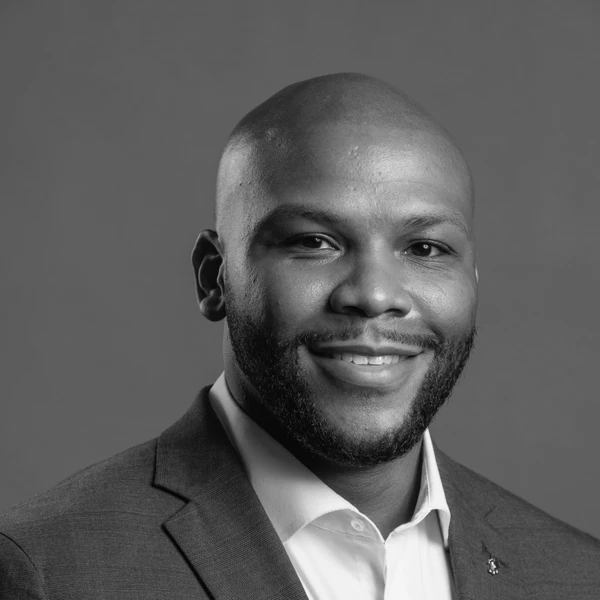
Hobbies and interests
Golf
Artificial Intelligence
Public Relations
Public Policy
Government
Football
Community Service And Volunteering
Philanthropy
Art
Bible Study
Coffee
Cooking
Reading
Academic
Christianity
Cookbooks
I read books daily
ANTHONY THOMPSON
1x
Finalist
ANTHONY THOMPSON
1x
FinalistBio
I'm a Master in Public Administration candidate at Harvard University, where I serve as a Roy and Lila Ash Scholar in Democracy. I'm returning from a leave of absence in Fall 2026 to complete my degree and deepen my work at the intersection of democratic governance, community engagement, and civic innovation.
Before Harvard, I spent over a decade in public service and institutional leadership. As Director of Communications for the New York State Assembly Majority Leader, I led strategy around housing, healthcare, and workforce legislation in high-stakes public environments. At CCS Fundraising, I directed campaigns that secured over $750 million in philanthropic commitments for institutions including Caltech, the Archdiocese of Los Angeles, and Merit America. Earlier in my career, I organized community forums reaching over 1,000 families annually as Director of Community Engagement at Buffalo ReformEd.
I'm also the founder of CuriVara, a personalized recommendation engine for hair and skincare products that uses outcome data to help people find what actually works for them.
I'm a proud member of Phi Beta Sigma Fraternity, Inc., the NAACP, and the National Urban League. I hold an MS in Negotiation and Conflict Resolution from Columbia University. I come from an underserved community in Western New York, and everything I do is grounded in the belief that the people closest to the problem are closest to the solution.
Education
Harvard Kennedy School
Master's degree programMajors:
- Public Administration
Columbia University in the City of New York
Master's degree programMajors:
- Peace Studies and Conflict Resolution
Canisius College
Bachelor's degree programMajors:
- Criminology
- Criminal Justice and Corrections, General
- Political Science and Government
Miscellaneous
Desired degree level:
Master's degree program
Graduate schools of interest:
Transfer schools of interest:
Majors of interest:
- Political Science and Government
- Public Administration
- Public Policy Analysis
Career
Dream career field:
Non-Profit Organization Management
Dream career goals:
Director
CCS Fundrasing2021 – 20243 years
Sports
Golf
Intramural2020 – Present6 years
Public services
Public Service (Politics)
New York State — Director of Communications2021 – 2024
Future Interests
Advocacy
Politics
Volunteering
Philanthropy
Entrepreneurship
Bick First Generation Scholarship
Being a first-generation college student has meant learning to walk into rooms that my family’s sacrifices made possible, even when no one in my family had a map for how to navigate them.
I grew up on the East Side of Buffalo, New York, surrounded by hardworking people who carried intelligence, creativity, and resilience but did not always have access to the same opportunities as others. College represented more than earning a degree. It represented the possibility of changing the trajectory of my family and proving that where someone starts should not determine how far they can go.
As a first-generation student, I had to learn lessons many students inherit. I had to figure out applications, professional networks, financial decisions, and unfamiliar academic environments while often wondering if I belonged. There were moments when the distance between where I came from and where I was trying to go felt enormous. But every challenge strengthened something in me: the ability to adapt, ask questions, keep learning, and open doors for those coming behind me.
That journey carried me from Buffalo to earning my bachelor’s degrees, then to Columbia University for my master’s degree, and eventually to Harvard University for graduate studies in public leadership. Each step was bigger than just myself. I carried my family, my community, and every young person who needed proof that someone from their background could belong in those spaces.
My education has never been about collecting accomplishments. It has been about impact. I returned home to serve my community, leading public health efforts during the COVID-19 pandemic that helped thousands of residents access vaccines, working in public service, and eventually becoming a candidate for Mayor of Buffalo because I believed communities like mine deserved bold leadership and new possibilities.
Today, that same mission drives my work developing a company as a graduate student at Harvard. As the founder of CuriVara, a technology startup focused on making online discovery more personal and equitable. I am building because I know what it feels like to navigate systems that were not designed with you in mind. Whether in education, government, or technology, my goal is the same: create pathways where people are understood, included, and given the tools to succeed.
Receiving the Bick First Generation Scholarship would help me continue building on the foundation education has given me. It would reduce financial barriers while allowing me to focus on my studies, entrepreneurship, and the work of creating opportunities for others.
Being first-generation means being the bridge between generations. It means honoring the people who came before me by reaching places they never had the chance to go, and honoring those who come after me by making sure the path is easier to follow.
My dream is not simply to be the first. My dream is to make sure I am not the last.
Charles B. Brazelton Memorial Scholarship
Growing up, one of the things that made me stand out was how serious I was about conversations most people my age avoided. While other kids talked about sports, music, or what was trending online, I was the person asking questions about politics, community problems, education, and why some neighborhoods seemed to have opportunities while others were constantly struggling. I have always been naturally reflective and observant, which, honestly, made me seem awkward at times. I was the kid who would rather sit with adults listening to conversations about life than spend hours trying to fit in socially. For a long time, I thought that made me strange.
Growing up in Buffalo, New York, I saw many of the realities people often avoid discussing openly: poverty, violence, addiction, grief, and systemic inequities. Losing my father to lung cancer at a young age also changed the way I viewed the world. While many people around me learned to avoid difficult conversations, I became someone who leaned into them. I wanted to understand why communities struggled and why some people felt invisible within systems that were supposed to support them. That curiosity became part of my identity, even when it made me feel different from others my age.
In school, I was often described as “too intense” or “too serious.” I cared deeply about purpose and impact long before many of my peers did. I remember being teased for always talking about leadership, social issues, and wanting to help improve my community. Looking back now, I realize that what felt awkward then eventually became one of my greatest strengths. My willingness to think deeply, ask difficult questions, and genuinely care about people shaped both my academic and professional path.
Another thing that made me stand out was my love for public speaking and storytelling. A lot of people fear speaking in front of crowds, but I found comfort in it because it allowed me to connect with people emotionally and honestly. Even when I was nervous, I enjoyed finding ways to bring people together through words and ideas. That passion eventually led me toward careers in community organizing, communications, nonprofit leadership, and public service.
Over time, I stopped viewing my “awkwardness” as something negative. Instead, I realized it reflected authenticity. I was not trying to follow what everyone else thought was normal or popular. I was trying to understand people and contribute something meaningful to the world around me. That mindset eventually led me to pursue degrees in Political Science, Criminal Justice, Negotiation and Conflict Resolution from Columbia University, and Public Administration at Harvard Kennedy School.
Today, I still carry many of those same qualities. I am still reflective, deeply curious, and probably more comfortable discussing public policy or community issues than small talk. But I have learned that being different is often where purpose begins. The things that once made me feel awkward are the same things that helped shape my leadership, my career, and my commitment to serving others.
I think everyone has something that makes them stand out, even if they do not recognize it immediately. For me, it was learning that caring deeply about people, asking difficult questions, and wanting to create change were not weaknesses. They were the foundation for the person I was becoming.
Christian Fitness Association General Scholarship
I grew up in Buffalo, New York, in neighborhoods where hardship and resilience existed side by side. I watched hardworking families struggle to make ends meet, schools fight against underinvestment, and entire communities navigate systems that often felt more like barriers than pathways to opportunity. At an early age, I learned that success was never guaranteed, especially for young Black men growing up in underserved communities. But I also learned something equally important: adversity can either discourage you or push you toward purpose. I chose purpose.
That purpose has guided my educational, professional, and personal journey. I should be considered for this scholarship not simply because of my academic accomplishments, but because of the commitment I have shown to using my education and leadership to create meaningful impact in the lives of others. Every challenge I have faced has strengthened my determination to help build stronger, more equitable communities.
Growing up, my family faced financial hardships that made higher education feel uncertain at times. After losing my father to lung cancer caused by smoking, my family carried both emotional and financial burdens that reshaped my understanding of responsibility at a young age. Watching my mother persevere through grief and hardship while continuing to support our family taught me resilience, discipline, and faith. Those experiences shaped my understanding of service and leadership because I saw firsthand how easily people can feel overlooked by systems that were meant to support them. Instead of allowing those experiences to limit my ambitions, I used them as motivation to pursue opportunities that could help me create positive change for others facing similar challenges.
Education became my pathway toward that goal. I attended Morgan State University before completing my bachelor’s degrees in Political Science and Criminal Justice at Canisius College. I later earned a Master of Science in Negotiation and Conflict Resolution from Columbia University and a Master of Public Administration from Harvard Kennedy School, where I also served as a Fellow with the Ash Center for Democratic Governance and Innovation. These academic experiences expanded my understanding of leadership, public service, and the systems that shape communities. More importantly, they reinforced my belief that education carries a responsibility to serve others, not just ourselves.
While pursuing my education, I remained deeply involved in community advocacy and public service. Early in my career, I worked as a community organizer focused on increasing civic engagement and addressing inequities affecting underserved communities in Buffalo. Through that work, I learned how policy decisions directly impact the daily lives of families struggling with housing insecurity, underfunded schools, healthcare disparities, and economic instability. I also learned that many people simply want leaders who are willing to listen to them and fight alongside them rather than speak over them. Those lessons continue to shape the kind of leader I aspire to be.
One of the most defining experiences of my professional life came during the COVID-19 pandemic. At a time when fear, uncertainty, and division overwhelmed communities across the country, I helped lead one of the region’s largest vaccination efforts through the New York State Department of Health. In that role, I worked to help ensure that more than 200,000 residents had access to life-saving healthcare resources. Many of the communities we served were historically marginalized and disproportionately impacted by the pandemic. There were residents who lacked transportation, access to healthcare information, or trust in public institutions. That experience taught me that leadership during moments of crisis requires empathy, patience, and the ability to build trust with people from all backgrounds. It also reinforced my belief that service is most meaningful when it reaches those who are often forgotten or left behind.
In addition to my public service work, I have also built a career focused on nonprofit development and philanthropy. As a Director at CCS Fundraising, I partnered with nonprofit organizations to help secure resources supporting education, healthcare, and community initiatives. Through this work, I helped organizations raise millions of dollars in philanthropic funding to support vulnerable communities and long-term institutional goals. This experience strengthened my understanding that sustainable social change requires collaboration between nonprofits, public institutions, and local communities working together toward common goals.
Outside of academics and professional accomplishments, mentorship and representation remain deeply important to me. I understand what it feels like to grow up questioning whether opportunities truly exist for you. Because of that, I try to remain accessible to young people from backgrounds similar to my own. Whether through mentorship, public speaking, or advocacy, I want others to see that their environment does not determine the limits of their future. Representation matters because seeing someone who has navigated similar obstacles can help people believe new possibilities exist for themselves.
Financial need also remains an important reality in my educational journey. Like many students from low-income backgrounds, I have had to balance professional responsibilities, educational expenses, and long-term career goals. Scholarships such as this one help reduce those burdens and create greater access to opportunities that might otherwise remain out of reach. More importantly, scholarships are investments not only in individual students, but in the communities those students will eventually serve.
Ultimately, I believe my journey reflects perseverance, leadership, and service. I have worked to transform personal hardship into purpose and to use every educational and professional opportunity as a chance to uplift others. My long-term goal is to continue building bridges between communities, institutions, and people while helping create systems rooted in equity, dignity, and opportunity. This scholarship would not only support my educational journey, but also strengthen my ability to continue serving communities that deserve greater investment, advocacy, and hope.
TOMORROW X TOGETHER (TXT) MOA Scholarship
1. I found TXT around 2020 during the pandemic. At the time, the world felt heavy and uncertain, and their music became a source of comfort and energy for me. What first drew me in was not only their music, but the way they spoke honestly about youth, growth, pressure, and finding yourself. As someone balancing school, work, and personal challenges, their message resonated deeply with me.
2. I think one of the most important characteristics of a MOA is empathy. TXT’s music often focuses on emotional growth, vulnerability, and supporting one another through difficult moments. I think MOAs reflect that same energy by creating spaces where people feel accepted and understood.
3. My bias is Soobin. I admire his calm leadership style and the way he carries responsibility with humility and kindness. As someone interested in public leadership and community service, I connect with the idea that leadership is not about being the loudest person in the room, but about making others feel supported and valued.
4. My ult bias would probably also be Soobin because of how genuine and grounded he seems despite the pressure that comes with success and visibility.
5. My favorite TXT song is “Run Away.” The song captures the feeling of wanting to escape pressure and uncertainty while still holding onto hope. Growing up in Buffalo and navigating personal loss, financial struggles, and academic pressure, I connected with the idea of searching for something better while trying not to lose yourself in the process. The song feels emotional but hopeful at the same time.
6. I have not had the chance to see TXT live in concert yet, but it is definitely something I hope to experience one day. Watching performances online, though, you can still feel the energy and connection they have with MOAs.
7. My favorite album concept is The Chaos Chapter because of how honestly it explores confusion, growth, loneliness, and identity. I think many students, especially those balancing hardship and ambition, can relate to those emotions.
8. I am currently paying for school through a combination of financial aid, scholarships, and personal work experience. As someone from a low-income background, financing higher education has required a lot of sacrifice, discipline, and persistence.
9. This scholarship would help relieve some of the financial pressure that comes with graduate education and allow me to focus more on my academic and professional goals. It would help cover educational expenses and reduce the stress that often comes with balancing school and financial responsibilities.
10. TXT has influenced me positively by reminding me that vulnerability and perseverance can exist together. Their music encourages growth without pretending life is always easy. That message has helped me remain motivated during difficult moments while continuing to push toward my goals.
11. I plan to use my education to continue serving underserved communities through public leadership, advocacy, and conflict resolution. Growing up in Buffalo, I saw how inequality and lack of opportunity affect entire neighborhoods. My studies in Political Science, Negotiation and Conflict Resolution, and Public Administration have strengthened my commitment to helping communities access better opportunities, stronger representation, and more equitable systems. I hope to use my education to build stronger communities where people feel heard, supported, and empowered.
Bulkthreads.com's "Let's Aim Higher" Scholarship
I want to build something larger than a career. I want to build stronger communities where people feel seen, heard, and empowered to shape their own future. Growing up in Buffalo, New York, I witnessed how poverty, violence, underfunded schools, and economic inequality could limit opportunity for entire neighborhoods. I also witnessed the resilience of everyday people who continued showing up for one another despite those hardships. Those experiences shaped my belief that leadership is not about status or power, but about creating systems and opportunities that allow communities to thrive together.
Education became the foundation for building that vision. From attending Morgan State University and Canisius University to earning graduate degrees from Columbia University and Harvard Kennedy School, each step of my educational journey strengthened my understanding of public leadership, conflict resolution, and community development. More importantly, it deepened my commitment to service. I realized that meaningful change requires more than passion alone. It requires strategy, collaboration, and the ability to bring people together around shared goals.
What I hope to build is a future where underserved communities are no longer treated as afterthoughts. Through my work as a community organizer, nonprofit leader, and public servant, I have already worked to help communities secure resources, expand opportunities, and strengthen civic engagement. During the COVID-19 pandemic, I helped lead one of the region’s largest vaccination efforts to ensure over 200,000 residents had access to healthcare resources during a moment of crisis. Experiences like that reinforced my belief that leadership is ultimately about service and responsibility to others.
Looking forward, I hope to continue building initiatives that strengthen neighborhoods through economic opportunity, equitable public policy, education, and community-centered leadership. I want to help create systems where young people from underserved backgrounds can see possibility instead of limitation. I also want to build stronger bridges between communities and institutions by fostering trust, collaboration, and inclusion.
On a personal level, I am also building a legacy rooted in perseverance and hope. Losing my father to lung cancer, growing up in a low-income household, and navigating systemic barriers taught me resilience at an early age. Those experiences did not discourage me. Instead, they strengthened my determination to create positive change for others facing similar struggles.
Ultimately, the future I want to build is one where leadership is measured by impact, compassion, and the ability to uplift others. I believe the greatest success is not simply what we achieve for ourselves, but what we help build for the communities and people around us.
Learner Mental Health Empowerment for Health Students Scholarship
Mental health is deeply important to me because I understand firsthand how emotional struggles can shape every aspect of a person’s life, especially for students balancing grief, pressure, identity, and uncertainty. Growing up in Buffalo, New York, in one of the city’s underserved communities, I witnessed how poverty, violence, illness, and systemic inequities affected not only physical well-being but mental and emotional health as well. Losing my father to lung cancer caused by smoking added another layer of grief and emotional hardship to my life at a young age. For a long time, I believed strength meant carrying pain silently. Over time, however, I learned that acknowledging mental health challenges and seeking healthy ways to process them is a form of strength, not weakness.
As a student, mental health became essential to my ability to succeed academically and personally. Pursuing higher education while navigating grief, financial stress, and the pressures of leadership was not always easy. Meditation and journaling became important tools that helped me manage stress, reflect honestly on my emotions, and remain grounded during difficult moments. These practices taught me self-awareness, emotional discipline, and resilience. They also helped me better understand how mental health directly affects a student’s confidence, focus, relationships, and sense of purpose.
Because of these experiences, I have become a strong advocate for mental health awareness within my community and professional work. As a community organizer and public servant, I have worked closely with individuals and families facing trauma, economic hardship, and emotional stress. One of the lessons I have learned is that many people suffer silently because mental health remains stigmatized, particularly in underserved communities and communities of color. I try to advocate for mental health by creating spaces where people feel heard, respected, and supported without judgment. Sometimes advocacy begins with something as simple as listening compassionately to someone’s story or helping them feel less alone.
During the COVID-19 pandemic, I helped lead one of the region’s largest vaccination efforts through the New York State Department of Health, helping provide healthcare access to more than 200,000 residents. That experience reinforced for me how interconnected mental and physical health truly are. Many residents were not only afraid of illness, but emotionally exhausted from isolation, grief, and uncertainty. I realized that leadership during moments of crisis requires empathy as much as strategy.
My educational journey, which includes studies in Political Science, Criminal Justice, Negotiation and Conflict Resolution at Columbia University, and Public Administration at Harvard Kennedy School, has strengthened my commitment to building healthier and more equitable communities. In both my academic and professional life, I strive to advocate for mental health by encouraging open conversations, promoting empathy, and supporting systems that prioritize people’s emotional well-being alongside their physical and economic needs.
Ultimately, mental health matters to me because I know how profoundly it affects a person’s ability to thrive. I believe every student deserves to feel supported, valued, and understood, and I hope to continue using my experiences, leadership, and education to help create communities where mental health is treated with compassion rather than stigma.
Michael Rudometkin Memorial Scholarship
Selflessness, to me, means using your experiences, skills, and opportunities to help create pathways for others. Growing up in Buffalo, New York, I witnessed firsthand how poverty, violence, illness, and systemic inequities affected entire neighborhoods. My family faced many of the same struggles. After losing my father to lung cancer caused by smoking, I saw how hardship can deeply impact both individuals and communities. Rather than allowing those experiences to make me cynical, they gave me a stronger sense of empathy and responsibility toward others.
One of the clearest examples of this commitment came during the COVID-19 pandemic. While many communities were overwhelmed with fear and uncertainty, I helped lead one of the region’s largest vaccination efforts through the New York State Department of Health. In that role, I worked to ensure that more than 200,000 residents, particularly those in underserved communities, had access to life-saving healthcare resources. Many residents were hesitant, frustrated, or afraid. Some lacked transportation or access to accurate information. I understood those fears because they reflected many of the same inequities I grew up witnessing. Instead of simply treating the work as a job, I approached it as a responsibility to serve people with patience, dignity, and compassion during one of the most difficult periods in recent history.
I have also embodied selflessness through my work as a community organizer and advocate. Throughout my career, I have worked to help communities secure resources, improve opportunities, and amplify voices that are often ignored. Whether helping nonprofits raise funding, mentoring young people, or advocating for equitable policies, my goal has always been larger than personal success. I believe leadership is about empowering others and helping people recognize their own potential.
Perseverance has also been central to my journey. Growing up in one of Buffalo’s underserved communities, there were many moments when success felt distant. Still, I remained committed to education and service. That commitment led me to earn degrees in Political Science, Criminal Justice, Negotiation and Conflict Resolution from Columbia University, and Public Administration at Harvard Kennedy School. Each step of my educational journey strengthened my belief that meaningful change happens when people are willing to serve something larger than themselves.
Ultimately, I embody selflessness by remaining committed to improving the lives of others, even when the work is difficult or imperfect. I understand what it feels like to struggle, to grieve, and to feel overlooked. Because of that, I strive to lead with empathy, compassion, and a genuine desire to help others build better futures for themselves and their communities.
Lotus Scholarship
Growing up in a low-income household in Buffalo, New York, taught me resilience long before I understood the word itself. My family worked hard, but like many families in underserved communities, we often faced difficult realities where opportunity felt just out of reach. After losing my father to lung cancer caused by smoking, my mother carried the responsibility of holding our family together through grief, financial strain, and uncertainty. Watching her persevere through hardship taught me that strength is not measured by what you have, but by your willingness to keep moving forward despite adversity.
Those experiences shaped my commitment to service and leadership. Growing up, I saw how poverty, poor healthcare access, and systemic inequities affected entire communities. Rather than allowing those experiences to make me bitter, they inspired me to pursue education and advocacy as tools for change. I earned degrees in Political Science, Criminal Justice, Negotiation and Conflict Resolution from Columbia University, and Public Administration at Harvard Kennedy School. Today, I actively work to create positive impact through community organizing, public leadership, and efforts focused on equity and opportunity for underserved communities.
I believe my experiences allow me to connect authentically with people who often feel unheard or overlooked. My long-term goal is to continue building solutions that strengthen neighborhoods, improve access to opportunity, and help communities navigate conflict and hardship with dignity. Coming from a low-income household taught me perseverance, but it also taught me responsibility: when you overcome challenges, you should help create pathways for others to overcome them too.
Enders Scholarship
My father’s battle with lung cancer changed the course of my life long before I fully understood what loss meant. Watching someone you love slowly deteriorate because of smoking is a different kind of heartbreak. It is painful, frustrating, and deeply human all at once. I remember the hospital visits, the exhaustion in his body, and the emotional weight that settled over my family as we tried to hold onto hope while preparing for the possibility we feared most. Losing my father forced me to confront grief at a young age, but it also forced me to confront questions about health, responsibility, resilience, and purpose.
Growing up in Buffalo, New York, in one of the city’s most underserved communities, hardship was never something distant to me. I saw families navigating poverty, addiction, violence, and illness while still finding ways to care for one another. Those experiences shaped my understanding of how fragile life can be, but they also showed me the strength that exists within community. My father’s passing deepened that understanding. For a long time, I carried anger and sadness quietly. I struggled with watching someone I loved suffer from a preventable illness and struggled even more with the feeling of helplessness that came afterward.
Over time, I realized grief does not disappear. You learn how to carry it. Meditation and journaling became two of the most important tools in helping me heal and grow. Journaling gave me a private space to process emotions that were often difficult to express publicly. Writing helped me organize my thoughts, reflect on painful memories, and better understand myself. It gave me clarity during moments when grief felt overwhelming. Meditation helped me develop stillness and discipline. It taught me how to sit with difficult emotions instead of running from them. In many ways, these practices transformed pain into reflection and reflection into purpose.
What I learned about myself through this experience is that resilience is not about pretending to be unaffected. Real resilience is choosing to keep moving forward while carrying pain honestly. My father’s passing gave me a deeper sense of empathy and responsibility toward others. It pushed me toward service, leadership, and advocacy because I know firsthand how health challenges and systemic inequities can affect entire families and communities.
Education became my pathway toward creating impact. As someone raised in Buffalo’s underserved neighborhoods, I understood early how transformative opportunity can be. That understanding motivated me to pursue higher education, earning degrees in Political Science, Criminal Justice, Negotiation and Conflict Resolution from Columbia University, and Public Administration at Harvard Kennedy School. My goal is to continue using education as a tool to help communities navigate conflict, inequity, and systemic barriers while creating pathways for people to thrive.
The biggest influences in my life begin with my family, especially my mother, whose perseverance and faith taught me strength during difficult moments. I have also been inspired by leaders like Barack Obama, Michelle Obama, Robert F. Kennedy, and Wes Moore, whose messages about hope, responsibility, and service resonate deeply with me. Their words remind me that leadership is ultimately about helping people believe that a better future is possible.
My father’s death will always be one of the most painful experiences of my life. But it also taught me the importance of healing, reflection, and purpose. His memory continues to push me toward becoming someone who not only overcomes adversity but helps others do the same.
Ruthie Brown Scholarship
I owe Harvard University $17,000. Not for tuition. For housing. And until that balance is cleared, I cannot register for classes, complete my degree, or return to the institution that accepted me as a Roy and Lila Ash Scholar in Democracy.
That number sits at the center of everything right now. It is the reason I am writing this essay. It is the reason I have spent weeks applying to every scholarship I qualify for. And it is the reason I understand, in a way that no policy textbook could teach, how financial barriers quietly end academic journeys for students who are doing everything right.
I am a Mid-Career Master in Public Administration candidate at Harvard Kennedy School. I took a leave of absence in January 2025, and I plan to return full-time this fall. My tuition is covered through the Ash Center's fellowship. But the housing debt from my prior enrollment remains, and Harvard's policy is clear: no registration until the balance is paid. So I am working to close that gap through a combination of external scholarships, personal savings, and the possibility of a small loan to bridge whatever remains.
This is my strategy. It is not elegant. It is not guaranteed. But it is deliberate.
I am currently the founder of CuriVara, a personalized recommendation platform for hair and skincare products. I built it during my leave, and it is both my professional focus and my source of income. Every dollar I earn goes toward two things: keeping the business alive and getting back to Cambridge. The tension between those two priorities is constant. Some weeks, the business needs investment. Every week, the debt needs attention. I manage both because I do not have the option of choosing one.
Beyond CuriVara, I am applying aggressively for scholarships and grants. I have submitted applications to programs supporting Black graduate students, students in public policy, students who have experienced loss, and students with financial need. Each application is part of a larger plan to eliminate as much of the $17,000 as possible before the fall semester begins. I am treating scholarship applications the way I treat any campaign I have ever managed: with volume, precision, and persistence.
I am also exploring federal loan options. As a returning student, I am eligible for Direct Unsubsidized Loans and Graduate PLUS Loans through FAFSA. I have filed my application and am waiting on the financial aid office to process my returning student forms. If scholarships and savings cannot close the full gap, federal borrowing at manageable interest rates will cover the remainder. I am committed to keeping that number as low as possible.
Looking further ahead, I plan to pursue a career in public service and nonprofit leadership. That path qualifies me for Public Service Loan Forgiveness after ten years of qualifying payments. I am building my career with that trajectory in mind, not because PSLF is a guarantee, but because public service is where I have always worked and where I intend to stay.
The cost of higher education is real. The debt is real. But so is the plan. I am not waiting for someone to solve this for me. I am applying, saving, building, and borrowing strategically to make sure that a housing balance does not become the reason a Harvard Kennedy School education goes unfinished. Every scholarship I receive makes the math a little more possible. This one would make it $5,000 closer to done.
Cariloop’s Caregiver Scholarship
Sharra Rainbolt Memorial Scholarship
My father died of cancer in 2015. His name was James Thompson.
In the months after his death, I was lost. Not in the way people describe grief on television, where there is a clear arc from pain to healing. I was lost in the quiet, permanent way, where you wake up every morning and the world looks the same but something fundamental has shifted beneath it. My father was the person I called when I did not know what to do next. And suddenly, the person I needed most was the one person I could not reach.
For a while, I had no direction. Grief does that. It does not just take a person from you. It takes the version of yourself that existed in relationship to them. I had to figure out who I was without my father, and that process did not come with instructions.
What I knew was that I did not want his death to be the end of his story. So I applied for a role at the American Cancer Society in Upstate New York, managing and directing Relay for Life events across communities and universities. I was not sure it was the right move. I was not sure I was ready.
The day I drove from Buffalo to Syracuse for the interview, I was still uncertain. Then I stopped at an intersection. The street signs read James and Thompson. My father's name, split across two signs, staring back at me from a place I had never been before. I stopped questioning whether I was supposed to be there. I took the interview. I got the job. And I threw myself into the work with everything I had.
I managed Relay for Life events that raised hundreds of thousands of dollars to fund cancer care and research. I worked with survivors, caregivers, families, and volunteers who were all carrying their own version of the grief I knew so well. What I learned from them is that grief, when channeled into purpose, becomes one of the most powerful forces a person can carry. Every event I organized was personal. Every dollar raised was a conversation I was still having with my father.
Cancer taught me that the systems we depend on in moments of crisis are not built equally for everyone. The families I worked with came from every background, but the ones who struggled most had the fewest resources. Communities of color. Rural families. People without insurance or someone to advocate for them inside a medical system that moves too fast to explain itself. That pattern is what led me to Harvard Kennedy School, where I am completing a Mid-Career Master in Public Administration as a Roy and Lila Ash Scholar in Democracy. I study how public systems can be redesigned to serve the people who need them most.
My father did not get to see me go to Harvard. He did not get to see the events I organized in his honor. But he is the reason I do this work. And he is the reason I stopped at that intersection in Syracuse and decided to keep driving forward.
Future Nonprofit Leaders Award
The first community forum I organized at Buffalo ReformEd drew about forty people. Parents, teachers, a handful of students, and one school board member who sat in the back row with her arms crossed. I was not sure anyone would show up. The topic was education policy in a district where most families had stopped believing that showing up to meetings changed anything. But they came. And when a mother in the second row stood up, holding her son's report card, and asked why her child's school had not had a permanent science teacher in two years, the room shifted. People leaned forward. The school board member uncrossed her arms. Something opened.
That moment is why I chose nonprofit work. Not because it is prestigious or well-compensated. Because it is the space where people who have been shut out of decision-making can walk into a room and be heard. The nonprofit sector, at its best, creates that room. It builds the bridge between communities and the institutions that are supposed to serve them. And it does so not through charity, but through accountability.
I have spent my career building those bridges. As Director of Community Engagement at Buffalo ReformEd, I organized forums that reached over one thousand parents, educators, and students annually. I built coalitions that elevated underrepresented voices in policy decisions affecting their children's futures. The work was not glamorous. It was showing up to church basements on Tuesday nights, printing flyers in Spanish and English, calling families who had been promised things before and had every reason not to trust another organization. But it worked. People who had never spoken at a public meeting started testifying before the school board. Parents who felt invisible began shaping the policies that governed their children's education.
That experience taught me something that carried into every role I have held since. At CCS Fundraising, I directed campaigns that secured over $750 million in philanthropic commitments for institutions including Caltech, the Archdiocese of Los Angeles, and Merit America. The scale was different, but the core principle was the same: nonprofit work succeeds when it centers the people it serves, not just the people who fund it. The campaigns that raised the most money were the ones built on genuine community trust. The ones that failed were the ones that treated donors as audiences instead of partners.
I am now completing a Mid-Career Master in Public Administration at Harvard Kennedy School as a Roy and Lila Ash Scholar in Democracy. I chose HKS because I wanted to understand the systems that shape how resources reach communities, and how to redesign those systems when they fall short. Public policy is the architecture. Nonprofit work is the construction. You need both.
After graduation, I plan to return to the nonprofit sector with a sharper set of tools. I want to lead organizations that do more than deliver services. I want to build organizations that change the conditions that make those services necessary. That means redesigning how nonprofits engage communities in decision-making. It means using data to hold institutions accountable. And it means training the next generation of nonprofit leaders to see their work not as filling gaps, but as closing them permanently.
The mother at that first forum in Buffalo did not need charity. She needed a science teacher for her son. She needed a system that listened. Nonprofit work, done right, builds that system. That is the work I am committed to, and it is the work I will spend my career advancing.
Marie J. Lamerique Scholarship for Aspiring Scholars
I was twenty-seven years old when my mother lost her home.
She had not missed a single day of work that year. She had filled out every form the bank sent her. She had called every number they gave her, waited on hold for hours, explained her situation to people who asked the same questions over and over again. None of it mattered. The foreclosure moved forward anyway, steady and mechanical, like a clock that did not care who was standing beneath its hands.
I remember the kitchen table. I remember the light coming through the window. I remember my mother sitting down, not crying, not yelling, just looking at me and saying five words. "We'll figure it out." She said it the way she always said things. Calm. Clear. Final. As though the world had taken something from her and she was already deciding what to build next.
That was my challenge. Not the loss of a house. The loss of a belief. I had grown up thinking the system worked if you worked. That if you showed up, did right, played by the rules, the rules would protect you. Watching my mother do everything right and still lose everything taught me that was not true. Not for her. Not for Black families in neighborhoods like ours. Not for the people I had grown up with in Western New York, who worked double shifts and still could not get ahead. The problem was not effort. The problem was design.
That was the moment I made a choice. I decided I was going to understand the systems that failed my mother. Not just complain about them. Not just survive them. I was going to learn how they were built, who they were built for, and how to change them so that people like her would not be invisible to the institutions that were supposed to serve them.
That choice took me to Columbia University, where I earned a Master of Science in Negotiation and Conflict Resolution. I learned how institutions and communities negotiate competing interests. I learned frameworks for resolving disputes. But I also learned something the textbooks did not say directly: you can resolve a conflict at a table, but if the table was built to exclude certain people, resolution is not enough. You have to redesign the table itself.
That realization is what brought me to Harvard Kennedy School, where I am completing a Mid-Career Master in Public Administration as a Roy and Lila Ash Scholar in Democracy. At HKS, I study how systems of governance can be restructured to serve everyone, not just the people who already know how to navigate them. The red tape that buried my mother was not an accident. It was a design choice. And design choices can be changed.
This is not just my story. This is the story of millions of families in underserved communities across this country who face systems that punish them for not having resources they were never given access to in the first place. Black Americans. Single mothers. Working families one emergency away from losing everything. The barriers they face are not natural. They are constructed. And what is constructed can be taken apart and rebuilt by people who understand both the policy and the human cost.
That is why I do this work. It is why I founded CuriVara, a technology platform that uses outcome data to serve people who have been overlooked by the industries that profit from them. It is why I spent years organizing community forums that brought over a thousand families into conversations about education policy. It is why I directed legislative communications in the New York State Assembly, fighting for housing, healthcare, and workforce legislation. Everything I do traces back to that kitchen table, to my mother's voice, to the quiet refusal to accept that the way things are is the way things have to be.
The challenge is urgent. The systems have not fixed themselves. But I am building the knowledge and the tools to fix them. And I am not doing it alone.