Hobbies and interests
Anime
Archery
Bible Study
Gaming
Studying
Reading
Coding And Computer Science
Reading
Academic
I read books multiple times per week
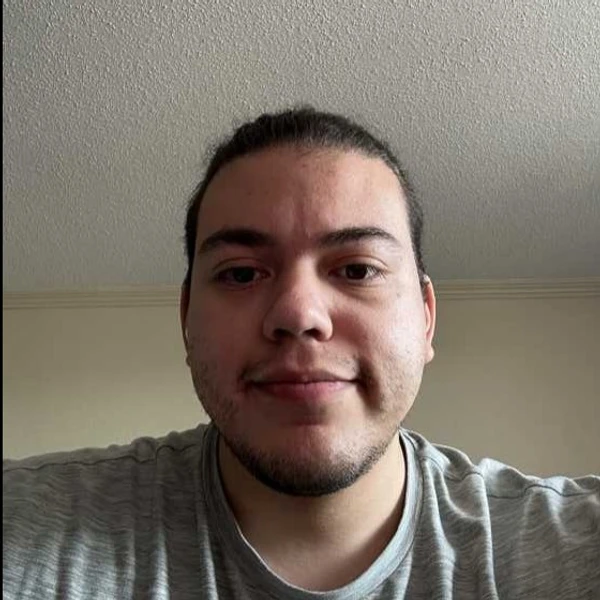
Anthony Roque
1x
FinalistAnthony Roque
1x
FinalistBio
My name is Anthony Roque, and I am currently pursuing a bachelor's degree in computer information technology at the Rochester Institute of Technology. As a first-generation college student, I have worked hard to overcome academic and financial obstacles, including managing part-time work and supporting my widowed mother while maintaining my education. I am passionate about technology, systems administration, and problem-solving, and I aim to utilize my degree to develop secure, innovative systems that have a positive impact. Receiving this scholarship would ease my financial burden and allow me to continue pursuing my goals with focus and determination.
Education
Rochester Institute of Technology
Bachelor's degree programMajors:
- Computer/Information Technology Administration and Management
Manchester Community College
Associate's degree programMajors:
- Computer Systems Networking and Telecommunications
White Oak School The
High SchoolMiscellaneous
Desired degree level:
Bachelor's degree program
Graduate schools of interest:
Transfer schools of interest:
Majors of interest:
- Computer/Information Technology Administration and Management
Career
Dream career field:
Information Technology and Services
Dream career goals:
Backroom Receiving Specialist
Chrismas Tree Shops LLC2017 – 20225 years
Sports
Soccer
Club2004 – 20051 year
Research
Computer/Information Technology Administration and Management
Rochester Institue of Technology — Student2024 – 2025
Future Interests
Advocacy
Volunteering
Entrepreneurship
Lotus Scholarship
My name is Anthony Roque, a proud Puerto Rican student pursuing a Bachelor’s in Computer Information Technology at Rochester Institute of Technology. In 2015, a month before high school graduation, I lost my father. My mother became the sole provider, and I took on responsibilities to support our household.
Coming from a single-parent, low-income background taught me resilience and purpose. I earned my associate degree while working part-time at the Christmas Tree Shops to help cover bills and school expenses. Today, I split tuition with my mother and use credit to manage my share. Despite financial stress, I remain focused on building a better future.
At RIT’s Service Center, I support faculty, troubleshoot systems, and create tech guides that help others. I also mentor peers and contribute to a collaborative, supportive environment. My experiences have inspired me to use technology to uplift underrepresented communities.
This scholarship would ease financial pressure and allow me to focus more fully on my academic and service goals. My journey has given me strength, empathy, and determination, qualities I’ll continue using to lead, support others, and build solutions that make a difference.
Thank you for considering my story and commitment to giving back.
Learner Math Lover Scholarship
I love math because it gives me something few other subjects can: clarity in a complex world. In math, everything has structure, logic, and purpose. There’s beauty in how even the most complicated problem can be broken down into smaller, manageable steps and solved with the right tools and thinking. That process gives me a sense of control, confidence, and accomplishment that I’ve carried into other areas of my life.
What I find especially exciting about math is that it’s both exact and creative. While there may be one right answer, there are often multiple paths to get there. This makes problem-solving feel like a puzzle or a strategy game, not just memorizing formulas, but learning how to think critically, explore patterns, and understand the why behind the numbers. I find joy in discovering that moment when everything “clicks,” and a concept that once seemed confusing suddenly makes perfect sense.
Math is also powerful. It’s behind the technology I study in Computer Information Technology, the algorithms that shape the internet, and the systems that keep our world running. Whether I'm analyzing data, configuring networks, or working with programming logic, math is the foundation that helps me understand what’s going on under the surface. It’s the language of machines, but also a universal language of problem-solving and precision.
On a personal level, math has helped me learn discipline and patience. As someone who has struggled with learning differences like dyslexia, I’ve had to work harder to process certain information. But math, with its step-by-step nature, gave me something solid to hold onto, a set of tools I could rely on. When I couldn’t find words, I could find numbers. That gave me a way to succeed and feel capable even when other subjects felt overwhelming.
I love math because it teaches me how to think, not just how to calculate. It has shaped the way I approach challenges, see patterns in the world, and seek truth in data. It’s a skill I carry with pride, and one I know will continue to open doors and help me build a future where I can solve real problems and make a difference.
Learner Online Learning Innovator Scholarship for Veterans
Scholarship Essay: Learning Through Online Tools and Platforms
As a student pursuing a degree in Computer Information Technology at Rochester Institute of Technology, I’ve found that learning doesn’t stop when class ends it continues through the online platforms, tools, and communities that support real-world application and independent growth. Given the technical and rapidly evolving nature of my field, I’ve learned to rely on a variety of digital resources that not only help me understand course concepts but also help me apply them in hands-on, practical ways.
One of the most impactful platforms I use is YouTube, specifically channels like NetworkChuck, Computerphile, and The Linux Experiment. These creators take complex topics such as DNS, networking, cybersecurity, or scripting and break them down with visual demonstrations and relatable explanations. Watching how professionals apply these concepts in real scenarios has helped me connect classroom theory with real-world practice. For example, after watching a Pi-hole DNS setup walkthrough, I was able to build my own local DNS server at home and later used that same experience to solve a real printer-DNS issue at my job on campus.
Another critical tool is ChatGPT and AI platforms like it. As someone who has dyslexia and sometimes struggles to process dense technical documentation, I use AI to break down concepts, reword complicated articles, and walk me through step-by-step explanations in a way I can digest. It’s like having a tutor who’s always available, which has drastically improved how I prepare for exams and how I troubleshoot projects.
In addition, I frequently use GitHub and Stack Overflow not only to solve issues but to learn by studying how other developers structure code, write documentation, or build projects from the ground up. Exploring open-source repositories has taught me version control with Git, project management basics, and how to collaborate in coding environments, skills that my coursework only lightly touches on but are essential in the workforce.
LinkedIn Learning, Udemy, and Cisco’s Networking Academy have also played a major role in expanding my understanding of systems administration, cybersecurity, and networking fundamentals. These structured courses have helped me earn certifications, build my resume, and gain confidence applying skills in labs and at work.
These tools don’t replace school; they extend it. They’ve helped me become a more independent learner, problem solver, and technician. Most importantly, they’ve empowered me to apply what I’ve learned to real problems in my job, on personal projects, and in helping others. That's what learning should be: knowledge in action.
Pro-Life Advocates Scholarship
My pro-life position has been shaped by more than belief — it’s been formed by lived experiences that taught me the value of life, the importance of compassion, and the responsibility we must stand for the voiceless. I was raised in a single-parent household after the sudden loss of my father. Watching my mother carry the weight of raising a family on her own instilled in me a deep respect for the sacrifices women make, especially in difficult circumstances. Her resilience showed me that life is precious and that the choice to protect and nurture life, even when it’s hard, is one of the most powerful acts of love there is.
This foundation naturally informed my view of the unborn. All human life has value — not just when it’s visible, convenient, or easy to support, but always, from conception to natural death. The unborn are among the most vulnerable members of our human family. They have no voice, no vote, and no way to defend their existence. A truly compassionate society extends its care to every life, especially those who cannot advocate for themselves.
But being pro-life is not just about protecting the unborn. It’s about affirming the inherent dignity of all human beings, regardless of their stage of development, ability, background, or circumstances. It means supporting mothers facing unplanned pregnancies. It means walking alongside families in crisis. It means creating a culture where people are not left to suffer alone — where life is protected not only in principle but in practice.
I try to live out these values in small but meaningful ways. I’ve worked with students who were overwhelmed with anxiety, financial hardship, or academic stress, and made it a point to support them without judgment. In doing so, I’ve come to understand that protecting life also means protecting hope. I use my time to mentor others, offer encouragement, and advocate for mental health support, because choosing life also means choosing to fight despair with compassion.
I’ve also supported organizations that provide resources to pregnant women, including local pregnancy care centers and educational outreach programs. These groups offer more than just pro-life messaging — they provide tangible help like parenting classes, counseling, diapers, formula, and even job support. That’s the kind of pro-life ethic I believe in — one that doesn’t end at birth but walks with the mother and child long after.
Whenever I have respectful discussions with peers about life issues, I try to lead with empathy and humility. I don’t expect to change minds through argument alone — but through example, through patience, and through the belief that kindness and truth together can open hearts.
My pro-life position is rooted in the idea that every life matters and every person — including the unborn — deserves a chance to be loved, to grow, and to thrive. I believe that by standing up for the voiceless, serving others with dignity, and fostering a culture of support, we build a better world — one life at a time.
Chris Jackson Computer Science Education Scholarship
My interest in pursuing a degree in Computer Information Technology began with a simple desire to understand how systems work beneath the surface. Growing up, I was always the person who enjoyed solving problems others gave up on whether it was fixing our home Wi-Fi, troubleshooting a broken game console, or learning how to build a custom PC. Over time, that curiosity developed into a deeper interest in system administration, networking, and cybersecurity. Once I got to Rochester Institute of Technology, I realized that technology is more than just tools, it’s a way to serve others, create smarter systems, and solve real-world problems in meaningful ways.
My ultimate goal after earning my degree is to work in a role where I can combine my technical knowledge with my passion for helping people ideally in IT operations, systems architecture, or cybersecurity for a mission-driven organization. Whether that’s securing networks for educational institutions, building infrastructure for nonprofits, or managing systems that keep communities connected, I want to use my skills to make technology safer, more accessible, and more reliable. Long term, I also hope to mentor students like me those who may struggle with learning differences or lack traditional support systems to show them that they can succeed in tech too.
I believe I am a strong candidate for this scholarship because I bring not only academic commitment, but also real-world experience and resilience. I am financing my education with a combination of loans, credit, part-time work, and shared family responsibility. I split my tuition costs with my mother, who is widowed, and I am doing everything I can to stay in school while managing financial and academic pressures. Despite these challenges, I continue to take initiative whether it’s writing technical guides for my campus support center, resolving complex system issues, or learning independently beyond the classroom.
I don’t just want to succeed for myself, I want to build a future where I can uplift others through technology, service, and mentorship. This scholarship would not only reduce the financial strain I carry, but also empower me to focus more fully on my education and growth. I’m ready to work hard, give back, and make a meaningful impact in this field not someday, but starting now.
Kyle Lam Hacker Scholarship
Delighting Others Through Practical Tech Solutions
One of the most memorable times I used my hacking and tinkering skills to help someone came while working at the Rochester Institute of Technology’s Service Center. A faculty member walked in visibly frustrated—her office printer had been “offline” for several days. Despite multiple IT tickets and communications between departments, no one had resolved the issue. She was preparing for an important presentation and urgently needed to print research documents. The timing couldn’t have been worse, and she was on the verge of giving up.
Rather than repeating the usual response—“wait for the IT ticket to be processed”—I offered to take a look. I’ve always been someone who enjoys digging into problems others shy away from. I find fulfillment in understanding the inner workings of a system and applying what I’ve learned to real-world scenarios. This was one of those moments. I visited her office and started troubleshooting from the ground up.
The issue turned out to be a subtle but impactful network configuration problem. The printer had been assigned a static IP address that had recently been recycled by the campus network. It was no longer visible to the DNS server, and the university’s internal naming system could no longer resolve the device’s hostname. As a result, the printer disappeared from the subnet and refused to connect. Most had missed the deeper network layer causing the problem.
Using knowledge I’d developed from tinkering with my own DNS projects and Pi-hole setups at home, I manually assigned the printer a new dynamic IP, updated the device’s hostname configuration, and flushed the local DNS cache. Within minutes, the printer reappeared, and the documents began to print. The faculty member stood back, stunned. “You fixed what three departments couldn’t,” she said, smiling with relief.
What made the experience truly rewarding wasn’t just the technical solution—it was the opportunity to lead by example and cut through bureaucracy with hands-on action. Afterward, I created a clear, step-by-step guide so other support staff could solve similar issues without escalating tickets unnecessarily. That guide was reviewed, tested, and eventually added to our internal knowledge base. To this day, it’s helped others avoid delays and confusion in similar situations.
For me, hacking and tinkering are not just technical hobbies—they’re about making things better for the people who rely on them. Whether I’m configuring a secure DNS resolver to protect user privacy, optimizing server performance, or helping someone under pressure print their lecture notes, I see each moment as a chance to use my skills to serve. That’s what excites me most about technology: the chance to solve problems creatively, empower others through action, and leave behind something useful for the next person.