Age
18
Gender
Male
Ethnicity
Hispanic/Latino
Hobbies and interests
Robotics
Soccer
Chess
Engineering
Gaming
Cars and Automotive Engineering
Basketball
Baseball
Mathematics
Minecraft
Motorsports
STEM
Studying
YouTube
Tutoring
Spanish
Anime
Volunteering
Reading
Science Fiction
Magical Realism
Adventure
Action
Business
Epic
Science
Psychology
Historical
I read books multiple times per month
Anthony Ortega
1x
Finalist1x
Winner
Anthony Ortega
1x
Finalist1x
WinnerBio
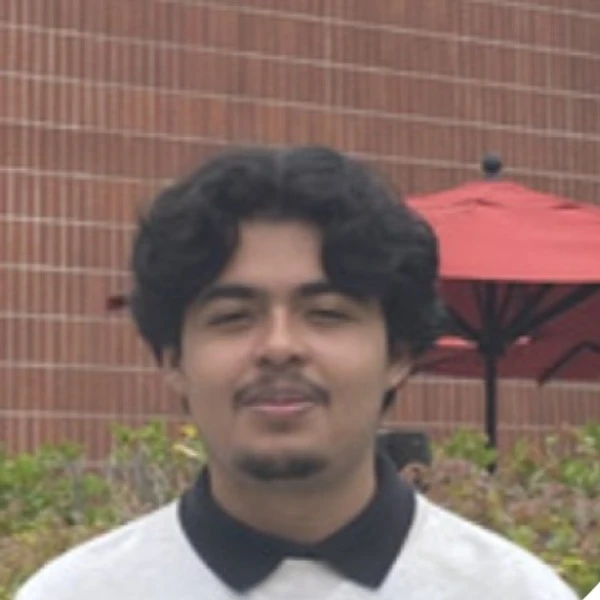
I’m Anthony, a low‑income, first‑generation Mexican‑American student from South Los Angeles, and I will be attending the University of Southern California to study Mechanical Engineering. Growing up in an under-resourced community shaped my drive to pursue STEM and create opportunities for others. From leading my robotics team to completing programs like MITES, America On Tech, and The Intern Project, I’ve worked to turn limited resources into meaningful achievements. My goal is to use engineering to support my family and bring STEM access back to communities like mine.
Education
University of Southern California
Bachelor's degree programMajors:
- Mechanical Engineering
Animo Pat Brown
High SchoolGPA:
4
Miscellaneous
Desired degree level:
Bachelor's degree program
Graduate schools of interest:
Transfer schools of interest:
Majors of interest:
- Mechanical Engineering
Career
Dream career field:
Mechanical or Industrial Engineering
Dream career goals:
Mechanical Engineer
Cashier
Jack in the Box2025 – 20261 year
Public services
Volunteering
Los Angeles Regional Food Bank — Food Handler Volunteer2025 – 2026
Future Interests
Volunteering
Philanthropy
Entrepreneurship
Overcoming Adversity - Jack Terry Memorial Scholarship
Jack Terry’s story inspires me because it proves that even the deepest suffering cannot extinguish a person’s potential to rise, rebuild, and give back. After surviving the Holocaust, losing his entire family, and arriving in the United States with no English and only an elementary education, he still pushed himself through high school, college, engineering, medical school, military service, and a lifetime of helping others. His life shows that adversity does not define you — your response to it does. That message resonates deeply with me because my own journey has been shaped by hardship, resilience, and the determination to create something better for my family and my community.
Growing up in a low-income, single‑parent household in South Los Angeles, I learned early what it meant to carry responsibility. My mom worked constantly to keep us afloat, and I stepped up wherever I could — helping at home, working part‑time, and finding my own opportunities in STEM because my school didn’t offer many. But the hardest moments came when life hit us all at once.
There were times when our financial situation felt like a trap I couldn’t escape. Times when I had to study in a crowded home, work late shifts, or teach myself engineering concepts online because I didn’t have access to the programs other students took for granted. But the adversity that changed me most wasn’t academic — it was personal.
Watching my family struggle through instability, financial stress, and the constant pressure of “not enough” forced me to grow up quickly. I learned to be resourceful, independent, and resilient. I learned that waiting for perfect conditions means never moving forward. And I learned that self‑pity, while tempting, only keeps you stuck. What helped me push through was remembering that my circumstances were not my ceiling — they were my motivation.
Like Jack Terry, I realized that hardship can either harden you or shape you. I chose to let it shape me.
My pursuit of STEM has been my way of building a future beyond the limits of my environment. I taught myself physics and engineering concepts online, joined a robotics team outside my school, completed the MITES Semester program, and earned an engineering internship — all steps that required persistence, not privilege. Every challenge strengthened my belief that I could create opportunities not just for myself, but for others who feel overlooked.
That is how I plan to give back.
I want to become a mechanical engineer who returns to communities like mine and expands access to STEM education. I want to mentor students who remind me of myself — curious, ambitious, and underestimated. I want to build programs, workshops, and outreach efforts that make engineering accessible to low‑income students who don’t yet see themselves in the field.
Jack Terry rebuilt his life and used it to uplift others. I hope to honor his legacy by doing the same: turning adversity into purpose, and using my education to open doors for the next generation.
Dr. Michal Lomask Memorial Scholarship
My passion for STEM began long before I had access to formal programs or engineering classes. Growing up in a single‑parent, low‑income household, I didn’t have the resources many students rely on to explore science. What I did have was curiosity — and YouTube. Self‑teaching myself concepts like Newton’s laws of motion became my way of understanding the world. Every new idea I learned sparked ten more questions, and the more I explored, the more certain I became that I wanted a future in STEM.
But when I reached high school, I quickly realized that my school didn’t have the resources to support my interests. There were no engineering classes, no physics labs, and no robotics team. Instead of letting that limit me, I looked beyond my school for opportunities. I joined the TeraWatts robotics team, where I finally got hands‑on experience with mechanical design and problem‑solving. I also took online computer science classes through America On Tech, which gave me my first exposure to programming and broadened my understanding of how technology shapes the world.
I made the most of every summer, applying to programs that would challenge me academically. One of the most transformative experiences was the M.I.T.E.S. Semester, where I took online physics and science animation courses. For the first time, I was surrounded by students who shared my passion for learning. I dove into topics like how batteries store energy, how animation can model scientific concepts, and even Einstein’s Theory of General Relativity. I became fascinated by gravitational waves and how scientists use LIGO technology to detect black holes. Researching scholarly articles and analyzing real scientific data made me feel like I was stepping into the world I had always dreamed of.
My final project in my animation course pushed me even further. Working with a team, I created a four‑minute animation explaining how microplastics cause cellular damage in the human body. Translating complex scientific research into something visual and understandable showed me the power of STEM communication — and how science can inspire action.
These experiences didn’t just deepen my interest in STEM; they shaped my identity. They taught me resilience, independence, and the importance of seeking opportunities even when they aren’t readily available. They also showed me how transformative STEM can be for students like me — students who have the passion but not the access.
Now, as I prepare to transition to college, I’m eager to take my love for science even further by studying mechanical engineering. Robotics gave me my first glimpse into the field, but college will give me the depth, resources, and mentorship I’ve never had. I want to design solutions that improve people’s lives and eventually return to South Los Angeles to expand STEM access for students who face the same barriers I did.
STEM changed the way I see the world — and I’m passionate about pursuing it because I know it can change my future, my family’s future, and the future of my community.
Julius Quentin Jackson Scholarship
Growing up in a low‑income, single‑parent household has shaped nearly every part of who I am. My mother has always worked hard, but her income has never been enough to provide financial stability, let alone contribute to college expenses. From a young age, I understood that if I wanted opportunities, I would have to find them myself. That reality pushed me to become independent earlier than most students, and it taught me how to navigate challenges with determination rather than discouragement.
One of the biggest obstacles I faced was the lack of access to STEM programs. Engineering fascinated me, but the programs that could help me explore it were often expensive or located far outside my community. Instead of giving up, I searched for free opportunities, commuted to a robotics team at another school, completed online engineering courses, and took on internships that allowed me to learn while earning money. These experiences taught me resilience, resourcefulness, and the importance of advocating for myself.
At the same time, I faced financial challenges at home. Living in an overcrowded household with limited income meant that I often had to balance schoolwork with responsibilities at home. I learned how to manage my time, stay organized, and remain focused even when my environment made it difficult. These challenges didn’t weaken me—they strengthened my sense of responsibility and shaped me into someone who refuses to let circumstances define my future.
My financial struggles have also shaped my educational goals. I want to study Mechanical or Electrical Engineering not only because I love building and problem‑solving, but because I want to create a stable future for my family. I want to be the first in my family to earn a degree and use that achievement to support my mother, who has sacrificed so much for me. Long‑term, I hope to return to South Los Angeles and expand STEM access for students who face the same barriers I did. I want to create programs and mentorship opportunities that make engineering accessible to low‑income students and show them that their circumstances do not limit their potential.
However, pursuing higher education comes with significant financial barriers. My family cannot contribute to my college expenses, and even with my academic achievements, the cost of tuition, housing, and basic living needs remains overwhelming. This scholarship would relieve a tremendous amount of financial pressure and allow me to focus fully on my education. It would help me continue my journey toward becoming an engineer and give me the chance to turn the challenges I’ve faced into opportunities for myself and others.
The obstacles I’ve overcome have shaped me into someone who is resilient, driven, and committed to giving back. With your support, I can continue pursuing my goals and create a future where my success becomes a foundation for others to rise.
Resiliency Award
Pursuing higher education without financial support from my family or federal aid has never been a choice—it has been a reality shaped by my circumstances. I was raised by a single mother who works tirelessly but earns well below the amount needed to contribute to college expenses. For years, I understood that if I wanted to attend college, I would have to find a way to make it happen on my own. My family’s financial situation has always been unstable, and while my mother has given me everything she could, paying for college has never been possible. That reality pushed me to become independent much earlier than most students my age.
These circumstances have shaped me into someone who plans ahead, works relentlessly, and refuses to give up. I learned to navigate financial aid forms, scholarship applications, and college requirements on my own. I researched every opportunity available to low‑income students, reached out to financial aid offices, and built a plan that didn’t depend on anyone else’s ability to support me. While many students rely on parents to guide them through the college process, I became my own advocate—learning how to communicate professionally, gather documents, and stay organized through every step.
Growing up without financial security also taught me the value of responsibility. I’ve always known that my education isn’t just for me—it’s a path toward stability for my family. I want to be the first in my family to earn a degree, not only to build a better future for myself, but to help support my mother and create opportunities for the next generation. That sense of responsibility motivates me to work harder, stay focused, and never take my education for granted.
These experiences have also shaped my independence. I learned how to manage my time, balance school with responsibilities at home, and make decisions that would impact my future. Instead of feeling discouraged by the lack of support, I used it as fuel. I taught myself engineering concepts, joined a robotics team outside my school, and pursued internships that allowed me to grow academically and professionally. Every step I’ve taken has been driven by my determination to build a future that looks different from the one I grew up in.
My background has also shaped my long‑term goals. I plan to study Mechanical or Electrical Engineering and eventually return to South Los Angeles to expand STEM access for students who face the same barriers I did. I want to create programs, mentorship opportunities, and hands‑on workshops that make engineering accessible to low‑income students. My experiences have shown me how powerful it is when someone invests in you—and I want to be that person for others.
Pursuing higher education without family or federal financial support has been challenging, but it has also made me resilient, independent, and deeply committed to my goals. With the help of this scholarship, I can continue my education and turn the obstacles I’ve faced into opportunities for myself and my community.