Age
19
Gender
Female
Ethnicity
Asian
Religion
Muslim
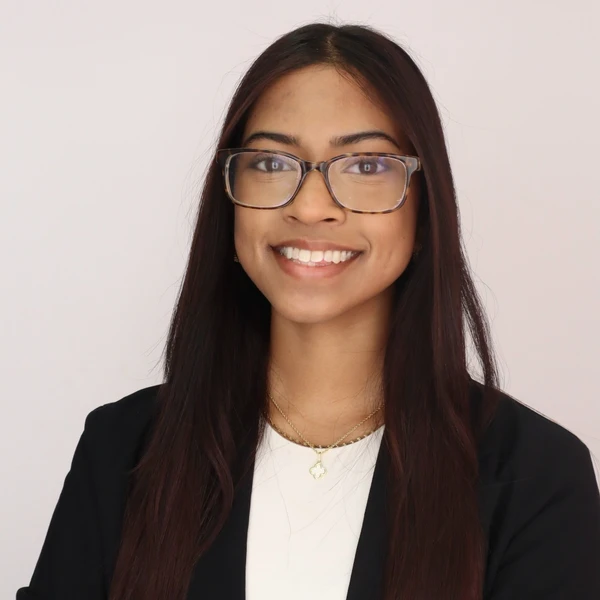
Anousha Shahid
1x
FinalistAnousha Shahid
1x
FinalistBio
I am a sophomore at Cornell majoring in Biomedical Engineering and minoring in Business. After college, I hope to pursue a PhD and work in research and development in the biotech industry, and potentially work on the business/management side of biotech as well. Outside of school, I like to crochet and work out!
Education
Cornell University
Bachelor's degree programMajors:
- Engineering, General
- Psychology, General
- Biomedical/Medical Engineering
Minors:
- Business/Commerce, General
Amity Regional High School
High SchoolMiscellaneous
Desired degree level:
Bachelor's degree program
Graduate schools of interest:
Transfer schools of interest:
Majors of interest:
- Biomedical/Medical Engineering
Career
Dream career field:
Biotechnology
Dream career goals:
PhD, Industry, possibly MBA and transition from research side of industry to business
Private Online Tutor, Tutor k-12 math students of various skill level and needs such as SAT practice, schoolwork, and math subjects
Wyzant2023 – Present3 years
Sports
Taekwondo
Club2015 – 20249 years
Awards
- black belt
Research
Biological/Biosystems Engineering
iGEM Cornell Project Team — Support brainstorming: review literature, pitch project ideas, and contact stakeholders, Gain experience in bacterial wet-lab techniques and protein modeling software, Research wet lab aspects of project by reviewing past projects and literature2024 – PresentBiochemistry, Biophysics and Molecular Biology
Polygence Research Mentorship Program — highschool research mentee, Wrote literature review on bacterial degradation of poly- and per-fluoroalkyl substances (PFAS); Studied abiotic and bacterial PFAS degradation advances using synthetic biology; Mentored by UC Berkeley PhD Candidate2023 – 2023Microbiological Sciences and Immunology
Flyak Lab at Cornell — I have joined this lab as an undegrad researcher and will start in June of 20252025 – PresentMicrobiological Sciences and Immunology
EvolveImmune Therapeutics — Cultured and passaged 4 tumour cell lines for use in antibody binding experiments, took inventory of lab consumables weekly and supported lab maintenance daily,Did Flow Cytometry for 3 antibody binding experiments with donor T-cells and tumour cells2024 – 2024
Public services
Advocacy
RISEUP at Cornell — Public Policy Lead, work on spearheading "Know your rights" campaign, workshops to inform refugees on their healthcare rights, contact stakeholders and fundraise2024 – Present
Future Interests
Volunteering
Philanthropy
Hue Ta Asian American Scholarship
Mental health and disability advocacy are crucial within the Asian American community because of the heavy stigma that exists against these health issues, frequent refusal to acknowledge these issues, and the immense pressure to succeed felt throughout the Asian American community. Mental health and other "invisible" disabilities such as autism or ADHD are often overlooked by the Asian community, especially elders. Even in my own family, struggling individuals are told their mental health challenges stem from insufficient religious practice or laziness. Even when a disability is physical, Asian communities are too often unprepared to support them.
This lack of knowledge and belief in mental health and disabilities contributes to the harmful narrative that Asian Americans are a “model minority,” creating a cycle of immense pressure to succeed followed by unacknowledged mental health issues. As the daughter of Bangladeshi immigrants who has grown up in predominantly Asian communities, I have experienced and witnessed this cycle firsthand. Many are told to "pray away" their mental struggles, while most of my friends never speak up or attempt to get help for whatever challenges they may be facing.
Going into college, I knew I wanted to uplift immigrant communities like mine. I joined RISEUP, an organization that uplifts refugee communities in Tompkins county by providing healthcare access information, immigration law workshops, public service information, ESL classes, and more. Serving on the public policy and ESL committees, I helped organize "know your rights" workshops for refugees to learn about the health services they can demand and have access to. The aim of these workshops is to let refugees and immigrants know they don't have to withhold their health concerns out of fear of being deported; There are basic services everyone is entitled to such as mental health evaluations, physical therapy, pain relief, counseling, etc.
I hope that by reassuring refugee communities that these mental health and disability support services are available, they will be more inclined to use them and let go of their potential stigmas Mental health service access is also important to me as a biomedical engineering major. One of my research interests are neurology and the science behind neurological conditions/mental health disorders. In the future I want to research Alzheimer's and how Alzheimer's connects to mental health issues such as chronic stress, depression, anxiety, etc. Depression and anxiety have been shown to be early indicators of Alzheimers; Finding a more specific connection between the two can not only help more accurately diagnose Alzheimers but also provide proof of the existence of conditions such as depression and anxiety, which many in Asian American communities still doubt.
This scholarship would alleviate immense financial burden and allow me to continue with my undergraduate education. I am currently dependent on the Parents PLUS loan to pay for my undergraduate education, which the current administration has capped at $20,000 a year starting July 2026. I get almost no financial aid from my school, so outside financial support is crucial for me to continue attending Cornell University, a school with abundant resources for aspiring PhD students like myself. The school offers countless faculty labs, top notch student project teams, and incredibly knowledgeable and approachable professors. I am currently in a synthetic biology project team, iGEM, and doing research in an immunology faculty lab. Continuing these experiences and getting to graduate school is dependent on outside financial support. Being here gives me the resources to connect with peers with similar goals and help shift the narrative around mental health and disability in the robust Asian American community at Cornell, which I hope I can continue to do.