Hobbies and interests
Tutoring
Drawing And Illustration
Finance
Social Justice
Reading
Self-Help
Psychology
Economics
I read books multiple times per week
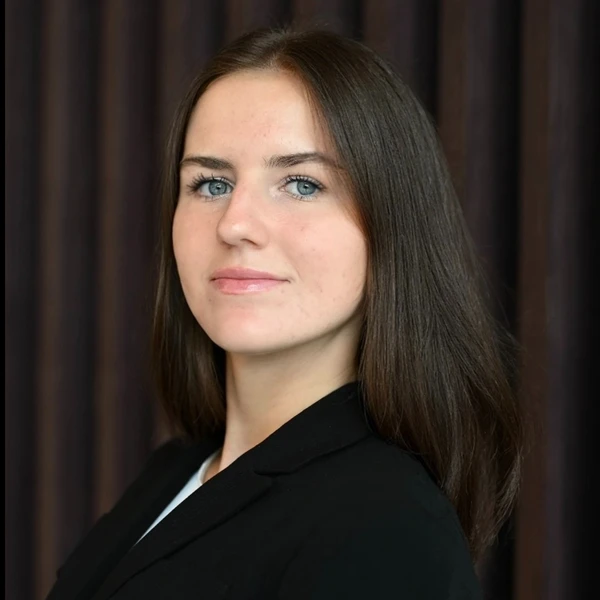
Anna Melnyk
1x
Finalist1x
WinnerAnna Melnyk
1x
Finalist1x
WinnerBio
Hey, I’m Anna! I’m a finance student at Baruch College, but my interests go way beyond just numbers. I love mentoring and tutoring young kids, diving into psychology, and exploring holistic medicine. Born in Brooklyn but raised abroad (in Ukraine) for part of my childhood, I came back to New York in third grade and have been here ever since.
Outside of finance, I enjoy traveling, reading, yoga, painting, and anything that fuels my creativity. In the future, I’d love to work as a Financial Planner or a Finance Professor while running my own tutoring business. My overall goal is to combine creativity and psychological approaches to help people feel more confident and less anxious about their future and finances.
Education
CUNY Bernard M Baruch College
Bachelor's degree programMajors:
- Entrepreneurial and Small Business Operations
- Finance and Financial Management Services
Miscellaneous
Desired degree level:
Master's degree program
Graduate schools of interest:
Transfer schools of interest:
Majors of interest:
- Business, Management, Marketing, and Related Support Services, Other
- Psychology, General
Career
Dream career field:
Financial Services
Dream career goals:
Sports
Tennis
Intramural2012 – 202513 years
Arts
The Bay Academy
Visual ArtsSculpture, Watercolor Painting, Oil Pastel Painting2016 – 2019
Public services
Volunteering
FasTracKids — As a tutor, I provided personalized academic support, helping students build strong foundational skills while fostering a love for learning.2022 – 2024
Future Interests
Entrepreneurship
Start Small, Dream BIG Scholarship
What began as a small favor for a neighbor’s child during high school—just a few afternoons at my kitchen table helping with math homework—has quietly grown into one of the most meaningful parts of my life. At first, it felt like something small and simple, a way to give back and feel useful. But those sessions sparked something much deeper in me: a love for teaching, connecting, and helping young minds grow. Over time, that small gesture evolved into a private tutoring and mentorship business that now serves children between the ages of five and twelve. I’ve been fortunate to develop such strong relationships with families that there’s now a waitlist of students hoping to join. Still, no matter how much my business grows, my approach stays the same—personal, empathetic, and rooted in understanding. My psychology studies have deepened this perspective, helping me recognize that education is not only about improving grades, but also about helping children understand themselves, manage emotions, and build resilience. Many of my students remind me of my younger self—curious, ambitious, and often anxious about measuring up. I see tutoring as a chance to guide them through those emotions, to create a safe space where learning feels empowering rather than intimidating. Every child I work with teaches me something new about patience, growth, and the small, powerful ways confidence can change a life.
This scholarship would allow me to take that mission further—to invest in structured learning resources, digital tools, and a small online platform that could make my sessions more interactive and accessible. More importantly, it would give me the means to expand my focus beyond academics, developing programs that blend tutoring with mentorship, teaching both study skills and emotional intelligence. The theme “Start Small, Dream Big” perfectly mirrors my journey—from one student at my kitchen table to a thriving small business built from genuine care and persistence. My dream isn’t about growing into something enormous; it’s about deepening impact. I want to continue creating a space where education feels personal, where every child feels seen and supported not just for their grades, but for who they are becoming. In many ways, this journey has been a reflection of my own growth: starting small, uncertain, but full of hope. I’ve learned that when you nurture something with consistency, empathy, and heart, it naturally grows beyond what you ever imagined. What began as a simple act of helping has become a calling—one that continues to remind me that the biggest dreams often start with the smallest, most sincere intentions.
RonranGlee Literary Scholarship
Passage from Meditations by Marcus Aurelius:
“The part of life you live is all that you can lose, since the past is gone and the future is not yet yours. If you understand this, you will no longer spend your life in a state of dissatisfaction, nor will you allow your mind to become a prisoner to the future or to the past. For your life can only be lived in the present, and you are not required to be a victim of circumstances; instead, you should be a master of your actions.”
There is nothing more human than fearing the future and mourning the past. We replay our mistakes as if we could rewrite them; we cling to anxieties as if worrying might bend fate to our will. Marcus Aurelius tears through those illusions in this passage, reminding us that both past and future are shadows. The only piece of life we truly hold is the present, and it is in this present moment—this breath, this choice—where freedom exists. His words are not meant to comfort but to confront: stop wasting time in chains, because you are capable of being your own master.
When Aurelius writes, “The part of life you live is all that you can lose,” he reframes how we think about loss. The past, however dear, is untouchable. The future, however promising, is not yet ours. What we truly risk losing is today—the part of life we are actually living. This subtle but piercing truth forces a reckoning: most of our dissatisfaction comes not from the present but from our refusal to accept it. We grieve what is already gone, or we reach desperately toward what has not yet arrived, and in doing so we fail to see that the present is the only space where life actually unfolds. Aurelius is telling us that dissatisfaction is not inevitable; it is a choice we make when we refuse to live where we stand.
The metaphor of becoming a “prisoner” to the past or future is even more striking. To be a prisoner is to be confined, powerless, stripped of freedom. Aurelius is not exaggerating when he uses this word—he is showing how our minds create cages when we dwell on regrets or anxieties. Unlike physical chains, these mental prisons are self-made. We build them thought by thought, regret by regret, worry by worry. Yet the irony is that the key to escaping them is also in our hands. By returning to the present moment, by directing our focus to what we can do now, we dismantle the prison walls we ourselves erected. In this sense, freedom is not granted from the outside—it is chosen from within.
The insistence that “your life can only be lived in the present” pushes this further. On the surface, this is common sense: we cannot live yesterday or tomorrow. But Aurelius is not simply pointing out a fact of time—he is demanding a way of living. For him, the present is not just where we happen to exist; it is the only arena where moral action, discipline, and virtue are possible. The past holds only memory, the future only possibility. The present is the battlefield where choices are made and character is revealed. To ignore the present, then, is not just wasteful—it is a form of self-abandonment.
The passage concludes with its most direct and empowering claim: “You are not required to be a victim of circumstances; instead, you should be a master of your actions.” Aurelius here draws one of Stoicism’s sharpest distinctions: what belongs to us and what does not. Circumstances—political chaos, natural disaster, betrayal, even death—lie beyond our control. Actions—our choices, our discipline, our response—lie squarely within it. Victimhood is surrendering power to what we cannot influence, allowing the outside world to dictate our inner one. Mastery is seizing control over the only domain that truly belongs to us: the self. This is Stoicism distilled into its essence.
It is worth pausing to remember that Aurelius himself was not writing these words in serenity, but in turmoil. As emperor of Rome, he was surrounded by war, political unrest, and immense responsibility. If anyone might have felt justified in claiming to be a victim of circumstances, it was him. Yet he insisted that freedom did not lie in conquering the world outside but in mastering the self within. This makes his words not abstract philosophy but lived practice.
The relevance of this passage extends far beyond ancient Rome. In modern life, we are more distracted than ever—haunted by the past through constant replay, consumed by the future through relentless planning. Students, in particular, often feel crushed between these two forces. Regrets over what could have been and anxieties about what is to come create a constant hum of dissatisfaction. Aurelius’s wisdom cuts through this noise: neither the past nor the future exists in a way we can control. The only ground we stand on is today, and the only power we truly hold lies in what we do with it.
For me, these words resonate deeply because my own life has been shaped by upheaval. I was born in Brooklyn, but before I even turned one, my family moved back to Ukraine. That was the life I knew—until 2014, when war broke out and we were forced to return to America. Living between two countries, two cultures, and two versions of myself left me wrestling with belonging. I often felt caught in a limbo, looking backward with longing at what I had lost, or forward with fear at what I could not yet grasp. In that constant back-and-forth, the present felt like something I was always missing.
But adaptability became my strength. Each time my life shifted, I had to focus on what I could do in that moment—learn a new system, make new connections, rebuild in unfamiliar territory. Slowly, I began to see that this adaptability was not just survival—it was freedom. It was the practice of Aurelius’s philosophy without my realizing it: mastering actions rather than circumstances, living in the present instead of being crushed by shadows of time.
College has sharpened this lesson even further. The temptation to drown in regret over past mistakes or to obsess about the future is constant. It is easy to measure life only in what has slipped away or what might be gained. But this passage from Meditations calls me back, again and again, to the truth that the present is the only life I own. To live anywhere else is to betray myself.
This passage reminds us that dissatisfaction doesn't need to be our destiny, and victimhood doesn't have to be the only option. Life, in Aurelius’s vision, is brutally short and endlessly uncertain. But within that uncertainty lies freedom: the freedom to master our actions, to claim the present as ours, and to live it with intention.
Love Island Fan Scholarship
What makes Love Island unforgettable isn’t just the drama—it’s the moments when Islanders are forced to drop the act and show what’s really in their hearts. That’s why my original challenge idea, called “The Love Labyrinth,” would be unlike anything the villa has seen before. It’s part obstacle course, part emotional test, and designed to reveal whether couples can handle both playful chaos and real vulnerability.
Here’s how it works. Each couple enters a giant, maze-like course together. At each checkpoint, they face a different challenge that tests not only their physical teamwork but also their emotional bond. For example, one station might involve blindfolding one partner while the other has to guide them through a winding path using only their voice. If the blindfolded Islander stumbles or hesitates, it reveals how much trust they truly have in their partner.
Another station would be the “Truth Wall.” Here, couples must answer vulnerable questions that appear on a screen before they can move on. These aren’t surface-level questions—they dig deep, like: What’s one insecurity you’re afraid to share? or What moment made you doubt us? Answering truthfully unlocks the gate, but dodging the question means losing valuable time.
There’s also a station called the “Memory Match,” where Islanders have to quickly sort through objects representing big villa moments—a personalized water bottle, a recoupling firepit token, a challenge prop—and match them to something meaningful their partner said or did. This adds a nostalgic element while testing how much they’ve been paying attention.
The final station is the “Leap of Faith.” One Islander must jump into a pool of water from a platform, but they can only leap if their partner is waiting at the bottom, arms outstretched, ready to catch them after they surface. It’s symbolic, emotional, and the kind of moment fans would replay for seasons to come.
Couples are timed throughout the maze, and the pair that completes it the fastest wins a romantic reward, like a night away from the villa. But just like in real relationships, speed isn’t everything. Islanders and viewers alike would get to watch who laughed their way through the course, who fought, who hesitated, and who grew closer by the end.
What excites me about this challenge is that it mixes entertainment with depth. It’s funny to watch couples stumble through obstacles or argue about directions, but it’s also meaningful to see who can trust, listen, and be honest when it counts. To me, Love Island is about more than quick chemistry—it’s about building something real. The Love Labyrinth would push Islanders past surface-level attraction and into a space where teamwork, trust, and vulnerability decide the outcome.
That’s the kind of challenge I’d want to see: one that keeps the audience laughing but also leaves them with goosebumps, because love—like the maze—is never easy, but the journey is what makes it worth it.
Bick First Generation Scholarship
My life has never followed a straight line. I was born in Brooklyn, but before I could even form my first memories, my family moved back to Ukraine. That was the world I knew—until 2014, when war forced us to leave everything behind and return to America. Starting over again and again meant I had to learn how to adapt quickly. New schools, new languages, new cultures—I had no choice but to adjust. At the time, it felt like survival. Looking back now, I realize it shaped me into someone who can handle change with strength and independence.
Being a first-generation student hasn’t always been easy, but it has always demanded adaptability. When you don’t have a blueprint to follow, you create your own. That’s what I did. While others leaned on family experience to guide them through education, I relied on my own ability to adjust, to figure things out, to grow stronger with each challenge. And because of that, by the time I got to college, I was already independent. I didn’t need someone to hold my hand. I had already learned how to navigate unfamiliar spaces and make them my own.
That adaptability carried into every part of my life. In high school, I started tutoring one fifth grader, unsure of what it would turn into. Through persistence and word of mouth, I built a business of 15 students. It wasn’t easy—balancing academics, lesson planning, and schedules took discipline. But instead of backing down, I adapted. I created systems, learned how to market myself, and took ownership of what I had built. Tutoring wasn’t just a way to earn money; it was proof that I could create opportunities from scratch, even without a roadmap.
What being first-gen means to me has changed over time. At first, it felt like pressure, like carrying the hopes of my family on my shoulders. But with each obstacle I overcame, that pressure became motivation. Now, it feels like power. It’s a reminder that I have already walked through change, upheaval, and uncertainty—and come out stronger. It’s why I see adaptability as one of my greatest strengths. No matter where I am placed, no matter what challenges arise, I know I can adjust, rebuild, and thrive.
This scholarship would not only ease the financial weight of college, but it would also affirm the journey I’ve taken so far. Being a first-generation student is not a label I wear out of obligation—it’s a story I live with pride. It’s the reminder that I’ve built independence where there was no guide, found resilience in places where it would’ve been easier to give up, and turned uncertainty into possibility. That’s what drives me forward, and that’s the legacy I hope to continue.
Taylor Swift Fan Scholarship
Heartbreak has a way of making the world feel unrecognizable. Suddenly, songs you’ve heard a hundred times hit differently, and the smallest reminders cut like glass. When I went through my first romantic heartbreak, I didn’t know how to process the weight of it. That’s when Taylor Swift’s performance of All Too Well (10 Minute Version) on Saturday Night Live became more than just music to me—it became a mirror of my pain and a guide through it.
I remember sitting in my room that night, numb from the weeks of sadness I had been carrying. As the lights dimmed and Taylor sat with just her guitar, there was a stillness that demanded attention. Then she began to sing. Her voice was fragile yet steady, carrying every ounce of devastation, anger, and longing that heartbreak brings. For the first time since my own breakup, I felt like someone understood exactly what I was feeling.
What moved me most was not just the lyrics but the way she lived them on stage. Every line carried years of memories, love, and loss. She didn’t shy away from the rawness; she leaned into it fully. Watching her pour every emotion into that performance gave me permission to feel my own heartbreak without shame. It was as if she was saying, “Yes, this hurts. But you’re allowed to feel it, and you will survive it.”
At that point in my life, I had been trying to “move on” too quickly, to push the pain away because it felt too heavy to carry. But Taylor showed me that heartbreak isn’t something to run from. It’s something to move through. The way she stretched each lyric, unafraid to let the silence and the sorrow linger, taught me that healing isn’t about rushing—it’s about allowing yourself to sit with the hurt until you’re ready to rise again.
That performance became a turning point. I started to write more, to journal my feelings instead of bottling them up. I listened to All Too Well on repeat, sometimes crying, sometimes finding comfort in the familiarity of her words. Slowly, I realized that heartbreak doesn’t just take something from you—it can also give you something back. It can teach you resilience, self-respect, and a deeper understanding of what you deserve.
For me, Taylor’s SNL performance will always be the most moving because it arrived at the exact moment I needed it. It was a lifeline during my first experience with heartbreak, a reminder that even in pain, there is beauty, art, and connection. Watching her transform her own heartbreak into a performance that touched millions showed me that vulnerability can be powerful.
Even now, whenever I revisit that performance, I remember how it carried me through one of the hardest seasons of my life. It wasn’t just Taylor telling her story—it was her giving me the strength to start writing mine again.
Qwik Card Scholarship
I will never forget sitting in the office during my first internship at a mortgage lender firm, listening to a client break down in tears after learning they couldn’t qualify for a home loan because of poor credit. It was the summer before my freshman year of college, and while I had always been curious about finance, I didn’t fully understand its weight until that moment. That day, I realized that credit isn’t just a number on a report—it’s a gatekeeper to opportunity, stability, and freedom.
My parents, who both left Ukraine after the collapse of the Soviet Union to give my sister and me a better life, had always emphasized the importance of financial literacy. My dad especially encouraged me to start thinking about building credit early, reminding me that in America, your credit score can shape the entire trajectory of your future. But seeing real families struggle with rejection at the mortgage firm made those lessons hit differently. It wasn’t abstract anymore; it was real people, with real dreams, being shut out because of choices—or sometimes lack of knowledge—about their credit. That’s when I knew I wanted to take control of my own financial path and never take the opportunities my parents fought for me to have for granted.
Since then, I’ve been intentional about how I manage money. One of my proudest accomplishments has been building and growing my tutoring business. What started with one student in high school has grown into 15 students through word of mouth and my own marketing efforts. Running this business has taught me discipline, resilience, and how to manage both time and money. I budget every dollar I earn, setting aside savings while covering expenses and preparing for the unexpected. It’s not glamorous work—there are nights when I stay up late after classes to create lesson plans or weekends when I sacrifice free time to tutor—but it has given me independence and the confidence to manage my finances with purpose.
What excites me most about building credit is the sense of security it brings. I don’t see it as a way to borrow recklessly or spend beyond my means. To me, it’s about creating a foundation: the ability to rent an apartment, finance a car, or eventually buy a home without fear of being denied. It’s also about knowing I can handle emergencies and plan for the future with confidence. Building credit is one of the smartest financial moves anyone can make, and I am determined to start early so that when bigger life decisions come, I’m ready.
But my motivation goes beyond myself. The more I’ve learned, the more I feel a responsibility to share that knowledge with others—especially young people who, like me, are just beginning their financial journeys. I’ve already seen how much small lessons in confidence and structure can change my students’ academic lives, and I believe financial literacy can do the same for their futures. One day, I hope to combine my background in finance, psychology, and entrepreneurship to build programs that make financial education accessible to students everywhere, so fewer people ever have to sit in that mortgage office hearing the word “no.”
This scholarship would not just help me financially—it would be another step toward the kind of future I want to build: one where I use my talents to create opportunities, empower others, and continue the legacy of resilience and responsibility my parents began when they chose to start over in America.
Sabrina Carpenter Superfan Scholarship
When I hear Sabrina Carpenter’s songs—whether it’s the playful confidence of “Espresso” or the raw honesty of “Please, Please, Please”—I feel joy, empowerment, and connection. But my love for Sabrina goes even deeper than her music. My true appreciation for her began with Girl Meets World, where she brought Maya Hart to life. For me, Maya wasn’t just a character on a show; she became a guide, a role model, and a reminder of what true friendship and resilience look like.
Maya Hart was witty, bold, and unapologetically herself. She often used humor as armor, but beneath that toughness was a girl who cared deeply about the people she loved. She showed what it meant to be loyal, to stand up for your friends, and to fight through challenges even when life felt unfair. Watching her navigate growing up made me feel less alone as I went through my own adolescence. Whenever I doubted myself, I thought of how Maya never pretended to be perfect—she was flawed, she struggled, but she always showed up for the people around her. That made me believe I could do the same.
What stood out to me most about Maya was the way she balanced strength and vulnerability. She came from a difficult background, but instead of letting it define her, she grew into someone who used her experiences to become empathetic and fiercely protective of others. As a teenager, that message hit me deeply. It reminded me that my challenges didn’t have to hold me back—they could actually make me stronger and more compassionate. Maya taught me that it’s okay to laugh at yourself, to push through pain with humor, and to trust in the people who love you.
As Sabrina’s career evolved, I felt like I was growing alongside her. Seeing her step from television into music and film reminded me that you don’t have to limit yourself to one path. She taught me that reinvention and growth are not only possible but necessary if you want to follow your passions fully. Sabrina embodies hard work and creativity, but she also embodies authenticity. Whether through Maya Hart or her own lyrics, she communicates messages of resilience, individuality, and hope.
The impact she’s had on me has shaped the way I see my own goals. I want to live with that same mix of courage and openness, to work hard but also to stay true to myself. Sabrina Carpenter’s artistry—and especially her portrayal of Maya—helped guide me through some of my most formative years. She gave me an example of how to be both strong and caring, how to chase dreams while staying grounded, and how to build lasting friendships by showing up for others.
This scholarship is more than an opportunity for me; it feels like a way to honor someone who has inspired me to dream bigger, to embrace who I am, and to carry the lessons of Maya Hart into my own life. Just as Sabrina Carpenter continues to evolve and inspire, I want to take the lessons she has given me and use them to grow, create, and encourage others along the way.
Raise Me Up to DO GOOD Scholarship
Every opportunity I have today is built on the courage of my parents. Long before I was old enough to understand it, my mom and dad made a decision that would forever change our family’s path: they left their life in Ukraine after the collapse of the Soviet Union to begin again in a country where they had little more than hope. The older I get, the more I realize how terrifying that must have been—to leave behind everything familiar and step into uncertainty with nothing guaranteed. But they did it, not for themselves, but for my sister and me, so that we could grow up with stability, opportunity, and the freedom to dream.
Growing up, I didn’t fully grasp the weight of their sacrifices. My childhood was filled with school, friends, and simple joys, while behind the scenes my parents were building our lives from the ground up. Now, as I move forward in my own education and career, I can see more clearly the grit and resilience it must have taken for them to start over. Even after years in America, my dad often reminds me how much was done for us to be here and how many doors are open to me that he never had. Those reminders ground me. They make me both grateful for what I have and determined to never waste the opportunities they worked so hard to create.
Living in a family that has navigated so much change has taught me perseverance, humility, and appreciation. My parents didn’t just tell me to work hard—they lived it every day. They showed me what it means to keep going even when things are difficult, to put family above all else, and to measure success not by wealth but by the chances you create for the next generation. These lessons have shaped not only my goals but also the way I want to live my life.
Looking toward the future, I want to use my talents to carry forward the same spirit of service and resilience that my parents instilled in me. Whether through my tutoring business, my studies in finance and psychology, or opportunities still ahead, I want to make a difference in people’s lives. Helping kids learn, mentoring others, or creating opportunities for those who feel limited by their circumstances all excite me because I know firsthand how life-changing support can be. My parents’ journey taught me that when someone believes in you enough to fight for your future, you can rise far beyond where you started.
I don’t know exactly what my future career will hold, but I do know that it will involve using my skills to uplift others. I want my work to give back the way my parents gave to me—to provide stability, encouragement, and hope where it may not exist.
In the end, my story is really my parents’ story. Their bravery and sacrifices built the foundation of who I am today. The best way I can honor them is by using every talent I have not only for myself but to open doors for others, just as they once opened doors for me.
LiveYourDash Entrepreneurs Scholarship
WinnerMy journey toward becoming an entrepreneur began unexpectedly in high school, when I took AP Psychology. I became fascinated with adolescent development and how much early support can shape a child’s future. A few months later, I was asked to work with a 5th grade girl who was struggling with school. I have always been a passionate person, hence, I poured myself into helping her — not just reviewing homework but encouraging her when she doubted herself and pushing her when she didn’t believe she could do more. Watching her grow gave me a sense of purpose I hadn’t felt before.
What started with that one student slowly grew into something bigger. Through word of mouth, families began reaching out, and before long, I was tutoring several kids in my neighborhood. I realized this wasn’t just something I enjoyed, but it was something I could build into a business. That realization was exciting, but it also came with a lot of responsibility. I began designing lesson plans, balanced multiple schedules, kept parents updated, and learned how to promote myself through flyers and online posts. Every new student I gained wasn’t handed to me—I had to earn their trust, show results, and prove that I was worth investing in.
Today, I tutor around 15 students, and while I’m proud of how far I’ve come, I also know the amount of work it has taken to get here. There are late nights when I’m exhausted from college assignments but still have to prepare lessons for the next day. There are days when things don’t go smoothly—when a student loses focus, or a parent has concerns, or my schedule feels impossible to juggle. Running a business at my age has meant sacrificing free time, constantly staying organized, and pushing myself harder than I thought I could. But I’ve learned that entrepreneurship is not about comfort—it’s about persistence. It’s about showing up, even when it’s hard, and putting in the hours that nobody sees.
What excites me most about being an entrepreneur is the opportunity to create something that is fully my own. There is a deep satisfaction in knowing that this business didn’t come from luck or chance—it came from my effort, consistency, and refusal to give up. My students inspire me to keep going, because I see their struggles mirror my own. Just like I encourage them to keep trying when school feels overwhelming, they remind me that growth comes from pushing through the difficult moments.
I was inspired to pursue this path by both my passion for psychology and the kids I work with every week. They’ve shown me that being an entrepreneur is not just numbers or profit. It’s about believing in yourself enough to take a risk, working hard enough to earn trust, and caring enough to keep improving what you’ve built.
This scholarship would not only support my education but also allow me to keep growing as an entrepreneur. I know firsthand how much grit it takes to build something from the ground up, and I am ready to keep putting in the work to turn this small tutoring business into a lifelong journey of leadership, impact, and purpose.
Lieba’s Legacy Scholarship
I know in my heart that I am meant to carry forward the spirit of Lieba’s Legacy Scholarship because my life’s passion has been to stand up for children who are often misunderstood, overlooked, or dismissed. From the moment I discovered psychology in high school, I felt a deep calling to help gifted children not only reach their potential but also feel seen, supported, and valued for who they are.
My journey began when I took AP Psychology, a class that forever changed how I understood people and the mind. I became fascinated by how children experience the world—how their emotions, challenges, and talents shape who they become. That early spark grew into a sense of purpose, which is why I chose to minor in psychology alongside my Finance major.
One of the most meaningful ways I have lived out this passion is through my tutoring business, which I started in high school. Over the years, I’ve worked with many students, but one in particular stands out. He was exceptionally gifted in math but often became overwhelmed with frustration when things didn’t come easily. Teachers labeled him “difficult,” but I saw beyond that. During our sessions, I challenged him with advanced problems while also creating space for him to process his emotions. I reminded him that mistakes were not signs of failure but stepping stones to growth. Over time, I watched his confidence return, and with it, his joy for learning. That experience showed me how essential it is to nurture both the intellectual and emotional needs of gifted children.
My career goal is to create spaces where gifted children can flourish as whole people. Too often, their talents are recognized while their struggles are overlooked, or their challenges overshadow their abilities. I want to advocate for them, to ensure they feel supported, understood, and empowered. By combining what I am learning through my psychology studies with my hands-on tutoring experience, I hope to design programs and support systems that foster both their social-emotional well-being and their intellectual growth.
Receiving the Lieba’s Legacy Scholarship would allow me to pursue this mission with the same courage and compassion that defined Lieba’s life. Her story reminds me that justice and kindness begin in everyday acts of care and advocacy. I want my life’s work to carry that legacy forward, ensuring that gifted children are not only recognized for their abilities but also cherished for their humanity.
Kalia D. Davis Memorial Scholarship
Kalia D. Davis’s story moved me deeply. It's clear that Kalia lived with excellence, balance, and generosity - qualities I strive to bring into my own life. Her ability to push herself academically, athletically, and in service to others while uplifting those around her is the type of legacy I hope to honor.
I was born in Brooklyn, New York, but at the age of one my family moved back to Ukraine, where I spent most of my childhood. Growing up there shaped my sense of identity, but when the war first broke out in 2014, I had to leave everything behind and return to America. At the time, I was still very young, and the move forced me to rediscover myself in a completely different culture and environment. It was not an easy transition—I had to learn to adapt quickly, build new friendships, and prove to myself that I could thrive no matter the circumstances. That experience instilled in me resilience and a drive to keep pushing forward, even when life feels uncertain.
Now, as a Finance major, I carry those lessons into everything I do. Academically, I push myself to excel, but I also find fulfillment in giving back. I volunteer as a tutor for children ages 5–12, and I’ve come to love the moments when I see a child’s confidence grow because of the encouragement I’ve given them. Tutoring has taught me patience, empathy, and the importance of lifting others up. Beyond academics, I am training for the New York Marathon, a journey that has tested both my body and my mind. There are days when running feels impossible, but I’ve learned that endurance comes from showing up consistently, even when it’s difficult. That discipline has carried over into all parts of my life.
Looking ahead, I plan to study abroad next spring. Coming from a commuter school and still living with my parents, I’ve never had the chance to live independently. Being back in Europe, this time as a young adult, would allow me to reconnect with that part of my past but from a completely different perspective. I would be returning not as a child forced to leave, but as someone who has grown, learned, and built a foundation of strength and purpose. Living abroad would challenge me to step out of my comfort zone, discover more about myself, and find a deeper sense of purpose in the person I want to become. This scholarship would relieve the financial pressure of that opportunity and make it possible for me to embrace the experience fully.
Receiving this award would not only support my goals but also carry forward the spirit of Kalia’s legacy: to live with purpose, strive for excellence, and use every opportunity to grow while uplifting others along the way.