user profile avatar

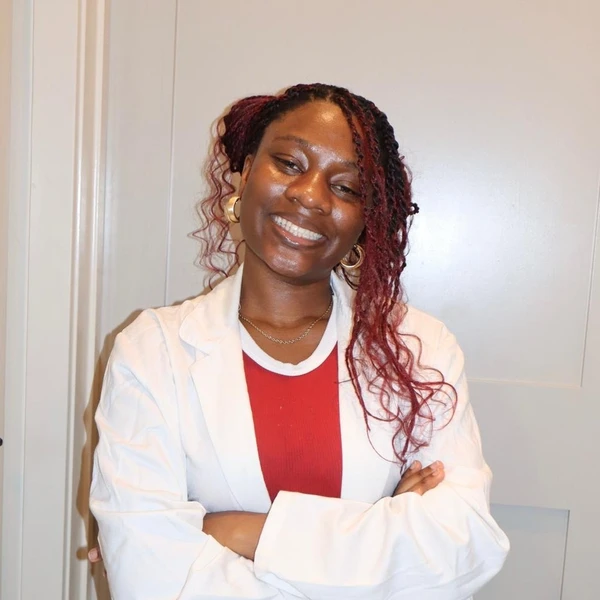
Anjolaoluwa Odomo

1x

Nominee

1x

Finalist

1x

Winner

Bio

Hi! I’m Anjola! Future medical technologist in the making 🩺 I’m passionate about healthcare, community impact, and using science to solve real-world problems. When I’m not studying or researching, I’m probably building something new or finding ways to make a difference! My life philosophy is to leave no regrets and squeeze every drop of potential out of my talents. I'm not just here to get good grades and call it a day. I want to build things that matter, solve problems that seem impossible, and have some fun while doing it!

Education

Fisk University

Bachelor's degree program
2024 - 2028
  • Majors:
    • Biological and Biomedical Sciences, Other
    • Biomedical/Medical Engineering

Miscellaneous

  • Desired degree level:

    Doctoral degree program (PhD, MD, JD, etc.)

  • Graduate schools of interest:

  • Transfer schools of interest:

  • Majors of interest:

  • Not planning to go to medical school
  • Career

    • Dream career field:

      Biotechnology

    • Dream career goals:

      Medical Technology

    • Research Intern

      University of Illinois Chicago
      2025 – 2025
    • Computational Biology Intern

      Yale University
      2025 – 2025

    Research

    • Biological and Biomedical Sciences, Other

      University of Illinois Chicago — Research Intern
      2025 – 2025
    • Biological and Biomedical Sciences, Other

      Yale University — Computational Biology Intern
      2025 – 2025

    Public services

    • Volunteering

      Tennessee School for the Blind – Wrestling Support Volunteer — Served as event support staff during 6-hour shifts, tracked pin times, distributed refreshments, and assisted athletes and facilitators to ensure smooth, safe, and organized activities.
      2025 – 2025
    • Volunteering

      Salama Urban Ministries — Provided one-on-one tutoring in homework, reading, and schoolwork at Salama Urban Ministries while mentoring students, fostering trust, and strengthening communication and leadership skills.
      2024 – 2025
    Zedikiah Randolph Memorial Scholarship
    Seven-year-olds aren't supposed to know what an endoscopy is, or wonder why the doctor didn't suggest one. But when you're scared and waiting, you notice everything. I was 6 when we found out my grandmother had Helicobacter pylori. The male doctor said, "it was nothing, just an ulcer, she was fine." She was not. I was 7 when she was diagnosed with stomach cancer, and 8 when she passed. Years later, at 16, I was diagnosed with Helicobacter pylori. My mom held my hand the same way I'd held my grandmother's a decade before. But this time, the story went differently. A Black female doctor, a simple breath test, fifteen minutes, and we had answers. Treatment started the next week. It would all be fine. But the truth is, not everyone gets their fifteen minutes. Not everyone gets to be fine. The gap between what's medically possible and what's actually accessible is why I chose medical technology. I want to create diagnostic devices that catch diseases early, point-of-care devices delivering results in minutes, wearable biosensors monitoring patients remotely, tools with affordability and accessibility at their core. I've always wondered why there aren't more people who look like me building them. Black women make up only 3 percent of the tech workforce and 2.8 percent of physicians. At the intersection where I stand, those numbers get even smaller, meaning more women risk being overlooked simply because they lack representation. But you know what they say—the best time to plant a tree was twenty years ago; the second best time is now. At 17, I took a teaching position at Cuddles Childminders & Schools, rewriting that story that began in the hospital room. Beyond teaching, I helped my Black female students reimagine who they could be in spaces that so often erase them. I designed a curriculum combining professional development with STEM learning, weaving confidence into every lesson. I introduced them to LinkedIn and guided them in building profiles celebrating their achievements. By the time I left, every student had a professional LinkedIn page, proudly posting their projects and embracing their identities in tech. At Fisk University, I became a voice for women in STEM. Through ColorStack, Girls Who Code, and Rewriting the Code, I helped students feel seen and supported. After leading a team to win the Girls Who Code hackathon, I've connected over 30 female students with scholarships, internships, and bootcamps. Yet this is just the beginning. I don't just want to hold the door open, I want to build more doors. I plan to formalize these efforts into an organization with curriculum connecting lessons to health challenges in underserved communities. Students will learn Python while analyzing health disparities, build prototypes while understanding why medical devices fail the people who need them most. I'm partnering with HBCUs and community health centers to create pipelines where people identify diagnostic gaps and build solutions. Eventually, I'll establish my medical technology company built with accessibility and equity embedded in every decision. We'll provide global internships, research positions, and leadership roles for women of color. I'll establish scholarships funding tuition, conference attendance, and research projects, opportunities reaching young women across the globe still waiting on their fifteen minutes. Every Black woman entering medical technology changes whose problems get solved, whose pain gets believed, whose grandmother gets that endoscopy. I'm planting trees now so the next generation won't have to wait. With the Zedikiah Randolph Memorial Scholarship's support, I'll ensure everyone gets the chance to be fully represented, and that fifteen minutes is all it takes, every single time, for every single person.