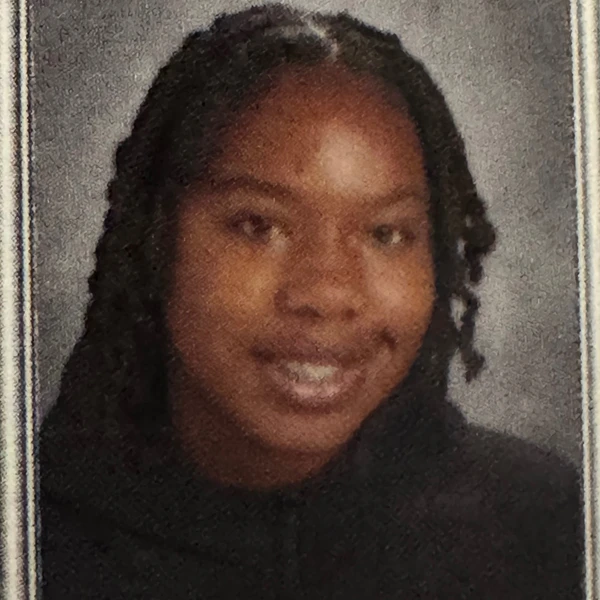
Hobbies and interests
Basketball
Violin
Piano
Aniyah Williams
1x
Finalist
Aniyah Williams
1x
FinalistBio
Hi, my name is Aniyah Williams. I am a high school senior in the Allied Health program at Eastern Center
for Arts and Technology, with plans to pursue a career in nursing. I am passionate about helping others and providing care during important moments in people’s lives. Through hands-on healthcare training, community service, and leadership as a basketball team captain, I have developed compassion, discipline, teamwork, and responsibility. I am motivated to continue my education, grow professionally, and make a positive impact in healthcare while building a stable and meaningful future.
Education
Abington Shs
High SchoolMiscellaneous
Desired degree level:
Bachelor's degree program
Majors of interest:
- Registered Nursing, Nursing Administration, Nursing Research and Clinical Nursing
Career
Dream career field:
Hospital & Health Care
Dream career goals:
Sports Coach
Greater Philadelphia YMCA2025 – Present1 year
Sports
Basketball
Varsity2022 – 20264 years
Awards
- MVP for a tournament
- First Team All-League
Arts
Abington Senior High School Orchestra
Music2022 – 2025
Future Interests
Volunteering
Nabi Nicole Grant Memorial Scholarship
One of the most significant times I relied on my faith was during a season when I felt overwhelmed by financial pressure and personal responsibility. Growing up, I have always known that my parents—who are now in their 80s—live on a fixed income. Even at their age, they continue to work part-time to help support me. As I got older and began thinking seriously about college, tuition costs, and the expenses that come with pursuing a nursing degree, the weight of it all began to feel heavy. I found myself feeling guilty, wondering if I was adding stress to their lives instead of easing it.
There were nights when I questioned how everything would work out. I worried about scholarships, academic performance, and whether I would be able to balance the rigor of nursing school with financial realities. I felt pressure to succeed not only for myself, but for my family. That pressure could have easily turned into fear.
During that time, I leaned deeply into my relationship with Jesus. I began praying more intentionally—not just asking for solutions, but for peace. One verse that anchored me was Philippians 4:6-7: “Do not be anxious about anything, but in every situation, by prayer and petition, with thanksgiving, present your requests to God. And the peace of God… will guard your hearts and your minds in Christ Jesus.” Instead of allowing anxiety to control me, I started surrendering my fears to God daily.
I also reflected on Jeremiah 29:11, which reminds me that God has plans for my future—plans filled with hope. That scripture shifted my mindset from “How will this happen?” to “God will make a way.” Faith did not instantly remove the challenges, but it changed how I carried them. Instead of feeling alone in my worries, I felt supported and guided.
Through prayer, I gained clarity and renewed motivation. I focused on what I could control: studying hard, applying for scholarships, staying disciplined, and trusting God with the rest. My faith reminded me that my parents’ sacrifices are acts of love, not burdens, and that honoring them means pursuing my goals with excellence—not guilt.
That season strengthened my trust in God. I learned that faith is not just for easy moments; it is for uncertain ones. Relying on my faith helped me move from fear to focus, from anxiety to assurance. It reminded me that obstacles are not signs to stop—they are opportunities to trust God more deeply and walk forward with courage.
Robert F. Lawson Fund for Careers that Care
My name is Aniyah Williams, and I am a calm, compassionate, and determined individual who believes that purpose is often born from perseverance. I was adopted as a baby and do not know my biological family, which has shaped my perspective on identity, gratitude, and resilience. Growing up, I learned that life does not always begin with clarity—but it can be built with intention. I was raised by loving parents who are now in their 80s and living on a fixed income. Even at their age, they continue to work part-time to help support me. Watching their sacrifices has deeply influenced my work ethic and strengthened my desire to build a stable and meaningful future.
From a young age, I have felt called to help others. I am naturally attentive and empathetic, and I find fulfillment in being someone others can rely on. During high school, I enrolled in an Allied Health program and earned my CPR and First Aid certification. Through hands-on learning and patient-care simulations, I realized that nursing is not just a career path for me—it is my calling. I plan to pursue a Bachelor of Science in Nursing, become a registered nurse, work as a travel nurse, and eventually advance my education to become a nurse practitioner.
Through my career, I plan to make a positive impact on the world by combining clinical excellence with compassion. Healthcare is more than diagnosing and treating illness—it is about making people feel seen, heard, and valued during vulnerable moments. I want to work in communities where access to quality healthcare may be limited and advocate for patients who feel overlooked or misunderstood. Clear communication, patience, and empathy can significantly improve a patient’s experience, and I want to embody those qualities in every interaction.
As a future travel nurse, I hope to serve diverse populations across the country, stepping into hospitals that may face staffing shortages and providing stability where it is needed most. In the long term, as a nurse practitioner, I aim to increase my impact by diagnosing and managing care more independently, particularly in underserved areas.
Beyond direct patient care, I hope to mentor young students—especially those facing financial hardship or identity struggles—so they can see that their beginnings do not limit their potential. My journey has taught me that resilience can become strength and that adversity can fuel purpose.
Ultimately, I want my career to reflect service, integrity, and heart. By honoring my parents’ sacrifices and using my education to uplift others, I hope to leave a lasting impact rooted in compassion and meaningful change.
Kristinspiration Scholarship
Education is important to me because it represents opportunity, stability, and transformation. It is more than earning a degree—it is a pathway to change my circumstances, honor my family’s sacrifices, and create a meaningful impact in the lives of others. For me, education is not optional; it is essential.
I was adopted as a baby and do not know my biological family. Growing up with that reality taught me early on that life can begin with uncertainty. However, I also learned that your beginning does not determine your outcome. I was raised by loving parents who are now in their 80s and living on a fixed income. Even at their age, they continue to work part-time to help support me. Watching their sacrifices has shaped the way I view education. I see it as a responsibility. Their hard work fuels my determination to succeed academically and build a future that brings them peace and stability.
Education is important to me because it provides knowledge, but it also builds discipline and confidence. Through my Allied Health program in high school and earning my CPR and First Aid certification, I discovered that learning gives me the tools to serve others effectively. I plan to pursue a Bachelor of Science in Nursing, become a registered nurse, work as a travel nurse, and eventually advance to become a nurse practitioner. None of those goals are possible without education. In healthcare, knowledge directly impacts lives. Being well-educated means being competent, prepared, and capable of making critical decisions that can save someone’s life.
Beyond personal success, education represents generational change. Growing up in a low-income household has shown me how financial limitations can restrict opportunities. By earning my degree, I will not only create stability for myself but also relieve the burden my parents have carried for years. I want my education to be a turning point—one that shifts my family’s future toward security and growth.
The legacy I hope to leave is one of resilience, compassion, and service. I want to be remembered as someone who did not allow circumstances to define her limits. As a nurse and eventually a nurse practitioner, I hope to provide excellent care to underserved communities and advocate for patients who feel unheard. I want people to remember how I made them feel—safe, valued, and understood.
I also hope to inspire younger students, especially those facing financial hardship or identity challenges, to believe that they are capable of more than their situation suggests. If my journey can encourage even one person to pursue their goals despite obstacles, then my legacy will extend beyond my career.
Education is my foundation. It is the bridge between where I started and where I am determined to go. Through it, I will build not only a career, but a life of purpose and impact.
Dashanna K. McNeil Memorial Scholarship
As a graduating high school student, I want to become a nurse because caring for others is not just something I enjoy—it is something that feels deeply purposeful to me. Nursing combines science, responsibility, and compassion in a way that allows me to make a meaningful difference in people’s lives. I am naturally calm, attentive, and empathetic, and I have learned that those qualities are strengths in healthcare. Nurses are often the steady presence in uncertain moments, and I want to be someone patients can trust and feel safe with.
My personal experiences have strongly influenced this decision. I was adopted as a baby and do not know my biological family. Growing up with that reality brought questions, but it also gave me resilience and gratitude. I was raised by loving parents who are now in their 80s and living on a fixed income. Watching them continue to work part-time to support me has shaped my work ethic and determination. Their sacrifices motivate me to pursue a stable and impactful career—not only to support myself, but to honor everything they have done for me.
During high school, enrolling in an Allied Health program and earning my CPR and First Aid certification confirmed my desire to enter the medical field. Through hands-on training and patient-care simulations, I realized how much I value both the technical and human sides of healthcare. I was drawn to the way nurses advocate for patients, explain procedures in comforting ways, and notice small details that can make a big difference in outcomes. I saw how a calm tone and patient explanation could ease fear, and that resonated with me.
There are several areas of nursing that interest me, but I am especially drawn to critical care or emergency nursing. These specialties require quick thinking, emotional strength, and the ability to remain calm under pressure—qualities I continue to develop through academics, athletics, and leadership experiences. In emergency or critical care settings, patients and families are often experiencing some of the most stressful moments of their lives. I want to provide not only skilled medical care but also reassurance and clarity during those times.
In the future, I also hope to become a travel nurse to serve diverse communities and expand my clinical experience. Eventually, I plan to further my education and become a nurse practitioner so I can increase my scope of practice and serve patients more independently, especially in underserved areas.
Ultimately, I want my career in nursing to reflect resilience, compassion, and excellence. My journey has taught me that stability and support can change a life. As a nurse, I hope to provide that same sense of care and confidence to others—turning my personal experiences into purpose and service.
Beverly J. Patterson Scholarship
I am passionate about nursing because it combines compassion with competence. It is one of the few careers where science and heart work side by side. I have always been calm, attentive, and empathetic, and I feel most fulfilled when I am helping someone feel safe and supported. Nursing allows me to step into people’s lives during vulnerable moments and provide not only medical care, but reassurance and dignity.
My passion for nursing is deeply connected to my personal experiences. I was adopted as a baby and do not know my biological family. Growing up with that reality gave me an early understanding of uncertainty and the importance of stability. I was raised by loving parents who are now in their 80s and living on a fixed income. Watching their sacrifices and continued hard work has strengthened my desire to build a stable, meaningful career. I want to honor their support by pursuing a profession that allows me to serve others while also creating security for my family.
Through high school’s Allied Health program and earning my CPR and First Aid certification, I realized that nursing is more than a career—it is my calling. I am drawn to the human connection in healthcare. A nurse is often the person who explains a diagnosis in simple terms, notices subtle changes in a patient’s condition, or offers comfort during fear. I want to be that steady presence.
I hope to begin my career in critical care or emergency nursing. These areas require quick thinking, calmness under pressure, and strong clinical skills—qualities I strive to embody. In emergency or critical care settings, patients and families are often facing some of the most frightening moments of their lives. I want to provide not only skilled medical attention but also emotional steadiness. A calm voice and clear communication can ease panic and build trust in high-stress situations.
After gaining experience, I plan to become a travel nurse so I can serve diverse communities and hospitals facing staffing shortages. Eventually, I hope to advance my education and become a nurse practitioner, expanding my ability to diagnose and treat patients independently.
The impact I hope to make in my specialty is rooted in compassion and advocacy. In critical or emergency settings, patients can feel like they are just another case in a fast-moving system. I want them to feel seen. I want families to feel informed rather than confused. I want to advocate for equitable care, especially in underserved communities.
Ultimately, I hope to leave a legacy of excellence, integrity, and heart. Nursing will allow me to combine resilience from my own life with professional skill, creating an impact that extends beyond treatment and into genuine human connection.
Maxwell Tuan Nguyen Memorial Scholarship
I was inspired to pursue a career in the medical field because I have always felt called to care for people during their most vulnerable moments. My desire to help others is not something I developed overnight—it grew from my personal experiences and the environment I was raised in. I was adopted as a baby and do not know my biological family. Growing up with that reality gave me an early understanding of uncertainty and the importance of stability, compassion, and support. I learned that simply knowing someone is there for you can make all the difference.
I was raised by loving parents who are now in their 80s and living on a fixed income. Watching them continue to work part-time to help support me has deeply shaped my perspective. Their sacrifices have inspired me to pursue a career that is both meaningful and stable. At times, I have felt guilty knowing the weight they still carry, but that feeling has motivated me to work harder, stay disciplined, and build a future where I can support them in return.
During high school, enrolling in an Allied Health program and earning my CPR and First Aid certification confirmed that healthcare is my calling. I was drawn not only to the science behind medicine, but to the human connection involved in patient care. I realized that healthcare professionals are often the steady presence in chaotic or frightening situations. A calm voice, clear explanation, and compassionate attitude can ease fear just as much as medication can ease pain. As someone who is naturally calm and attentive, I saw that my personality aligns with the needs of the field.
I plan to make a difference through my career by combining clinical excellence with compassion. My goal is to earn a Bachelor of Science in Nursing, become a registered nurse, work as a travel nurse to serve diverse communities, and eventually advance my education to become a nurse practitioner. I want to work in areas where healthcare access may be limited and advocate for patients who feel unheard or misunderstood. Clear communication and empathy can empower patients to take control of their health, and I want to be someone who bridges that gap.
Beyond direct patient care, I hope to mentor young students who may feel uncertain about their futures, especially those facing financial hardship or identity struggles. My journey has taught me that adversity can become purpose. Through healthcare, I will not only treat illness—I will provide reassurance, dignity, and hope.
Community Health Ambassador Scholarship for Nursing Students
I want to pursue a degree in nursing because caring for others is deeply rooted in who I am. I have always been calm, observant, and compassionate, and over time I realized those qualities are not weaknesses—they are strengths, especially in healthcare. Nursing is a profession that blends knowledge, critical thinking, and heart. It allows someone to be both clinically skilled and emotionally present, and that balance is what draws me to the field.
My personal story has shaped this goal in a meaningful way. I was adopted as a baby and do not know my biological family. Growing up with that reality brought questions and moments of uncertainty, but it also gave me gratitude and resilience. I was raised by loving parents who are now in their 80s and living on a fixed income. Even at their age, they continue to work part-time to help support me. Watching their sacrifices has been both humbling and motivating. At times, I have felt guilty knowing they still carry financial responsibility for me, but instead of allowing that to discourage me, I have used it as motivation to work harder and pursue a stable, impactful career.
During high school, I enrolled in an Allied Health program and became CPR and First Aid certified. That experience solidified my desire to become a nurse. I enjoyed learning hands-on skills and understanding how to care for patients safely and effectively. More importantly, I realized how powerful simple compassion can be. A calm explanation, steady reassurance, or attentive listening can completely change how a patient experiences care. Nursing is not only about treating illness; it is about supporting the whole person.
As a nurse, I hope to contribute to my community by providing compassionate, high-quality care, particularly in areas where healthcare access is limited. I want patients to feel seen and heard, not rushed or overlooked. I hope to advocate for individuals who may not fully understand their diagnoses or feel comfortable speaking up for themselves. Clear communication and empathy can reduce fear and improve outcomes, and I want to be someone who brings both competence and comfort into every room.
In the future, I plan to become a travel nurse. This will allow me to serve diverse communities, expand my clinical experience, and step into hospitals that may be facing staffing shortages. Travel nursing will also help me build financial stability so I can relieve the burden on my parents and create long-term security. Ultimately, I hope to advance my education and become a nurse practitioner. With that role, I will be able to diagnose, treat, and manage patient care more independently, increasing my impact in underserved communities.
Nursing is more than a degree to me—it is a pathway to service, stability, and purpose. Through this career, I will honor my parents’ sacrifices, use my resilience as strength, and give back to my community by caring for others with skill, integrity, and compassion.
God Hearted Girls Scholarship
My relationship with Jesus has shaped my faith, my identity, and the way I approach every challenge in my life. For me, faith is not just a belief—it is a daily relationship. Being adopted as a baby and not knowing my biological family has brought questions and moments of uncertainty, but my faith reminds me that my life is not accidental. Jeremiah 29:11 says, “For I know the plans I have for you… plans to prosper you and not to harm you, plans to give you hope and a future.” That verse has anchored me in seasons where I needed reassurance that God’s hand was on my life. It really just reminds you to just follow in the Lord's will for he knows everything.
I attend church every Sunday, and my involvement there has strengthened my relationship with Christ. On Youth Sundays, I serve as a worship leader, helping guide the congregation in praise. I am also a member of the choir and serve as an usher on other Sundays. Leading worship has deepened my confidence and taught me responsibility. Standing before a congregation is not about performance—it is about humility and service. Worship has helped me grow spiritually and personally, reminding me that my gifts are meant to glorify God and uplift others.
My faith has also sustained me through financial challenges. My parents, who are in their 80s and living on a fixed income, still work part-time to help support me. Watching their sacrifices can be heavy at times, but Philippians 4:13—“I can do all things through Christ who strengthens me”—reminds me that I am not walking this journey alone. Instead of feeling defeated, I feel motivated to work hard and honor both my parents and God through perseverance.
As I pursue my Bachelor of Science in Nursing, and later aim to become a travel nurse and eventually a nurse practitioner, I plan to implement my faith throughout my educational journey. I will rely on prayer during stressful exams and clinical rotations. I will strive to embody Colossians 3:23: “Whatever you do, work at it with all your heart, as working for the Lord.” Excellence, integrity, and discipline will guide my studies.
Most importantly, I will carry Christ’s compassion into healthcare. Jesus consistently cared for the sick and marginalized. I want my patients to feel that same sense of dignity and love. My faith is my foundation—it gives me peace in uncertainty, strength in adversity, and purpose in my pursuit of nursing.
Losinger Nursing Scholarship
1. Please discuss your personal inspiration for pursuing a career in nursing.
My inspiration for pursuing a career in nursing is deeply personal. I was adopted as a baby and do not know my biological family. Growing up with that reality has given me a unique perspective on uncertainty and gratitude. I learned early that life can begin with unanswered questions, but it can still be filled with purpose. That understanding has shaped my desire to be a steady presence in the lives of others—especially during vulnerable moments.
I was raised by loving parents who are now in their 80s and living on a fixed income. Watching them continue to work part-time to help support me has strengthened my determination to succeed. Their sacrifices motivate me daily. At times, I have felt guilty knowing the financial strain they carry, but instead of allowing that feeling to discourage me, I have used it as fuel to work harder and remain disciplined.
During high school, enrolling in an Allied Health program confirmed that nursing is not just an interest—it is my calling. Becoming CPR and First Aid certified and practicing hands-on patient care showed me how critical compassion and competence are in healthcare. I am naturally calm, attentive, and empathetic, qualities that I believe are essential in nursing.
Nursing combines science, responsibility, and heart. It allows me to advocate for patients, educate families, and provide comfort in moments of fear or uncertainty. My goal is to become a registered nurse, then a travel nurse, and eventually a nurse practitioner so I can expand my impact. Nursing is more than a career for me—it is a way to turn my life experiences into service for others.
2. What does the phrase "human touch" mean to you? Explain how "human touch" can impact patient care.
To me, the phrase “human touch” represents compassion in action. It goes beyond physical contact; it is the ability to connect with someone emotionally, mentally, and respectfully during moments when they may feel vulnerable or afraid. In healthcare, patients are often experiencing pain, uncertainty, or loss of control. “Human touch” reminds us that they are not just diagnoses, charts, or room numbers—they are people with stories, fears, and dignity.
Human touch can be as simple as maintaining eye contact, speaking gently, listening without rushing, or offering reassurance before a procedure. It is the difference between performing a task and truly caring for someone. A nurse may administer medication efficiently, but when that nurse explains what the medication is for, asks if the patient has questions, and notices their body language, that is human touch.
I believe human touch has a powerful impact on patient outcomes. When patients feel heard and respected, they are more likely to communicate openly about symptoms, concerns, or misunderstandings. This improves trust and strengthens the nurse-patient relationship. Trust can reduce anxiety, which in turn can positively influence recovery. A calm voice, a reassuring presence, or even a simple moment of empathy can ease fear in ways that technology alone cannot.
My personal experiences have shaped how I view human touch. Growing up adopted and facing financial challenges has taught me how meaningful it is to feel seen and supported. Stability and compassion change lives. In healthcare, those same qualities can transform an overwhelming hospital experience into one where a patient feels safe.
As a future nurse, I want my patients to remember not only the care they received, but how they felt while receiving it. Human touch ensures that medicine remains rooted in humanity. It reminds us that healing is not only physical—it is emotional and relational as well.
Overcoming Adversity - Jack Terry Memorial Scholarship
Dr. Jack Terry’s story inspires me because it proves that beginnings do not determine endings. To lose his entire family, survive unimaginable suffering, arrive in a new country alone at fifteen without knowing the language, and still rise to become both a medical professional and a source of hope for others reflects extraordinary resilience. What moves me most is not only his survival, but what he chose to do afterward. He did not allow pain to define him. Instead, he transformed it into purpose and used his education to serve others. That decision—to give back rather than give up—is what resonates with me deeply.
While my adversity looks different from Dr. Terry’s, his perseverance mirrors the mindset I strive to carry in my own life. I was adopted as a baby and do not know my biological family. Growing up, that reality brought unanswered questions and moments of uncertainty about where I came from. At the same time, I was raised by loving parents who are now in their 80s and living on a fixed income. Financial limitations have been a consistent challenge. Even now, they continue to work part-time to help support me. Watching them do that at their age has been difficult and, at times, has made me feel guilty for the sacrifices they continue to make.
There have been moments when the weight of financial stress and personal uncertainty felt overwhelming. However, like Dr. Terry, I have learned that circumstances do not have to define your direction. Instead of allowing hardship to discourage me, I have used it as motivation. I enrolled in an Allied Health program, became CPR and First Aid certified, and committed myself to pursuing a Bachelor of Science in Nursing. I have balanced academics, athletics, and responsibilities at home while staying focused on my long-term goals.
From adversity, I have learned gratitude, discipline, and empathy. Not knowing my biological background has taught me to value the family who chose me. Growing up with limited financial resources has taught me to be intentional, hardworking, and appreciative of opportunity. Most importantly, it has strengthened my compassion. I understand what it feels like to face uncertainty, and that perspective will shape how I care for others.
I plan to use my studies in nursing to give back to society in meaningful ways. As a future registered nurse, and eventually a nurse practitioner, I hope to serve in communities where access to quality healthcare is limited. I want to advocate for patients who feel unheard and provide care that combines competence with compassion. In the future, I also hope to mentor young people—especially those facing financial hardship or identity struggles—so they can see that their beginnings do not limit their potential.
Dr. Terry’s life reminds me that resilience is not simply survival; it is choosing to turn pain into purpose. His story strengthens my commitment to persevere, pursue education wholeheartedly, and use my career in healthcare to uplift others. Like him, I want my life to reflect hope, service, and the belief that adversity can become a foundation for impact.
Hester Richardson Powell Memorial Service Scholarship
Resilience is something I have had to develop in my own life, but one of the most meaningful moments came when I was able to use it to support a teammate who was struggling.
During one basketball season, one of my teammates began losing her confidence after a series of mistakes in games. She missed a few key shots, turned the ball over under pressure, and started hesitating every time she touched the ball. You could see it in her body language—her shoulders would drop, her voice became quieter, and she stopped playing aggressively. Instead of trusting her instincts, she played cautiously, afraid to mess up again.
I understood that feeling deeply. As someone who is naturally quiet and self-critical, I have had moments where one mistake felt bigger than it really was. I have had to learn how to separate my performance from my worth and how to move on quickly instead of replaying errors in my mind. Because of my own experiences balancing personal challenges, financial stress at home, and pressure to succeed, I had learned that resilience is about responding to mistakes with growth rather than shame.
After one particularly tough game, I sat next to her on the bus ride home. I told her that mistakes are part of being trusted with responsibility. “You can’t mess up if you’re not involved,” I said. I reminded her that our coach would not put the ball in her hands if he did not believe in her. I shared times when I doubted myself and how I had to choose to keep shooting, keep communicating, and keep showing up.
In practices, I made a point to encourage her loudly after good plays and to look for her when she was open, even if she had missed before. I wanted her to see that I trusted her. When she hesitated, I would tell her, “Next play.” That became our phrase—a reminder that one moment does not define the next.
Over time, I saw a shift. She started attacking the basket again. Her energy returned. She began talking more on defense and celebrating small wins instead of focusing on mistakes. One game, she hit a crucial shot late in the fourth quarter. When we huddled afterward, she looked at me and said, “Thanks for not giving up on me.”
That experience showed me that resilience is contagious. By staying steady, choosing encouragement, and sharing my own vulnerability, I helped someone else rebuild her confidence. I exemplified resilience not by being perfect, but by demonstrating that setbacks are temporary and growth is possible.
In life and on the court, I strive to be the kind of person who lifts others when they are doubting themselves—because sometimes all someone needs to persevere is to know they are not alone.
David G. Sutton Memorial Scholarship
One of the most impactful people in my life has been my high school basketball coach. I have always been naturally quiet, calm, and soft-spoken. While those traits are strengths, there was a time when I saw them as weaknesses—especially in a sport that often rewards loud energy and outward confidence. Early in high school, I struggled with self-doubt. If I made a mistake during a game, I would internalize it. I played cautiously instead of confidently, afraid to disappoint my team.
My coach saw something in me that I did not yet see in myself.
There was a game where I hesitated on an open shot and passed the ball instead. During a timeout, my coach looked directly at me and said, “Stop thinking and just play.” It was not harsh, but it was honest. After the game, he pulled me aside and told me that leadership does not always look loud. He said my calm presence steadied the team, but I had to trust my preparation and step fully into my role.
From that moment forward, he challenged me differently. He held me accountable, pushed me harder in practice, and expected more from me—not because I was failing, but because he believed I could rise higher. He was tough, but every correction came from a place of investment. When I felt discouraged, he reminded me of the work I had put in. When I succeeded, he celebrated quietly but meaningfully. Over time, my confidence grew. I began taking shots without hesitation, communicating more on the court, and embracing responsibility instead of avoiding it.
That experience changed more than my performance in basketball—it changed my mindset. I learned that growth requires discomfort and that someone pushing you is often a sign that they believe in you. My coach helped me overcome the challenge of self-doubt by pairing accountability with encouragement. He did not allow me to stay small.
I strive to exemplify the traits that David valued: loyalty, heart, and the ability to lift others up. As a teammate, I am dependable. I show up consistently, support my teammates whether we are winning or losing, and encourage them when they are frustrated. I may not have a booming voice, but I use my words intentionally to build others up. If a teammate misses a shot, I am the one reminding her to keep going. If someone is struggling in practice, I stay after to help.
Like Dave, my coach understood that sports are about more than the scoreboard. They are about character. Through basketball, I have learned discipline, resilience, and how to lead with both strength and compassion. Those lessons extend into every area of my life, including my goal of becoming a nurse. Just as my coach pushed me to grow on the court, I plan to push myself to grow in healthcare—serving others with both toughness and heart.
Scorenavigator Financial Literacy Scholarship
My personal experiences with finances have been shaped by both limitation and responsibility. Growing up in a low-income household with parents in their 80s living on a fixed income has made me aware of money in a way many teenagers are not. I was adopted as a baby, and my parents have sacrificed greatly to give me stability and opportunity. Even now, they continue to work part-time to help support me. Watching them do that at their age has been both motivating and humbling. At times, I have felt guilty knowing they still carry financial pressure because of me. However, instead of allowing that guilt to discourage me, I have used it as fuel to become more disciplined and financially aware.
Because money has never been abundant in my household, I learned early the importance of budgeting and distinguishing needs from wants. Simple decisions—such as comparing prices at the grocery store, waiting before making nonessential purchases, or saving gradually for larger expenses—were normal parts of life. While we did not have formal financial education conversations when I was younger, I gained practical lessons through observation. I saw the impact of medical bills, fixed income limitations, and the importance of planning ahead. Those experiences taught me that financial stability does not happen by accident; it requires intentional choices.
As I have gotten older, I have begun taking more initiative in educating myself about finances. I understand that pursuing a nursing degree will require careful financial planning, including managing tuition costs, minimizing student loan debt, and building credit responsibly. I have started learning about budgeting strategies, emergency funds, credit scores, and long-term saving. I recognize that financial literacy is just as important as academic success, especially in a demanding field like healthcare.
In the future, I plan to use what I learn about financial education to create stability not only for myself, but for my family. One of my goals is to relieve my parents of financial stress and ensure they can enjoy retirement without worry. As I work toward becoming a registered nurse, then a travel nurse, and eventually a nurse practitioner, I intend to be intentional with my income. Travel nursing, in particular, can provide higher pay opportunities, and I plan to use that income wisely—paying down any student loans quickly, building savings, investing for long-term security, and possibly supporting community initiatives.
Beyond personal stability, I want to break cycles of financial uncertainty. Being adopted and growing up with limited resources has shown me how easily circumstances can shape opportunity. By becoming financially literate and disciplined, I can create generational change. I also hope to mentor younger students in the future, sharing what I learn about budgeting, scholarships, and financial planning so they can make informed decisions early.
Ultimately, financial education represents freedom and responsibility. It allows me to turn hard work into long-term security. By applying what I learn, I plan to build a stable future, honor my parents’ sacrifices, and create opportunities that extend beyond my own success.
Honorable Shawn Long Memorial Scholarship
My career goal is to become a registered nurse, work as a travel nurse, and ultimately advance my education to become a nurse practitioner. Nursing is more than a profession to me—it is a calling rooted in compassion, resilience, and service. My journey has shaped this goal in a deeply personal way.
I was adopted as a baby and do not know my biological family. Growing up, I learned early that life can begin with uncertainty, but that does not mean it cannot lead to purpose. My parents, who are now in their 80s, raised me with love, faith, and sacrifice. Living on a fixed income has not always been easy. Even at their age, they continue to work part-time to help support me. Watching them do that has motivated me to pursue a career that will not only allow me to serve others, but also provide financial stability for my family. At times, I have felt guilty knowing the weight they still carry, but that feeling has pushed me to work harder, stay focused, and honor their sacrifices through achievement.
My first step is earning a Bachelor of Science in Nursing (BSN) and becoming a registered nurse. I want to work in hospital settings where I can directly care for patients during vulnerable moments. Nurses are often the steady presence in chaotic situations—the ones who listen, explain, comfort, and advocate. I am naturally calm and attentive, qualities that I believe are essential in healthcare. I want patients to feel safe and heard in my care.
After gaining experience, I plan to become a travel nurse. Travel nursing will allow me to serve diverse communities across the country, especially hospitals facing staffing shortages. It will also help me grow professionally by adapting to new environments and learning from different healthcare teams. Financially, travel nursing will provide greater stability, allowing me to support my parents and reduce the burden they have carried for years.
Long term, my goal is to return to school and become a nurse practitioner. I want to expand my scope of practice so I can diagnose, treat, and manage patient care more independently. As a nurse practitioner, I hope to serve in underserved communities where access to quality healthcare is limited. I want to be part of the solution to healthcare disparities by combining clinical excellence with compassion.
This scholarship will assist me by easing the financial strain of higher education. Nursing programs are rigorous and demanding, and reducing financial stress will allow me to focus fully on my studies and clinical training. It will also lessen the pressure on my parents, who have already sacrificed so much. Instead of worrying about tuition costs, I can dedicate more energy to excelling academically and preparing to become the best nurse possible.
This scholarship is not just financial assistance—it is an investment in my future and in the communities I will serve. With support, education, and perseverance, I am determined to transform my experiences into impact, building a career that honors my family’s sacrifices while uplifting others through compassionate care.
Evangelist Nellie Delores Blount Boyce Scholarship
My name is Aniyah Williams, and my story begins with uncertainty but is grounded in resilience. I was adopted as a baby and do not know my biological family. While I may never fully understand where I came from, I have learned that my beginning does not define my future. Instead, it has shaped my gratitude, empathy, and determination. Growing up adopted has given me a deep awareness that stability and love are gifts—not guarantees—and that perspective has influenced both my character and my goals.
My parents, who are now in their 80s, have sacrificed tremendously to provide for me. Living on a fixed income has meant that finances have often been tight. There have been moments when I have felt a quiet sense of guilt knowing that they still work part-time to help support me. Watching them continue to push forward at their age has fueled my motivation. Their sacrifices are not something I take lightly. They inspire me to work harder, stay disciplined, and pursue a future where I can relieve their financial burdens and give back to them in the way they have always given to me.
I am naturally calm, soft-spoken, and self-disciplined. I have always felt most fulfilled when helping others, which led me to pursue healthcare. During high school, I enrolled in an Allied Health program and became CPR and First Aid certified. Through hands-on clinical training, I realized nursing is not just a career option—it is my calling. I am committed to earning a Bachelor of Science in Nursing (BSN) and becoming a registered nurse. Higher education is essential for me because nursing requires knowledge, precision, and leadership. Lives depend on competence, and I am determined to be fully prepared.
After becoming a registered nurse, I hope to work as a travel nurse. Travel nursing appeals to me because it will allow me to serve diverse communities, adapt to different healthcare environments, and expand my skills while increasing my financial stability. It will also give me the opportunity to step outside of my comfort zone, grow professionally, and support hospitals that face staffing shortages.
Ultimately, my long-term goal is to become a nurse practitioner. I want to expand my scope of practice so that I can diagnose, treat, and advocate for patients more independently. Becoming a nurse practitioner will allow me to have a deeper impact, particularly in underserved communities where access to providers may be limited.
Every part of my story—being adopted, growing up in a low-income household, watching my elderly parents continue working—has strengthened my resolve. I am pursuing higher education not only to build a stable future for myself, but to honor the sacrifices made for me. I want to create generational change, provide security for my family, and serve patients with compassion and excellence.
My beginning may have been uncertain, but my direction is clear. Through education, perseverance, and faith, I am determined to turn my experiences into purpose and build a career that uplifts both my family and my community.
Change of Heart Scholarship
When I first walked into Abington Senior High School, I was quiet, reserved, and unsure of where I truly belonged. I had always been calm and self-disciplined, but I often confused silence with smallness. I believed leadership belonged to the loudest voices and that confidence meant never showing uncertainty. Over the course of high school, that mindset shifted. I learned that strength can be gentle, leadership can be quiet, and purpose grows when you challenge yourself to step forward.
One of the most transformative experiences for me was enrolling in the Allied Health program during my senior year. Until then, I knew I wanted a meaningful career, but I had not fully connected my natural compassion to a clear direction. In Allied Health, I was introduced to real patient-care skills, medical terminology, and hands-on learning that required focus and confidence. I earned my CPR and First Aid certification and began to see myself not just as a student, but as a future healthcare professional.
There was one moment in particular that shifted my heart. During a skills lab, we practiced patient interaction scenarios. I remember initially feeling nervous about speaking with authority and clarity. However, as I walked through the scenario—explaining procedures calmly and offering reassurance—I realized something powerful: my quiet nature was not a weakness. It was an asset. My calm tone made the “patient” feel comfortable. My attentiveness allowed me to notice small details others overlooked. That day, I stopped trying to change who I was and instead embraced how I was uniquely wired to serve.
An influential teacher in the Allied Health program also played a major role in my growth. She consistently reminded us that competence and compassion must go hand in hand. She saw potential in me before I fully saw it in myself. When I doubted whether I was “confident enough” for nursing, she encouraged me to recognize that confidence is built through preparation and experience. Her belief in me helped me believe in myself.
Because of my experience at Abington, my future plans are clearer than ever. I intend to pursue a Bachelor of Science in Nursing (BSN) and become a registered nurse. Eventually, I hope to further my education and possibly specialize in a field where I can serve vulnerable populations. Beyond clinical work, I want to mentor young students—especially those who feel overlooked or uncertain—just as I once did.
High school transformed my mindset from self-doubt to self-awareness. It taught me that growth does not require becoming someone new; it requires fully stepping into who you already are. The confidence, direction, and purpose I developed at Abington continue to guide me as I move toward a career rooted in service, leadership, and compassion.
Jose Montanez Memorial Scholarship
Yes.
My name is Aniyah Williams, and being part of the foster care and adoption system is a meaningful part of my story. I was adopted as a baby, and although I do not remember that chapter of my life, I understand that it began with uncertainty. Growing up knowing that my life started differently has shaped my perspective in powerful ways. It has taught me resilience, gratitude, and empathy for people whose journeys are not simple or easy. Rather than seeing my beginning as a setback, I see it as a foundation that strengthened my character.
I am naturally quiet, calm, and self-disciplined. I have always found purpose in helping others and making people feel supported. Whether in school, on the basketball court, or in everyday life, I try to lead with encouragement and patience. I believe that sometimes the most impactful people are not the loudest in the room, but the most consistent and compassionate. Those qualities have guided my decision to pursue a career in healthcare.
I am currently CPR and First Aid certified and enrolled in an Allied Health program during my senior year to prepare for a future in nursing. Healthcare is not just a career path for me—it is a calling. I want to serve individuals during moments when they may feel afraid, vulnerable, or unheard. Nurses are often the people who spend the most time with patients. They are the ones who explain procedures, answer questions, and provide reassurance. I want to be the kind of nurse who brings both skill and heart into every patient interaction.
When I earn my nursing degree, I plan to make a positive impact on my community in several ways. First, I want to work in settings where access to quality healthcare may be limited. Many families face barriers such as financial hardship, lack of insurance, or limited education about health. I want to advocate for patients and ensure they understand their diagnoses and treatment plans. Clear communication can empower people to take control of their health, and I want to be someone who helps bridge that gap.
In addition to direct patient care, I hope to mentor young students—especially those who have experienced foster care, adoption, or other challenges. Representation and encouragement are powerful. If I can share my story and show someone that their beginning does not determine their future, I can help break cycles of doubt and limitation. I want to remind others that resilience can become strength.
Ultimately, my goal is to create a lasting impact rooted in compassion, service, and perseverance. My early experiences gave me perspective. My education will give me the tools. Together, they will allow me to serve my community with empathy, excellence, and a genuine desire to make people feel seen, valued, and cared for.
Mema and Papa Scholarship
I learned what helpfulness looked like long before I understood the word. As a quiet and soft-spoken person, I used to think leadership meant being the loudest in the room. Over time, I realized that my strength was different. I demonstrate helpfulness by paying attention—by noticing when someone is overwhelmed, discouraged, or simply needs support. Whether in the classroom, on the basketball court, or in my community, I try to be the person who shows up consistently and serves without needing recognition.
One of the clearest ways I have demonstrated helpfulness is through my commitment to healthcare. I am CPR and First Aid certified, and I chose to attend an Allied Health program during my senior year because I want to become a nurse. I love helping people and making their day better, especially during moments when they feel vulnerable. In class, I take learning seriously because I know one day someone’s life could depend on the skills I am building now. I also help classmates who struggle with certain skills by practicing with them after class or reviewing notes together. For me, helpfulness is not just about big heroic moments—it is about steady preparation and being dependable.
Basketball has also shaped how I serve others. As someone who is naturally calm and self-disciplined, I lead by encouragement. If a teammate misses a shot or feels discouraged, I am the one reminding her to keep going. I understand how much confidence affects performance, so I try to uplift others, even when I am battling my own nerves. Being part of a team has taught me that success is collective. When one of us improves, we all improve.
Persistence and perseverance have played a major role in my life as well. Preparing for my future in nursing has not always been easy. Balancing academics, basketball, and planning for college requires discipline and sacrifice. There have been times when I felt overwhelmed—late nights studying, early morning workouts, and moments of self-doubt about whether I was doing enough. Instead of giving up, I created structured plans, set clear goals, and reminded myself why I started. My desire to help others in a healthcare setting pushes me to keep going even when I am tired.
A specific example of perseverance leading to success was improving my performance in challenging science courses. At first, some concepts did not come naturally to me. Rather than accepting average results, I sought extra help, asked questions after class, and reviewed material consistently. Over time, my grades improved, but more importantly, my confidence did. That experience showed me that growth is not instant—it is earned through consistent effort.
Helpfulness and perseverance are connected in my life. My desire to serve others motivates me to push through obstacles. I want to become a nurse not just as a career, but as a calling to care for people during some of their hardest moments. Through quiet leadership, steady discipline, and a commitment to growth, I strive to make a lasting difference in the lives of others.