user profile avatar

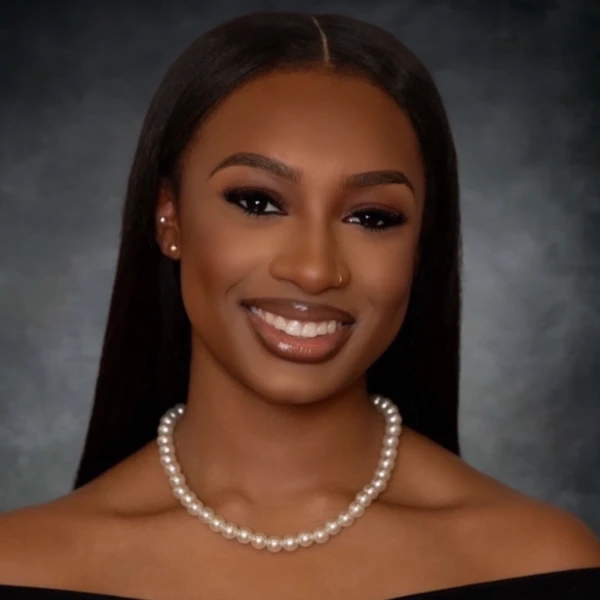
Aniyah Buckley

1x

Finalist

1x

Winner

General information

Age
19
Gender
Female
Ethnicity
Black/African

Hobbies & Interests

  • Softball
  • Animals
  • Basketball

Reading

-

Bio

Greetings, I am Aniyah Buckley, a second-year health science scholar hailing from Athens, Georgia. I am a first-generation scholar coming from a single-parent home. I use my circumstances as motivation to get my education, make myself proud, and break generational curses. Through my time in school, I have held many leadership positions and amazing opportunities, such as studying abroad and presenting award-winning research at a symposium. I plan to pursue my master's in public health and work for the CDC.

Education

Florida Agricultural and Mechanical University

Bachelor's degree program

2025 – 2029

Majors:
  • Allied Health Diagnostic, Intervention, and Treatment Professions
Clarke Central High School

High School

2021 – 2025

Miscellaneous

Desired degree level:
Doctoral degree program (PhD, MD, JD, etc.)
Majors of interest:
Public Health

Career

Miscellaneous

Dream career field:
Medicine
Dream career goals:
Epidemiology
Has nursing license:
No
HBCU Legacy & Excellence Scholarship
As a Black woman, choosing to attend Florida A&M University has been one of the most meaningful decisions I have made. Before coming to FAMU, I knew HBCUs had a rich history, but I did not fully understand what that history felt like until I became a part of it. Every day I walk across campus, I am reminded that I am surrounded by people who look like me, believe in me, and expect me to succeed. That feeling has changed the way I see myself and the future I am working toward. Growing up, I often felt like I had to prove that I belonged. At FAMU, I have learned that I already do. Instead of being the only Black student in the room, I am surrounded by future doctors, veterinarians, educators, scientists, entrepreneurs, and leaders who inspire me to raise my own expectations. Being in an environment where Black excellence is normal has shown me what is possible when people are given the opportunity to thrive. It has made me realize how important representation truly is. One of the biggest lessons FAMU has taught me is that I am never alone. Success here is not treated like a competition. Classmates help each other study. Professors genuinely want to see us grow inside and outside of the classroom. Alumni come back to mentor students because they understand what it means to pour into the next generation. There is a sense of community that I have never experienced anywhere else. Knowing that there are people who want to see me win has given me confidence during moments when I questioned myself. My HBCU experience has also deepened my appreciation for Black education. FAMU exists because generations before me fought to create opportunities that were once denied to them. They built institutions where Black students could receive an education, develop as leaders, and dream without limitations. That legacy reminds me that earning my degree is about more than personal achievement. It is about honoring the sacrifices of those who came before me and making sure those opportunities continue for the generations that follow. I plan to continue my education by earning a master's degree in epidemiology. My goal is to improve public health and help address health disparities that continue to affect underserved communities. I want my work to contribute to research that includes communities that have historically been overlooked and to help create solutions that improve people's lives. I also hope to encourage more Black students, especially Black women, to pursue careers in STEM by showing them that they belong in these spaces just as much as anyone else. When I think about the legacy I want to leave, I do not think about titles or awards. I think about people. I want to mentor students who need someone to believe in them. I want to return to HBCUs to speak with future scholars. I want to invest in the same communities that invested in me. FAMU has shown me that the strongest legacies are built through service, education, and community. Long after I graduate, I hope to carry those values into every classroom, laboratory, and community I have the privilege to serve. That is how I hope to honor the legacy of those who came before me while helping build one for those who come after me.
ESOF Academic Scholarship
Education has always represented more than earning a degree to me. It represents opportunity, responsibility, and the ability to create meaningful change in the lives of others. As a first generation college student at Florida A&M University majoring in General Health Science, I am building the foundation for a career dedicated to improving the health of communities that have historically been underserved. My educational goal is to earn my bachelor's degree with a strong academic record, gain hands on research experience in public health, and continue my education by pursuing a master's degree in epidemiology. I want to develop the scientific knowledge and research skills needed to understand why certain populations experience greater health disparities and how evidence based solutions can improve health outcomes. Professionally, my goal is to become an epidemiologist focused on reducing health inequities that disproportionately affect underserved communities, particularly communities of color. I want to study patterns of disease, identify the social and environmental factors that contribute to poor health, and help create prevention strategies that improve quality of life. Rather than only treating illness after it occurs, I hope to contribute to research and public health initiatives that prevent disease before it starts. I believe that education, data, and community partnerships have the power to save lives, and I want my career to reflect those values. My commitment to civic and public service has shaped both who I am and the professional I hope to become. Throughout high school and college, I have looked for opportunities to serve my community through leadership, volunteer work, authenticity and public engagement. As Freshman Class Vice President at Florida Agricultural And University, I worked to represent my peers and help create a welcoming environment for new students. I have also served as an election poll worker, where I witnessed firsthand the importance of civic participation and ensuring every eligible voter has the opportunity to make their voice heard and make a change. These experiences taught me that serving others often begins with showing up, listening, and being willing to help where you are needed. Beyond leadership, I have remained committed to community service because I believe lasting change happens through consistent action. Whether volunteering, participating in community initiatives, or supporting programs that benefit others, I have learned that every effort, no matter how small, can make a meaningful difference. Public service has strengthened my leadership, communication, and problem solving skills while reminding me that the purpose of education is not simply personal success but using what you learn to improve the lives of others. As I continue my education and eventually enter the field of epidemiology, I intend to carry this commitment to service with me. My goal is not only to conduct research but also to advocate for healthier communities, educate the public, and help ensure that quality healthcare and preventive resources are accessible to everyone. Receiving this scholarship would allow me to continue pursuing these goals while preparing for a career centered on service, equity, and creating a lasting impact.
Rosa A. Wilson Scholarship
A woman's zip code, race, or income should never determine whether she lives long enough to watch her children grow up. Unfortunately, for far too many BIPOC women, it still does. Realizing that health is shaped by far more than medicine is what inspired me to pursue General Health Science and a career in epidemiology. When I chose this field, I knew I wanted to do more than work in healthcare. I want to become an epidemiologist because I believe one of the best ways to help people is to prevent disease before it happens. Instead of asking how to treat an illness, I want to ask why certain communities experience worse health outcomes than others and what can be done to change that. BIPOC women continue to face barriers that go far beyond a lack of access to healthcare. Black women are more likely to die from pregnancy related complications, even when factors like income and education are similar. They are more likely to have their pain dismissed, experience delays in diagnosis, and feel like they have to repeatedly convince healthcare providers that something is wrong before they are taken seriously. Many women of color leave medical appointments feeling unheard instead of cared for. The more I learned about these disparities, the more I realized they were not isolated incidents. They were patterns that could be measured, studied, and changed through public health. These inequities extend beyond maternal health. Black women are about 40% more likely to die from breast cancer than White women, despite having similar rates of diagnosis. Later detection, unequal access to treatment, and more aggressive forms of the disease all contribute to this disparity. Too many women are forced to navigate a healthcare system that was not designed with their experiences in mind. No one should have to fight to be believed while they are already fighting for their health. As an epidemiologist, I want to use research and public health data to identify where these disparities exist and why they continue. My goal is to help develop solutions that improve early detection, expand access to preventive care, and ensure healthcare policies reflect the needs of underserved communities. Research should not end in a published report. It should lead to action that saves lives. Community engagement will always be at the center of my work. I plan to partner with schools, churches, community centers, and local organizations to provide culturally relevant health education and connect women with resources they may not know exist. I also want to encourage women to participate in preventive screenings, understand their family health history, recognize when they deserve a second opinion, and feel confident advocating for themselves throughout their healthcare journey. Creating change also means investing in the next generation. As a first-generation college student, I understand how important representation and mentorship can be. I hope to mentor young women of color who are interested in STEM and public health so they can see themselves as future researchers, healthcare professionals, and leaders. To me, health equity is one of the most important forms of social justice. My degree will not simply prepare me for a career. It will give me the opportunity to challenge systems that have failed BIPOC women for generations. I may not eliminate every disparity on my own, but I can dedicate my career to making sure fewer women are overlooked, fewer families lose loved ones to preventable diseases, and more communities receive the care they have always deserved. That is the impact I hope to make.
Barbara Cain Literary Scholarship
If someone had told me a few years ago that a single book would help me choose my future career, I probably would have laughed. At the time, I did not even like reading, and I had never heard the word “epidemiologist.” I just knew that once something caught my attention, I had to learn everything I could about it. It all started when I became interested in Freddie Mercury and wanted to learn more about his life. That curiosity led me to the HIV/AIDS epidemic, which eventually led me to *And the Band Played On* by Randy Shilts. I expected to learn about a disease. Instead, I found myself learning about people. As I read, I kept asking myself the same question: How could this have happened? The book showed me that the HIV/AIDS epidemic was never just a medical crisis. It was also shaped by fear, politics, misinformation, and discrimination. Scientists were raising concerns. Doctors were trying to understand a new disease. Families were losing people they loved. Still, too many people in positions of power were slow to respond. That frustrated me more than anything else. It made me realize that sometimes disease is not the only thing that costs lives. Silence, bias, and hesitation can be just as dangerous. What surprised me most was how deeply the book stayed with me. I was not someone who normally reread books, especially because reading had never been one of my favorite things to do. Still, I have read *And the Band Played On* three times over the past five years. Each time, I noticed something different. The first time, I focused on the history. The second time, I paid more attention to the people who were ignored. By the third time, I was thinking about what I could do differently in my own future career. When I finished the book, I was not finished learning. I started watching documentaries, reading about activists like Hydeia Broadbent, and learning about the AIDS Memorial Quilt. One question turned into another, and before I knew it, I had spent months learning about outbreaks, public health, and the people who dedicated their lives to stopping them. None of it was assigned. I genuinely wanted to understand. That curiosity changed my goals. Today, I am studying Animal Science at Florida A&M University, and I plan to earn a graduate degree in epidemiology. I hope to study infectious diseases, especially those that spread between animals and humans, and help communities respond before outbreaks become public health emergencies. I want to ask difficult questions, follow the evidence, and make sure vulnerable communities are never treated like an afterthought. People often say books can change your life. I used to think that was an exaggeration. Now I know better. The book I never expected to finish became the one I returned to three times, and it helped me discover the work I hope to spend the rest of my life doing.
TOMORROW X TOGETHER (TXT) MOA Scholarship
My name is Aniyah Buckley, and I am a first-year General Health Science scholar from Georgia attending Florida A&M University. 1. I found TXT around 2020 through TikTok. Their songs and performance clips kept appearing on my For You Page, especially videos from the “Blue Hour” era. “Blue Hour” was the first song that made me stop scrolling and search for the group. I loved how bright and fun it sounded, but it also had a nostalgic feeling that made it stand out. Yeonjun was the first member who caught my attention because of his dancing, confidence, and stage presence. He looked completely comfortable whenever he performed. Not many people around me listen to TXT, so finding their music felt like discovering something that was personal to me. As I watched more videos and learned about the other members, I started appreciating each of their personalities and became more connected to the group. 2. I think one of the most important characteristics of a MOA is being supportive and welcoming. Since not many people around me listen to TXT, I understand how meaningful it can be to find other people who enjoy the same music. A good MOA should make other fans feel included instead of judging them based on how long they have been a fan, how many albums they own, or how much they know about the group. Supporting TXT is not only about streaming music or choosing a bias. It also means respecting all five members, protecting their privacy, and not comparing them in a negative way. MOAs come from different places and backgrounds, but the music gives everyone something to connect through. 3. My TXT bias is Soobin. Yeonjun first caught my attention, but Soobin became my bias after I learned more about his personality. I admire his calm leadership, kindness, humor, and the way he supports the other members without needing to be the loudest person. 4. My ultimate bias is also Soobin because I relate to his quiet and caring personality. He reminds me that being sensitive does not make someone weak. 5. My favorite TXT song is “Blue Hour.” It is fun and energetic, but it also gives me a nostalgic feeling. It helps improve my mood when I am stressed and reminds me to enjoy the present instead of always worrying about the future. 6. I have not had the chance to see TXT live. I hope to attend a concert one day because it would be exciting to finally be surrounded by other MOAs. 7. My favorite album concept is The Chaos Chapter: FREEZE. I like how it represents the confusion, loneliness, pressure, and emotional changes that come with growing up. The music, visuals, and styling all worked together well. 8. I currently pay for school through financial aid, grants, scholarships, student loans, and support from my family when possible. 9. This scholarship would help cover gaps in tuition, housing, books, transportation, and other living expenses. It would also lower the amount of student loan debt I have to take on and allow me to focus more on school. 10. TXT has influenced me by reminding me that growth is not always easy or predictable. Their music discusses friendship, dreams, fear, and uncertainty in an honest way. As a first-year college student adjusting to a new environment, their music gives me comfort and motivation. 11. I plan to use my education to become an epidemiologist. I want to study how diseases spread, create prevention strategies, and help communities that do not always have equal access to healthcare or reliable information. I hope to make public health information easier to understand so people can make safer decisions for themselves and their families.
Ann and Phil's Scholarship
Winner
I used to pray nobody would ask where I lived. When my peers talked about having friends over or getting ready together, I always had an excuse. I didn’t want anyone to know I lived in public housing. I didn’t want them to know that some Saturdays were spent sitting in a laundromat because we didn’t have a washer and dryer at home. I didn’t want them to know I had been working since I was fifteen, not because I wanted extra spending money, but because I needed to support myself. The hardest part wasn’t being poor. It was feeling like I had to hide it. I grew up watching people with incredible potential settle for less because they believed that was all life had to offer. In my family, college wasn’t the expectation. Many people became parents young, dropped out of school, or chose jobs based on what would pay the bills instead of what they were passionate about. It wasn’t because they lacked intelligence or ambition. They had simply never seen someone who looked like them do anything different. When you’ve never seen a dream become reality, it’s hard to believe it’s possible for you.I refuse to let that become my story. Today, I’m the first person and the first woman in my family to attend college. I’m studying Health Science at Florida A&M University because I want to become an epidemiologist. I’m fascinated by understanding how diseases spread and, more importantly, how we can prevent them before they devastate communities. Growing up, I saw firsthand how families with fewer resources often had fewer opportunities to stay healthy, receive quality care, or even access basic health education. I want to help change that through research and public health. Since arriving at FAMU, I’ve made the most of every opportunity because I know how rare those opportunities are. I’ve served as Freshman Class Vice President, become an active member of the School of Allied Health Sciences Learning Living Community, presented award-winning research with a team studying vaccination adherence in Brazil, and earned a scholarship to study abroad in Spain. Every achievement reminds me that I belong in rooms I once thought were only meant for other people. But the financial reality of college never disappears. Every semester comes with questions about how I’ll pay for textbooks, housing, transportation, and the countless expenses that aren’t covered by financial aid. For a low-income, first-generation student, receiving a scholarship doesn’t just ease financial stress. It gives me the freedom to spend more time in the classroom, in research, and serving my campus instead of constantly worrying about how to make ends meet. More than anything, I’m driven by the legacy I want to leave behind. I want my younger siblings to grow up believing that graduating from college, traveling the world, and pursuing careers in healthcare are normal because someone in our family did it first. I want my future children to inherit opportunities instead of obstacles. This scholarship wouldn’t be funding a dream that hasn’t started. It would be investing in someone who has spent her entire life proving that where you begin does not determine where you can go. I’ve worked too hard to let finances become the reason I stop now. I’m not asking for someone to rescue me. I’m asking for the opportunity to keep building towards my future and my families future.
HBCU LegaSeed Scholarship
I used to dream about the day I would have a washer and dryer inside my own house. On weekends, when I went to the laundromat, I would pull my hoodie tight around my face until I could barely see out of it. I was ashamed of being seen. I grew up in public housing with my mom, who was raising us in a single parent household, and even though I was young, I understood that my life looked different from many of my classmates. While they only had to focus on school, I was already thinking about how I could build a better life for myself and my family. Being a high achiever made many people assume my life was easy. On the surface, I earned good grades, carried myself as a role model, and kept a smile on my face. What they did not see was the insecurities I carried. I often felt like I had to hide where I came from because I was afraid people would look at me differently if they knew I was struggling. I felt like I was living as two different people. At school, I was the student people expected to have it all together. At home, I was reminded of the challenges my family was still trying to overcome. Even in spaces I work to be in, I question if I truly belong there. With time, I realized my background was not something I needed to hide. It was proof of everything I had survived and everything I was capable of becoming. Growing up with limited resources taught me how to adjust, keep going, and make a way. Every challenge I face gives me a reason to work hard for something bigger than myself. Today, I am a first-generation college student pursuing a degree in health science. Along the journey, I have found myself in rooms I once could not imagine being in. I have received amazing opportunities from brands, taken on leadership roles, and studied abroad in Spain for three weeks completely free through my college. Moments like that remind me that everything I dreamed about was possible because I never gave up. They also remind me that I am not just surviving my story anymore. I am building something new from it. I have already started building my legacy because one day, when I have children, they will not have to be first-generation. It means the sacrifices my family made and the struggles I went through are not being passed down. My upbringing also shaped the work I want to do in the future. I plan to pursue a career in public health because I know what it feels like to grow up in a community where people do not always have the same access to resources. Honestly, I am still dealing with some of those issues now. Health insurance can be expensive and confusing, and it has shown me how hard it can be for people to get help. I want to use my education and experiences to speak up for people who are often ignored, because I know what it feels like to be one of them. Building a new legacy means creating opportunities that did not exist for previous generations of my family. My dad always tells me, “Never panic, just perform.” That quote has stayed with me because it reminds me that I do not have to let pressure control me. I just have to keep showing up, keep working, and prove that everything I went through was not for nothing.
Aniyah Buckley Student Profile | Bold.org