Hobbies and interests
Coaching
Education
Yoga
Gardening
Reading
Academic
Adult Fiction
Adventure
Business
Chick Lit
Childrens
Education
Health
How-To
Mystery
Novels
Romance
Thriller
Travel
I read books daily
Anita Hill
1x
Finalist1x
Winner
Anita Hill
1x
Finalist1x
WinnerBio
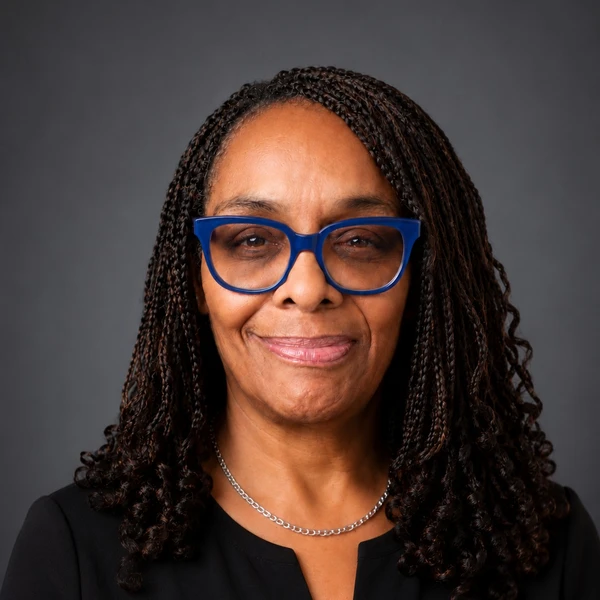
Anita is a Reading Instructor in Chicago, where she teaches literacy to pre-nursing students. A Chicago Public Schools educator for over three decades, she served as an Academic Interventionist in addition to representing her colleagues as a Local School Council representative and Chicago Teachers Union Delegate. Throughout her career, Anita has held various leadership roles, including MTSS Coordinator and Instructional Support Team member. She has achieved 100% teacher retention and performance improvement rates as a Virtual Instructional Coach, while securing over $100,000 in educational funding and expanding arts access across the district.
Anita began her doctoral journey years ago at Illinois State University but paused her studies to care for her ill spouse and young children. Choosing to prioritize family responsibilities, she never lost sight of her goal and is now completing the degree she once set aside. She is currently completing her Educational Doctorate in Educational Technology at the American College of Education, where her research focuses on academic persistence in adult learners with interrupted educational histories.
Married for over 30 years and the proud parent of two young adults, she shares her home with Zo the turtle and is graciously owned by a cat.
Education
American College of Education
Doctoral degree program (PhD, MD, JD, etc.)Majors:
- Education, Other
National Louis University
Master's degree programMajors:
- Education, Other
Roosevelt University
Bachelor's degree programMajors:
- Teacher Education and Professional Development, Specific Levels and Methods
Miscellaneous
Desired degree level:
Doctoral degree program (PhD, MD, JD, etc.)
Graduate schools of interest:
Transfer schools of interest:
Majors of interest:
- Curriculum and Instruction
Career
Dream career field:
- Education
Dream career goals:
My long term career goal is to widen access to education for the adult learners the system overlooks, building research-backed tools and programs through my teaching and consulting that outlast my own classroom.
Instructor
ATS Institute of Technology2025 – Present1 yearEducator
Chicago Public Schools1991 – 202534 years
Research
Education, General
Teach Plus — Senior Change Agent2022 – 2024
Arts
Chicago Public Schools
Visual Arts2014 – 2025
Public services
Advocacy
Chicago Public Schools — Grant Program Facilitator & Arts Liaison2015 – 2025
Future Interests
Advocacy
Volunteering
Philanthropy
Entrepreneurship
Dr. Jade Education Scholarship
The Life I'm Building Toward
If you ask me what my dream life looks like, it isn't some far-off fantasy. It's an extension of what I'm already doing, just with more room to breathe and more reach.
I would be traveling more. Not the two-week-vacation kind of travel, but the kind where I can go slow, spend real time in a place, and come back with something to bring into my classroom or my consulting work. I want to sit in classrooms in other countries and watch how they teach reading, how they build community, how they think about adult learners. Chicago raised me and shaped me, but I want to see how the rest of the world solves the problems I've spent my career solving here.
I would still be teaching. That part isn't negotiable. My students remind me every semester why I do this work. Watching a pre-nursing student who came in convinced she wasn't a reader finally trust her own thinking, that never gets old. Whatever else my dream life includes, it includes a classroom, even if it's smaller or more selective than the one I have now.
I would be rehabbing properties. I've always seen houses the way I see students, full of potential that just needs the right investment and the right eyes to see it. In my dream life I'm not doing this on the side or squeezed between other obligations. I'm doing it with capital behind me, a real team, and the freedom to take on the harder projects, the ones other investors walk past because they don't see what I see.
At the center of all of it is the intergenerational home. This is the piece I think about the most, because it isn't just a personal dream, it's a policy statement. I want to build a home, and eventually a model, where grandparents, parents, and children can live together with dignity, with enough private space that nobody feels crowded, and enough shared space that nobody feels isolated. I've watched too many families get pulled apart by housing costs, by eldercare that doesn't fit anyone's budget, by young adults who can't launch and elders who can't age in place. An intergenerational home solves more than one problem at a time. It solves housing, it solves caregiving, it solves loneliness, it solves wealth building across generations. That is exactly the kind of layered solution I've spent thirty five years looking for in education, and I think housing needs the same kind of thinking.
If I can get even one version of that built and documented, something other families in Chicago and across the country could actually study and replicate, that would outlast any grant I ever wrote or any classroom I ever ran. That's the through line in all of it. Teaching, traveling, rehabbing, building. It's all the same instinct. Take what works, make it bigger, and make sure somebody else can use it too.
Ethel Hayes Destigmatization of Mental Health Scholarship
How My Experience with Mental Health Shaped My Goals, Relationships, and Understanding of the World
For most of my adult life, I did not fall apart. I want to be clear about that, because in the world I grew up in, not falling apart was the goal. You handled things. You kept going. You did not burden other people with what was happening inside you, especially not if you were a Black woman with a household to hold together and a career to sustain and a sick husband who needed you to be solid.
That is not strength. I know that now. That is stigma dressed up as discipline.
My husband has been chronically ill for years. He has been on the transplant list for a kidney transplant, managing complications, medication changes, hospitalizations, and all the uncertainty that comes with waiting for something that may or may not come in time. We raised two children through that. I worked full time as an educator in Chicago Public Schools for nearly 35 years. I coached teachers, coordinated supports for struggling students, held meetings, filed paperwork, showed up every single day. I was the person other people leaned on. And I told myself that was fine. I told myself I was handling it.
What I was not handling was myself.
My marriage carried the weight of that silence in ways I could not see while I was inside it. When you are the caregiver and the breadwinner and the one keeping everything running, you stop being a partner. You become a function. My husband was sick, and I was managing his illness, and somewhere in that arrangement the two of us stopped really talking about what we were each carrying. My children grew up watching me be competent and busy and present but not always emotionally available in the way they needed. I thought I was protecting them from worry. What I was actually modeling was that you do not talk about hard things. You just keep moving.
The moment everything shifted was, of all things, a trip to the dentist.
I went in thinking I had a tooth problem. The dentist looked at my jaw and told me what was happening was not dental. I was referred to my primary care physician, who referred me to a psychiatrist. What I had been writing off as a physical issue was my body storing years of unprocessed stress. My jaw had been clenched so long and so hard that it had become a medical problem. I had been carrying so much for so long that I stopped registering it as weight. It had just become my body's normal.
That referral cracked something open.
I entered individual therapy and then group therapy. Group was the more difficult one for me, because it required me to sit in a room with other people and say out loud what was true. I had to stop being the capable one. I had to learn that asking for help is not a character flaw. That lesson sounds simple. For someone who had spent decades being the person others depended on, it was not simple at all. It was some of the hardest work I have ever done.
Mindfulness practice helped me reconnect to a body I had essentially abandoned. I learned to notice when I was tensing, bracing, holding. I learned that I had been living in survival mode for so long that I had forgotten what it felt like to simply be present without preparing for the next crisis.
What changed in my relationships was real and slow and worth naming. I started talking to my husband differently. Not as his caregiver but as his wife. I started letting my children see me as someone who was also learning, also growing, not just someone who had everything figured out. That vulnerability changed something between us. It created room for honesty that had not been there before.
I formally retired from Chicago Public Schools and returned to doctoral study at American College of Education. I had started an Ed.D. years earlier and had to stop because my husband's illness and raising my children made it impossible to continue. Therapy helped me stop carrying shame about that decision. I made a reasonable choice under unreasonable circumstances. Going back is not about proving anything. It is about finishing something that belongs to me.
I teach adult learners now in a pre-nursing pathway. Many of them are caregivers themselves. I see what they are carrying. I build classrooms where the whole person is welcome, not just the student who has it together.
The stigma that almost broke me was not loud or obvious. It did not come from a single voice or moment. It was the accumulated message that I did not have permission to need anything. It was the cultural expectation that strong women absorb and endure. It lived in every choice I made to keep going instead of stopping to ask whether I was okay.
I was not okay. And getting help was the most important thing I have ever done for myself and for the people I love.
Learner Math Lover Scholarship
I love living. That is really where it starts. If you love being alive, if you pay attention to the world around you, math is everywhere. And I mean everywhere.
I love the logic of it. I love that math is consistent. Two plus two is four today, tomorrow, and fifty years from now. There is something deeply satisfying about that kind of reliability, especially when so much of life feels uncertain. Math does not change its mind. Math does not have a bad day. It just works.
But here is what really drew me in: math makes sense of the things I already love doing.
I am a shopper. I clip coupons. I chase sales. I calculate discounts in my head before I even pick something up off the shelf. When something is marked 30% off and there is an additional 15% at the register, I already know what I am paying before I get to the cashier. That is math. That is real, practical, joyful math.
I cook. I garden. I scale recipes up for a family gathering and cut them down when it is just me. I figure out how many square feet of bed space I need for tomatoes and how far apart to plant them. I track my growing season. All of that is math, and it connects directly to something I care about and nurture with my own hands.
And then there is the teaching. I have spent decades in classrooms watching students struggle not because they lacked intelligence, but because no one ever showed them how math lived inside their actual lives. Once you connect the concept to something real, something a student already does or already cares about, it clicks. That connection is everything.
Math is not abstract to me. It is the language of the life I am already living. It is how I budget, plan, cook, grow, and teach. It is how I make sense of the world I move through every single day.
So when people ask me why I love math, my honest answer is simple: because I love living, and math helps me live better.
Charles B. Brazelton Memorial Scholarship
My mother says I came out of the womb ready to talk and have never stopped. She was not wrong. My brain runs fast, my curiosity runs faster, and somewhere between the two, my mouth usually wins the race. My uncle had a name for it. Every time I walked into a room, he would announce "here comes WVON" like I was a radio station that had just gone live on air.
I am an interrupter. Not the rude kind, at least I hope not, but the kind whose next question is already fully formed before the other person has finished their sentence. I have spent decades training myself to sit still inside a conversation, to breathe, and to actually listen before I respond. It is still a work in progress. The talking is connected to something deeper, though. I am wired for other people. I cannot turn it off, and I stopped trying a long time ago.
I once watched a man on the Metra ask the conductor twice about his stop. The conductor answered both times and moved on. The man was still confused, still scanning his phone, still shifting in his seat, about to make a move at the wrong station. I watched for a few minutes before I got up, walked over, and helped him figure out exactly where to get off and which direction to walk once he got there. He thanked me. I went back to my seat feeling like I had done something important. That is not an exaggeration. That is genuinely how it felt.
I have had to learn the difference between being helpful and being intrusive. They can look identical from the outside. What separates them is whether the other person invited you in. I still catch myself jumping over that line sometimes, not out of arrogance but out of reflex. When I see someone struggling, something in me moves toward them before I have made a conscious decision to do so.
My mother traces this back to when I was very young. She says I would never ask for anything just for myself. If I wanted something, I made sure my little brother could have it too. I did not frame it that way as a child. I just could not imagine asking for enough for only me when he was standing right there. That impulse never left. It just grew up alongside me and eventually found a profession.
Education is the only field I know where every single one of those tendencies becomes an asset. The talking serves students who need someone to explain something six different ways until one of them lands. The interrupting becomes the well-timed question that redirects a confused learner before they go too far down the wrong path. The reflexive helpfulness becomes the reason I notice when a student has gone quiet, when something is off, when someone needs more than the lesson plan offers. And the little girl who always asked for enough for her brother became the teacher who could not design a lesson without asking who else in the room might be left out.
I did not choose education because it was practical or because someone pointed me toward it. I chose it because it was the first place I ever walked into where being too much of everything I already was turned out to be exactly enough. Three decades later, I am still that person on the train, still leaning over, still asking where you are trying to go, still absolutely certain I can help you get there.
Bulkthreads.com's "Let's Aim Higher" Scholarship
Building What I Was Always Meant to Build
What I want to build is something I have already started: a consulting practice and a body of research that together close the gap between what adult learners need and what educational systems actually offer them. Advanced Educational Mentoring and Coaching (AEMC) is not just a business. It is the structure through which I intend to do the most meaningful work of my career.
After decades serving in Chicago Public Schools, I stepped out of the institution and into something I had to build from the ground up. That transition was deliberate. I had spent decades coaching teachers, coordinating systems, and advocating for students inside a structure that did not always make that work easy. When I left, I took everything I had learned and began building something of my own, something that answers directly to the community it serves rather than to an institutional hierarchy.
At the same time, I am completing my Ed.D. in Instructional Technology at American College of Education. My research focuses on blended digital learning environments and academic persistence in adult learners with interrupted educational histories. That research is not separate from AEMC. It is the foundation I am building underneath it. When I finish this degree, I will be able to bring evidence-based frameworks directly into my consulting work, into the classrooms where I teach developmental literacy, and into the community spaces where adult learners in South Shore and across Chicago are trying to find their footing.
The community impact of this work is personal to me. South Shore is my neighborhood. I know what interrupted education looks like here. I know the adults who stopped out of college to care for children or aging parents, who lost jobs or housing, who always meant to go back but needed someone to show them the path was still open. AEMC is built for those people.
The research behind it is built to prove that the right learning environments and the right support structures can change outcomes for learners who have been written off by systems that were not designed with them in mind.
What I am building is a future where my expertise outlasts my career, where the frameworks I develop can be taught to other educators and coaches, and where the adult learners I serve have access to tools and guidance that meet them where they actually are. I am building the thing I always knew I was supposed to build. I just needed the time, the credentials, and the courage to do it fully. All three are finally in place.