Hobbies and interests
Acting And Theater
Writing
Community Service And Volunteering
True Crime
Neuroscience
Advocacy And Activism
African American Studies
Agriculture
Animals
Animation
Anime
Biology
Biotechnology
Biomedical Sciences
Camping
Concerts
Cooking
Cosplay
Costume Design
Criminology
Drawing And Illustration
Dungeons And Dragons
English
Farming
Food And Eating
Global Health
Health Sciences
Pet Care
digital art
Reading
Academic
Book Club
Health
Religion
Sociology
I read books daily
Anise Sorn
1x
Finalist
Anise Sorn
1x
FinalistBio
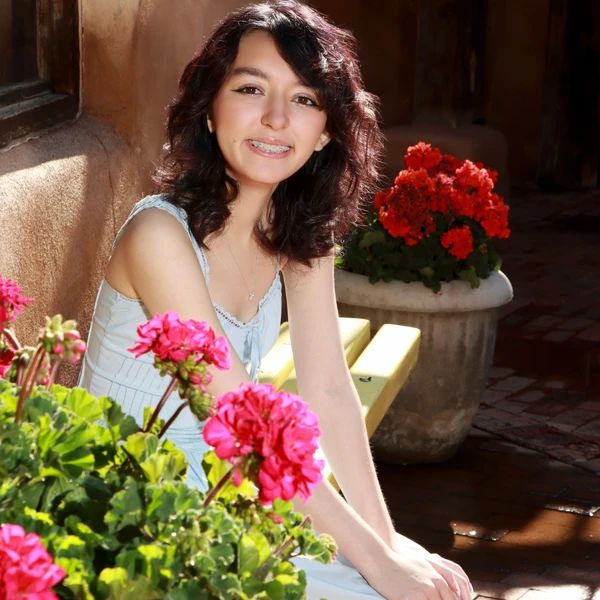
I am a dedicated high school student from College & Career High School. I just graduated with an associate of applied science degree through dual enrollment at Central New Mexico Community College. After graduation in May 2026, I moved to New York to pursue work for the summer before college. I thrive in challenging academic environments, having earned honors in Algebra and consistently achieving Honor Roll recognition. I am also a proud member of the National Society of High School Scholars.
Beyond the classroom, I am passionate about leadership and creative expression. I served as President of the Film Club and have held the role of Vice President for the True Crime Club. I enjoy engaging with diverse communities, participated in the Black Student Union, Book Club, and D&D Club, and competed in academic challenges like the New Mexico Brain Bee. My interests also extend to medical advocacy, where I participate in conferences and hold certifications in Basic Life Support and First Aid.
Community service is a cornerstone of my growth. I volunteered with my school’s PTSA and have contributed at the Raymond G. Murphy VA Hospital. Through work experiences on farms and in school offices, I have developed a strong work ethic, adaptability, and a love for learning in real-world environments.
I am driven by curiosity, leadership, and a desire to make a meaningful impact, combining academic achievement with community involvement and creative pursuits.
I am certified in CPR/AED.
Education
Central New Mexico Community College
Associate's degree programCollege and Career High School
High SchoolMiscellaneous
Desired degree level:
Bachelor's degree program
Majors of interest:
- English Language and Literature, General
- Biological and Biomedical Sciences, Other
- Medical Clinical Sciences/Graduate Medical Studies
Career
Dream career field:
Medicine
Dream career goals:
I plan on working within my community in the medical field as a patient advocate, science based journalist, and being an entrepreneur. I am considering medical school.
Pumpkin Patch Crew Member (Seasonal)
McCall's Pumpkin Patch2025 – 2025
Public services
Volunteering
PTSA — PTSA Student Volunteer2022 – 2024Volunteering
Raymond G. Murphy VA Hospital — Administrative Volunteer2023 – 2023
Future Interests
Advocacy
Volunteering
Philanthropy
Entrepreneurship
“I Matter” Scholarship
Growing up as a biracial Cambodian and White student with a rare disease in New Mexico, I often felt culturally invisible. I have never met anyone who shares my background here, and I have never met another Cambodian in my state. For most of my life, it felt like I was navigating my identity alone. That feeling began to change when I became close friends with a classmate at my school who is Black. Although our cultures are different, we quickly realized that we shared similar experiences of growing up as minorities in a place where representation is limited.
Our friendship grew through conversations about identity, school, and our hopes for the future. We both dreamed of attending colleges outside of New Mexico where there are larger and more diverse communities. During this time, I joined the Black Student Union to support her and the work the organization was doing to create a sense of community. Over time she stepped into leadership and eventually became the club’s president. Watching her grow into that role inspired me and strengthened my commitment to supporting my friends and the communities around me.
When college application season approached, my friend began to feel overwhelmed. Even though we attended the same school, researching colleges, writing essays, and managing deadlines can be intimidating. She often doubted whether she was good enough to apply to the universities she had dreamed about attending. When I first started learning about the application process, my family helped guide me through researching schools and organizing everything I needed. Because of that support, I was able to share what I had learned with her.
We spent time after school researching universities and discussing how she could tell her story in a way that truly reflected who she was. Sometimes I helped by talking about her background and goals for her essay or organizing deadlines. Other times it meant reminding her that she belonged in those spaces and that her voice mattered.
For both of us, the process meant more than submitting applications. As two students from underrepresented backgrounds in New Mexico, we were encouraging each other to believe that opportunities existed beyond what we saw around us. Supporting her also reinforced something I had been learning in my own life, confidence often grows when someone else believes in you.
The day she received her acceptance letter to the university she had dreamed about attending was unforgettable. Seeing her excitement and relief reminded me how meaningful encouragement can be. Knowing that I helped her navigate a difficult process made me proud, not because I wanted recognition, but because I saw how small acts of support can open doors.
Helping my friend showed me that success is not only about individual achievement. It is also about lifting others along the way, especially when you understand the challenges they face. Sometimes the most powerful way to help someone in need is simply by standing beside them and reminding them that their dreams are possible.
Christian Fitness Association General Scholarship
The biggest challenge I faced in my education was not a single medical crisis or academic problem, but learning how to speak up for myself in places where I often felt ignored. This experience changed how I saw school, authority, and my own value. Overcoming it has been one of the most important parts of my life.
At five years old, I had a hemorrhagic stroke because of a rare neurological condition called cerebral cavernous malformation. I couldn’t explain what was happening, but I knew something was wrong. In kindergarten, I sat alone with blurry, double vision while my teacher told me to read quietly. My symptoms were ignored until I got home, where my mother quickly saw something was seriously wrong. Within hours, I was in the emergency room, and doctors confirmed I’d had a hemorrhagic stroke.
Although the medical event itself was traumatic, the lasting impact came from what followed. I learned at a very young age that being unwell did not guarantee being believed. I watched my mother argue with medical professionals to secure proper testing, treatment, and later, access to research opportunities. Living in a state with one of the highest concentrations of my condition, I still found myself excluded from a specialist study because I did not meet a narrow genetic profile. It was only through my mother’s persistence that I was admitted. Observing these experiences taught me an unsettling lesson. Advocacy was necessary, but my own voice did not seem to carry weight.
As I got older, that lesson affected how I acted in school. I started to hide my discomfort and hesitated to ask for help. By middle school, even if something felt wrong, I stayed quiet. When I had a second hemorrhagic stroke at 11 years old, it showed me how risky that silence was, but I still didn’t know how to change. I was used to being afraid of not being taken seriously.
When the pandemic moved school online, my challenge got even harder. Without in-person support, it was tougher to share what I needed. I did my assignments and went to virtual classes, but I struggled alone, telling myself that asking for help would just bother others or make them doubt me. I kept working hard in school, but I felt alone and unsupported.
Going back to in-person classes in high school was a big turning point. For the first time, I had teachers who listened to me and respected both my abilities and my medical history. I had a 504 plan, but I hardly used it because I wanted to show I could do things on my own. I’d been in gifted programs for years and set high standards for myself, thinking that doing well would prove my worth. Slowly, I started to trust that adults outside my family could see me as more than just my diagnosis.
Feeling encouraged, I chose a dual-enrolled school to be in college during my freshman year of high school. I wanted to challenge myself and show I was resilient. But the independence of college made me realize how much I still struggled to speak up for myself. Even though my parents and teachers kept telling me to register with accessibility services, I didn’t. I convinced myself I could handle it all on my own and that asking for help would take away from what I had achieved.
The results of that choice were tough but important. When my health got in the way of my classes, I had to drop two and failed two others. I asked a professor for help, but was told nothing could be done since I hadn’t used the official process. It felt all too familiar; I wasn’t being heard again. But this time, I couldn’t ignore what happened. I wasn’t 5 years old. My silence had real effects on my grades, and I couldn’t blame my age or situation anymore.
Instead of giving up, I thought about what went wrong. I realized that being resilient isn’t about facing problems alone or staying quiet to seem strong. Real resilience means being honest, communicating, and having the courage to ask for help when you need it. I started talking openly with my parents and school staff, admitted my mistakes, and began speaking up for myself. This change was hard, but it made me feel stronger. For the first time, I saw that self-advocacy isn’t a weakness; it’s a skill you have to learn and practice.
Getting through this challenge changed how I handle school and life. Now, I make an effort to talk with teachers, use the resources available, and feel more confident dealing with systems that used to scare me. These experiences have made me more disciplined, empathetic, and clear about what I want for my future.
The challenge of learning to use my voice has taught me that growth often comes from discomfort. I am no longer the student who stays silent out of fear of being dismissed. I am someone who speaks thoughtfully, seeks support responsibly, and persists through adversity. This journey has prepared me not only for the academic demands of college but for a lifetime of learning, leadership, and advocacy.
Vanna Christian Sun Legacy Scholarship
My name is Anise Sorn, and I come from a family shaped by survival, loss, and an enduring hope for a safer future. My grandparents, Yay and Ta, escaped the Khmer Rouge forced labor and prison camp in Cambodia after experiencing firsthand and witnessing terrible violence against friends and neighbors. Their names appeared on a list of people to be executed, and a guard warned my grandfather that they had one last chance to get away. During their time in Cambodia, my now late grandfather was shot. He survived, but the trauma haunted his dreams and affected my father and our family. Their oldest daughter died at age four after being denied medical care by the Khmer Rouge. After her passing, my grandparents had a son, my uncle. Realizing that staying in Cambodia was too dangerous, they decided to escape. They walked for months to Thailand, traveling only at night and hiding during the day.
My father was born in a refugee camp in Thailand. They named him Sambath, meaning prosperity and good fortune, to express their hope for a better future. While still in the U.N. camp, my grandparents had another son. My grandfather had an education in Cambodia, but my grandmother did not. My grandfather wrote to many countries asking for asylum, and the United States accepted them. They moved to a refugee camp in the Philippines to learn about American customs before coming to the U.S.
In America, my grandparents had another son and worked hard in factories to create a stable life for their family. Even after all they had been through, my father decided to join the U.S. military. This was hard for my grandparents to accept because of their past, but my father saw it as an opportunity in America. They eventually understood my father’s reasoning for his decision for a better life in this country. After his military service he later earned college degrees and built a career in information technology, showing perseverance and a strong commitment to education.
I am a first-generation, biracial Khmer American who grew up in New Mexico. My mother is also the child of an immigrant. Living in a state not knowing any other Cambodians and being white passing has often made it hard for others to see that I am half Khmer. This sense of invisibility has been especially challenging as a Khmer woman and has motivated me to focus on advocacy, representation, and pride in my identity.
Like my family, I have faced challenges beyond my control. I was diagnosed with a rare disease called cerebral cavernous malformation and had two hemorrhagic strokes at age five and eleven. These health problems brought many continued struggles. When teachers and doctors dismissed my concerns during important times, I learned that survival often means speaking up for myself. These experiences made me determined to advocate for myself and for others whose voices are not heard in the medical community.
I enjoy volunteering, school clubs, and taking on leadership roles. This has taught me the importance of service and giving back to my community. I plan to attend a college in the northeastern United States, where I can be closer to the Cambodian American community. I want to study English to amplify voices like mine and develop skills important in STEM fields, such as clear communication, leadership, and the creation of fair solutions in the medical field. The Vanna Sun Scholarship would help ease financial stress and support my goal of honoring my family’s journey by creating opportunities for others and making a positive impact in the Khmer American community.